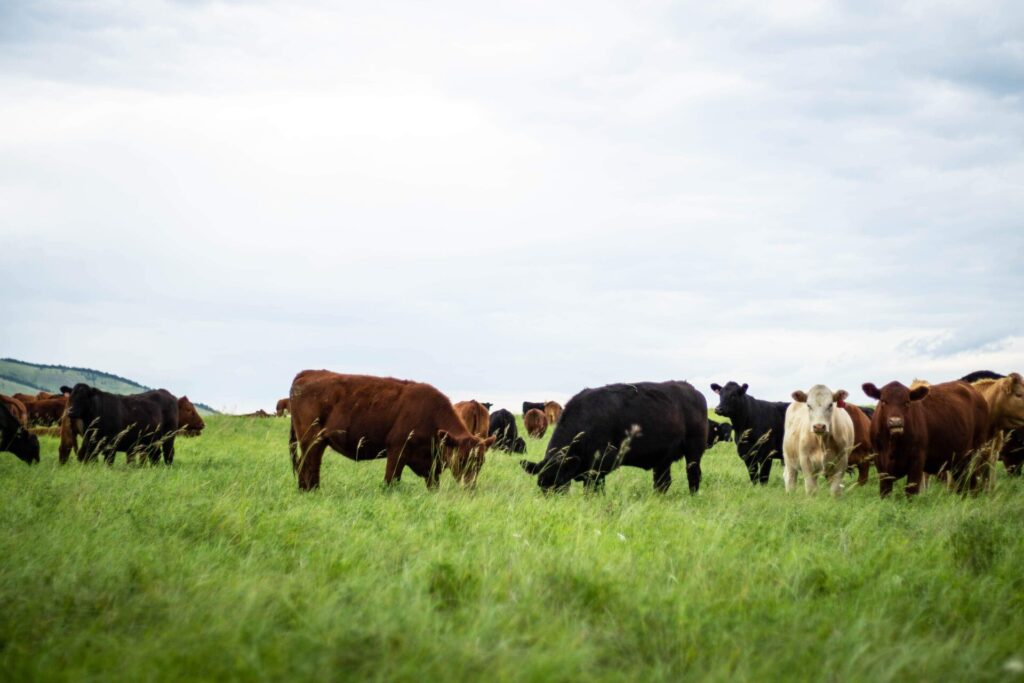
Attention Extension Agents: Upcoming Online Meeting About Call for Letters of Intent

The current BCRC Call for Letters of Intent (LOIs) related to technology transfer and production economics focuses on three challenge statements related to: grazing management/forage rejuvenation, optimizing reproductive rates and the Code of Practice for Care and Handling of Beef Cattle

Join us on Thursday, July 7, to discuss potential extension strategies to employ in these areas, as well as an overview of the funding application process and guidelines for LOI submissions. 

In preparation for the online meeting, visit our Call for Proposals page for complete information about the current Call

The virtual meeting will be held on Thursday, July 7, 11:00 a.m. – 12:00 p.m. MT. 

  • 10:00 a.m. in BC 
  • 11:00 a.m. in AB and SK  
  • 12:00 p.m. in MB  
  • 1:00 p.m. in ON and QC 
  • 2:00 p.m in NS, NB, PE and NL 

To join the Zoom meeting, you must register in advance.

After registering, you will receive a confirmation email containing details about joining the meeting. To allow adequate time to log in, please join five minutes early so that we can start promptly at the top of the hour. When you log in, you’ll have the option to join with video turned on plus two options for audio: your computer audio or dial in over the phone. 

Interested but not available at that time?  Register anyway! This webinar will be recorded and can be shared upon request. 

Sharing or reprinting BCRC posts is welcome and encouraged. Please credit the Beef Cattle Research Council, provide the website address, www.BeefResearch.ca, and let us know you have chosen to share the article by emailing us at info@beefresearch.ca.

The BCRC is funded by a portion of the Canadian Beef Cattle Check-Off.

Canadian Beef Cattle Check-Off

Your questions, comments and suggestions are welcome. Contact us directly or spark a public discussion by posting your thoughts below.

More Useful and More Relevant

This article written by Dr. Reynold Bergen, BCRC Science Director, originally appeared in the June 2022 issue of Canadian Cattlemen magazine and is reprinted on BeefResearch.ca with permission of the publisher.

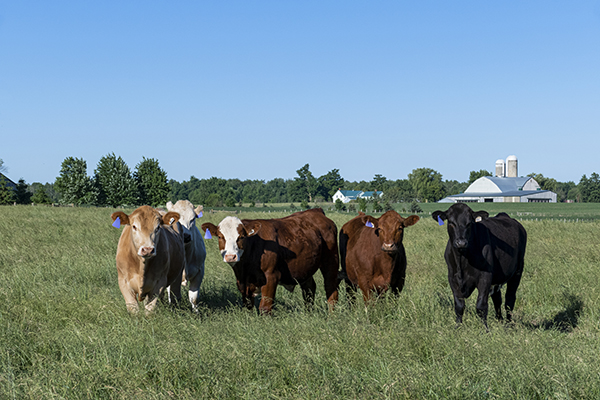
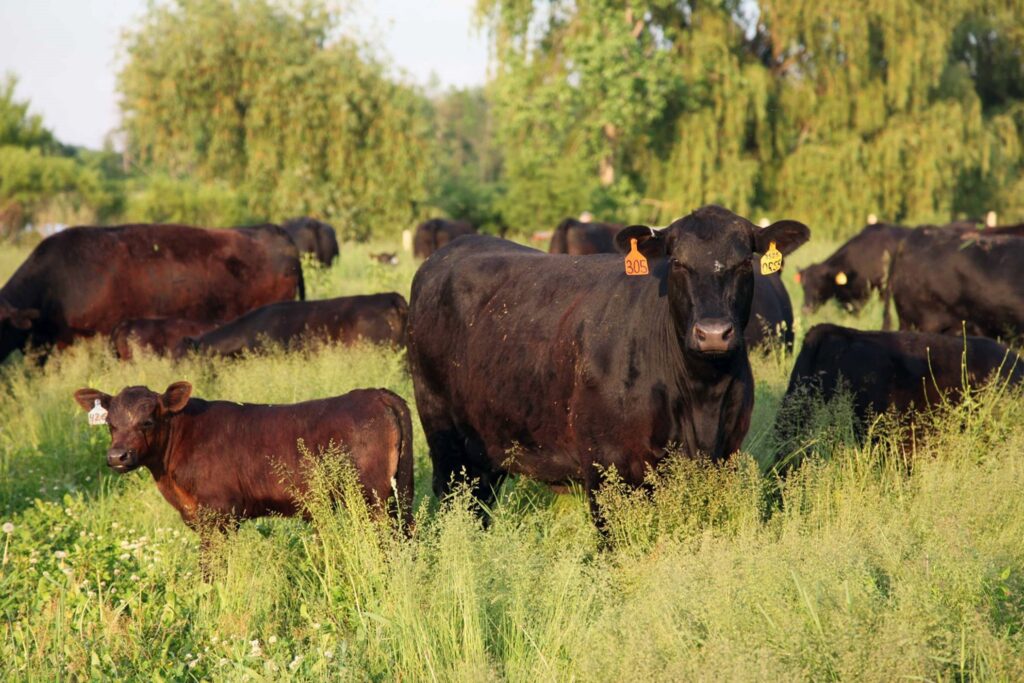
red beef cow in tall grass with barns and silo in background

When the Beef Cattle Research Council was formed nearly 25 years ago, we simply funded research projects and relied on researchers and provincial extension services to help producers learn about and adopt relevant results on their operations. We deliberately didn’t do much extension because we didn’t want to give governments an excuse to reduce their extension services.

That didn’t work – traditional extension services have declined significantly. Agriculture Canada and most universities do not encourage their researchers to help producers adopt new innovations. In most provinces, the battalions of district, regional and provincial specialists that used to help farmers trouble-shoot and solve problems have been significantly downsized and many have been re-assigned to administering government programs.

Sensing this trend wasn’t going to reverse, the BCRC developed a Knowledge and Technology Transfer (Extension) Strategy in 2011. In 2012, we launched www.beefresearch.ca, with the goal of being a reputable, comprehensive, one-stop-shop for useful Canadian beef research and extension information. Our extension activities have expanded considerably since then. We’ve learned a lot as the extension landscape has continued to evolve. After ten years, it’s time to re-assess our approach and identify how we can continue to improve.

What We Did

Last year we hired an independent company (Framework Strategies) to lead a review, because we wanted to know what people really thought about us. Framework conducted an online survey, interviewed individuals with strong extension knowledge and experience and hosted separate discussion groups with extension agents and producers. They asked a series of questions to learn what the BCRC is doing well, and what we can do better, and they summarized their findings in a 95-page report.

What We Learned and What We’re Doing About It

Most of the feedback was positive. When asked to describe BCRC’s extension program in one word, the most common responses were “useful” and “relevant.” That’s nice to hear. But, the report also suggested some ways we could make our extension program even more useful and more relevant. Here are three of them.

We can strengthen ties with existing extension experts.

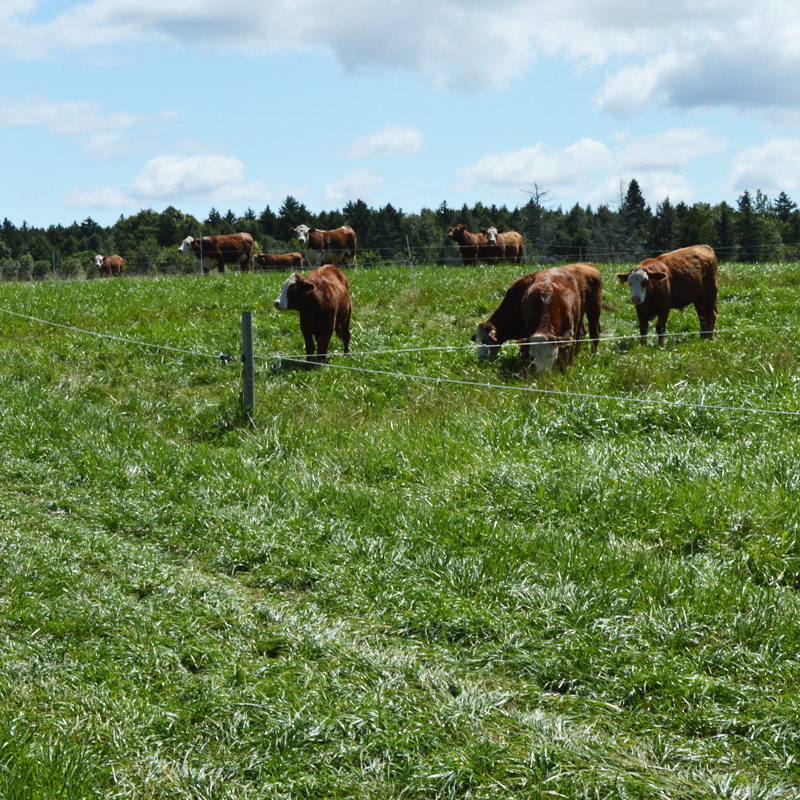
mixed steers on grass with barn and silos in the background

The BeefResearch.ca website is a great way for our small BCRC extension team to cost-efficiently distribute a lot of solid, science-based production information and decision-making tools to producers across Canada. But no two producers or operations are identical, and one-size-fits-all solutions are rare. Some producers need help implementing recommendations or tools in their specific situation. Sales and technical service representatives, forage associations and provincial extension specialists can help with this. This is mutually beneficial. For example, provincial employees are often so busy with administration that they don’t always have time to develop new extension materials.

We’re strengthening the Canadian Beef Technology Transfer Network to connect extension agents across Canada with each other and with extension resources that already exist, and to help us identify additional production information and tools we can develop that will benefit producers across Canada.

We can strengthen ties with veterinarians.

Many producers rely on their veterinarian and clinic staff for much more than just animal health advice. At the same time, optimizing herd health, fertility and production usually involves tweaking nutritional, grazing and other management practices. Your veterinarian knows your operation and management practices better than we ever will, but it may have been years since they studied some of these topics!

We’ve assembled a collection of tools and information that can help you and your veterinarian both get the most value from your veterinary-patient-client relationship. We are actively working with veterinary associations to ensure the veterinary community is aware of these resources.

We can stretch into more regions.

Ontario farmyard with cattle - BCRC is focusing on extension programs in eastern Canada

Cattle, forage and beef production systems, management practices and challenges vary enormously from coast-to-coast, but much of the BCRC’s information and tools are most applicable to western Canada. The BCRC is funded by the Canadian Beef Cattle Check-Off paid by producers across the country, but producers in Central and Atlantic Canada haven’t always seen their production systems reflected in enough of the information the BCRC puts out.

We’re working with more producers and extension experts in Ontario, Quebec and Atlantic Canada to identify existing content that is relevant to producers further east and to recognize significant information gaps that the BCRC can help fill. We’re also working to add and update resources on BeefResearch.ca that producers across the country will find locally relevant.

So What Does This Mean… to You?

We’re constantly working to find better ways to turn the results from the applied forage, cattle and beef research that you fund through your Check-Off into meaningful information and tools that you can use to problem-solve, reduce your risks and improve your profitability. If you haven’t checked out BeefResearch.ca (or haven’t recently), have another look. It’s being updated to make it even easier for you (and extension experts, veterinarians and others) to find what you’re looking for. We appreciate hearing your positive and constructive feedback and suggestions.

If you’re interested in seeing BCRC’s extension staff and program in action, consider attending our Bov-Innovation sessions at the Canadian Beef Industry Conference this August 16-18 in Penticton, B.C.

Canadian Beef Industry Conference 2022

The Beef Cattle Research Council is funded by the Canadian Beef Cattle Check-Off. The BCRC partners with Agriculture and Agri-Food Canada, provincial beef industry groups and governments to advance research and technology transfer supporting the Canadian beef industry’s vision to be recognized as a preferred supplier of healthy, high-quality beef, cattle and genetics.

Click here to subscribe and receive email notifications when new content is posted.

The sharing or reprinting of articles on BeefResearch.ca is typically welcome and encouraged, however this article requires permission of the original publisher.

The BCRC is funded by a portion of the Canadian Beef Cattle Check-Off.

Canadian Beef Cattle Check-Off

We welcome your questions, comments and suggestions. Contact us directly or generate public discussion by posting your thoughts below.

Attn Extension Agents: BCRC Opens Call for Letters of Intent

The Beef Cattle Research Council invites letters of intent (LOIs) for technology transfer and production economics projects. The application deadline for this call is August 19, 2022, at 11:59 PM MT. 

Canadian Beef Cattle Check-Off

The purpose of this targeted call is to achieve specific objectives in the Canadian Beef Research and Technology Transfer Strategy and the National Beef Strategy. This call for technology transfer LOIs is made possible by the recent increase in the Canadian Beef Cattle Check-Off in most provinces. Approved projects, funded by Canadian cattle producers through the Canadian Beef Cattle Check-Off, will be required to use the industry funding to leverage additional funds from government or other funding organizations to fulfill project budgets. 

Through extensive consultation with research teams and industry stakeholders to identify critical needs and key areas where the BCRC can have the greatest impact, target outcomes have been clearly defined for the call. Please refer to the problem statements listed within the documents linked below before deciding whether to submit an LOI. 

Technology Transfer and Production Economics Funding Application 

Proposed projects up to two years in length may be submitted. The BCRC will provide a maximum of 50% of the project budget, with a maximum BCRC contribution of $50,000 per project. Refer to the documents below and watch for a webinar announcement in the coming weeks for more information. 

Sharing or reprinting BCRC posts is welcome and encouraged. Please credit the Beef Cattle Research Council, provide the website address, www.BeefResearch.ca, and let us know you have chosen to share the article by emailing us at info@beefresearch.ca.

The BCRC is funded by a portion of the Canadian Beef Cattle Check-Off.

Canadian Beef Cattle Check-Off

Your questions, comments and suggestions are welcome. Contact us directly or spark a public discussion by posting your thoughts below.

Three Producers Share Ideas That Improve Efficiency

Editors note: This article is the third in a series featuring ideas from beef producers across the country. See the first: Eight beef producers share their recent changes and second: Five Producers Share Ideas That Have Made Their Farms And Ranches More Efficient

Beef producers across the country are always looking to improve management and production practices that not only benefit cattle, but also reduce their workload, and help to save time and money.

It may involve improved calf identification measures, installing remote cameras to monitor watering systems, or adopting quiet livestock handling practices in a flexible year-round grazing system. They all help to improve beef production efficiency.

Here are some measures three beef producers say has benefited their operations:

Rob Somerville – Endiang, AB

Rob Somerville who ranches with family members in east-central Alberta is using both high and low-tech technology to help him manage cattle on the century old family farm near Endiang, about 90 minutes east of Red Deer.

On the low-tech side, noting “it may have been a good idea my wife had”, Somerville says for the past two calving seasons he has been using bright coloured dog collars to help him identify calves he needs to be watching.

“All our calves are given I.D. ear tags,” says Somerville who ranches with his wife Laurie. “But when you have a good sized herd and you need to find five calves out of about 300 head it can take a lot of looking to find the ones you want to check. Using these dog collars has made the job just so much easier.”

Photo submitted by Rob Sommerville

The brightly coloured dog collars are applied to calves that need some follow up attention. It could be a situation where Somerville just wants to find a calf to make sure it is nursing its mother, it may be a calf that needs to be fed morning and evening, or in another case, it may be a calf being treated for some health reason that needs to be watched or given a follow up treatment.”Say, for example, it is a calf and I just want to make sure it is nursing,” he says. “I’ll give it an orange dog collar and then when I’m checking the herd it is very easy to pick out. If there is another calf that needs to be fed twice a day I will give it a different coloured dog collar. And if it is a calf that needs to be given some sort of treatment I’ll give it another coloured collar. It makes it so much easier to find them.”

Acting on Laurie’s suggestion, Somerville found the collars at an outdoor sporting supply store. They are large, brightly coloured and made of durable plastic type material. He bought several in different colours.

“An important thing to remember, as soon as you are done trying to track a calf, make sure you take the collar off. They can be cleaned up and reused.”

Value of RFID tags

Another higher tech management tool Somerville began using during the 2019 calving season, is to outfit each calf with a CCIA-approved RFID ear tag as soon as it is born. “The dog collars help with management, but using these RFID tags on newborn calves has actually made me money,” says Somerville. With the RFID tags applied to the calf, almost as soon as it hits the ground, Somerville can usually match the calf RFID to the mother’s RFID, eliminating or reducing the risk of ending up with an orphan calf.

“At the peak of calving when you have 20 or 25 cows calving a day it can get crazy,” he says. “Most pairs mother-up very well, but every once in while you run into a calf on its own and you have to ask “who does this guy belong to?” So we try to be there and apply that RFID tag just as soon as the calf is born, and then we can come back later or the next day to dehorn calves as needed and attach a floppy ID tag in the ear.

Somerville bought a good quality Gallagher RFID tag reader, which also allows him to input management information into the reader right in the field.

“As soon as the calf is born it takes a few seconds to snap the RFID tag into place, you have the calf’s number in the reader and usually the mother is close by so you can capture her number as well and then move on to the next one.”

Somerville says he has had situations where soon after a cow gives birth, the mother wanders off and ignores the calf, in other situations he has had one cow calve but then she mothers up with another cow’s calf, and occasionally there are twins born with both calves needing to be linked to a single mother.

He said it would have been a really useful tool in the spring of 2018 when bad weather hit during calving. “Several calves were literally born in a snowbank so you rushed to get inside to be warmed up, but then it was a challenge to get them paired up with their right mothers later on,” he says.

Somerville says even with his new system of applying RFID tags at birth, if one calf does get missed it is easier to determine the mother of that calf through a process of elimination. “You can identify the ones that are paired up by RFID numbers, so that leaves just one or two that maybe haven’t been,” he says.

Along with the RFID tag number, he can also input calf birthweights and other management information into the reader, which is all useful as he follows that calf through their on-farm finishing feedlot.

“Information on how the calf performs is also useful in making decisions on which cows to cull,” he says. “If you’re short of pasture and need to cut down numbers, it is always good to know who the bottom-end cows are.”

Somerville says he has used the RFID tags for years, but “it was mostly because it was required,” he says. The calves would receive RFID tags at branding or just ahead of sale day. “I see now how they can be a valuable management tool right from birth in helping to keep cow-calf pairs mothered up. Using these RFID tags at calving will make us more money.”

TRAVIS PEARDON – OUTLOOK, SK

Travis Peardon likes to keep an eye on summer and winter watering systems as well as farmyard activities even when he might be some distance from home.

The southern Saskatchewan beef producer, who farms with family members near Outlook uses two camera systems to help him monitor and manage cattle helping him to maintain the beef herd and also saves time and reduces stress.

One camera system is used to monitor remote watering systems on summer pasture and winter feeding areas. The camera either confirms water is available to his 250 head cowherd, or can alert him to a supply problem.

“Actually I got the idea from colleague Alicia Sopatyk, (Saskatchewan Agriculture livestock and feed extension specialist at Tisdale) who had tested the camera idea through the ADOPT program, ” says Peardon, who himself is also a provincial livestock specialist at Outlook. ADOPT is an acronym for Ag Demonstration of Practices and Technologies program.

With their cattle wintered on a site about a half-mile from the farm headquarters, Peardon, for the winter of 2018/19, installed a game camera over the winter watering system. The winter-feeding site has a dugout with water transferred into a wet well and then pumped into a heated water bowl. He has electricity available from nearby irrigation systems to provide power to the watering system, although it can be hooked up to solar power as well.

Photo submitted by Travis Peardon

The $350 game camera is mounted on a post above the water bowl and is programmed to capture three photos per day and transfer those photos to Peardon’s cell phone.”You can set up the camera system to be motion activated or just program the camera to take photos at different times of the day,” he says. The game camera system provides 100 free photos per month. A fee is charged for any photos over the 100 limit.

“We know when our cattle usually head to the waterer so we have the camera programmed to send three photos daily at 10, 11 a.m. and 12 noon,” he says. “It’s a good clear picture of the bowl, so if we can see water in the bowl we know it is working.”

Similarly, they can move the camera to a solar powered watering system used on pasture in the summer.

“Before we had the camera we would need to check the watering systems every day,” he says. “This way we can regularly monitor the waterers and know they are working. You don’t want your cattle to run out of water at anytime, but particularly on a hot day in the summer water needs to be available.”

The game camera photos are transmitted to both Peardon’s cell phone as well as to his father’s cell phone. “That way we can both keep an eye on the watering system and check if there appears to be a problem,” he says.

“It saves time, it provides peace of mind being able to see the waterers are working, and also from a production standpoint you don’t want cattle running out of water,” he says.

Another calving camera system in the farmyard is also a useful tool, says Peardon. It can be monitored form his cell phone or portable tablet.

“The calving camera helps you monitor cattle that are about to calve in the yard,” he says. “You can scan over a group of cows and zoom in on a particular animal for a closer look. You can also zoom in on the waterer in the pen to make sure it is working. And I can also scan most of the farmyard to make sure everything is in order there.”

DEAN MANNING – FALMOUTH, NS

Variable weather is something Dean Manning is learning to work with on his mixed farming operation at Falmouth, NS about a 45 minute drive north of Halifax.

With a 75 to 80 head commercial beef herd being about one half of his farming operation and a market garden and vegetable production being about the other half, he’s been working to develop an extended, but flexible grazing system for his operation.

“I’ve always been interested in grazing management and probably focused more on getting the proper forage stand for a number of years,” he says. “Now I have more focus on extending the grazing system, which is often affected by increasingly variable weather patterns.”

Photo submitted by Dean Manning

And as he moves cattle through a grazing system that has them outside about 90 per cent of the time, he also pays attention to proper, gentle, handling practices, which makes management much easier.In recent years, he’s been working to extend winter grazing as long as possible. Through proper management of a rotational grazing system, he stockpiles forage on both native and tame pastures, he seeds some kale as an annual forage crop for fall and winter grazing, and has also saves part of his corn silage crop for winter grazing as well.

He says his cattle — a Red Angus based cowherd crossbred with continental breeds such as Limousin, Simmental and Charolais — are never really inside for winter feeding. “They are used to being outdoors so that is where they spend most of winter,” says Manning. “There is a loose housing barn they can use for shelter if the weather gets bad, but they come and go as they wish. And we have native pastures that are brushy and well treed so they use that as well if they need shelter from the weather.”

Manning runs both spring and fall calving herds. Calves from the spring herd are weaned in late October and sold as feeders, while calves from the fall herd are weaned in early April and sold in April and May. All calves are weaned with the Quiet Wean nose flap system. It is a system that allow calves to remain alongside their mothers, but once the nose flaps are attached they can no longer nurse. After three to five days of not nursing, the calves are weaned and can be separated from their mothers with considerably reduced stress on the cattle as well as humans who don’t want to listen to the bawling.

With most of the farm landbase devoted to forage production for winter feeding, Manning needs to haul cows to pasture. “We are sort of boxed in here where the farm is with little extra land available close by,” he says. “For summer grazing we need to haul cows to different pastures that may be one to two hours away.”

Tame pastures are a combination of mostly fine-leaf tall fescue, meadow fescue and festulolium, which is a cross between tall fescue and perennial ryegrass. Native pastures are a combination of native grasses, shrubs and trees. “The native pastures are fairly productive land for cattle but not suited for cultivation,” says Manning. “It provides good protection throughout the year if the cattle need shelter from the elements.”

Photo submitted by Dean Manning

In the rotational grazing system, the cattle move through the tame grass pastures three times over the growing season, while the native pastures are used once with maybe a second shorter or lighter grazing later in season.”We try to leave some of the pastures to regrow so the stockpiled forage provides some late fall grazing,” he says. “But once it gets colder we get snow and sometimes freezing rain, or snow melts and freezes and then the pastures get this layer of ice and cows can’t reach the grass. Once it thaws or as we get closer to spring and the ice melts they can go back on those pastures.”

Kale and standing corn remain above the ice layer so they provide grazing later into the winter. While the cattle are grazing these winter crops, Manning also provides supplemental feed in the form of round bale grass silage.

“Sometimes the weather co-operates and we can make hay, but usually we have frequent rains, so most of the grasses are cut and baled at higher moisture and put into in-line wrapping which produces a long sealed tube of bales that turn into silage.”

For winter feeding, along with kale and/or corn grazing, silage bales are hauled out and placed in roundbale feeders to minimize feed waste. “If they are grazing standing corn, for example, we limit feed the corn area they can graze with a moveable electric fencing and we’ll place the round bale feeders on the area that has already been grazed and haul out new bales every day or two as needed. We also keep moving the feeders to a new location to help with manure distribution.”

Manning says, although he’s only used winter corn grazing for a couple years it appears to work well. The cattle do well and it reduces the amount of feed he needs to haul. A downside can be the variable weather.

“If we have frozen ground, the cows can remain on the corn fields, but if we get a thaw they’d be up to their bellies in mud,” he says. When there is a thaw, he moves cows to other pastures with higher ground. He also moves the roundbale feeders to those areas. If it freezes up again, cows can go back to the corn.

“With the variable weather we really have to keep things flexible and move to areas where conditions are more suitable.”

With the need to move cattle by truck to pasture, or just to move animals through rotation in summer, or to fields with better footing in the winter, Manning says it is important to use proper cattle handling practices so moves go smoothly.

“You need to have an understanding of animal behaviour and also be calm when working around cattle,” he says. “We also cull cattle based on their temperament. If you go into a field and something gets their head in the air and ears pointing forward to take off, that’s an animal that isn’t going to stay around this farm. We use calm and quiet handling procedures when handling the cattle and we also want cattle with a quiet temperament.”

Click here to subscribe to the BCRC Blog and receive email notifications when new content is posted.

The sharing or reprinting of BCRC Blog articles is welcome and encouraged. Please provide acknowledgement to the Beef Cattle Research Council, list the website address, www.BeefResearch.ca, and let us know you chose to share the article by emailing us at info@beefresearch.ca.

We welcome your questions, comments and suggestions. Contact us directly or generate public discussion by posting your thoughts below.

Attn Researchers And Extension Agents: BCRC Opens Two Calls For Letters Of Intent

The Beef Cattle Research Council and Alberta Beef Producers invites letters of intent (LOIs) for research projects as well as LOIs for technology transfer and production economics projects. The application deadline for these separate but concurrent calls is August 9, 2019 at 11:59 PM MT.

The purpose of these two targeted calls is to achieve specific objectives in the Canadian Beef Research and Technology Transfer Strategy and the National Beef Strategy. These  calls for research and technology transfer LOIs, expected to occur annually for research and bi-annually for technology transfer and production economics, are made possible by the recent increase in the Canadian Beef Cattle Check-Off in most provinces.

Approved projects, funded by Canadian cattle producers through the Canadian Beef Cattle Check-Off, will be required to use the industry funding to leverage additional funds from government or other funding organizations to fulfill project budgets.

Through extensive consultation with research teams and industry stakeholders to identify critical needs and key areas where the BCRC and ABP can have the greatest impact, target outcomes have been clearly defined for both calls. Please refer to the target objectives listed within the documents linked below before deciding whether to submit a LOI.

Research Funding Application

Research projects one to three years in length may be submitted. Projects will commence no earlier than April 1, 2020 and must be completed by March 31, 2022. Extended durations are discouraged but may be granted on a case by case basis when clearly justified. Researchers early in their career are encouraged to apply as a principle investigator. Priorities include Beef Quality & Food Safety, Feed & Forage Productivity, and research to support Improvements in Productivity. Refer to the documents below for more information.

Technology Transfer and Production Economics Funding Application

A separate but concurrent call for LOIs is focused on technology transfer and production economics.Proposed projects up to three years in length may be submitted. The BCRC will provide a maximum of 50% of the project budget, with a maximum BCRC contribution of $50,000 per project. Refer to the documents below for more information.

Click here to subscribe to the BCRC Blog and receive email notifications when new content is posted.

The sharing or reprinting of BCRC Blog articles is welcome and encouraged. Please provide acknowledgement to the Beef Cattle Research Council, list the website address, www.BeefResearch.ca, and let us know you chose to share the article by emailing us at info@beefresearch.ca.

We welcome your questions, comments and suggestions. Contact us directly or generate public discussion by posting your thoughts below.

Top 10 Blog Posts of 2017

This past year we published 70 blog posts that offered production tips and decision tools, provided a science-based perspective on issues in the media, highlighted new beef, cattle and forage research projects and results, and announced other exciting initiatives. Of those, these were the top 10 most popular:

10) The Canadian beef industry’s water footprint is shrinking

New research funded by the Canadian Beef Cattle Check-Off and Canada’s Beef Science Cluster found that producing 1 kg of Canadian beef in 2011 used 17% less water than it did in 1981. Continued improvements in production practices and advancements in technologies improves productivity and efficiency while reducing environmental footprint.

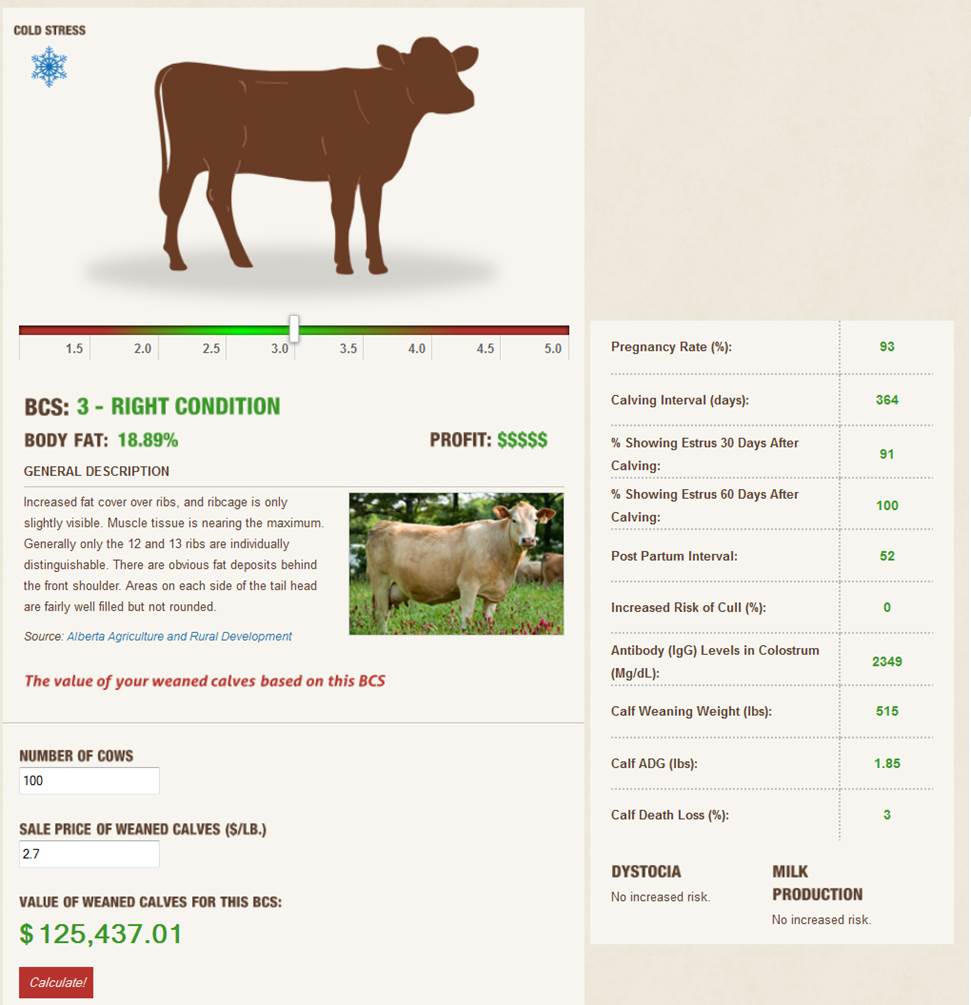
9) Based on 2017 calf prices, how much did last summer’s cows in ideal condition earn?

This article highlights the difference in value between a calf crop from a herd of cows in ideal condition versus a herd with some thin cows. Different scenarios were run using the online productivity tool and this fall’s calf prices. The scenarios can also help producers decide whether to segregate cows that need extra attention over the winter.

8) New video: what beef producers need to know about environmental footprint

The beef industry has a good story to tell when it comes to the environment. The industry’s environmental footprint is shrinking and recognition of the positive impacts of beef production are growing. But, as is true with all industries, there are opportunities for improvement. This short video featured producers striving to increase efficiency and reduce their environmental footprint, and may offer some tips others can use on their own operations.

7) A Canadian perspective on the red meat allergy

Earlier this year, popular media reported on a tick that can cause people to become allergic to red meat. We asked Shaun Dergousoff, PhD, an Agriculture Agri-Food Canada researcher who specializes in tick populations, for his perspective and whether Canadians are really at risk.

6) Another look at the costs and benefits of swath grazing

Well managed swath grazing has both economic and environmental benefits. This article reviews a Beef Science Cluster funded project that looked at greenhouse gas emissions from swath grazing vs. confined feeding.

5) 3 tips for swath and bale grazing

A summary of key points made during a webinar that gave both an Eastern and Western Canadian perspective on swath and bale grazing. It includes specific tips that can help producers manage winter grazing.

4) The BCRC is asking for more money from cattle producers. Here’s why.

With an increase in the Canadian Beef Cattle Check-Off being proposed, Bryan Thiessen, Chair of the BCRC, explained how additional funds directed towards research will be used. This article also outlines why the increase is being proposed now.

3) Drought management strategies

When most of Western Canada experienced severe drought this summer, we shared a list of resources to help producers manage their cattle and pastureland during this stressful time. Although most of the resources apply in the summer months, winter feeding strategies are included as well.

2) That’s gotta hurt

Pain control products are now more common and accessible. This article explains a survey conducted by researchers at the University of Calgary faculty of Veterinary Medicine. It looked at what producers consider to be painful procedures. It found that of the producers who started using pain control on their operation, none of them reverted back to performing procedures without it.

1) Copper deficiency takes heavy toll

Meet Garret Hill, a cow-calf producer from central Saskatchewan who faced the problem of declining conception rates. Garret couldn’t figure out what was wrong; his cattle had plenty of feed, water, and a mineral mix available to them.

It came down to copper deficiency. His water was high in sulfate and his grass was high in molybdenum, both of which bind copper and prevent it from being used by the animal. Garret’s story is a reminder of the value of testing water quality.

Click here to subscribe to the BCRC Blog and receive email notifications when new content is posted.

The sharing or reprinting of BCRC Blog articles is welcome and encouraged. Please provide acknowledgement to the Beef Cattle Research Council, list the website address, www.BeefResearch.ca, and let us know you chose to share the article by emailing us at info@beefresearch.ca.

We welcome your questions, comments and suggestions. Contact us directly or generate public discussion by posting your thoughts below.

Producers, Which Innovations do You Most Want to Learn About?

The Beef Cattle Research Council (BCRC) is looking for input on which topics to choose when planning presentations and workshops for Canadian beef producers. Please consider completing our short survey. It takes about 10 minutes.

Your feedback will help determine which topics will be presented during Bov-Innovation at the Canadian Beef Industry Conference in August 2017.

What is Bov-Innovation? Bov-Innovation is an extension event for producers held as part of the Canadian Beef Industry Conference (CBIC). Bov-Innovation features innovative, underutilized or emerging production practices that feedlot and cow-calf operators may want to consider implementing in their operations. The sessions are engaging and interactive. Participants are able discuss the recommendations with presenters and fellow producers, and take home additional resources.

The CBIC is a joint collaboration of the BCRC, Canada Beef, the Canadian Beef Breeds Council (CBBC) and the Canadian Cattlemen’s Association (CCA). The inaugural CBIC was held in 2016.

CBIC 2017 will be held August 15-17 at the BMO Centre in Calgary, Alberta.  Visit the CBIC website or follow the CBIC on Twitter or Facebook for updates.

Canadian Beef Industry Conference 2017
take_survey_small

Click here to subscribe to the BCRC Blog and receive email notifications when new content is posted.

The sharing or reprinting of BCRC Blog articles is welcome and encouraged. Please provide acknowledgement to the Beef Cattle Research Council, list the website address, www.BeefResearch.ca, and let us know you chose to share the article by emailing us at info@beefresearch.ca.

We welcome your questions, comments and suggestions. Contact us directly or generate public discussion by posting your thoughts below.

Top 10 Blog Posts of 2016

This past year we published 72 blog posts that offered production tips and decision tools, provided a science-based perspective on issues in the media, highlighted new beef, cattle and forage research projects and results, and announced other exciting initiatives. Of those, these were the top 10 most popular:

10) Announcing the Beef Researcher Mentorship Program 2016-17 participants

Our mentorship program provides researchers who study cattle, beef, genetics, feed or forage production an excellent opportunity to gain a better understanding of the Canadian beef industry. Of the many applicants this year, four participants from across Canada were chosen and paired with both an industry and producer mentor.

See if you recognize any of the participants or their mentors

9) Results of the Beef Research Priority Survey

We asked producers and other industry stakeholders across the country to rate the importance of various research issues. Over 500 respondents told us which research issues are of highest priority to the industry, which we will use to influence future research funding decisions.

8) Attention Researchers: BCRC opens call for Letters of Intent

BCRC now accepting LOIs

In anticipation of the third Beef Cattle Industry Science Cluster, which will enable several new research projects to be funded, the BCRC asked researchers to start sending in short proposals called letters of intent (LOIs). LOIs explain researchers’ ideas for projects or studies that have potential to achieve specific outcomes identified by the industry as high priority and most likely to advance the Canadian beef industry. Researchers interested in submitting a LOI have until January 13th.

cicer milk vetch 2

7) Let cattle do the seeding

Looking for an easy way to add some new forage varieties to pastures? Beef cows and yearlings can be passive seeders! By encouraging cows to consume mature forage seeds, they will inevitably shed some in the manure creating a place for seeds to germinate and grow.

Commercil herd B Rosom Apr 24 2011 016

6) Tips to improve calf health this calving season

One of our past webinars shared several tips on how to manage both cows and calves to prevent sickness in young calves and increase their survival rates.

5) Try this new calculator to determine when it pays to preg-check

results

Preg-checking may be more profitable some years than you realize. Know what your profits could be with our new calculator in these different scenarios: 1) preg-checking cows in the fall and culling immediately, 2) preg-checking in the fall and feeding open cows separately to market at a later date, or 3) not preg-checking. 

Screen Shot 2016-06-14 at 12.38.04 PM

4) Verified Beef Production Plus Program officially launched

With a growing demand for validation of sustainable production, the new national VBP+ program will help producers to validate their responsible production practices. The voluntary program includes training and auditing for animal care, biosecurity and environmental stewardship along with on-farm food safety practices within the cow-calf and feedlot sectors. The program will serve as a tool for Canadian beef producers to proactively demonstrate their commitment to responsible stewardship of both cattle and resources with consumers and retailers.

3) Pain control gaining popularity among beef producers

Russ Carter, Lacadena SK (Photo supplied by Tamara Carter)

As ongoing research develops new pain control drugs that are registered for use in cattle in Canada, and knowledge builds on the appropriate dosage, routes of administration and synergy between anesthetics and analgesics, more and more beef producers are adding them to their toolkits.

Meet the Carters, cow-calf producers from Saskatchewan who use pain control products prior to branding and castration. They not only see that it makes a difference in the comfort level in their calves, they also believe that pain control increases calf gains. 

2) The environmental hoofprint of Canada’s beef industry

New research funded by the Canadian Beef Cattle Check-off and Canada’s Beef Science Cluster shows that producing 1kg of beef in Canada now creates 15% less greenhouse gases than in 1981. The industry’s continued improvements in production practices and advancements in technologies improves productivity and efficiency while reducing its environmental footprint. 

1) Calf prices and retained ownership

alberta 500 600lb steer price cwt 2000 to 2016

This year saw a major drop in calf prices. This price correction caused producers to take a look at different marketing and feeding options. In this post, Brain Perillat, Manager and Senior Analyst at Canfax ran an economic scenario to help producers considering retained ownership this fall. https://www.beefresearch.ca/blog/calf-prices-and-retained-ownership/

Click here to subscribe to the BCRC Blog and receive email notifications when new content is posted.

The sharing or reprinting of BCRC Blog articles is welcome and encouraged. Please provide acknowledgement to the Beef Cattle Research Council, list the website address, www.BeefResearch.ca, and let us know you chose to share the article by emailing us at info@beefresearch.ca.

We welcome your questions, comments and suggestions. Contact us directly or generate public discussion by posting your thoughts below.

Bov-Innovation Workshop to Provide Beef Producers with a Unique Extension Experience

News Release
June 1, 2016

Calgary, AB – The Beef Cattle Research Council (BCRC) is pleased to help power a new extension event for producers, titled Bov-Innovation. Bov-Innovation will be held as part of the inaugural Canadian Beef Industry Conference, which will take place from August 9-11, 2016 at the Grey Eagle Resort and Casino in Calgary, Alberta.

“The BCRC has a great track record of sharing meaningful science-based information to Canada’s beef producers online and in print, and we are looking forward to the opportunity to partner on this in-person session,” explained Tim Oleksyn, a cow-calf producer based out of Shellbrook, SK and the Chair of BCRC. “Bov-Innovation will bring leading research and expertise to producers in a unique format that encourages producer participation,” Oleksyn added.

Canadian Beef Industry Conference

Bov-Innovation will feature innovative and emerging production practices that feedlot and cow-calf operators may want to consider implementing in their operations. The session format itself will be engaging and unlike mainstream producer events, with experts delivering information in a fast-paced lightning-round style. The audience will be able to choose between six topics presented during two concurrent sessions and participants will be able to discuss the recommendations with presenters and fellow producers. The BCRC will provide additional resources to producers on-site.

Bov-Innovation will take place on August 10 from 3:00pm to 6:00pm and include sessions lead by industry leaders with input from producers who are actively incorporating some of the featured practices on their own operations. Topics will include:

  • The economic benefits associated with preconditioning, as presented by Brenna Grant of Canfax Research Services, with Dr. Oliver Schunicht sharing his producer perspective on why he chooses to precondition.
  • Using cover crops to maximize soil health while providing forage for grazing cattle, as shared by Dr. Jill Clapperton of Rhizoterra.
  • Antimicrobial usage and resistance and effective prevention measures, as discussed by Dr. Cody Creelman of Veterinary Agri-Health Services.
  • The increasing challenge of sustainable internal parasite management in beef cattle, as presented by Dr. John Gilleard of the University of Calgary.
  • Pain management methods and techniques, as explained by Dr. John Campbell with Tamara Carter providing a producer perspective.
  • Demystifying genomic selection tools, as covered in a tag-team presentation by Dr. John Crowley of the Canadian Beef Breeds Council and Dr. Kim McLean, the provincial beef specialist with the Saskatchewan Ministry of Agriculture.

“There is so much value in collaborating with other stakeholders and beef industry partners who are organizing the first Canadian Beef Industry Conference. Bov-innovation will be just one important part of this comprehensive and worthwhile national event,” Oleksyn added.

This unique extension event is possible because of funding through the National-Check-Off and the Beef Science Cluster, and collaboration with other industry stakeholders through the National Beef Strategy and the organizing committee of the Canadian Beef Industry Conference. For more information, visit the Canadian Beef Industry Conference’s Website.

– 30 –

For further information, contact:
Tracy Herbert
Beef Extension Coordinator
Beef Cattle Research Council
306-850-5026 | herbertt@beefresearch.ca

Canadian Beef Industry Conference Drives Fresh Energy

A brand new national event built for everyone involved in beef

Canadian Beef Industry Conference

Learning, fun and moving the beef industry forward. These are three key elements of the inaugural Canadian Beef Industry Conference, slated for Aug 9 – 11 in Calgary at the Grey Eagle Resort and Casino.

The conference is a brand new, first-of-its-kind event for Canada designed to create a national meeting place for everyone involved in beef production, from the grass roots level through all parts of the supply chain.  It will help support the new National Beef Strategy. It will also support a new level of grass roots interaction and relationship building to drive progress based on shared interests.

Among a diverse range of topics and speakers, the conference features very practical, educational sessions for producers. A leading example is a session called “Bov-innovation,” which covers topics such as making informed decisions on pre-weaning management, how to improve forage production, how to strengthen internal parasite control programs and how to take advantage of genomic selection tools.

cbic2016cochairvirgillowe

“When I first heard about the idea for this conference and had the opportunity to get involved, I couldn’t have been more excited,” says Virgil Lowe, an Associate with Dentons Canada LLP and co-chair of the event. “This is something our industry has needed. It’s something we’ve been working toward for a long time. It’s about bringing together the many faces of our industry, from all sectors, and from across the country, to interact with each other and share ideas around our common interests. It will help us implement the National Beef Strategy and provide a platform to drive fresh energy and progress for our industry for many years to come.”

Teamwork and sharing

cbic2016cochairrobsmith

The concept for the conference emerged around the discussions for the National Beef Strategy, says Rob Smith, Canadian Angus Association Chief Executive Officer and the other co-chair of the conference.
“We realized that one of the things we need on an annual basis is a holistic conference that brings together all the links in our value chain. This is needed to communicate and promote the strategy but also in a much broader sense it is important to support the interaction across different sectors and parts of the country.”

The plan for a summer event in Calgary allows for inclusion around summer vacation and travel plans, says Smith. “It should be a fun and valuable time that people will find energizing and enjoyable.”

It’s not meant to be a typical industry business meeting, says Lowe. “It’s more of a coming together with something for everyone, as much about the social and interaction aspects as it is about the sessions. Everyone involved in every shape and form of beef production is encouraged to attend, from the ranchers to the retailers. It’s a real celebration of the diversity of our industry and how we can use our common interests as a strength to drive the opportunities ahead.”

Teamwork drives success

The conference is a joint collaboration of four organizations partnering in the event, the Beef Cattle Research Council (BCRC), Canada Beef, the Canadian Beef Breeds Council (CBBC) and the Canadian Cattlemen’s Association (CCA).

Picture12

The main conference agenda features top speakers on important issues and hot topics for the industry. Opening day keynote speaker is entrepreneur, consultant and former Dragon’s Den star Arlene Dickinson. The agenda will also include keynote speakers on each of the National Beef Strategy’s four pillars: connectivity, productivity, beef demand and competitiveness, along with educational presentations and interactive workshops on new developments, market and brand opportunities and production innovations.

Related events include meetings of the partners, their provincial affiliates, and various other beef industry groups, and the Cattlemen’s Young Leaders 2016 graduation and 2017 selections.

“The sessions, speakers and topics are all excellent – there is something for everyone depending on their interests,” says Smith. “There is a lot of opportunity for visiting, networking and enjoying different social events around the main sessions.”

Early bird registration rates are available until June 15 and hotel accommodations at a special conference rate are available until sold out. Full registration includes all public sessions, the opening night (Tuesday) reception and the Wednesday night banquet and entertainment, featuring the band Ain’t No Rodeo.

Picture1

Extra tickets are available for purchase for both of these evening events. Additional options available by separate ticket purchase include a pre-conference Monday tour hosted by Alberta Beef Producers, the Canadian Cattlemen’s Foundation Classic Golf Tournament on Tuesday, and a Thursday evening Heritage Park supper.

“There is so much to do and choose from,” says Smith. “It’s something you can bring the family for and enjoy a great week in Calgary.”

Speaking with a united voice

The potential benefits of the conference are huge for the industry, says Lowe. “They are really immeasurable. There is nothing that one part of the industry does that doesn’t affect the other parts and on 99 percent of the issues the interests are the same. Bringing everyone together allows us to build our common messages and common direction around those interests. The more people that are involved, the stronger our voice and the more our messages will be heard.”

“This is important for us so we’re not just preaching to the choir but also developing shared approaches to talk about what we’re doing to the people outside our industry, to communicate our experiences and value so we build the understanding and goodwill needed to keep doing what we love. This has never been more important to do than it is today. The conference provides an outstanding platform to help us develop ways to do that around a strong united vision for the future.”

Industry pride. Industry progress. The heart of Canadian beef. All will be on display with the concept of bringing everyone together, says Smith.

“The Canadian beef industry is among the most dynamic and diverse of its kind in the world. This poses challenges. But it’s also a major strength. Everyone from industry leaders to individual producers has an important role to play, to strengthen our industry and drive it forward. That’s what this conference is all about. We are looking forward to an outstanding event”

Sponsors and volunteers stepping up

In the cooperative spirit of the industry a number of major sponsors have stepped up to the plate to help make it happen, says Lowe. “We are extremely grateful to each of our sponsors, as well as to the large group of volunteers involved. They make this type of event possible and are critical to our ability to deliver this scope and caliber of conference to the participants.”

Visit www.canadianbeefindustryconference.com for more information and to register. Follow on Twitter @CDNBeefConf and Facebook /canadianbeefindustryconference for updates.

CBIC LOGO (RGB)

Click here to subscribe to the BCRC Blog and receive email notifications when new content is posted.

The sharing or reprinting of BCRC Blog articles is welcome and encouraged. Please provide acknowledgement to the Beef Cattle Research Council, list the website address, www.BeefResearch.ca, and let us know you chose to share the article by emailing us at info@beefresearch.ca.

We welcome your questions, comments and suggestions. Contact us directly or generate public discussion by posting your thoughts below.

Top 10 BCRC Blog Posts of 2015

This past year we published 68 blog posts that offered production tips, science-based perspectives on issues in the media, highlighted new beef, cattle and forage research projects and results, and announced other exciting initiatives. Of those, these were the top 10 most popular:

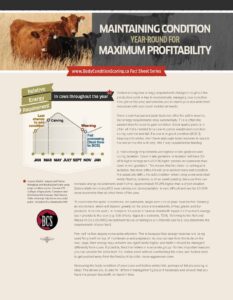
body_condition_yearround_profitability_beef_cattle_fact_sheet

10. New resources added to BodyConditionScoring.ca help cow-calf producers increase profits

A new feed cost calculator was added to give producers the ability to compare the costs of increasing the body condition of thin cattle using different feed sources. Three fact sheets were also added, which explain reproductive issues with over- and under-conditioned cows, developing a winter feeding program for under-conditioned cows and how to maintain condition year-round for maximum profitability.

Follow the link to see the fact sheets and to calculate costs with the feed sources available on your own operation.

Click to enlarge

9. Celebrate beef industry’s continual environmental improvements on Earth Day

Cattle producers continue to make improvements that reduce the environmental impact of beef production. A study currently underway and funded by the BCRC is examining changes in the amount (and types) of feed, land and water needed to produce a kilogram of beef compared to three decades ago.

8. New video: What beef producers need to know about pain control and prevention

We know that procedures such as branding, castration, and dehorning are painful, but what are the incentives and practical options for mitigating pain in cattle?

Watch this short video to find out how pain control and prevention options now available for beef cattle can have production benefits and can make processing easier, safer, and more efficient.

Canadian Beef Industry Conference - SaveTheDate2016

 7. Inaugural Canadian Beef industry Conference set for August 9-11, 2016

Several of Canada’s beef industry organizations have come together to create a one-of-a kind conference with keynote speakers, educational presentations, interactive demonstrations, as well as fun and entertainment.

Read the press release to find out more!

6. Consumer MisReports

beef-consumer-reports

During the summer, Consumer Reports released a “Beef Report” that raised questions about the quality and safety of beef, and beef production’s contribution to antibiotic resistance. Some of the information in it was misleading or simply not true.

We tackled some of the claims made in that report.

5.  Are ionophores a risk for antibiotic resistance?

Health Canada will phase out growth promotion claims for medically important antibiotics by December 2016.

This article explains why not including ionophores in the initiative is based on sound science.

Claudia

4. Announcing the Beef Researcher Mentorship Program 2015-2016 participants

The Beef Researcher Mentorship program allows researchers who study cattle, beef, genetics, feed or forage production to gain a better understanding of the Canadian beef industry. This year four participants from across Canada where chosen and paired with both an industry and producer mentor.

Follow the link to meet this year’s participants and their mentors.

Click to play video

3. New video: What beef producers need to know about antibiotic use and resistance

Antibiotic use and resistance was a popular topic in 2015. With so much news and information available, this short video was released to provide beef producers with the information they need to know.

Retail beef

2. These little piggies ate a quarter pounder a day

Consumer concerns about the use of hormones in beef production are rising. For example, it has been questioned whether hormone implants in beef cattle cause young girls to reach puberty sooner.

This article explains the science and why there is no need to be concerned.

1. Results of the Western Canadian Cow-Calf Survey: Production Benchmarks.

The Western Canadian Cow-Calf Survey was conducted over winter 2014-15. Our most popular blog post of the year break down the results and how these can be used as production benchmarks on your operation.

Any requests for 2016?

We’re working hard to make BeefResearch.ca interesting and useful to you and your operation, but we need to hear from you. Feedback helps us deliver the information cow-calf producers, feedlots, veterinarians, meat packers and other industry players across the country need to make informed decisions to profitably and responsibly produce top quality Canadian cattle and beef. Don’t hesitate to ask questions and make comments in the space below or email us at info@beefresearch.ca.

More on BeefResearch.ca

Remember there is more than just blog articles on BeefResearch.ca! Take a look at overviews and videos on all kinds of topics, or summaries of individual research activities. To raise your beef IQ, start by clicking one of these:

Click here to subscribe to the BCRC Blog and receive email notifications when new content is posted.

The sharing or reprinting of BCRC Blog articles is welcome and encouraged. Please provide acknowledgement to the Beef Cattle Research Council, list the website address, www.BeefResearch.ca, and let us know you chose to share the article by emailing us at info@beefresearch.ca.

We welcome your questions, comments and suggestions. Contact us directly or generate public discussion by posting your thoughts below.

Upcoming Events for you to Consider

Organizations across the country are continually hosting events to give you an inside look at important research and offer practical advice on how to implement new technologies, improve productivity, prevent a wreck or save costs. These events are also a good opportunity to discuss how our industry is facing opportunities and challenges, and meet leading experts and other progressive cattlemen. Registration for many events are little or no cost to producers.

Visit our Events Calendar often to

  • view upcoming field days, seminars, conferences and other events in your area,
  • find out about online webinars to listen in on a live presentation right from your computer or phone,
  • be reminded of nomination, survey or application deadlines
    , and
  • discover related career opportunities in the beef and forage sectors.

Take a look at what’s happening in the next few months.

Note that most provincial cattle associations will be holding district meetings this fall. Attending a fall meeting in your area is a great opportunity to hear industry updates and to have your voice heard. BCRC staff will present at some district meetings across the country.

Click here to subscribe to the BCRC Blog and receive email notifications when new content is posted.

The sharing or reprinting of this BCRC Blog article is welcome and encouraged. Please provide acknowledgement to the Beef Cattle Research Council, list the website address, www.BeefResearch.ca, and let us know you chose to share the article by emailing us at info@beefresearch.ca.

We welcome your questions, comments and suggestions. Contact us directly or generate public discussion by posting your thoughts

BeefResearch.ca Expands to a More Comprehensive Resource for Beef-Related Research Information

NEWS RELEASE
For immediate release

March 5, 2015

The Beef Cattle Research Council (BCRC) is pleased to announce another step toward enhanced knowledge dissemination and technology transfer in the Canadian beef industry.

The BCRC’s website, beefresearch.ca, now has the capability for other organizations that fund beef, cattle and forage-related research of interest to the Canadian beef industry to create and submit research summaries to the website.

“The BCRC has always worked hard to communicate the objectives and results of in-progress and completed research projects funded by the National Check-off and the Beef Cattle Industry Science Clusters,” said Andrea Brocklebank, Executive Director of the BCRC.

“Especially since launching BeefResearch.ca in August 2012, we’ve seen huge interest by producers and industry groups in our concise fact sheets, so in the collaborative spirit of the National Beef Research Strategy and the Science Clusters, we have built the capability for other organizations to develop and share similar fact sheets through the same channel.”

Like-minded organizations can acquire login information from the BCRC, then draft fact sheets using customizable templates and indicate where they should appear in the website’s navigation. Before being submitted, a fact sheet author must confirm that the lead researcher has reviewed and approved its content.

BCRC staff will moderate submissions to ensure that all posted fact sheets adequately summarize sound science that is valuable to the industry or pertinent to industry stakeholders. The system encourages fact sheets to acknowledge all of a project’s funders and prevents duplicate summaries by multiple authors.

“Sharing research results is important. The BCRC’s initiative to co-publish related research allows for greater distribution of results ensuring that targeted audiences are more likely to get up-to-date information,” said Rob Hand of the Alberta Crop Industry Development Fund Ltd. (ACIDF). “ACIDF plans to put the ALMA/ACIDF Livestock Feeding Initiative research results on the BCRC website.”

Staff at ACIDF and the Alberta Beef Producers (ABP) assisted the BCRC in the development of the system by testing it and offering user feedback. ABP and ACIDF fact sheets are among the first third party authored fact sheets to be posted on BeefResearch.ca.

– 30 –

For further information, contact:

Tracy Herbert
Beef Extension Coordinator
Beef Cattle Research Council
306-850-5026 | herbertt@beefresearch.ca

Download PDF version.

Click here to subscribe to the BCRC Blog and receive email notifications when new content is posted.

The sharing or reprinting of BCRC Blog articles is welcome and encouraged. Please provide acknowledgement to the Beef Cattle Research Council, list the website address, www.BeefResearch.ca, and let us know you chose to share the article by emailing us at info@beefresearch.ca.

We welcome your questions, comments and suggestions. Contact us directly or generate public discussion by posting your thoughts below.

BodyConditionScoring.ca Launches with new Tools to Help Cow-Calf Producers Boost Production and Profit

NEWS RELEASE

A new webpage offers a fresh look at the importance of monitoring the nutrition of beef cows and the role body condition plays in overall productivity and profit.

“The importance of maintaining cows’ fat cover at an optimal level is underrated,” said Karin Schmid of the Alberta Beef Producers. “Many producers don’t realize how much thin or over-fat cows hurt their bottom lines, and how easy and effective body condition scoring is when figuring out how to adjust rations and keep cows in the right condition.”

The webpage, bodyconditionscoring.ca, features an interactive tool which makes the value of maintaining cows at the right body condition abundantly clear in terms of reproductive performance, calf health, weaning weights and other important aspects of production. It also includes an engaging four minute video that shows examples of cows in various condition, and explains how to quickly and easily measure fat cover. The nutritional information available will help producers decide how to manage their rations once they have an accurate measure of their cows’ condition to get and keep their animals in the right condition.

The project is a collaborative effort between the Beef Cattle Research Council, Alberta Beef Producers, Farm and Food Care Saskatchewan, the University of Saskatchewan and the Saskatchewan Ministry of Agriculture. Funding was provided by Alberta’s Growing Forward 2 Livestock Welfare Delivery Agent Program. Growing Forward 2 is a federal-provincial-territorial government initiative to drive an innovative, competitive and profitable Canadian agriculture and agri-food sector.

The groups expect that the new, easily accessible and user-friendly resources will not only lead to improved bottom lines for cow-calf producers, but also prevent animal welfare concerns during cold winter months.

– 30 –

For further information, contact:

Tracy Herbert
Beef Extension Coordinator
Beef Cattle Research Council
306-850-5026 | herbertt@beefresearch.ca

Download PDF version.

Related: New resources added to BodyConditionScoring.ca help cow-calf producers increase profits (March 26, 2015)

Click here to subscribe to the BCRC Blog and receive email notifications when new content is posted.

The sharing or reprinting of BCRC Blog articles is welcome and encouraged. Please provide acknowledgement to the Beef Cattle Research Council, list the website address, www.BeefResearch.ca, and let us know you chose to share the article by emailing us at info@beefresearch.ca.

We welcome your questions, comments and suggestions. Contact us directly or generate public discussion by posting your thoughts below.

Upcoming Events and Deadlines

Organizations across the country are continually hosting events to give you an inside look at important research and offer practical advice on how to implement new technologies, improve productivity, prevent a wreck or save costs. These events are also a good opportunity to discuss how our industry is facing opportunities and challenges, and meet leading experts and other progressive cattlemen. Registration for many events are little or no cost to producers.

Visit our Events Calendar often to

  • view upcoming field days, seminars, conferences and other events in your area,
  • find out about online webinars to listen in on a live presentation right from your computer or phone,
  • be reminded of nomination, survey or application deadlines
    , and
  • discover related career opportunities in the beef and forage sectors.

Take a look at what’s happening in the next few months.

Click here to subscribe to the BCRC Blog and receive email notifications when new content is posted.

The sharing or reprinting of this BCRC Blog article is welcome and encouraged. Please provide acknowledgement to the Beef Cattle Research Council, list the website address, www.BeefResearch.ca, and let us know you chose to share the article by emailing us at info@beefresearch.ca.

We welcome your questions, comments and suggestions. Contact us directly or generate public discussion by posting your thoughts

Creating a Forage Industry Chair to Maintain Research Expertise

Click to open fact sheet

Cow-calf producers in Western Canada have widely adopted extended fall and/winter grazing practices using both annual and perennial forages. However, competition with high value annual crops has resulted in higher land prices and decreased land base for forage production in many beef producing areas. Therefore, having expertise in integration of land, plant and animal management is critical to increasing the productivity of both the forage land base and cow herd.

Work funded by the National Check-off and Canada’s Beef Science Cluster is supporting the establishment of a permanent Western Canada Forage Industry Chair at the University of Manitoba. The project will also provide leadership and technology transfer for several projects focused on the evaluation and utilization of novel annual and perennial forages for late season and overwinter grazing.

To learn more, see the BCRC fact sheet.

Click here to subscribe to the BCRC Blog and receive email notifications when new content is posted.

The sharing or reprinting of this BCRC Blog article is welcome and encouraged. Please provide acknowledgement to the Beef Cattle Research Council, list the website address, www.BeefResearch.ca, and let us know you chose to share the article by emailing us at info@beefresearch.ca.

We welcome your questions, comments and suggestions. Contact us directly or generate public discussion by posting your thoughts below.

Where to Find Events and Deadlines

Organizations across the country are continually hosting events to give you an inside look at important research and offer practical advice on how to implement new technologies, improve productivity, prevent a wreck or save costs. These events are also a good opportunity to discuss how our industry is facing opportunities and challenges, and meet leading experts and other progressive cattlemen. Registration for many events are little or no cost to producers.

Visit our Events Calendar often to

  • view upcoming field days, seminars, conferences and other events in your area,
  • find out about online webinars to listen in on a live presentation right from your computer or phone,
  • be reminded of nomination, survey or application deadlines, and
  • discover related career opportunities in the beef and forage sectors.

Click here to subscribe to the BCRC Blog and receive email notifications when new content is posted.

The sharing or reprinting of this BCRC Blog article is welcome and encouraged. Please provide acknowledgement to the Beef Cattle Research Council, list the website address, www.BeefResearch.ca, and let us know you chose to share the article by emailing us at info@beefresearch.ca.

We welcome your questions, comments and suggestions. Contact us directly or generate public discussion by posting your thoughts

2013: Top 10 BCRC Blog Articles

Of the 85 articles posted on the BCRC Blog in 2013 that offer production tips, add science-based perspective to issues and misconceptions in the media affecting cattlemen, and announce new beef, cattle and forage research results, these were the Top 10 most popular.  Any surprises?

10. Retained Ownership and Feeder Basis

Guest Post by Brian Perillat, Canfax Manager/Senior Analyst
October 10, 2013

Although calf and feeder prices have been quite strong so far this fall, generally $5-$15/cwt stronger than a year ago, a bullish tone in the cattle futures markets and a bearish tone in the feed market has producers looking at the opportunity to background or retain ownership of their calves.

With any venture of feeding calves, whether they are bought or raised, the potential rewards must be weighed against the risks, while keeping in mind that strategies exist to reduce overall risk exposure.  Continue reading…

9. The future of beef research in Canada

November 4, 2013

Telling the future by looking at the past… is like driving a car by looking in the rear-view mirror Herb Brody…  but history helps illuminate the present. Shortly after Confederation, agriculture became a nation-building tool to settle the west and prevent US expansion. Agriculture provided freight for Canada’s railroads, fed the urban population, and supplied millers, processors and exporters. Canada’s Experimental Farms Stations Act of 1886 supported productivity-boosting research. This provided even more freight, food, and economic spin-offs. Canada’s farm population declined as technology and mechanization reduced the need for labor, and an expanding economy produced new jobs in other industries. When Canada’s first agricultural census was completed in in 1931, 31.7% of Canada’s population lived on farms.  Continue reading…

8. Try these weaning techniques for more productive calves this fall

September 24, 2013

It won’t be long before it’s time to wean calves so that cows can head into winter in good body condition.  The abrupt separation of calves from their dams is the most common approach to weaning, but it’s also the most stressful, and calves that experience a lot of stress underperform.

It’s easy to see why weaning is stressful on calves; sudden deprivation of milk and social contact with mothers, being handled for vaccinations, changes to feed and water sources, and transportation to a different environment with unfamiliar pen mates is a lot for young animals to cope with. The stress calves experience through weaning depresses their immune systems, making freshly weaned calves the most susceptible to bovine respiratory disease (BRD) infections. Stressed calves also have lower feed intakes. Listening to their bawling, seeing them pace in their pens and dealing with sick calves is no doubt stressful on producers too.  Continue reading and watch videos…

7. Trends in consumer perceptions about beef

November 28, 2013

This Country Called Agriculture, a television show focused on agribusiness topics in Canada, recently aired an episode focused on trends in consumer perceptions about beef.  Host Rob Eirich interviewed BCRC’s Science Director Dr. Reynold Bergen on a number of issues related to the production and food safety of Canadian beef.

The first of four segments responds to common perceptions about the food safety and nutrition of beef, and begins a discussion about antibiotic use in cattle. Continue reading and watch the episode…

6. Mentorship opportunities for beef researchers

December 2, 2013

Engaging researchers who study cattle, beef, genetics, feed or forage production with the Canadian beef cattle industry is mutually beneficial; it allows researchers to be better informed of industry needs and more likely to share their findings with a practical, solution-based focus. Facilitating and encouraging their attendance to industry events and networking with industry professionals, especially for new beef researchers from non-agriculture backgrounds, is extremely valuable. The following two programs offer just that.  Continue reading…

5. Using new ideas and technology in the beef industry: video

December 11, 2013

Innovative ideas and technologies that can be used by beef producers are coming out all the time. Research is key to driving competitiveness so governments and industry groups make significant investments to continually find better and more efficient methods of producing high quality beef and cattle.

But to realize the benefits of those research efforts, producers and other industry players must be aware and take advantage of the new knowledge and tools that make sense for their operations. Extension and technology transfer services are critically important. Being informed and adopting innovation improves production efficiencies and beef demand, helping to make individual farms and the industry as a whole more profitable.  Continue reading and watch video…

4. Q&A on conventional production of Canadian beef

September 26, 2013

Do growth promoting, antimicrobial or other veterinary drugs affect the food safety of Canadian beef?  Veterinary drugs are regulated by the Food and Drugs Act and Regulations. All veterinary drugs go through a Health Canada approval process before they are licensed for use.  The Health Canada Veterinary Drug Directorate (VDD) evaluates and monitors the safety, quality and effectiveness, and sets standards for the use of veterinary drugs to ensure that, when used according to label directions, they are safe for both animals and humans.  Continue reading…

3. Denmark shows impact of banning growth promoting antimicrobial use in cattle

November 14, 2013

Antimicrobial resistance has become a highly charged issue.  Headlines appear in the news on a regular basis suggesting that antibiotics are becoming less effective in humans and farmers are to blame.

Some concerns have been raised that antimicrobial use in livestock leads to antimicrobial resistance and that some of the products used in food animals are closely related to antimicrobials that are important in human health. It’s also been questioned whether antimicrobial resistance can be transferred among bacteria, which may reduce effectiveness of drugs used in human medicine.  Continue reading…

2. Explaining Growth Promotants Used in Feedlot Cattle

January 14, 2013

Feed efficiency in cattle can make or break profitability in the feeding sector, and has environmental implications. The costs of buying a calf and the feed needed to finish it are the two largest variable expenses facing the beef cattle feeding sector. Feed costs are higher than ever because of poor growing conditions in major grain producing countries, because of the use of feed grains in ethanol production, and because of increasing competition of land for crop production versus urban development. Continue reading…

1. Bigger is not always better: finding the right sized cow

Guest post by Karin Schmid, Beef Production Specialist with the Alberta Beef Producers
November 22, 2013

Marketing cows because they are open, calved late, or their conformation is breaking down are easy decisions.  Marketing cows or retaining heifers based on productive efficiency definitely requires more thought.

Biological efficiency is not always the same as economic efficiency.  In a cattle production system, efficiency is often a combination of those two measures.  How we optimize efficiency will depend on:

  • the genetic potential of the cowherd,
  • the environment in which the cattle are raised, and
  • the marketing strategy utilized by the producer.  Continue reading…

Any requests for 2014?

We’re working hard to make BeefResearch.ca interesting and useful to you and your operation, but we need to hear from you. Feedback helps us deliver the information cow-calf producers, feedlots, veterinarians, meat packers and other industry players across the country need to make informed decisions to profitably and responsibly produce top quality Canadian cattle and beef. Don’t hesitate to ask questions and make comments in the box below or email us at info@beefresearch.ca.

More on BeefResearch.ca

Remember there is more than just blog articles on BeefResearch.ca!  Take a look at overviews and videos on all kinds of topics, or summaries of individual research activities. To raise your beef IQ, start by clicking one of these:

Related

Top 5’s on BeefResearch.ca
BCRC Blog | August 8, 2013

Click here to subscribe to the BCRC Blog and receive email notifications when new content is posted.

The sharing or reprinting of this BCRC Blog article is welcome and encouraged. Please provide acknowledgement to the Beef Cattle Research Council, list the website address, www.BeefResearch.ca, and let us know you chose to share the article by emailing us at info@beefresearch.ca.

We welcome your questions, comments and suggestions. Contact us directly or generate public discussion by posting your thoughts below.

Using New Ideas and Technology in the Beef Industry: Video

Innovative ideas and technologies that can be used by beef producers are coming out all the time. Research is key to driving competitiveness so governments and industry groups make significant investments to continually find better and more efficient methods of producing high quality beef and cattle.

But to realize the benefits of those research efforts, producers and other industry players must be aware and take advantage of the new knowledge and tools that make sense for their operations. Extension and technology transfer services are critically important. Being informed and adopting innovation improves production efficiencies and beef demand, helping to make individual farms and the industry as a whole more profitable.

In this episode of the Beef Research School, we talk to producers from across Canada about why they think it’s important to keep up to speed with the latest in beef research. They share their favorite sources of information, and how they make informed decisions that benefit their herds and land.

See the video here

That’s a wrap on this season of the Beef Research School.  Did you miss any of the 30 episodes?  Find them all at beefresearchschool.com. More information on the Beef Research School project.

Click here to subscribe to the BCRC Blog and receive email notifications when new content is posted.

The sharing or reprinting of this BCRC Blog article is welcome and encouraged. Please provide acknowledgement to the Beef Cattle Research Council, list the website address, www.BeefResearch.ca, and let us know you chose to share the article by emailing us at info@beefresearch.ca.

We welcome your questions, comments and suggestions. Contact us directly or generate public discussion by posting your thoughts below.

Find Important Events and Deadlines

Organizations across the country are continually hosting events to give you an inside look at important research and offer practical advice on how to implement new technologies, improve productivity, prevent a wreck or save costs.  These events are also a good opportunity to discuss how our industry is facing opportunities and challenges, and meet leading experts and other progressive cattlemen. Registration for many events are for little or no cost to producers.

Visit our Events Calendar often to

  • view upcoming field days, seminars and conferences in your area,
  • be reminded of nomination, survey or application deadlines,
  • discover related career opportunities in the beef and forage sectors, and
  • find out about online webinars where you can listen in on a live presentation right from your computer or phone.

Note that events are colour-coded by geography:

  • BC: blue
  • AB: yellow
  • SK: green
  • MB: orange
  • ON: purple
  • Maritimes: red
  • Online: with blue text

To post an event to the BeefResearch.ca calendar of events, click here.
Click here to subscribe to the BCRC Blog and receive email notifications when new content is posted.

The sharing or reprinting of BCRC Blog articles is welcome and encouraged. Please provide acknowledgement to the Beef Cattle Research Council, list the website address, www.BeefResearch.ca, and let us know you chose to share the article by emailing us at info@beefresearch.ca.

We welcome your questions, comments and suggestions. Contact us directly at info@beefresearch.ca or generate public discussion by posting your thoughts

The Future of Beef Research in Canada

This article written by Dr. Reynold Bergen, BCRC Science Director, originally appeared in the November 2013 issue of Beef in BC magazine and is reprinted with permission.

Telling the future by looking at the past… is like driving a car by looking in the rear-view mirror Herb Brody…  but history helps illuminate the present. Shortly after Confederation, agriculture became a nation-building tool to settle the west and prevent US expansion. Agriculture provided freight for Canada’s railroads, fed the urban population, and supplied millers, processors and exporters. Canada’s Experimental Farms Stations Act of 1886 supported productivity-boosting research. This provided even more freight, food, and economic spin-offs. Canada’s farm population declined as technology and mechanization reduced the need for labor, and an expanding economy produced new jobs in other industries. When Canada’s first agricultural census was completed in in 1931, 31.7% of Canada’s population lived on farms. By 2006, 2.2% of Canada’s population lived on farms. Agricultural productivity continues to increase, but other economic sectors have grown even faster. Last year, Canada’s beef industry and economic spin-offs contributed $32 billion to Canada’s economy, about 1.7% of Canada’s $1.8 trillion gross domestic product.

Governments need to cut deficits while supporting health, education and other programs that Canadians demand. Very few Canadian voters are beef producers, and the beef industry is a relatively small proportion of Canada’s economy. Maintaining public support for applied beef research may be challenging.

The future is made of the same stuff as the present Simone Weil…  In a competitive global beef industry, standing still is falling behind. Canada’s beef industry will need innovations that improve production efficiencies to keep beef competitive with pork, poultry, and foreign beef in both domestic and export markets. We will need beef quality and food safety research that supports consumer confidence and demand for Canadian beef.

The only thing we know about the future is that it is going to be differentPeter Drucker…  Research can do more than find ways to reduce production costs and improve product value. Research can also inform effective, science-based regulation (e.g. federal animal transport regulations), generate fact-based consumer information (e.g. nutritional value of beef), and validate the environmental, animal welfare, food safety, and product quality attributes of Canada’s beef industry. Research into issues that concern the general public was once viewed as the government’s responsibility. The public’s questions have now become the industry’s concerns, and we need to make sure we have the right answers.

The trouble with the future is that is usually arrives before we’re ready for itArnold H. Glasow…  Public research investments are increasingly guided by industry investments. Lack of industry investment is used to justify cutting or redirecting public research and extension programs. The University of Saskatchewan has Canada’s only strong, comprehensive forage, cattle and beef research program. Most universities have shifted towards narrowly-focused animal welfare, genomics, or environmental research. This attracts public funding for today’s hot topics, and may be less costly than production research. But it compromises the education of tomorrow’s researchers. Many of today’s animal science graduates are from an urban or non-Canadian background. Their outside perspectives are good, and their enthusiasm and sincere desire to contribute to the beef industry are invaluable. But these promising new researchers need opportunities to learn about Canada’s beef industry. The Cattlemen’s Young Leaders mentorship program is providing some up-and-coming researchers with this exposure.

The future, according to some scientists, will be exactly like the past, only far more expensive John Sladek…  Cattle producers support research through provincial and National Check-Offs (NCO). Provincial cattle associations decide how their NCO dollar is invested. In 2012, an average of 15 cents went to research (Beef Cattle Research Council; BCRC), 70 cents went to marketing (Canada Beef Inc.), and 13 cents went to provincial initiatives. But a declining Canadian beef herd and inflation have reduced the number of NCO dollars as the cost of research is increasing. Industry is expected to fund a larger share of both applied and public-good research projects, and industry investments are often required before a university or government will create or fill new research jobs or facilities.

Check-off and public funds support research that doesn’t interest for-profit companies. Private research is important, but it doesn’t typically fund research that won’t produce a saleable product (e.g. extending the grazing season to lower winter feeding costs). Or research to strengthen the industry in general, but no one in particular (e.g. animal welfare, environment, food safety and antimicrobial resistance). Public and industry check-off funding supports this industry-good research. Even in 2007, when 550 pound calves were selling for under $600, less than one fifth of one percent of the sale value of their animals went to support Canada’s national marketing and research programs.

The future is here. It’s just not widely distributed yetWilliam Gibson…  Pressures imposed by decreasing government support for research and declining check-offs will lead funders to be more strategic in their research investments. In the 2009-13 Beef Science Cluster, the BCRC, Alberta Beef Producers (ABP) and Agriculture and Agri-Food Canada (AAFC) pooled their research funds ($85 government:$15 industry), and invested them in 32 industry-selected projects with specific research and technology transfer outcomes. In early 2012, the Beef Value Chain Roundtable commissioned a National Beef Research Strategy. The strategy showed how improving funder alignment could help avoid over-funding of “hot” topics (e.g. omega-3 beef), and ensure adequate funding for less exciting but critical research (e.g. forage breeding). The strategy also lists specific priority outcomes that Canada’s beef industry wants to achieve over the next 3, 5 and 10 years. These outcomes form the basis of the research and extension activities supported under the 2013-18 Beef Science Cluster. In addition to BCRC, ABP and AAFC, the new cluster includes industry investments from Alberta Cattle Feeders Association, Ontario Cattlemen’s Association, Manitoba Beef Producers, and the Quebec Beef Producers Federation ($75 government:$25 industry). The BCRC is developing a simple National Beef Inventory to help coordinate research funding, and to assess how the National Research Strategy’s priority research outcomes are being supported by industry and government research funders.

To learn more about the Beef Science Cluster and the research funded through the National Check-Off, please visit www.beefresearch.ca.

Click here to subscribe to the BCRC Blog and receive email notifications when new content is posted.

The sharing or reprinting of BCRC Blog articles is welcome and encouraged, however this article requires permission of the original publisher.

We welcome your questions, comments and suggestions. Contact us directly at info@beefresearch.ca or generate public discussion by posting your thoughts below.

Top 5’s on BeefResearch.ca

Today the Beef Cattle Research Council (BCRC) is celebrating one year since the launch of BeefResearch.ca!

We are thrilled to report that over the past year, traffic to the website has continually increased, new subscribers regularly sign up for the blog, and communities of beef research enthusiast are growing on Twitter, Facebook and YouTube. Cattle producers are demonstrating that they are eager to educate themselves about research and innovation.

Since launching the website, we’ve posted 71 blog articles and numerous research topic overviews, technical fact sheets, videos and more. Here’s what our website audience has been most interested in, based on the highest number of views:

Top 5 Blog Posts

  1. Explaining growth promotants used in feedlot cattle (January 14, 2013)
  2. Researching healthy fats in beef: CLA and Omega 3 (December 5, 2012)
  3. EPDs: What do all those numbers mean? (February 25, 2013)
  4. Ractopamine angst (April 8, 2013)
  5. E.coli O157:H7: an industry research priority (October 5, 2012)
  6. Tips for successful extended grazing to reduce winter feeding costs (December 10, 2012)

Top 5 Research Topics (general overviews)

  1. Optimizing Feedlot Feed Efficiency
  2. Carcass Grading
  3. Dark-cutting Beef
  4. Bovine Respiratory Disease
  5. Environmental Footprint of Beef Production

Top 5 Fact Sheets (individual research project summaries)

  1. Preventing Shipping Fever Pneumonia in Calves (Research completed in 2006)
  2. Testing for Beef Tenderness (Research completed in 2006)
  3. Can Composting Destroy BSE Prions? (Research completed in 2013)
  4. Forage and Seed Mixtures for Different Regions of Canada (Research in progress)
  5. E-Beam Treatment to Improve Beef Safety (Research completed in 2013)

Top 5 Videos

  1. Cattle Transport (8:05)
  2. Why is Beef Research so Important to Cattle Producers? (10:30)
  3. Using Residual Feed Intake (RFI) to Select for Feed Efficiency (5:55)
  4. Antimicrobial Resistance (Part 1 of 3) (6:01)
  5. Properly Diagnosing Lameness in Cattle (7:12)

#1 Most Visited Webpage on BeefResearch.ca

  • Events Calendar

We keep an eye on popular pages to give us an idea of what our readers are most interested in. That knowledge helps to inform the types of new content we produce for the website.

We also produce new content based on your questions and comments, so keep them coming!

Tell us…

  • What kind of information do you look for?
  • How do you want information delivered?
  • What helps you decide whether or not to try something new or different?

Wondering what to expect in the coming year? In addition to many more new topic overviews, fact sheets, blog articles and videos, BeefResearch.ca will also be expanded to include fact sheets on research funded by other organizations, and launch a series of live webinars.

The BCRC’s expanded role in knowledge dissemination and technology transfer within the Canadian beef cattle industry is possible through support from the Beef Cattle Industry Science Cluster. The BeefResearch.ca website is a key part of the long-term initiative.

Click here to subscribe to the BCRC Blog and receive email notifications when new content is posted.

The sharing or reprinting of BCRC Blog articles is welcome and encouraged. Please provide acknowledgement to the Beef Cattle Research Council and list the website address, www.BeefResearch.ca.

We welcome your questions, comments and suggestions. Contact us directly at info@beefresearch.ca or generate public discussion by posting your thoughts below.

Stay connected by following us on Twitter @BeefResearch, liking us on Facebook, and subscribing to our YouTube Channel.

WEBINAR May 22: Benefits of Beef Research

Join us online Wednesday, May 22, 2013 at 7:00pm MT for a free webinar on the benefits of beef research for cattle producers.

You’ll hear from the Beef Cattle Research Council’s (BCRC) Science Director, Dr. Reynold Bergen, and Beef Extension Coordinator, Tracy Sakatch.  Dr. Bergen will explain the BCRC’s role in reaching the industry’s priority research objectives, and the value of results from various research projects funded through the BCRC. Tracy will discuss BCRC’s relatively new knowledge and technology transfer initiative. There will also be an opportunity for you to ask questions.

Updated May 23, 2013: Missed the webinar?  Watch it now.

This webinar was presented by the Alberta Beef Producers.

New Video Series Disseminates Valuable Research Information to Beef Cattle Producers

NEWS RELEASE
For immediate release

Calgary, AB – Through a partnership with RealAgriculture.com, the Beef Cattle Research Council (BCRC) today launched a new online learning resource called Beef Research School for the benefit of Canadian beef cattle producers.  The School, a series of approximately 30 videos, will encourage producers to utilize research-supported knowledge and technologies, which can positively impact their herds, land and bottom lines, and support the competitiveness and sustainability of the industry.

Videos will feature interviews with researchers, veterinarians and other industry experts from across Canada on the latest research knowledge and technology, as well as progressive producers and feedlots that put it into practical use on their operations. Each segment will run approximately 6-10 minutes.

“Producers have demonstrated that they are keen to learn and will quickly adopt new research-supported ideas when it makes sense for their operation,” said Matt Bowman, Chair of the BCRC and a producer from Thornloe, Ontario.  “Given the range of research topics of interest to producers, it can be difficult for them to stay caught up on publications or attend numerous seminars and field days, so the videos will be an engaging, convenient way to learn about the latest innovations.”

Topics presented by the videos will include research knowledge related to animal health and welfare, feeds, food safety, beef quality, genetics and environmental stewardship.  The series will also discuss the importance and value of research in the Canadian beef cattle industry, showcase a research centre and highlight extension resources available across the country.  Videos in the School will continue to be filmed and distributed through to Summer 2013.

The Beef Research School can be found online at BeefResearchSchool.com or through the BCRC’s new extension website at BeefResearch.ca.

The School, supported in part by the Alberta Livestock and Meat Agency Ltd. (ALMA) and the Agricultural Demonstration of Practices and Technologies (ADOPT) initiative under the Canada-Saskatchewan Growing Forward bi-lateral agreement, will be an important tool in the BCRC’s long-term strategy to improve technology transfer and knowledge dissemination within the Canadian beef cattle industry.  The strategy is part of Agriculture and Agri-Food Canada’s Beef Cattle Industry Science Cluster.

The BCRC is Canada’s industry-led funding agency for beef research.  The BCRC is funded through a portion of the producer-paid national levy which leverages government research funding, and is led by a committee of beef producers from across the country.  The BCRC’s mandate is to determine research and development priorities for the Canadian beef cattle industry and to administer national check-off funds allocated to research.  It operates as a division of the Canadian Cattlemen’s Association.

– 30 –

The sharing or reprinting of BCRC Blog articles is welcome and encouraged. Please provide acknowledgement to the Beef Cattle Research Council and list the website address, www.BeefResearch.ca.

We welcome your questions, comments and suggestions.  Contact us directly at info@beefresearch.ca or generate public discussion by posting your thoughts below.  Stay connected by following us on Twitter @BeefResearch, liking us on Facebook, and subscribing to our YouTube Channel.