Make informed decisions for your operation with information delivered right to your inbox.
Get the latest tools, innovations and science-based information for the Canadian beef industry, including seasonal production considerations and economic analyses.
Stay up to date with the latest news, updates and information from the Beef Cattle Research Council.
Practical Approaches for Managing Stock Water - BCRC Webinar Recap
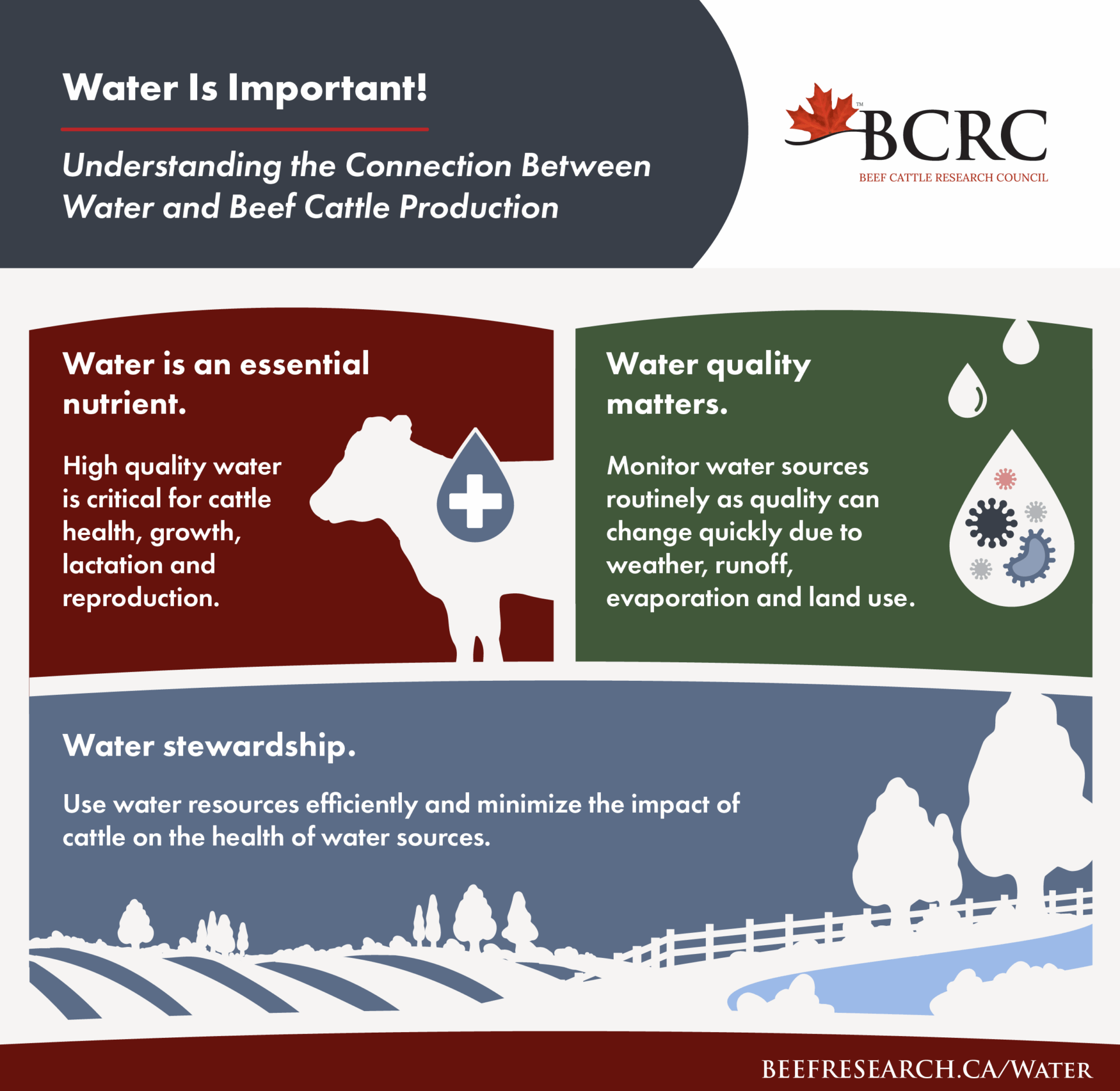
Water is an essential nutrient for beef cattle, and high-quality water is critical for maintaining animal health and performance. Poor-quality water can contribute to various health and production problems, including reduced reproductive efficiency, poor weight gain, increased risk of disease and even death.
In the Beef Cattle Research Council webinar “Practical Approaches for Managing Stock Water,” Dr. Cheryl Waldner with the Western College of Veterinary Medicine and Karla Hicks of Bluestone Stock Farms discussed their experiences with water management for beef cattle and shared practical, on-farm solutions for managing water quality.
How To Assess Water Quality
Dr. Waldner began the webinar by discussing how to assess water quality. She emphasizes that visual assessment is not a reliable method, as water that appears clean may have issues that are not apparent to the naked eye. Sending water samples to a laboratory for testing is the best way to determine quality.
If specific tests are required, contact a testing lab to ensure proper procedures are followed.
Initial water screening using an electrical conductivity meter can help producers decide whether further lab testing is needed.
Electrical Conductivity (EC) Meter Guidelines:
The higher the electrical conductivity is, the higher the total dissolved solids (TDS) in the water.
TDS = concentration of inorganic salts in the water.
EC values above 2,000 should be sent to a laboratory to confirm levels.
How Poor-Quality Water Can Affect Your Herd
Common problems that can occur when beef cattle are consuming poor-quality water include:
Blue-Green Algae Toxicity
Toxins impact the liver and nervous system
Can result in sudden death
Run-off increases the risk of blue-green algae
To reduce risk of promoting bacterial growth, pump water to trough, aerate and treat with copper sulfate
Nitrate and Nitrite Toxicity
Causes respiratory distress, abortions and sudden death
Typically caused by fertilizer run-off into shallow wells and surface water
Risk comes from combined intake from both feed and water, not just one source alone
Can lead to human health concerns
High Water Sulfates
Dugouts can contain high levels of sulphate
High levels can result in polioencephalomalacia (polio)
Greater risk of illness in cattle when weather conditions are hot, leading to concentration of sulphates in surface water sources due to evaporation
Don’t Overlook the Trough: Tips for Better Quality Water
Keeping water troughs clean is an obvious, but sometimes overlooked, factor in ensuring cattle have access to fresh water. Dr. Waldner and Karla both shared beneficial management practices for keeping troughs clean.
Use a scrub brush to remove dirt and debris.
Get as much debris out as possible.
Use the appropriate concentration of bleach to clean. (Apple cider vinegar is an alternative cleaning agent.)
Let it dry in the sunshine before refilling.
Regularly clean troughs so debris does not build up.
Copper Deficiency in Beef Cattle
Water that is high in sulphates, which is a major cause of poor-quality water, can lead to secondary copper deficiency. Sulfur works with molybdenum to reduce copper absorption and can also directly tie up copper and selenium, making these important minerals less available to the animal.
Signs of Copper Deficiency in Cattle:
Decreased reproductive performance
Impaired immune system
Loss of colour in coat
Unthrifty (not thriving normally) or stunted growth
Lameness
What Can Beef Producers Do to Prevent Copper Deficiency:
Weather patterns vary across Canada, with conditions often particularly variable in regions such as the Palliser Triangle and Missouri Coteau. This creates challenges for Karla and her family, including navigating drought, low-quality water and forage, inconsistent weather, pests and maintaining herd health.
Through trial and error, Karla and her family have adjusted water management strategies and practices to keep their herd healthy and profitable. Here are a few practices that maintain high-quality water at Bluestone Stock Farms:
Grazing plans built around water management plans
Strategic dugouts in every corner of the grazing system ensures cattle always have access to fresh water
Continuously considering possible future risks and mitigation strategies
Improving above ground water systems where underground water is limited or not available
Stock Water Quality Matters
The quality of water cattle consume directly impacts their health and well-being, which can play a critical role in a beef producer’s bottom line. Testing water quality, keeping watering systems clean, monitoring cattle health and having a strategic plan in place are simple steps that can help keep cattle healthy, productive and profitable.
Sharing or reprinting BCRC posts is welcome and encouraged. Please credit the Beef Cattle Research Council, provide the website address, www.BeefResearch.ca, and let us know you have chosen to share the article by emailing us at info@beefresearch.ca.
The BCRC is funded by a portion of the Canadian Beef Cattle Check-Off.
Your questions, comments and suggestions are welcome. Contact us directly or spark a public discussion by posting your thoughts below.