Is Something Worming Its Way Into Your Profits? 🎙️
CLICK THE PLAY BUTTON TO LISTEN TO THIS POST:
Listen to more episodes on BeefResearch.ca, Spotify, Apple Podcasts, Amazon Music or Podbean.
This article written by Dr. Reynold Bergen, BCRC Science Director, originally appeared in the September 2026 issue of Canadian Cattlemen magazine and is reprinted on BeefResearch.ca with permission of the publisher.
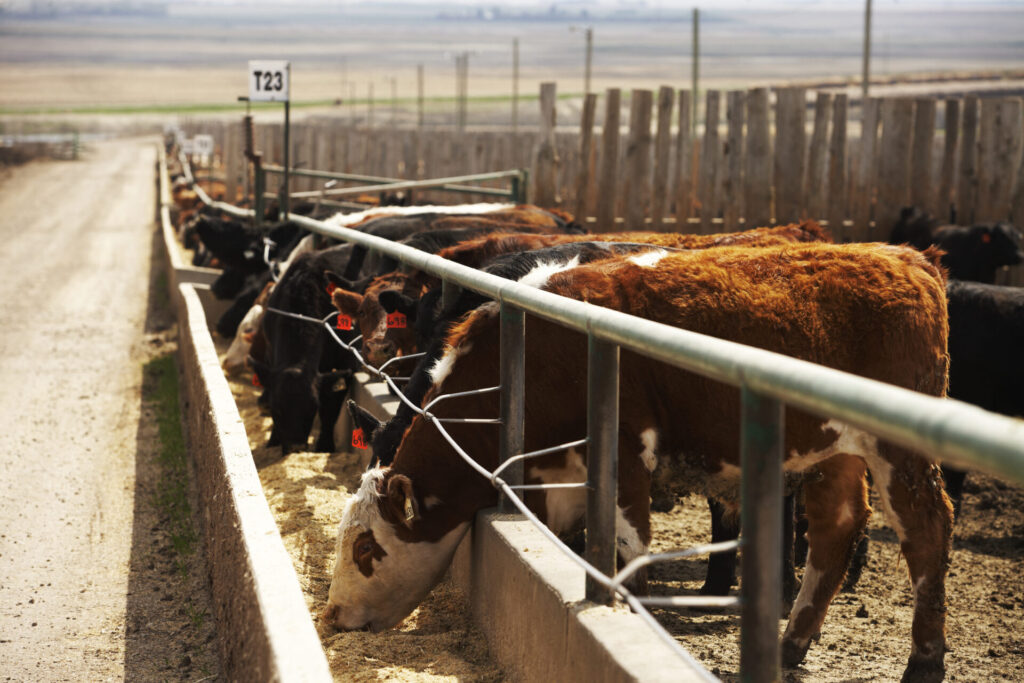
Most parts of Canada have seen much better forage growing conditions this year. Chances are, you spent a good deal of time and energy this past summer managing, growing and harvesting grass, hay or silage that you’ll spend all winter feeding to your cows. If your herd has worms, flukes, coccidia or other internal parasites, you’re feeding them, too. Each mouthful of grass or feed your cows graze or eat is shared with the parasites they’re carrying. The nutrients those parasites use come at the expense of your cows. The bigger the parasite load, the more nutrition they steal.
Internal parasites shed their eggs in the animal’s feces. The eggs hatch in the manure pat, move onto the grass, are consumed by other animals, develop into adults inside the digestive tract, produce more eggs, and the cycle continues. Parasite larvae survive much better in the moisture and warm weather that produce good forage yields.
Drought, cold and good grazing management all help to control internal parasites but they don’t entirely eliminate them. Many producers use one of the “mectins” (e.g., Ivomec, Bimectin, Dectomax, Eprecis, Eprinex, Ivermectin, Longrange, Solmectin) to combat both external and internal parasites. Some internal parasites have become resistant to the mectins, but they can still be effectively treated using “bendazole” products (e.g., Panacur, Safe-guard, Valbazen). In some cases, using both a mectin and a bendazole together may give better control of internal parasites. This is known as “combination deworming.”
The potential benefit of controlling internal parasites was demonstrated by the Western College of Veterinary Medicine’s Dr. Fabienne Uehlinger and coworkers from the Universities of Saskatchewan and Calgary and Merck Animal Health (Effects of anthelmintics and gastrointestinal nematode infection intensity on growth and production performance and carcass quality in western Canadian feedlot cattle).
What They Did
The researchers bought 234 crossbred beef steers averaging 610 lbs through the auction. Fecal egg counts were done on each animal at arrival to determine their initial internal parasite load. The steers were then split into three equal groups with similar parasite loads. The control group was only treated for external parasites (Sabre pour-on). A second group was given injectable ivermectin (Ivomec). The third group received both injectable ivermectin and oral fenbendazole (Safe-guard). The steers were backgrounded, finished and sent for slaughter. Parasite counts and animal performance were monitored throughout the growth trial, and carcass data was collected.
What They Learned
Even low levels of internal parasites can impact cattle.
Internal parasite loads: Nearly all steers (225 out of 234) had internal parasites on arrival. Fecal egg counts averaged nine eggs per gram but some were as high as 53. (For comparison purposes, a similar study done in the U.S. averaged 30 eggs per gram.) The Ivomec-only treatment reduced fecal egg counts by just over 80%, and the Ivomec/Safe-guard treatment reduced them by 100%.
Effects of parasite treatment: Neither experimental treatment affected animal weight, average daily gain, feed intake or feed efficiency, but carcasses from the Ivomec and Ivomec/Safe-guard treatments had more Prime and fewer AA marbling scores than carcasses from the control treatment.
Effects of internal parasites: An additional 10 worm eggs per gram on arrival reduced average daily gain enough to decrease slaughter weight by 14 lbs. It also made the carcasses leaner. Ten extra eggs per gram decreased the odds of a carcass grading AAA (vs. AA) by 29.5% and increased the odds of the carcass being yield grade 1 (instead of yield grade 2).
What It Means
Even at low levels, internal parasites may have subtle but important effects on cattle productivity and body composition.
So, What Does This Mean to Me?
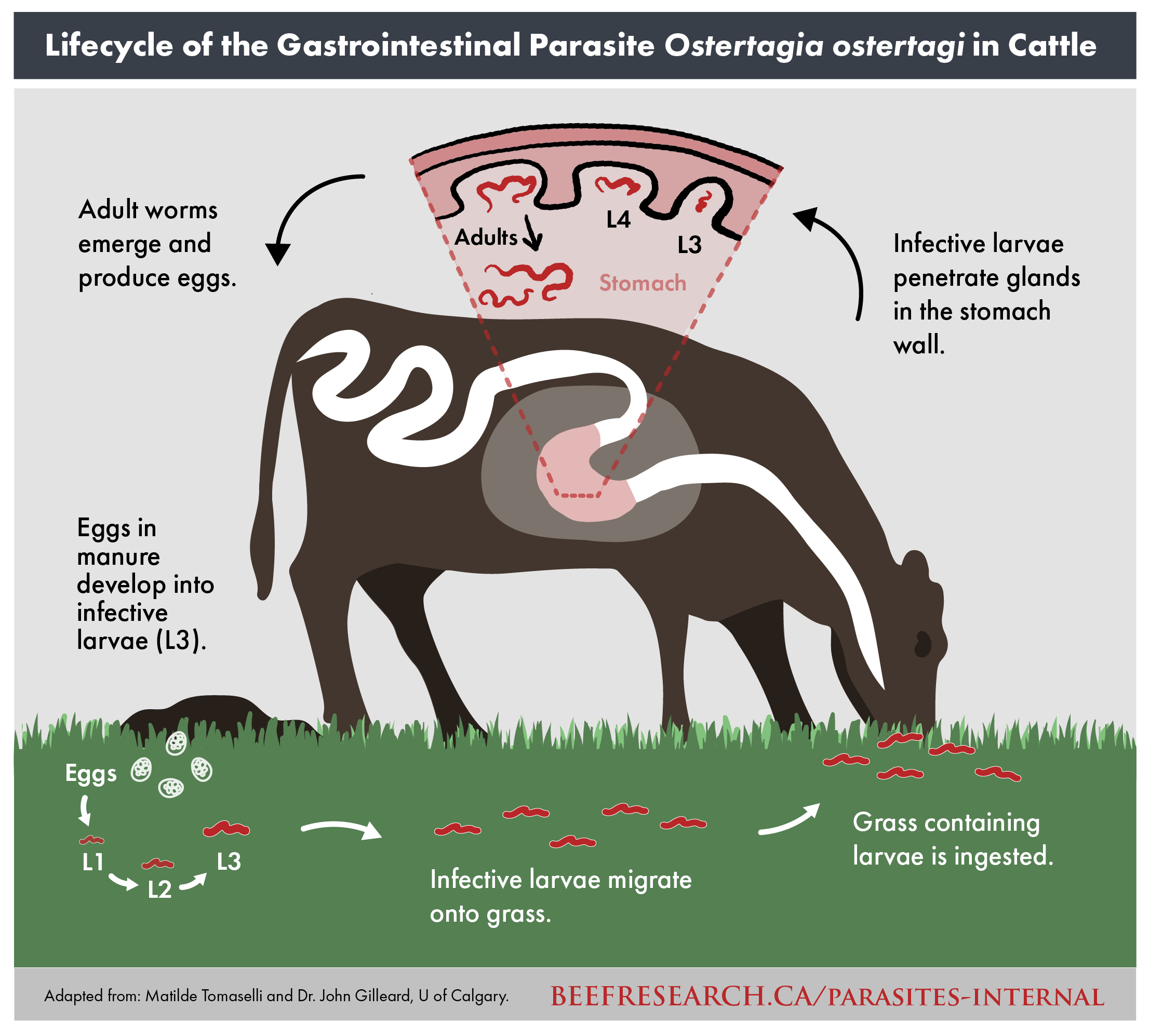
This research looked at feedlot cattle, but internal parasites also cause problems for the cow herd. Yield grade and marbling are measures of carcass fatness. Body condition score assesses fat stores in the live animal. Cows with a body condition score less than 3 out of 5 are slower to resume cycling after calving, are slower to rebreed, calve later, produce lower quality colostrum and wean lighter calves. If parasites are dragging body condition down, reproductive performance may suffer.
This doesn’t mean that the whole herd needs to be blanket treated for internal parasites as a precaution. Cows that are fat and healthy probably have minimal parasite loads. But thin cows may benefit from being treated. This is called “targeted selective treatment.” This saves money, reduces the risk that parasites will develop resistance to dewormers and helps ensure these products will continue to be effective.
After a few years of drought, this summer’s warmer, wetter conditions may have helped the parasite load rebound on your pastures and in your cattle. Next year’s reproductive performance may be impacted if parasites steal too much nutrition from the herd. Treating parasites is simple. First find out whether you need to treat. Ask your veterinarian how and when to collect fecal egg count samples for them to test. If treatment is necessary, they can help design the optimal treatment strategy for your operation. Now that feed supplies and profits are more promising, be careful not to let parasites eat into them.
The Beef Cattle Research Council is funded by the Canadian Beef Cattle Check-Off. The BCRC partners with Agriculture and Agri-Food Canada, provincial beef industry groups and governments to advance research and technology transfer supporting the Canadian beef industry’s vision to be recognized as a preferred supplier of healthy, high quality beef, cattle and genetics.
Click here to subscribe and receive email notifications when new content is posted.
The sharing or reprinting of articles on BeefResearch.ca is typically welcome and encouraged, however this article requires permission of the original publisher.
The BCRC is funded by a portion of the Canadian Beef Cattle Check-Off.

We welcome your questions, comments and suggestions. Contact us directly or generate public discussion by posting your thoughts below.