From Tubs to TMR: Pros and Cons of Mineral Delivery Strategies for Beef Cattle
Editor’s note: This article is part two in a three-part series on optimizing your mineral program. (Read part one and part three.)
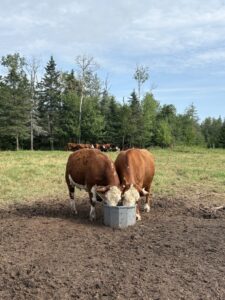
Providing the right minerals at the right time is one of the most impactful—and often underappreciated—parts of beef cattle nutrition. Today, there is a wide range of delivery options to choose from, each with its own advantages, limitations and cost implications. Common mineral delivery methods include:
- Free-choice dry, loose mineral
- Mineral tubs
- Inclusion in a total mixed ration (TMR)
- Injectable minerals
- Mineral boluses
Because the “best” option depends on factors such as forage quality, management style, herd size and production goals, understanding advantages and limitations of each approach is essential.
Free-Choice Loose Mineral
✅ Pros:
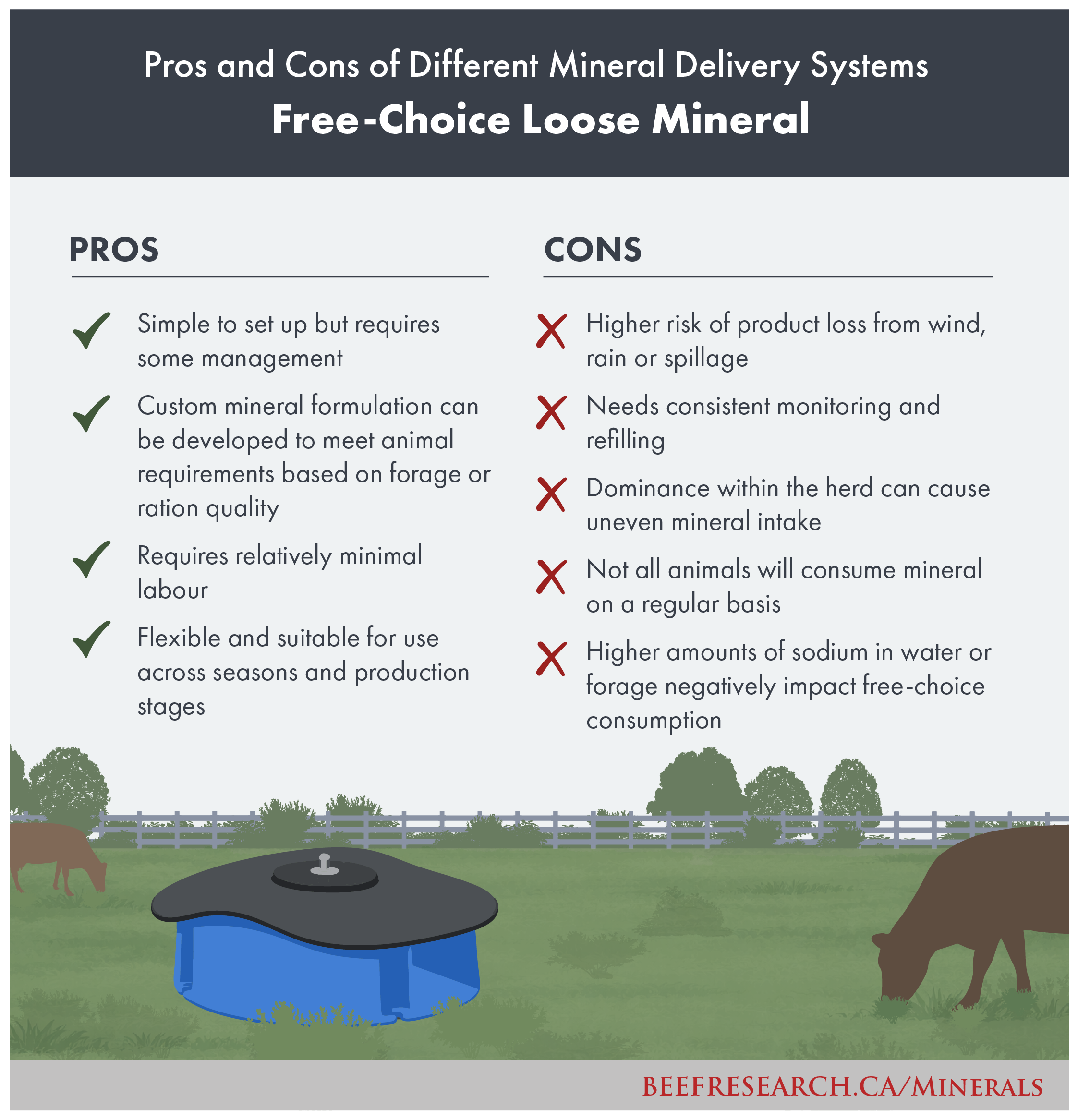
- Custom mineral blends can be created to match the specific nutrient profile of local forages or feed ingredients, helping correct deficiencies and more precisely balance the diet.
- After initial placement, mineral delivery generally requires only periodic replenishment and visual checks, making it a practical option for operations with limited labour availability.
- It provides flexibility across seasons, forage conditions and production stages allowing changes to formulation without major changes to management routines.
❌ Cons:
- Wind and rain can blow away or leach minerals, and cattle may spill or waste products through pawing or knocking over feeders.
- Free-choice systems work best when minerals are always available, so feeders must be monitored regularly.
- Dominant cows may guard the feeder, reducing intake opportunities for timid animals, heifers or young cattle.
- Not all animals visit the feeder consistently, leading to unpredictable mineral status across the herd.
- When cattle are offered salt from other sources, they’re less motivated to consume free-choice minerals.
Free-Choice Mineral Tubs
✅ Pros:
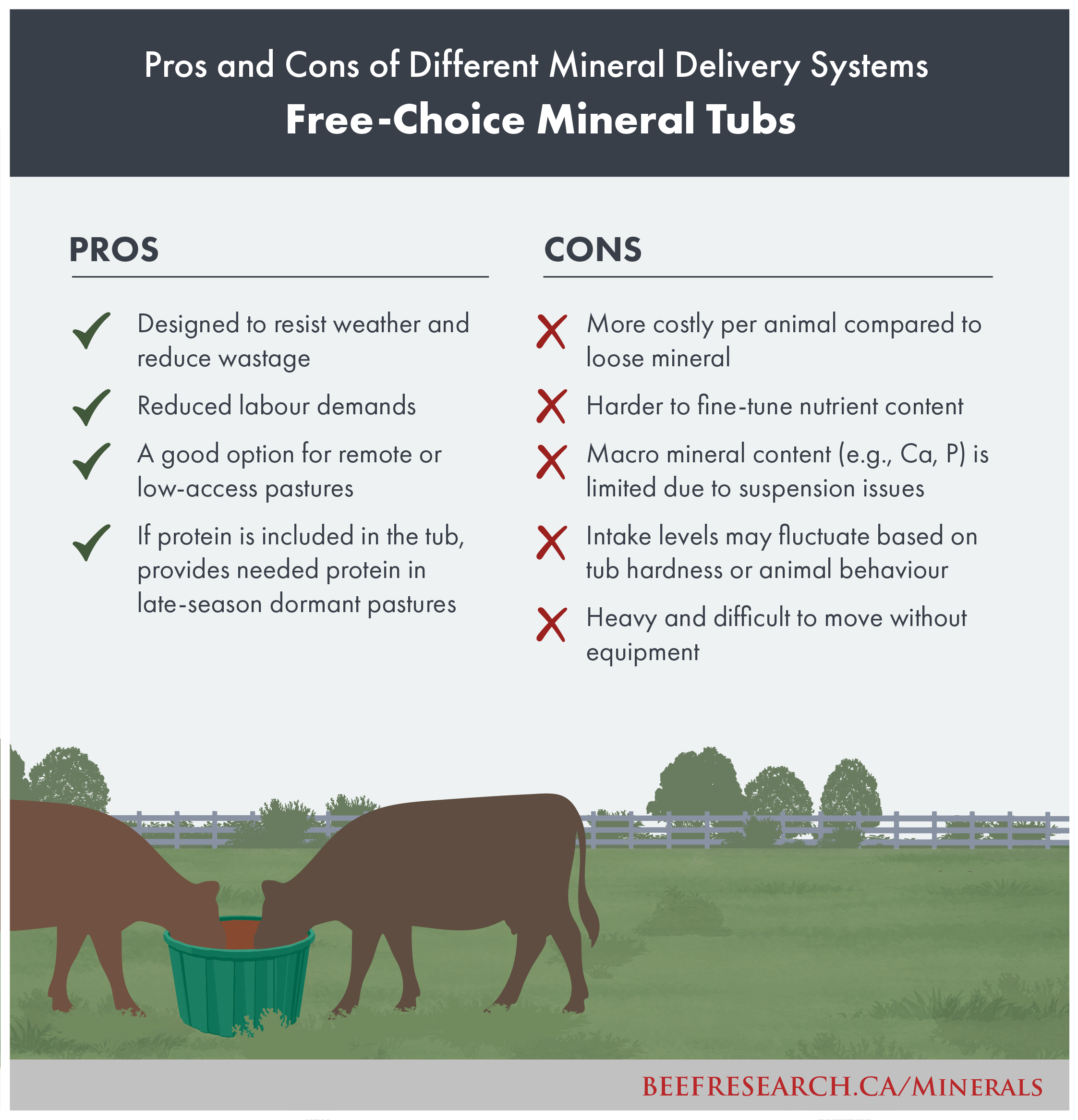
- Mineral tubs are often formulated and structured to hold up against rain, snow and wind, helping prevent leaching, hardening or physical loss of product.
- They require less day-to-day labour compared to loose mineral systems. This makes them particularly valuable on operations where labour is limited.
- Tubs are well-suited for remote pastures or areas with limited accessibility.
- When these tubs contain added protein, they become an effective tool for supporting cattle grazing mature, low-quality forage.
❌ Cons:
- These products generally come with a higher cost per animal compared to loose mineral.
- Since mineral tubs rely on set commercial formulations, it’s harder to precisely match mineral content to specific forage conditions, regional deficiencies or herd-specific needs.
- Limited ability to include high levels of macrominerals such as calcium and phosphorus.
- Weather, product formulation and even herd dynamics can affect how quickly cattle consume the tub, leading to intakes that may fluctuate from the intended target.
- Mineral tubs are durable but bulky, often requiring equipment to move them, especially across rough terrain or to remote pastures.
Minerals Fed in a Total Mixed Ration (TMR)
✅ Pros:
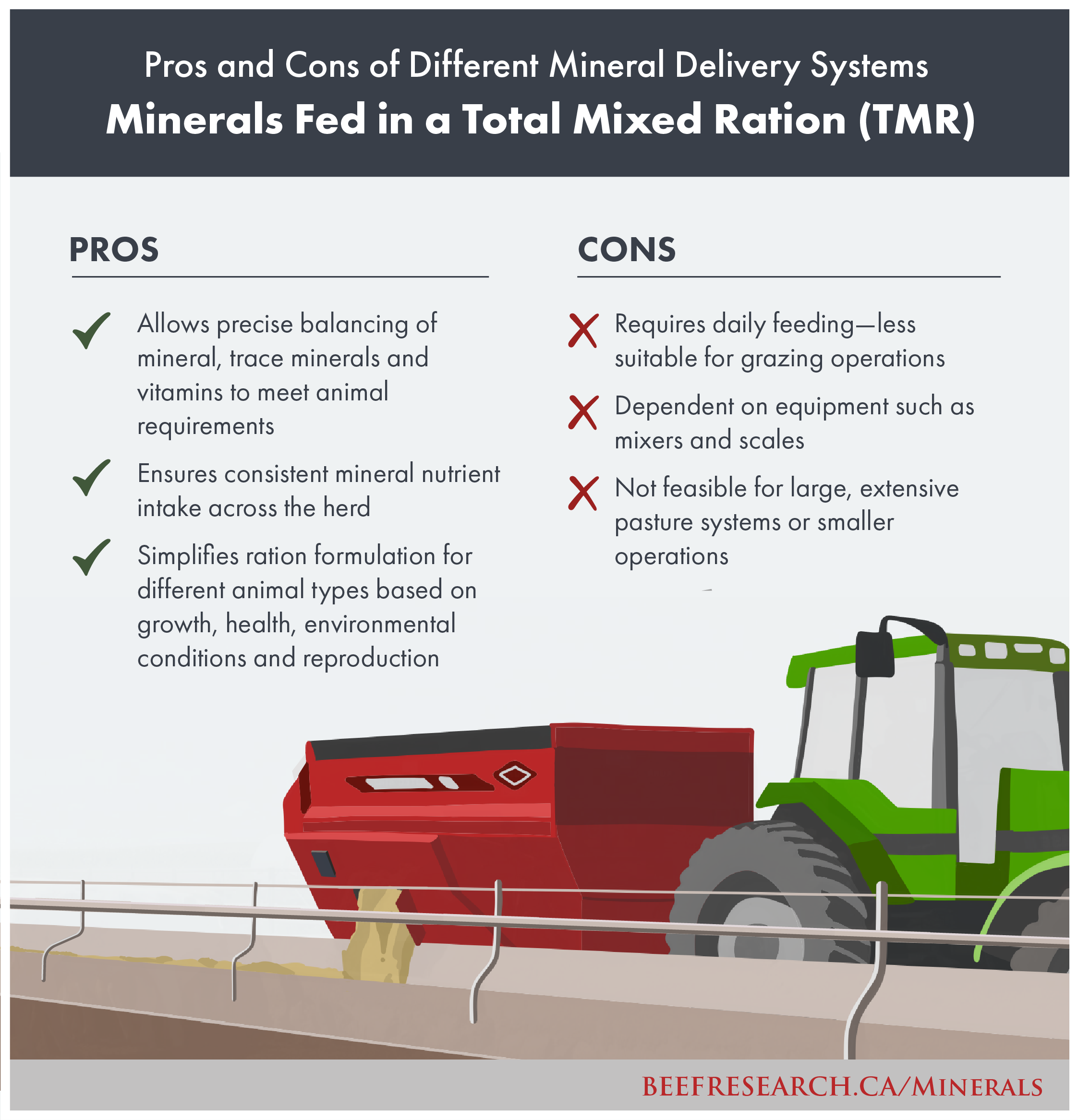
- TMRs provide the ability to precisely balance macrominerals, trace minerals and vitamins according to specific animal requirements.
- It promotes uniform and predictable mineral intake across the entire herd.
- Mineral levels can be easily modified in the mix to meet the needs of growing calves, lactating cows, sick animals or cattle facing environmental stress.
❌ Cons:
- This mineral method requires daily delivery of feed, making it less practical for herds on extensive grazing systems or smaller operations.
- It is dependent on equipment such as mixers, scales and reliable feeding infrastructure.
Injectable Minerals
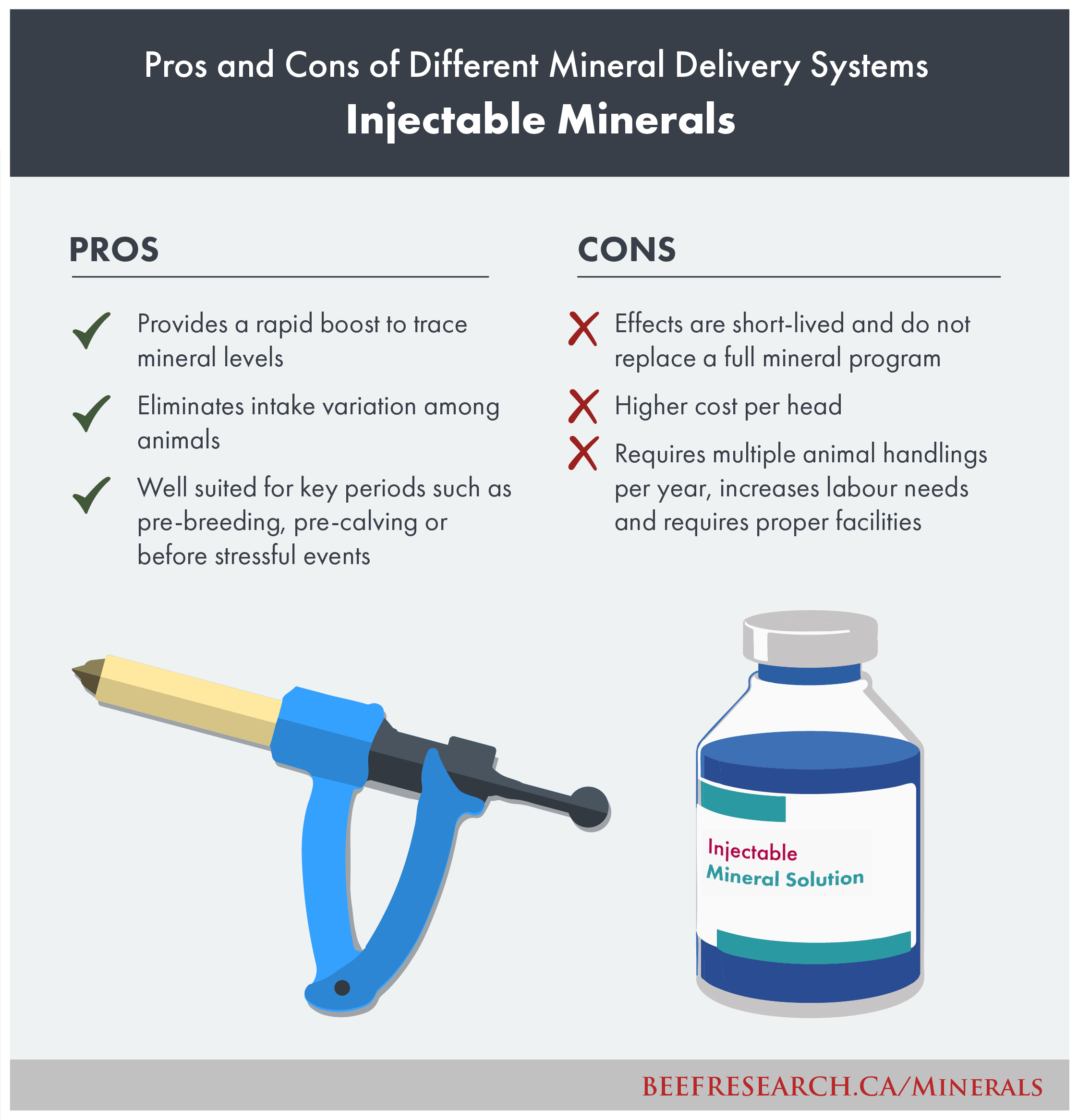
✅ Pros:
- Injectable products provide an immediate boost of minerals such as copper, selenium and zinc, helping correct deficiencies quickly.
- Each animal receives the same controlled dose, helping to avoid the intake inconsistencies common with free-choice systems.
- Injectable minerals are particularly useful when administered ahead of breeding, calving, transportation, weaning or other high-stress situations, helping ensure animals have adequate mineral status.
❌ Cons:
- Injectable products typically contain a limited number of minerals, meaning some minerals will still need to be supplemented orally.
- Although injectables raise mineral levels quickly, the boost is temporary. Long-term mineral status still depends on a consistent feeding program.
- The precision and speed of injectables come with a premium price, making them more expensive on a per-animal basis.
- Multiple treatments per year may be necessary, increasing labour demands and requiring safe working facilities to administer injections correctly.
Mineral Boluses
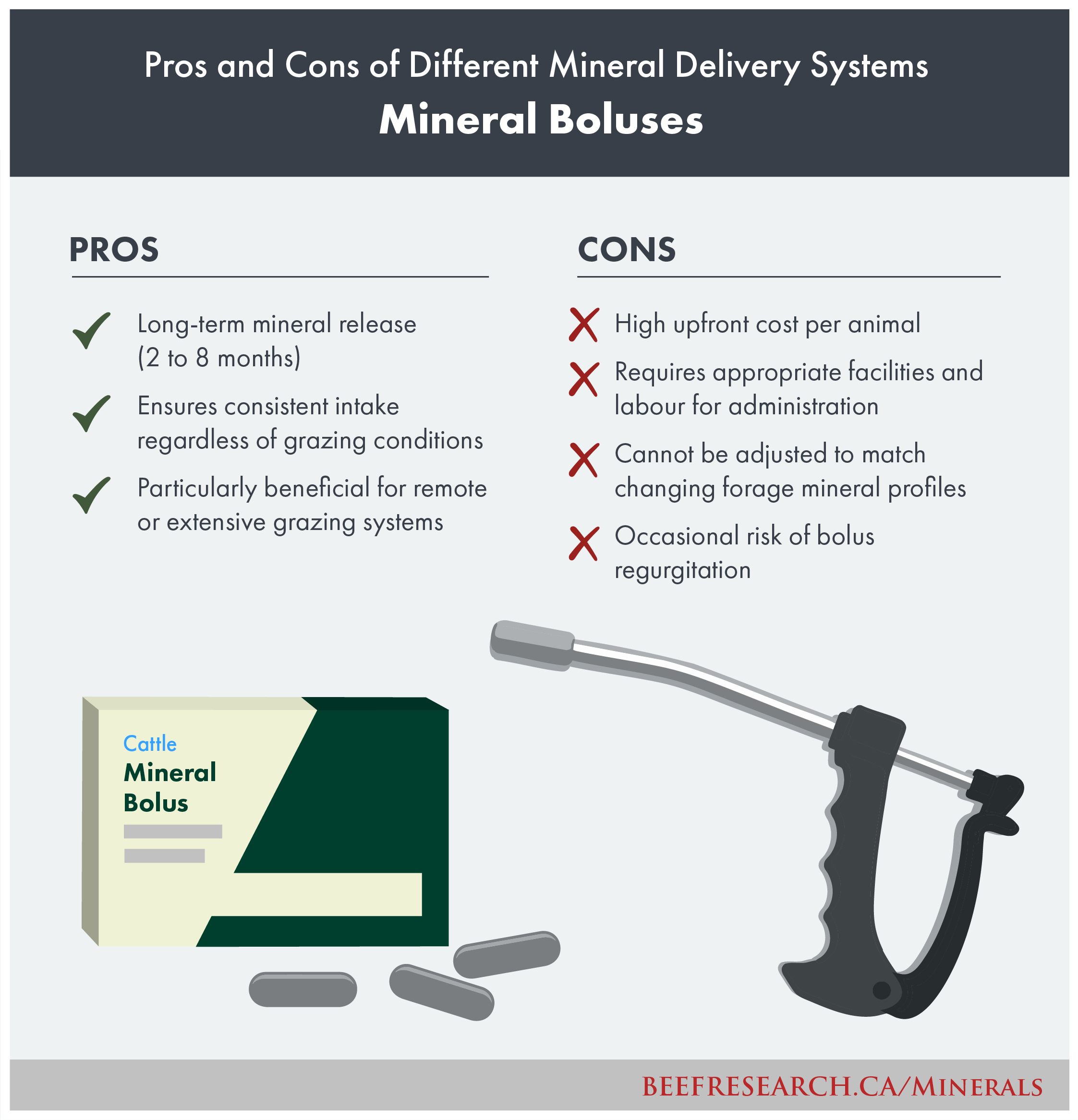
✅ Pros:
- Boluses are designed to release trace minerals gradually—often over two to eight months—ensuring cattle maintain steadier mineral intake without daily or weekly labour requirements.
- Since each animal is administered a specific amount of mineral, intake isn’t influenced by dominance issues, feeder placement, pasture quality or weather challenges.
- Mineral boluses are highly effective for cattle grazing remote, rugged or extensive rangeland systems.
❌ Cons:
- Although long-lasting, boluses require a larger up-front investment that may not fit every budget or management system.
- Bolus application involves oral dosing tools and secure handling, which can be challenging without appropriate facilities.
- Once administered, the mineral release profile is fixed, limiting the ability to respond to shifting deficiencies or increases in antagonists like sulfur or molybdenum.
- While uncommon, boluses can be regurgitated out shortly after administration, leading to inconsistent supplementation unless carefully monitored.
Working closely with your nutritionist, local extension specialist or veterinarian to evaluate and compare mineral delivery strategies can help to determine which best fits your operation and cattle nutrition requirements.
Sharing or reprinting BCRC articles is welcome and encouraged. Please credit the Beef Cattle Research Council, provide the website address, www.BeefResearch.ca, and let us know you have chosen to share the article by emailing us at info@beefresearch.ca.
The BCRC is funded by a portion of the Canadian Beef Cattle Check-Off.

Your questions, comments and suggestions are welcome. Contact us directly or spark a public discussion by posting your thoughts below.