Make informed decisions for your operation with information delivered right to your inbox.
Get the latest tools, innovations and science-based information for the Canadian beef industry, including seasonal production considerations and economic analyses.
Stay up to date with the latest news, updates and information from the Beef Cattle Research Council.
Mineral Labels Made Simple
Editor’s note: This article is the last of a three-part series on optimizing your mineral program. (Read part one and part two.)
Whether cattle are grazing pasture, managed in a dry lot or at different stages of growth and production, providing a well-balanced ration remains essential for achieving optimal performance. Mineral supplementation is a key component of that ration, ensuring each animal receives the nutrients required to support growth, reproduction and overall health. Yet with the sheer number of mineral products on the market—each offering different formulations, delivery methods and claims—selecting the right option can feel overwhelming. Understanding the basics of mineral requirements and evaluating product labels can simplify the process, leading to more confident, informed decisions.
The mineral product tag or label is the most important tool when comparing products. Understanding the label ensures you know exactly what you’re feeding and whether it meets your cattle’s dietary needs.
Click to access an interactive label.
Here are five key pieces of information to understand on your mineral label:
1. Product Name
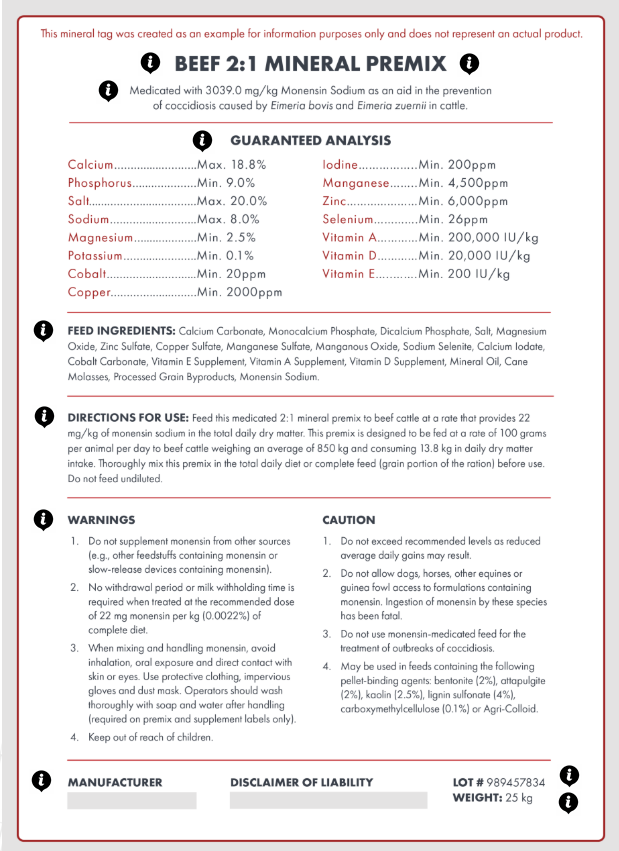
The product name is located at the top of the label. The name describes what kind of mineral it is and which animal and production class it is formulated for (e.g., breeding, calving, growing). The level of calcium to phosphorus is often listed in the name as a ratio. For example, a 2:1 mineral means there is twice as much calcium relative to phosphorus. It is important to note that this ratio does not provide the actual amount of calcium and phosphorus, but rather their proportion relative to each other.
Mineral names may also mention the inclusion of different additives, such as garlic.
EXAMPLE:
2. Feeding Level
The recommended intake or consumption level for each mineral being evaluated is provided in the “Feed Directions” or “Directions for Use” section of the product label. This section outlines how to feed the product safely and effectively, including the appropriate feeding rate and any mixing instructions. These directions may be printed on the label or included as a package insert, provided the label clearly references the additional information.
EXAMPLE:
For products manufactured in Canada, recommended intake is typically expressed in grams per head per day. In some cases, the label may simply indicate an expected intake, such as 75 grams or 2.65 ounces (1 gram = 0.035274 ounces) per head per day. Alternatively, the directions may describe how to formulate a feed mix by combining the mineral product with grain and/or another supplement.
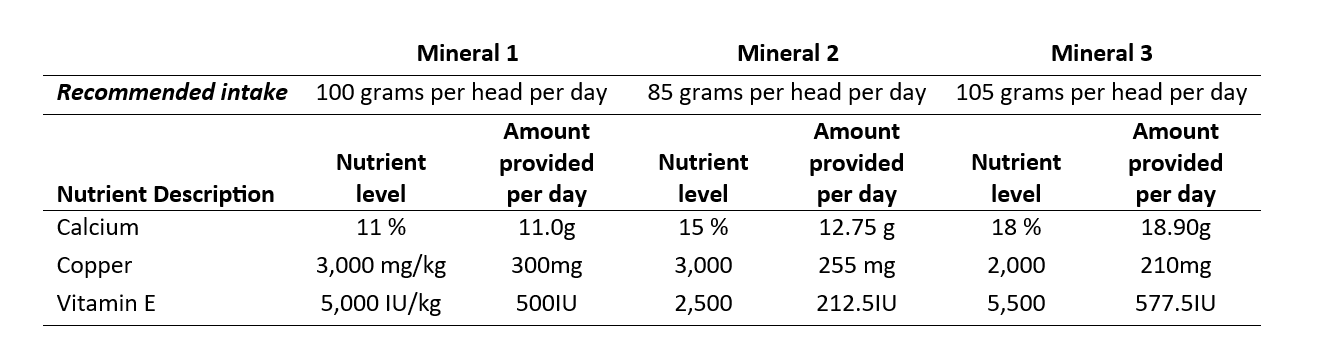
Intake information is valuable for assessing how well a product meets the nutritional requirements of a particular group of cattle. It also provides a basis for comparing different products. Table 1 presents an example of calcium, copper and vitamin E concentrations in three sample mineral products and expected nutrient consumption based on recommended intakes. These levels can then be compared to the requirements of the group of cattle you are feeding.
Table 1: Calcium, Copper and Vitamin E Intake Levels in Three Sample Dry, Loose Mineral Products Based on Recommended Feeding Rate
3. Guaranteed Analysis
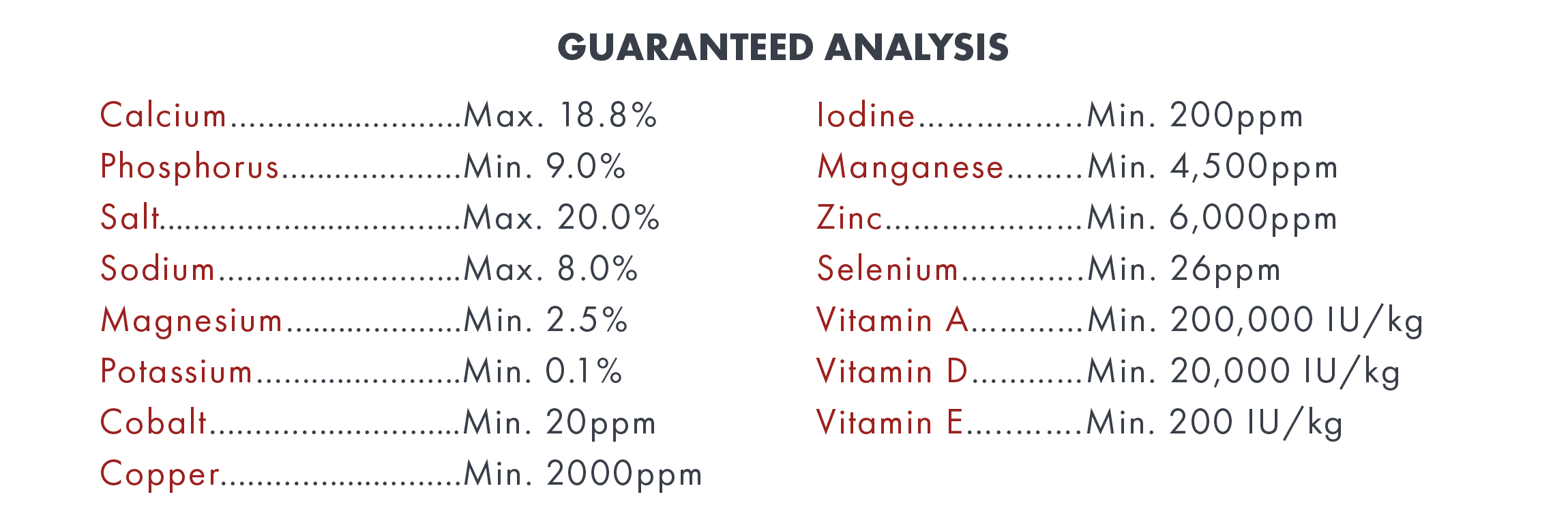
The concentration of each nutrient included in a mineral product is listed in the Guaranteed Analysis section of the label. These levels are reported on an as fed basis.
EXAMPLE:
macrominerals:
Determine if the level of macrominerals is adequate. These are reported on the tag as a percentage of total weight. Mineral and premix labels are required to include minimum amounts of calcium, phosphorus, magnesium, sulfur, sodium and potassium.
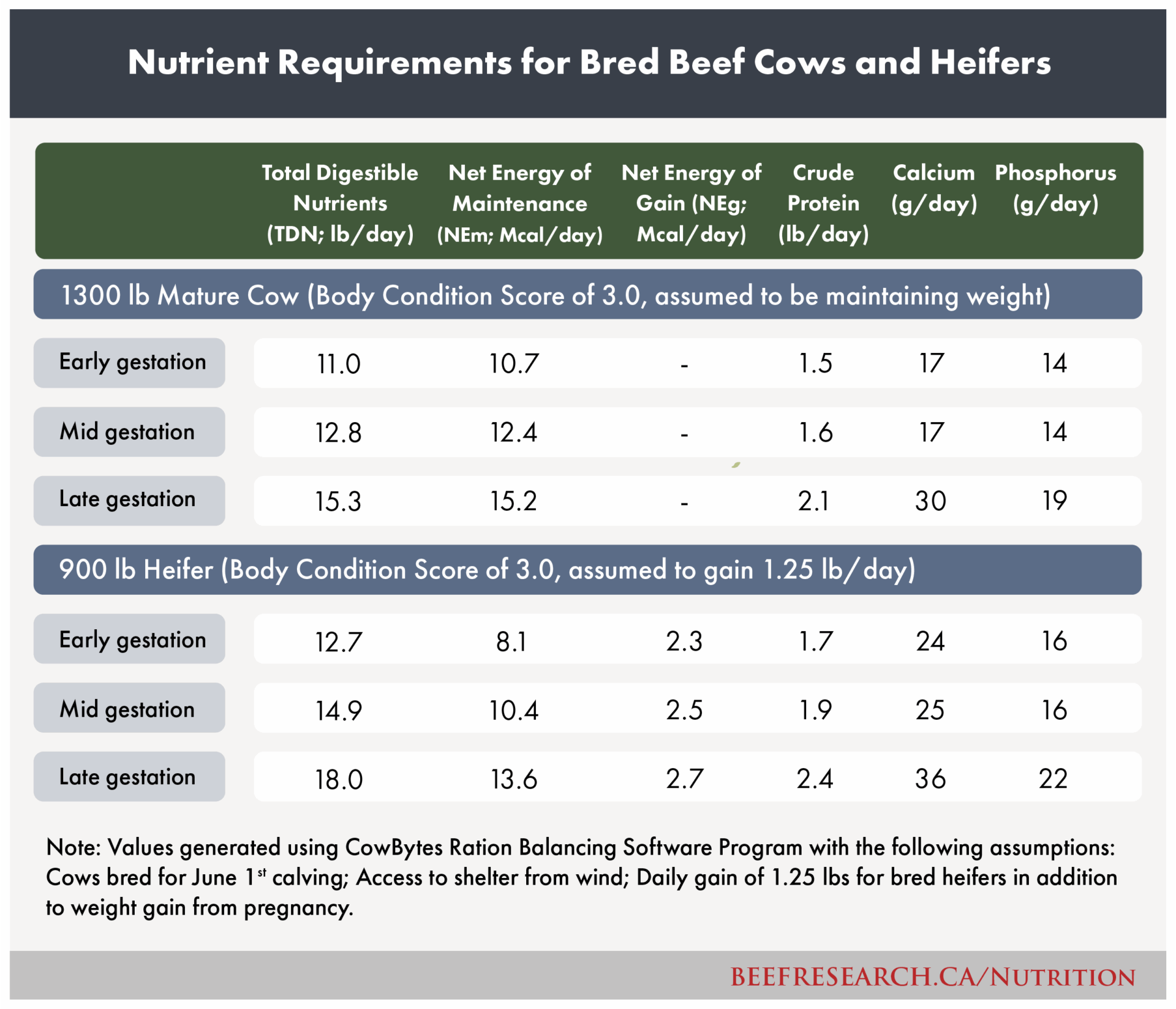
To calculate the amount of each nutrient being supplied, simply multiply the percentage by the recommended feeding rate. Based on Table 1, Mineral 3 is providing 18.9 g of calcium per day at a 105 g feeding rate. Compare this to the nutritional requirements of the group of cattle you are feeding, such as bred heifers and cows depicted in Table 2. It is important to note that the macromineral levels in a mineral product are not formulated to meet the full animal requirements but rather complement the levels present in other feed ingredients.
For macrominerals, a product formulated with 18% calcium and fed at a rate of 105 grams per head per day provides 18.90 grams of calcium per head per day (0.18 x 10⁵ grams = 18.9 g).
Table 2: Nutrient Requirements for Bred Beef Cows and Heifers
mICROminerals or (TRACE) MINERALS:
Mineral labels are required to report minimum amounts in milligrams per kilogram (mg/kg) or parts per million (ppm; 1ppm = 1 mg/kg) of iodine, iron, cobalt, manganese, zinc, copper and selenium. A 1,300 lb. beef cow in early gestation requires 115 mg of copper per day.1 Therefore, all the minerals included in Table 1 should provide adequate copper for this group of cattle.
For a micromineral like copper, taking the feeding rate of 105g and a copper concentration of 2,000 mg/kg in Mineral 3, this mineral provides 210 mg per head per day of copper (0.105 kg (feeding rate) x 2,000 mg/kg copper = 210 mg).
VITAMINS:
The minimum number of international units (IU) per kilogram of product is required to be reported for vitamins A, D and E. In Table 1, you can see that the IU provided can range greatly depending on the nutrient level of the mineral product and the recommended feeding rate.
Some products may include other vitamins, such as vitamin B12 and biotin. These are reported as minimum µg/kg (micrograms per kg) of product. Any other vitamins are displayed as minimum mg/kg of product.
For a vitamin like Vitamin E, a mineral containing 5,000 IU/kg of Vitamin E with a recommended intake of 100 grams per head per day, provides 500 IU per head per day (0.1 kg (feeding rate) x 5,000 IU/d).
If you are comparing multiple mineral types, such as dry, loose mineral with a poured (soft) mineral tub, it is important to take into account the variation in moisture levels in the products. A poured mineral tub will have a higher moisture level than dry, loose mineral, which impacts nutrient concentration per unit of mineral as the moisture dilutes nutrients.
Regardless of the moisture content or nutrient concentration of a mineral product, its effectiveness depends on cattle consistently consuming the recommended intake level. Even the most well-formulated mineral program will not deliver the intended nutritional benefits if consumption is too low or too high, making regular monitoring and appropriate supplementation strategies essential. Consider the pros and cons of common mineral supplementation approaches.
4. Feed Ingredients
For all mineral products, ingredient information must be available. It can be printed on the label, included as a package insert or provided to the buyer upon request.
Knowing the ingredients in the feed will give you an idea as to whether there are organic versus inorganic mineral sources included, as not all mineral products will identify this on the label directly. Organic sources of trace minerals typically have higher bioavailability when compared to inorganic sources.2
Sulfates and oxides are among the most widely used inorganic mineral supplements, primarily due to their affordability, availability and ease of incorporation into rations. Copper sulfate or zinc oxide are examples of inorganic trace minerals used.
In chelated minerals, elements such as zinc and copper are bound to organic molecules like amino acids, creating a stable complex that is less likely to interact with antagonistic compounds. Products like zinc methionine and copper glycine are examples of chelated minerals commonly used. It is important to note that the level of chelated trace minerals will vary by product.
Antagonists are compounds or minerals that interfere with the absorption or utilization of essential trace minerals, such as copper, zinc, manganese and selenium. Even when cattle consume adequate minerals, antagonists can prevent those nutrients from reaching the animal. For example, high sulphate water can reduce copper absorption. These interactions can take place in the digestive tract or at the site of metabolism.
EXAMPLE:
Feed ingredient names may not be listed directly on the label but can be requested from the manufacturer.
5. Medications and Additives
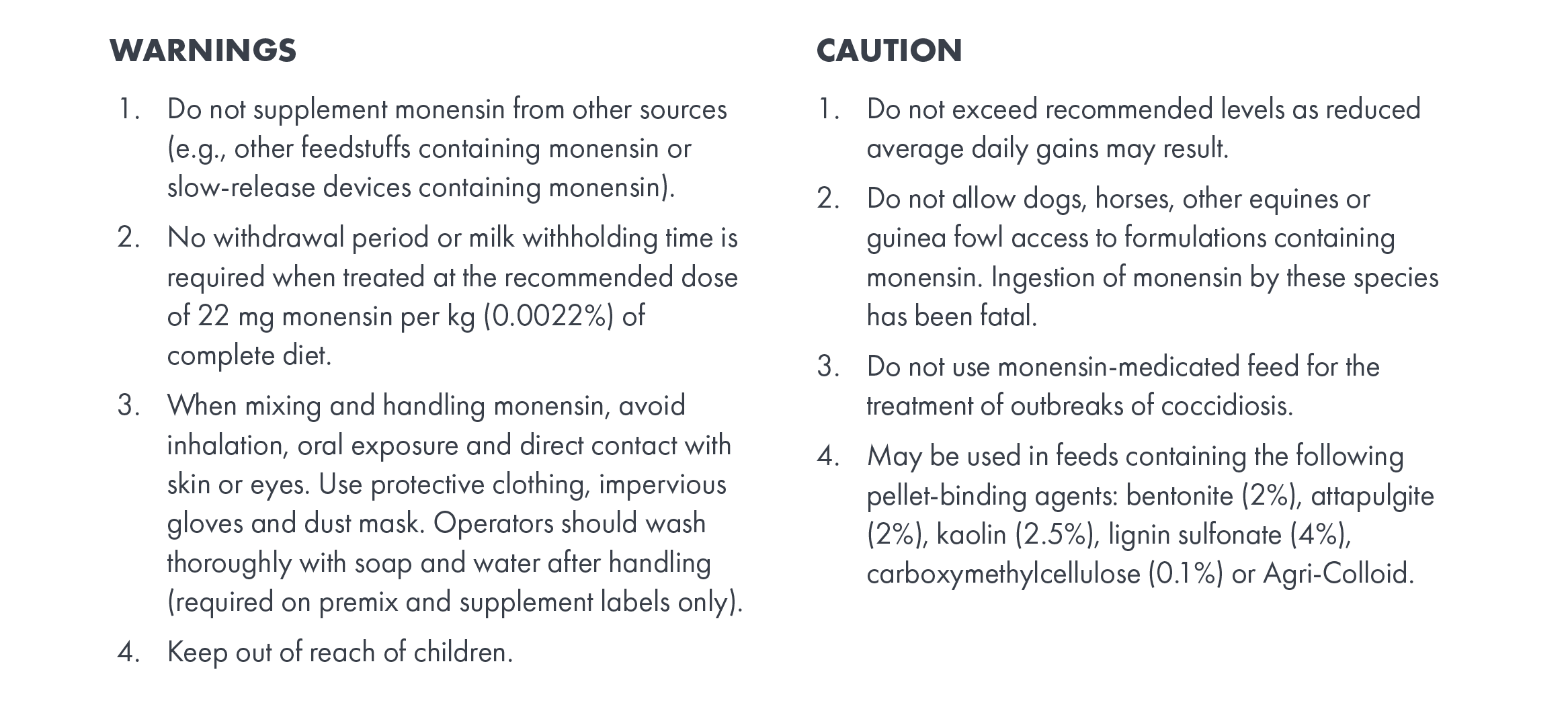
Mineral products containing one or more medicating ingredients (e.g., monensin sodium, lasalocid acid) will clearly list the name and amount of each medicating ingredient, as well as any information required by the Compendium of Medicating Ingredients Brochure. When multiple medications are present, the longest withdrawal time must be shown. Custom medicated feeds, which are manufactured under a veterinary prescription, must include prescription-specific directions, duration of medication use and any prescribed warnings or cautions, with the longest withdrawal time prominently displayed.
EXAMPLE:
Turning Tag Information into Action
Understanding information on a mineral tag and how those nutrients fit within your herd’s nutrition program can help you make more informed supplementation decisions and maximize the value of your mineral investment. Although mineral supplements typically represent a relatively small portion of overall production costs, a well-designed mineral program can have a significant impact on herd health, reproductive performance, productivity and long-term profitability.
Mineral labels can sometimes be difficult to interpret and may appear to be written more for regulatory purposes than for cattle producers. If you have questions about a product label or how to evaluate a mineral program, consult your local extension specialist, nutritionist, veterinarian or feed sales representative for guidance.
Key Takeaways
Mineral labels report nutrient levels on an as-fed basis.
Feed ingredients may not appear on the label but can be requested from the manufacturer.
Calculate nutrient delivery based on recommended intake and nutrient concentration.
When comparing mineral products, account for differences in moisture content.
A mineral program is only effective if cattle consistently consume the recommended intake.
References
National Academies of Sciences, Engineering and Medicine. 2016. Nutrient Requirements of Beef Cattle: Eighth Revised Edition. Washington, DC: The National Academies Press. Available here.
Byrne L and Murphy RA. 2022. Relative Bioavailability of Trace Minerals in Production Animal Nutrition: A Review. Animals 12(15): 1981. Available here.
Sharing or reprinting BCRC posts is welcome and encouraged. Please credit the Beef Cattle Research Council, provide the website address, www.BeefResearch.ca, and let us know you have chosen to share the article by emailing us at info@beefresearch.ca.
The BCRC is funded by a portion of the Canadian Beef Cattle Check-Off.
Your questions, comments and suggestions are welcome. Contact us directly or spark a public discussion by posting your thoughts below.