Standing Corn: A High-Energy, Low-Cost Winter Grazing Option
With proper planning and management, grazing standing corn can provide a cost-effective forage option for cow-calf operations, while reducing reliance on stored feed and effectively extending the grazing season. This practice can help lower feed costs, make better use of available land and provide shelter from the weather, while giving cattle direct access to a feed source. However, corn grazing isn’t a one-size-fits-all solution. Success depends on choosing the right variety, seeding, managing the crop and monitoring cattle.
When Does Corn Grazing Make Sense?
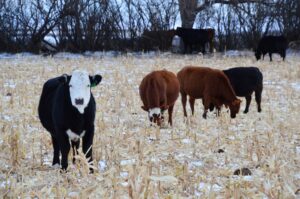
Corn grazing may not work for every beef cattle operation; it is important to consider your goals. Corn grazing is best suited for:
- Extended or year-round grazing systems looking to reduce winter feeding costs
- Operations with limited hay land or those looking to increase forage production per acre
- Regions with cold, dry winters, where corn can stand above snow and be grazed in place
Which Variety Should I Choose?
Grazing corn varieties are not the same as those used for grain or silage production. Select early-maturing, silage-type hybrids that align with the corn heat units (CHU’s) in your region to increase the chance of a high-yielding, high-quality crop. These varieties typically offer a good balance between moderate grain yield and high biomass, which helps reduce the risk of acidosis by limiting the proportion of energy-rich cobs relative to the overall plant.
Corn Heat Unit (CHU):
A measure of accumulated heat, rather than calendar days, during the growing season that indicates how well corn will grow in a specific area. Higher CHUs mean more suitable conditions for corn maturity, helping producers choose hybrids and predict feed availability for silage or grazing.
How To Seed Corn for Grazing
Consider the recommendations below to help maximize yield and grazing efficiency.
- Seeding depth: aim for 1.5 to 2 inches in western provinces (BC to MB) and 1.5 to 3 inches in eastern regions (ON to PEI). Always plant into warm, moist soil with a temperature of at least 10°C.1
- Row spacing: 30” is preferred to allow for optimal plant development and easier cattle access.
- Seeding equipment: for best results, producers could use a corn planter, which promotes better emergence and can produce 15 to 20% more biomass compared to air drill seeders.
- Weed control: it is recommended to apply treatment before seeding and again at the four-leaf and eight-leaf stages.
- Fertilization: about 80lbs of nitrogen per acre is typically needed to meet crop needs and maximize productivity.
Grazing Management Considerations
Cattle unfamiliar with corn grazing need time to learn how to graze the tall stalks and to allow time for the rumen to adjust to the new feed. Consider the management tips below:
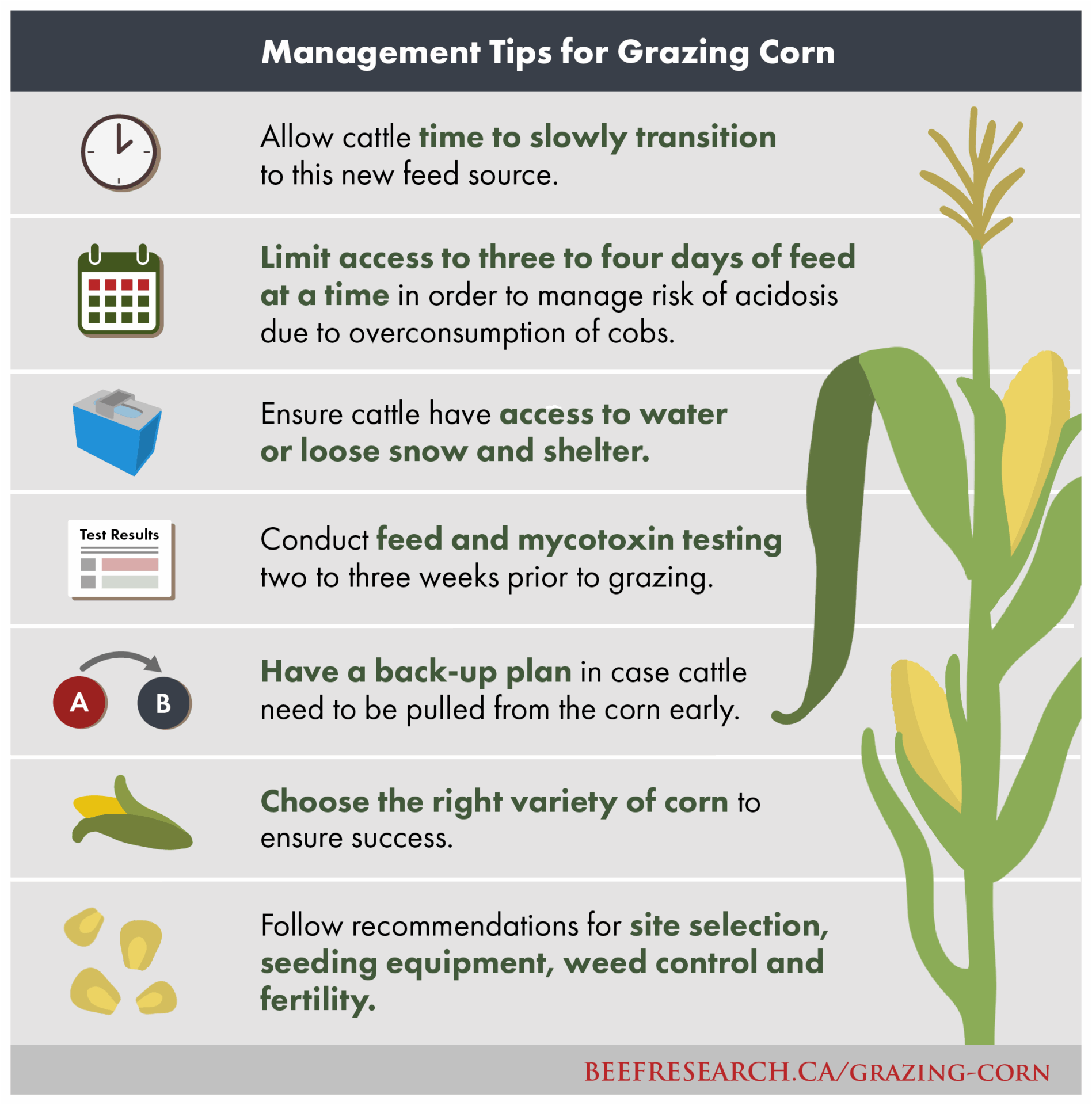
- Start slow when transitioning cattle to corn grazing.
- Offer small grazing areas with access limited to just three to four days of feed.
- Provide hay or another familiar forage alongside the corn to support digestion and reduce the risk of acidosis.
- Monitor cattle closely, especially those with no prior corn grazing experience, and pay attention to whether they’re selectively eating only cobs, which can increase the likelihood of digestive upset.
- Move the electric fence every few days to limit overconsumption of cobs and to prevent trampling.
- Have a backup feed source, such as bale grazing, if corn grazing becomes inaccessible.
- Monitoring body condition score (BCS) and weather conditions is critical during corn grazing. Cows in poor condition (BCS 1-2) are more vulnerable to cold stress, meaning they may need supplementation or early removal.
Fencing, Water and Shelter Management
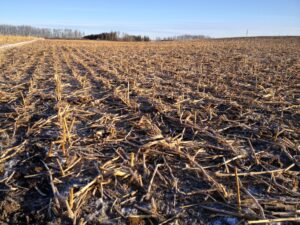
- Strip grazing with electric fencing is the most effective way to regulate corn access and to promote uniform nutrient intake.
- Reliable water access is critical. Ensure cattle can reach flowing water, dugouts or loose snow, especially during extreme cold weather.
- One of the benefits of corn grazing is that corn stalks can provide shelter from the elements if grazed from the center of the field outward. However, pasture layout and colder temperatures may mean additional shelter, such as windbreaks, should be provided.
- Deep snow or crusted fields can reduce cattle’s ability to access standing corn. In addition, unpredictable winter weather can impact both the availability of the feed and reduce intakes.
Animal Health Considerations
Acidosis is a key concern when grazing corn as cows will choose to consume the high-energy cobs first. Excessive energy intake can also lead to over-conditioned cows.
While standing corn often meets the energy needs of cows in mid-gestation, it is low in protein and calcium, along with other minerals. This makes feed testing important to determine what additional supplementation is required. Corn should also be tested for mycotoxins, which are a group of harmful toxins that can create a variety of problems for beef cattle including impaired health and reduced productivity.
Conclusion
Corn grazing can be a valuable addition to your feeding program, offering high energy, reduced feed costs and flexibility in extended grazing systems. Careful planning is essential, from selecting the right variety to managing animal health and field conditions to ensure success.
- References
Manitoba Agriculture, Crop Management. Corn Seed Bed Preparation.
Sharing or reprinting BCRC posts is welcome and encouraged. Please credit the Beef Cattle Research Council, provide the website address, www.BeefResearch.ca, and let us know you have chosen to share the article by emailing us at [email protected].
The BCRC is funded by a portion of the Canadian Beef Cattle Check-Off.

Your questions, comments and suggestions are welcome. Contact us directly or spark a public discussion by posting your thoughts below.