Road to Bull Sale Season: Seven Key Stops to Buying the Right Bull
Purchasing the right bull can quickly move your beef herd toward your production goals. However, buying the right bull doesn’t start on sale day; it begins months in advance.
Here are seven essential stops along the road to purchasing your next herd sire:
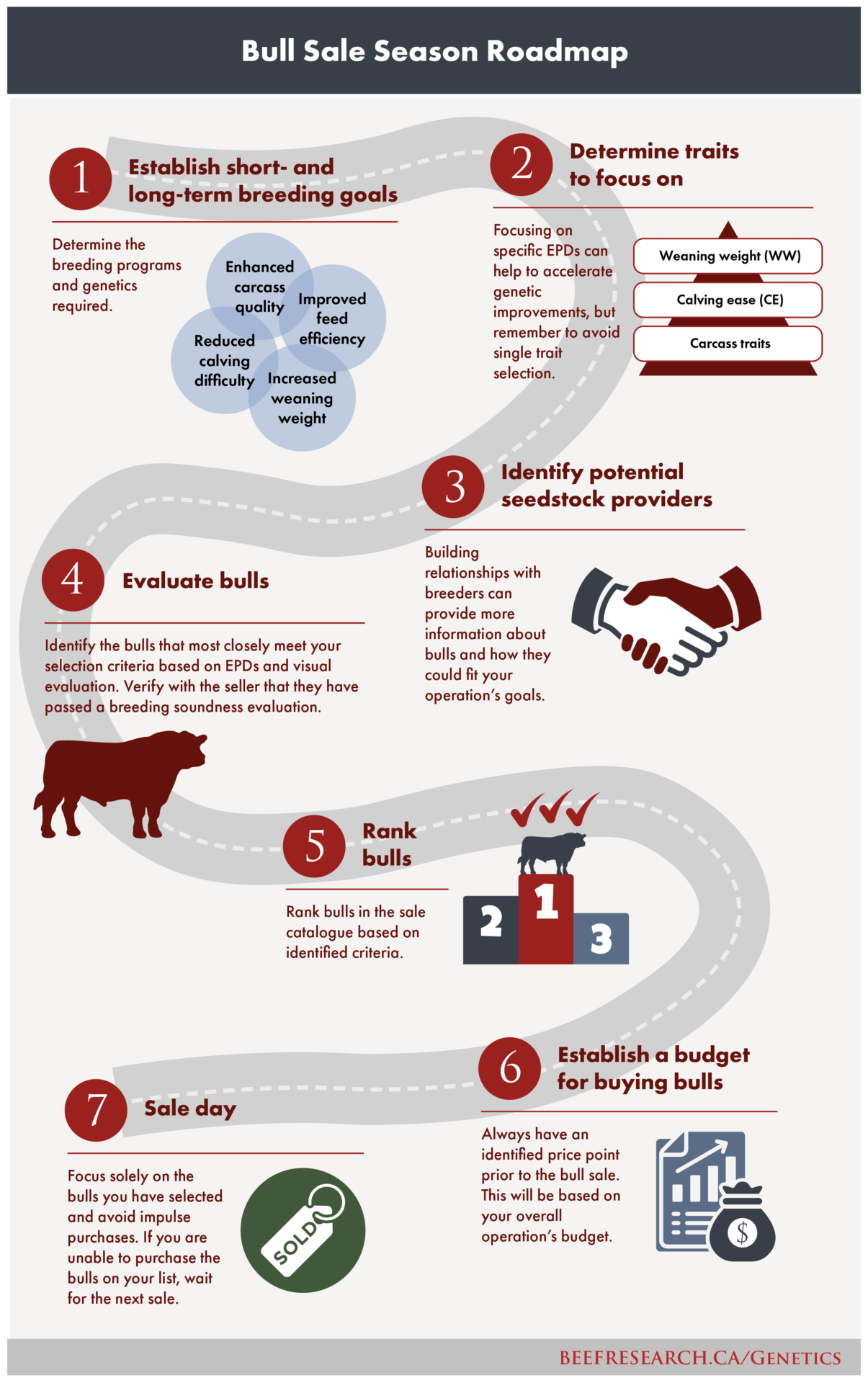
#1: Establish Short- and Long-Term Breeding Goals
Before looking at bulls, identify what you want your herd to achieve in the short and long-term. Your breeding program should align with your operation’s resources, management style and future plans.
For example, knowing the traits that you want your calves to have (e.g. lighter birth weight, better growth, carcass quality, maternal traits), will better prepare you to match those goals with the genetic potential offered by available bulls.
By clearly defining your goals, you’ll be able to make informed, data-driven selection decisions that improve herd genetics, profitability and sustainability.
#2: Determine the Traits to Focus On
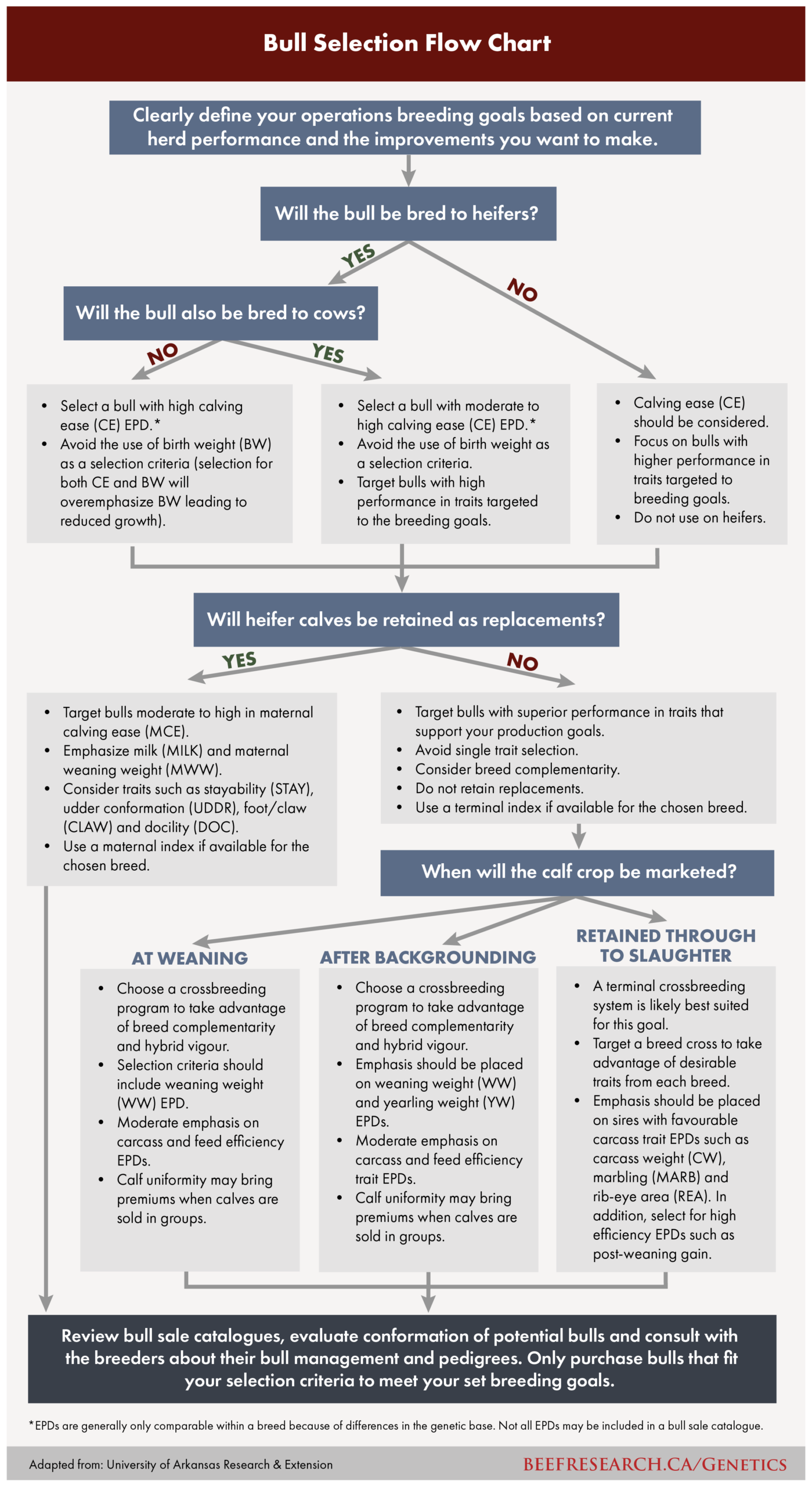
Based on your goals, determine which traits to select for. As an example, if you are breeding first calf heifers, selecting bulls with higher calving ease is essential. In contrast, if you are not retaining replacement females and sell all calves after backgrounding, consider focusing on weaning weight (WW) and yearling weight (YW), with moderate emphasis on carcass and feed efficiency traits.
Use expected progeny differences (EPDs) to predict how a bull’s offspring will perform, on average, compared to offspring from another bull. Emphasis on specific EPDs can help accelerate genetic improvements but remember to avoid single trait selection. Consider prioritizing economically relevant traits (ERTs) and using selection indexes to combine multiple traits into one value.
#3: Identify Potential Seedstock Suppliers
Not all bulls or breeders are created equally. Build relationships with seedstock providers who can explain the genetics behind their bulls, provide performance records and bull breeding soundness exams (BBSEs). These relationships also allow you to evaluate management practices implemented on the farm as differences in production systems can impact performance and how traits are expressed.
Trustworthy breeders will help you match the bull’s genetics to your operational goals. Some may offer post-sale support or health guarantees.
#4: Evaluate Bulls
Now it’s time to dig into the details. Compare bulls based on your selected EPDs and physical characteristics (e.g., structure, feet, temperament).
Confirm each bull has passed a BBSE and is up to date on vaccinations. Benefits of a bull breeding soundness evaluation include higher pregnancy rates, tighter calving season, early detection of problems and reduced disease risk.
Visually inspect the bulls to assess structural soundness and conformation, which are moderately heritable traits. This impacts a bull’s longevity, breeding efficiency, injury risk and genetic influence on the herd. Bulls with correct leg, foot and joint structure can travel farther, mount more successfully and avoid lameness or injury.
#5: Rank Bulls
Rank the bulls according to how closely they meet your breeding goals and selection criteria. It may be helpful to use a spreadsheet or note system to keep track of rankings and make comparisons across key traits. Using selection indexes can streamline ranking further at this step.
#6: Establish a Bull Buying Budget
Having a budget is key. Bull prices can range from $2,000 to upwards of $20,000 depending on genetics, pedigree and reputation.
Use the BCRC Bull Valuation Calculator to estimate the break-even price of a bull based on your operation’s size, feed costs, weaning rates and current market prices.
A high-priced bull may be more cost effective in the long run if he sires better calves or lasts for more breeding seasons.
#7: Sale Day
Whether buying through an auction or private treaty, the same rule applies—stick to the plan. Focus only on bulls that have been pre-evaluated. Avoid impulse buys or being pressured into a purchase that doesn’t fit your goals or budget. If the right bull isn’t available at the right price, be prepared to wait or reassess rankings.
Final Thoughts on Bull Selection
Bull buying is more than flipping through a catalogue. It’s a multi-step process that starts with good records, clear goals and knowing what traits will move your operation forward. By planning and sticking to a disciplined approach, you can ensure your next herd sire is a sound investment.
Acknowledgements
Thanks to the following individuals for contributing their time and expertise to review this article and related resources:
- Karin Schmid, Beef Production and Extension Lead, Alberta Beef Producers
- Chelsey Siemens, Livestock and Forage Extension Specialist, Saskatchewan Ministry of Agriculture
- Macy Liebreich, Chief Executive Officer, Canadian Beef Breeds Council
- Stephanie Lam, Director of Research, Livestock Research Innovation Corporation
Sharing or reprinting BCRC posts is welcome and encouraged. Please credit the Beef Cattle Research Council, provide the website address, www.BeefResearch.ca, and let us know you have chosen to share the article by emailing us at [email protected].
The BCRC is funded by a portion of the Canadian Beef Cattle Check-Off.
Your questions, comments and suggestions are welcome. Contact us directly or spark a public discussion by posting your thoughts below.