From Research to Adoption: Renewed Research and Extension Objectives Support a Thriving Beef Sector

Strategic and collaborative investments in research and knowledge mobilization are strengthening the Canadian beef sector as it responds to rising global food production demands and adapts to increasingly challenging environments and capacity restraints. Today the Beef Cattle Research Council (BCRC) and its industry partners released a renewed five-year strategy designed to encourage collaboration and better target funding toward high-priority beef research and extension objectives.  

The Five-Year Canadian Beef Research & Knowledge Mobilization Strategy provides a coordinated national framework to align investment, accelerate innovation and ensure research outcomes lead to measurable impact for beef producers, the broader value chain and the public. Built upon the success of previous iterations, the new Strategy will help accomplish the National Beef Strategy’s ambitious 10-year goals. It is intended to guide investments of the BCRC and other Canadian beef research funding agencies to improve efficiency with limited funding. By encouraging greater collaboration across funding agencies through a portfolio approach, the Strategy ensures key research, capacity and extension priorities are addressed in a coordinated manner.  

The Strategy reflects extensive industry engagement to ensure priorities are grounded in producer needs and real-world challenges across the value chain. More than 500 stakeholders across Canada participated through a combination of national surveys, focus groups and engagement sessions, including producers, veterinarians, researchers, government representatives, industry organizations, funders and extension specialists.

Along with the full Strategy, seven summary documents in key program areas are available:

Sharing or reprinting BCRC posts is welcome and encouraged. Please credit the Beef Cattle Research Council, provide the website address, www.BeefResearch.ca, and let us know you have chosen to share the article by emailing us at info@beefresearch.ca.

The BCRC is funded by a portion of the Canadian Beef Cattle Check-Off.

Canadian Beef Cattle Check-Off

Your questions, comments and suggestions are welcome. Contact us directly or spark a public discussion by posting your thoughts below.

Call for Applications: 2026 BCRC Regional Knowledge Mobilization Initiatives Funding Program

open call for BCRC's regional knowledge mobilization activities

The Beef Cattle Research Council is now accepting applications for the 2026 funding program for regional knowledge mobilization initiatives. The application deadline is June 12, 2026, at 11:59 PM MT. 

Funding is available for knowledge mobilization activities that engage beef producers and align with the Canadian Beef Research and Technology Transfer Strategy. While funding does not support recurring event sponsorship, innovative knowledge mobilization activities held independently or in conjunction with existing events will be considered.

Preference will be given to:

  • New and innovative engagement approaches, including novel ways of presenting information, demonstrating new or emerging technologies and enhancing record-keeping or documentation practices.
  • Demonstrations and workshops related to replacement heifer and cow selection, including practices that enhance heifer development, improve retention and strengthen long‑term cow herd productivity.
  • Initiatives that support improved feed and nutrition management, including practices to better meet nutritional requirements, feed and water testing and effective mineral supplementation.

Funding Details

Applicants may request up to $5,000 per activity. Matching funding is encouraged but not a requirement. Activities must be completed by May 31, 2027, unless rationale is provided for a later completion date.

Proposals will be evaluated based on alignment with program priorities, potential impact for beef producers and the effectiveness of the knowledge mobilization approach.

Key dates

  • Application deadline: June 12, 2026 (11:59 PM MT)
  • Notification of results: Mid‑August 2026

Ready to apply?

Proposals must be submitted through the online application form. Applicants are encouraged to present knowledge mobilization or extension initiatives that deliver tangible outcomes for beef producers, including increased adoption of science-based practices that enhance productivity, sustainability and decision making.

Learn more about the regional knowledge mobilization initiatives funded through previous calls: 

Sharing or reprinting BCRC posts is welcome and encouraged. Please credit the Beef Cattle Research Council, provide the website address, www.BeefResearch.ca, and let us know you have chosen to share the article by emailing us at info@beefresearch.ca.

The BCRC is funded by a portion of the Canadian Beef Cattle Check-Off.

Canadian Beef Cattle Check-Off

Your questions, comments and suggestions are welcome. Contact us directly or spark a public discussion by posting your thoughts below.

Advancing the Canadian Beef Industry Through Innovation and Knowledge

Research and knowledge mobilization work hand in hand to move the Canadian beef industry forward. By turning new ideas into practical tools and information, they help beef producers make informed decisions and strengthen their operations. The Beef Cattle Research Council (BCRC) supports this progress by funding proof of concept (POC) projects and knowledge mobilization initiatives that connect science with on-farm impact.

Proof of Concept Research

“Proof of concept projects help get new ideas off the ground — testing innovations, technologies and practices from other sectors or countries that could benefit Canada’s beef industry,” says Dean Manning, BCRC chair. “These small, targeted investments use a modest portion of Canadian Beef Cattle Check-Off dollars to evaluate potential solutions and generate the evidence needed to support larger-scale research and long-term industry progress.”

Dean Manning, BCRC chair, Nova Scotia
Dean Manning, BCRC Chair

POC Projects Funded Under the 2025 Call for proposals:

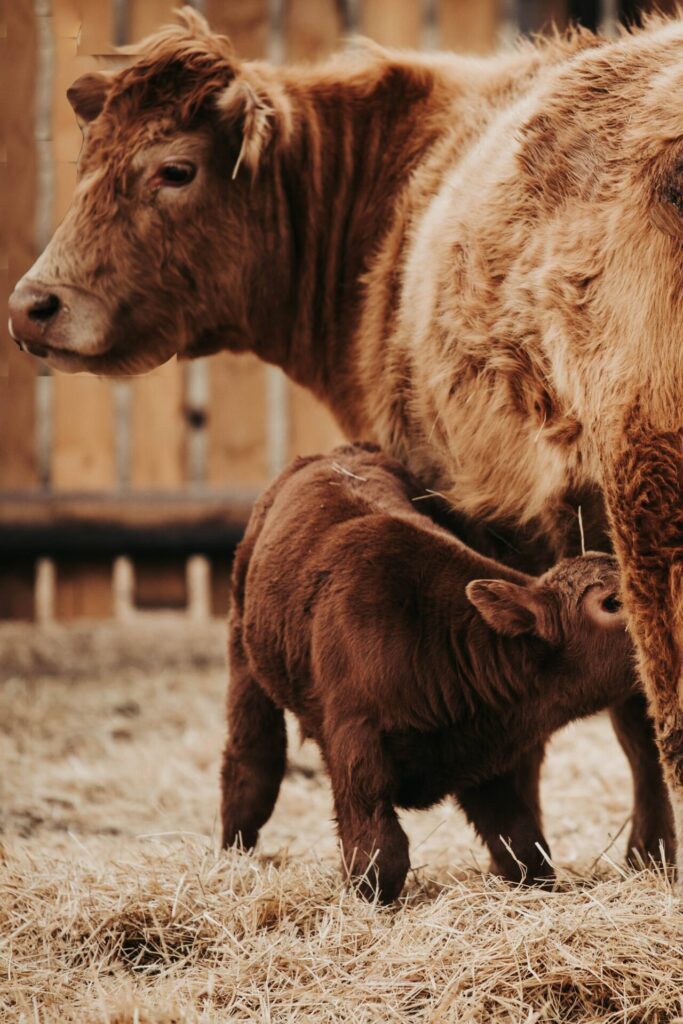
red cow and calf nursing on straw

Are Maternal Vitamin Levels More Reliable Than Fetal Levels for Diagnosing Nutritional Deficiencies in Abortion Cases? Project lead: Dr. Yanyun Huang, Prairie Diagnostics Services Inc.
 
The current method for assessing if an abortion is the result of nutrient status of the dam is for the lab to test the fetus for vitamin levels.  However, because there is limited vitamin transfer between the ruminant dam and fetus, testing the fetus’s vitamin status may not be giving an accurate picture of the vitamin status of the dam. This team wants to test both the dam and the aborted fetus for vitamin levels and determine if testing the fetus gives an accurate reflection of maternal vitamin levels or if other avenues should be used to evaluate nutritional causes of abortion.
 
All projects funded by the BCRC address the priorities laid out in the Five-Year Canadian Beef Research and Technology Transfer Strategy.

  • Enhancing Cicer Milkvetch Germination Rate Through Ultrasound Scarification. Project lead: Dr. Erick Santos, University of Alberta.
  • Wearable Electrochemical Biosensor Patch for Real-Time Cortisol Monitoring in Cattle. Project lead: Dr. Amir Sanati Nezhad, University of Calgary.
  • Evaluation of Ocularly Delivered Bovine Adenovirus Vectored Vaccine for Pinkeye. Project lead: Suresh Tikoo, Vaccine and Infectious Disease Organization.
  • Nasal and Blood Transcriptomes in Feedlot Calves Using a Bovine Coronavirus (BCoV) Challenge Model. Project lead: Stacey Lacoste, University of Saskatchewan, Western College of Veterinary Medicine.

Knowledge Mobilization Initiatives

Lee Irvine, Beef Cattle Research Council Vice Chair
Lee Irvine, BCRC Vice Chair

“Connecting science with on-farm practice ensures that research doesn’t stay on the shelf — it drives real improvements in productivity, sustainability and profitability for Canadian beef producers,” says BCRC Vice Chair Lee Irvine on funding knowledge mobilization initiatives. “The success of innovation depends on building producer awareness and fostering adoption of research, technologies and beneficial practices across the beef industry.”

Through a new pilot initiative, the BCRC opened a call for proposals in 2023 to support regional knowledge mobilization activities with preference given to new and innovative engagement ideas. This funding call was renewed for the second time in 2025. Eight activities were funded beginning in fall 2025 and all activities will wrap up in summer 2026. 

Back to Basics Workshops

Beef Farmers of Ontario in-person workshop discussions
Beef producers had the opportunity to participate in peer group discussions at the event.

Funded through the 2024 call for proposals, the Beef Farmers of Ontario hosted two in-person workshops for beef producers focused on beneficial management practices to improve the cost of production. The objectives of these events included: 1) discussion of on-farm practices required to raise a healthy and uniform calf crop, 2) sharing ideas and learning directly from other producers and their experiences, 3) exploring resources available to assist in on-farm decision making and 4) learning practices that could be implemented on-farm tomorrow.

Participant feedback:

  • “Excellent! A welcomed change from the usual sit and listen events.”
  • “Loved it! It was very informative to learn from other producers.”
  • “Loved the group sessions and being able to get together to talk and not just listen.”

Initiatives Funded by the 2025 Knowledge Mobilization Call:

cow drinking from stock water tank
  • Beef Cattle Production Seminar. November 5, 2025. Project lead: Alaina Archibald, Peace Country Beef & Forage Association.
  • Rancher’s University. December 5-6, 2025. Project lead: Shelby Robinson, Saskatchewan Ministry of Agriculture.
  • Protecting Your Herd: Practical Biosecurity Implementation for Enhanced Cow and Calf Health. February 6-7, 2026. Project lead: Rachel Kehoe, Northern Ontario Farm Innovation Alliance.
  • ‘Bos’ Ladies Round Up. Project lead: Dr. Carling Matejka, Veterinary Agri-Health Services.
  • Animal Health Workshop. December 11, 2025. Project lead: Cindy Jack, Manitoba Agriculture.
  • Producer Engagement Leverage in Eastern Canada. November 8, 2025. Project lead: Amy Higgins, Maritime Beef Council.
  • Fence-O-Rama: Rotational Grazing Boot Camp. May 2026. Project lead: Amy Higgins, New Brunswick Cattle Producers.
  • Livestock Water Source Management Strategies. Project lead: Alyssa Krawchuk, Lakeland Agricultural Research Association.
    • Summer Water Quality and Water Systems Tour – September 11, 2025.
    • Winter Water Systems Tour – February 2026.

The BCRC is Canada’s national industry-led funding agency for beef, cattle and forage research. The BCRC’s mandate is to determine research and development priorities for the Canadian beef cattle industry and to administer Canadian Beef Cattle Check-Off funds allocated to research. A division of the Canadian Cattle Association, the BCRC is directed by a committee of beef producers from across the country. The BCRC is funded in part through a portion of the Canadian Beef Cattle Check-Off which is then leveraged with government and industry partner funding.

Sharing or reprinting BCRC posts is welcome and encouraged. Please credit the Beef Cattle Research Council, provide the website address, www.BeefResearch.ca, and let us know you have chosen to share the article by emailing us at info@beefresearch.ca.

The BCRC is funded by a portion of the Canadian Beef Cattle Check-Off.

Canadian Beef Cattle Check-Off

Your questions, comments and suggestions are welcome. Contact us directly or spark a public discussion by posting your thoughts below.

Applications Are Now Being Accepted for the 2025 Regional Knowledge Mobilization Initiatives Funding Program

Apply now for the BCRC's Regional Knowledge Mobilization Initiatives Funding Call

The Beef Cattle Research Council (BCRC) is pleased to announce that the funding program for regional knowledge mobilization initiatives has been renewed, and applications are now being accepted. The application deadline is June 13, 2025, at 11:59 PM MT

Funding is available for, but not limited to, events. The knowledge mobilization events eligible for funding must involve beef producers and be aligned with the Canadian Beef Research and Technology Transfer Strategy. While recurring event sponsorship is not eligible, innovative knowledge mobilization activities held independently or in conjunction with existing events will be considered. 

Preference will be given to:

  • New and innovative engagement ideas such as presenting information in a new format or demonstrating a new technology
  • Workshops and tours related to water quality, water management and winter and summer water system choices and maintenance
  • Demonstrations and workshops on biosecurity practices for improved calf health outcomes and disease prevention
  • Demonstrations and workshops related to record-keeping for tracking herd genetic improvements, replacement heifer and bull selection and breeding cow management

Applicants may apply to receive up to a maximum of $5,000 in funding per activity. Matching funding is encouraged, but not a requirement. Funding will be awarded to proposals that most closely meet the evaluation criteria. Activities must be completed by May 31, 2026, unless rationale is provided for a later completion date.

Applications are to be submitted using the online form no later than June 13, 2025. Successful applicants will be notified via email by mid-August 2025.

Learn about the regional knowledge mobilization initiatives funded in previous calls:

2024 Regional Knowledge Mobilization Initiatives

2023 Regional Knowledge Mobilization Initiatives

mixed beef cows on green grass

Sharing or reprinting BCRC posts is welcome and encouraged. Please credit the Beef Cattle Research Council, provide the website address, www.BeefResearch.ca, and let us know you have chosen to share the article by emailing us at info@beefresearch.ca.

The BCRC is funded by a portion of the Canadian Beef Cattle Check-Off.

Canadian Beef Cattle Check-Off

Your questions, comments and suggestions are welcome. Contact us directly or spark a public discussion by posting your thoughts below.

The BCRC Announces $1.43 Million for Nine Priority Research Projects

black Angus cattle in winter

Nine new projects have been funded under the BCRC 2024 call for proposals. BCRC funding to the nine projects totals $1.43 million. Each project brings funding from other sources, leveraging producer funding with over $3.1 million.  

Beef Cattle Research Council Chair Craig Lehr
BCRC Chair Craig Lehr

Funding decisions are made by the BCRC’s producer council based on priorities identified in the Canadian Beef Research and Technology Transfer Strategy.  

“Applied research is important to help producers make on-farm decisions and implement strategies that improve producer productivity and profitability,” says Craig Lehr, BCRC chair and Alberta beef producer. “Bovine respiratory disease (BRD) and antimicrobial resistance are ongoing issues for the Canadian beef industry. Projects investigating causes and transmission of BRD pathogens and antimicrobial resistance will help inform future prevention and treatment practices.”  

Dean Manning, BCRC vice chair, Atlantic
BCRC Vice Chair Dean Manning

“Research improves producer competitiveness through informing beneficial management practices,” says Dean Manning, BCRC vice chair and Nova Scotia beef producer. “Research into animal health, feed efficiency and food safety will contribute to advancing our industry.”  

Research under this call was co-funded with Results Driven Agricultural Research (RDAR).  

Projects funded under the 2024 call include: 

  • ANH.02.24 – Understanding how Mycoplasma causes respiratory disease. Project Lead: Dr. Jeff Caswell (University of Guelph) 
  • ANH.05.24 – Are there more bacteria involved in spreading bovine respiratory disease and antimicrobial resistance? Project Lead: Dr. Tim McAllister (AAFC Lethbridge) 
  • ANH.07.24 – Can supplementation early in the feeding period help correct copper deficiency and improve health outcomes in newly-arrived feeder calves? Project Lead: Dr. Cheryl Waldner (University of Saskatchewan, WCVM) 
  • ANH.16.24 – Surveillance of antimicrobial use and resistance in Canadian feedlot cattle. Project Lead: Dr. Sheryl Gow (WCVM/PHAC) 
  • FDE.02.24 – Synergistic rumen microbial consortia: A probiotic approach to augmenting feed utilization efficiency. Project Lead: Dr. Tim McAllister (AAFC Lethbridge) 
  • FDE.12.24 – Effect of divergent fibre digestion efficiency on growth performance, methane emissions, and carcass characteristics of beef cattle, and its association with the host genetic/genomic makeup. Project Lead: Dr. Gabriel Ribeiro (University of Saskatchewan) 
  • FDE.13.24 – Can we use laser technology to develop a rapid feed test? Project Lead: Dr. Nii Patterson (National Resource Council) 
  • FOS.02.24 – Battling biofilms. Project Lead: Dr. Kim Stanford (University of Lethbridge) 
  • FOS.05.24 – Remote ante- and postmortem meat inspections using augmented-reality live-stream video software. Project Lead: Dr. Argenis Rodas-González (University of Manitoba) 

The BCRC is Canada’s national industry-led funding agency for beef, cattle and forage research. The BCRC’s mandate is to determine research and development priorities for the Canadian beef cattle industry and to administer Canadian Beef Cattle Check-Off funds allocated to research. A division of the Canadian Cattle Association, the BCRC is directed by a committee of 16 beef producers from across the country. The BCRC is funded in part through a portion of the Canadian Beef Cattle Check-Off which is then leveraged with government and industry partner funding.  

Sharing or reprinting BCRC posts is welcome and encouraged. Please credit the Beef Cattle Research Council, provide the website address, www.BeefResearch.ca, and let us know you have chosen to share the article by emailing us at info@beefresearch.ca.

The BCRC is funded by a portion of the Canadian Beef Cattle Check-Off.

Canadian Beef Cattle Check-Off

Your questions, comments and suggestions are welcome. Contact us directly or spark a public discussion by posting your thoughts below.

BCRC Funds Proof of Concept and Knowledge Mobilization Projects to Advance the Canadian Beef Industry  

Beef Cattle Research Council Chair Craig Lehr
BCRC Chair Craig Lehr, Alberta

Research and knowledge mobilization play a critical role in advancing the Canadian Beef Industry by providing key insights to progress the industry and empower producers with knowledge. The Beef Cattle Research Council (BCRC) provides funding for proof of concept (POC) projects and knowledge mobilization initiatives. 

“The proof of concept projects focus on ideas, technologies and practices from other countries, industries or sectors that could add value to the beef industry,” says Craig Lehr, BCRC chair and Alberta beef producer on the value of POC funding. “These projects require a small portion of Canadian Beef Cattle Check-Off dollars and provide key insights to progress the industry forward.” 

An example of a recently completed proof of concept project was done by Dr. Nilusha Malmuthuge at Agriculture and Agri-Food Canada Lethbridge. This team found that good vaccine practices are vital to generate protective immune responses and increase herd immunity.

All projects funded by the BCRC address the priorities laid out in the Five-Year Canadian Beef Research and Technology Transfer Strategy.    

Find more information on past proof of concept and other check off funded research. 

Dean Manning, BCRC vice chair, Atlantic
BCRC Vice Chair Dean Manning, Atlantic

“Knowledge mobilization is a core component of ensuring the sustainability and competitiveness of the Canadian Beef Industry,” says Dean Manning, BCRC vice chair and Nova Scotia beef producer on funding knowledge mobilization initiatives, “The key to the success of innovation is encouraging industry and producer awareness and adoption of existing and new research, technology and practices.” 

A recently completed knowledge mobilization project is The Beef Cattle Health and Nutrition Podcast which features interviews with veterinarians, nutritionists, producers and researchers on topics related to beef cattle health and management. The objective of this project was to develop and publish an audio podcast as a means of knowledge mobilization to Canadian cow-calf producers. To date the podcast has produced 49 episodes, has 270 regular subscribers, over 900 downloads per episode, 44,500 total downloads and was ranked in the top 10 Life Science Podcasts on Apple Podcasts in the spring of 2024.   

The Beef Cattle Health and Nutrition Podcast is available on Podbean, Spotify, Apple Podcasts and Amazon Music.

Through a new pilot initiative, the BCRC opened a call for proposals in 2023 to support regional knowledge mobilization activities with preference given to new and innovative engagement ideas. This funding call was renewed in 2024. Nine activities were funded beginning in fall 2024 and all activities will wrap up in summer 2025.  

An example of a completed event is Ranchers University, which was held December 6-7, 2024, in Saskatoon, SK and hosted by the Saskatchewan Ministry of Agriculture. The two-day event included seminars on forage management during drought, pest control on pasture and a CowBytes training workshop. This was followed by hands-on demonstrations on low-stress cattle handling, selection of replacement heifers and completing post-mortems on farm.  

The two-day event included a hands-on replacement heifer selection demonstration.

Projects funded under the 2024 POC call include: 

  • Can vaccinating beef cows in the fall offer the same protection as spring vaccination? Project lead: Dr. Claire Windeyer, University of Calgary  
  • Can anogenital distance be used as a predictor of bull fertility? Project lead: Dr. John Kastelic, University of Calgary  
  • Investigating the mechanisms behind beef cattle’s mucosal immune responses. Project lead: Dr. Emma Borkowski, University of Guelph  
  • Developing a rapid, chute-side diagnostic test to inform BRD treatment. Project lead: Dr. Michael Jelinski, Veterinary Agri-Health Services  
  • Improving the rate of diagnosis of bovine infectious diseases. Project lead: Dr. Yanyun Huang, University of Saskatchewan  
  • Can enzyme supplementation improve nutrient uptake in cattle on forage-based diets? Project lead: Dr. Emma McGeough, University of Manitoba 

Activities funded by the 2024/25 Regional Activities funding program include:   

  • Remote Drug Delivery Seminar. November 6, 2024, in Bluffton, AB. Seminar and hands on learning in collaboration with Veterinary Agri-Health Services. Project lead: Mariann Valstar, Bluffton Veterinary Services.  
Beef cattle producer using CowBytes ration-balancing software on computer
  • Water Quality and Ration Balancing with Cowbytes. October 29 and November 14, 2024, in Fort Kent, AB. Project lead: Alyssa Krawchuk, Lakeland Agricultural Research Association.  
  • CowBytes Training with Barry Yaremcio. November 6, 2024, in Paintearth County, AB. Project lead: Khalil Ahmed, Battle River Research Group.  
  • Livestock and Forage Extension Day. January 15, 2025, in Dauphin, MB. Project lead: Pamela Iwanchysko, Manitoba Agriculture.  
  • Digesting CowBytes – A Training Session. October 9, 2024, in Dawson Creek, BC. Project lead: Nadia Mori, Peace River Forage Association. 
  • Rancher’s University 2024. December 6-7, 2024, in Saskatoon, SK. Two-day event featuring seminars, CowBytes training and hands-on demonstrations. Project lead: Rikki Wilson, Government of Saskatchewan.  
  • Back to Basics – Improving Producers’ Cost of Production. Project lead: Jaclyn Hornberg, Beef Farmers of Ontario. 
    • Workshop 1: April 5, 2025, Elora, ON
    • Workshop 2: April 12, 2025, Selby, ON
  • Enhancing Livestock Water Management Through Educational Workshops and Farm Tours. Project lead: Naveen Arora, Mackenzie Applied Research Association.  
    • Educational workshop, January 25, 2025
    • Water management field tour, June 25, 2025
  • Atlantic KTT – Two Approaches to Three Topics (Leadership/advocacy, risk management, and pasture and forage utilization). Project lead: Amy Higgins, Maritime Beef Council. 
    • Grazing Extravaganza held in conjunction with the Maritime Beef Conference November 8-9, 2024, in Moncton, New Brunswick.
    • Adaptation of the Atlantic Beef School to an online on-demand platform for completion by April 30, 2025.

The BCRC is Canada’s national industry-led funding agency for beef, cattle and forage research. The BCRC’s mandate is to determine research and development priorities for the Canadian beef cattle industry and to administer Canadian Beef Cattle Check-Off funds allocated to research. A division of the Canadian Cattle Association, the BCRC is directed by a committee of beef producers from across the country. The BCRC is funded in part through a portion of the Canadian Beef Cattle Check-Off which is then leveraged with government and industry partner funding.  

Sharing or reprinting BCRC posts is welcome and encouraged. Please credit the Beef Cattle Research Council, provide the website address, www.BeefResearch.ca, and let us know you have chosen to share the article by emailing us at info@beefresearch.ca.

The BCRC is funded by a portion of the Canadian Beef Cattle Check-Off.

Canadian Beef Cattle Check-Off

Your questions, comments and suggestions are welcome. Contact us directly or spark a public discussion by posting your thoughts below.

BCRC Announces $2 Million in Funding for 12 Beef Research Projects

Speckle Park cattle in pasture

Twelve research projects have been awarded a total of $2 million in funding by the Beef Cattle Research Council (BCRC) through the 2022/2023 annual call. Through these projects, the $2 million of industry funding will be leveraged with over $4 million in matching funding through government and industry partners.  

Craig Lehr
BCRC Chair Craig Lehr, Alberta

As an Alberta beef producer, including a backgrounding feedlot and cow-calf operation, BCRC Chair Craig Lehr sees first-hand how applied research improves the productivity and profitability of Canadian beef production.

“We are able to leverage producer dollars from the Canadian Beef Cattle Check-Off to support research that truly matters to the day-to-day management of our herds,” says Lehr. “This is important work. The BCRC not only funds the research but develops practical resources to support producers in making informed decisions to improve profitability, keep Canadian beef competitive and continue our ability to operate with a social license.”  

The investment in these projects will ensure that research is being done in areas that directly impact the Canadian Beef Industry and the priorities laid out in the Five-Year Canadian Beef Research and Technology Transfer Strategy.  

BCRC Vice Chair Ron Stevenson, Ontario

“Research matters. It moves the needle on best practices used across the industry, from animal health and productivity to nutrition, forage and grazing management, soil health, and the list goes on,” says Ron Stevenson, BCRC vice chair and Ontario cow-calf producer, who values industry-funded research not only as producer, but also through his experiences working in the veterinary industry.

“The investment in these projects will lead to outcomes that have an impact, providing tools for farmers and ranchers to continuously improve.”  

Projects funded under the 2022/2023 BCRC call include: 

  • The known unknowns – Pulling back the cover on macrolide resistance in feedlots. Project Lead: Dr. Ruzzini, University of Saskatchewan  
  • Does supplementing pregnant cows with protein during winter grazing improve calf health? Project Lead: Dr. Malmuthuge, Agriculture & Agri-Food Canada, Lethbridge 
  • Can genomic tests identify the infectious causes of reproductive losses better than traditional diagnostics? Project Lead: Dr. Huang, Prairie Diagnostic Services Inc. 
  • Boosting calf immunity with early-life management. Project Leads: Dr. Malmuthuge, Agriculture & Agri- Food Canada, Lethbridge and Dr. Erickson, University of Saskatchewan 
  • Turning lemons into lemonade and cattle hide into snacks. Project Leads: Dr. Bruce and Dr. Roy, University of Alberta
  • Cracking the code on early life management of crossbred dairy-beef calves. Project Lead: Dr. Steele, University of Guelph 
  • Can natural malate production in forages reduce methane emissions in grazing cattle? Project Lead: Dr. Block, Agriculture & Agri- Food Canada, Lacombe 
  • Burn baby burn – Can prescribed fire be a tool for pasture rejuvenation and improved soil health? Project Lead: Dr. Bainard, Agriculture & Agri- Food Canada, Agassiz 
  • Maximizing pasture’s grazing potential by sod-seeding alfalfa mixes. Project Lead: Dr. Lardner, University of Saskatchewan 
  • Testing new forage varieties to improve production and reduce our carbon hoofprint. Project Lead: Dr. Ribeiro, University of Saskatchewan 
  • Forage for climate action – Can grazing perennial forages improve environmental sustainability and animal health?  Project Lead: Dr. Poudel, Agriculture & Agri- Food Canada, Lethbridge 
  • Understanding rest-recovery and grazing management for native prairie to improve grassland and animal productivity. Project Lead: Dr. Kelln, University of Saskatchewan 

The BCRC is Canada’s national industry-led funding agency for beef, cattle and forage research. The BCRC’s mandate is to determine research and development priorities for the Canadian beef cattle industry and to administer Canadian Beef Cattle Check-Off funds allocated to research. A division of the Canadian Cattle Association, the BCRC is directed by a committee of 15 beef producers from across the country. The BCRC is funded in part through a portion of the Canadian Beef Cattle Check-Off which is then leveraged with government and industry partner funding. 

Sharing or reprinting BCRC posts is welcome and encouraged. Please credit the Beef Cattle Research Council, provide the website address, www.BeefResearch.ca, and let us know you have chosen to share the article by emailing us at info@beefresearch.ca.

The BCRC is funded by a portion of the Canadian Beef Cattle Check-Off.

Canadian Beef Cattle Check-Off

Your questions, comments and suggestions are welcome. Contact us directly or spark a public discussion by posting your thoughts below.

Survey Says...?

Canadian beef producer standing in pasture taking BCRC's online beef industry survey

This article written by Dr. Reynold Bergen, BCRC Science Director, originally appeared in the August 2021 issue of Canadian Cattlemen magazine and is reprinted on the BCRC Blog with permission of the publisher.

In February’s column I encouraged you to fill out our online beef research survey to help the Beef Cattle Research Council and other industry and government funders develop a clear set of priorities to guide our funding decisions over the next five years. Thanks for responding – we had nearly twice as many responses this time as we got five years ago. The more responses we get, the more confidence we have in the feedback that comes in. Here are some of the highlights of what you told us.

What We Did:

The survey was open between January 5 and March 5, 2021. It asked you to rate a variety of research issues as Extremely, Very, Moderately, Slightly or Not Important in the areas of feed efficiency and utilization, forage and grassland productivity, environmental sustainability, animal health and welfare, beef quality and food safety. We also asked how often producers used different communication channels for production information and how influential they were in their decision making.

A total of 878 Canadians responded to the survey. This article focuses on the responses provided by the 65 seedstock, 497 cow-calf and 33 feedlot producers, as well as the 39 veterinarians (for the animal health and welfare section) and 26 non-governmental organization (NGO) representatives (for the environmental sustainability section). We paid particular attention to issues that were rated as Extremely or Very Important by 75% or more of respondents, as well as issues that were rated as Slightly or Not Important by 25% or more of respondents.

What We Learned:

Feed efficiency and utilization: Cow-calf and seedstock respondents prioritized differences in wintering costs between efficient and inefficient cows, while feedlot operators prioritized the impacts of feed quality and feedlot management practices on feed efficiency. Not surprisingly, feedlot operators rated barley and corn yields more highly than cow-calf or seedstock producers.

Forage and grassland productivity: Forage yield and quality were priorities across both the cow-calf and feedlot sectors. The cow-calf sector also prioritized stand longevity and rejuvenation, grazing management and winter-feeding strategies. Flood resistance was deemed slightly or not important by 28% of respondents, probably because it tends to be a regional concern.

Environmental sustainability: Water use, quality and management was a priority for both the beef industry and NGOs. Nutrient management and soil health and quality were seen as priorities across industry sectors. Curiously, greenhouse gas reduction was rated as less important by seedstock producers than by cow-calf or feedlot respondents.

Animal health and welfare: Reproductive efficiency was a high priority for seedstock, cow-calf producers and veterinarians. All sectors highlighted disease prevention, improved management practices and other tools to reduce the need for antimicrobials. Feedlot operators and veterinarians both prioritized respiratory disease and production-limiting disease surveillance. Veterinarians highlighted the importance of research focusing on improved diagnostics, pain management and lameness. Pinkeye fell into the slightly or not important categories for seedstock producers, cow-calf producers and veterinarians.

Beef Quality priorities rated as “extremely important” or “very important” by beef producers included improved product consistency and quality, benchmarking consumer satisfaction with Canadian beef, comparing the nutritional value of beef with respect to other animal and plant proteins and identifying what differentiates Canadian beef and beef production from international competitors.

Food safety: Verifying the effectiveness of packing equipment cleaning processes was a priority for cattle sector respondents. Feedlot respondents also identified the development of technologies targeting multiple pathogens in cattle and beef production and processing facilities as a high priority.

Technology transfer: Across all sectors of the industry, 73 to 93% of producers use magazines, newspapers and other printed materials to learn about science-based information at least monthly. Veterinarians are consulted monthly by 76 to 82% of producers, followed by websites, blogs and social media (including www.beefresearch.ca) at 55 to 81%.

So, What Does This Mean… to Me?

Five-Year Canadian Beef Research & Technology Transfer Strategy from July 2021

Research and adoption of improved production practices can help producers reduce production costs, support consumer confidence and improve the public’s perception of beef. There are a lot of different beef research funding agencies across Canada, but not all of them have a strong understanding of producer needs – that’s what this survey provides. The full results of the producer survey can be seen on pages 46-50 of the Five-Year Canadian Beef Research and Technology Transfer Strategy on the BCRC website (www.beefresearch.ca).

These survey results helped target the beef, cattle and forage research outcomes and priorities underpinning the updated Canadian Beef Research and Technology Transfer Strategy. We also held targeted workshops to get input from producers, researchers, extension specialists, government, veterinarians and other industry experts as we developed the Strategy. So, this isn’t just the BCRC’s strategy. We involved this broad range of participants to encourage all of Canada’s research funders to focus on answering questions and solving problems that are relevant to producers across Canada. Your participation in this survey will help the industry groups you fund (like the BCRC and your provincial cattle organization) invest your check-off funds more strategically and effectively and help federal and provincial government funders invest our tax dollars more strategically and effectively as well.

Click here to subscribe to the BCRC Blog and receive email notifications when new content is posted.

The sharing or reprinting of BCRC Blog articles is typically welcome and encouraged, however this article requires permission of the original publisher.

We welcome your questions, comments and suggestions. Contact us directly or generate public discussion by posting your thoughts below.

Renewed Research and Extension Objectives Support a Thriving Beef Sector

Strategic and collaborative investments in research and technology transfer bolster the Canadian beef sector’s leadership in responsibly meeting rising global food production needs. Today, the Beef Cattle Research Council and its industry partners released a renewed five-year strategy to help target funding toward achieving highpriority beef research and extension objectives.  

The Five-Year Canadian Beef Research and Technology Transfer Strategy supports increasing productivity while building upon the sector’s leadership in environmental, social and economic sustainability. It builds upon the success of previous iterations and complements the National Beef Strategy’s ambitious 10-year goals 

The five-year research and extension strategy provides a framework for achieving national coordination of beef research priorities, funding and technology transfer efforts. It identifies desired research and extension outcomes related to feed efficiency and utilization, forage and grassland productivity, environmental sustainability, animal health, welfare and antimicrobial resistance, beef quality and food safety. It is intended to guide investments of the BCRC and other Canadian beef research funding agencies for the most efficient use of limited funding. It also encourages greater collaboration across funding agencies through a portfolio approach to research investments, ensuring key research, capacity and extension priorities are addressed in a coordinated manner.  

The Strategy was developed for and by a broad range of producers, researchers, extension specialists, government, funding agencies and other industry stakeholders. Led by the Beef Cattle Research Council, input was gathered through various means including direct stakeholder consultation, an online survey and several online workshops.

Five-Year Canadian Beef Research and Technology Transfer Strategy July 2010Overview of Five-Year Canadian Beef Research & Technology Transfer Strategy
Full DocumentFive-Year Canadian Beef Research & Technology Transfer StrategyOverview: Five-Year Canadian Beef Research & Technology Transfer Strategy