Keep or Cull? Critical Checkpoints for Replacement Heifer Selection
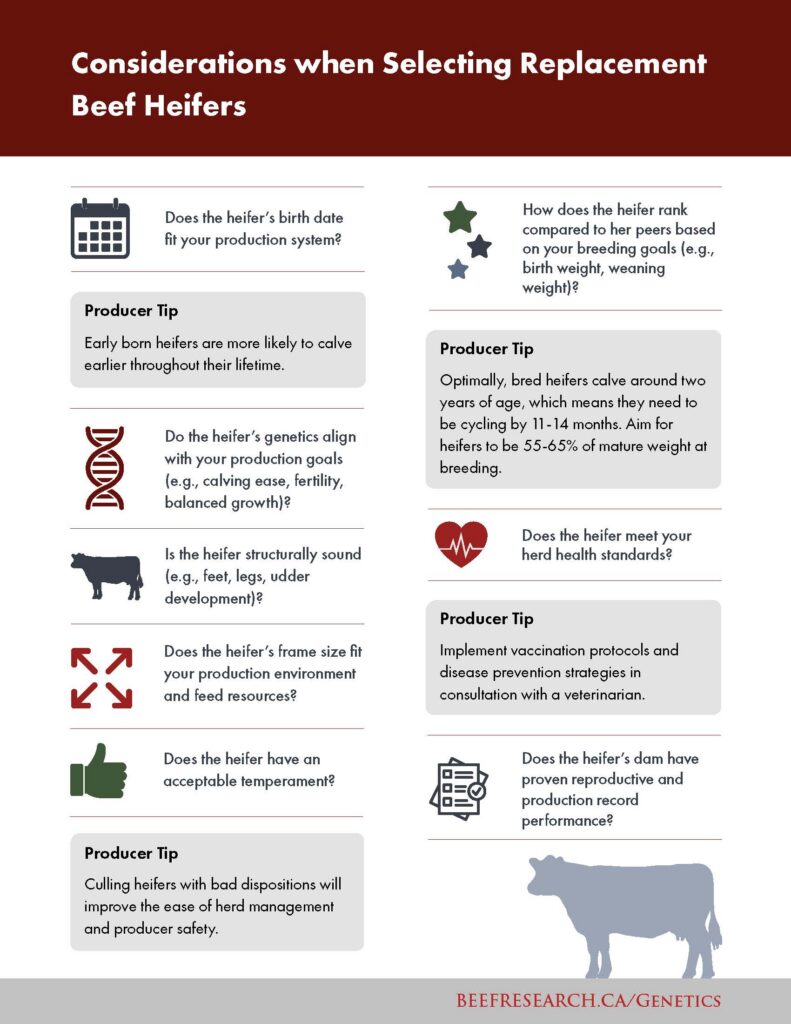
Replacement heifers represent the future genetic and productive potential of the beef herd. Selecting the right females can improve fertility, calving ease, maternal traits, temperament and overall herd performance. However, selection criteria should align with an operation’s goals, environment, available feed resources and marketing strategy.
The following checkpoints can help guide replacement decisions as a heifer progresses from birth to breeding.
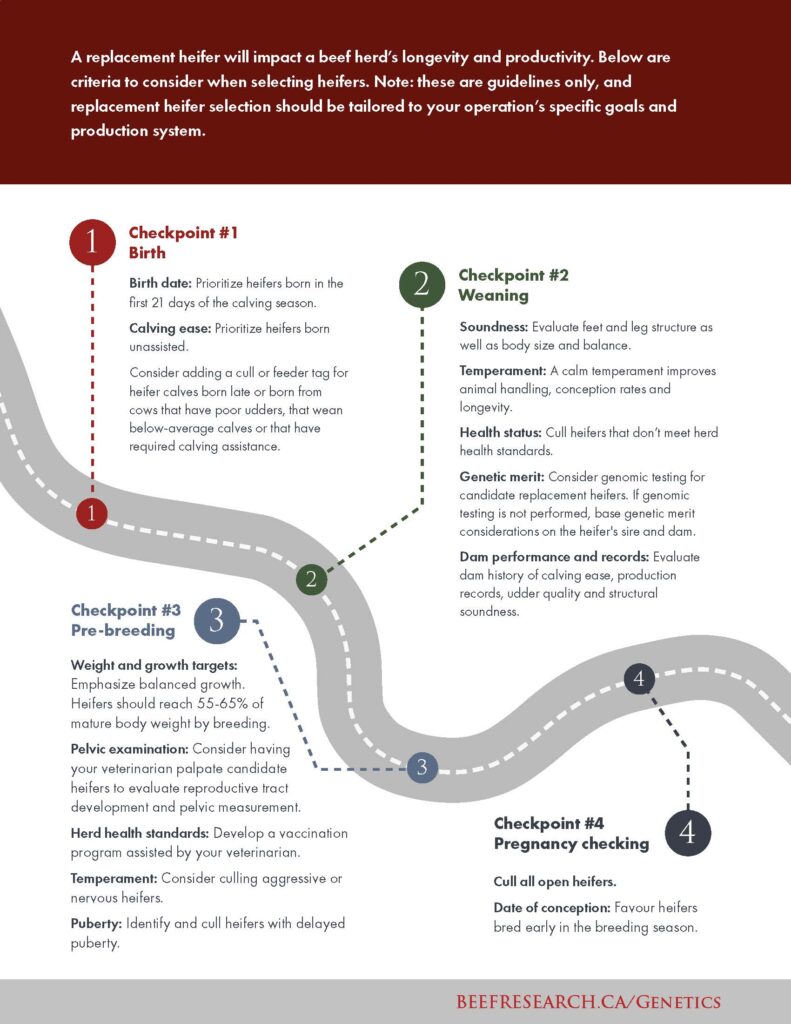
✅ Checkpoint #1: Birth
The selection process can start on day one.
Birth Date
Heifers born during the first 21 days of the calving season should receive special consideration. Research has shown that early-born heifers are more likely to reach puberty sooner, breed earlier and continue calving earlier throughout their productive lives.
Calving Ease
Prioritize heifer calves that were born unassisted. Difficult births can indicate problem genetics or maternal factors that may not align with long-term herd productivity goals.
Evaluate the Cow
Birth is also an opportunity to assess the cow behind the calf. Consider adding a cull or feeder tag for heifer calves from cows that:
- Consistently calve late
- Have poor udder quality
- Wean below-average calves
- Require calving assistance
Keep or Cull? Keep heifers that are early-born, born unassisted and come from productive, problem-free cows. Cull heifer calves that fail to meet these standards.
✅ Checkpoint #2: Weaning
By weaning, more information is available to evaluate each candidate heifer.
Structural Soundness
Assess feet, leg structure, body size and overall balance. Structural problems can lead to reduced longevity, impaired mobility and reproductive challenges later in life.
Temperament
Disposition matters. Calm cattle are generally easier to handle and may experience better reproductive performance and longevity. Nervous or aggressive animals can increase labor requirements and safety risks.
Health Status
Only retain heifers that meet herd health standards. Chronic health issues can affect growth, reproduction and lifetime productivity.
Genetic Merit
Evaluate each heifer’s genetic potential using available tools such as:
- Genomic testing
- Expected progeny differences (EPDs)
- Sire and dam performance records
Selection should focus on traits that support the operation’s production goals, which could include calving ease, fertility, maternal ability and balanced growth.
Cow Performance
Once again, review the dam’s history, including calving ease, production records, udder quality and structural soundness. Strong-performing cows often produce daughters that are more likely to succeed as replacements.
Keep or Cull? Retain heifers that combine sound structure, good health, desirable genetics and strong maternal backgrounds.
✅ Checkpoint #3: Pre-Breeding
The pre-breeding period is a critical stage as reproductive success drives herd profitability.
Weight and Growth Targets
Replacement candidates should achieve approximately 55% to 65% of their expected mature body weight by breeding and be in appropriate body condition. Reaching these targets improves the likelihood that heifers are cycling and ready to conceive.
Reproductive Development
Consider a reproductive tract and pelvic examination performed by a veterinarian prior to breeding. These evaluations can help identify females with delayed reproductive development or physical limitations that could affect calving and fertility, such as a narrow pelvis.
Puberty Status
Ideally, heifers should be cycling between 11 and 14 months of age to calve as two-year-olds. Heifers with delayed puberty may struggle to breed on schedule and should be carefully evaluated.
Herd Health
A veterinarian-guided vaccination and disease prevention program helps protect reproductive performance and long-term productivity.
Temperament Review
If temperament concerns remain evident at this stage, consider culling those females before investing further resources.
Keep or Cull? The best candidates are healthy, on target for weight and capable of entering the breeding season ready to conceive.
✅ Checkpoint #4: Pregnancy Checking
Pregnancy detection provides the final replacement-heifer evaluation before entering the cow herd.
Pregnancy Status
Open heifers should be culled. Retaining non-pregnant females increases costs without generating future calf revenue.
Date of Conception
Heifers that conceive early in the breeding season should be favored because they are more likely to calve early and maintain that advantage throughout their productive lives.
Keep or Cull? Keep bred heifers that conceived early in the breeding season (first 21 days). Cull open females and those that conceived late if replacement numbers allow.
➡️ Building a Stronger Cow Herd
Selecting replacement heifers involves a series of evaluations that begin at birth and continue through breeding and beyond. By assessing calving date, maternal background, structural soundness, growth, reproductive development, health, temperament and pregnancy status, beef producers can make informed decisions that strengthen herd performance over the long term.
The goal is simple: invest in females that will become productive, fertile, long-lasting cows while removing those that are less likely to contribute to the future success of the herd.
Sharing or reprinting BCRC articles is welcome and encouraged. Please credit the Beef Cattle Research Council, provide the website address, www.BeefResearch.ca, and let us know you have chosen to share the article by emailing us at info@beefresearch.ca.
The BCRC is funded by a portion of the Canadian Beef Cattle Check-Off.

Your questions, comments and suggestions are welcome. Contact us directly or spark a public discussion by posting your thoughts below.