Canadian Beef Industry Statement on AAFC Research Cuts
PUBLIC STATEMENT
The Canadian Cattle Association (CCA) and the Beef Cattle Research Council (BCRC) are concerned about Agriculture and Agri-Food Canada (AAFC) reductions affecting research farms, facilities, programs and research expertise at Nappan (Nova Scotia), Quebec City (Quebec) and Lacombe (Alberta). We recognize the fiscal pressures facing the federal government; however, the cuts will have far-reaching impacts for cattle producers, the beef industry, consumers and Canada’s efforts to grow the economy and diversify export markets.
In the past decade, Canada’s beef producers increased their own research contributions by over 600%, viewing research as an investment in future economic growth and competitiveness. Public-good research remains essential where market incentives are limited, or independent expertise is required for regulatory, trade and consumer confidence. AAFC’s national capacity is particularly important to maintain in the areas of food safety, carcass quality and grading, and forage breeding and management.
“Canada’s beef producers rely on a stable, high‑performing public research network to deliver the tools, evidence and innovations that keep farms resilient, food safe and our sector competitive,” explained CCA President Tyler Fulton. “When research capacity is lost, it isn’t quickly rebuilt. Cattle producers and the public pay the price for years and even decades.”
Negative Consequences for Beef and Forage Research
Forage is the foundation of the beef industry. Canada cannot have a competitive beef industry or efficiently respond to industry priorities without abundant and productive forages. The capacity to continue building in these vital programs has been lost through the closure of the Lacombe, Nappan and Quebec research stations.
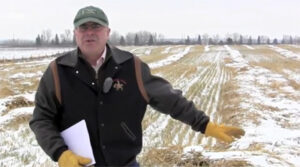
Extensive work conducted at the Lacombe Research and Development Centre exploring extended grazing practices allowed producers to cut winter-feeding costs and survive through the BSE crisis. While a small number of beef producers had begun attempting this practice, clear guidance by Dr. Vern Baron at AAFC Lacombe allowed other producers to begin implementation when it was needed most. In recent years, Dr. Baron began collaborating with AAFC researchers in Quebec led by Dr. Annie Claessens and Dr. Annick Bertrand, to develop higher-yielding, winter hardy alfalfa varieties. At AAFC Nappan, Dr. Yousef Papadopoulos, John Duynisveld and Dr. Kathleen Glover have been focused on forage and grazing strategies for Atlantic Canada’s unique climate and acidic soils. Among multiple accomplishments, they have developed grazing management programs for Eastern and Atlantic Canada and bred improved trefoil, red clover and alfalfa (e.g., AAFC Trueman) varieties that have been adopted across the country. This research program has developed more productive and economical pasture mixes for Eastern Canada and low-cost methods to rejuvenate pasture stands that would also improve forage germination and establishment. Critically, collaborations between these AAFC sites and agricultural universities led to a highly productive network that benefits forage and beef producers across the entire nation. The effectiveness of this network and the benefits it provides to Canadian beef producers are compromised by the loss of these facilities.
Beef grading is fundamentally important to pricing beef carcasses. With the closure of AAFC Lacombe, Canada has lost its only robust meat science program and will not have the scientific expertise needed to address questions of grade equivalency in any of the foreign export markets the Canadian beef sector is hoping to diversify into. The team of beef grading researchers at Lacombe developed the instrument grading technology that is currently in use worldwide. Dr. Oscar Lopez-Campos at Lacombe has been responsible for upgrades to Canada’s beef grading system for several years, working to harmonize it with the U.S. system. He has examined methods to go beyond simple “yield grade” estimations and has developed ways to fabricate individual beef carcasses to optimize the value of the cuts in each carcass. His accomplishments also include developing a methodology to translate Canadian beef carcass quality grades into Japanese equivalents to bolster Canadian beef marketing efforts.
The Lacombe research station was also home to the food safety team led by Dr. Xianqin Yang. Food safety research solves problems before they reach Canadian or international consumers. This program developed and validated procedures that packing plants use to wash hide-on carcasses, carcass rinses and pasteurization methods and improved methods to clean conveyor belts, knives and other equipment. These advances have contributed to significant decreases in E. coli O157:H7 related food safety recalls in Canada. After a major E. coli outbreak in 2012, Dr. Yang determined how to safely cook needle-tenderized beef so that Health Canada could label it appropriately. Food safety is a common “non-tariff trade barrier.”
We fully recognize the fiscal pressures facing the federal government and understand that spending reductions are necessary given the unprecedented situation Canada is facing. In anticipation, we engaged AAFC, requesting and trusting that industry priorities be considered. Elimination of critical expertise in forage breeding, carcass grading and food safety seems shortsighted and may have long-term impacts on ensuring the stability and longevity of Canada’s beef industry.
Where Do We Go from Here?
Research is an investment, not a discretionary expense. The BCRC believes the decision to close the Nappan, Quebec and Lacombe research stations may result in long-term, debilitating consequences for our industry including:
- The potential loss of unbiased, independent expertise in Canada in critical areas including forage breeding and management, beef quality, carcass grading and food safety.
- The potential loss of innovative and effective forage breeding and management solutions that can respond to adverse conditions including cold, drought, flooding and poor-quality agricultural soil.
- The potential loss of Canada’s ability to respond to food safety concerns and crises with science-based evidence and action plans.
- The potential loss of Canada’s ability to modernize our beef carcass grading system in response to changing genetics, management practices, consumer preferences and international market demands.
When considering the loss of critical capacity in these research areas, BCRC Chair Dean Manning noted, “Efficiency should mean smarter coordination of a national network, not the erosion of irreplaceable expertise. While the intent may be efficiency, the reality is that Canada loses the capacity to generate the learnings and innovations that maintain and improve sustainable and safe food production.” He added, “I believe that Canada’s beef producers are ready to partner on solutions rather than the elimination of critical research capacity.”
The CCA has requested that if the closure of these facilities stands, critical capacity and programs be transferred as outlined below.
- Maintaining a national carcass quality and grading research program is critical. The CCA requests that Dr. Oscar Lopez-Campos’ program be transferred to another institution such as the University of Guelph, which has a federally inspected research abattoir.
- We understand that Dr. Xianqin Yang’s position may be transferred to Lethbridge Research and Development Centre. The CCA requests that this be confirmed to ensure adequate support is available to maintain the critical food safety research being conducted.
- The CCA requests that the Nappan and Quebec City forage breeding programs be maintained or transferred with researchers maintaining access to forage breeding plots and support.
- If AAFC chooses to cancel projects midway through their completion, the CCA requests that the investments industry has made be refunded.
The CCA and the BCRC remain committed to constructive engagement with Minister MacDonald and AAFC officials to ensure critical research capacity is preserved, transitions are well managed and producer‑funded projects deliver the intended outcomes.
###
For further information, contact:
Tracy Herbert
Knowledge Mobilization and Communications Director
Beef Cattle Research Council
306-850-5026 | [email protected]
Tina Zakowsky
Communications Manager
Canadian Cattle Association
403-451-0931 | [email protected]
Sharing or reprinting BCRC posts is welcome and encouraged. Please credit the Beef Cattle Research Council, provide the website address, www.BeefResearch.ca, and let us know you have chosen to share the article by emailing us at [email protected].
The BCRC is funded by a portion of the Canadian Beef Cattle Check-Off.

Your questions, comments and suggestions are welcome. Contact us directly or spark a public discussion by posting your thoughts below.