Injection Best Practices for Beef Cattle - New Resources ▶️

Practice Makes Perfect: Little Things Done Right Lead to Big Rewards

When a beef cattle producer chooses to give cattle injections, there is a series of decisions that can have a big impact on carcass quality at the end of the production line, as well as on the efficacy of the products being injected.

While it may seem innocent enough to ignore best practices when injecting an animal that is far from entering the food chain, these decisions impact the entire industry. Each sector will ultimately be more profitable if everyone works together to ensure a quality product.  

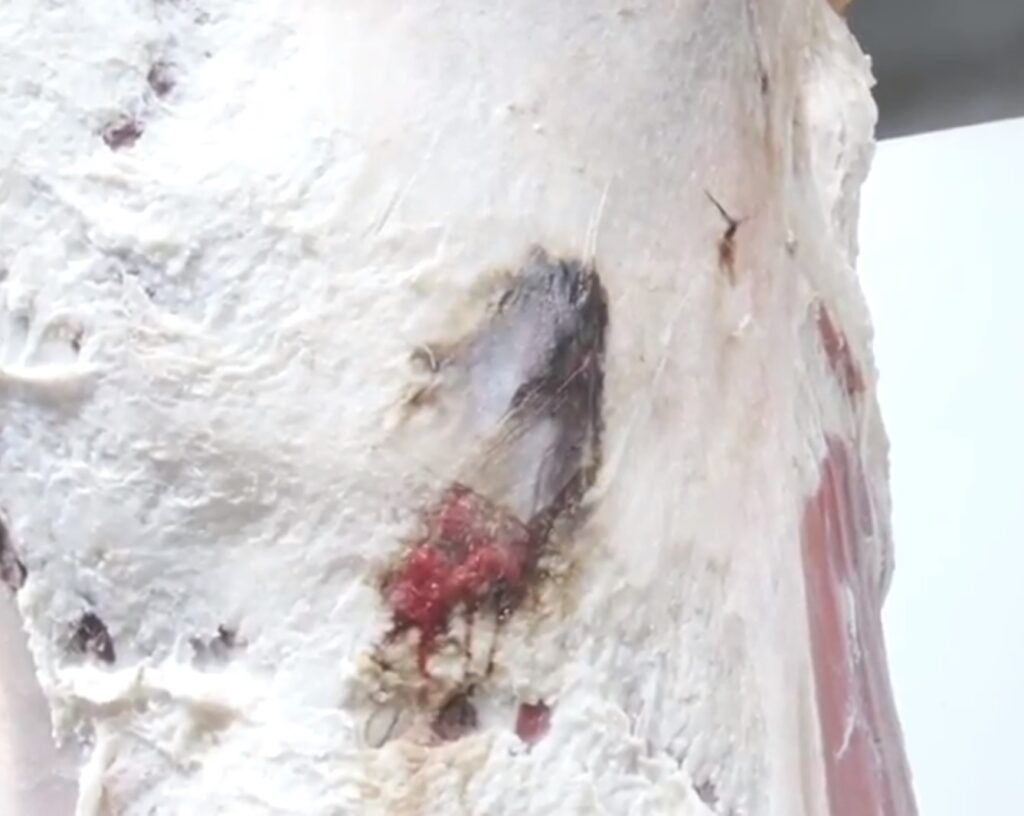
Due to increased prevalence rates, injection site lesions (ISL) cost the Canadian beef industry $0.56/head or $1.63 million in 2016 compared to $0.21/head or $662,951 in 2011.

As shown in the BCRC’s new cattle injection resources, there are many steps that can be taken to reduce or eliminate ISLs and ensure the products being injected can work as intended. Following a few simple steps can have a big impact on the health and welfare of the animal being treated and keep dollars in the pocket of the producer.

Restraint

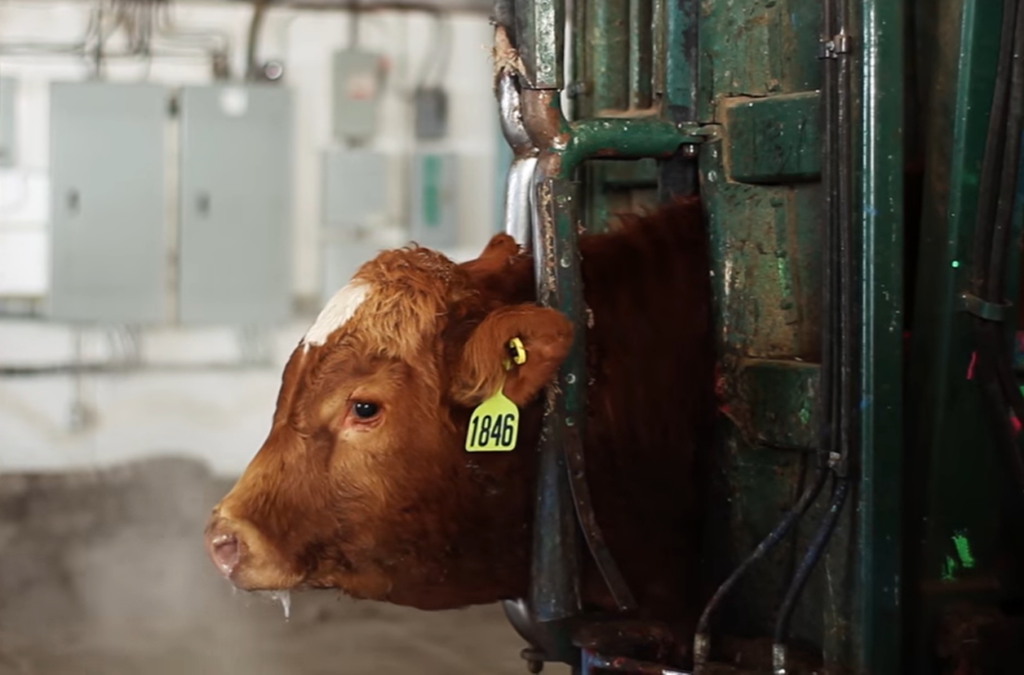
Ensure all animals being treated are safely restrained in a chute that allows the processor easy access to the neck and prevents unnecessary movement in the animal being treated. Cattle that are not properly restrained are at a higher risk for tissue trauma, needle breaks, improper injection technique and incorrect location.

Routes of Administration (ROA)

Subcutaneous (SubQ)

Subcutaneous injections are placed just under the skin in the safe zone. The needle should be inserted at a 45-degree angle to the animal. Subcutaneous injections are generally less irritating and the preferred ROA, however, always follow label directions.

INTRAMUSCULAR (IM)

All intramuscular injections should be given in the neck muscle in the safe injection zone. The needle should enter at 90 degrees, or perpendicular to the animal, into the muscle tissue. Always follow label direction for ROA.

Needle Size

Choose an appropriate needle size to ensure the product can be delivered with minimal tissue disruption. Choose the smallest gauge needle that can still effectively deliver the medication. 

Class of Cattle
 
Route of Injection
 
Gauge
 
Needle Length
 
Calves < 500 lbs
 
Intramuscular
 
20-18
 
1 inch
 
Subcutaneous
 
20-18
 
1/2 – 5/8 inch
 
Cattle >500 lbs
 
Intramuscular
 
18-16
 
1 – 1.5 inch
 
Subcutaneous
 
18-16
 
1/2 – 3/4 inch

Volume Per Injection Site

Recommended maximum volume per injection site is 10 ml (cc) per site. Increasing volume of medication injected into one location impedes the ability to absorb and excrete medication. 

Hygiene

  • Keep equipment clean and in good working order to prevent tissue trauma and abscesses. Use quality disposable needles, and change  every 10-15 injections, when using a multidose vial or when needles are burred, bent or dull.
  • Inject through clean hide, being careful not to introduce bacteria and debris into the tissue.

Record-Keeping

Keep these records every time you inject an animal:

  • What was treated?
  • Reason for treatment?
  • What drug and dose?
  • What route?
  • Withdrawal time?

ADDITIONAL RESOURCES:

Sharing or reprinting BCRC posts is welcome and encouraged. Please credit the Beef Cattle Research Council, provide the website address, www.BeefResearch.ca, and let us know you have chosen to share the article by emailing us at info@beefresearch.ca.

The BCRC is funded by a portion of the Canadian Beef Cattle Check-Off.

Canadian Beef Cattle Check-Off

Your questions, comments and suggestions are welcome. Contact us directly or spark a public discussion by posting your thoughts below.

Understanding the Five W's of Cattle Injections: Who, What, When, Where & Why 🎙️

CLICK THE PLAY BUTTON TO LISTEN TO THIS POST:

Listen to more episodes on BeefResearch.ca, Spotify, Apple Podcasts, Amazon Music or Podbean.

Over the last two decades, great strides have been made in standardizing beef cattle injection techniques and methods. Today, there are animal injection best practices that have become widely known in the beef industry as “just the right thing to do.” These cattle injection techniques are recommended to help farmers produce safe beef for the consumer and maintain Canada’s high reputation for beef quality

beef cattle injection techniques and key recommendations for beef cattle producers

How to Inject a Beef Animal

  • Securely restrain the animal.
  • Use the appropriate size and length of needle.
  • Use the subcutaneous route whenever the product label allows.
  • Only inject 10 ml (cc) maximum into any one site, or as per label.
  • Change needles when bent or dull and after every 10-15 uses.
  • Never straighten or reuse a bent needle.
  • Leave a hand-width of space between injections.
  • Never inject in the armpit of the animal (i.e. branding, spring processing).
Source: Verified Beef Production Plus Producer Manual

Route of Administration for Beef Cattle Injections

When label recommendations are followed, a beef animal’s ability to absorb, distribute, break down and excrete a drug are predictable. It is when those label directions are not followed that we run into concerns. There are distinct differences in the rate of absorption of drugs depending on how they are delivered. If a product is given incorrectly, there is no guarantee that the drug will be effective.  

Route of Administration (ROA): The route by which a drug is taken into the body (i.e. subcutaneous, intramuscular, oral, intravenous, topical, intranasal).

vaccination best practices
  • Incorrect ROA could lead to underdosing, which is an animal welfare and production concern when a therapeutic level may not be achieved. This will leave cattle vulnerable to the disease being treated or prevented. Underdosing is also a concern from an antibiotic stewardship standpoint, as chronically underdosing antimicrobial drugs can lead to resistance.  
  • The ROA also determines a beef animal’s ability to eliminate the product, affecting withdrawal recommendations, and potentially leading to drug residues being detected in meat.  
  • Subcutaneous injections (Sub-Q or SQ) are placed just under the skin, as opposed to an intramuscular injection where the medication is placed directly into the muscle. Subcutaneous injections are generally less irritating and are the preferred ROA.  
  • Pharmaceutical companies are continually updating products and labels, so become familiar with the current label recommendations and use the subcutaneous route whenever possible. 

Volume Recommendations for Cattle Injections

The recommended maximum volume per injection site is 10 ml (cc) per site. Increasing the volume of medication injected into one location will impede a beef animal’s ability to absorb and excrete the medication. 

  • An increased volume can lead to a pocket of unabsorbed medication being left in the tissue. This decreases the efficacy of the treatment and could also be detected as drug residue in the carcass of a beef animal.  
  • A lower volume injection also ensures that the tissue can effectively recover from the irritation of the medication, decreasing the chances of the animal developing an injection site lesion. 
beef animal injection site lesion

Injection site lesions (ISL) cost the beef industry $0.56/head or $1.63 million in 2016 compared to $0.21/hd or $662,951 in 2011 due to higher prevalence rates. There are many steps that can be taken to reduce or even eliminate ISL’s. 

Proper Location for Beef Cattle Injections

Only inject beef animals in the recommended safe zone on the neck, never in the rump or loin. This ensures that, if an animal has a reaction to the product and develops a lesion, it can easily be trimmed away from the less valuable chuck, rather than damaging the more valuable round cuts.   

cattle injection zones
butcher's guide to oven roast tenderness of beef cuts
Source: Canada Beef
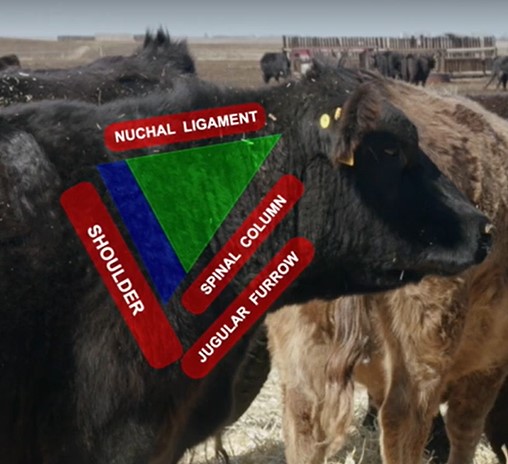
  • Injecting outside of the safe zone in the neck can potentially cause injury and even death to the animal being treated. The nuchal ligament is responsible for supporting the head of a beef animal, and if it is damaged via an injection that animal can suffer severe and permanent paralysis. The same result can occur if the spinal cord is inadvertently hit. The jugular furrow contains the jugular vein and carotid artery. If medications are mistakenly injected directly into the blood stream, animals may suffer severe drug reactions. 
  • A hand-width of space between medication injections will ensure the tissue can adequately recover from the injection and prevent medications from comingling. If medications mix within the animal, they can interact and cause drug reactions, or even inactivate each other, rendering them useless.  

Best Needle Size for Beef Cattle Injections

Choose the appropriate needle size to ensure the product can be delivered while causing the minimum disruption to the tissue. Always choose the smallest gauge needle that can still effectively deliver the type of medication needed. Disposable needles with an aluminum hub, rather than plastic, are preferred. 

Class of CattleRoute of InjectionNeedle GaugeNeedle Length
Calves less than 500 poundsIntramuscular20-181 inch
Subcutaneous 20-18 ½ – inch
Cattle >500 pounds Intramuscular18-161 – 1½ inch
Subcutaneous 18-16½ – ¾ inch 
syringe and needles for beef cattle injections for vaccines or medications

Good Hygiene Methods for Cattle Injections

Keep equipment clean and in good working order to prevent unnecessary tissue trauma and the possibility of localized abscesses.  

  • Never inject through a dirty hide, which will only drag bacteria and debris into the tissue and create a perfect environment for abscesses.  
  • Burred, bent and dull needles will also increase the likelihood of damage and abscessing. This can be prevented by using a quality disposable needle that can be changed anytime damage is evident, every 10-15 injections and every time you enter a multidose vial. 
safe restraint in a chute for giving cattle injections, vaccinations and medications

Safe Restraint for Cattle Injections

Cattle that are not properly restrained are more likely to suffer from tissue trauma, incorrect injection technique and location, and are at a higher risk for needle breaks. Ensure that all animals being treated are safely restrained in a chute that allows the processor easy access to the neck and prevents unnecessary movement in the animal being treated. 

A little knowledge goes a long way, and understanding the reasoning behind each recommendation can help instill accountability and ensure producers are diligent in the day-to-day tasks involved in raising cattle for food. Little things done right every day safeguard food quality and ensure Canadian food safety remains at a high standard.  

ADDITIONAL rESOURCES:

Sharing or reprinting BCRC posts is welcome and encouraged. Please credit the Beef Cattle Research Council, provide the website address, www.BeefResearch.ca, and let us know you have chosen to share the article by emailing us at info@beefresearch.ca.

The BCRC is funded by a portion of the Canadian Beef Cattle Check-Off.

Canadian Beef Cattle Check-Off

Your questions, comments and suggestions are welcome. Contact us directly or spark a public discussion by posting your thoughts below.

Lost profits: Injection site lesions cost the industry $1.63 million: New Videos

Injection site lesions visible on the carcass surface have increased to nearly 14% of non-fed cattle and 8% of fed cattle. Even in areas that are inches away from injection sites can result in tissue damage causing tougher meat and lower eating quality. As a result, injection site lesions cost the industry $0.56/head or $1.63 million in 2016. That’s up considerably from 0.21/head or $662,951 in 2011.

What do you need to know?

Animals should be properly restrained to ensure the safety of both yourself and the animal. This will also give greater access to the neck area to improve delivery accuracy and reduce the risk of broken needles.

Use subcutaneous (below the skin) when possible versus intermuscular (into the muscle) when administering injections. Intermuscular injections generate a greater risk of developing a reaction to the treatment and can create injection abscesses and bruising.

It is recommended to deliver only 10 mL of treatment per injection site. Although, antibiotics such as penicillin may require multiple injections per dose. To do this, deliver the treatment in the soft tissue area between the spine, shoulder and neck veins which forms a triangle. Deliver multiple injections of 10 mL or less about one hand width apart.

Alternatively, injections may be delivered behind the shoulder blade by tenting the skin and injecting in a downward motion. It is best to avoid injections in the hip region.

Avoid delivering treatments in an area with mud or tag on the hide. Injections through areas of tag and debris can introduce bacteria into the injection site and cause a reaction.

In remote locations, animals may be treated using a dart gun. While the darts may hold more than 10 mL, the same rule applies to only give 10 mL per injection site. This method may not be appropriate for treatments that need more than 10 mL per dose. When retrieving the dart make sure that the entire needle has been removed.

Multi-dose needles should be changed every 10-15 animals or when dull, burred, or bent and should be changed before every new drug or vaccine.

Watch the videos

 Learn more: 

Click here to subscribe to the BCRC Blog and receive email notifications when new content is posted.

The sharing or reprinting of BCRC Blog articles is welcome and encouraged. Please provide acknowledgement to the Beef Cattle Research Council, list the website address, www.BeefResearch.ca, and let us know you chose to share the article by emailing us at info@beefresearch.ca.

We welcome your questions, comments and suggestions. Contact us directly or generate public discussion by posting your thoughts below.

Carcass defects cost industry an estimated $110 million/year: New video

Beef quality defects, like bruises and lesions, cause economic losses to the Canadian beef industry due to reductions in usable meat and the added labour to remove these defects from the carcass.

This video from a new video series on the results of the latest National Beef Quality Audit (NBQA) provides the answers to which carcass defects the beef industry has improved upon since the previous audit and the areas we as an industry need to work on. The ultimate objective of the NBQA is to enhance the quality and safety of Canadian beef while increasing the profitability of the Canadian beef and cattle industry.

The NBQA results indicate the overall cost of carcass defects has increased 15% to $85/head on fed cattle and increased by 5% to $47/head on non-fed cattle. By assigning dollar values to the various defects, those with the greatest expense to the industry can be identified. This informs the areas to be tackled first through research or through communications about prevention.

 Improvements made since the previous NBQA:

  • The number of cattle with horns continues to decrease and is now considered to be below 10%.
  • The number of cattle with brands has decreased to 13%. (The number of branded non-fed cattle has decreased, but the number of branded fed cattle has increased.)
  • Bruises in non-fed cattle has decreased significantly from 86% to 63%.

Areas that require improvement:

  • Injection site lesions have increased significantly in both fed and non-fed cattle.
  • Hide manure and mud (tag) percentage has increased (which may be due to seasonal weather).
  • Liver abscesses have increased in both fed and non-fed cattle. The economic loss from liver discounts alone in 2016 is estimated at $20.98/head for all cattle, with a total industry loss of $61.2 million.

Watch the video

Learn more

Click here to subscribe to the BCRC Blog and receive email notifications when new content is posted.

The sharing or reprinting of BCRC Blog articles is welcome and encouraged. Please provide acknowledgement to the Beef Cattle Research Council, list the website address, www.BeefResearch.ca, and let us know you chose to share the article by emailing us at info@beefresearch.ca.

We welcome your questions, comments and suggestions. Contact us directly or generate public discussion by posting your thoughts below.