Forage Without Borders 🎙️

CLICK THE PLAY BUTTON TO LISTEN TO THIS POST:

Listen to more episodes on BeefResearch.caSpotifyApple PodcastsAmazon Music or Podbean.

This article written by Dr. Reynold Bergen, BCRC Science Director, originally appeared in the June 2025 issue of Canadian Cattlemen magazine and is reprinted on BeefResearch.ca with permission of the publisher.

About 20 years ago, Doug Wray drove in from Irricana, Alberta, to ask why the beef industry didn’t fund more forage breeding. Back then, the usual beef industry response to forage breeding proposals was “let the government and forage groups fund that.”

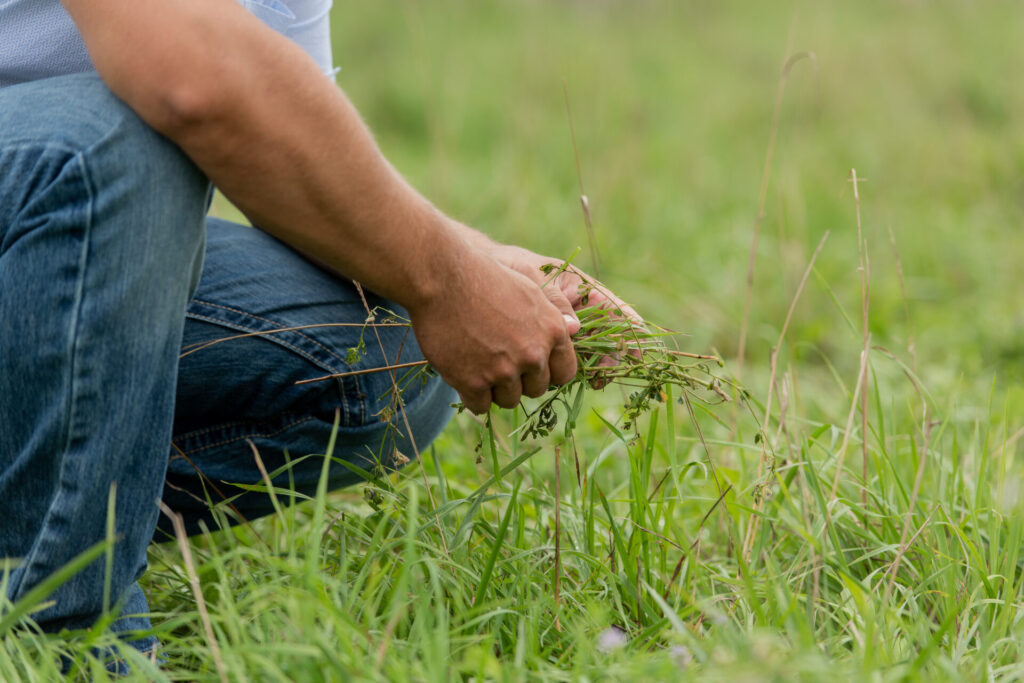
beef producer checking forage in pasture
Photo credit: Beef Farmers of Ontario

Doug calmly explained that the forage groups he was active in don’t have a check-off. So, if beef cattle producers wanted better forage varieties, beef producers would need to invest in forage breeding.

When we looked into it, we found there weren’t many forage breeders left in Canada. Universities and government administrators explained that low industry funding signaled that forage breeding wasn’t a priority. So, retired breeders weren’t replaced, and long-term breeding and management programs had been scaled back or closed.

After the beef industry began to invest in forage breeding (largely thanks to the Canadian Beef Cattle Check-Off), universities and Agriculture Canada began to reinvest in a new generation of forage breeders. Canada has fewer forage breeders than 20 years ago, but the ones we have are very enthusiastic, attuned to industry and working hard to address industry priorities.

Dr. Bill Biligetu (University of Saskatchewan) and Dr. Annie Claessens (Agriculture and Agri-Food Canada, Quebec City) compared how different forage varieties performed under different growing conditions across North America (Genotype × environment interaction patterns of dry matter yield in meadow brome, orchardgrass, tall fescue, and timothy evaluated at harsh winter sites; DOI: 10.1002/glr2.12088).

What They Did

The research team evaluated the yields of registered varieties and experimental populations from four different perennial tame grasses at seven locations across North America. They evaluated nine meadow bromes, nine orchardgrasses, seven tall fescues, and ten timothies. Plots were grown and harvested in 2019, 2020 and 2021 under dryland conditions in Alberta (two annual cuts of orchardgrass in Beaverlodge), Saskatchewan (two cuts of all four grasses in Saskatoon and Swift Current), Quebec (three cuts of all four grasses in Saint-Augustin and Normandin) and under irrigation in Utah (five cuts of all four grasses in Millville and Panguitch).

What They Learned

Meadow brome and timothy produced the highest yields at all sites except at Normandin and Panguitch where timothy was outperformed by orchargrass and tall fescue.

Location x variety interactions: The grass variety that had the highest overall yield (averaged across all locations) didn’t necessarily have the highest yield at every individual location.

When yields were averaged across all six sites, the three highest yielding meadow bromes were Armada (registered by AAFC Saskatoon in 2009), S9498 (an experimental University of Saskatchewan population), and UTMB-B (an experimental Utah population). These three outyielded the bottom two meadow brome varieties by 8%. But Armada’s high overall yield was because it performed so well under irrigation in Millville. Experimental populations from Quebec (QBP-1301) and Utah (UTMB-B) performed better in Normandin, Saskatoon and Swift Current, and Paddock (registered by AAFC Saskatoon in 1987) gave the best yields in St-Augustin.

Overall, the top performing orchardgrass varieties were AC Killarney (registered by AAFC Brandon in 2007) and AC Early Arctic (registered by a private BC company in 2002). They yielded 10% better than the bottom three orchardgrasses. But again, these top two varieties didn’t yield the best at every location. AC Killarney yielded best in Utah, while AC Early Arctic yielded best in St-Augustin. Other varieties were better suited to Beaverlodge, and two experimental populations yielded best in Normandin, Saskatoon and Swift Current.

Tall fescue did not have a variety x location interaction; Courtenay (registered by a private BC company in 1987) and S9582 (an experimental population from the University of Saskatchewan) yielded best at all locations and outperformed the bottom two varieties by 53%. Those other two varieties might be better suited for other environments, though.

The three overall highest yielding timothies included CDC Tiznow (registered by the University of Saskatchewan in 2022), Climax (registered by AAFC Ottawa in 1947), and an experimental Utah population (UTM1602). They outyielded the bottom variety by 24%. CDC Tiznow yielded well in Millville, Normandin and Saskatoon, Climax yielded well in Panguitch, and the Utah population yielded best in Swift Current. Experimental populations from AAFC Quebec performed best in St-Augustin.

So, What Does This Mean to You?

Variety is important. Not all meadow bromes are the same, and the same goes for other grasses and legumes. This paper focused on yield, but the same concept applies to other important forage traits. A locally developed variety might not be the best choice for your situation. Sometimes a variety developed elsewhere might be your ideal option. The key is to choose a variety that is well adapted to your local conditions, regardless of where it was originally developed. Over time, long-term, collaborative variety trials like this should help develop more refined variety selection recommendations for different climatic and soil zones. This project is ongoing, and has expanded to include breeders in Lethbridge, Winnipeg and Nappan.

your input is important

The Bottom Line

The beef industry’s support for forage breeding can be traced back to producers who spoke up. The Beef Cattle Research Council has launched an on-line survey at BeefResearch.ca to inform forage, cattle and beef research priorities for the next five years. Here’s your chance to speak up!

The Beef Cattle Research Council is a not-for-profit industry organization funded by the Canadian Beef Cattle Check-Off. The BCRC partners with Agriculture and Agri-Food Canada, provincial beef industry groups and governments to advance research and technology transfer supporting the Canadian beef industry’s vision to be recognized as a preferred supplier of healthy, high-quality beef, cattle, and genetics. Learn more about the BCRC at www.BeefResearch.ca.

Click here to subscribe and receive email notifications when new content is posted.

The sharing or reprinting of articles on BeefResearch.ca is typically welcome and encouraged, however this article requires permission of the original publisher.

The BCRC is funded by a portion of the Canadian Beef Cattle Check-Off.

Canadian Beef Cattle Check-Off

We welcome your questions, comments and suggestions. Contact us directly or generate public discussion by posting your thoughts below.

Utilizing Annual and Perennial Forages to Improve Productivity🎙️

CLICK THE PLAY BUTTON TO LISTEN TO THIS POST:

Listen to more episodes on BeefResearch.caSpotifyApple PodcastsAmazon Music or Podbean.

This article is one of a series of case studies on forage beneficial management practices from Alberta Agrisystems Living Lab and Canfax. It is reprinted on BeefResearch.ca with permission.

What can I do about low productivity pastures or increase my feed supply? Several beneficial management practices (BMPs) can improve pasture or feed yields, increase the proportion of desirable species in a forage stand, improve overall forage quality, or have beneficial impacts on soil quality. A variety of methods can be used to achieve these goals, such as grazing management, re-seeding, sod seeding, overseeding, utilizing different forage mixtures (for pasture or feed production), applying fertilizer/manure, and/or herbicide application. The benefits from using these practices may include increased yields, improved average daily gain, increased potential to retain soil moisture, more grazing days, reduced winter feed costs or impact of drought, and better body condition on cows.1

Three producers have shared their firsthand experiences with the following BMPs so that their insight and knowledge may help others looking to try these practices on their own operations:

Key Takeaways for Improving Feed Availability

  • Choose the right species and varieties for your region: The amount of moisture at seeding is critical for success, so choose plants that are suited for your region and rainfall/soil moisture levels. The Beef Cattle Research Council’s Forage U-Pick Tool can help with selecting species based on your field characteristics.  
  • Use grazing as a tool: While it’s true that deferring grazing is an important step to allow seedlings to establish, in some instances increased grazing pressure can open space for new seedlings while maintaining some of the old stand. This may help avoid a lost grazing year. 
  • Cut costs where you can: In each  of these cases, machinery used for seeding and fertilizing was already owned by the operation. If custom seeding or fertilizing is required, this can increase costs substantially, and you may need to get more creative.  

Intercropping Wheat and Italian Ryegrass 

Susan Heather started an intercropping project on her farm near Nanton, AB, in 2023. The goal of this Alberta AgriSystems Living Lab Project was to reduce wind erosion, increase grazing days and capture more moisture during the three months the field would normally sit bare. The field sits on a reclaimed gravel site, and Susan wanted to do “just those little things to try and make it a little bit more productive” and add more organic matter. 

The wheat was air seeded and Italian ryegrass was floated on the field the day after the wheat was seeded. The field was then rolled to prevent moisture loss and increase seed-to-soil contact. The intercrop was planted in an irrigated field. Wheat was silaged for feed for their finishing operation. Bred cows and heifers grazed the ryegrass in the fall. Susan felt that intercropping gave the ryegrass a “running start” so that it was ready for grazing shortly after the wheat was removed. Manure and urine from grazing returned nutrients to the soil and may reduce the amount of fertilizer needed in the future. 

“It’s definitely a win for us, especially in a year when feed is so expensive.” – Alberta Beef Producer Susan Heather

The Heathers assumed the wheat crop yield would suffer because of competition with the ryegrass, but, to their surprise, they “saw an increase in tonnage off our Italian ryegrass with the wheat versus the check where [we] just had the wheat.” The addition of this field to the pasture rotation reduced grazing pressure on their native grasslands. A warm December in 2023 allowed grazing to continue well into January, significantly reducing winter feeding time and cost. 

Irrigation was a key factor in the success of this project; however, some other local dryland producers have had success with similar intercropping systems. It’s important to consider your rainfall and soil moisture if you are considering intercropping, and it may be beneficial to consult with your local agronomist or seed representative. This is a  BMP that may be useful for producers interested in gaining some additional grazing days from their crop fields, while also potentially reducing fertilizer use. 

Top Tip

Have a clear goal in mind: This helps decide what tools to use and whether you are using the correct approach to achieve that goal. What are the specific improvements you want to see? 

Tame Pasture Rejuvenation

Photo courtesy of Terri and Brad Mappin

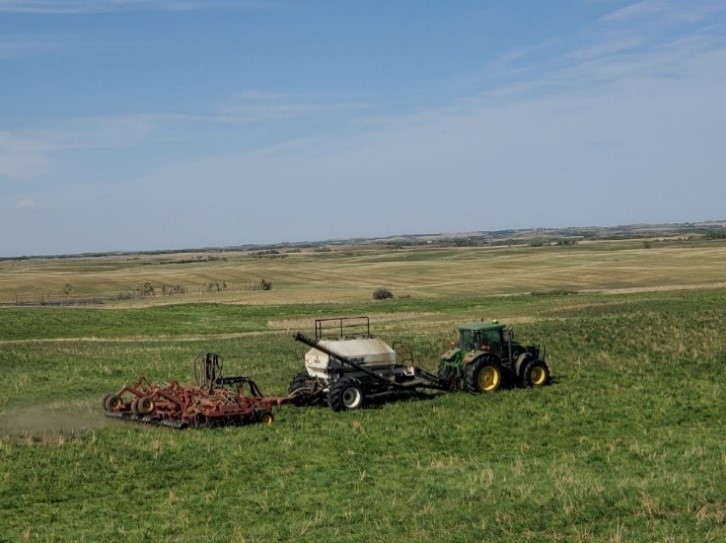
In 2020, Terri and Brad Mappin wanted to improve a newly purchased piece of tame pasture on their farm near Byemoor, Alberta that hadn’t been taken care of. Described by Terri as “a hodgepodge of we’re not really sure what it was,” Brad used an air seeder after a few runs with discs to get a more consistent grass/legume mix. Unfortunately, Brad seeded too deep the first time around, and didn’t get much growth at all. After a few seasons of trial and error, and some timely rainfall, they got the thicker and healthier grass/legume mix they were hoping for.

A second pasture at the Mappin’s operation that had been degraded after a few seasons as a calving pasture. They heavily grazed until mid-June, disced, seeded, and fertilized. The heavy grazing reduced competition for the new seedlings while also keeping some pasture available for one more quick grazing pass later in the summer. A key was the speed of this pass, as Terri mentions, “I skipped them through there fairly quickly (1-2 days max) so that they didn’t get to those seedlings.” The fear was that if the cows got past some of the previous litter and into the seedlings, they’d overgraze the tender new growth and jeopardize the newly established plants.

The Mappins noticed increased calf weights because of the higher nutrition from the new stands, but a before- and after-rejuvenation comparison in terms of forage production was difficult because of drought conditions in 2021. However, they were able to keep a good stockpile of hay, and the rejuvenated pasture was still grazed the next year despite the dry conditions.

Top Tips

  • Be adaptable: Seeding is heavily dependent on moisture, so have seeding and grazing plans ready in the event of unfavourable conditions is key.
  • Don’t expect perfect results right away: If you can, have additional feed on standby in case the new stand doesn’t establish well, and be prepared for some trial and error until you find what works best for you. 
  • Start small: Starting with partial rejuvenation project can spread out risk from drought, poor establishment, or slow new forage growth.  

Forage Mixtures for Silage

Derek Friend switched to a 12-species forage blend for silage production in 2023 for his cow-calf operation in central Alberta. Previously, he planted a monocrop rotation of either barley, oats, wheat, peas, or canola on the field. The goal for this field was to find a silage blend that could balance lower inputs, rejuvenation the soil, and maintain acceptable yields. This new blend includes Italian ryegrass, radish, clovers, millet, forage rape, oats, other grasses, and barley as a base. Derek limited tillage on the field to a single disc pass instead of the typical 3-4 passes and seeded in May to make sure the warm-season species would not be caught in a late frost. No fertilizer was added either, so the total number of passes over the field was much lower than previous years. 

Derek assumed the silage yield would suffer given the minimal tillage and lack of fertilizer, but, at about “10+ tons an acre,” the result was likely closer to an average yield than lower harvest he expected. This ended up being a great result while keeping fuel and machinery costs low. Although this blend worked on Derek’s operation, keeping expectations realistic and selecting species based on their ability to grow together are important factors for switching to these blends. 

Maintaining Optimal Species Composition with Intensive Grazing 

A strategy Derek uses to get the most out of his pasture and keep one species from becoming dominant is an intense, almost daily rotation for grazing. The move from a continuous summer grazing system to intensive rotational grazing, was done to keep all species in the pasture evenly grazed. Like the Mappins, it’s hard to compare body conditioning and average daily gain between years in the 2020s, but Derek has noticed his cows eating more from the competition for the best bites. 

Top Tips

  • Reducing tillage intensity can be a cost cutting measure: While full tillage may produce a higher yield, it also adds costs and can be riskier if rainfall doesn’t arrive in the time and amount needed.  
  • Use cattle to keep a good species mix: Targeted heavy grazing can prevent less palatable species from becoming dominant and giving paddocks longer rest times give more palatable species more regrowth before re-grazing. 

1Omokanye, A., Yoder, C., Sreekumar, L., Vihvelin, L., & Benoit, M. (2018). Forage production and economic performance of pasture rejuvenation methods in northern Alberta, Canada. Sustainable Agriculture Research, 7(2), 94-110.

Alberta Agrisystems Living Lab
Canfax Research Services

Click here to subscribe and receive email notifications when new content is posted.

The sharing or reprinting of articles on BeefResearch.ca is typically welcome and encouraged, however this article requires permission of the original publisher.

The BCRC is funded by a portion of the Canadian Beef Cattle Check-Off.

Canadian Beef Cattle Check-Off

We welcome your questions, comments and suggestions. Contact us directly or generate public discussion by posting your thoughts below.

Choosing Forage Varieties Without Getting Lost in the Weeds 🎙️

This article written by Dr. Reynold Bergen, BCRC Science Director, originally appeared in the May 2024 issue of Canadian Cattlemen magazine and is reprinted on BeefResearch.ca with permission of the publisher.

CLICK THE PLAY BUTTON TO LISTEN TO THIS POST:

Listen to more episodes on BeefResearch.ca, Spotify, Apple Podcasts, Amazon Music or Podbean.

Henry Ford famously said, “Any customer can have a car painted any color that he wants, so long as it’s black.” Today’s vehicles have endless options in terms of color, body style, engine, drivetrain and everything else you can imagine. Some people revel in these endless options, enjoy mixing and matching, and “building” exactly what they want. Some of us are put off by all the extra hassle it takes just for the pleasure of dropping a king’s ransom on a new vehicle, and decide we’ve probably got a few more years and a few more thousand miles before the wheels fall off whatever we’re currently driving.

Marketers call that phenomenon “choice paralysis.” It can cause enormous problems for producers wanting to reseed tame perennial pastures and hayfields.

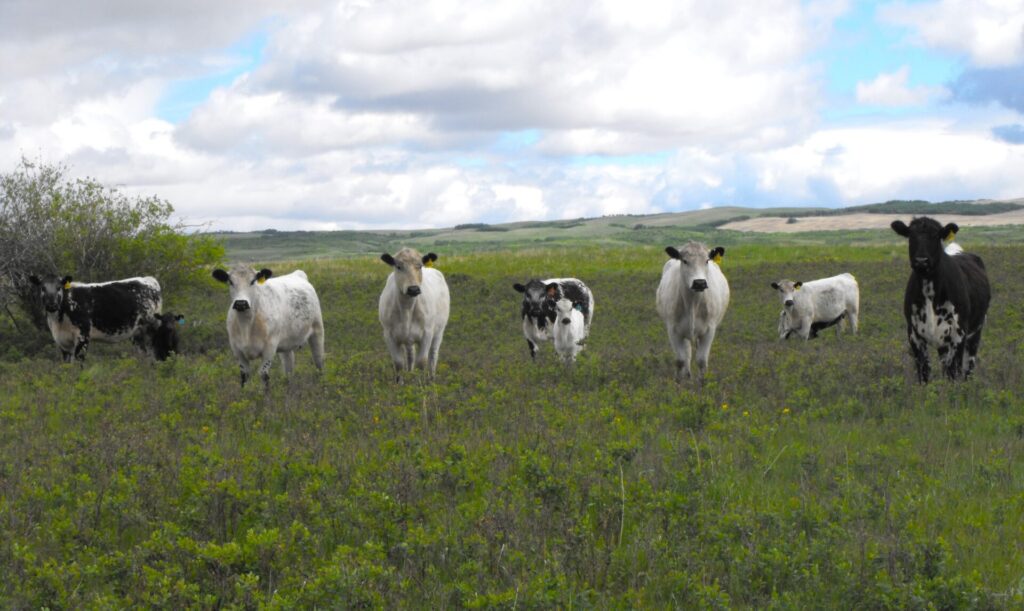
Charolais herd walking toward camera in green grass

Forage production typically declines as tame pastures get older, especially if moisture, fertility or grazing management are limiting. Over time, legumes die out and less desirable species like bluegrass, dandelions and thistles increase. Eventually, it no longer resembles the “alfalfa-grass” mix that was originally seeded.

But reseeding forages is costly and can be risky, and it’s not always easy to know what forages or varieties to seed next. The Canadian Food Inspection Agency no longer requires experimental yield, quality or agronomic data before new forage varieties are registered. Often, the only information available is data from the breeder or seed company, based on a limited number of sites, and comparing to a historical “control” variety that may not be the industry standard.

How are you supposed to know what to seed? You might be tempted to buy an off-the-shelf forage seed mix, hoping that some of the seed in the blend will germinate, establish and grow where you need it to. But off-the-shelf mixes weren’t designed to meet your precise needs – they were designed with the “average” operation in mind, to meet a price point. If that retail one-size-fits-all doesn’t fit the demands of your situation, then germination, emergence and establishment may suffer and leave you back at square one, and dollars behind.

Sorting out what forage species and blends might work for your situation is difficult. It’ll depend on soil zone, ecoregion, soil texture, soil pH and salinity conditions. It’ll depend on what you want to use it for (e.g., hay, pasture or both). Head-to-head comparisons of different forage varieties can be hard to find, and they’re often very site-specific. Recommended seeding rates will vary because different forage species often have different seed sizes. Seeding rates will also vary depending on whether you’re seeding into an existing stand (and how – e.g., frost seeding vs. sod seeding) or whether you’re starting a whole new stand on bare soil. What weeds are you dealing with and what’s the best strategy to deal with them in a mixed stand?

The answers to all these questions (and more) are available. But if you need to find each answer, figure out which answers are credible and relevant to your soil type, landscape and climate, and piece them all together by yourself… that’s a LOT of work! It might be easier to just leave that old pasture or hay stand alone and complain about the yields.

The good news is that solutions to this challenge exist. Tools like the “Saskatchewan Dryland Forage Species Selection Tool” (early 2000s) and the “Peace Forage Tool” (2014) were developed to help producers make an informed choice about which perennial forage species were suitable for their specific combination of soil type, salinity conditions and production and management systems in Saskatchewan and B.C. These tools were well-received but didn’t help producers elsewhere in Western Canada.

In 2018, the BCRC funded a project led by the Saskatchewan Forage Council to combine the existing Saskatchewan and BC tools, expand them to include additional forage varieties suited to more regions and apply to soil and climate conditions across Western Canada, and offer it as on online tool. The Forage U-Pick tool was launched in 2020. It was also well-received. But it didn’t cover the needs of producers in Central and Atlantic Canada.

Forage U-Pick: Canada's interactive forage species selection tool

So, in 2020, the BCRC funded an Ontario Forage Council project to expand the Forage U-Pick tool and make it nationally relevant. This was no small feat, given that Central and Atlantic Canada don’t have official soil zones, they face different soil challenges (e.g., acidic soils instead of Western Canada’s alkaline or saline soils), different climatic conditions (e.g. high moisture and waterlogging are common and drought is less common) and they have different forage varieties (e.g., Timothy, birdsfoot trefoil and orchard grass, etc.). It was completed in 2023 and is available at upick.beefresearch.ca. It’s also available en francais.

So what does this mean… to you?

Your Check-Off funds a lot of forage breeding work across Canada. The Forage U-Pick tool can help you assess whether these new varieties can fit in your situation.

Bottom Line: Deciding whether or how to reseed a pasture or hay stand can be confusing, costly and risky. The Forage U-Pick tool can help you make better, less risky choices, more easily.

The Beef Cattle Research Council is a not-for-profit industry organization funded by the Canadian Beef Cattle Check-Off. The BCRC partners with Agriculture and Agri-Food Canada, provincial beef industry groups and governments to advance research and technology transfer supporting the Canadian beef industry’s vision to be recognized as a preferred supplier of healthy, high-quality beef, cattle, and genetics. Learn more about the BCRC at www.beefresearch.ca.

Click here to subscribe and receive email notifications when new content is posted.

The sharing or reprinting of articles on BeefResearch.ca is typically welcome and encouraged, however this article requires permission of the original publisher.

The BCRC is funded by a portion of the Canadian Beef Cattle Check-Off.

Canadian Beef Cattle Check-Off

We welcome your questions, comments and suggestions. Contact us directly or generate public discussion by posting your thoughts below.

Forage U-Pick: An Interactive Forage Species Selection Tool Now Available Canada-Wide 🎙️

CLICK THE PLAY BUTTON TO LISTEN TO THIS ARTICLE:

The Canadian farms producing top-quality beef are as unique as our country’s topography. They do have one thing in common–each uses forages in some way.  

Forage U-Pick–a tool that helps farmers and ranchers from British Columbia to the Maritimes choose forages best suited to their fields, calculate seeding rates and manage forage weeds–is now available online at no cost.  

“Selecting forage species that will thrive under the growing and management conditions of a specific field on your farm improves the crop’s productivity. Since well-managed forage is typically the cheapest source of feed, growing productive forages can widen the profit margins of a beef operation,” shares Amy Higgins of the Maritime Beef Council.  

Improving accessibility for all Canadian forage growers, the new Forage U-Pick includes Eastern Canada and is available in French via www.boussolefourragere.ca. It builds upon the success and popularity of a previous version that was applicable to Western Canadian producers.  

Click here for a French version of this post.

Forage U-Pick now Canada-wide and bilingual

“Good quality information should not be limited. All producers need information they can take onto their farms and help to make the best decisions possible for good forage production,” Higgins adds. “Straight forage producers, livestock producers or crop producers can now all take advantage of Forage U-Pick.” 

The newly expanded Forage U-Pick is not just Western made to fit the East. While forage species have general characteristics and adaptabilities that are well documented, there are regional considerations that can positively or negatively contribute to selecting the ideal forage species. For example, soil pH is a critical consideration for Atlantic growers. Forage U-Pick walks growers through defining the characteristics of each specific field and matches forages that are best suited to those conditions. It can also provide options to consider that might not have been an obvious choice.  

Higgins is proud that Forage U-Pick captures much of these regional considerations and packages them into one easy-to-use, mobile-friendly site for producers. 

red cattle on green grass with pines in the distance

Partnerships make projects like this happen. In addition to funding provided by the Beef Cattle Research Council, the expansion of Forage U-Pick was supported by the 2018-2023 Innov’Action agroalimentaire program under the Canada-Quebec Agreement for the Implementation of the Canadian Agricultural Partnership; Conseil Quebecois des Plantes Fourrageres; Maritime Beef Council; Ontario Forage Council; Ontario Ministry of Agriculture, Food and Rural Affairs, and through Pan-Atlantic collaboration from the provinces of New Brunswick, Nova Scotia and Prince Edward Island with Canadian Agricultural Partnership support. 

Forage U-Pick originally launched in 2020 and was created through the contributions of more than 13 different organizations to help Western Canadian producers select forage species that are a good fit for their individual fields.  

“Saskatchewan Forage Council is proud to have been involved in the development of the original Forage U-Pick concept and its evolution into a valuable tool for all of Western Canada. Watching it adapt for use across the country is exciting and gratifying,” said Shannon McArton, executive director of the Saskatchewan Forage Council. 

For more information about the newly expanded Forage U-Pick tool, contact:  

Amy Higgins 
Maritime Beef Council 
maritimebeefcouncil@gmail.com  

Tracy Herbert, Extension and Communications Director 
Beef Cattle Research Council 
herbertt@beefresearch.ca  

Sharing or reprinting BCRC posts is welcome and encouraged. Please credit the Beef Cattle Research Council, provide the website address, www.BeefResearch.ca, and let us know you have chosen to share the article by emailing us at info@beefresearch.ca.

The BCRC is funded by a portion of the Canadian Beef Cattle Check-Off.

Canadian Beef Cattle Check-Off

Your questions, comments and suggestions are welcome. Contact us directly or spark a public discussion by posting your thoughts below.

BCRC Announces $2 Million in Funding for 12 Beef Research Projects

Speckle Park cattle in pasture

Twelve research projects have been awarded a total of $2 million in funding by the Beef Cattle Research Council (BCRC) through the 2022/2023 annual call. Through these projects, the $2 million of industry funding will be leveraged with over $4 million in matching funding through government and industry partners.  

Craig Lehr
BCRC Chair Craig Lehr, Alberta

As an Alberta beef producer, including a backgrounding feedlot and cow-calf operation, BCRC Chair Craig Lehr sees first-hand how applied research improves the productivity and profitability of Canadian beef production.

“We are able to leverage producer dollars from the Canadian Beef Cattle Check-Off to support research that truly matters to the day-to-day management of our herds,” says Lehr. “This is important work. The BCRC not only funds the research but develops practical resources to support producers in making informed decisions to improve profitability, keep Canadian beef competitive and continue our ability to operate with a social license.”  

The investment in these projects will ensure that research is being done in areas that directly impact the Canadian Beef Industry and the priorities laid out in the Five-Year Canadian Beef Research and Technology Transfer Strategy.  

BCRC Vice Chair Ron Stevenson, Ontario

“Research matters. It moves the needle on best practices used across the industry, from animal health and productivity to nutrition, forage and grazing management, soil health, and the list goes on,” says Ron Stevenson, BCRC vice chair and Ontario cow-calf producer, who values industry-funded research not only as producer, but also through his experiences working in the veterinary industry.

“The investment in these projects will lead to outcomes that have an impact, providing tools for farmers and ranchers to continuously improve.”  

Projects funded under the 2022/2023 BCRC call include: 

  • The known unknowns – Pulling back the cover on macrolide resistance in feedlots. Project Lead: Dr. Ruzzini, University of Saskatchewan  
  • Does supplementing pregnant cows with protein during winter grazing improve calf health? Project Lead: Dr. Malmuthuge, Agriculture & Agri-Food Canada, Lethbridge 
  • Can genomic tests identify the infectious causes of reproductive losses better than traditional diagnostics? Project Lead: Dr. Huang, Prairie Diagnostic Services Inc. 
  • Boosting calf immunity with early-life management. Project Leads: Dr. Malmuthuge, Agriculture & Agri- Food Canada, Lethbridge and Dr. Erickson, University of Saskatchewan 
  • Turning lemons into lemonade and cattle hide into snacks. Project Leads: Dr. Bruce and Dr. Roy, University of Alberta
  • Cracking the code on early life management of crossbred dairy-beef calves. Project Lead: Dr. Steele, University of Guelph 
  • Can natural malate production in forages reduce methane emissions in grazing cattle? Project Lead: Dr. Block, Agriculture & Agri- Food Canada, Lacombe 
  • Burn baby burn – Can prescribed fire be a tool for pasture rejuvenation and improved soil health? Project Lead: Dr. Bainard, Agriculture & Agri- Food Canada, Agassiz 
  • Maximizing pasture’s grazing potential by sod-seeding alfalfa mixes. Project Lead: Dr. Lardner, University of Saskatchewan 
  • Testing new forage varieties to improve production and reduce our carbon hoofprint. Project Lead: Dr. Ribeiro, University of Saskatchewan 
  • Forage for climate action – Can grazing perennial forages improve environmental sustainability and animal health?  Project Lead: Dr. Poudel, Agriculture & Agri- Food Canada, Lethbridge 
  • Understanding rest-recovery and grazing management for native prairie to improve grassland and animal productivity. Project Lead: Dr. Kelln, University of Saskatchewan 

The BCRC is Canada’s national industry-led funding agency for beef, cattle and forage research. The BCRC’s mandate is to determine research and development priorities for the Canadian beef cattle industry and to administer Canadian Beef Cattle Check-Off funds allocated to research. A division of the Canadian Cattle Association, the BCRC is directed by a committee of 15 beef producers from across the country. The BCRC is funded in part through a portion of the Canadian Beef Cattle Check-Off which is then leveraged with government and industry partner funding. 

Sharing or reprinting BCRC posts is welcome and encouraged. Please credit the Beef Cattle Research Council, provide the website address, www.BeefResearch.ca, and let us know you have chosen to share the article by emailing us at info@beefresearch.ca.

The BCRC is funded by a portion of the Canadian Beef Cattle Check-Off.

Canadian Beef Cattle Check-Off

Your questions, comments and suggestions are welcome. Contact us directly or spark a public discussion by posting your thoughts below.

Welcome to Pasture 101 – A New Collection of Grazing Management Resources

pasture 101

The Beef Cattle Research Council and Alberta Beef Producers are pleased to announce the launch of Pasture 101, a project initiated by the Alberta Beef, Forage and Grazing Centre.   

The 101 of Pasture 101

pasture 101 - extending grazing systems page
Click to access the Extended Grazing Systems module.

Informed by producer and expert input, Pasture 101 is an extensive online collection of grazing management resources. The content is organized into modules, with information ranging from selecting forage species and establishing perennial pastures to extended grazing systems and managing pasture soils. Each module is outfitted with quizzes to increase knowledge retention and many of the modules feature toolkits with helpful worksheets, calculators and extra resources if you want to dig deeper. 

Forage & Beef Innovation for the Next Generation

The Alberta Beef, Forage and Grazing Centre (ABFGC) was a five-year agreement (2015-2020) between Agriculture and Agri-Food Canada, Alberta Agriculture and Forestry and Alberta Beef Producers (ABP). It arose from producer interest in bringing together research and extension delivery in beef and forage systems. It was supported with capacity from both governments and an operational budget provided by ABP.  

The ABFGC supported and worked on several initiatives over the term of the agreement including multiple researcher projects, the rancher/researcher pilot (later expanded by the applied research and forage associations), tools for evaluating feed test results and evaluating economic value of feeds based on nutrient content, Forage U-pick, field days and other learning opportunities, and of course, Pasture 101.  

Collaboration

Pasture 101 is hosted on BeefResearch.ca on behalf of the ABFGC. These new tools and resources compliment and link to grazing management information already found within the Beef Cattle Research Council’s collection. 

Start Planning for the Grazing Season

As you plan for the grazing season ahead, take some time to explore Pasture 101. You’ll be glad you did!   

mixed cows grazing green grass

LEARN MORE:

Sharing or reprinting BCRC posts is welcome and encouraged. Please credit the Beef Cattle Research Council, provide the website address, www.BeefResearch.ca, and let us know you have chosen to share the article by emailing us at info@beefresearch.ca.

The BCRC is funded by a portion of the Canadian Beef Cattle Check-Off.

Canadian Beef Cattle Check-Off

Your questions, comments and suggestions are welcome. Contact us directly or spark a public discussion by posting your thoughts below.

Adapting to a Changing Climate

This article written by Dr. Reynold Bergen, BCRC Science Director, originally appeared in the April 2022 issue of Canadian Cattlemen magazine and is reprinted on the BCRC Blog with permission of the publisher.

cattle and a changing climate: beef cattle grazing alfalfa in bloom

I had a National Geographic poster of “Ice Age Mammals of the Alaskan Tundra” on my bedroom wall when I was a kid. It showed herds of prehistoric muskoxen, horses, wolves, lemmings, bears, lions, mammoths, camels, saber-toothed tigers, mastodons and humans marauding across a vast, grassy expanse 12,000 years ago. The muskoxen, bears, wolves and lemmings still live in Alaska. The lions, camels and horses moved to other parts of the world where the climate suited them better. The saber-toothed tigers, mammoths and mastodons went extinct. When archaeologists found the frozen remains of these animals, they dug deeper and uncovered the fossils of duckbilled dinosaurs from millions of years earlier when conditions were hot and tropical.

Earth’s climate is always changing. Volcanoes, bogs, soil and animals exhale greenhouse gases, and plants and the oceans absorb them. Since industrialization, human burning of fossil fuels has emitted greenhouse gases faster than the natural environment can sequester them. Climate models predict how changing greenhouse gas levels will impact future global temperature and precipitation patterns.

Climate models resemble economic models – both are constantly being tweaked and improved as better data becomes available, and both are subject to “noise” that temporarily obscures long-term trends. Economic forecasters consider historical and current data about an industry and the larger economy to predict future trends. Unforeseen shocks like BSE or a pandemic cause significant short- to medium-term disruptions that might make people think the economic model is broken. But over time, long-term trends shine through (e.g., trends towards agricultural consolidation with fewer and larger pharmaceutical and equipment companies, farms, feedlots, packers and retailers). Similarly, volcanoes, solar dimming or cyclical El Nino or La Nina weather patterns can temporarily obscure long-term climate trends. Even if we don’t like where trends are pointing, understanding them can help us respond appropriately.

In 2020, Agriculture and Agri-Food Canada researchers Vern Baron (Lacombe) and Gilles Bélanger (retired) co-authored the Climate, Climate-Change and Forage Adaptation chapter in a book called “Forages: The Science of Grassland Agriculture, Volume II (Seventh Edition).” This chapter covered a lot of ground, but here’s what stood out for me.

By the middle of this century, climate models predict that Canadian provinces will average 1 to 3oC warmer than now. That doesn’t sound like much, but there’s more. Warmer air will mean warmer soil, which may benefit some plants but stress others. Weather variability will also increase. Warmer air and ocean currents can alter jetstreams and precipitation patterns. B.C., Ontario, Quebec and Atlantic Canada are predicted to generally become wetter, with more of their precipitation coming in heavy rainfall events during the growing season. The prairies are expected to see less precipitation, with most of it falling in winter and spring. The growing season will be hotter and drier, with perhaps two weeks of temperatures over 28oC instead of one. Canada will have more frost-free days, and grassland areas are predicted to gradually expand further north and east into areas of the prairies and Ontario that are currently forested.

Carbon dioxide is a nutrient for plants, so higher CO2 levels can help plants grow and use water more efficiently. But if temperatures are too high, and/or moisture is limiting, plants won’t be able to take advantage of the elevated CO2. Overall, forage productivity is predicted to increase in Eastern Canada and decline on the prairies.

alfalfa pasture in bloom

But in an ironic twist, “global warming” may increase the risk of winterkill. Take alfalfa as an example. While having proportionally more spring moisture may improve alfalfa germination in Western Canada, a warmer, drier growing season may make it harder for those seedlings to establish healthy roots and survive long-term.

This will make it more important to ensure that alfalfa persists well in established forage stands. But if warmer, drier conditions mean alfalfa is the only green forage remaining in late summer and fall, grazing pressure may increase. Overgrazing weakens alfalfa and makes it more prone to disease and winterkill. Less snowfall across the country could leave the crown of the plant unprotected, and further increase the risk that alfalfa will die out of the stand. Periodic warm spells in winter may cause alfalfa plants to lose their dormancy and then fatally freeze if colder winter weather resumes. These aren’t new problems, but climate change will make them bigger, and will also make appropriate harvest and grazing management practices even more important than they already are.

I had hoped that these challenges could be solved by taking forages that already grow in warm, dry places (like the southwestern US) seeding them in Western Canada, or by seeding forages from warm, damp places (like the southeastern US) in Eastern Canada. But that won’t work. Plants are highly sensitive to daylength. Perennial plants that grow well further south where daylength is more uniform throughout the year may not survive further north, where days rapidly become much longer in summer and shorter in fall. Instead, we’ll need to genetically improve the species that already perform well here to help them adapt to future conditions. Upcoming columns will talk about researchers’ efforts to do that.

The Beef Cattle Research Council is funded by the Canadian Beef Cattle Check-Off. The BCRC partners with Agriculture and Agri-Food Canada, provincial beef industry groups and governments to advance research and technology transfer supporting the Canadian beef industry’s vision to be recognized as a preferred supplier of healthy, high-quality beef, cattle and genetics.

Click here to subscribe to the BCRC Blog and receive email notifications when new content is posted.

The sharing or reprinting of BCRC Blog articles is typically welcome and encouraged, however this article requires permission of the original publisher.

We welcome your questions, comments and suggestions. Contact us directly or generate public discussion by posting your thoughts below.

How Mother Nature Hedges Her Bets

This article written by Dr. Reynold Bergen, BCRC Science Director, originally appeared in the May 2021 issue of Canadian Cattlemen magazine and is reprinted on the BCRC Blog with permission of the publisher.

cattle grazing on healthy, green pastures

Pasture plants are generally classified as decreasers, increasers and invaders. Decreaser species are the plants you want to see and your cattle prefer to eat, so they face the most grazing pressure. Increaser plants tend to thrive when the decreaser species are challenged by overgrazing, drought or other sub-optimal conditions. Invaders (weeds) proliferate when increasers and the remaining decreasers are so weakened by overgrazing or environmental extremes that they have a hard time competing for nutrients, water and sunlight. 

Healthy, productive pastures are dominated by decreasers. The composition of the decreaser community in healthy native rangelands was shaped by thousands of years of natural selection and environmental pressures. In tame pastures, humans take the wheel from Mother Nature as we seek to establish and maintain a stand of tame decreaser species that can be productive and long-lived in our particular soil and climate conditions. In both native and tame pastures, good grazing managers adjust stocking densities, grazing intensities, grazing and rest period length and frequency, etc. based on annual and seasonal variations in growing conditions to maintain pasture health and optimize long-term forage and animal productivity.

Different growing conditions affect different forage species differently, so even a healthy, well-managed pasture experiences some back-and-forth between different decreaser plant species in response to year-to-year variations in weather or grazing pressure. As part of a larger and longer-term Beef Cluster project aimed at developing new tame and native varieties and mixtures with improved forage yields and pasture resilience, researchers at Agriculture and Agri-Food Canada’s Swift Current Research Station studied how bunchgrasses and sod-forming grasses respond to drought and grazing. These results were published under the amazing title of Drought weakens the positive effects of defoliation on native rhizomatous grasses but enhances the drought‐tolerance traits of native caespitose grasses in 2018 (Ecology and Evolution DOI: 10.1002/ece3.4671).

What They Did:

Two sod-forming grasses (western wheatgrass and northern wheatgrass) and two bunchgrasses (needle-and-thread grass and western porcupine grass) native to Western Canada were grown in separate pots under controlled greenhouse conditions. Each grass was exposed to four different moisture levels (100%, 85%, 70% and 55% of field capacity). “Field capacity” refers to how much water the soil can hold. At 100% field capacity, the soil is “full”; any more water that is added will either run off, recharge groundwater, or both. The 85%, 70% and 55% treatments reflected slight, moderate and severe drought conditions. To simulate grazed and ungrazed conditions under each moisture level, plants were either clipped back to a height of 5 cm, twice (one month apart) or not clipped at all. Plant height, leaf length, and numbers of tillers and leaves were measured, and forage yields and root growth responses were measured for each plant.

What They Learned:

The western porcupine and needle-and-thread bunchgrasses were generally shorter but had more tillers and more (but shorter) leaves than the sod-forming western and northern wheatgrasses.

Bunchgrasses were less productive under optimal moisture conditions but were more drought-tolerant than the sod-forming grasses. Western porcupine grass displayed relatively stable forage yields regardless of drought severity. Needle-and-thread grass had stable forage yields under slight and moderate drought but significantly lower yields under severe drought conditions. Both bunchgrasses also tended to show slightly more root growth under slight and moderate drought. Clipping had minimal effects on total forage yield for either bunchgrass, but it reduced root growth (particularly for western porcupine grass) under more severe drought conditions.

Sod-forming grasses were twice as productive as bunchgrasses under good moisture conditions, but their yields decreased sharply as drought conditions worsened, to the point that they were no more productive than bunchgrasses under severe drought. Root growth mirrored the same pattern as forage yields. Clipping increased the forage yield of western and northern wheatgrasses under no or slight drought, but not under severe drought. Clipping progressively reduced the root growth of both western and northern wheatgrasses.

So What Does This Mean … to Me?

Everyone knows that severe drought and over-grazing weakens desirable forage plants. But not all plants respond the same way to the same growing and grazing conditions. Mother Nature has adapted to yearly variations in moisture and temperature patterns by designing plant communities that contain species that thrive in cooler or moister than average conditions as well as other species that cope better with harsher than usual growing seasons.

A high producing monoculture could probably produce higher yields under ideal conditions. But few growing seasons are ideal, particularly on the marginal soils that are often used for pasture. Well-managed grasslands maintain a variety of different forage species, ensuring that there are always some species present that will be able to survive and potentially thrive no matter what the weather has in store. Mother Nature optimizes, trading maximum yields under ideal conditions for resilience under normal or extreme conditions. Good grazing management helps her do that.

Next month’s column will talk about a few other tricks that forage plants have up their leaves that they can use to compete with weeds and other invader species.

The Beef Cattle Research Council is funded by the Canadian Beef Cattle Check-Off. The BCRC partners with Agriculture and Agri-Food Canada, provincial beef industry groups and governments to advance research and technology transfer supporting the Canadian beef industry’s vision to be recognized as a preferred supplier of healthy, high quality beef, cattle and genetics.

Click here to subscribe to the BCRC Blog and receive email notifications when new content is posted.

The sharing or reprinting of BCRC Blog articles is typically welcome and encouraged, however this article requires permission of the original publisher.

We welcome your questions, comments and suggestions. Contact us directly or generate public discussion by posting your thoughts below.

New Webpage: Forage Species

Forages are a major feed component for the cow-calf and backgrounding sectors of the beef industry, and are made up of grasses, legumes, forbs and shrubs. Eighty percent of a beef animal’s diet over its lifetime comes from forages.

Climate, local soil conditions and management objectives determine the best forage species and variety for each planting area and application. Forage crops add to the diversity and beauty of landscapes, provide habitat for wildlife, can play a role in soil improvement and water conservation, reduce erosion, and contribute to the carbon cycle as a carbon sink.

Most cultivated grasses grown in Canada, referred to as tame species, are introduced species from Europe or Asia that have been bred and adapted to perform in Canadian conditions. The unique characteristics that various species have will provide an advantage over other species under different growing conditions. Some grasses have superior adaptation to soil and climate conditions such as heat, drought, flooding, cold, salinity and acidity. The fibrous root systems of grasses stabilize soil and reduce erosion.

Common grasses used in beef cattle production in Canada include timothy, tall fescue, smooth and meadow bromegrass, orchard grass, Kentucky bluegrass, ryegrass, crested wheatgrass and reed canary grass. Timothy grass is the most common species of grass cultivated for forage throughout eastern Canada. Highly palatable, it is often seeded with a mixture of other types of grasses and legume forages for improved yield performance. In western Canada, wheatgrasses and bromegrasses are commonly used due to their greater drought tolerance. To increase yield, flexibility and economic returns, producers may also use annual cereal crops, including barley, oats, wheat, triticale, millet, sorghum and corn, as forage for grazing, cutting and baling as greenfeed, and extended grazing.

Many factors must be considered when making a forage selection. Stand mixtures should be appropriate for the soil, acclimatized to the region, and be able to withstand management intentions and pressures (i.e., haying/grazing).  When matching forage species to the characteristics of the soil, consider drainage, fertility, and pH. Soil maps and information that describe the limitations of a particular soil type are helpful, especially for land that has not been previously managed.

The newly released interactive Forage Species Selection Tool (Forage U-Pick) for Western Canada is available to assist land managers in selecting the correct forage species best suited to their climate, soil conditions and management goals. Detailed species information, including longevity, use, yield, nutritional quality, tolerance, and hardiness, are included as well as pictures at various stages of growth. Seeding rate and seed cost calculators plus information about weeds are integrated within the tool as well.

Visit the new Forage Species Page for more information including mixtures vs pure stands, management considerations, and an overview of Canadian forage breeding programs.

Click here to subscribe to the BCRC Blog and receive email notifications when new content is posted.

The sharing or reprinting of BCRC Blog articles is welcome and encouraged. Please provide acknowledgement to the Beef Cattle Research Council, list the website address, www.BeefResearch.ca, and let us know you chose to share the article by emailing us at info@beefresearch.ca.

We welcome your questions, comments and suggestions. Contact us directly or generate public discussion by posting your thoughts below.