BCRC Funds Proof of Concept and Technology Transfer Projects to Propel Canadian Beef Industry Forward

Six proof of concept (POC) research projects and 13 knowledge technology transfer (KTT) activities received funding from the Beef Cattle Research Council (BCRC) through the 2023 annual calls. These initiatives are expected to deliver key insights to progress the industry and empower beef producers with knowledge.  

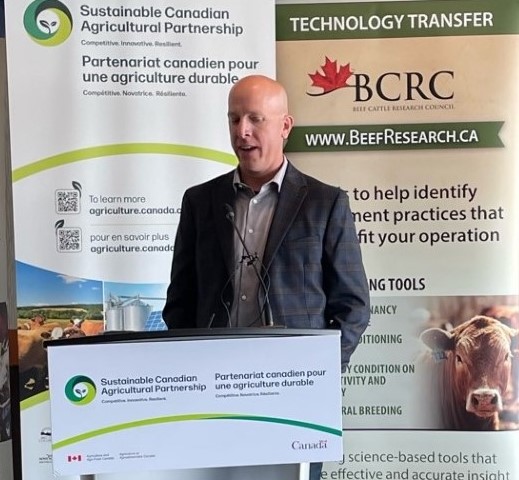
Beef Cattle Research Council Chair Craig Lehr
BCRC Chair Craig Lehr, Alberta

Craig Lehr, BCRC chair and an Alberta beef producer with a backgrounding feedlot and cow-calf operation, values the importance of POC projects in advancing the Canadian beef industry. 

“We are able to use a relatively small portion of Canadian Beef Cattle Check-Off dollars to fund one-year projects that explore ideas, technologies and practices from other countries, industries or sectors that could add value to our beef industry,” says Lehr. “These small investments tell us right away if an idea is promising or not, which means researchers can leverage the work done to receive more funding elsewhere, or we can get out of something that isn’t working without a huge financial cost.”  

An example of a recent POC project was led by Dr. Roopesh Syamaladevi at the University of Alberta who recognized the large opportunity chemical-free sanitizers have to reduce E. coli and biofilm contamination in beef processing plants. The initial POC investment showed promising results and led to a full-scale research project funded through the Beef Science Cluster IV.  

All projects funded by the BCRC address the priorities laid out in the Five-Year Canadian Beef Research and Technology Transfer Strategy.   

Photo from POC.09.19. Lab-scale LED treatment of E.coli and biofilm contaminated surfaces common at beef processing plants.
Photo from POC.09.19. Lab-scale LED treatment of E. coli and biofilm contaminated surfaces common at beef processing plants.
BCRC Vice Chair Ron Stevenson, Ontario beef producer
BCRC Vice Chair Ron Stevenson, Ontario

Through a new pilot initiative, the BCRC opened a call for proposals in 2023 to support regional extension activities with preference given to new and innovative engagement ideas.  

“Research matters, but it means nothing unless it reaches the people who can actually use it,” says Ron Stevenson, BCRC vice chair and Ontario cow-calf producer. “It is an important initiative to get science off the shelf and into the hands of Canadian producers.”

Jacy McInnis carcass ultrasound demo at Beef Day @ Dal
Jacy McInnis presents a carcass ultrasound demonstration at the inaugural Beef Day @ Dal at the Atlantic Stockyards, which was funded in part by the BCRC.

KTT activities funded through the pilot began in fall 2023 and will wrap up in summer 2024. The inaugural Beef Day @ Dal hosted by the Maritime Beef Council is one example.

The full-day event included research summaries from local universities, a live carcass ultrasound demonstration and the first screening in Eastern Canada of the short documentary “Reduce, Reuse, Ruminate”. 

Projects funded under the 2023 POC call include:

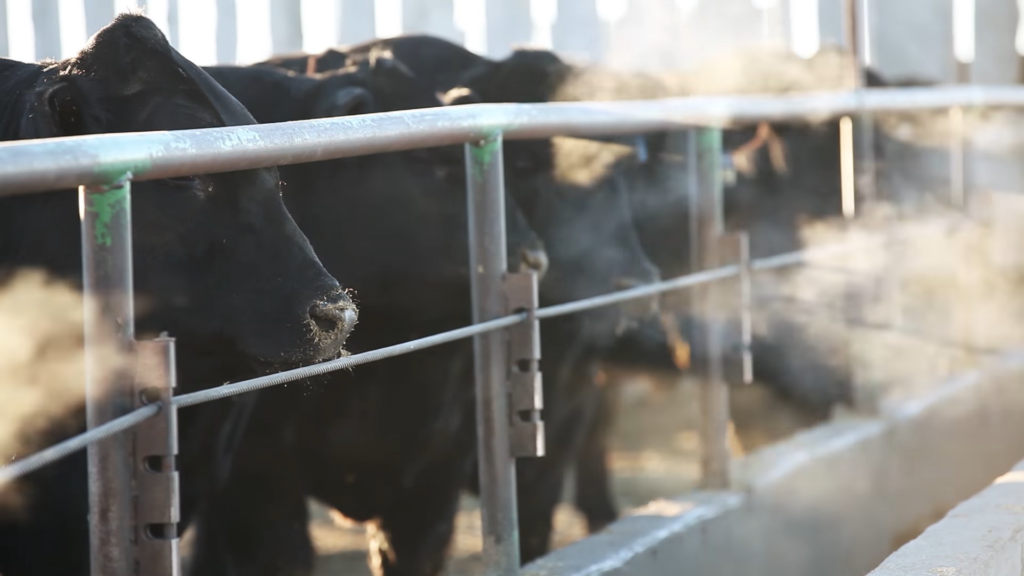
black cattle in a feedlot with steamy breath
  • Faster, cheaper, more accurate detection of Shiga toxin-producing E. coli (STEC). Project lead: Dr. Kim Stanford, University of Lethbridge 
  • Learning from the past: What can the genome of beef feedlot environments tell us about antimicrobial resistance? Project lead: Dr. Anthony Ruzzini, University of Saskatchewan  
  • Refining and improving Bovine Respiratory Syncytial Virus (BRSV) testing. Project lead: Dr. Yangyun Huang, University of Saskatchewan  
  • A better vaccine for bovine TB. Project lead: Dr. Jeffery Chen, University of Saskatchewan  
  • Identifying the rumen bacteria that improve beef production and carcass quality. Project lead: Dr. Anthony Ruzzini, University of Saskatchewan  
  • Not the usual suspects – understanding the bacterial populations of septic arthritis cases in feedlot cattle. Project lead: Dr. Andrew Cameron, University of Regina  

Activities funded by the 2023 KTT funding pilot include:  

  • Livestock Water Management Series. Project lead: Alyssa Krawchuck, Lakeland Agricultural Research Association
    • Part one: Water and Livestock Health, January 31, 2024
    • Summer Water Systems Field Tour, August 1, 2024
  • Feeding and managing cattle through drought (nutrition, feed testing, water quality, vaccine use, disease prevention). February 1, 2024, in Elrose, SK. Project lead: Dr. Charlotte Williams, Hooves and Paws Vet Services
  • Designer Cows for Your Ranch – Extension Event. March 1-2, 2024, in Olds, AB. Project lead: Tatyana Irodenko, Grey Wooded Forage Association
  • Ladies Cow Boss Clinic. March 6, 2024, in Special Area 2, AB. Project lead: Jesse Williams, Special Areas Board
  • Who Darted? A Seminar on Remote Drug Delivery Best Practices. June 4, 2024. Project lead: Dr. Elizabeth Homerosky, Veterinary Agri-Health Services. Register here.
  • Peer Groups – A Pilot. Project Lead: Kathy Larson, University of Saskatchewan 
  • Improving Nutrition and Grassland Management Through the Education of Future Beef Cattle Veterinarians. Project lead: Dr. Tommy Ware, Veterinary Agri-Health Services
  • Making Science Accessible: Turning 10+ years of calf health and welfare research into producer-friendly videos. Project lead: Dr. Claire Windeyer, University of Calgary Faculty of Veterinary Medicine 
  • CowBytes Training and Nutrition Workshops. Project lead: Pamela Iwachysko, Manitoba Agriculture, held multiple dates in November 2023.
  • CARA Cattlemen and Grazing Club Events. Held November 28, 2023, in Oyen, AB. Project lead: Karin Roen, Chinook Applied Research Association  
  • Extensive wintering management workshop including non-traditional feeds. Held December 5, 2023, in Weyburn, SK. Project lead: McKenzie Paget, Saskatchewan Ministry of Agriculture  
  • Beef Day @ Dal. Held November 25, 2023, in Bible Hill, NS. Project lead: Amy Higgins, Maritime Beef Council 
  • Ranchers University. Held December 1, 2023, in Moosomin, SK. Project lead: Alexis DeCorby, Saskatchewan Ministry of Agriculture

The BCRC is Canada’s national industry-led funding agency for beef, cattle and forage research. The BCRC’s mandate is to determine research and development priorities for the Canadian beef cattle industry and to administer Canadian Beef Cattle Check-Off funds allocated to research. A division of the Canadian Cattle Association, the BCRC is directed by a committee of 15 beef producers from across the country. The BCRC is funded in part through a portion of the Canadian Beef Cattle Check-Off which is then leveraged with government and industry partner funding.  

Sharing or reprinting BCRC posts is welcome and encouraged. Please credit the Beef Cattle Research Council, provide the website address, www.BeefResearch.ca, and let us know you have chosen to share the article by emailing us at info@beefresearch.ca.

The BCRC is funded by a portion of the Canadian Beef Cattle Check-Off.

Canadian Beef Cattle Check-Off

Your questions, comments and suggestions are welcome. Contact us directly or spark a public discussion by posting your thoughts below.

$12 Million Federal Investment to Drive Environmental, Economic and Social Sustainability in Canada’s Beef Sector

Francis Drouin, Parliamentary Secretary to the Minister of Agriculture and Agri-Food, along with BCRC Chair Craig Lehr, made $12 million Beef Cluster funding announcement while attending the Calgary Stampede.
(l to r) Francis Drouin, Parliamentary Secretary to the Minister of Agriculture and Agri-Food, and BCRC Chair Craig Lehr announce new funding

CALGARY, July 12, 2023 – The Beef Cattle Research Council (BCRC) is welcoming more than $12 million in funding from the Government of Canada for Canada’s Beef and Forage AgriScience Cluster under the Sustainable Canadian Agricultural Partnership – AgriScience Program. Francis Drouin, Parliamentary Secretary to the Minister of Agriculture and Agri-Food, made the funding announcement today while attending the Calgary Stampede.

The AgriScience Cluster funding will bolster the Canadian beef sector’s environmental and economic sustainability and resilience as the sector adapts to changing climates and evolving marketplaces. This investment will support sector goals to meet the Government of Canada’s greenhouse gas reduction targets by reducing emission intensity, sequestering additional carbon and maintaining native grasslands in the care of Canadian beef producers.

“The Government of Canada recognizes the importance of Canadian beef,” said Parliamentary Secretary Drouin. “Today’s announcement will help contribute to the continued success of the industry, while keeping it strong and resilient for the future. The results from these innovation, research and technology activities will transform into real results on farms.”

Parliamentary Secretary to the Minister of Agriculture and Agri-Food Francis Drouin
BCRC Chair Craig Lehr
BCRC Chair Craig Lehr, Alberta

Alberta beef producer and BCRC Chair Craig Lehr said the results from this AgriScience Cluster will benefit farmers, ranchers, processors, retailers and consumers, as well as the broader Canadian population. 

“The demand for beef is expected to grow by 10 percent in the next 10 years and, with one of the lowest environmental footprints for beef production in the world, Canadian producers are well-positioned to responsibly meet growing global beef demand,” Lehr said. “Canada’s Beef and Forage AgriScience Cluster drives research and technology transfer that supports producer profitability with on-farm improvements in things like animal health and performance, feed production and efficient feed use so we can continue to supply high-quality, nutrient-dense protein.”  

Canada’s beef industry will contribute more than $9.6 million, primarily through the research allocation of the Canadian Beef Cattle Check-Off, bringing the total AgriScience Cluster investment to more than $21.7 million. BCRC Vice Chair Ron Stevenson, a beef producer from Ontario, said this AgriScience Cluster builds on the success of three previous Beef Science Clusters.

BCRC Vice-Chair Ron Stevenson, Ontario
BCRC Vice Chair Ron Stevenson, Ontario

“The Science Clusters recognize the beef sector’s determined leadership and encourage producers in their pursuits of innovation and ingenuity,” Stevenson said. “The Cluster will help the Canadian beef industry realize its tremendous opportunity to increase production and exports while ensuring the maintenance of soil health, water quality, air quality and biodiversity.”

Twenty-three projects will be funded between April 1, 2023, and March 31, 2028, under three themes: climate change and environment; economic growth and development, and sector resilience and societal challenge. The balanced research portfolio, led by respected scientists through collaborative arrangements between academia, government and industry, will work to achieve objectives with the greatest potential to advance the Canadian beef sector. Some projects will explore improved diagnostic tests and vaccines to manage cattle diseases, new forages that can thrive across Canada and food safety technologies in beef processing facilities that reduce water and energy use, while others will develop practical, science-based resources and economic decision-making tools for the industry.

– 30 – 

For further information, contact: 

Tracy Herbert 
Extension and Communications Director 
Beef Cattle Research Council 
C: 306-850-5026, herbertt@beefresearch.ca 

Sharing or reprinting BCRC posts is welcome and encouraged. Please credit the Beef Cattle Research Council, provide the website address, www.BeefResearch.ca, and let us know you have chosen to share the article by emailing us at info@beefresearch.ca.

The BCRC is funded by a portion of the Canadian Beef Cattle Check-Off.

Canadian Beef Cattle Check-Off

Your questions, comments and suggestions are welcome. Contact us directly or spark a public discussion by posting your thoughts below.

**REMINDER**WEBINAR: Everything You Always Wanted to Know About the Beef Cluster* (*But Were Afraid to Ask)

The BCRC is hosting a webinar on Wednesday, August 4th for researcher teams intending to apply for funding under the 2023-28 Beef Science Cluster (Cluster IV). 

Have questions? Submit them in advance when you register. 

This webinar will cover topics including: 

  • Canada’s Beef Industry Strategy  
  • Canada’s Beef Research & Technology Transfer Strategy 2023-28 
  • Research priorities targeted for the Beef Cluster IV 
  • The BCRCs LOI and proposal review and selection process 
  • Tips, cautions and considerations for preparing Letters of Intent and Full Proposals 
  • Researcher FAQs about research proposals 

The webinar will be recorded and posted on www.beefresearch.ca for future reference. 

Please share this blog announcement to students and postdocs in your circles who you are likely to participate in the project brainstorming and proposal development process.

For more information about the BCRCs current Call for Letters of Intent click here

Click here to subscribe to the BCRC Blog and receive email notifications when new content is posted.

The sharing or reprinting of BCRC Blog articles is welcome and encouraged. Please provide acknowledgement to the Beef Cattle Research Council, list the website address, www.BeefResearch.ca, and let us know you chose to share the article by emailing us at info@beefresearch.ca.

We welcome your questions, comments and suggestions. Contact us directly or generate public discussion by posting your thoughts below.

Attn Researchers: BCRC Opens Call For Cluster IV Letters Of Intent *Webinar*

Beef Cattle Research Council

The Beef Cattle Research Council invites letters of intent (LOIs) for the fourth Beef Cattle Industry Science Cluster. The application deadline for this call is October 1, 2021 at 11:59 PM MT.

The purpose of this call is to achieve specific objectives in the Five-Year Canadian Beef Research and Technology Transfer Strategy and the National Beef Strategy. This call for research LOIs is made possible by the recent increase in the Canadian Beef Cattle Check-Off in most provinces.

Approved projects can be up to five years in length and will commence no earlier than April 1, 2023, subject to the approval of the Beef Cattle Science Cluster by AAFC. Projects will be funded by Canadian cattle producers through the Canadian Beef Cattle Check-Off and matching funding BCRC will apply for through the Agri-Science Clusters Program under the next agricultural policy framework.  

Through extensive consultation with research teams and industry stakeholders to identify critical needs and key areas where the BCRC can have the greatest impact, target outcomes have been clearly defined for this call. Please refer to the target outcomes and priorities listed within the documents linked below before deciding whether to submit an LOI. 

Funding Application

Research projects one to five years in length may be submitted. Projects will commence no earlier than April 1, 2023 (subject to AAFC approval of the Science Cluster) and must be completed by March 31, 2028. Refer to the documents below and watch for BCRC’s Cluster webinar announcement for more information. 

WEBINAR: Everything You Always Wanted to Know About the Beef Cluster* (*But Were Afraid to Ask)

The BCRC will be hosting a webinar on August 4th for researcher teams intending to apply for funding under the 2023-28 Beef Science Cluster (Cluster IV). 

This webinar will cover topics including: 

  • Canada’s Beef Industry Strategy  
  • Canada’s Beef Research & Technology Transfer Strategy 2023-28 
  • Research priorities targeted for the Beef Cluster IV 
  • The BCRCs LOI and proposal review and selection process 
  • Tips, cautions and considerations for preparing Letters of Intent and Full Proposals 
  • Researcher FAQs about research proposals 

The webinar will be recorded and posted on www.beefresearch.ca for future reference. 

Please share this blog announcement to students and postdocs in your circles who you are likely to participate in the project brainstorming and proposal development process.

Click here to subscribe to the BCRC Blog and receive email notifications when new content is posted.

The sharing or reprinting of BCRC Blog articles is welcome and encouraged. Please provide acknowledgement to the Beef Cattle Research Council, list the website address, www.BeefResearch.ca, and let us know you chose to share the article by emailing us at info@beefresearch.ca.

We welcome your questions, comments and suggestions. Contact us directly or generate public discussion by posting your thoughts below.