Polycrop Potential: 12 Tips for Using Mixed Forage Crops 🎙️

CLICK THE PLAY BUTTON TO LISTEN TO THIS POST:

Listen to more episodes on BeefResearch.ca, Spotify, Apple Podcasts, Amazon Music or Podbean.

Polycrops, intercrops, cover crops and cocktail crops are different terms that all encompass planting mixed crop species for livestock feed. 

Proponents of polycrops have found that mixing different plant species when growing crops can help improve soils by adding more root systems, microbiological communities and organic matter. Compared to single species crops, polycrops may also show resilience against pests and disease. While benefits are well-publicized, as with any farming practice, trying something new requires a realistic approach.  

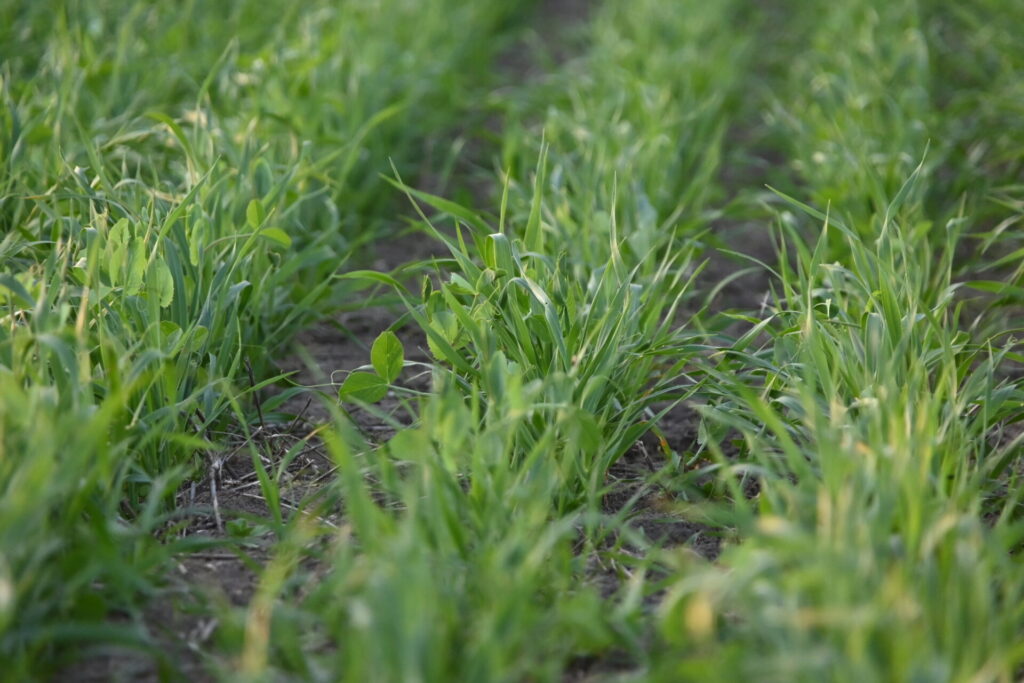
seeded polycrop mix
Many producers are seeding polycrops of three or more species in hopes of improving production, soil organic matter, microbiology and resilience. Twelve tips for using polycrop mixes are included below.

One Saskatchewan Farm’s Experience with Polycrops in Production 

Jocelyn Velestuk operates a multi-generational family farm with her husband, two children and her in-laws. The mixed grain and commercial cow-calf operation in southeast Saskatchewan has used polycrops for a few years, with the primary goal of improving their soils.  

Jocelyn, who has a background in soil science research, was excited to include polycrops in their rotations. “We had to figure out how to get our land to be more productive, so I started learning about intercrops and polycrops,” she says. “When we were first deciding whether we wanted to jump into them with both feet, we had many conversations,” she adds. Jocelyn admits she was somewhat skeptical because there wasn’t a lot of science backing some of the polycrop claims.  

They had an opportunity to try polycrops when they rented a new field that needed some improvements. “There had been heavy tilling,” she describes. “It was definitely hurting, that spongey organic matter was missing,” she says. “Nutrients were non-existent, there was a very low nutrient supply in our soil, so knowing all this, my husband and I asked, how are we going to be profitable?”  

They decided the lowest-risk way they could incorporate polycrops was with an annual blend they would make into silage bales.

“I can put whatever in there as long as we get the material,” Jocelyn reasons. “I wanted to make sure we were adding root systems,” she says. “My goals were centered on getting that rhizosphere and getting that soil working again.

“We did try some kale and clovers and did a mix of cereals with oats and barley together, and it didn’t turn out really great,” she admits, adding that flea beetles knocked out the kale which was supposed to make up the bulk of the material. It did still make decent feed in spite of not being as productive as they had hoped.  

The rhizosphere is the immediate zone including and between plant roots and soil. Sometimes it is called the “root-soil interface” and is the area that is influenced by roots, root secretions and soil microbes.

The following year, they decided to simplify the mix more. “We kept with red clover, oats and barley which made great feed with huge production,” she says. She also added that in doing so, they found less rust in the cereals compared to when they were grown as monocultures.  

In spite of having some past successes with polycrops, this year the Velestuks simplified their cropping decisions even more and decided to stick with straight barley. “With the price of barley being so high and not knowing how your crop is going to be, if we have enough silage and greenfeed then we can combine the rest,” Jocelyn explains. 

Using Research to Learn More About Polycrop Popularity

Dr. Bart Lardner with the University of Saskatchewan says his team has been looking at polycrops since they started gaining popularity around five or ten years ago.

The principle behind polycrops is to keep the land covered for longer throughout the growing season and into the dormant season, he says. “Along came the different new mixtures, species and blends, with some that may or may not have been adapted to western Canada,” Lardner adds.  

“You can get pretty well anything you can dream up in that mixture, and you’ll see mixtures from three species to 27 species,” Lardner says. “I always challenge producers if you buy the complex versus simple mixtures, are you sure that species 17 or 23 gave you anything for biomass? If you’re paying for it, you want to make sure it works,” Lardner says. 

“Based on our experiences there are a lot of claims [about polycrops], but as a research community, we should look at those and validate and be truthful about what’s happening.”  


Dr. Bart Larnder, Ministry of Agriculture Strategic Research Program Chair in Cow-Calf and Forage Systems at the University of Saskatchewan

Through collaboration between the Livestock and Forage Centre of Excellence and Agriculture and Agri-Food Canada, Lardner and his team are assessing polycrop mixes at two different Saskatchewan sites for yield, biomass and quality. The research compares three treatments of a single oat monoculture; a simple four-species mix of oats, pea, brassica and hairy vetch; and a complex mix with eight species, adding red proso millet, teff grass, chicory and barley to the four-species mix. 

After looking at the results, Lardner found that yields were quite comparable among all three treatments of oat, four-species and eight-species mix, coming in at around two tonnes of dry matter/acre during some very dry conditions. “We also saw pretty good crude protein, 13 to 14% and lower [neutral detergent fibre] of around 46 to 48%,” he explains.  

Science is showing that polycrops have promise below ground as well. “The good thing is the different rooting systems, the fibrous versus taproots,” he says. “We’re seeing more root biomass with these polys than monocultures,” he says, adding that in the short term, they’ve noticed in areas that previously had low soil organic carbon, the polycrops have increased those levels.   

This continuing study will assess data to determine whether the different mixes yielded different greenhouse gas emissions from animals during grazing. Scientists will also continue to look at soil organic carbon changes over time. 

Twelve Tips for Using Polycrop Mixes

1. Start out with simple mixes. “Maybe think twice about buying the 20 species mix,” says Lardner. “Go simple so you’re sure when you seed them you can see evidence that they are contributing to yield.” Velestuk agrees and says they try to use plants that they know are already adapted to their area.

2. Start on a smaller scale. “Don’t go crazy and seed a whole quarter, maybe start with 10 or 20 acres, see how that blend works depending on where you’re at, and see how they’ll yield,” says Lardner. 

3. Aim for success. Jocelyn performs soil tests and chooses a customized fertilizer blend to meet their specific needs. “We fertilized pretty good, we don’t cheap out, that has to feed our cows,” she says.  

4. Feed test. Lardner advises producers to feed test prior to grazing or feeding polycrops. Farmers should be aware that if they plan to use polycrops for fall or winter grazing, depending on the class of animal, they may need to supplement their herd for energy which can negate any savings.  

Polycrops can be baled, grazed, or put up as silage. Mixes can be simple and comprised of a few common annual forage plants such as cereal grains, a pulse and a brassica. They can also be complex and customized and include twenty or more species in the mix. 

5. Be mindful of the percentage of species type in the mix and how that can impact forage quality. For example, Dr. Lardner has experience suggesting you don’t want more than 20% of brassicas in the mix. “With too many in there, you can see issues in elevated levels sulfur, nitrates, elevated levels of potassium which is antagonistic with magnesium,” he explains. 

6. Consider pre- and post-polycrop weed control. “With a polycrop, you can’t spray in-crop, so if you have noxious weeds, or those ones that want to linger, it might take more herbicides, later on, to help you gain control,” Jocelyn explains. “We’ve always had challenges with weed pressure, and some can have anti-quality factors,” Lardner agrees.   

7. Use what you have. For mixing and seeding polycrops, the Velestuks opt to use equipment already on hand. “For mixing seed species, we use a mix mill, and we seed it all with our air drill,” explains Jocelyn.  

8. Strike a balance with seed depth when seeding multiple species. Jocelyn says with their polycrops, they seed everything relatively shallow but still at a depth of around three-quarters of an inch. “It needs to be into moisture,” she recommends. 

9. Avoid grazing fields before freeze-up. One season, Velestuks included winter triticale in their greenfeed mix with the idea that the triticale would be a post-silage cover crop. “Once we took the silage off, the triticale did come up and we grazed the stuff that was fenced, but those hooves on stubble really pack the soil down,” she cautions.  

10. Be aware that polycrops may require special business risk management. Jocelyn notes that ag risk management programs may not support polycrops as easily as single-species commodity crops. Farmers need to determine whether polycrop benefits outweigh the risk of growing a crop that potentially cannot be insured. 

11. Keep an open mind on the end-use of polycrops. “Producers may use the crop for silage, or for green manure, that’s an opportunity,” Lardner says. Polycrops can also be used for grazing as a standing crop or for baled feed.  

12. Remember perennial forage blends are polycrops, too. Some of the greatest successes on the Velestuk farm have been incorporating perennial forage mixes into shorter-term rotations. They’ve used oats underseeded to yellow blossom sweet clover, sanfoin, bromes, slender wheatgrass and timothy. “The goal was short-term forages, meant to be in for three to five years, but when it’s producing so well, it’s hard to take it out of production. It’s year six, and it’s looking really good still.”  

The benefits that polycrops provide may make them suitable for many farms in the short- or even long-term. However, there are a lot of variables that go into cropping decisions. “It really depends on a lot – what our financials are looking like, what our business priorities or challenges are that year, what the markets are doing, what world stuff is going on,” says Jocelyn Velestuk. “Science can sometimes be dealing with averages, but there is no prescription for farming and everyone must adapt the science to their own farm circumstances,” she concludes.  

LEARN MORE

Sharing or reprinting BCRC posts is welcome and encouraged. Please credit the Beef Cattle Research Council, provide the website address, www.BeefResearch.ca, and let us know you have chosen to share the article by emailing us at info@beefresearch.ca.

The BCRC is funded by a portion of the Canadian Beef Cattle Check-Off.

Canadian Beef Cattle Check-Off

Your questions, comments and suggestions are welcome. Contact us directly or spark a public discussion by posting your thoughts below.

BCRC Announces $2 Million in Funding for 12 Beef Research Projects

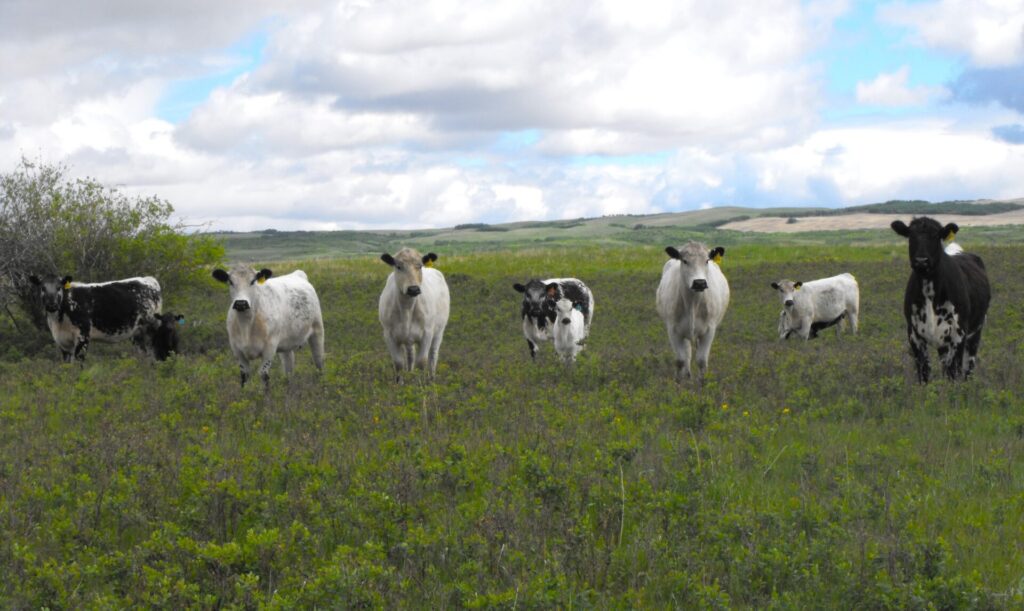
Speckle Park cattle in pasture

Twelve research projects have been awarded a total of $2 million in funding by the Beef Cattle Research Council (BCRC) through the 2022/2023 annual call. Through these projects, the $2 million of industry funding will be leveraged with over $4 million in matching funding through government and industry partners.  

Craig Lehr
BCRC Chair Craig Lehr, Alberta

As an Alberta beef producer, including a backgrounding feedlot and cow-calf operation, BCRC Chair Craig Lehr sees first-hand how applied research improves the productivity and profitability of Canadian beef production.

“We are able to leverage producer dollars from the Canadian Beef Cattle Check-Off to support research that truly matters to the day-to-day management of our herds,” says Lehr. “This is important work. The BCRC not only funds the research but develops practical resources to support producers in making informed decisions to improve profitability, keep Canadian beef competitive and continue our ability to operate with a social license.”  

The investment in these projects will ensure that research is being done in areas that directly impact the Canadian Beef Industry and the priorities laid out in the Five-Year Canadian Beef Research and Technology Transfer Strategy.  

BCRC Vice Chair Ron Stevenson, Ontario

“Research matters. It moves the needle on best practices used across the industry, from animal health and productivity to nutrition, forage and grazing management, soil health, and the list goes on,” says Ron Stevenson, BCRC vice chair and Ontario cow-calf producer, who values industry-funded research not only as producer, but also through his experiences working in the veterinary industry.

“The investment in these projects will lead to outcomes that have an impact, providing tools for farmers and ranchers to continuously improve.”  

Projects funded under the 2022/2023 BCRC call include: 

  • The known unknowns – Pulling back the cover on macrolide resistance in feedlots. Project Lead: Dr. Ruzzini, University of Saskatchewan  
  • Does supplementing pregnant cows with protein during winter grazing improve calf health? Project Lead: Dr. Malmuthuge, Agriculture & Agri-Food Canada, Lethbridge 
  • Can genomic tests identify the infectious causes of reproductive losses better than traditional diagnostics? Project Lead: Dr. Huang, Prairie Diagnostic Services Inc. 
  • Boosting calf immunity with early-life management. Project Leads: Dr. Malmuthuge, Agriculture & Agri- Food Canada, Lethbridge and Dr. Erickson, University of Saskatchewan 
  • Turning lemons into lemonade and cattle hide into snacks. Project Leads: Dr. Bruce and Dr. Roy, University of Alberta
  • Cracking the code on early life management of crossbred dairy-beef calves. Project Lead: Dr. Steele, University of Guelph 
  • Can natural malate production in forages reduce methane emissions in grazing cattle? Project Lead: Dr. Block, Agriculture & Agri- Food Canada, Lacombe 
  • Burn baby burn – Can prescribed fire be a tool for pasture rejuvenation and improved soil health? Project Lead: Dr. Bainard, Agriculture & Agri- Food Canada, Agassiz 
  • Maximizing pasture’s grazing potential by sod-seeding alfalfa mixes. Project Lead: Dr. Lardner, University of Saskatchewan 
  • Testing new forage varieties to improve production and reduce our carbon hoofprint. Project Lead: Dr. Ribeiro, University of Saskatchewan 
  • Forage for climate action – Can grazing perennial forages improve environmental sustainability and animal health?  Project Lead: Dr. Poudel, Agriculture & Agri- Food Canada, Lethbridge 
  • Understanding rest-recovery and grazing management for native prairie to improve grassland and animal productivity. Project Lead: Dr. Kelln, University of Saskatchewan 

The BCRC is Canada’s national industry-led funding agency for beef, cattle and forage research. The BCRC’s mandate is to determine research and development priorities for the Canadian beef cattle industry and to administer Canadian Beef Cattle Check-Off funds allocated to research. A division of the Canadian Cattle Association, the BCRC is directed by a committee of 15 beef producers from across the country. The BCRC is funded in part through a portion of the Canadian Beef Cattle Check-Off which is then leveraged with government and industry partner funding. 

Sharing or reprinting BCRC posts is welcome and encouraged. Please credit the Beef Cattle Research Council, provide the website address, www.BeefResearch.ca, and let us know you have chosen to share the article by emailing us at info@beefresearch.ca.

The BCRC is funded by a portion of the Canadian Beef Cattle Check-Off.

Canadian Beef Cattle Check-Off

Your questions, comments and suggestions are welcome. Contact us directly or spark a public discussion by posting your thoughts below.

Beef Cattle & the Carbon Cycle 🎙️

CLICK THE PLAY BUTTON TO LISTEN TO THIS POST:
Listen to more episodes on BeefResearch.caSpotifyApple PodcastsAmazon Music or Podbean.

Carbon is a hot topic these days with individuals, organizations, and entire industries working to better understand the environmental implications of their activities. Terms like “carbon sequestration,” “climate change,” “carbon footprint,” and “greenhouse gas emissions” are often used in the news and on social media. What do these terms mean? What role does beef production play in the carbon cycle?  How can carbon sequestration and greenhouse gas emissions impact beef producers on their farms?

The Carbon Cycle

Every living thing contains carbon and everything – including cattle and grasslands – are part of a carbon cycle. Carbon cycles are dynamic and vary around the world, by region, and even by farm, depending on different management practices.

Measuring emissions and sequestration in beef production depends on the type of life cycle analysis performed (i.e., birth-to-consumption vs. birth-to-slaughter). When people attempt to compare carbon footprints that analyse different portions of the beef production life cycle – or entirely different industries – these comparisons can be inaccurate and even misleading.

Raising cattle can have both positive and negative impacts on the carbon cycle and different management practices can increase or decrease the sector’s carbon footprint.

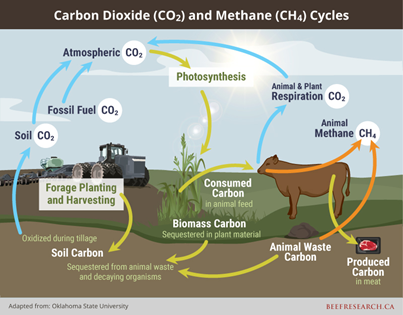
On one side of the equation, cattle emit greenhouse gases like enteric methane (CH4), a natural by-product of rumen fermentation. A management practice, such as including a feed additive like monensin, can help reduce enteric methane emissions while still enabling cattle to convert roughage into nutrient-rich beef. Burning fossil fuels for feeding or forage operations is another example of emissions, this time carbon dioxide (CO2). Producers can reduce carbon dioxide emissions by implementing extended grazing to reduce reliance on daily feeding.

On the other side of the equation, perennial forages and grasslands – the foundation of the beef cow-calf sector – are a critically important part of the carbon cycle because of their sequestration potential in Canada and worldwide. Forages and grasslands capture carbon dioxide (CO2) during plant growth, and sequester carbon in underground roots. Grasslands store up to 30% of the world’s organic carbon, and perennial grasslands are particularly effective carbon sinks, storing up to 97% of their carbon belowground.

Carbon Sequestration on Grasslands

Carbon sequestration is a dynamic process. Plants take in carbon dioxide (CO2) from the atmosphere during photosynthesis for plant growth, release oxygen into the atmosphere, and sequester carbon underground within their root systems.

All plants, including trees, annuals, and native and tame perennial grasslands, sequester carbon, however not all carbon sinks are equal. In stable conditions, forests sequester more carbon in timber, leaves and needles, than grasslands can store above and below ground. However, when a forest fire occurs, much of this carbon is promptly released back to the atmosphere during combustion. Fire suppression, drought, and insect infestations put carbon sequestered in forests at risk of release. In contrast, by storing the majority of their carbon belowground where it is protected from fire, grasslands provide a more stable carbon sink.

Annual crops sequester the least amount of carbon underground. Annual cropping systems are important for food and feed production, however compared to native grasslands, annual cropland often provides fewer ecosystem benefits, such as reduced biodiversity, reduced carbon storage, decreased soil water availability, and decreased soil porosity.

Scientists estimate that between 50 and 200 tonnes of carbon per hectare is stored in Canada’s grasslands, with an additional 3 to 12 tonnes of carbon per hectare stored in above-ground plant growth and plant litter. Most of the carbon sequestered is typically contained in the top 15cm of the soil. Soil organic carbon can also increase with grazing, particularly in the surface (0-15cm) soil, with minimal changes below this depth. Increased soil carbon may be caused by the ongoing animal impact that is responsible for trampling litter into soil, a grazing-induced plant response which causes plants to set down additional shallow roots following grazing, as well as an increase in the growth of individual plant species with higher grazing tolerance.

Carbon Storage and Land Use Practices

Grass species store most of their carbon below ground in their root systems.

Historical land use change is the single largest disturbance of grassland carbon, leading to an estimated global loss of 30-50% of grassland carbon stores. Practices such as converting grassland to cropland, draining wetlands, and construction such as urban development and transport infrastructure, lead to carbon loss.

Changes in carbon stocks occur in the short term and over a long period of time as well. For example, when a grassland is cultivated for annual cropping, there will be a rapid loss in carbon stocks during the first few years of cultivation, however carbon may continue to be lost from the system for several years after, eventually reaching an equilibrium at a much lower level. Beneficial land use practices, such as revegetating annual cropland to perennial forage or using livestock manure as a fertilizer can help rebuild carbon stocks, but it remains unclear as to whether the previous carbon stocks can be restored, and if so, how long it may take.

It’s estimated that Canada once had 61,500,000 hectares of natural grassland, of which approximately 1,540,000 hectares remain, primarily in smaller fragments. The conversion of natural grassland to annual cropland represents a loss of carbon stocks estimated between 20% and 60%. While grasslands sequester carbon and cycle other nutrients, these valuable landscapes also provide numerous ecological services including biodiversity conservation; habitat for wildlife, species at risk, and pollinators; flood mitigation; sediment trapping and buffering; water filtration and retention; and soil conservation. The conversion of grasslands to other land uses impacts carbon sequestration negatively, but also causes a loss of other ecological benefits.

Left intact, Canadian grasslands can and have been building carbon stores. In a study that looked at carbon sequestration over an 80-year time frame, there was a general gain in net carbon on grazed pastures in the Great Plains, particularly in recent decades, and soil organic carbon increased during that time frame at a rate of 190 kg of carbon per hectare per year.

Management Practices to Increase Carbon Sequestration

Farms that implement management practises that promote removing carbon dioxide from the atmosphere (through plant growth) and sequestering that carbon belowground (in the root system and soil) may be more resilient and adaptable to changing climatic conditions. There are some on-farm practices that producers can implement to increase sequestration and stability:

  • Avoid converting perennial grassland to annual cropland. After annual cropland is planted to perennial forage, revegetated land is slow to recovery and may not fully recover root mass and soil organic matter, even after 50 years.
  • Converting annual cropland to perennial forage is a carbon storage opportunity, however data is unclear on how much carbon is sequestered over time. However, in addition to carbon storage opportunities, converting annual cropland, particularly marginal land, to perennial forage does provide additional ecological benefits, including improved habitat and biodiversity, reduced soil erosion, and increased water retention.
  • Canadian studies have shown that moderate grazing can increase soil carbon concentration, particularly in the top 15cm of the soil surface. Grazing appears to be more beneficial for soil carbon in moister grasslands than in dry areas. Moderate grazing can also enhance other ecological services, including plant diversity and forage production.
  • Native grassland plant species tend to have higher root-to-shoot ratios than tame forages and tend to have more root mass belowground than tame species. When revegetating annual cropland to perennial grassland, including native plant species may be an effective way to increase carbon storage.
  • Left undisturbed, wetlands typically store more carbon than they release, resulting in net carbon sequestration. Wetland restoration can help re-establish ecological functions on these sites, and Canadian studies have indicated that carbon sequestered on newly restored wetlands as well as older restored wetlands result in a net carbon benefit.

Moving Forward

There is a growing interest in trading carbon through credits or offsets. Pilot projects across Canada are being set up, including the Canada Grassland Project Protocol. Led by the Canadian Forage and Grasslands Association, this project, which has numerous provincial and national partners, will help producers determine how much carbon they sequester in pastures and wetlands under different management practices and production systems. When carbon stores are better quantified on a farm-level, farmers may be able to establish a value for the carbon they are sequestering and trade carbon offsets in the future.

Beef production in Canada has a distinct carbon cycle that includes inputs and outputs, and greenhouse gas emissions and carbon storage. While there are challenges that the sector must overcome, including reducing emissions and meeting ambitious industry-leading targets, there are also great opportunities. Canadian researchers are working toward understanding practices that support carbon sequestration and methane reduction in beef cattle production. At the same time, technology and innovation are allowing producers to become more efficient at producing beef, and there is an opportunity to understand the incredible value that grasslands and forages present for carbon sequestration.

To learn more about beef cattle and carbon cycles, visit the webpage.

Click here to subscribe to the BCRC Blog and receive email notifications when new content is posted.

The sharing or reprinting of BCRC Blog articles is welcome and encouraged. Please provide acknowledgement to the Beef Cattle Research Council, list the website address, www.BeefResearch.ca, and let us know you chose to share the article by emailing us at info@beefresearch.ca.

We welcome your questions, comments and suggestions. Contact us directly or generate public discussion by posting your thoughts below.