Water Stewardship: A Ranching Family’s Approach to Conservation and Changing Landscapes 🎙️

CLICK THE PLAY BUTTON TO LISTEN TO THIS POST:

Listen to more episodes on BeefResearch.caSpotifyApple PodcastsAmazon Music or Podbean.

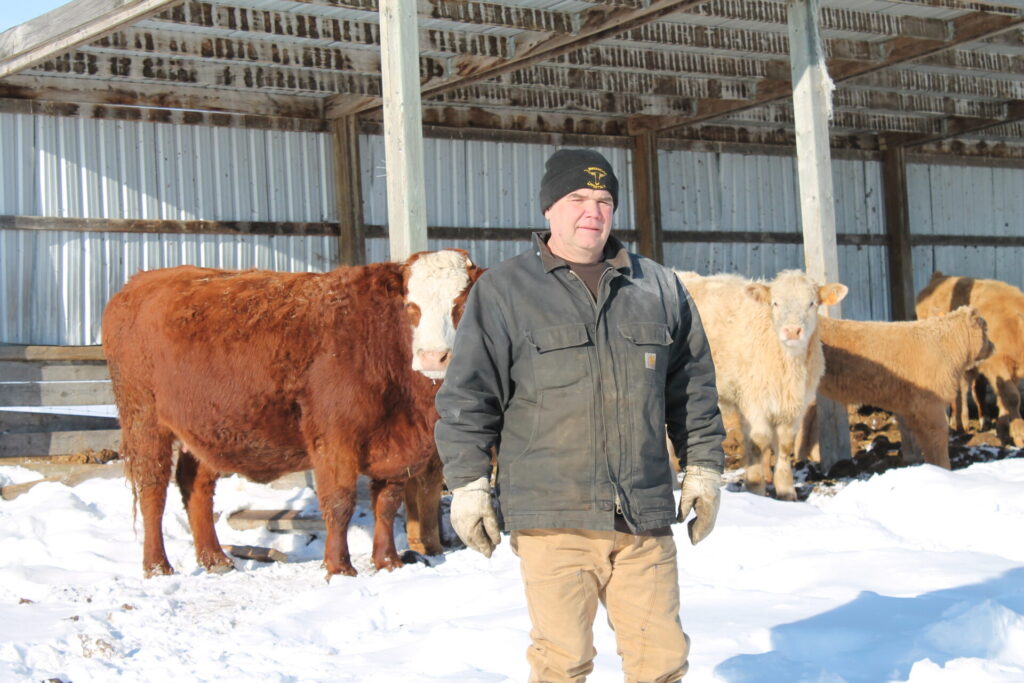
Nestled in the arid South Okanagan, Thomas Ranches is a multigenerational operation that balances ranching with conservation. In 2000, the Thomas family sold their land to The Nature Trust of British Columbia, preserving natural habitat while continuing cattle operations under a lease agreement. Today, Brian Thomas manages 200 head of cattle on 350 acres, with the remaining 1,650 acres dedicated to wildlife habitat. Effective water management is crucial to sustaining both livestock and the surrounding ecosystem in this dry region.

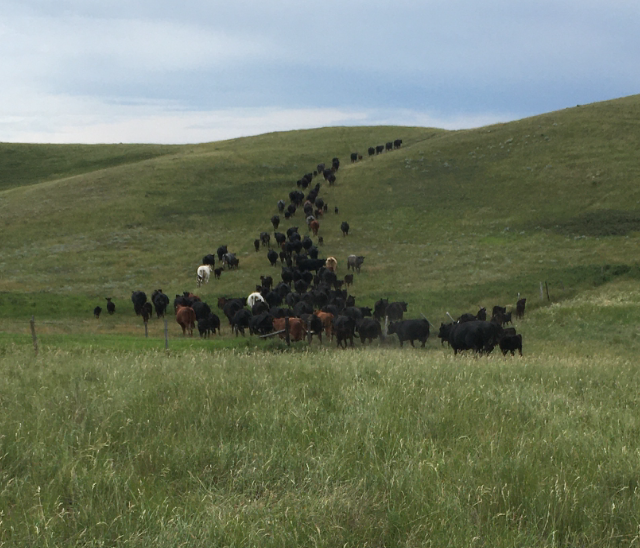
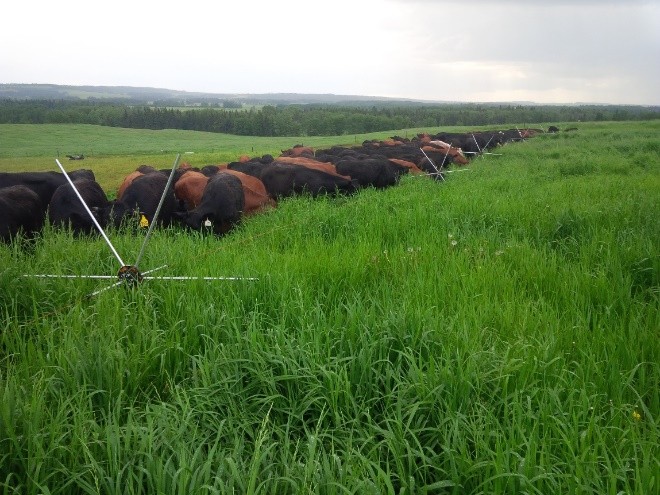
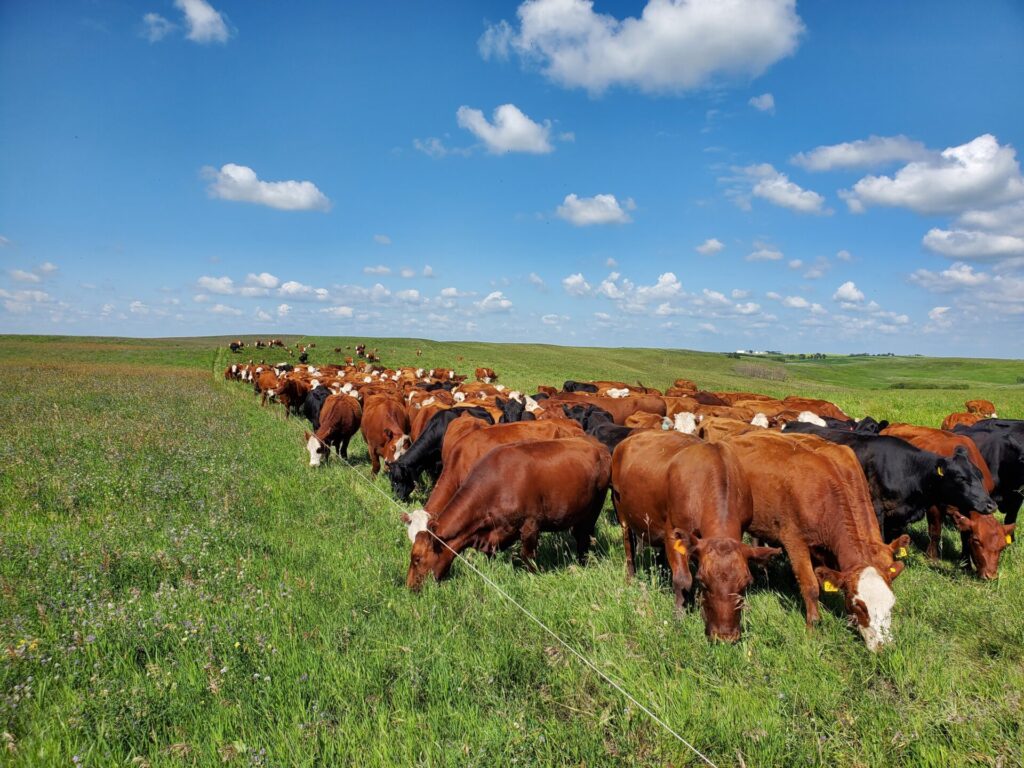
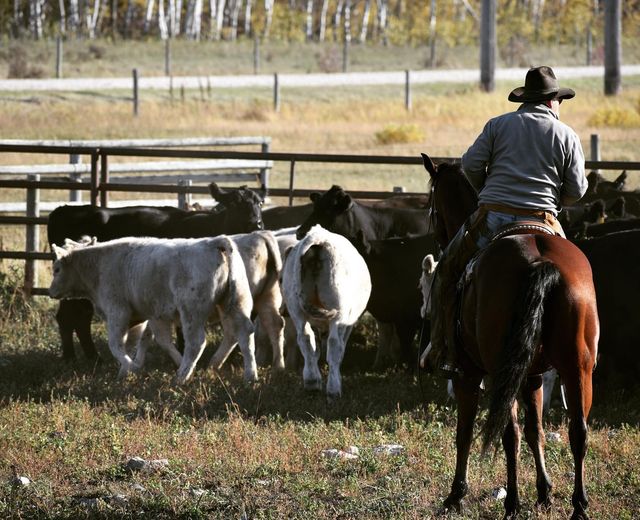
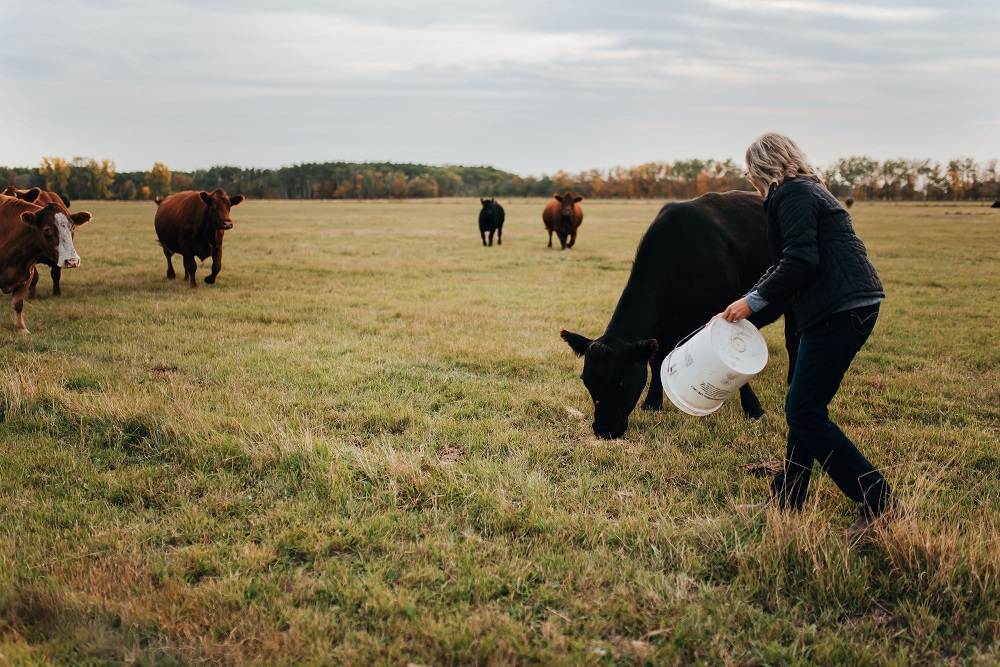
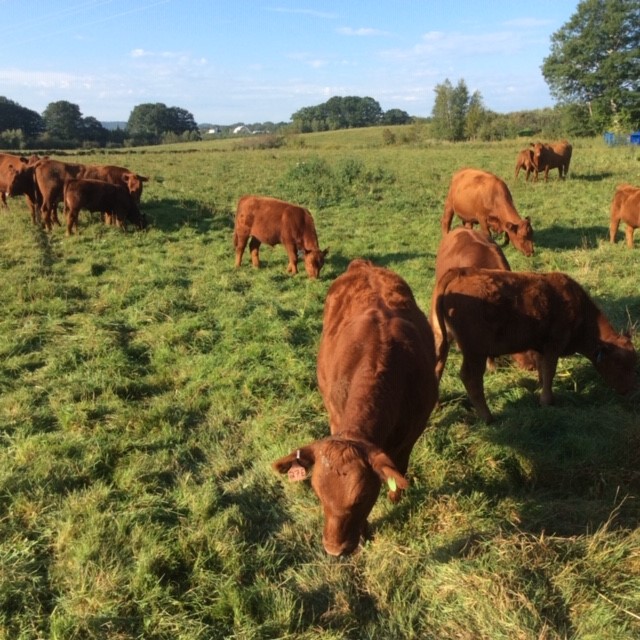
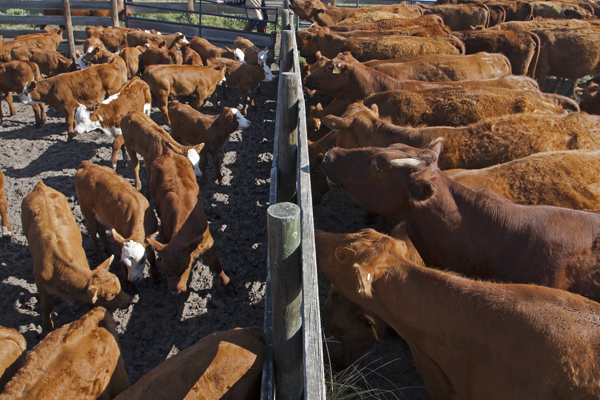
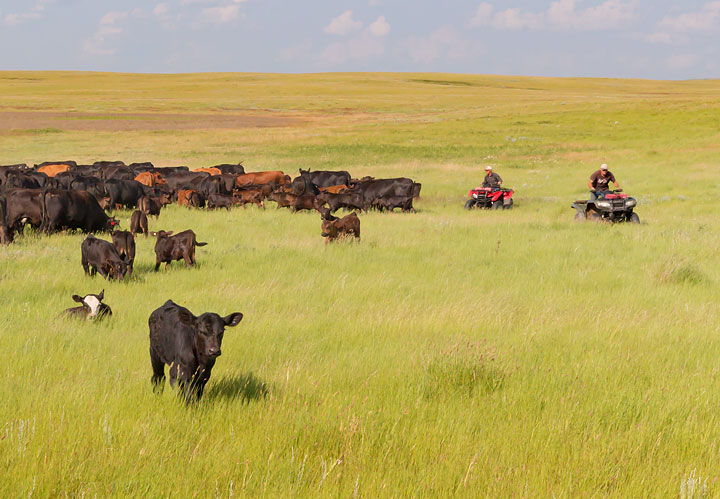
beef cattle on Crown rangeland in South Okanagan
Cattle on Crown rangeland. Photos courtesy of Brian Thomas.

Balancing Water Needs in a Shifting Landscape

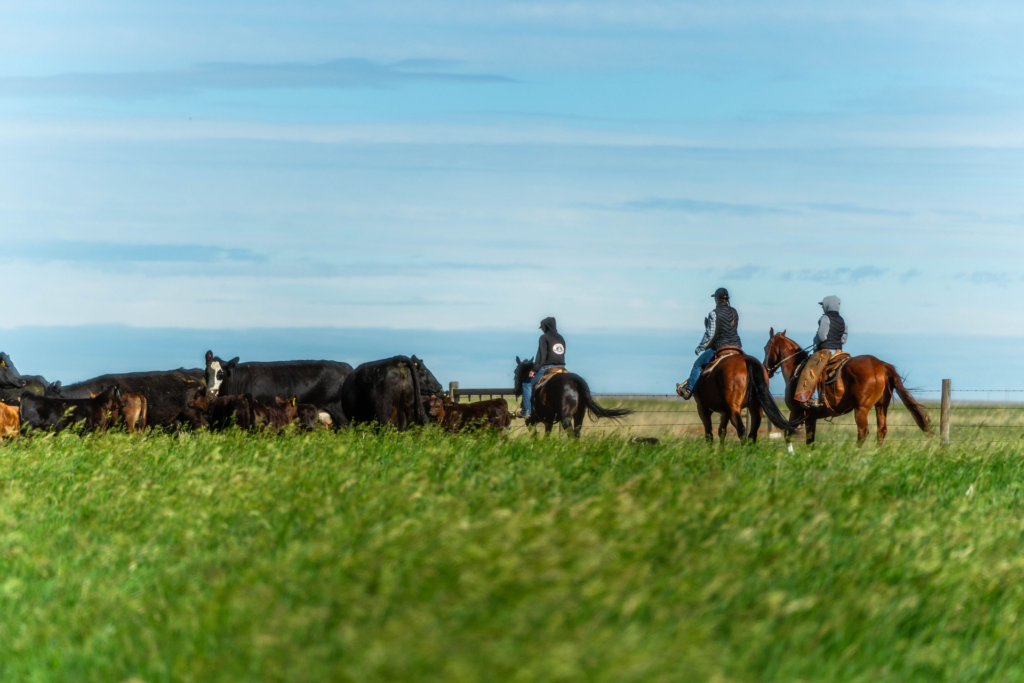
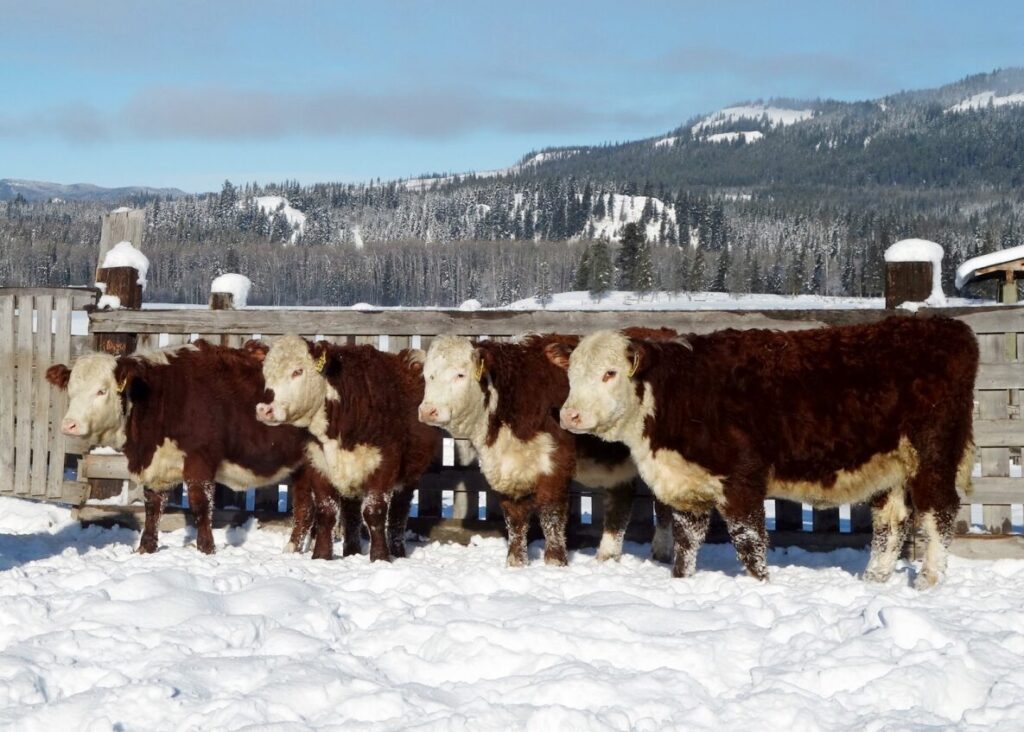
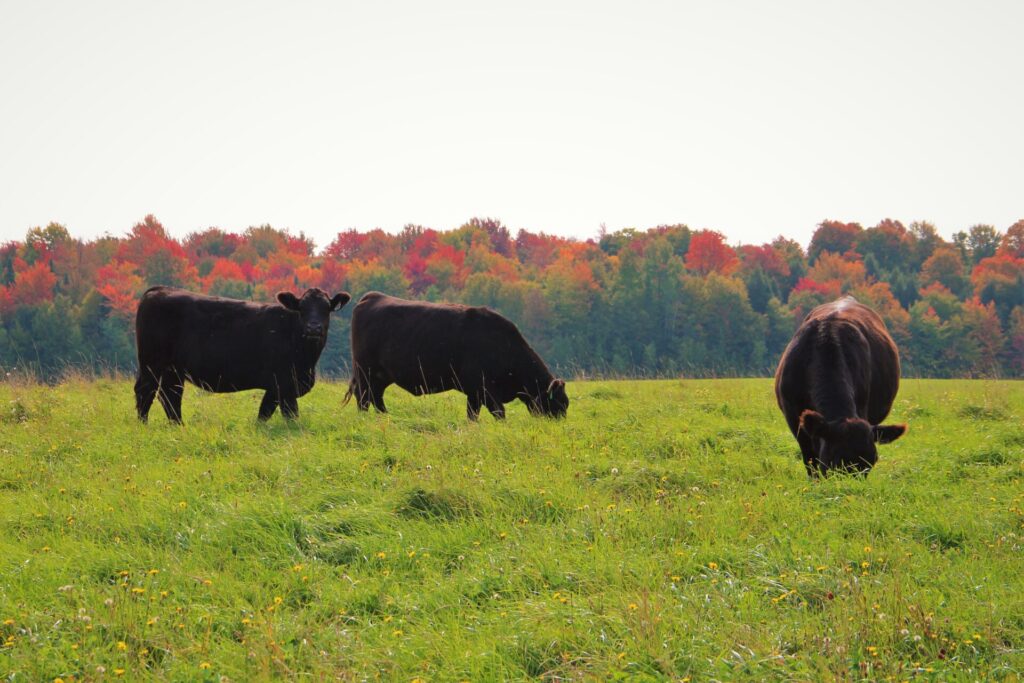
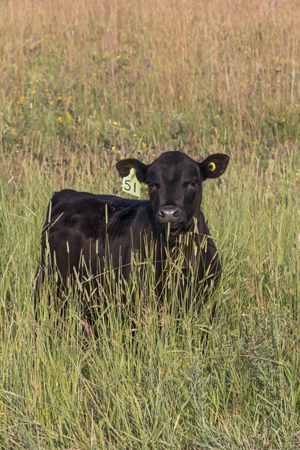
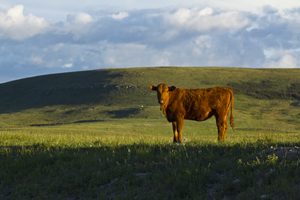
cattle on Thomas Ranches in South Okanagan, BC
Cattle on Thomas Ranches in the South Okanagan, BC

Thomas Ranches relies on a creek-fed storage dam and an extensive irrigation system. This helps them manage water shortages in a dry climate that gets less than a foot of annual rainfall. Frequent droughts have intensified competition for water resources, and the impacts of increasing population growth, tourism and conservation efforts place additional demands on an already limited supply.

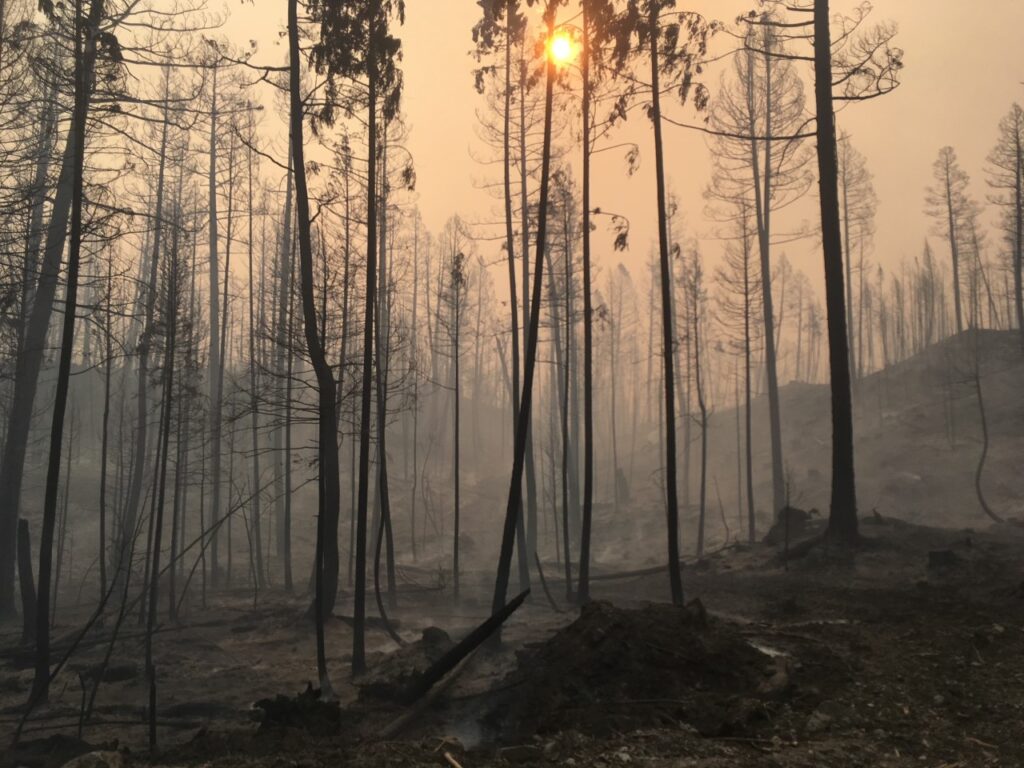
Wildfires also pose ongoing risks. A wildfire in 2021 burned nearly half the ranch’s land. However, the resulting reduction in tree cover ultimately increased water availability by reducing vegetation uptake.

Wildlife protection adds complexity, as the ranch’s rugged terrain supports species like California bighorn sheep, elk and mule deer, necessitating careful water stewardship. Despite scrutiny of agricultural water use, Brian underscores that broader water use by humans is a major driver of water shortages, not cattle consumption. This reinforces the need for proactive water management to ensure long-term sustainability. These pressures have shaped Brian’s mindset, strengthening his focus on planning, advocacy and preparedness.

Water Storage and Distribution

The ranch’s storage dam, originally built in 1943 and expanded over the years, is vital for maintaining water availability throughout the year. The earthen embankment dam creates a reservoir that collects and holds water during wetter periods, like during spring snowmelt or heavy rainfall. The stored water can then be used during drier months. Additionally, springs and roadside ditches provide secondary water sources for cattle on Crown rangeland where cattle graze from May to October.

To reduce irrigation water waste, the ranch has transitioned from above-ground aluminum pipes to underground PVC pipelines, significantly lowering water loss through leaks and evaporation. Additionally, pivot irrigation systems are replacing older hand-line and reel irrigators, further improving efficiency. These improvements have significantly reduced overall water consumption, which helps ensure the cattle have the water they need, even in drier periods.

This practical water analysis guide for beef producers outlines key questions and considerations to support decision-making around different watering solutions for cattle.

Off-Stream Watering Systems

Historically, cattle drank directly from creeks, but all riparian areas on the ranch are now fenced off to protect the watercourses from contamination and erosion. Instead, water is delivered via underground gravity-fed pipes to troughs, ensuring a consistent supply while protecting water quality. This change was supported by federal and provincial funding through the Species at Risk program, benefiting both cattle and local wildlife. Additionally, this practice enhances the ranch’s image, as the public appreciates seeing natural water sources protected.

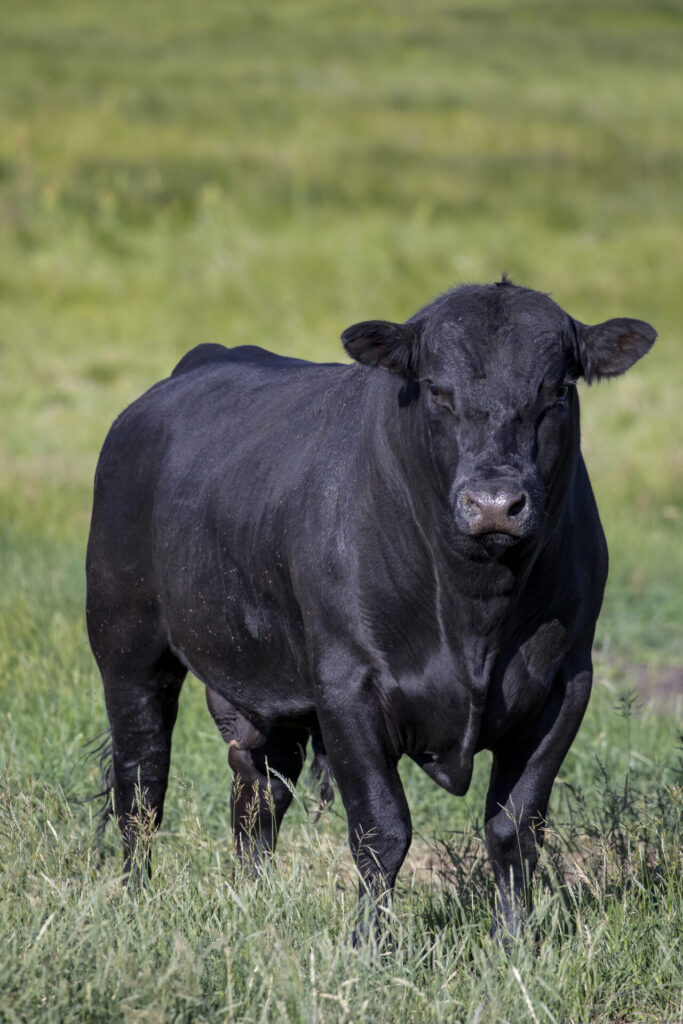
storage dam in British Columbia
A storage dam is the primary water source for Thomas Ranches.

Water Access and Security

The ranch holds historic water licenses dating back to the 1870s, ensuring legal access to water from McLean Creek and the storage dam. However, regulatory challenges persist, particularly regarding water rights in British Columbia, with concerns about stock water rights on Crown land.

The BC Cattlemen’s Association is advocating for improved stock water regulations to provide greater security for ranchers, ensuring reliable water sources for their cattle. In collaboration with industry groups, Brian is actively involved in discussions about policies that recognize the importance of agricultural water use and support cattle health and productivity.

Key Water Management Takeaways

  • Plan for Drought: Water storage infrastructure is essential during dry periods. 
  • Protect Natural Water Sources: Fencing off creeks and utilizing off-stream water systems improves water quality for both cattle and wildlife. 
  • Monitor and Adapt to Changing Conditions: Wildfires, drought and increasing human activity require continuous adjustments to water management strategies. 
  • Work Collaboratively: By working together, beef cattle producers can ensure their water needs are understood and considered in provincial planning. 

Acknowledgements

Thanks to the following individuals for contributing their time and expertise to review this article and related resources: 

  • Dr. Mary-Jane Orr, General Manager, Manitoba Beef & Forage Initiatives 
  • Dwayne Summach, Livestock and Feed Extension Specialist, Saskatchewan Ministry of Agriculture 
  • Jaclyn Horenburg, Producer Relations Specialist, Beef Farmers of Ontario 
  • Bree Patterson, Conservation Programs Specialist – Agriculture, Ducks Unlimited Canada 
  • Katie Trottier, Ruminant Livestock Specialist, Perennia Food & Agriculture 
  • Geoff Larkin, Climate Change Adaptation Coordinator, Agri-Commodity Management Association 
  • Kaley Segboer-Edge, VBP+ Coordinator and ABP Stewardship Lead, Alberta Beef Producers 

Sharing or reprinting BCRC posts is welcome and encouraged. Please credit the Beef Cattle Research Council, provide the website address, www.BeefResearch.ca, and let us know you have chosen to share the article by emailing us at info@beefresearch.ca.

The BCRC is funded by a portion of the Canadian Beef Cattle Check-Off.

Canadian Beef Cattle Check-Off

Your questions, comments and suggestions are welcome. Contact us directly or spark a public discussion by posting your thoughts below.

Ingenuity, Upgrades and Legacy: On-Farm Practices That Pay Off for These Beef Producers

The Beef Cattle Research Council (BCRC) is made up of producer members from across Canada, appointed by each of the provincial beef organizations that allocate part of the Canadian Beef Cattle Check-Off  to research. The number of members from each province is proportional to the amount of provincial check-off allocated to research. 

The following is part of a series introducing you to this group of innovative thinkers. These producers set the BCRC’s direction by sharing practices, strategies or technologies they have integrated into their own operations. Read the past installments in this series.  

Implementing changes to increase profitability, reduce labour or fit farm work around an off-farm job doesn’t happen overnight. But, is doesn’t always require big investments either. Small tweaks and creatively using resources already on your farm can add up to meaningful gains and deliver big pay offs.

Using Data and Resources Effectively

Tara Mulhern Davidson – Ponteix, Saskatchewan

Lonesome Dove Ranch, Saskatchewan
Photo provided by Tara Mulhern Davidson

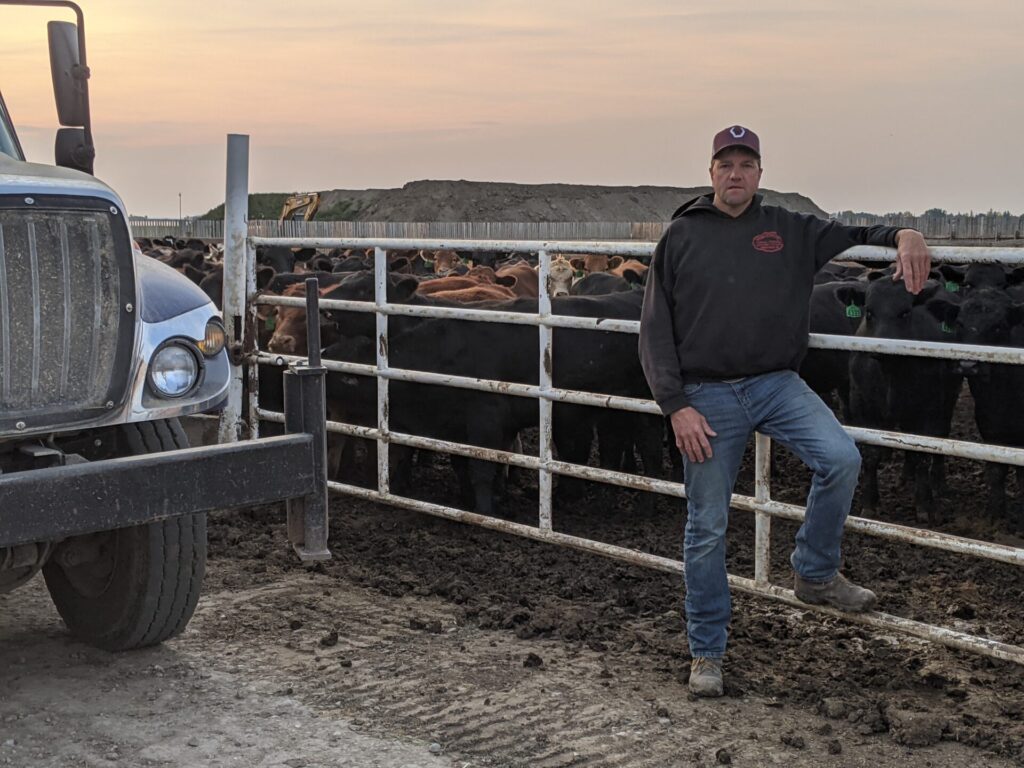
Tara Mulhern Davidson, along with her husband Ross and their four children, own and operate Lonesome Dove Ranch, a large commercial cow-calf and seedstock operation south of Ponteix, Saskatchewan. They raise both purebred Gelbvieh and commercial Gelbvieh-cross cattle, selling feeder steers, replacement heifers and some direct-to-consumer beef. The ranch also exports cattle genetics and live animals across North America and around the world, co-hosting an annual bull sale with family.

The Davidsons calve the majority of their herd in February and March and sort cattle as they are calving into groups for pasture turnout. Cows usually go to pasture in May, and Tara points out that their operation is “very spread out, so while our headquarters are south of Ponteix, we can have cattle 40 minutes away from us in any direction, and this is reflected in some of our management decisions.”

Data-Driven Decisions Through Record-Keeping

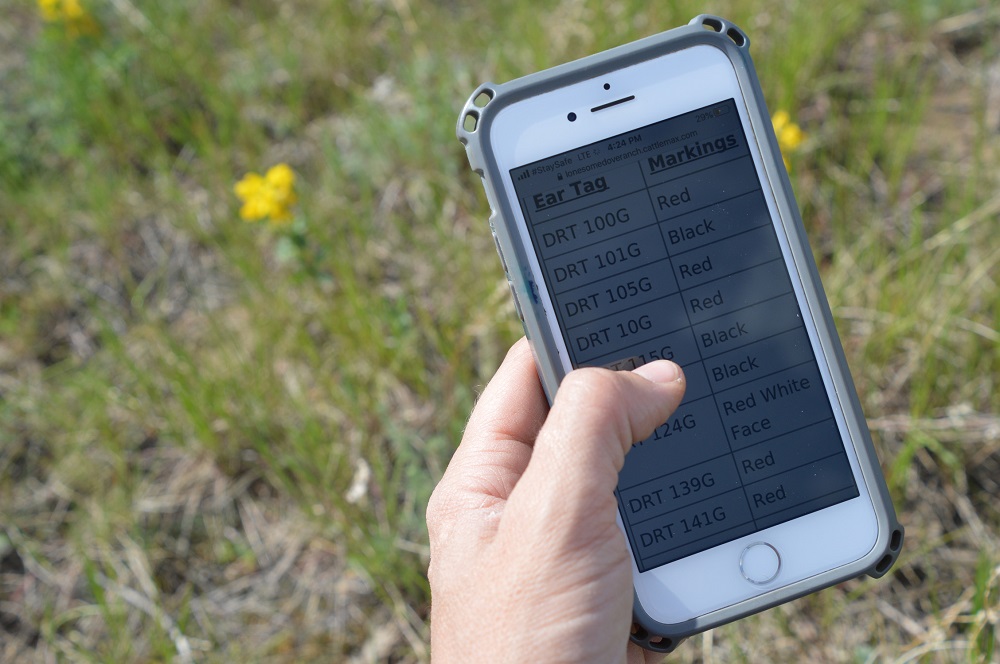
Tara is a long-time advocate of digital record-keeping and was an early adopter of online herd management tools. For more than 16 years, she’s used online cattle management software to track animal health, performance, treatments, maternal lineage and reproductive data. Tara has found that having this data is valuable for day-to-day management decisions.

“If someone is out riding through calves and gives one a treatment, they can record it immediately,” she explains. “The next day if someone completely different is out there riding through, they can look the calf up and know that they have already been treated.”

They also find value in having years of data in the system. Being able to look up any animal and know not only her information, but also the information about her offspring over several years has helped in decision making.

Tara points out data is used both for individual management and for herd-level decisions including:

  • Identifying cows for culling based on temperament, feet, udder quality and performance
  • Selecting heifers and bulls with strong genetic and performance histories
  • Ensuring consistent information is available to all ranch workers no matter where they are

By tying calf data to dams and following animals across years, Tara can confidently market only the cattle that fit the ranch’s long-term goals and breeding objectives.

Portable Handling Systems for a Spread-Out Ranch

Operating across a wide geographic area, Tara notes that having a portable hydraulic squeeze chute has been a game changer for their ranch. “We can now check and process animals virtually anywhere,” she says. “You can make a corral out of anything and then stick the chute on the end, and it makes handling cattle much easier and safer.”

This system works especially well on rented pastures where they don’t know if they will have access in future years. It gives them flexibility to pregnancy check, treat or vaccinate cattle on the pasture whenever needed.

The portable chute reduces stress for both cattle and handlers and allows implementation of consistent management practices even on distant pastures.

Using Straw Bales for Shelter and Flexibility

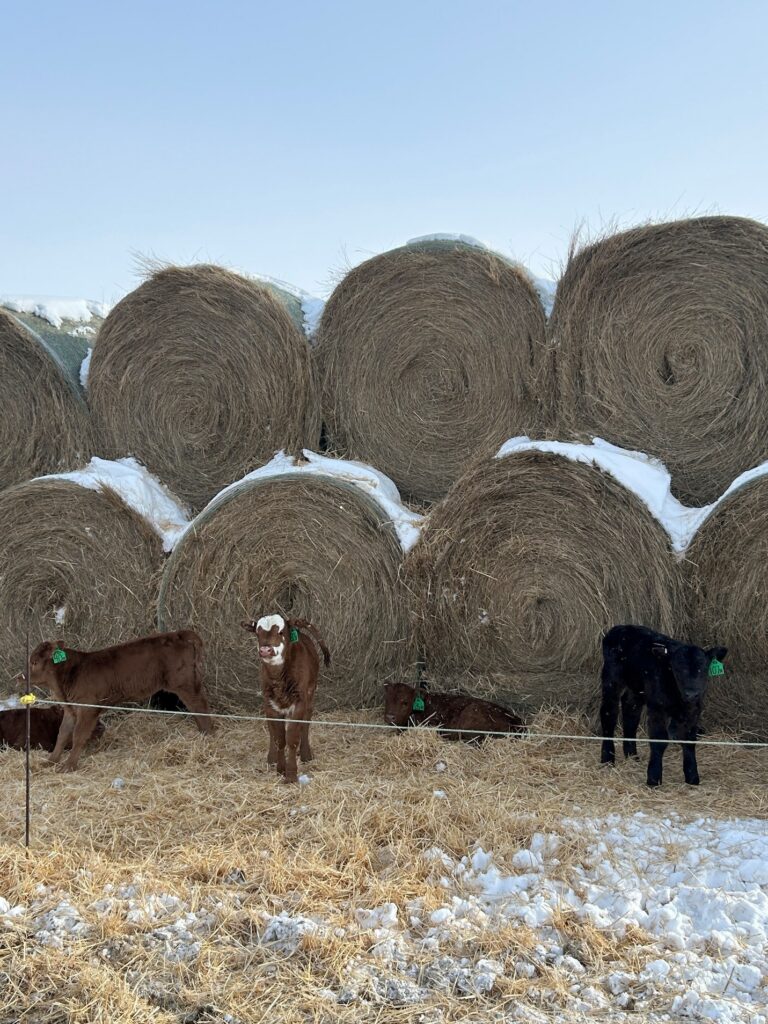
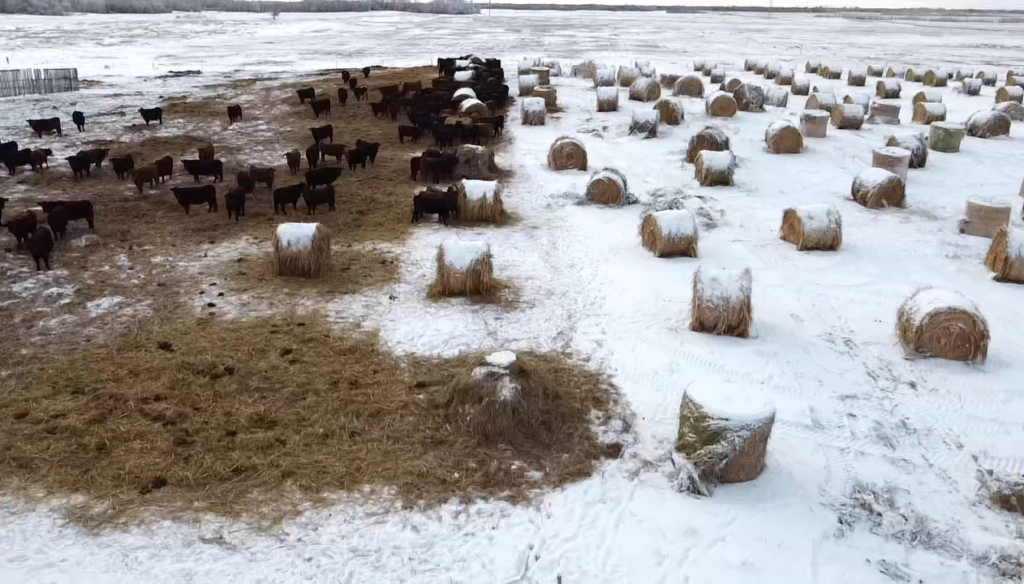
Straw is an extremely valuable resource on the Davidson’s farm. Because straw can be difficult to find in their area, they bale it from their own cereal crops to ensure supply. They use straw as feed and as bedding, but they also stack it strategically in calving and grazing areas as windbreaks and as temporary shelter for young calves and cows throughout the spring and winter. They run electric fence around the outside of the bales, which allows calves to get under it close to the bales but prevents cows from getting too close.

Tara also likes that this system is flexible, enabling them to stubble graze some of their fields and allowing shelter where it is needed year to year.

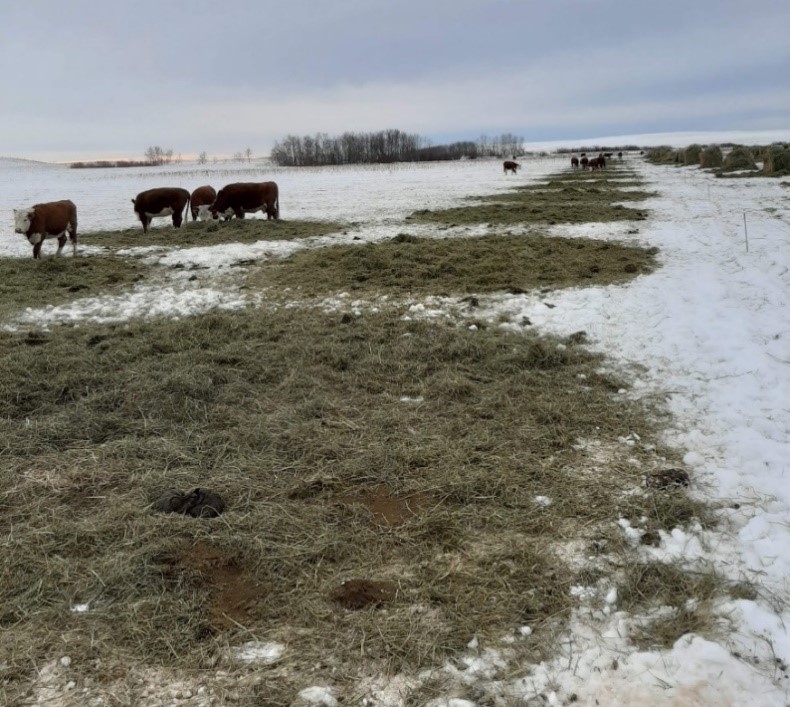
calves with hay shelter, photo by Tara Mulhern Davidson
Photo provided by Tara Mulhern Davidson

Making Your Farm Work For You

Kim Jo Bliss – Emo, Ontario

Kim Jo Bliss and family in Ontario
Photo provided by Kim Jo Bliss

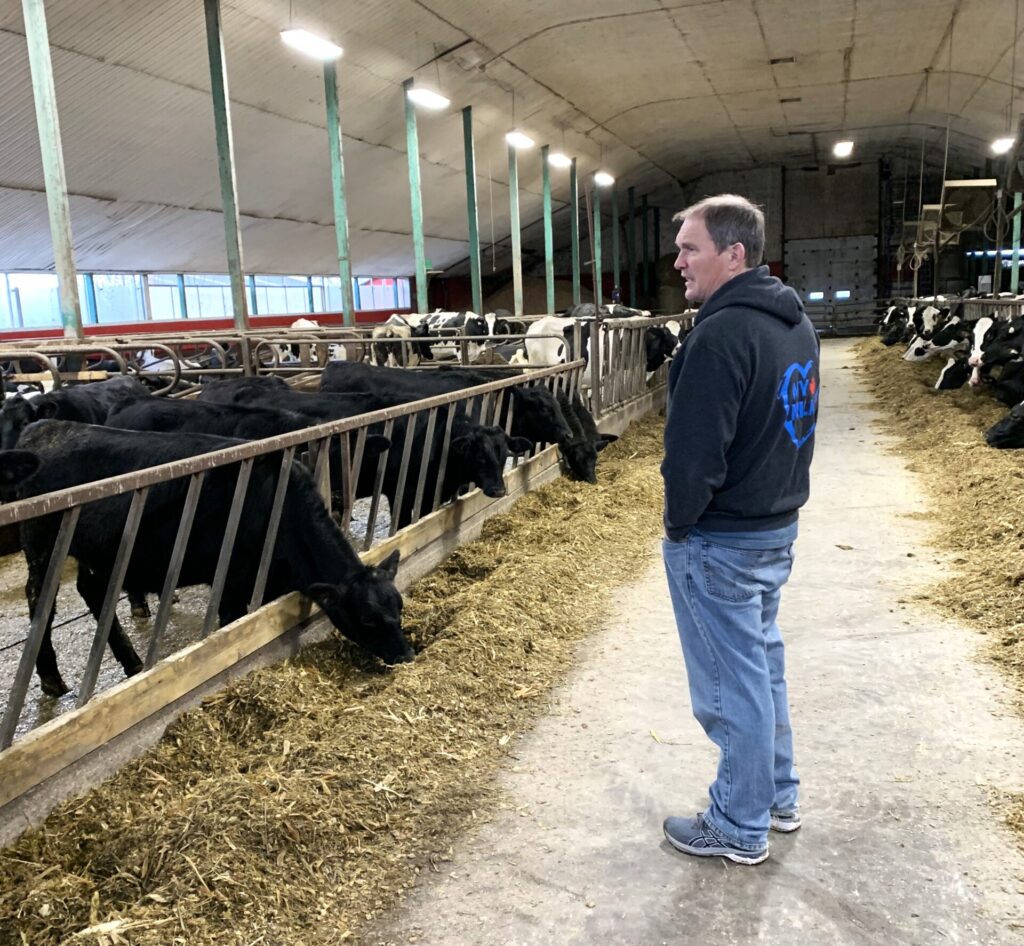
Kim Jo Bliss runs a diversified beef cattle operation in Northwestern Ontario near the borders of Manitoba and Minnesota. After coming back from university, Kim fell in love with farming through her grandmother and still farms some of her grandmother’s land today. On her farm, Kim Jo has about 50 head of purebred Herefords and Hereford × Red Angus crosses, along with some sheep, goats and other animals.

Kim Jo balances on-farm production with her day job at the University of Guelph’s Emo Research Station. Her role keeps her at the intersection of producer needs, forage research and practical on-farm management adaptations. Off-farm work has required Kim Jo to adopt practices that enable her to be away from the farm during the day.

Winter Bale Grazing for Efficiency and Animal Health

Kim Jo grows all of her own feed and utilizes the fields with bush for winter feeding. She uses hay to bale graze but rotates pastures to ensure a better distribution of nutrients and to allow cattle access to the bush for shelter.

Bale grazing begins in November with cattle allowed access to 10–14 days of feed at a time and bales are spaced out to encourage cattle to walk. Depending on forage quality, older or poorer quality bales are rolled out to encourage cattle to eat them. Providing only this amount of feed at a time allows Kim Jo an opportunity to look through the cattle and check them when feeding. “I still check the cattle on the days I am not feeding, but I find spending the time to go out there every 10 days really gives me a good opportunity to look at everything while I am feeding,” she says.

The feed is tested annually, and protein blocks are fed to balance the nutritional value of the hay. She points out that in drought years there can be a real problem with feed quality, especially when it comes to mineral deficiencies. This method allows her to tailor feeding and grazing patterns, keeping cattle healthier and better monitored while also maximizing labor and feed resources.

beef producer Kim Jo Bliss steps off tractor
Photo provided by Kim Jo Bliss

Calving Barn Cameras for Management Flexibility

Cows calve in February and March to accommodate a busier field work season in Kim Jo’s job at the research centre. A network of cameras ensures she can check on and manage calving, even while working off farm during the day, especially during colder weather.

All cattle are brought in close to the yard during calving, then those that are close to calving are moved to the barn. Kim Jo points out that having higher quality cameras has helped her not only monitor calving but also ensure calves are getting up and nursing or determining if they require assistance.

The barn is set up with six calving stalls each with their own camera, and with the addition to a camera in the yard, she is able to monitor cattle from anywhere on her phone. “I choose to use a security camera system. It rotates 360 degrees and will also zoom in for high quality so that I can read ear tags. It was more money, but I think it was worth it.”

This technology gives her peace of mind during peak calving and allows her to balance farm chores with other responsibilities.

Putting Production-Driven Experience Into Action

Both Tara and Kim Jo bring production-tested practices to the BCRC — from data-informed decisions and flexible infrastructure, to adaptive grazing systems and smart use of technology. Their on-farm experiences enrich the council’s perspective, ensuring research directions continue to reflect the realities and opportunities of Canadian beef production.

Sharing or reprinting BCRC posts is welcome and encouraged. Please credit the Beef Cattle Research Council, provide the website address, www.BeefResearch.ca, and let us know you have chosen to share the article by emailing us at info@beefresearch.ca.

The BCRC is funded by a portion of the Canadian Beef Cattle Check-Off.

Canadian Beef Cattle Check-Off

Your questions, comments and suggestions are welcome. Contact us directly or spark a public discussion by posting your thoughts below.

Mise en commun des ressources : un pâturage communautaire modernise ses systèmes d’abreuvement pour des bovins de boucherie en meilleure santé

Claire Sampson-MacDonald est présidente de Maple Brook Co-operative Pastures Ltd., un pâturage communautaire situé sur l’île du Cap-Breton, près de Maple Brook, en Nouvelle-Écosse. En Nouvelle-Écosse, les pâturages communautaires ont vu le jour dans les années 1960 et ont été gérés par les gouvernements provinciaux pendant des décennies ; mais aujourd’hui, la province est propriétaire des terres et la gestion de chaque pâturage est assurée par des organismes communautaires ou des coopératives.

Maple Brook Co-operative Pastures Ltd compte actuellement 22 membres et dispose d’environ 106 acres de terres défrichées consacrées au pâturage. La coopérative fait paître de 75 à 80 têtes de mai à novembre, mais souhaite augmenter ses effectifs à mesure que des améliorations sont apportées aux infrastructures et aux terres.

Infrastructures vieillissantes

Le pâturage de Maple Brook est situé sur une colline, avec un ruisseau qui traverse la partie la plus basse du pâturage. Pendant de nombreuses années, ce ruisseau a constitué la principale source d’eau pour l’ensemble de la zone de pâturage.

Cette approche de la gestion de l’eau a entraîné plusieurs problèmes :

  • Les bovins ne gagnaient pas autant de poids qu’ils auraient pu : l’unique point d’eau, situé dans un coin du pâturage, les obligeait à parcourir une longue distance pour s’abreuver, tandis que la zone près du ruisseau était pâturée de façon intensive, ce qui entraînait une utilisation inégale du terrain.
  • Avec des étés de plus en plus secs, le niveau d’eau du ruisseau baissait à la fin de l’été.
  • Le fait que les bovins aient un accès direct au ruisseau n’était pas idéal pour la protection de l’environnement et la propreté de l’eau.
BCRC economics of water systems calculator

Le Calculateur de la rentabilité des systèmes d’abreuvement du BCRC a été conçu pour estimer les coûts et les avantages économiques potentiels de systèmes d’abreuvement alternatifs comparativement à l’accès direct à l’eau d’un étang-réservoir.

Moderniser les infrastructures pour répondre aux besoins d’aujourd’hui

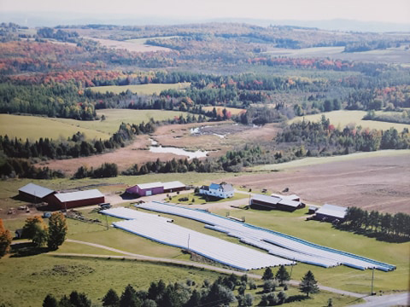
Vue aérienne du pâturage communautaire de Maple Brook. Photo gracieusement fournie par Claire Sampson-MacDonald.

À la suite du regain d’intérêt de la province pour les pâturages communautaires à travers la Nouvelle-Écosse, Maple Brook a été mise en relation avec Perennia Food and Agriculture Corporation, une agence provinciale de développement. L’équipe de Perennia a recommandé de développer des sources d’eau supplémentaires afin de pouvoir diviser le pâturage en parcelles plus petites, ce qui permettrait un pâturage plus intensif. Ils ont également recommandé de clôturer le ruisseau afin d’en limiter l’accès aux bovins, de préserver la qualité de l’eau et de réduire au minimum les risques pour l’environnement. En réponse, le gouvernement provincial a alloué des fonds aux pâturages dans le cadre du Programme de soutien aux pâturages communautaires, ce qui a permis à la coopérative de commencer à mettre en œuvre les changements nécessaires.

Un effort collectif

Les membres de la coopérative ont consacré du temps et de l’énergie à la mise en œuvre de ces changements, en complétant le financement reçu par Maple Brook. Ils ont également sollicité les conseils de Perennia concernant les pompes solaires et la conception d’un système d’approvisionnement en eau à partir de matériaux facilement accessibles.

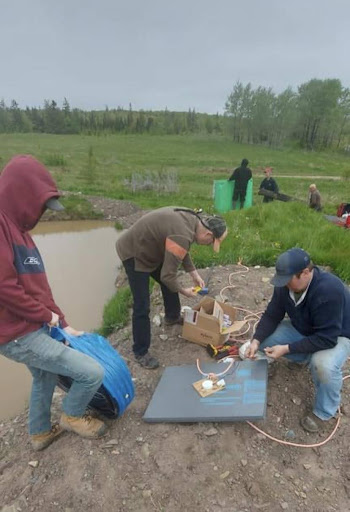
Trois étangs ont récemment été aménagés pour capter les eaux de ruissellement de surface, avec des talus éviter qu’ils ne se comblent. L’eau est pompée depuis ces étangs à l’aide d’une pompe solaire équipée d’une batterie de secours, puis acheminée vers des réservoirs et enfin vers des abreuvoirs pour les bovins. De plus, le ruisseau est désormais en grande partie clôturé, ce qui limite l’accès des bovins.

L’un des trois nouveaux bassins de rétention des eaux de surface et de ruissellement à Maple Brook. Photo gracieusement fournie par Claire Sampson-MacDonald..
Les membres de la coopérative ont travaillé ensemble pour apporter des modifications au réseau d’alimentation en eau. 

Ajustements et projets pour l’avenir

Disposant désormais de plus d’une source d’eau, Maple Brook est en mesure de pratiquer le pâturage en rotation dans ses enclos, ce qui permet de mieux exploiter l’ensemble de ses pâturages. Cela a également amélioré l’état des pâturages grâce à une meilleure répartition du pâturage et du passage des animaux. La première année, il a été difficile de maintenir un débit suffisant pour que les abreuvoirs restent pleins, mais des modifications apportées à l’équipement afin d’augmenter le débit ont permis de résoudre le problème. Le nouveau système nécessite également une surveillance quotidienne sur place afin de résoudre tout problème éventuel. Les améliorations futures porteront sur l’optimisation de l’accès et du drainage autour de l’abreuvoir, ainsi que sur l’augmentation de sa capacité.

Dans l’ensemble, Maple Brook a rapidement constaté les avantages du nouveau système : « Ce qui m’a le plus surpris, c’est la rapidité avec laquelle nous avons constaté les effets bénéfiques sur la santé du troupeau. Dès le mois de juin de cette première année où nous avons installé les étangs, on voyait clairement que les bovins avaient pris plus de poids que les années précédentes, alors que nous n’étions même pas encore à la moitié de la saison de pâturage. »

Il est très utile de faire appel à des conseillers dont l’expertise peut aider à orienter le processus. Pour les producteurs ou les groupes confrontés à des défis similaires, adopter les changements recommandés par les experts peut rapidement s’avérer bénéfique.

Points clés à retenir en matière de gestion de l’eau

  • Veillez à ce que les bovins aient facilement accès à de l’eau propre et, si possible, alimentez un abreuvoir à l’aide d’une pompe.
  • Surveiller régulièrement les sources d’eau et les systèmes afin de résoudre tout problème qui pourrait survenir.
  • Installez des clôtures autour des points d’eau pour empêcher les bovins d’y accéder et éviter toute contamination.
  • Des conseillers sont à votre disposition pour vous aider à moderniser vos réseaux d’alimentation en eau.


Remerciements

Merci aux personnes suivantes d’avoir consacré temps et expertise à la révision du présent article et des ressources connexes : 

  • Kaley Segboer-Edge, coordonnatrice de VBP+ et responsable de l’intendance environnementale chez Alberta Beef Producers
  • Dre Mary-Jane Orr, directrice générale, Manitoba Beef & Forage Initiatives 
  • Dwayne Summach, spécialiste de la vulgarisation en élevage et alimentation animale, Ministère de l’Agriculture de la Saskatchewan
  • Jaclyn Horenburg, spécialiste des relations avec les producteurs, Beef Farmers of Ontario 
  • Bree Patterson, spécialiste des programmes de conservation – Agriculture, Canards Illimités Canada
  • Katie Trottier, Spécialiste en élevage de ruminants, Perennia Food & Agriculture 
  • Geoff Larkin, coordonnateur de l’adaptation au changement climatique, Agri-Commodity Management Association 

Le partage ou la réimpression des publications du BCRC sont les bienvenus et sont encouragés. Veuillez mentionner le Beef Cattle Research Council, fournir l’adresse du site Web, www.BeefResearch.ca/fr, et nous faire savoir que vous avez choisi de partager l’article en nous envoyant un courriel à info@beefresearch.ca.

Le BCRC est financé par une partie du prélèvement national sur les bovins de boucherie.

Vos questions, commentaires et suggestions sont les bienvenus. Contactez-nous directement ou lancez une discussion publique en publiant vos idées ci-dessous.

Clôtures, filtres et gouttières : initiatives innovantes relatives à l'eau afin d'améliorer la santé du troupeau

Brian Windover et son fils Scott sont propriétaires et exploitants de Bayview Farms à Napanee, en Ontario. Leur exploitation comprend un troupeau commercial de 90 têtes de bovins Gelbvieh et Gelbvieh x Charolais certifié par Verified Beef Production Plus (VBP+). 

La ferme comprend 250 acres de pâturages avec des clôtures arborées et ouvertes. Deux des pâturages bordent Hay Bay, une baie du lac Ontario, et sont clôturés pour empêcher les bovins d’accéder à la baie.

Le maintien d’une bonne qualité de l’eau a toujours été une priorité absolue pour Bayview Farms, les amenant à mettre en œuvre plusieurs changements afin de réduire la contamination par le fumier et d’assurer un approvisionnement abondant en eau potable pour leurs bovins.


Un problème lié à la qualité de l’eau de réserve

La principale source d’eau potable pour les bovins provient d’un étang alimenté par une source qui alimente un puits. L’eau est pompée du puits vers des abreuvoirs dans la grange. Les bovins sont tenus à l’écart de l’étang par un talus de terre et des barrières en béton. Malgré cela, Brian et Scott ont remarqué que l’eau était décolorée et malodorante, en particulier après de fortes pluies.

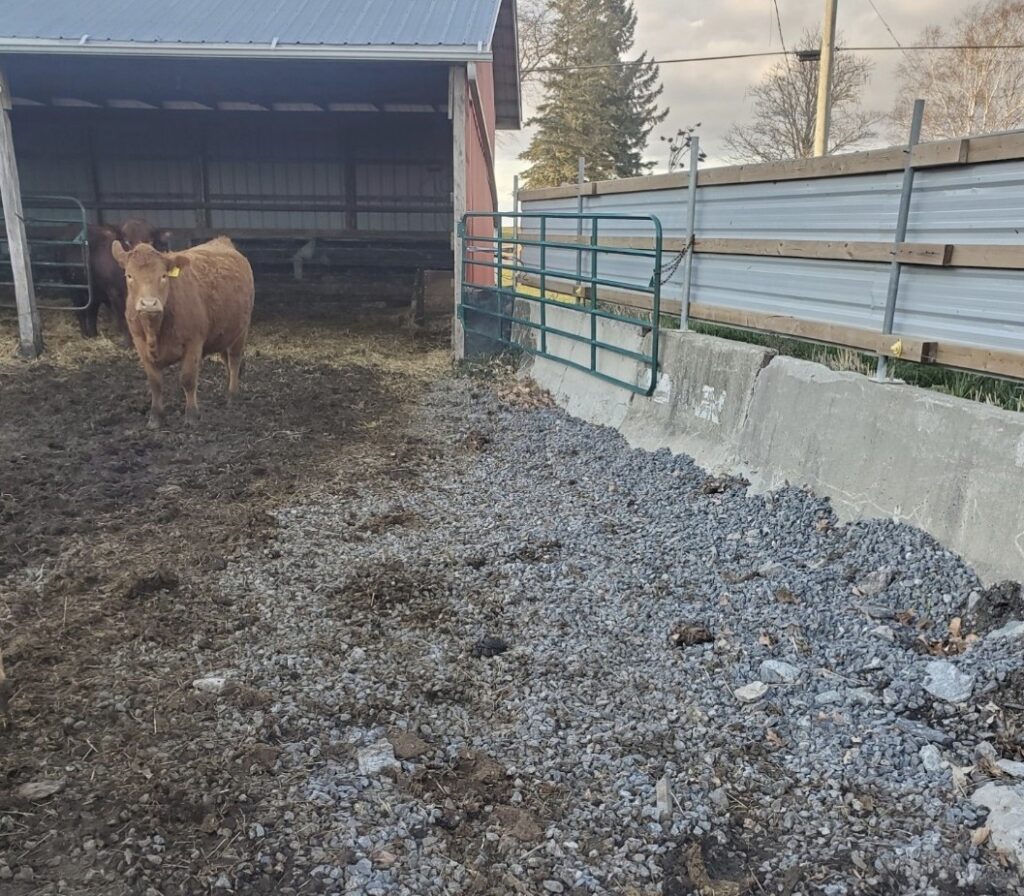
Au fil du temps, à mesure que la ferme changeait et que les bâtiments étaient modifiés, de plus en plus de fumier s’accumulait dans la cour de la grange. Un point bas s’est formé près de la grange et à proximité de l’étang, où l’eau s’est accumulée. Le fumier a contaminé l’eau de surface, qui s’est infiltrée dans le sol et a affecté la qualité de l’eau de l’étang et du puits.

Photo gracieusement fournie par Brian Windover

Un bon nettoyage

Sachant qu’une mauvaise qualité de l’eau peut nuire à la santé et à la prise de poids des bovins, les Windover ont trouvé une solution raisonnable et rentable :

  • Un lit filtrant a été construit pour évacuer l’eau contaminée de l’étang et la filtrer.
  • Ajout de gravier clair de ¾ pouce dans le point bas près de la grange, ainsi que d’un tuyau perforé de 250 pieds avec du gravier clair de ¾ pouce.                     

Brian était un peu sceptique quant à l’efficacité de leur plan, mais à sa grande surprise, celui-ci a eu un impact immédiat. « Grâce au système de filtration que nous avons installé, la qualité de l’eau s’est améliorée presque instantanément. L’eau n’était plus brune, décolorée et malodorante », a-t-il déclaré.

Brian et Scott ont réalisé les travaux eux-mêmes, achevant la construction du lit filtrant pendant les mois d’été, alors qu’il n’y avait pas de bovins dans la cour. Les principaux coûts du projet comprenaient l’achat d’un tuyau Big “O” perforé, d’un chargement de roches propres et le temps qu’ils ont consacré à ce projet. Brian estime que cet investissement a été rentable, car l’amélioration de la qualité de l’eau a permis d’améliorer la santé et les performances des bovins.

La ligne pointillée délimite la zone du lit filtrant qui s’étend en diagonale devant la grange. L’étang se trouve à gauche, au-delà des hautes herbes. Photo gracieusement fournie par Brian Windover.
Barrières en béton et brise-vent avec de nouvelles pierres propres visibles contre la barrière (délimitées par la ligne pointillée). Auparavant, l’eau s’accumulait à ce point bas de la cour. Désormais, elle s’écoule à travers les pierres dans un tuyau perforé et s’évacue par le lit filtrant. Photo gracieusement fournie par Brian Windover.

Améliorer l’accès à l’eau de réserve : récupération de l’eau de pluie

Bien que Bayview Farms soit à deux pas de Hay Bay et du lac Ontario, le forage d’un puits dans ce secteur ne garantit pas un approvisionnement abondant en eau. Le secteur connaît également parfois des périodes de sécheresse. Cela a incité Brian à trouver une autre façon d’améliorer l’accès à l’eau en installant un système de captage d’eau sur deux des granges de l’exploitation : une grange principale de 50 pi x 100 pi et une annexe de 24 pi x 48 pi.

L’eau de pluie provenant des toits des granges est captée dans une gouttière, évacuée par un tuyau solide, puis pompée dans l’étang. Ce système simple a été couronné de succès, car il a permis d’augmenter la quantité d’eau disponible dans l’étang et de garder les zones autour de la cour au sec.

Points clés à retenir en matière de gestion de l’eau

  • Clôturer les étangs et autres sources d’eau afin d’empêcher les bovins d’y accéder directement et de les contaminer.
  • Surveiller les sources d’eau et traiter la contamination afin d’éviter des problèmes à long terme.
  • Des mesures rentables, telles que les systèmes de filtration et la récupération de l’eau de pluie, peuvent améliorer considérablement la qualité et la disponibilité de l’eau.

Remerciements

Nous remercions les personnes suivantes d’avoir consacré leur temps et leur expertise à la révision de cet article et des ressources connexes :

  • Dre Mary-Jane Orr, directrice générale, Manitoba Beef & Forage Initiatives 
  • Dwayne Summach, spécialiste en vulgarisation sur le bétail et des aliments pour animaux, ministère de l’Agriculture de la Saskatchewan 
  • Jaclyn Horenburg, spécialiste des relations avec les producteurs, Beef Farmers of Ontario 
  • Bree Patterson, spécialiste des programmes de conservation – agriculture, Canards Illimités Canada 
  • Katie Trottier, spécialiste du bétail ruminant, Perennia Food & Agriculture 
  • Geoff Larkin, coordonnateur de l’adaptation aux changements climatiques, Agri-Commodity Management Association 
  • Kaley Segboer-Edge, coordonnatrice VBP+ et responsable de l’intendance chez ABP, Alberta Beef Producers

Le partage ou la réimpression des publications du BCRC sont les bienvenus et sont encouragés. Veuillez mentionner le Beef Cattle Research Council, fournir l’adresse du site Web, www.BeefResearch.ca/fr, et nous faire savoir que vous avez choisi de partager l’article en nous envoyant un courriel à info@beefresearch.ca.

Le BCRC est financé par une partie du prélèvement national sur les bovins de boucherie.

Vos questions, commentaires et suggestions sont les bienvenus. Contactez-nous directement ou lancez une discussion publique en publiant vos idées ci-dessous.

Réservoirs de résilience : construire des systèmes de réserve d'eau fiables à travers des années de sécheresse

Bluestone Stock Farms, située près de Mortlach et Parkbeg, en Saskatchewan, a dû faire face à d’importants défis en matière de gestion de l’eau en raison de la sécheresse et des tendances météorologiques changeantes au cours des dernières années. Bluestone est une entreprise familiale, et la famille Hicks gère ensemble 15 000 acres répartis sur trois sites. La ferme est également certifiée VBP+, et Karla fait partie du comité provincial VBP+ de la Saskatchewan. Avec un troupeau de plus de 800 vaches Black Angus, la ferme se fie au pâturage en rotation pour maximiser la santé des pâturages et les occasions de pâturage, comblant 90 % de ses besoins en aliments pour animaux avec des aliments et des pâturages cultivés sur place.

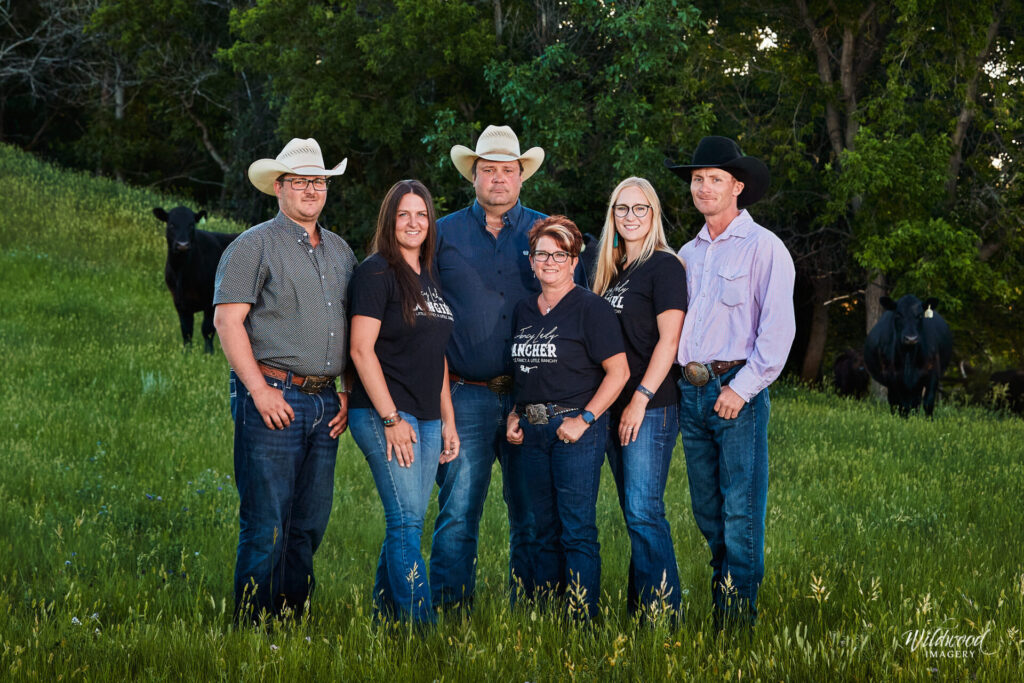
Bluestone Stock Farms, Karla Hicks and family, Saskatchewan
De gauche à droite : la famille Hicks, composée de Tyrell et Nicole Hicks, Jason et Karla Hicks, ainsi que Lexi et William Macza. Photo gracieusement fournie par Karla Hicks.

Les systèmes de réserve d’eau avant la sécheresse

Avant la sécheresse de 2019, Bluestone Stock Farms disposait d’un système d’approvisionnement en eau bien établi, comprenant une installation solaire avec une turbine, dix mares-réservoirs et deux sources naturelles d’eau. Le terrain, avec sa topographie légèrement vallonnée et ses marécages naturels, fournissait un approvisionnement en eau abondant pendant l’hiver et au début du printemps, avec seulement quelques défis occasionnels.

La ferme fonctionnait selon la supposition que les cycles naturels de neige, de pluie et de soleil suffisaient à maintenir les bovins en bonne santé et hydratés. Cependant, avec peu de neige pendant l’hiver 2018-2019 et aucune pluie au printemps, les terres ont commencé à s’assécher et les sources d’eau à se tarir. Au départ, la famille n’a pas réalisé l’ampleur du problème et a attribué le poids plus léger des vaches cette année-là à d’autres facteurs environnementaux liés à la sécheresse. 

La crise se poursuit

L’hiver suivant (2019-2020), la situation de Bluestone liée à l’eau avait empiré. Les mares-réservoirs et les marécages s’asséchaient, et les faibles chutes de neige hivernales n’ont pas mené à un réapprovisionnement suffisant en eau. L’absence de pluie printanière n’a pas permis de remplir les petits plans d’eau, et même les grands plans d’eau qui n’avaient pas séché depuis des décennies ont commencé à baisser. La croissance des pâturages était clairsemée et aucune trace d’animaux sauvages n’était visible près des plans d’eau, constituant un autre changement par rapport aux années précédentes. Le plus inquiétant était que les bovins montraient des signes de détresse: perte de poids, apparence rugueuse et diarrhée sévère.  

La famille a commencé à analyser ses sources d’eau et a découvert des niveaux élevés de sulfates, certaines sources d’eau présentant des niveaux dangereusement élevés, dans la plage de 19 000 ppm, bien au-dessus du seuil de sécurité pour la consommation bovine et causant de graves effets sur la santé. (Voir l’interprétation des résultats d’analyse de l’eau pour les bovins de boucherie pour plus de directives.) En réponse, le ranch a commencé à utiliser des suppléments de minéraux chélatés pour aider à atténuer ces effets et a limité l’utilisation des sources d’eau présentant les niveaux de sulfate les plus élevés. 

Cliquez pour lire l’étude de cas complète (cette page web n’est actuellement disponible qu’en anglais.)

Karla Hicks water quality case study
solar and wind powered stock water system
L’un des plus grands systèmes de la ferme, équipé d’énergie solaire et éolienne. Photo gracieusement fournie par Karla Hicks.

Innovations dans la gestion des réserves d’eau

Les conditions de sécheresse ont persisté et, en 2021, la situation ne s’était pas améliorée. Les sources d’eau naturelles et les mares-réservoirs n’ont pas été réapprovisionnées en raison du manque de pluie printanière et l’humidité du sol était complètement épuisée.

Déterminée à traverser une nouvelle saison difficile et consciente de l’intérêt à long terme de rendre la ferme plus résistante aux problèmes liés à l’eau, Bluestone a investi dans de nouveaux équipements, y compris une excavatrice, un camion d’eau et trois nouveaux systèmes de réserve d’eau à énergie solaire. Elle a également ajouté des éoliennes et des batteries pour compléter les systèmes solaires en cas de pénurie d’électricité.

La famille transportait chaque jour de l’eau vers plusieurs pâturages, et les vaches et les animaux sauvages affluaient vers le camion d’eau. Onze nouvelles mares-réservoirs ont été ajoutées, chacune conçue pour recueillir l’eau de pluie et fournir une source d’eau fiable pour les bovins, et une source à débit naturel a été agrandie. Bien que ces changements aient permis au ranch de répondre aux besoins en eau des bovins, les nouveaux systèmes et le transport de l’eau nécessitaient un entretien et un travail constants. 

En 2022, la famille a connu une autre année difficile, marquée par une chaleur extrême et une sécheresse persistante, mais elle a continué à améliorer ses systèmes en ajoutant trois mares-réservoirs supplémentaires et en perfectionnant ses systèmes existants.  

Digging a new stock water dugout
Creusement d’une nouvelle mare-réservoir en 2021 à l’aide de l’excavatrice. Bien que la mare-réservoir se soit remplie d’elle-même, l’eau présentait une teneur trop élevée en sulfates et en magnésium pour être immédiatement utilisable. Photo gracieusement fournie par Karla Hicks.

Analyse et surveillance de la qualité de l’eau

Les analyses de la qualité de l’eau sont devenues un élément essentiel de la stratégie mise en place par Bluestone pour garantir la santé de ses bovins. Avant la sécheresse, la famille n’avait jamais envisagé de procéder à des analyses régulières de l’eau, mais la crise l’a poussée à adopter cette pratique. Elle a commencé à analyser plusieurs sources et sites, y compris la même source plusieurs fois par an afin de suivre la détérioration de la qualité de l’eau.

Les analyses ont révélé que plusieurs de leurs sources d’eau présentaient régulièrement des taux élevés de sulfates. Avec l’aide d’un spécialiste en vulgarisation du ministère de l’Agriculture de la Saskatchewan, ils ont pu poser des questions, interpréter les résultats et prendre des mesures pour éviter ou atténuer les effets d’une mauvaise qualité de l’eau. 

Des analyses régulières ont permis à la famille de prendre des décisions éclairées quant aux sources d’eau à utiliser et à celles à éviter. Elle a également commencé à mélanger l’eau de mauvaise qualité avec de l’eau de meilleure qualité, acheminée par camion depuis d’autres sources, afin de diluer les contaminants et d’offrir une hydratation plus sûre à ses bovins.  

Investir dans la sécurité hydrique pour l’avenir

Un réseau diversifié de marécages, de mares-réservoirs et de sources naturelles, appuyé par des systèmes alimentés à l’énergie solaire et soutenu par des génératrices, assure un approvisionnement constant en eau, quelles que soient les conditions. Cependant, la tâche d’entretenir des sources d’eau éloignées demeure incessante, exigeant à la fois de la prévoyance et de la persévérance.

« C’était un investissement important en peu de temps, mais nous ne le regrettons pas », affirme Karla. « Nous serons riches en eau, et cette tranquillité d’esprit n’a pas de prix. Maintenant, mes petits-enfants seront prêts pour la prochaine. »   

À mesure que les tendances météorologiques deviennent plus imprévisibles, Bluestone Stock Farms reste vigilante dans la gestion de ses systèmes de réserve d’eau, continuant à recourir à des analyses de l’eau et aux conseils d’experts. Malgré les défis posés par les étés chauds, des améliorations stratégiques et des connaissances durement acquises ont permis de renforcer la ferme contre le manque d’eau.

Principaux points à retenir en matière de gestion de l’eau

  • Des analyses régulières de la qualité de l’eau permettent de détecter des problèmes tels qu’une teneur élevée en sulfates ou une contamination avant qu’ils ne s’aggravent. 
  • Dans les secteurs caractérisés par des précipitations irrégulières ou la sécheresse, il est essentiel de développer plusieurs sources de réserve d’eau, telles que des mares-réservoirs, des sources et des systèmes alimentés à l’énergie solaire, afin de garantir un approvisionnement fiable. 
  • Soyez prêt pour l’entretien. Certains systèmes d’abreuvement des animaux d’élevage nécessitent une surveillance et un entretien fréquents afin de garantir leur bon fonctionnement, en particulier pendant les périodes de conditions météorologiques extrêmes.
  • Surveillez attentivement la santé et le comportement des bovins. S’ils présentent des signes de déshydratation ou de maladie, vérifiez immédiatement la qualité de l’eau. 
  • Sachez quand demander de l’aide. Consultez des conseillers, des programmes gouvernementaux et des agriculteurs voisins pour vous aider à prendre des décisions en matière de gestion de l’eau.  

Remerciements

Nous remercions les personnes suivantes d’avoir consacré leur temps et leur expertise à la révision de cet article et des ressources connexes :

  • Dre Mary-Jane Orr, directrice générale, Manitoba Beef & Forage Initiatives 
  • Dwayne Summach, spécialiste en vulgarisation sur le bétail et des aliments pour animaux, ministère de l’Agriculture de la Saskatchewan 
  • Jaclyn Horenburg, spécialiste des relations avec les producteurs, Beef Farmers of Ontario 
  • Bree Patterson, spécialiste des programmes de conservation – agriculture, Canards Illimités Canada 
  • Katie Trottier, spécialiste du bétail ruminant, Perennia Food & Agriculture 
  • Geoff Larkin, coordonnateur de l’adaptation aux changements climatiques, Agri-Commodity Management Association 
  • Kaley Segboer-Edge, coordonnatrice VBP+ et responsable de l’intendance chez ABP, Alberta Beef Producers

Le partage ou la réimpression des publications du BCRC sont les bienvenus et sont encouragés. Veuillez mentionner le Beef Cattle Research Council, fournir l’adresse du site Web, www.BeefResearch.ca/fr, et nous faire savoir que vous avez choisi de partager l’article en nous envoyant un courriel à info@beefresearch.ca.

Le BCRC est financé par une partie du prélèvement national sur les bovins de boucherie.

Vos questions, commentaires et suggestions sont les bienvenus. Contactez-nous directement ou lancez une discussion publique en publiant vos idées ci-dessous.

Petits pas, grands gains : comment démarrer en douceur mène au succès des pâturages

things to consider when starting rotational grazing

Cet article fait partie d’une séries d’études de cas sur les pratiques de gestion bénéfique des fourrages de l’Alberta Agrisystems Living Lab et de Canfax. Il est reproduit sur le site BeefResearch.ca avec la permission de l’auteur.

Le pâturage en rotation peut avoir des significations différentes selon les personnes. Cette pratique de gestion bénéfique (PGB) est souvent adoptée à des niveaux d’intensité variables, en fonction du moment et de la quantité des précipitations, de la source d’eau ou de la disponibilité de la main-d’œuvre. Le pâturage en rotation présente de nombreux avantages, notamment un pâturage plus régulier, une meilleure santé du sol, une meilleure qualité de l’eau et la préservation de la productivité de vos pâturages. Les systèmes de pâturage en rotation peuvent également offrir plus d’options dans des conditions de sécheresse, mais les sécheresses successives, la disponibilité de l’eau, les clôtures et la main-d’œuvre peuvent rendre la mise en œuvre de cette PGB difficile.  

Grazing Management Systems for beef cattle
stocking rate and stocking density for beef cattle

Trois producteurs de l’Alberta ont partagé leur expérience de l’adoption du pâturage en rotation et les défis qu’ils ont relevés pour réussir. Ils espèrent qu’en partageant leurs histoires, d’autres producteurs pourront tirer des enseignements et des connaissances de leurs expériences :

Principaux points à retenir pour le pâturage en rotation :

  • Commencez lentement : Diviser un pâturage continu en deux parties et laisser une moitié du pâturage se reposer est un bon début.
  • Construisez un système autour de la source d’eau : Lors de la mise en place d’un système de pâturage en rotation, ne perdez pas de vue votre source d’eau, que ce soit avec un système d’eau solaire portatif et des clôtures mobiles, ou avec une source d’eau centrale entourée d’enclos permanents.
  • Commencez par des clôtures temporaires : Plutôt que de mettre immédiatement en place des clôtures permanentes, les clôtures temporaires peuvent constituer une mesure d’économie à court terme et permettre une plus grande flexibilité.

La planification des champs prend du temps

rotational grazing paddock for cattle
Photo courtoisie de Jill Burkhardt

Kelly et Jill Burkhardt ont commencé à exploiter une ferme de cinquième génération au milieu des années 2000, en commençant par un petit troupeau de vaches et une exploitation de semi-finition. Situés entre Wetaskiwin et Camrose, en Alberta, ils exploitent maintenant un mélange d’activités vache-veau, de semi-finition et de cultures agricoles. Ils ont triplé leur troupeau pour atteindre 175 vaches adultes, et leurs terres ont été agrandies par l’ajout d’acres louées. Ils ont triplé leur exploitation de semi-finition et doublé leurs terres céréalières. L’expansion les a aidés à atteindre leur objectif de rester à plein temps sur la ferme. Kelly et Jill sont tous deux diplômés en gestion des pâturages ; grâce à leur formation et à leur expérience, ils sont extrêmement compétents en matière de gestion des pâturages.

Chez les Burkhardt, le pâturage en rotation fait partie de l’exploitation depuis le début. Kelly a construit des clôtures pour leur système de pâturage en rotation sur l’un de leurs quarts de section alors qu’il était encore étudiant.

Tous leurs systèmes de pâturage rotatif sont entourés d’une clôture permanente, avec des clôtures mobiles pour diviser les parcelles. En général, Kelly et Jill maintiennent un chargement animal inférieur à la capacité des pâturages. Ils ne s’inquiètent donc pas du manque d’herbe lors des années sèches. « On dit toujours qu’on est là pour faire pousser de l’herbe, pas du bœuf. »

beef cattle in pasture with water
Photo courtoisie de Jill Burkhardt

Au fil des ans, ils ont augmenté la productivité des pâturages. Leurs rotations sont guidées par la croissance de l’herbe, ce que Jill décrit comme « l’art de la gestion des parcours. » Ils se fient souvent à la hauteur de l’herbe. Par exemple, si leurs vaches pâturent jusqu’à une hauteur de trois pouces, ils attendront pour faire pâturer cette section jusqu’à ce que l’herbe ait retrouvé une hauteur de cinq ou six pouces. Les pâturages et le moment du broutage varient d’une année à l’autre, et il faut du temps pour savoir à quelle vitesse l’herbe repoussera après le broutage.

Récemment, Kelly et Jill ont mis en place un système de pâturage adaptatif à plusieurs parcelles pour l’Alberta AgriSystems Living Lab dans un champ existant qui n’avait pas été incorporé auparavant dans leur système de pâturage en rotation. Cette parcelle de terre n’était pas continuellement pâturée mais ne faisait pas partie de leur système de pâturage intensif non plus. Auparavant, ils avaient deux petites sections d’environ 20 et 60 acres dans ce champ, passant de l’une à l’autre pour leur permettre de se reposer. Une aide financière extérieure a été utilisée pour installer une clôture électrique temporaire.

stock water system
Photo courtoisie de Jill Burkhardt

Ils ont passé du temps à examiner une carte de leurs terres et à essayer de concevoir un système de clôtures et d’abreuvement. Le champ longe un lac, tout comme la terre adjacente appartenant à leurs voisins, et ils ont dû se procurer un système d’eau solaire pour que le pâturage en rotation fonctionne. Concevoir leur système de pâturage en rotation autour d’une source d’eau a été un défi, mais c’était nécessaire. Chaque enclos est en forme de tarte, menant à l’abreuvoir portatif. « Pour obtenir de l’eau, nous déplaçons simplement la clôture autour de l’abreuvoir, ce qui permet aux animaux d’y accéder. » Ils ont également la possibilité de déplacer l’abreuvoir entre toutes leurs parcelles de pâturage en rotation pour de futures installations en rotation.

Kelly et Jill conseillent aux producteurs de « sortir des sentiers battus et de ne pas se laisser limiter par ce que font les autres ». Mettez lentement en place le pâturage en rotation pour permettre à votre terre de s’adapter, même si cela ne fait que diviser une section de pâturage continu en deux parties. De cette façon, vous continuez à aider l’herbe et à la laisser se reposer et se rétablir. Vous éviterez ainsi de vous épuiser. Il faut du temps pour s’adapter aux nouveaux systèmes de pâturage et constater des améliorations.

Principaux conseils

  • Sortez des sentiers battus : Lorsque vous concevez votre système de pâturage en rotation, il ne doit pas nécessairement ressembler à ceux que vous avez déjà vus.
  • Soyez patient : Il faut du temps pour voir des améliorations.

Clôtures permanentes et temporaires

Assar Grinde et sa famille élèvent environ 300 couples vache-veau dans un système de pâturage en rotation, mis en place à l’origine par son père dans les années 1980. Ce dernier croyait fermement au pâturage en rotation et a rejoint la Grey Wooded Forage Association dans les années 1980, ce qui lui a permis d’en apprendre davantage sur les pratiques de pâturage en rotation et sur la mise en place de son système. Au départ, le père d’Assar avait commencé par le pâturage en bandes avec des bouvillons d’un an.

Assar a mis en place 30 enclos permanents d’une superficie comprise entre 10 et 20 acres, en utilisant une clôture à haute résistance à un seul fil pour un pâturage en rotation à long terme, ainsi que des clôtures temporaires pour un pâturage plus intensif. Ce grand pâturage unique permet aux bovins de se déplacer facilement vers chaque enclos sans avoir à les transporter vers de nouveaux pâturages. L’avantage est qu’il y a moins de groupes de troupeaux et que les parcelles sont plus proches les unes des autres, ce qui permet de déplacer les bovins pour les faire pâturer. Il garde ses paires vache-veau dans un seul groupe, ce qui économise de la main-d’œuvre, et a un groupe séparé de génisses de remplacement. L’avantage de garder les génisses de remplacement séparées est que cela leur permet d’accoupler leurs génisses avec un taureau sélectionné.

Chaque année, ils réservent certaines parcelles afin d’avoir de l’herbe en réserve pour la période de vêlage (entre la fin avril et le début juin). Vers la fin juin, alors que les dernières vaches terminent de vêler, le troupeau est intégré au système de pâturage en rotation. Ils effectuent généralement deux rotations sur l’ensemble de leurs terres de pâturage chaque été. Au cours d’une année normale, Assar déplace les bovins tous les trois ou quatre jours. Il s’agit d’une rotation plus rapide, mais qui permet des périodes de repos plus longues pour la récupération de l’herbe. Assar explique qu’il fait paître l’herbe jusqu’à la moitié de sa longueur avant de retirer les bovins et de laisser l’herbe repousser. Si la repousse est lente, il laisse les bovins dans certains enclos plus longtemps pour laisser aux autres enclos le temps de repousser. De même, à l’approche de l’automne, il laisse les bovins plus longtemps dans les sections de pâturage, ce qui leur permet de brouter davantage.

rotational grazing in Alberta
Photo courtoisie d‘Assar Grinde

Un ajout récent à leur système de pâturage en rotation a été la création d’enclos dans 290 acres de pâturages avec une certaine couverture de broussailles. À l’origine, ce pâturage était surnommé « le pâturage des vacances », afin de pouvoir quitter la ferme en sachant que les bovins disposeraient de suffisamment d’herbe. Auparavant, le champ était utilisé pour fournir 12 à 14 jours de pâturage, mais Assar l’a depuis converti pour qu’il corresponde au système de pâturage en rotation existant.

Assar a expliqué : « Cette parcelle que nous avons aménagée dans le cadre du projet Living Labs est traversée du nord au sud par un ruisseau, que nous avons utilisé comme source d’eau. Nous avons installé deux ou trois clôtures orientées est-ouest, et j’ai ajouté de chaque côté du ruisseau une clôture permanente à un seul fil, en fil électrique à haute tension. » Plutôt que de parcourir toute la vallée du ruisseau comme une parcelle de pâturage continue, les parcelles séparées permettent une plus grande rotation et un plus grand temps de repos.

tumblewheel fence for rotational grazing livestock
Clôture appelée « tumble wheels » (qui sont de grands rouleaux en forme de rayons attachés à des clôtures en fil de fer) pour le pâturage en rotation;
photo courtoisie d’Assar Grinde

Assar a fait remarquer que si un producteur loue ou possède des terres en petites sections et en plusieurs endroits, cela pose des problèmes pour le pâturage en rotation. Cela augmente les coûts du pâturage en rotation en raison de la main-d’œuvre et du carburant nécessaires pour transporter le bétail et peut avoir un impact sur l’adoption de systèmes de pâturage en rotation plus intensifs. En outre, les périodes de pâturage sont généralement plus longues avant de déplacer les bovins vers le pâturage suivant en raison du temps nécessaire pour se déplacer d’un endroit à l’autre.

Depuis qu’Assar pratique le pâturage en rotation, il est difficile de constater des améliorations dans la santé et la croissance des pâturages en les comparant d’une année sur l’autre. Les améliorations sont plus facilement perceptibles lorsqu’elles sont comparées sur une période plus longue. La repousse des pâturages peut être limitée les années où l’humidité est faible. Les précipitations de l’année auront un impact considérable sur le succès d’un nouveau système de pâturage en rotation ou d’un système plus intensif.

Dans l’ensemble, leur système de pâturage en rotation leur permet d’avoir plus de bovins sur leurs terres actuelles. Assar conseille aux producteurs de concevoir leurs clôtures rotatives en fonction de la source d’eau centrale. En outre, le fait d’avoir des enclos pré-clôturés est utile dans le cadre d’un système de pâturage en rotation à long terme pour limiter le temps nécessaire à l’installation et au démontage des clôtures. Comme l’a déclaré Assar, « il est utile de n’installer que quelques clôtures permanentes la première année ». Lors de la mise en place d’un système de pâturage en rotation, il est possible d’utiliser à la fois des clôtures permanentes et temporaires pour ajuster les rotations de pâturage d’une année à l’autre.

Principaux conseils :

  • Varier la taille des parcelles : Des enclos de tailles différentes permettent de varier les durées de pâturage, lesquelles peuvent être adaptées à la croissance du fourrage ou à d’autres engagements temporels.
  • Utiliser à la fois des clôtures permanentes et des clôtures temporaires : Cela peut aider à maintenir la rotation souhaitée, tout en offrant une certaine souplesse en ce qui concerne la taille des parcelles et la durée des rotations.

Un pâturage intensif pour un pâturage uniforme

Derek Friend, installé dans le centre de l’Alberta, est récemment passé d’un système de pâturage continu à une rotation intensive, déplaçant les bovins aussi souvent que chaque jour. Comme le dit le proverbe, « Un bon éleveur inspecte son troupeau tous les jours », ce à quoi Derek ajoute : « Pourquoi ne pas déplacer quelques clôtures pendant que vous êtes là ? »

Derek fait pâturer intensivement chaque parcelle par son troupeau avant de le déplacer pour obtenir un pâturage uniforme. Avec son ancien système de pâturage continu, les bovins avaient le temps de choisir les meilleures plantes et d’ignorer les moins désirables. Avec ce système de rotation fréquente, les bovins n’ont pas autant de temps pour chercher les meilleures plantes et consomment tout le fourrage disponible. Cela crée également une certaine concurrence pour les plantes les plus savoureuses dans chaque enclos, ce qui augmente la vitesse de pâturage. Derek a remarqué que son troupeau devenait progressivement plus docile après avoir mis en œuvre cette rotation plus fréquente parce qu’il travaillait plus souvent avec ses bovins.

Des clôtures électriques temporaires sont actuellement utilisées pour tous les enclos, mais il envisage d’ajouter des clôtures plus permanentes, en particulier sur les enclos qui bordent les routes. Pour l’instant, les clôtures temporaires offrent une grande souplesse pour déplacer le troupeau. Les clôtures temporaires permettent d’augmenter la taille des enclos pendant les semaines chargées et de la réduire pendant les périodes plus calmes de l’année où l’on peut passer plus de temps à déplacer le bétail. Des fonds externes ont été utilisés pour aider à financer les coûts des clôtures.

Un abreuvoir alimenté par 2000 pieds de tuyau de ¾ de pouce et déplacé dans chaque enclos suffit à fournir de l’eau au troupeau. Derek a estimé que ce système d’abreuvement conviendrait probablement pour un troupeau de 200 têtes, mais qu’ensuite, un système d’abreuvement plus rigoureux serait probablement nécessaire, en particulier si la taille des enclos augmentait.

Comme cette rotation plus intensive n’a été introduite que récemment, on ne dispose pas encore d’une comparaison avant-après de l’état corporel des vaches ou du poids des veaux. Bien qu’une rotation plus intensive exige plus d’heures dans les champs, Derek affirme que le plaisir d’être dehors et de déplacer les bovins fait que le changement en vaut la peine.

Principaux conseils :

  • Trouver des options de financement pour les frais de mise en place.
  • Utiliser le pâturage en rotation pour gérer les espèces végétales et la diversification des pâturages.
Alberta Agrisystems Living Lab
Canfax Research Services

Le partage ou la réimpression des articles du www.BeefResearch.ca/fr est généralement bienvenu et encouragé, mais cet article nécessite l’autorisation de l’éditeur d’origine.

Le BCRC est financé par une partie du prélèvement national sur les bovins de boucherie.

Vos questions, commentaires et suggestions sont les bienvenus. Contactez-nous directement ou suscitez un dialogue public en publiant vos réflexions ci-dessous.

Sélection des génisses de remplacement : augmenter la longévité et le retour sur investissement

Hereford heifers from Copper-T Ranch
Photo courtoisie du Copper-T Ranch

Que les éleveurs de bovins de boucherie conservent les femelles de leur propre troupeau ou qu’ils les achètent, les génisses de remplacement ont un coût et constituent un investissement dans le futur troupeau. La sélection des bons animaux et une gestion appropriée sont nécessaires pour atteindre les objectifs de l’exploitation et améliorer la longévité des génisses en tant que futures vaches reproductrices.

Une analyse récente de 63 fermes canadiennes inscrites au Réseau canadien de référence des coûts de production vache-veau a estimé que le coût de l’élevage des génisses de remplacement en 2023 serait en moyenne de 2 904 $ par génisse, avec une fourchette de 1 905 $ à 3 806 $, et qu’il serait encore plus élevé en 2025. La dépense la plus importante liée à l’élevage de génisses de remplacement est la perte de l’occasion de vendre la génisse. Selon le coût de production, les producteurs pourraient rembourser leur investissement dans les génisses de remplacement en cinq à sept ans.

Du point de vue de l’ensemble du troupeau, le coût total de remplacement dépend à la fois du coût d’élevage de chaque génisse de remplacement et du taux de remplacement global. Pour les 63 exploitations de référence, le coût de remplacement représentait en moyenne 8 % des coûts totaux du troupeau en 2023. Lorsque le coût de toutes les génisses de remplacement est réparti sur l’ensemble du troupeau de vaches, le coût de remplacement moyen par vache est estimé à 139 $, avec une fourchette de 50 $ à 272 $ par vache.

Selon les coûts de production, les producteurs de bœuf pourraient récupérer leur investissement dans les génisses de remplacement en cinq à sept ans. Consultez le calculateur de génisses de remplacement pour en apprendre plus.

Pour réduire ces coûts, les producteurs peuvent se concentrer sur des stratégies de gestion, notamment l’amélioration de la longévité des vaches. Plus une femelle peut produire de veaux au cours de sa vie, meilleur est le retour sur investissement. 

Jamie and Bill Lloyd, Fraser Lake, BC

BC beef producers Bill and Jamie Lloyd
Bill et Jamie Lloyd; photo courtoisie du Copper-T Ranch

Le Copper-T Ranch est un élevage de géniteurs Hereford situé dans le centre-nord de la Colombie-Britannique, sur la rive nord du lac Fraser, qui élève chaque année une centaine de femelles pour le vêlage d’avril. Le troupeau a été créé en 1988 par Trevor et Janice Tapp. Jamie et Bill Lloyd ont été embauchés par le ranch il y a dix ans en tant que gestionnaires de bovins et sont maintenant copropriétaires.

L’objectif de l’exploitation est d’élever une génétique de remplacement pour elle-même et pour d’autres troupeaux, afin de constituer une base prévisible et stable pour le troupeau. Pour la reproduction, ils utilisent à la fois la reproduction naturelle et les technologies de reproduction, y compris l’insémination artificielle (IA). L’utilisation de l’insémination artificielle « … nous permet d’introduire des croisements et de la génétique progressive », expliquent les Lloyd. « Nous sommes très sélectifs avec nos taureaux d’IA, ainsi qu’avec nos taureaux de monte naturelle, ne recherchant pas le prochain taureau de concours ou la prochaine tendance génétique, mais sélectionnant plutôt la prévisibilité, la structure, la performance et la longévité ».

Lorsqu’il s’agit de sélectionner un taureau pour le troupeau, « la possibilité de voir des photos de la mère et des femelles apparentées, ainsi que les registres de performance de la mère, les pattes et la structure du pis avant de s’engager dans le choix d’un nouveau taureau pour le troupeau est une nécessité pour nous. Les femelles derrière nos taureaux doivent être solides comme le roc, et du type que vous voulez avoir dans tout le troupeau ».

Hereford replacement heifers from Copper-T Ranch in British Columbia
Génisses de remplacement ; photo courtoisie du Copper-T Ranch

Pour la sélection des génisses de remplacement, les Lloyd recherchent ces quelques caractéristiques:

  • Pattes : « Si vous avez un troupeau avec de très bonnes pattes, vous voulez le conserver, car cela peut rapidement se perdre ».
  • Disposition: « Les femelles faciles à manipuler sont indispensables, le vêlage ne doit pas être un sport de contact. »
  • Instinct maternel : « … chez la femelle et le veau. Si une génisse de première naissance a un accouchement classique mais ne lèche pas son veau, notez-le et réformez-la. Ce n’est pas le type de femelle que vous voulez garder et créer en plus grand nombre ».
  • Croissance et performance de production : « Les femelles de remplacement sélectionnées doivent répondre à nos critères : nous appliquons des seuils minimaux pour le poids au sevrage et le poids à un an. Elles doivent avoir un poids adéquat au moment de la saison de reproduction et respecter un gabarit souhaité – les extrêmes sont à éviter. »
  • Performance du veau : « Une génisse primipare doit aller de l’avant et sevrer un veau au-delà de nos attentes minimales, en prouvant que sa capacité de traite est suffisante et qu’elle le fait tout en conservant sa condition et en se reproduisant en temps voulu ».

Selon les Lloyds, les génisses sont élevées pour vêler 10 à 14 jours avant le troupeau de vaches principales afin d’augmenter la probabilité de reproduction au cours du premier cycle en tant que jeunes vaches.

Pour en savoir plus sur la dynamique de reproduction et la gestion des génisses de reproduction, visitez la page Gestion des vaches reproductrices du BCRC.

Yearling heifers in a sheltered wind break. Copper-T Ranch, BC.
Génisses d’un an à l’abri sous un brise-vent ; photo courtoisie du Copper-T Ranch

La tenue de registres fait également partie du processus de sélection, selon les Lloyds. « Nous inscrivons les caractéristiques du pis et des pattes de la mère, le poids au sevrage, le poids des animaux d’un an, le gain quotidien moyen (GQM), la mesure de taille et la date de mise à la reproduction. Nous évitons de conserver les génisses mises à la reproduction tardivement (troisième cycle), car nous estimons que la probabilité qu’elles aient une longévité de reproduction est faible. »

Les Lloyd utilisent les données enregistrées pour évaluer les tendances génétiques des lignées de vaches ou de taureaux, car celles-ci influencent la longévité. Par exemple, les filles d’un certain taureau qui se retrouvent non gestantes, ou certaines lignées de vaches dont les filles finissent elles aussi par être non gestantes. « Une fois qu’on repère ces tendances, elles deviennent assez prévisibles. Il faut trouver des lignées génétiques qui s’adaptent bien à votre environnement », affirment les Lloyd.

Une alimentation optimale est essentielle pour nourrir les génisses de remplacement afin de s’assurer qu’elles sont prêtes à être mises à la reproduction, qu’elles ont un poids correct et qu’elles sont en bonne santé. Les Lloyd soulignent également l’importance de ne pas suralimenter les génisses, car cela peut avoir un impact négatif sur la fertilité. « Outre le contrôle de gestation à l’automne, sa place en tant que vache mère commence ici, et elle doit maintenir sa condition grâce à un programme d’alimentation rentable dans notre troupeau de vaches adultes. »

Lorsqu’il s’agit de choisir les génisses de remplacement, les Lloyd’s suggèrent ce qui suit :

  • Établissez un plan écrit. Des directives ou des limites écrites vous aideront à rester concentré et à vendre ou à réformer les femelles qui ne seront pas le type de femelle qui fonctionnera à long terme dans votre troupeau.
  • Soyez très strict en ce qui concerne la mise à la réforme. Les animaux qui ne sont pas retenus coûteront plus cher à entretenir.
  • Ne donnez jamais de seconde chance. Une femelle non gestante, même si c’est votre meilleure génisse, doit partir !
  • Accordez une grande importance aux programmes de minéralisation et de vaccination.

Brian Dudgeon, Dobinson, ON

Dudgeon family, Ontario
Brian, Kim, Owen, Grace et Kylie Dudgeon; photo courtoisie de la Dudgeon Cattle Company

Brian Dudgeon et sa famille possèdent et exploitent la Dudgeon Cattle Company à Dobinson, en Ontario, juste au nord du lac Huron. Chaque année, la famille organise la vente de génisses «Top Cut », la plus grande vente de génisses élevées en Ontario, avec plus de 200 têtes vendues. Ils ont actuellement un troupeau de 200 vaches, dont 50 sont des vaches Black Angus de race pure. Leurs meilleures génisses sont inscrites à leur programme de vente. Les autres veaux sont semi-finis et finis dans leur parc d’engraissement. Ils achètent également 300 à 400 génisses en Alberta et en Saskatchewan pour les élever selon leurs protocoles de génisses de remplacement dans le but de remplir le catalogue de vente.

Au sein de leur troupeau, les Dudgeon recherchent la longévité, de bonnes aptitudes fonctionnelles, la robustesse, une croissance au sevrage supérieure à la moyenne, une bonne musculature, un tempérament docile, une structure correcte, de bonnes proportions, l’allure féminine, un bon poids de carcasse, la possibilité d’élever de gros veaux pour le parc d’engraissement, une bonne charpente et une bonne longueur corporelle.

Lorsqu’ils sélectionnent des taureaux pour accoupler des génisses de remplacement, ils visent des poids à la naissance de l’ordre de 60 à 80 livres, tout en accordant une grande importance au tempérament. « Nous travaillons beaucoup avec ces animaux, alors ceux qui s’éloignent de vous, nous les retirons ; ceux qui sont nerveux sont retirés de l’enclos de vente.

The Top Cut bred heifers from Dudgeon Cattle Company in Dobinson, ON
The Top CGénisses de race « Top Cut » ; photo courtoisie de la Dudgeon Cattle Company

Pour être retenues dans le catalogue de vente, les génisses de remplacement doivent répondre aux critères établis, notamment une bonne musculature de l’arrière-train, de bonnes performances et une capacité laitière adéquate, précisent les Dudgeon. Ils ajoutent qu’ils n’adhèrent pas aux tendances passagères et qu’ils gardent toujours en tête les réalités des producteurs commerciaux, afin que chacun puisse en retirer une rentabilité à la fin.

Ils s’appuient également sur la tenue de registres pour faciliter les sélections. « Si une génisse a été retirée en raison d’un traitement médical, il se peut, selon le problème de santé, qu’elle n’ait pas la longévité que nous recherchons ou qu’elle ne puisse pas se reproduire. Si c’est le cas, elle n’est pas mise en vente. »

black Angus heifer from Dudgeon Cattle Company
Photo courtoisie de la Dudgeon Cattle Company

Avant la reproduction, les génisses sont nourries avec une ration totale mélangée (RTM). « Nous donnons une RTM équilibrée qui est légèrement plus énergétique qu’une ration de base. L’objectif est de faire en sorte que les génisses pèsent au moins 900 livres au moment de la reproduction. » Pour aider à organiser les génisses pour la vente, les Dudgeons utilisent un système d’étiquettes d’oreille colorées.

Une gestion des génisses de remplacement efficace nécessite un équilibre entre une sélection rigoureuse, la tenue de registres et une bonne alimentation. En se concentrant sur l’intégrité structurelle, le tempérament, l’instinct maternel et la performance globale, les producteurs peuvent améliorer la longévité du troupeau et les rendements financiers. Pour les producteurs qui cherchent à améliorer leurs programmes de remplacement, l’accent mis sur la génétique, la santé du troupeau et la mise à la réforme stratégique peut avoir un impact durable sur leur investissement.

Le partage ou la réimpression des publications du BCRC sont les bienvenus et sont encouragés. Veuillez mentionner le Beef Cattle Research Council, fournir l’adresse du site Web, www.BeefResearch.ca/fr, et nous faire savoir que vous avez choisi de partager l’article en nous envoyant un courriel à info@beefresearch.ca.

Le BCRC est financé par une partie du prélèvement national sur les bovins de boucherie.

Vos questions, commentaires et suggestions sont les bienvenus. Contactez-nous directement ou lancez une discussion publique en publiant vos idées ci-dessous.

Améliorer la génétique du troupeau : l'insémination artificielle apporte de grands avantages aux petits troupeaux de bovins

Pros and cons of artificial insemination in beef cattle herds

Le progrès génétique peut être lent chez les bovins de boucherie, mais l’insémination artificielle (IA) est un outil qui permet aux producteurs d’atteindre plus rapidement leurs objectifs en matière de génétique du troupeau. C’est la raison principale pour laquelle Brendon Crane a immédiatement tiré parti de cette technologie lorsqu’il a créé la Crane Cattle Company à Lorne Valley, sur l’Île-du-Prince-Édouard, en 1990. La ferme se concentre sur la production et la finition de veaux Hereford de qualité supérieure avec son troupeau de 30 vaches.

« En tant que petit producteur, je ne pouvais pas me permettre d’acheter ces taureaux de qualité supérieure qui correspondaient vraiment à ce que je cherchais à améliorer dans mon troupeau », explique Brendon, qui ajoute que « pour améliorer la base génétique de son troupeau et être compétitif, non seulement au sein d’une race spécifique mais aussi sur le marché, il faut avoir une base génétique différente qui entre dans le troupeau en permanence. »

average percentage of cow-calf operations used ai by cow herd size
Figure 1 : pourcentage moyen d’exploitations vache-veau ayant eu recours à l’insémination artificielle par taille du troupeau de vaches.

Bien que l’IA soit disponible depuis plus de six décennies, elle n’a pas été largement adoptée par les producteurs de boeuf canadiens. Les résultats de l’Enquête canadienne vache-veau 2022-23 ont montré que 34 % des producteurs ayant 50 vaches ou moins utilisaient l’IA dans leur exploitation, avec une tendance à la réduction de l’utilisation avec l’augmentation de la taille du troupeau (Figure 1). De même, ces petits producteurs étaient plus susceptibles d’inséminer artificiellement un pourcentage plus élevé de leurs génisses (62% ; Figure 2) et de leurs vaches (40% ; Figure 3) par rapport aux exploitations plus grandes.

average percentage of heifers ai among users by cow herd size
 Figure 2 : pourcentage moyen de génisses inséminées artificiellement chez les producteurs de boeuf canadiens par taille du troupeau de vaches.
average percentage of cows ai among users by cow herd size
Figure 3 : pourcentage moyen de vaches inséminées artificiellement chez les producteurs de boeuf canadiens par taille du troupeau de vaches

Il y a de nombreux avantages à l’utilisation de l’IA, notamment une plus grande uniformité de la production de veaux, une réduction de la transmission des maladies, une saison de vêlage plus courte grâce à la synchronisation, une réduction des blessures subies par les génisses, une diminution des coûts d’entretien des taureaux, une sécurité accrue pour les personnes qui les manipulent et la possibilité pour les meilleurs géniteurs de produire plus de veaux par an qu’il ne serait possible de le faire de manière naturelle.

Plus d’accès à la génétique sans plus de taureaux

red beef bull in Ontario
L’insémination artificielle réduit le nombre de taureaux nécessaires à la ferme. Photo fournie par : William Stoneman

L’évaluation génétique des taureaux de boucherie s’est considérablement améliorée au cours des dernières années, rendant la sélection des taureaux plus objective et plus fiable. De plus, le fait que la semence sexée, les écarts prévus dans la descendance (EPD) et la capacité de sélectionner des traits spécifiques identifiés par des marqueurs ADN soient maintenant commercialement disponibles augmente les possibilités lorsqu’on fait recours à l’IA.

Will Stoneman, propriétaire et exploitant de la First Line Angus à Hagersville, en Ontario, profite de la prévisibilité génétique améliorée des taureaux en faisant venir de la semence de partout au Canada et aux États-Unis pour créer un animal équilibré sur le plan des traits maternels et de la carcasse. L’exploitation de 90 têtes comprend un troupeau Angus pur-sang, un troupeau Simmental pur-sang et un troupeau commercial de 40 têtes. Ils gèrent également un petit programme de semi-finition pour leurs veaux commerciaux.

« Nous vendons beaucoup de taureaux à des éleveurs commerciaux qui font également de la finition et qui recherchent donc l’aspect carcasse », explique Will. « En outre, l’IA nous permet de ne pas avoir le même nombre de taureaux à la ferme, ce qui est une grande victoire. Avec 90 vaches, nous aurions besoin de quatre à cinq taureaux adultes, qui nécessitent des installations, une gestion et une main-d’œuvre supplémentaires. »

Brendon Crane with Crane Cattle Company in Prince Edward Island
Brendon Crane est propriétaire et exploitant de la Crane Cattle Company à Lorne Valley, à l’Île-du-Prince-Édouard. Photo courtoisie de : Ellen Crane

À l’instar de la First Line Angus, l’IA a permis à la Crane Cattle Company d’accroître les améliorations génétiques au sein de son troupeau en sélectionnant manuellement quelles familles de vaches sont accouplées à quels taureaux. Cela se traduit par un troupeau de vaches homogène et une production de veaux cohérente.

« Nous nous sommes longtemps concentrés sur la sélection de taureaux pour améliorer la conformation et le tempérament des vaches afin de développer un troupeau de vaches fiable et de qualité adapté à notre ferme », explique Brendon. « Maintenant, l’un de nos objectifs est d’élever des bovins plus efficaces sur le plan de l’alimentation. Le coût des aliments pour animaux augmente sans cesse, donc si vous pouvez réduire la quantité d’intrants, tels que les aliments pour animaux, vous augmenterez d’autant plus les profits. »

Brendon rappelle aux producteurs qu’« il faut parfois deux taureaux ou plus et deux ou trois générations pour éliminer ou introduire un trait spécifique, alors assurez-vous de choisir le bon taureau. L’utilisation de l’IA vous donne également plus de souplesse pour modifier rapidement les taureaux afin d’atteindre vos objectifs. »

Le choix du moment de l’insémination est la clé du succès

Ne pas détecter l’œstrus (les chaleurs) peut s’avérer un problème coûteux pour les programmes d’IA. Par conséquent, un programme réussi doit commencer par une détection efficace et précise des chaleurs.

Brendon Crane, artificial insemination technician
Brendon Crane est technicien en IA depuis plus de 20 ans et insiste sur le fait que la clé de la reproduction basée sur les chaleurs naturelles est le choix du moment. Photo courtoisie de :  Ellen Crane

Les vaches devraient être observées deux fois par jour pendant 20 à 30 minutes à chaque fois. Bien que l cycle œstral soit en moyenne de 21 jours, il varie en réalité de 18 à 24 jours. L’ovulation se produit environ 24 heures après l’acceptation du chevauchement. Il a été démontré que les taux de gestation peuvent être améliorés lorsque l’insémination a lieu plus près du moment de l’ovulation.

Chez la Crane Cattle Company, toutes les vaches sont fécondées par IA lors du premier tour de reproduction, sur la base des chaleurs naturelles. Toute vache qui ne conçoit pas est relâchée avec un taureau de rattrapage. Brendon est technicien en IA depuis plus de 20 ans et affirme que la clé de l’utilisation des chaleurs naturelles est le choix du moment.

« Les vaches doivent être fécondées 12 à 16 heures après l’acceptation du chevauchement. De nombreux producteurs s’inquiètent et procèdent à la fécondation trop tôt », explique-t-il.

Le premier signe de chaleur est le fait qu’une vache se lève pour permettre à un compagnon de troupeau de monter. Les signes secondaires comprennent la tentative de monter d’autres animaux, le repos du menton, l’augmentation de l’activité, l’écoulement de mucus clair de la vulve et le gonflement et la rougeur de la vulve.

L’accouplement basé sur les chaleurs naturelles peut s’avérer difficile. Amy Higgins, de la Model Farm Angus à Quispamsis, au Nouveau-Brunswick, connaît bien l’impact de ces défis. Elle possède et exploite la ferme avec son père Bob Higgins et se concentre sur la production de taureaux Black Angus de race pure et de génisses de relève pour les éleveurs locaux de race pure et les éleveurs commerciaux.

« Les vaches doivent être fécondées 12 à 16 heures après l’acceptation du chevauchement. De nombreux producteurs s’inquiètent et procèdent à la fécondation trop tôt. »

Brendon Crane, Lorne Valley, I.-P.-É.

« Là où nous avons rencontré des problèmes avec les chaleurs naturelles, c’est lorsque nous ne savons pas depuis combien de temps la femelle est en chaleur. A-t-elle commencé à minuit ou à 4 heures du matin ? Dans ces cas-là, le moment choisi peut s’avérer ne pas avoir été le moment idéal, ce qui a un impact négatif sur les taux de conception », explique Amy.

Elle insiste également sur la nécessité de loger les animaux en groupes pour permettre l’expression de signes clairs de chaleur. « Nous avions un groupe de génisses qui étaient en pension dans un autre site. Elles étaient logées dans une étable à stalle entravée, ce qui limitait les comportements typiques de l’œstrus comme le chevauchement ou l’augmentation de l’activité physique », explique-t-elle, « et cela a entraîné de faibles taux de conception. »

Cette année, ils envisagent d’acheter des étiquettes d’oreille pour faciliter la détection des chaleurs. Cette technologie permet de surveiller les changements de comportement des animaux qui pourraient indiquer une détresse ou des chaleurs. Les données sont collectées et transmises directement à un ordinateur ou à un appareil mobile. Il existe plusieurs autres technologies de détection de la chaleur, notamment les podomètres, les marqueurs de queue et les dispositifs électroniques qui enregistrent les comportements sexuels tels que le chevauchement.

Amy suggère aux producteurs désireux d’utiliser l’IA en fonction des chaleurs naturelles de vérifier d’abord la disponibilité d’un technicien expérimenté en IA dans leur région. « Si l’accès à un technicien est limité, l’utilisation d’un programme de synchronisation peut s’avérer plus judicieuse pour assurer une saillie en temps opportun », dit-elle.

Synchronisation œstrale

The Zoerb family in Saskatchewan
La famille Zoerb a mis en œuvre avec succès des programmes d’IA à temps fixe dans son exploitation. Photo courtoisie de: Rachelle Zoerb.

Les protocoles de synchronisation œstrale ont pratiquement éliminé la nécessité de détecter les chaleurs dans les programmes d’IA et permettent d’inséminer les vaches quand l’exploitant le souhaite, d’où le nom d’« IA à temps fixe ».

Les avantages de l’IA à temps fixe comprennent la réduction du travail en raison du fait qu’aucun temps n’est consacré à la détection des chaleurs et que l’insémination a lieu à un moment préétabli, ce qui peut se traduire par une augmentation des taux de gestation. Les protocoles de synchronisation sont généralement divisés en deux catégories : ceux qui sont basés sur l’estradiol et ceux qui sont basés sur la GnRH.

MR RancHers, situé à l’ouest de Delisle, en Saskatchewan, appartient et est exploité par Rachelle et Micheal Zoerb, ainsi que leurs trois filles Tessa, Erica et Heidi. Leur troupeau de 25 vaches comprend des vaches commerciales croisées Angus et Simmental, ainsi qu’un troupeau de Charolaises pur-sang.

La ferme a mis en œuvre un programme de synchronisation oestrale lorsqu’elle a commencé à utiliser l’IA au cours de la saison de reproduction 2023. Cette année-là, ils ont accouplé 10 de leurs meilleures vaches et ont connu un grand succès avec un taux de conception de 80 %. L’année suivante, ils ont fécondé 20 vaches (commerciales et de race pure) en deux groupes de 10, fécondées à sept jours d’intervalle.

« La première série de 10 vaches a eu un taux de conception de 100 % avec deux paires de jumeaux, soit un taux de 120 % », explique Rachelle. « Nous n’avons pas eu autant de chance avec la deuxième série de 10, car une tempête de neige s’est abattue ce jour-là, ce qui a ajouté un stress supplémentaire pour les vaches. Nous avons tout de même obtenu 60 %. »

Rachelle souligne que l’exécution d’un programme efficace d’IA à temps fixe nécessite un engagement et qu’il est important de respecter le protocole de synchronisation, la manipulation des hormones et l’administration.

« Cela coûte de l’argent, c’est un investissement dans votre troupeau. Ainsi, lorsque l’on considère les choses sous cet angle, il est logique de faire preuve de diligence raisonnable pour s’assurer que chaque étape du processus est effectuée dans le bon ordre et de manière appropriée », dit-elle.

Concentration sur la gestion avant et après la fécondation

MR RancHers Charolais cattle
MR RancHers utilise l’IA pour élever des bovins charolais de race pure et des bovins commerciaux de qualité supérieure. Photo courtoisie de : Rachelle Zoerb

La gestion des vaches avant l’insémination est cruciale pour augmenter les taux de conception. La fertilité dans un programme d’IA est le produit de la fertilité des femelles, de la fertilité de la semence, des compétences de l’inséminateur et du moment choisi pour l’IA. Il est essentiel de comprendre qu’une déficience dans l’un de ces éléments, ou une performance sous-optimale dans deux ou plusieurs d’entre eux, diminuera considérablement le taux de gestation.

« Nous aimons que nos vaches reçoivent de 4 à 6 livres de grains d’orge matin et soir dès que les veaux commencent à toucher le sol », explique Erica, de MR RancHers. « Nous fournissons également un accès libre aux minéraux et au sel au moins 30 jours avant l’insémination. La clé est de s’assurer que leur nutrition est optimale et qu’ils sont en bon état corporel. »

Erica ajoute qu’ils accordent une attention particulière aux génisses. « Il faut s’assurer qu’elles sont suffisamment nourries pour soutenir leur propre croissance et celle du veau. »

Cette année, les vaches sélectionnées pour l’IA sont logées dans un parc d’élevage séparé du reste du troupeau, ce qui permet une gestion plus étroite du programme d’alimentation et réduit toute dépense d’énergie supplémentaire pour les vaches. Les animaux sont également soumis à un programme sanitaire strict et vermifugés au moins 14 jours avant la reproduction. »

Rachelle insiste sur le fait qu’il est également crucial de minimiser le stress après la reproduction. « Nos vaches restent sur le site d’origine pendant au moins 45 jours après la saillie, et de préférence 60 jours avant d’être transportées vers les pâturages. Ce temps supplémentaire réduit le risque qu’elles perdent leur veau. »

L’insémination artificielle offre la souplesse nécessaire pour répondre aux besoins des marchés cibles

black Angus bull
Le coût du sperme sexé peut varier de 20 $ à 60 $, en plus du coût habituel de 10 $ à 30 $ par paillette de sperme.

Les taureaux d’un an produits à la Model Farm Angus sont commercialisés dans le cadre de la vente annuelle de reproducteurs de la Maritime Beef Testing Society, qui a lieu le premier samedi d’avril. Pour cette vente, les taureaux doivent être nés entre le 1er décembre et le 28 février, et chaque taureau est soumis à une série de tests de performance reproductive.

Pour répondre à ces exigences, ils ont récemment commencé à utiliser du sperme sexé afin d’augmenter le nombre de veaux mâles nés en décembre. Le coût du sperme sexé peut varier de 20 $ à 60 $, en plus du coût habituel de 10 $ à 30 $ par paillette de sperme.

« Nous visons les taureaux nés en décembre, car ils réussissent systématiquement les tests d’évaluation de la reproduction avant la vente », explique Amy. « Nous avons eu des taureaux nés en novembre, mais nous n’avons pas vraiment de marché pour eux parce que la station de testage ne les accepte pas, et nous n’avons pas les moyens de les engraisser. De même, les taureaux nés en février sont moins développés et ont plus de chances d’échouer les tests. »

Les programmes et les objectifs de reproduction diffèrent d’un producteur de boeuf à l’autre. Cependant, les améliorations des technologies disponibles, telles que le sperme sexé et la synchronisation œstrale, augmentent les options disponibles lors de la mise en œuvre de l’IA..

Meilleurs conseils pour une insémination artificielle réussie

  • Réduire le stress avant et après l’insémination. « Utilisez des méthodes de manipulation peu stressantes et restez calme. » – Rachel Zoerb, Delisle, Sask.
  • Gérer les génisses primipares de manière appropriée. « Les génisses primipares sont les plus difficiles à remettre en gestation, alors assurez-vous d’avoir suffisamment d’énergie devant elles pour maintenir leur état. » – Will Stoneman, Hagersville, Ont.
  • La tenue de registres est un élément clé ! « Le succès et l’amélioration continue proviennent de la documentation avant, pendant et après l’IA. » – Rachelle Zoerb, Delisle, Sask.
  • Embaucher un technicien expérimenté en matière d’IA. « Un bon technicien possède l’expérience nécessaire pour aider à la réussite du processus. » – Amy Higgins, Quispamsis, N.-B.
  • Connaître les objectifs de reproduction de votre exploitation. « Selon la compagnie avec laquelle vous faites affaire pour sélectionner un taureau, vous pourriez avoir une liste de plus de 300 taureaux, ce qui peut être accablant à trier. Ayez à l’esprit vos objectifs de reproduction pour vous aider à réduire votre recherche. » – Will Stoneman, Hagersville, Ont.
  • Veiller à ce que le programme soit bien planifié et mis en œuvre. « Il faut mettre en place un plan, suivre les exigences du protocole et réduire le stress des animaux. » – Rachelle Zoerb, MR RancHers, Delisle, Sask.
  • Disposer des installations nécessaires pour utiliser l’IA. Ne pas avoir l’équipement nécessaire, c’est tout simplement une « recette pour se blesser ». – Will Stoneman, Hagersville, Ont.
  • Discuter avec votre vétérinaire et votre technicien d’IA pour mettre au point un programme adapté à votre exploitation. « Les professionnels peuvent vous aider à mettre en place un programme adapté à votre exploitation. » – Brendon Crane, Lorne Valley, Î.-P.-É.

Le partage ou la réimpression des publications du BCRC sont les bienvenus et sont encouragés. Veuillez mentionner le Beef Cattle Research Council, fournir l’adresse du site Web, www.BeefResearch.ca/fr, et nous faire savoir que vous avez choisi de partager l’article en nous envoyant un courriel à info@beefresearch.ca.

Le BCRC est financé par une partie du prélèvement national sur les bovins de boucherie.

Vos questions, commentaires et suggestions sont les bienvenus. Contactez-nous directement ou lancez une discussion publique en publiant vos idées ci-dessous.

Adaptive Winter Grazing Strategies 🎙️

CLICK THE PLAY BUTTON TO LISTEN TO THIS POST:

Listen to more episodes on BeefResearch.caSpotifyApple PodcastsAmazon Music or Podbean.

winter grazing? for every day you can extend grazing you're dollars ahead

This article is one of a series of case studies on forage beneficial management practices from Alberta Agrisystems Living Lab and Canfax. It is reprinted on BeefResearch.ca with permission.

Extended grazing can play a key role in lowering your feed costs and can have positive benefits for the health of your land. Some of these benefits include more even manure distribution across fields, less corral cleaning, improved soil fertility and overall reduced fuel use on your operation. One thing to keep in mind with extended grazing is the nutritional or feeding needs for the cattle. Some stages of growth or pregnancy may need more feed than extended grazing can provide. Careful monitoring of the cattle’s condition and feed tests can help you to be successful with extended grazing.

Swath grazing utilizes annual crops, such as cereals or forage crops, that are cut in the fall and left in the field for cattle to graze directly. It can improve soil fertility by directly depositing manure, and trampled feed residue can also build organic matter in the soil.

Bale grazing strategically places bales of hay or forage in designated grazing areas for winter feeding. Producers can optimize feed utilization and enhance pasture productivity by rotating bale locations and distribution.

Both swath and bale grazing offer several advantages over daily feed delivery methods, including reduced feed, labour, machinery fuel costs, residue and manure management costs and reduced reliance on extra fertilizer.

However, there are unique challenges, such as environmental conditions (heavy snow,
freeze-thaw cycles, etc.), feed lost to wildlife, availability of winter watering sources and increased animal energy requirements that must be managed.


Learn more about extended grazing from three producers utilizing these techniques in Alberta.

Key Takeaways for Extensive Winter Grazing

  • Extended grazing season: Swath and bale grazing techniques enable grazing for more days in a year, reducing the reliance on purchased or stored feed and associated costs such as machinery, fuel and labour.
  • Soil health benefits: Both swath and bale grazing can improve soil health by adding organic matter, nutrients and moisture retention capabilities to grazing sites, leading to enhanced forage productivity and resilience.
  • Wildlife and weather management: Strategies such as fencing, timing of swathing and/or grazing, and leaving bales wrapped may mitigate challenges posed by wildlife. It may also be necessary to have a backup feeding plan in case the weather creates conditions not suitable for extended grazing.
  • Feed allocation: Matching the feed allocated to the number of cattle and extended grazing days, supplementing as necessary and feeding thin or growing animals separately can help to ensure animal nutritional requirements are met.
  • Site selection is important: Not every location is suitable for extended grazing or winter feeding. Avoiding areas that will be harmed by excessive nutrient build-up or subsequent run-off of those nutrients is important.
  • Adaptability and learning: Successful swath and bale grazing requires adaptability, careful planning and continuous learning. Mentorship and ongoing management adjustments can help optimize your system.

Having a backup plan in Central Alberta

Terri and Brad Mappin run 225 cow-calf pairs on their ranch located near Byemoor in Central Alberta. They utilize bale, and occasionally, swath grazing to extend their grazing season to limit their daily machinery and fuel use and to lower yardage and overall winter feed costs. The Mappin’s expressed it is a “lot cheaper to go out and move a fence every three or four days. If you’re not starting a tractor until the end of January or even into February or even if it’s at the end of December… for every day, every week that you can extend that grazing
season, you’re just dollars ahead.”

In the past, they have planted an oat with a cover crop mix that includes turnips at the end of May or early June for swath grazing, swathing the crop in late August or early September to the time the swath lays on the ground. Cattle are provided with four half-mile lengths of swaths every three to four days, using portable electric fencing. They make sure that the cattle still have access to shelter, regardless of where the swath grazing occurs. One of their main constraints is their total available cropping acres, which limits the amount of forage they can grow for swath grazing. However, in the years they swath graze, they rotate where the swath grazing takes place to avoid excessive nutrient buildup in any one area.

bale grazing beef cattle in the winter
bale grazing cattle in the winter in Alberta

When they first started bale grazing, they experimented with 125 bales and only bale grazed with bred and first-calf heifers. The bales were placed in six rows, and the cattle had access to one row at a time by moving a portable electric fence. The young heifers stayed in good condition, which prompted them to expand their bale grazing to include their main herd, on pastureland. The Mappin’s do monitor body condition and cull those that are not performing as well on this extensive grazing system. A variety of baled forages are used, for example, last year they used wheat greenfeed that had hail damage. After bale grazing is complete for the season, their cattle remain in an extensive winter-feeding system but are moved to crop stubble, where they are fed silage. This eliminates manure hauling costs and adds some natural fertilizer and organic matter to the cropland.

organic residue from bale grazing cattle in Alberta
Bale grazing photos courtesy of Terri Mappin

Aside from managing feed costs, bale grazing has added organic matter and nutrients to the land. Observations via drone images showed visible productivity differences between bale grazed and non-bale-grazed sections. However, they also have encountered several challenges. With drought for the past three years, feed costs have risen. They do not plant a swath grazing crop in dry years, instead opting to silage straight oats. They try to maintain a two- to three-year supply of stockpiled silage or other forages as their “insurance policy” so that they have enough winter feed for their herd in dry years, but several dry years in a row has lowered the desired stockpile inventory.

Top Tips

  • Have backup feed: Stockpiling extra feed provides flexibility in winter feeding plans and can mitigate the impact of unpredictable weather patterns on feed availability.
  • Enjoy the benefits: Implementing extensive grazing systems reduces winter-feeding days, lowering machinery use and labour hours.

Three-day feed allotments in Southern Alberta

Kelly and Glen Hall’s ranch is located near Parkland in Southern Alberta, where they raise 180 head of Simmental cross cows and custom-feed backgrounders. As seasoned practitioners of both bale and swath grazing, their approach prioritizes cost reduction and labour efficiency, while fostering land rejuvenation. They have a goal to convert land they currently swath graze back into perennial forage production for a full bale grazing setup.

swath grazing beef cattle in Alberta

In their swath grazing endeavors, Kelly and Glen strategically rotate cattle off swath-grazed fields before spring ground softens to prevent soil compaction. Additionally, they adjust grazing directions each year to distribute manure evenly. When thin swaths are at risk of rain damage or wind dispersal, they opt to bale those swaths to preserve nutritional value.

The Hall’s bale grazing is aimed at reducing manure hauling costs associated with confined feeding systems. When they transitioned to bale grazing a decade ago, they started with mature cows nearing the end of their second trimester. Now, replacements along with first and second calvers are separated from the mature cow herd and fed in a separate bale grazing group to reduce feed competition and allow those younger animals to maintain body condition over the winter more easily.

Before the winter-feeding season, Kelly and Glen calculate approximately how much feed will be needed. They start by estimating feed intake at 2.5% of body weight per day and add in a bit more for supplementation or increased intake during extreme weather. Then, using the number of cattle in each group and three-day feed allocations, they can determine the pounds of forage (or number of bales) needed to optimize feed utilization, using temporary fencing to only allow access to that amount of feed.

checking swaths on ranger with farm dogs in back in southern Alberta
Swath grazing photos courtesy of Kelly Hall

Before letting cattle into each individual section, bale twine is removed. Overall, they find hay is less wasteful than greenfeed for bale grazing because greenfeed often falls apart faster after taking the twine off. “It just poofs when you take the strings off compared to hay. Hay sticks together better. Greenfeed is a little trickier because it just kind of explodes when you take the twine off because it’s slippery. Cows are much more respectful of a round bale than the yearlings are.”

They leave the bales in the field where they were made to minimize transportation and add nutrients back into the soil. They bale graze multiple fields that have perimeter fencing and water access and try to rotate them from year to year. The fields selected for bale grazing also depend on that year’s forage yield as they would rather take the cattle to the bales.

When the cows are given their pre-calving vaccinations, they are taken off bale grazing, put on stockpiled grass and supplemented with rolled-out bales. Kelly and Glen like to remove cattle from the hay fields before the ground softens to avoid ruts and to keep those fields from getting too rough.

Some of the challenges faced are weather and wildlife, including mule and whitetail deer consuming forage. However, the weather is a greater concern for Kelly and Glen, as Chinook winds cause snow to drift and build up on the sides of bales, making twine removal difficult. Sometimes a hard crust forms on top of the swaths, making them harder for the cattle to access. To mitigate the impacts of wind and blowing snow, they use portable wind fences to provide protection for both the cattle and feed.

Kelly and Glen noted that their cattle have more room to exercise and are healthier and even happier. They also find the cattle are cleaner, with less tag in the winter grazing system compared to the confined system.

Top Tips

  • Find a mentor: Talking to somebody with previous experience can aid in learning and help further improve practices in your operation.
  • Be flexible: When thin swaths are at risk of rain damage or wind dispersal, they opt to bale them to preserve nutritional value or blowing away.
  • Manage ground with re-seeding in mind: Rotate cattle off swath-grazed fields before spring ground softens to prevent soil compaction and rutting. Adjusting grazing direction can spread manure evenly.

Navigating wildlife in Central Alberta

For many years, Doug and Deb Skeels have run a cow-calf operation with 60 cows and a backgrounding operation south of Rocky Mountain House. They have been bale grazing for about ten years and have used other winter feeding systems in the past, but find bale grazing is the best fit for their operation.

In the fall, after weaning, the bred heifers and young cows are separated from the main herd for winter feeding, limiting competition for feed and ensuring heifers maintain body condition. Once the cows are older, they join the main cow herd on bale grazing. The cows sometimes get silage after bale grazing is done in April and calving starts. “We started out in this business 30-some years ago. We used to calve our cows in the corral in February and now looking back, that was maybe the worst thing we could have done.” They set out about one bale per 10 cows for a three-day period. If the weather is colder, cattle will be moved every two days, but they typically stick to three-day moves on mild winter days. “There’s 8 to 12 hours of machine time to set out my whole grazing system for the winter, you know, almost every other system requires an hour or two of tractor time at least every second day, if not every day.”

bale grazing in central Alberta
rotational bale grazing with fencing

The perimeter fence for the bale grazing field is high tensile wire. They use rebar posts with insulators and 1/16 cable on a reel for their temporary fencing. A ball peen hammer is used to put in the rebar, and to take them out in the spring, they use a basic pipe wrench. In the past, they have had to weld together longer rebar posts when snow was deeper to reach the ground and ensure the fence was high enough. The 1/16 cable is very visible, and they find cattle pay attention to it more. A 12-volt solar power system powers their electric fence. They also have a permanent 24-volt solar-powered water system.

bale grazing paddocks
Rotational bale grazing photos courtesy of Darren Bruhiell

If bale grazing is done on a hill, Doug moves cattle up the hill to the next section of bales. If bales roll down the hill, then they do not disturb the fencing to the next section of bales. The Skeels prefer to use net wrap and stand the bales on end to make it easier to remove the net wrap. They leave three quarters of the net wrap on with the bottom quarter of net wrap removed so it does not freeze to the ground. Leaving some of the net wrap on ensures that the hay does not blow away and helps deter deer from eating the bales as much as possible. Overall, they find that net wrap is easier to take off than twine. Doug states, “The deer here are our biggest challenge, but they will generally stay a little way away from the cows. When you get to the end of the bale grazing sections, then sometimes the deer get tangled in the fences and tear them down.” Moose are worse because they do not care about the fences, but Doug has not yet had any moose trying to eat their bales. He recognizes that moose and elk can be a problem in other areas.

The Skeels rotate where they bale graze each year through different sections of the same pasture. Bale grazing is completed in the first part of April before calving. Calving is done on pasture, further eliminating the need for manure storage and hauling.

Top Tips

  • Manage body condition: Separate young females and feed them separately to limit competition for feed and to maintain body condition score for rebreeding.
  • Graze uphill: They graze their bales uphill. That way, any bales that may roll down do not roll into the next fence line but instead into the previously grazed area.
  • Manage for losses: Leave some twine/net wrap on the bales until just before feeding to reduce potential wildlife or weather losses
Alberta Agrisystems Living Lab
Canfax Research Services

Click here to subscribe and receive email notifications when new content is posted.

The sharing or reprinting of articles on BeefResearch.ca is typically welcome and encouraged, however this article requires permission of the original publisher.

The BCRC is funded by a portion of the Canadian Beef Cattle Check-Off.

Canadian Beef Cattle Check-Off

We welcome your questions, comments and suggestions. Contact us directly or generate public discussion by posting your thoughts below.

Meet the Council: Modifications Worth Making  

The Beef Cattle Research Council (BCRC) is made up of producer members from across Canada, appointed by each of the provincial beef organizations that allocate part of the Canadian Beef Cattle Check-Off  to research. The number of members from each province is proportional to the amount of provincial check-off allocated to research. 

The following is part six in a series to introduce you to this group of innovative thinkers that set BCRC’s direction by sharing practices, strategies, or technologies that they have integrated into their own operations. Read  the past installments in this series.  

Most Canadian beef cattle producers have goals they are working towards on their operation. Sometimes progress involves making major changes, while other times it involves slow and steady adjustments to everyday practices. These two council members have made modifications to improve and advance their operations.  

Attention to Detail is Key to Success  

Lyle Adams – Alberta  

Lyle and his family own and operate 6A Cattle Company, which includes an 8,500 head finishing yard along with a 150 head cow herd near Picture Butte, Alberta.  The Adams family purchased the feedlot nine years ago after it had been sitting empty for two years. Both Lyle and his wife Roxanne had previously worked in the feedlot industry, so the purchase seemed like a natural fit for their family. Lyle and Roxanne have four children with two involved in the day-to-day operations of the feedlot. Having family involved helps with labour but Lyle points out they also have a great crew working for them.  

While they do feed some of their own calves, most of the feedlot is filled with custom cattle. Lyle takes a very hands-on approach as a manager, doing everything from pen riding to scraping pens. This allows him to pay attention to detail and make small changes which has been helpful in keeping cattle on feed and maintaining good relationships with those he feeds cattle for.  

In a tight labour market, hiring and keeping good employees is always a worry, but Lyle says they are fortunate to have relatively low staff turn over. He attributes this to a number of factors, including treating their employees like family by recognizing achievements, celebrating them, providing variety in their day-to-day jobs and opportunities for further education and training.  

Lyle Adams

A recent change Lyle has made to their operation is the addition of the Te Pari® dosing gun system at take-in and when doing mass processing. This system automatically takes the weight of the animal and adjusts the dosage accordingly, taking the guess work out of processing animals. It prevents underdosing and overdosing which helps reduce antibiotic resistance and saves money, which Lyle is then able to pass on to his customers. Making the change to this system hasn’t slowed down processing and it allows staff to be confident that they are administering the proper dosage every time. “It’s just the right thing to do,” says Lyle.  

red and black cattle in feedlot

Along with the feedlot, the Adams manage 150 head of cattle year-round in a drylot. They calve in June which helps reduce the need for labour to check cows in cold weather, and reduces disease pressure in the herd. Calves are weaned in April, then backgrounded in the feedlot until July and sold as yearlings. Lyle intentionally targets this time of year as there are less cattle going to market during this period, resulting in a premium price for their calves. The main feedlot often empties out in the summer allowing them to focus on the cow herd as well as scrape everything out, make repairs, clean and set themselves up properly for the following year.  

It’s not always the big changes that influence the success of a business.  Attention to detail and doing the small things right are Lyle’s targets for his operation.  

Increasing Diversification and Utilization  

Photo credit: Duncan McNairnay / Manitoba Beef Producers

Trevor Sund – Manitoba  

Trevor and his family own a mixed cattle operation near Woodlands, Manitoba, where they have had cattle on the land for 49 years. They also grain farm, and have some sheep and chickens. While they are in an area known for rain and good farmland, they also have plenty of bush land that is much more suitable to grazing cattle.  

The cattle winter in the bush land which provides shelter and protection from the elements. In addition, the cattle are integral in helping to keep back shrub encroachment through grazing. “It also helps with manure management” says Trevor “Why haul manure if you can just let the cows do it themselves?” Since their home is heated with a wood burning stove, they also integrate this into the systems as the areas that are cleared while cutting firewood become the places they bed cows the following year. While cattle are out in the bush, they walk up to ¾ of a mile to water which they find helps keep the cows fit for calving season and has reduced calving difficulties.  

They feed the cows twice a day with a combination of greenfeed hay bales that are rolled out for the cattle and then top dressed with additional supplement as needed. Calving occurs in late March and April at which time they move cows closer to home and shift to feeding in the evenings. This has resulted in more cows calving in the daylight hours making management easier for the family. “We started doing this thirty years ago while dad was hauling gypsum from the quarry into Winnipeg. We kind of figured it out by accident since nighttime was the only time he could feed his cows” says Trevor, “It was actually the year he stopped and we realized that calves were coming at all hours of the day. We learned our lesson and went back to the night feeding.” Calving this time of year works well with the rest of their operation as it gives them a dedicated time for calving before lambing starts in May and then seeding in late May and June.  

black cattle on green grass

Keeping a condensed calving season is important with the number of enterprises on their operation but due to the rough terrain and bush land pulling bulls in the summer can prove tricky. Instead, to keep their calving dates condensed, the bulls are run with the cows most of the year, only separating them closer to the start of calving. They set a pre-determined length for their calving season and then after the final date has passed, sell all cows that have not calved. This prevents their calving season from getting too long or cows falling behind in future years.  

The Sund Family is located within an hour from Winnipeg which presents some unique opportunities when it comes to direct marketing. “We can sell eggs, lamb and beef direct to consumers in the city.” Trevor notes that up until now most of their sales have been through word of mouth but there is definitely room for expansion in that area.   

sheep forest grazing

Trevor has long term goals to further integrate their crop and livestock operations but fencing and access to water on the cropland are limiting factors. Because of the high value of land in their area they are working long term to get more use out of the land they have and hope to do so by utilizing crop land for more time than just the days it is growing crops. “We’re using that land for only 100 days and then the rest of the time it isn’t getting used. For most of that land there is another 60-80 days we could get out of it plus get some added fertility benefits.”  

One thing the Sunds have been doing to increase utilization of their land is underseeding sweet blossom clover into some of their greenfeed. The clover helps to increase the feed quality as well as fixes nitrogen in the soil. Trevor says they notice the following year which fields have had the clover in them the year before and that they have observed less of a problem with ringworm and warts since introducing the clover into their rotation.  

Having diversity in enterprises as well as increasing utilization on the land are important goals for the Sund family. “We have three kids who love to farm,” Trevor says when pointing out that diversification is how they will increase future income on the operation if their children choose a career on the farm. 

Stay tuned for the next installment in this series when we introduce you to another group of Council members and the management strategies and practices implemented on their operations. 

Sharing or reprinting BCRC posts is welcome and encouraged. Please credit the Beef Cattle Research Council, provide the website address, www.BeefResearch.ca, and let us know you have chosen to share the article by emailing us at info@beefresearch.ca.

The BCRC is funded by a portion of the Canadian Beef Cattle Check-Off.

Canadian Beef Cattle Check-Off

Your questions, comments and suggestions are welcome. Contact us directly or spark a public discussion by posting your thoughts below.

Producing Dairy-Beef: Starting Off on the Right Hoof

This is part two in a series that will explore the opportunities and challenges of dairy-beef cross calves with perspectives from across the value chain including the primary producer, backgrounder, feedlot and processor. 

Part one of this series discussed the challenges and opportunities for the feeding and processing sectors. For these sectors to turn a profit from dairy-beef calves, these animals need to have the right start.

For this article, “dairy-beef” refers to an animal with a dairy dam and a beef sire.

Dairy-beef calves at Bidalosy Farms

Management of dairy-beef calves is variable from operation to operation; however, a strong focus needs to be placed on the early care of these calves. Practices such as adequate colostrum, early health protocols, proper nutrition and housing are all necessary to develop an animal that is desirable for the beef sector.   

Andrew McCurdy, Bidalosy Farms, Old Barns, NS 

Andrew McCurdy, Bidalosy Farms, Old Barns, Nova Scotia 
Andrew McCurdy, Bidalosy Farms

Andrew McCurdy’s family began feeding dairy-beef calves in 2015 to increase the value of his non-replacement calves that would not become replacement females in the milking herd. He started using beef sires through artificial insemination to produce dairy-beef calves. “Determining which bulls to use has been a learning curve. Using EPDs to make sire selections is different from the dairy sector which is strictly using genomics,” Andrew says.  

In 2018, the McCurdys built a calving barn which would allow them to better handle newborn calves (both conventional dairy and dairy-beef) and give them the best start possible. At first, the barn was equipped with an automatic calf feeder to reduce labour costs.

Since milk replacer alone was costing the operation approximately $4,000 a month, a decision was made to remove the automatic feeder and switch to feeding whole milk and acidified milk using mob feeders (buckets with multiple nipples) for the first week of life. “This was a huge savings, so we have been doing this ever since,” Andrew says. 

Andrew says in order to be successful with these calves as beef animals, health protocols are key. “We were able to skate along the first two years in a brand-new barn, but after that we had a scours wreck,” he says.

Acidified milk is the process of lowering the pH of the milk using an acid, like citric acid, to reduce bacterial growth and reduce spoilage without using refrigeration.

A purebred Holstein (left) and a dairy-beef feeder (right) from Bidalosy Farms

Their operation now uses a scour vaccine in the herd and gives a nasal vaccine to calves under a week old. Until four to five months of age, all of his calves are commingled together. After this age, the calves are sorted into either a replacement or feeder calf group. The feedlot calves are given a modified live vaccine and switched to a feeder diet after they have reach 400 pounds.

In 2020, they converted a previous dairy barn into a slatted floor feeder barn. The facility currently finishes 150 head per year and can hold 60 head at a time. Dairy-beef calves are purchased from other operations that also provide a good start to their calves — “herds that have good management practices such as a herd health protocol, adequate nutrition and good colostrum management,” Andrew says.

The feeders are implanted and weighed every 90 days and are fed a diet containing high moisture corn, grass, mineral with rumensin, roasted beans, soybean oil, barley and corn silage with a gain of approximately four pounds per day. Andrew says, “One of the biggest benefits of doing the 90-day weigh-ins was learning what a finished animal actually looked like. We have also improved our handling capabilities with the dairy herd based on what we have learned with the feedlot.” 

Kurtis Moesker, Shylane Holsteins, Perth County, ON 

The Perth County region of Ontario is home to 325 dairy farms which produces 11% of the province’s milk supply and a large volume of purebred and dairy-beef calves each year, according to the latest statistics from the Government of Ontario.

Overhead view of the backgrounding pens from Shylane Holsteins

Kurtis Moesker started feeding calves from surrounding dairy operations in Perth and Oxford counties on a trial basis in 2014. The operation was already feeding dairy cows and replacement heifers. Kurtis noted, “Nobody wanted to feed dairy calves. We were already set up for feeding cows and heifers, so the calves seemed like a logical next step.”

Kurtis starts 5,000 calves per year, meaning the calves are bottle fed using milk replacer until they are old enough to be weaned off the milk replacer. Out of the 5,000 calves, 60% are raised for veal and the remainder are backgrounded for beef feedlots. The feedlot bound calves are sold once they have reached 800 pounds.  

Kurtis starts all calves (both veal and beef) in individual calf hutches. However, as of December 31, 2020, Code of Practice for the Care and Handling of Veal Cattle will no longer allow veal calves to be tethered in their individual housing and they must be housed in groups by the time they are eight weeks of age. For Kurtis, this has resulted in major changes for his management practices.

His operation is currently expanding with the construction of a new 2,000-head calf barn and a 3,500-head feeder barn, which will be completed in 2023. In the new calf barn, the calves will be fed individually using a bucket feeder. “Starting the calves is not a glamorous job, there is a lot of manual labour involved,” Kurtis says.  

Early calf health management is key for the operation. With the support of his veterinarian, a calf record app was developed to track all the calves by linking their data to their RFID and management tags. The app allows Kurtis and his veterinarian to track the health data of calves coming from the various dairies he purchases from. This has supported the identification of any major health issues that may need to be addressed with a producer and has also allowed Kurtis to make economical decisions with health treatments.

“The app has allowed us to make smart decisions about whether an animal is being treated for the first time or the third time,” he says. “This can help determine whether further treatment should take place.” 

Over time, Kurtis has built a good relationship with the nearby feedlots by producing a reliable source of calves that will succeed in a feedlot. “There is an argument for sustainability with the dairy-beef calves,” Kurtis says. “These calves are produced closer to home, which means less trucking and it produces a more efficient [dairy-beef] animal that was going to be produced and fed somewhere. Dairy producers are getting better at selecting their replacements; therefore, there’s going to be more calves to feed.” 

Dairy-beef calves are ultimately a by-product of dairy production that can be viewed as an opportunity for the beef sector. These calves are more efficient and resilient than a purebred dairy calf and they are available year-round, but nothing beats a beef calf. However, with proper and strategic management, these dairy-beef calves have a place in the value chain that supports the entire Canadian beef sector.   

Sharing or reprinting BCRC posts is welcome and encouraged. Please credit the Beef Cattle Research Council, provide the website address, www.BeefResearch.ca, and let us know you have chosen to share the article by emailing us at info@beefresearch.ca.

The BCRC is funded by a portion of the Canadian Beef Cattle Check-Off.

Canadian Beef Cattle Check-Off

Your questions, comments and suggestions are welcome. Contact us directly or spark a public discussion by posting your thoughts below.

Taking Pain Management Mainstream-- Beef Producers Add Pain Medication to Their Routines and Benefit Their Herds🎙️

CLICK THE PLAY BUTTON TO LISTEN TO THIS POST:

Listen to more episodes on BeefResearch.ca, Spotify, Apple Podcasts, Amazon Music or Podbean.

Beef producers care. The number of producers providing pain management to reduce discomfort has increased in recent years.

Pain management for beef cattle has evolved significantly in the past two decades. Scientists have gained a greater understanding of what pain looks like in an animal and how reducing pain can affect an animal’s well-being.  

The beef industry has also responded, with the advent of user-friendly, cost-effective pain medications as well as veterinary teams and producers skilled at implementing effective pain mitigation.  

“More veterinarians and producers are recognizing pain in cattle, and we now have a multitude of tools such as nonsteroidal anti-inflammatory (NSAIDs) drugs like Flunixin, Ketoprofen, and Meloxicam, and local anesthesia, such as lidocaine blocks, that we can use to better manage pain,” explains Dr. Jennifer Pearson, DVM, Ph.D. Pearson, a professor at the University of Calgary’s Faculty of Veterinary Medicine (UCVM), studies cow-calf health and reproductive management, including pain mitigation. 

“With new information about how to better manage pain in cattle, we can make appropriate management decisions to mitigate the health losses associated with pain such as illness and loss of production,” says Pearson. 

Pain management drugs, like NSAIDs, require a veterinary prescription. Today, more producers than ever are talking to their veterinarians to discuss pain relief options to help their herds withstand routine painful procedures like castration. As well, the use of pain medication is increasingly part of a producer’s toolbox for treating pain during relatively commonplace events, such as calving or calf sickness. 

In 2014, just over 4% of beef producers surveyed indicated they were controlling pain during castration. By 2017, up to 28% of producers reported using pain medication.

Source: Adoption Rates of Recommended Practices by Cow-Calf Operators in Canada, 2019

Delivery Discomfort 

Dr. Jennifer Pearson University of Calgary Faculty of Veterinary Science BCRC webinar Calving records
Dr. Jennifer Pearson with UCVM has researched post-calving pain management. Preliminary findings suggest calves treated with Meloxicam following a difficult delivery may thrive more than their counterparts. 

Pain in beef cattle is often thought of in the context of tissue damage, such as castration, injury, lameness or surgery, Pearson says. Inflammation from diseases like scours or pneumonia can also cause discomfort. Although calving is a natural process, it can be painful as well. Cows and calves that withstand a difficult delivery may benefit from pain management.  

“Very few studies have looked at the implementation of pain medications in beef cows and calves after a difficult birth,” says Pearson. “Our research at UCVM has shown that calves that receive Meloxicam after a difficult calving gain more weight in the first week of life compared to calves that received a placebo (no medication),” she explains. She adds that preliminary findings from a recent field trial also showed that calves receiving Meloxicam after a difficult calving expressed more play behaviour and were more active, compared to their counterparts that received the placebo.  

“Currently, we are recommending pain medication to be given to cows and calves after a difficult calving, but more research is needed to better understand how this pain medication can mitigate other negative effects of pain in cows and calves,” Pearson describes. 

Pearson says there haven’t been any studies that investigate the economic benefit of using pain medication for a difficult calving, but when speaking with producers she finds they are more than willing to reduce pain or suffering with a quick dose of pain drugs as an act of good stewardship. The cost of the medication doesn’t appear to be a barrier to its use, Pearson observes. 

Cow-Calf Care

Garrett Wolf raises cattle with his wife Jacquelyn near Spruce View, Alberta. On their farm, managing pain is simply a part of what they do when processing calves in the springtime or when treating a sick animal. 

“We’re not really doing anything crazy, it’s become a practice that we do every year that makes sense for us,” Wolf says. “Our vet got a lot of people into it,” he explains, adding that they started using it on a trial basis about four or five years ago and kept it up. “It’s just so dirt cheap compared to everything else.” 

At spring processing, in addition to tagging and vaccinating his calves, Garrett surgically castrates his steer calves, giving them a dose of oral Meloxicam to help manage pain. “Anyone can administer it, it’s less invasive than a needle,” he says. 

For producers looking for strategies to manage pain in their herds, the first step is to ensure they have a valid veterinary-client-patient relationship. Veterinarians can provide insight and guidance that is specific to a farm’s unique needs.

If he has to treat calves for sickness, such as scours, Wolf consults his veterinarian to determine if there is an opportunity to include pain management. “Anytime we treat a calf, it’s in pain of some kind,” he explains.  

He finds the cost of pain medication to be relatively affordable. “The pain management isn’t a miracle cure but it’s quite apparent it helps,” he says. “If it helps a little bit, it’s worth it, especially for the price,” Garrett concludes. 

“Return-on-investment aside, it’s the right thing to do.” 

— Garrett Wolf, beef producer from Spruce View, Alberta

Remember Pain Relief When Treating Foot Rot

Dr. Jacques van Zyl, DVM, a beef veterinarian with Ontario-based Metzger Veterinary Services, says pain management is standard practice for him. Most clients are open to using NSAIDs, he says, and adding a pain control product to a treatment protocol for diseases such as foot rot is manageable.  

Dr. Jacques van Zyl, Ontario veterinarian that works with beef cattle
Dr. Jacques van Zyl is an Ontario veterinarian that works with beef cattle. When treating cattle for disease, he prescribes pain medication. “If they aren’t in pain, they will come up to the bunk to feed or they get around faster for breeding,” he explains. (Photo courtesy of Metzger Veterinary Services)

“Foot rot is painful, we do know that,” he says.   

The only product labeled for managing pain due to foot rot is pour-on Banamine. “Anything pour-on needs to be absorbed through the skin,” van Zyl explains, noting that there is room for error with administration. “It must be applied to the skin, not just poured on top of the hair. Improper application is a common issue for failure to respond to treatment,” he says. 

Van Zyl acknowledges that pour-on products, particularly in pasture situations, may not be practical for producers to apply. He recommends producers contact their vets for other available pain control options that might be feasible.  

He points out lameness can have several causes and getting an early and accurate diagnosis is key. Veterinarians should lift the foot and inspect the area for swelling, redness, and other signs of infection to rule out injury or a foreign object embedded in the foot that could otherwise cause pain.

“You have to be sharp on the follow-up and look at treatment success rates,” he says, noting that the bacteria causing foot rot, Fusobacterium necrophorum, typically responds to antibiotics very quickly. 

Van Zyl says that there has been an increase in combination drugs that work to manage both pain and infection. “I think that might indicate a change in the market, guys want to give something for a reduction of fever but don’t want to give two needles, so there are more options available that are a one-shot deal,” he explains.  

“Getting more products on label for pain management is the biggest thing,” van Zyl says.

Feedlot Finds Pain Management a Worthwhile Venture 

Experienced Alberta feedlot operator Leighton Kolk has seen a transition in the approach toward cattle care that includes a willingness to incorporate pain management.  

Leighton Kolk and family at Kolk Farms in southern Alberta
Leighton Kolk and his family operate Kolk Farms, a large feedlot operation in southern Alberta. They take animal comfort seriously and use a variety of different products to help manage pain, as well as practice low-stress animal handling. (Photo courtesy of KolkFarms.com) 

Leighton, who is the CEO of Kolk Farms, based out of Iron Springs, Alberta, has seen the industry prioritize stress reduction and pain management in beef cattle.  

“I guess it’s two-fold,” he explains. “One is recognizing the importance of pain management and the second is then actually having something that we can use,” Kolk says. Having the philosophy that managing pain is worthwhile goes hand-in-hand with producers gaining access to user-friendly products. 

“It’s nice to have a $6 [per head] treatment and we know it works,” Kolk says.  

His pain control go-to is oral Meloxicam. “It’s very economical and easy to use and works really well, we use that for everything,” Kolk explains but adds that Meloxicam has a 35-day pre-slaughter withdrawal period. He has a few other options if animals are getting close to their harvest date. “[Injectable] Metacam works well too and has a 20-day withdrawal,” he explains. Anafen is another pain drug that has a much narrower one-day withdrawal window. 

cattle are fed at a bunk in a Kolk Farms feedlot
As research surrounding pain in beef cattle has grown, so too has the availability of medications that veterinarians and producers can use to manage pain. (Photo courtesy of KolkFarms.com)  

As prey animals, cattle tend to hide the fact that they are in pain, so the Kolks don’t wait for an animal to show signs of discomfort before they administer pain medicine. “We don’t like to display pain if we don’t have to, and neither do cattle,” he says. They use pain drugs for castrations, prolapses and just about any condition that might potentially cause a feedlot animal pain.  

For lameness, they will also use pain control strategies but first diagnose the underlying cause. “We will use it usually in conjunction in picking up a foot or looking for that injury or rock stuck in their hoof or a toe abscess,” he explains. 

Managing pain is important for staff morale as well. “One thing about our staff, is they do the job because they care about the animal and when they can see an animal that is comfortable, they feel better about their job,” Leighton says.  

“I feel better and can hold my head up proud knowing I’m not causing distress and the side benefit is the cattle perform better,” he explains. “So often in livestock agriculture, doing the right thing seems to almost always be the right thing economically. The big win I see is with animal comfort,” he concludes. 

While pain management is still advancing, producers, scientists, veterinarians and pharmaceutical companies are working together to develop practical, effective pain management solutions. 

Learn More:

Sharing or reprinting BCRC posts is welcome and encouraged. Please credit the Beef Cattle Research Council, provide the website address, www.BeefResearch.ca, and let us know you have chosen to share the article by emailing us at info@beefresearch.ca.

The BCRC is funded by a portion of the Canadian Beef Cattle Check-Off.

Canadian Beef Cattle Check-Off

Your questions, comments and suggestions are welcome. Contact us directly or spark a public discussion by posting your thoughts below.

Chute Decisions – Using Low Tech and High Tech Record Systems to Help Make Decisions Chute-Side 🎙️ 

CLICK THE PLAY BUTTON TO LISTEN TO THIS POST:

Listen to more episodes on BeefResearch.ca, Spotify, Apple Podcasts, Amazon Music or Podbean.

The best record-keeping system is the one that will be used by your operation. Whether it is recipe cards in a tin container or a more advanced digital recording system, if the system is gathering dust on the shelf, it isn’t adding value to your operation. These producers made the switch from paper records to higher tech systems and found greater value in tracking data digitally.  

Wilco van Meijl, South Valley Farms, Rapid City, MB 

Wilco and Adrienee van Meijl and family on farm in Rapid City, Manitoba
Wilco and Adrienee van Meijl and family. Photo supplied.

Wilco van Meijl runs South Valley Farms, a mixed operation farm partnership with his wife Adrienne, brother Eric and Eric’s wife Jamie. The partnership bought the first large group of cattle from Wilco and Eric’s parents in 2017.

Wilco participated in a BCRC webinar held January 18, 2023, where he discussed moving from paper records to an electronic database.  

The herd continued to expand after Wilco and his brother took over the management in 2021. “We could no longer remember every cow’s history by looking at them.” All four partners worked off farm and couldn’t always be in the same place at the same time. The team moved to electronic records which allowed all the family members to be able to see the records when they needed to. 

paper cattle records
“The Cards” – recipe cards to hold each cow record. Photo supplied.

South Valley Farms started with paper records with an individual record for each cow. Each cow record was on a recipe card that was kept in a metal tin. “We called them ’the cards’. If any of us dropped the cards, we were in trouble. It was a very manual process, and we wouldn’t review them very often.”

Due to the inefficiencies of this record-keeping system, the operation made a lot of chute decisions. “When you’re at the side of the chute, you’re making that decision while the cow is in the head of the chute. It can become an emotional decision. If a cow was bred, we kept her. We had a cow on our farm that had three c-sections. Our records were all on paper, and she didn’t make it on the culling list. That’s when we said we need to do something different.”   

For the open cows, “we used to keep them over. My son’s first 4-H heifer changed that practise when the heifer came back open two years in a row. If a cow was open, we would keep her and give her another shot. Moving to digital records for us opened our eyes to many of these areas we were missing out on.”

The farm began using a Microsoft Excel spreadsheet to track records and then made the switch to the record keeping software CattleMax®. Digital records have allowed the van Meijls to see lineage and a strong correlation to the dams having open years. It made it clear they had to work on conception rates.  

Watch Wilco’s full explanation at 43:42.

Data like retained heifers were easier to view with digital records. “One cow had seven active daughters in our herd that we could see the lineage for. Once you start playing with lineages you can see more patterns you may not see with paper records.” 

The electronic records have helped with heifer retention as well. “Conformation is still a starting point for us. We look at age, keeping the older heifers. When we began looking at our history digitally, we began to notice that if the heifer was born late, it was only a matter of time until she had chronically late calves. We are also keeping heifers born in the first two cycles.”  

For Wilco, the benefits of electronic record keeping are clear. “You can see the big picture of your operation and you can compare your progress.” He cites the downside of electronic records as, “time. Getting started is the biggest hurdle for getting into electronic records. Garbage in, garbage out – you get out of it what you put into it.” 

Mark Hoimyr, Box H Farm, Gladmar, SK 

Mark Hoimyr, Box H Farm, Gladmar, Saskatchewan 
Mark and Laura Hoimyr. Supplied photo.

Mark Hoimyr and his family operate a 300 cow-calf and direct market grassfed beef operation in southern Saskatchewan. 

Mark participated on the BCRC webinar held on January 12, 2022, where he spoke about upgrading their paper record keeping to a smart phone app.  

The operation’s data collection has evolved. Starting with a pocketbook calving book, recording cows as they calved, Mark gained more interest in record keeping and data collection. Mark then moved to a spreadsheet. “I liked the ability to be able to manipulate some of the numbers and to summarize some of the information – so we migrated to a spreadsheet. This was while also still using the paper calving book.” Since the farm was multigenerational, Mark was transferring data from the paper calving book to another paper copy for his father and in the evening was recording into the database which was cumbersome, and he was finding data errors. This method was dropped, and the operation started using the Numbers® app on the iPhone. They have been using this system successfully for 10 years.   

Mark set up multiple tabs on the spreadsheet for data such as cow records, health treatments, bull records, important dates and the calving season. He made the calving record easy to enter in all the data (he estimates about 30 seconds to enter the data). The spreadsheet has the tag list for the cows, polled/horned status and calving ease and has set defaults like polled unless changed to horned.

Watch Mark’s full spreadsheet explanation at 50:31.

Adding formulas to the spreadsheets such as the calf ID cell automatically generated using the dam’s ID, a header has allowed Mark to keep track of cows left to calve, number of live calves and percentage of cows calved. He also used the “sort” function to sort cows that have recently calved.  A number scale is used to track calves and cows that caused the most issues during calving as well as teat and udder scores.  

The operation started using the information for culling decisions, selecting culls based on udder size and recognizing that poor udders tend to correlate with the issues they observed handling newborn calves. They also used the data for heifer retention, trying to avoid bad temperament and udders.  

For Mark, the phone method is quick to use and accessible, usually safe from the washing machine and backed up online on the Cloud. The challenge is that it takes some basic technical skills and the time and energy to learn how to use a new system. Overall, Hoimyr is happy with how it has allowed them to keep track of what they want and not spend a ton of time doing it.

Tyler Fulton – Tyton Farm, Birtle, MB 

Tyler Fulton – Tyton Farm, Birtle, Manitoba 
Tyler, Mae, Evan and Dorelle Fulton. Supplied photo.

Tyler Fulton and his family own and operate Tyton Farm, a 650 head commercial cow-calf and backgrounding operation near Birtle, Manitoba. Tyler participated on the BCRC Webinar held on January 13, 2021, where he discussed the transition from paper records to using Google Sheets®. 

Part of the marketing strategy for Tyton Farm involves verification programs including antibiotic free, EU certification, and Verified Beef Production Plus (VBP+). These programs were part of the motivation to improve their record keeping capability.  

Initially, the operation was using an Excel spreadsheet to manage records. In 2021, Tyler’s operation started using Google Sheets®. At calving, calves are tagged with a management and CCIA tag, the cows are rated based on teats, udder and feet, calves are weighed and males are castrated. Since Tyler’s father is doing much of the calving data recording, the information is initially recorded on paper and Tyler’s daughter then enters it into the spreadsheet. This process gives data access to everyone including Tyler’s sister, who is off farm, as well as a farm employee.  

The electronic based system has allowed the operation to record birth weights and weaning weights which are eventually used to calculate weight gain per day of age from birth to weaning. This shows how consistent the calves are gaining across the herd. A capability with Google Sheets® is the ability to easily generate graphs that can show trends.  

Watch Tyler’s full Google sheet explanation at 30:55.

When it comes to selecting replacement heifers, Tyler generates a pivot table* and sets minimum criteria such as cows with minimum teat and udder scores of 1, birth weights between 65-95 pounds, calves in first two heat cycles and then sorted on weight gain per day of age. Depending how he wants to rank these traits, the spreadsheet can give a list of best to worst heifers. However, he recognizes that you can’t just go by the numbers. They also look at phenotypic traits. If a heifer looks good physically and her stats are good, she is kept.  

*A pivot table is a table of grouped values that combines information from a larger table, so it is easier to review.

For 2022, the operation was working to determine what their top 50 cows are based on fertility, average daily gain, and teat and udder scores. They were also implementing another tool from Google called the Google Form® to use as a calving record generator.   

Tips

  • Find something that works for you. Find a data keeping system that you’ll spend the time to enter the data into. 
  • There’s always going to be a hurdle of time to get the initial data entered.  
  • Talk to other producers about what they use. 

Make your farm records work for you! The BCRC has three free online record-keeping courses available to choose from.

These six-part online courses walk you through the process of successful record-keeping. Learn how to collect and save data so that it can be analyzed, used to make better decisions and turn information into action.

Content is emailed to you in digestible bites every few days. E-mail lessons will provide a brief overview with links to supporting information.

Cow-Calf-Record-Keeping Course: Animal Health & Performance

Sharing or reprinting BCRC posts is welcome and encouraged. Please credit the Beef Cattle Research Council, provide the website address, www.BeefResearch.ca, and let us know you have chosen to share the article by emailing us at info@beefresearch.ca.

The BCRC is funded by a portion of the Canadian Beef Cattle Check-Off.

Canadian Beef Cattle Check-Off

Your questions, comments and suggestions are welcome. Contact us directly or spark a public discussion by posting your thoughts below.

A Quarter-Century of Progress with Extended Grazing

BCRC: 25 years of advancement through science

This is the first in a four-part series celebrating 25 years of industry investment into Canadian beef industry research and extension.  

Putting cattle on extended grazing systems has paid off handsomely for Canadian ranchers over the past quarter-century – mostly by drastically reducing feeding costs, but also in helping the environment.  

Trevor Atchison, Manitoba beef producer at Poplarview StockFarm
Trevor Atchison, Poplarview Stock Farm

“Any time you can graze a blade of grass that you didn’t have to cut, bale, harvest or store, it’s cheaper,” says Trevor Atchison. “Things have been bad enough in the cow-calf sector lately – without what we’ve been implementing over the years, things would be a lot tougher for us having to spend on expensive fuel and equipment.” 

Atchison’s Poplarview Stock Farm calves 750 cows a year, backgrounds the calves over the winter and runs the heifers on grass. When conditions are right, he buys in 250 to 350 feeders, usually heifers. Atchison owns 5,500 acres of land with 3,000 in pasture and rents 8,000 acres with half in pasture. The ranch is in southwest Manitoba, east of Pipestone, and has been in the family for 120 years.  

Atchison started taking over the reins of the business a couple of years after graduating high school in 1993 when his dad got busy with several different boards. Since then, he’s been diligent in keeping up with developments through seminars, trade shows and other learning opportunities.  

Extended grazing means keeping cattle out of pens and corrals as long as possible. Methods include swath grazing, in which grain crops like oats, barley or triticale are swathed in the green stage and left in the field for the cattle. In bale grazing, bales of hay are placed in the pasture or hayfield instead of feeding in barns or yards. Bales are rationed to the cows by using electric fencing and wastage can be reduced by moving the fences every two to five days. Stockpiled perennial forages and crop residues can also be used in extended grazing systems. 

cattle bale grazing in winter
Bale grazing at Poplarview Stock Farm, photo provided by Trevor Atchison

The economic advantages over conventional drylot systems are many, including reduced costs for labour, equipment and transportation, planting, harvest and storage, buildings and managing manure. The manure aspect is actually an environmental boon in extended grazing systems because it naturally restores nutrients back to the soil. 

Drawbacks can include access to water, variable winter weather and snow that prevent the cattle from getting to the feed, shelter requirements, needing a backup for when feed is not available and wildlife damage to the feed. 

Statistics Canada’s 2021 agricultural census had 30,302 Canadian farms using in-field winter grazing or feeding. That’s 41 per cent of all farms reporting cattle, up from 35.4 per cent in the 2016 census. 

More Canadian producers are using extended grazing because they have seen how well it works in real time and because of the 25 years of research that has demonstrated how this practice is practical, economical and environmentally responsible.  

Kathy Larson, University of Saskatchewan

Crunching the numbers 

“By far the biggest cost to producers is winter feeding, especially in cow-calf production,” says Kathy Larson, professional research associate at the University of Saskatchewan, who is also involved with the Canadian Cow-Calf Cost of Production Network.  

In a study conducted by the Western Beef Development Centre between 2001 and 2012, winter feeding accounted for 27 to 34 per cent of overall costs, which included labour, veterinary and medicine, transportation and a number of other inputs. 

“Extended grazing is beneficial to the animal and to the pocketbook,” she says, adding that swath grazing is one of the lowest-cost feeding methods to over-winter cows yet it’s not the most common method used by producers. 

The economic advantages of extended grazing have been researched and well-documented for decades. A study published in 1993 showed that stockpiled grazing fescue was 52 per cent cheaper than alfalfa cubes and silage in drylot. In 2004, Duane McCartney and his research team at Lacombe (see below) found that swath grazing was $70 per cow cheaper over 100 days than drylot and used 38 per cent less labour. And environmentally, a 1997 study showed that pasture growth doubled after just one year of bale grazing.  

cattle swath grazing in winter
Swath grazing photo by Tamara Carter

Larson had just launched a survey in January 2023 to update knowledge on how producers use swath grazing as well as why some producers prefer not to swath graze or have even stopped using the method. 

Extended grazing in Canada has been used by some producers for decades and research has continued to show its worth.  

History

Duane McCartney, beef and forage researcher

In 1996, researcher Duane McCartney moved to Lacombe, Alberta, when the beef research program in which he had been working for more than 20 years at Melfort, Saskatchewan, was closed by the federal government.  

There, during the late 1970s and early 1980s, he and the research team had good success with crested wheatgrass – normally grown much farther south than Melfort – for early spring and late fall grazing. In summer, the cattle would be turned out on brome-alfalfa pastures.  

“The longer we could keep them (the cattle) grazing, the better off everybody was,” he says.  

They then moved on to Italian rye grass, which would be underseeded to oats or barley which would be cut and used for silage. The rye grass would then grow and be used for late fall grazing. 

“We could graze cattle right up to and into snow,” he says, adding that during the late ‘80s and early ‘90s, he heard about swath grazing being used by producers in Alberta.  

At Melfort, they successfully used swath grazing with oats and barley for a number of years.  

In the late 1990s, the Western Forage Beef Group was formed at Lacombe with extension people from the province and federal research scientists. Funding from the Canada-Alberta Beef Development Fund enabled the researchers to undertake a large research program on swath grazing.  

“The people at Lacombe have been swath grazing ever since,” he says. 

While barley and oats are the most common grains for swath grazing, there has been good success with triticale and corn, as well.  

Back at Poplarview 

Thirty years ago, calves at Poplarview were born in March and weaned in October. Calves were marketed immediately and heifers were kept as well as some bulls. Cows would go back out grazing after weaning. In those days, most ranchers brought their animals in and started feeding after weaning.  

Trevor Atchison family
Trevor Atchison & family, Poplarview Stock Farm

“As long as the tractor could get around the pasture, we left them out,” Atchison says.  

When Trevor took over, rotational grazing was being heavily promoted and there was lots of information available. 

“In the late ‘80s and early ‘90s, there was a big transition from grain land back to grass,” he says, which prompted a lot of experimentation in grazing. “I spent a lot of time travelling, gathering information, talking to people and trying to get it right,” he says.  

Today, Atchison’s cattle stay out on pasture for the entire year, except for when they are brought in for processing, including pregnancy checks, body condition scoring and vaccinations.  

Based on the body condition score and the age of the animal, he splits the herd into two groups – the ones that need extra nutrition and the ones that are doing fine. He uses a combination of swath and bale grazing and, in the past five years, started feeding silage. Calving now starts in May. 

The cattle are moved every other day in rotational grazing, which provides an opportunity to do health checks. Water sources include snow, aquifer fed dugouts, wells and troughs, and more than 12 miles of pipes. To prevent freezing, he allows water to trickle out of the pipes all the time.  

aerial view of bale grazing and feeding silage in the field at Poplarview Stock Farm
Aerial view of bale grazing and feeding silage in the field at Poplarview Stock Farm, photo provided by Trevor Atchison

For more information and production advice, visit the BCRC’s extended grazing webpage.  

Sharing or reprinting BCRC posts is welcome and encouraged. Please credit the Beef Cattle Research Council, provide the website address, www.BeefResearch.ca, and let us know you have chosen to share the article by emailing us at info@beefresearch.ca.

The BCRC is funded by a portion of the Canadian Beef Cattle Check-Off.

Canadian Beef Cattle Check-Off

Your questions, comments and suggestions are welcome. Contact us directly or spark a public discussion by posting your thoughts below.

Two Farms "Right-Sized" Their Herds by Being Open to Change and Working in Sync with Nature 

Editor’s note: This is the second in a two-part series on taking inventory of forage supplies and “right-sizing” a herd. Click to read Part One.   

Every farm has a unique set of circumstances, resources and goals, but every farm should aim to make a profit. A key aspect of maximizing profit and maintaining stability is striking the right balance between cattle numbers and available forage. 

Work in Sync with Nature 

Well-known holistic management proponent Don Campbell says one of the best ways to manage forage supply and demand on a farm is to look at nature.  

“It’s a great place to start – instead of trying to dominate nature, how can I cooperate and work with nature?” he asks. 

“Your real power isn’t in your land or your grass or your cattle, your real power is in your mind.”  

– Don Campbell, Saskatchewan beef producer

Campbell, who along with his family, runs a large grazing and beef operation near Meadow Lake, Saskatchewan, says the key to creating stability on their farm has been planned grazing. “I took a holistic management course in 1985 – that changed everything,” he explains, which prompted him to focus on profit rather than production.  

Over the course of decades, Campbell’s ranch has sustained floods, droughts, and every condition in between. “The year before, we had a severe flood, we were underwater,” Don says, about 2020. “That was a major upset. The next year, 2021, was a drought,” he adds. “We had frost in May which is detrimental and heat in July and grasshoppers – things all went wrong at the same time,” Campbell explains. 

“With planned grazing and better management, our land is resilient,” Don says, estimating they have tripled their capacity to grow grass since they changed their management in the mid-80’s. 

The Campbells calve in May and June with a relatively short calving period which helps them achieve a uniform calf crop.  

stocking rate by cow size

Calving in sync with nature achieves two goals, says Don. “One, you have a higher survival rate of offspring, and two, you have a higher breeding percentage in females,” he says. “We breed a lot of heifers and let nature select them. The ones that get bred are the best ones and fertile, and the ones that aren’t – sell them as yearlings,” Don suggests.  

Adapting their cow size to match their grazing resources has been important for the Campbell family and they use their cattle as a tool to make a profit. “It takes a certain amount of nutrition and grass to run a cow,” he says, explaining that running a larger cow (for example, 1500-1800 lb) will end up meaning a producer can run fewer cows that eat the same amount of grass but have fewer calves to sell. “The calves may be somewhat heavier, but they are less profit per cow,” Campbell says. “If you right-size the cow, she takes less feed. 

The Campbell family also grazes yearlings as a management strategy. “If you have a difficult year, the yearlings are flexible,” Don says, as they consume less grass than a cow-calf pair and they are quick to market if need be.  

Campbell acknowledges that operating a ranch and challenging one’s paradigms is not easy, but producers should be encouraged to step up and take control of their business. “You can start calving anytime you want, and you control when you pull bulls out of the herd,” Don says. “Your real power isn’t in your land or your grass or your cattle, your real power is in your mind,” he adds. 

Pondering the idea of balancing forage supply and demand, Don shares a favourite quote from cattle handling icon Bud Williams: “In the cattle business, there’s grass, there’s money, and there’s cattle. You can never have too much grass, you can never have too much money, but you can have too many cattle.” 

Learn to be Fluid 

Terri and Brad Mappin run Lazy M Bar Ranch in Stettler County, Alberta, along with their two sons. Their philosophy is to move towards making life easier with cattle.  

The Mappins transitioned to calving in May and June when their kids were still young. They traditionally backgrounded their calves with the target of selling them in the spring on the grass market. “In 2020, when COVID hit, the grass market kind of fell out,” Terri says. They responded by switching gears to grass the yearlings themselves.  

grassing yearling cattle
Brad & Terri Mappin took the opportunity to start grassing their own yearlings and now value the practice as a flexible strategy to help manage their grass. Photo courtesy of Terri Mappin.

With some quick thinking and cover crops, they grazed their yearlings on a cocktail mix that contained oats, canola and chicory, which got them through to September.  

“The yearlings gave us adaptability, we had always talked about grassing them through but had never done it,” she says. “Keeping the yearlings has pushed the paradigm and made us think differently.” This past spring, when conditions were dry, they were prepared to market the grass cattle if it didn’t rain by a certain date. 

Being adaptable has served the Mappin family well given they’ve experienced many climate curveballs in recent years, including drought, dwindling stock water supplies and hail storms.  

portable fencing to create stock water alleyways for grazing cattle paddocks
Terri uses portable fencing to create stock water alleyways for grazing paddocks. Photo courtesy of Terri Mappin.

I’ve always rotationally grazed cows to some extent whether it’s been splitting a field in half or quarters or whatever,” explains Terri. “With the drought, I’ve upped the ante on that which gives the grass more rest time which results in more grass,” she says. They’ve also started using more relay blends to complement winter cereals which fill gaps in their forage supply. “We’ve always done fall and winter cereals, they take advantage of snow if you get it or moisture in the fall and winter,” she says.   

Brad and Terri have developed additional dugouts, invested in more solar water systems, and strategically fenced grazing paddocks to make things work from a stock-water standpoint. They rely on alleyways and electric fences to create pathways to water. “It doesn’t hurt cattle to walk to water,” says Terri. 

right size of herd, bale grazing cattle in winter
“We have tried bale grazing and loved it,” says Terri Mappin, who adds that the soil benefits have been long-lasting. Photo courtesy of Terri Mappin.

This year, they had to pivot again when their triticale/sweet clover swath grazing mix was wiped out by hail. “The swath grazing was intended for cows but after the hail, we put it into a silage pile,” she explains. They plan to feed the silage right out in the field by limiting access using electric fence.  

At a time when mixed farmers seem to be trending away from forage, Mappins are bucking the trend. “Brad loves to run numbers, and with input prices, it kind of got to the point where either we go all in grain or we try and figure out a different way and we’re going a different way,” says Terri. “If we can minimize our costs by grazing more and for longer, we feel there is an opportunity. 

Brad says they are part of a grazing club and get together to look at different operations. “If you talk to other people, there are so many other ideas and different ways of doing things,” he says. “That’s such a key going forward in the cattle industry,” Brad says. “You have to learn how to be fluid, you can’t hang on to the ways we’ve always done things.” 

cattle swath grazing cattle in winter
Photo courtesy of Terri Mappin.

Learn More 

Sharing or reprinting BCRC posts is welcome and encouraged. Please credit the Beef Cattle Research Council, provide the website address, www.BeefResearch.ca, and let us know you have chosen to share the article by emailing us at info@beefresearch.ca.

The BCRC is funded by a portion of the Canadian Beef Cattle Check-Off.

Canadian Beef Cattle Check-Off

Your questions, comments and suggestions are welcome. Contact us directly or spark a public discussion by posting your thoughts below.

Statégies Pour le Pâturage à l’Automne et à l’Hiver: Perspective de l’Est du Canada

Editor’s note: To support current extension initiatives and provide enhanced resources, the Beef Cattle Research Council has increased collaboration and delivery of extension content that reflects the production practices and needs of Eastern Canadian beef producers. This post is part of an ongoing series of content delivery. Suggestions, ideas and comments are always welcome.    

Angus cattle grazing on fall pastures near Drummondville, Québec
Photo provided by Québec beef producers Jacob Morin and Rosemarie Allen

As we move into late summer, planning ahead for the coming fall and winter months is always time well spent, especially when considering the nutritional needs of the beef herd. Winter feeding can be costly and labour-intensive work.  

Extending the grazing season is one way to minimize reliance on stored feeds and reduce yardage costs and labour. Depending on your unique situation, this type of management system may take on various forms. Stockpiled perennial forages, annual forages (including cover crops), crop residues and bale grazing are all options that may work on your operation.  

The following producer profiles highlight some of the ways these strategies have been successfully implemented in Eastern Canada. 

Manning Family Farm – Falmouth, Nova Scotia 

Cover crop and corn grazing 

The Manning Family Farm is located near Falmouth, Nova Scotia, and is operated by Dean and Catherine Manning and their family. They run an 80-head cow herd with split calving seasons in the late spring and early fall; they also grow field crops and vegetables. A goal on their farm is to maximize biodiversity and sustainability.  

Part of their commitment to sustainable beef production is through extending their grazing season. They have been grazing stockpiled forage and standing corn for several years and this past winter experimented with grazing a cover crop cocktail mix. Cover crops are often grown for agronomic reasons—they hold on to soil, improve water infiltration and reduce runoff. However, they also provide a valuable feed source for grazing livestock, and including grazing animals in the system can help further improve the soil. 

beef cattle late fall grazing a cover crop cocktail mix on Nova Scotia family farm
Photo provided by Nova Scotia beef producers Dean and Catherine Manning

In 2021, the Mannings’ cover crop was seeded mid-August onto an 11-acre field after a crop of winter rye was harvested. The mix included fall rye (36%), Austrian winter peas (20%), hairy vetch (12%), crimson clover (10%), turnips (5%), forage kale (5%), berseem clover (5%), Nitro radish (2%), sunflowers (2%), Vivant hybrid brassica (2%) and phacelia (1%). This cocktail mix was chosen to maximize diversity within the stand.  

Fifty bred heifers were turned into the field on December 2, with an average weight of 1,200 pounds. Dean reported it took approximately one week for the cows to learn how to eat the roots of the radishes and turnips.  

Another benefit of grazing cover crops is annuals will usually be higher quality than what is typically available as stockpiled pasture. “I knew the feed had to be pretty good . . . they didn’t mind looking for feed in the snow,” Dean remarked. Forage samples showed 15.5% crude protein and 71% total digestible nutrient levels. There was approximately 7,300 pounds of dry matter/acre available which included both the above-ground leafy material and the turnip and radish roots. This resulted in approximately three weeks worth of grazing; the herd was able to graze the cover crop until late December. Dean reported that weeds were not a concern, likely due to the time of planting. 

beef cattle winter grazing corn residue and hay near Falmouth, Nova Scotia
Photo provided by Dean and Catherine Manning

Corn grazing is another opportunity that the Mannings use to graze cattle throughout the winter. After the cattle had finished grazing cover crops this past winter, they were moved to a nearby piece of land where silage corn had been grown for the purpose of winter grazing.  

The cows strip-grazed through the field and were allowed controlled access to rows of corn. Acidosis can be a concern if cows are allowed access to too much corn at once as they will selectively eat the cobs and get insufficient fibre. To mitigate this, the Mannings fed bales of hay in addition to the standing corn—at least half of the total diet. Controlled access also improved manure distribution and allowed for more uniform animal impact to trample stalks. On previous corn grazing locations, the area was replanted with a forage mix and used for harvested forage and stockpiling. This year they planted corn and brassicas where the cover crop had been grazed.  

Over time, Dean is interested in seeing how winter grazing affects soil quality and continues to contribute to the sustainability of their farm. The farm meets the certified sustainable beef standards as outlined by the Canadian Roundtable for Sustainable Beef through the Verified Beef Production Plus program. The Mannings were the recipients of the Canadian Cattle Association Environmental Stewardship Award for 2021 and Nova Scotia’s Provincial Farm Environmental Stewardship Award in 2010.  

Québec Angus beef producers Jacob Morin and Rosemarie Allen, Le Gourmand Paysan family farm
Québec beef producers Jacob Morin and Rosemarie Allen

Le Paysan Gourmand – Saint-Félix-de-Kingsey, Québec 

Stockpiled, corn and bale grazing 

Le Paysan Gourmand is a family farm located 20 minutes from Drummondville, Québec and is run by Jacob Morin and Rosemarie Allen and their young family. They have 80 black Angus cow-calf pairs that are grazed year-round on their 300-acre farm and neighbouring cropland. In addition, they also raise pastured pork and run a market garden. Three years ago, they took over the family farm after farming alongside Jacob’s parents. 

They finish their cattle on farm and sell half of their product direct to consumer as grass-fed beef and the other half to a retailer in Montreal. They also sell purebred black Angus heifers and bulls that have been proven for grass-based systems. In the past, they have had Salers and Simmental as well but feel that the smaller frame size and large rumen capacity of Angus works well for their operation. 

Their motivations to keep cattle outdoors year-round include improved animal health and increased profit margins, in addition to environmental sustainability. The barn on their property is an old dairy barn “with terrible ventilation,” Jacob says. They also see reduced costs by not operating their tractor while cattle are grazing corn, including no need to spread manure or haul bales. When bale grazing, they primarily buy in all their bales and have them delivered directly to the grazing site. On occasion when they do bale their own forage, they select fields which are nearby the chosen grazing site to reduce the hauling distance. This year they are growing corn on the site of last winter’s bale grazing which will reduce or eliminate the need for fertilizer. 

cattle bale grazing in winter snow on Quebec family farm
Photo provided by Jacob Morin and Rosemarie Allen
cattle winter grazing corn in snow on Quebec family farm
Photo provided by Jacob Morin and Rosemarie Allen

After the growing season, dry cows are grazed on stockpiled pasture before being moved to corn residue on a neighbour’s property. From around Christmas to early-mid February, they are moved to standing corn and finally, bale grazing until mid-April when they go to calving pastures. In the calving pastures, the cows are fed bales on the ground every other day. As they calve, they are moved to their regular pasture where they are rotationally grazed throughout the growing season. Calving season lasts from the end of April until early July. To address any challenges with mud the family is building a high-density wintering yard with a bed pack on sand where the cattle can be moved in the event of thaws, although they expect that good rotations should limit the use of it.  

This year, they are working on installing permanent, energy-free winter watering systems across the farm to allow better access to winter water, in the event that there is not enough snow available to satisfy the animals’ requirements and to reduce the distance animals currently have to walk to water. They are also aiming to directly market more of their beef and increase the number of breeding bulls being sold.  

Jacob stresses the importance of having the correct herd genetics to graze year-round. He suggests that producers purchasing bulls should think about the goals of their operation and look for bulls from farms that share the same values and production systems. He encourages visiting the farms before buying bulls, if possible. In addition to this, he also suggests that producers shouldn’t be afraid to cull cows that aren’t performing for them.

Rosemarie Allen and her beef cattle eating hay bales in winter snow on Quebec family farm Le Gourmand Paysan
Beef producer Rosemarie Allen on her Québec family farm, Le Paysan Gourmand

“If they aren’t working for you, they end up costing you money compared to selling them, Jacob says. “They are taking the place of a cow that would work better for your situation.” For their system, they require their cows to breed back and raise a calf every year.  

Variable weather is a challenge that the Morin family encounters; sometimes the snow comes earlier than expected or frost comes later. When grazing corn residue on neighbouring cropland they wait until after the ground is frozen to prevent damage to the field. Jacob says, “It’s a matter of being observant and adaptable and that every year is a learning experience; it’s all part of the process.” 

For more information about fall and winter grazing options, visit the BCRC’s recently updated Extended Grazing topic page

This post was developed in collaboration and with the expertise of staff at Perennia Food and Agriculture, based in Nova Scotia.  

Sharing or reprinting BCRC posts is welcome and encouraged. Please credit the Beef Cattle Research Council, provide the website address, www.BeefResearch.ca, and let us know you have chosen to share the article by emailing us at info@beefresearch.ca.

The BCRC is funded by a portion of the Canadian Beef Cattle Check-Off.

Canadian Beef Cattle Check-Off

Your questions, comments and suggestions are welcome. Contact us directly or spark a public discussion by posting your thoughts below.

Comment (et Pourquoi) ces Éleveurs-Naisseurs Canadiens Ont-Ils Changé et Défini Leurs Périodes

Il existe de nombreuses variables interreliées qui affectent ou qui sont affectées par la saison de vêlage. Des considérations comme les infrastructures et les établissements pour retirer et loger les taureaux suivant une saison de reproduction définie, la taille du troupeau, les prix du marché régionaux, la période de sevrage ciblée et la disponibilité de la main-d’œuvre sont certains des facteurs qui ont un impact sur la période de vêlage.

Ces producteurs ont fait leur devoir et ont planifié le changement de leurs saisons de vêlage afin de répondre aux besoins de leurs fermes particulières et de leurs familles.

Spencer Yeo, Nouvelle-Écosse – Raccourcissement de la période de vêlage de douze à six semaines

Spencer Yeo, Nova Scotia – Shorten Calving Period from Twelve to Six Weeks
« Si vous allez ajuster votre période de vêlage, vous devez vous assurer que vos vaches soient en bonne santé pour une transition réussie ». – Spencer Yeo, Nouvelle-Écosse

Il y a six ans, Spencer Yeo, un producteur bovin de la Nouvelle-Écosse, avait une grande période de vêlage, avec un taureau présent à longueur d’année. Approximativement 60 % de son troupeau vêlait au cours d’une période de 12 semaines, mais il y avait toujours des retardataires, ce qui signifiait beaucoup de nuits supplémentaires passées à vérifier les vaches. Yeo avait un petit troupeau et vendait ses veaux directement de la ferme. Avec un mélange de poids et des veaux plus petits qui faisaient baisser le prix moyen, il a vu une occasion pour faire un changement.

Yeo a ciblé une transition vers une période de vêlage de six semaines pour l’aider avec la régie du temps, car il travaillait également à l’extérieur de la ferme à temps plein. Il a choisi une période de vêlage au mois de février, car il fait généralement un peu plus chaud à ce moment dans sa région. C’est également un moment de l’année où il avait plus de temps libre et pendant lequel la majorité de ses vaches vêlaient déjà, donc il travaillait avec son troupeau plutôt qu’à contre-courant.

La transition s’est effectuée au cours d’une seule année et la saison de reproduction a été raccourcie du 1er mai jusqu’à la mi-juin. La vérification de la gestation s’est faite au mois d’août et les femelles non saillies ont été vendues. Ceci a bien fonctionné puisque les prix pour la réforme étaient plus élevés au mois d’août comparativement à plus tard à l’automne, ce qui a rapporté plus de revenus. La régie du taureau comprend l’option de le prêter pendant quelques mois ou de le vendre après la saison de reproduction. Yeo remplace son taureau tous les deux ans, donc il n’a qu’à gérer un taureau pendant la saison morte une année sur deux.

CONSIDÉRATIONS

Il y avait des préoccupations concernant le fait d’avoir de nombreuses femelles non saillies au cours de l’année de transition. Étonnamment, le taux de conception était élevé. Dans la période qui précédait la saison de reproduction, les vaches avaient un niveau élevé de nutrition pour soutenir la conception. Spencer a noté, « si vous allez ajuster votre fenêtre de vêlage, vous devez vous assurer que vos vaches soient en bonne santé pour une transition réussie ».

Les infrastructures sont une autre considération importante. En Nouvelle-Écosse, la neige et le verglas sont communs. Les producteurs doivent avoir de la litière sous un toit et l’espace pourrait être un facteur limitant. Spencer avait les infrastructures pour le faire, mais il reconnaît que d’autres producteurs pourraient ne pas choisir une période de vêlage au mois de février en raison de leurs infrastructures existantes.

LES AVANTAGES

En déplaçant la saison de vêlage sur une période de six semaines, Spencer a noté qu’il était relativement simple d’identifier les vaches non saillies. Avec l’objectif d’avoir une vache qui vêle tous les 12 mois comparativement à tous les 14 mois ou plus, l’identification des vaches qui répondaient à cet objectif était devenue très évidente. Avec une saison de vêlage plus longue, il est plus difficile d’identifier les vaches qui ne génèrent pas les mêmes revenus que les autres. De plus, avec une période de vêlage restreinte, Yeo avait un groupe plus uniforme de veaux au moment de la vente, ce qui réduit la probabilité d’une retenue sur le prix.

D’un point de vue de la main-d’œuvre, le vêlage se déroule sur une période intense de six semaines sur la ferme de Yeo, mais après cela, c’est terminé. Yeo note que ceci permet de planifier des vacances et des moments à l’extérieur de la ferme, puisqu’il n’attend plus à la maison pour qu’une dernière vache vêle. Reconnaissant que la qualité de vie est importante, il affirme également qu’il n’y a plus de vérifications tard la nuit dans l’étable.

En général, la transition pour une période de vêlage raccourcie lui a permis d’accomplir tout ce qu’il désirait. Spencer encourage les producteurs à garder l’esprit ouvert. Ceci inclut d’évaluer leur situation afin de déterminer si l’ajustement de leur période de vêlage est quelque chose qui pourrait fonctionner pour eux.

Donald Badour, Ontario – Un changement du vêlage d’hiver au vêlage d’automne

Donald Badour, Ontario – A Shift from Winter to Fall Calving
« Vous ne pourriez pas me payer pour retourner au vêlage d’hiver. C’est tellement plus simple maintenant. D’un point de vue de la main-d’œuvre, nous sommes passés d’une vérification toutes les deux heures à une vérification une fois par jour et deux fois par jour sur les génisses ». – Donald Badour, Ontario

Il y a près d’une décennie, Donald Badour et sa famille vêlaient du 1er janvier jusqu’à la fin février, avec une période de vêlage restreinte de 60 jours, basée sur une saison de reproduction du 20 mars à la mi-mai. La main-d’œuvre familiale était disponible, ce qui signifiait que des vérifications régulières pouvaient être effectuées tout au long de la journée et de la nuit. Alors que la disponibilité de la main-d’œuvre diminuait et que l’occasion d’acquérir une autre ferme s’est présentée, la famille a décidé de changer pour le vêlage d’automne, du 20 août jusqu’à la fin septembre, avec la saison de reproduction commençant le 14 novembre. La période de vêlage est restée la même à 60 jours.

Les Badour avaient initialement planifié faire la transition en tiers, en retenant la reproduction d’un tiers du troupeau pendant six mois pour que le troupeau entier ait fait la transition sur une période de trois ans. Après la première année, ils ont réalisé que le vêlage d’automne était beaucoup plus facile. Ils n’avaient pas suffisamment de main-d’œuvre pour deux saisons de vêlage, donc ils ont changé le reste du troupeau à la deuxième année.

Leurs vaches ont toujours passé l’hiver à l’extérieur avec un accès à un abri et cela n’a pas changé. Ceci est l’une des raisons précises pour lesquelles ils visent à terminer le vêlage à la fin du mois de septembre. Les veaux plus jeunes sont beaucoup plus difficiles à gérer pendant l’hiver. Leurs veaux passent bien l’hiver bien dans ce système de régie et ils sont un exemple pour démontrer qu’il est possible que les veaux passent l’hiver à l’extérieur dans cette région.

LES AVANTAGES

La principale motivation des Badour pour le changement de leur saison de vêlage était la réduction de la main-d’œuvre. Alors qu’ils vêlaient l’hiver, ils effectuaient des vérifications la nuit et cette charge de travail a été éliminée avec le vêlage d’automne. « Vous ne pourriez pas me payer pour retourner au vêlage d’hiver. C’est tellement plus simple maintenant. D’un point de vue de la main-d’œuvre, nous sommes passés d’une vérification toutes les deux heures à une vérification une fois par jour et deux fois par jour sur les génisses », dit Donald.

La santé générale de son troupeau s’est améliorée depuis la transition. Les fluctuations météorologiques lors du vêlage au mois de janvier entraînaient souvent une hausse des maladies chez les veaux et des taux de traitements plus élevés. Au cours des 15 années depuis qu’ils ont fait le changement pour le vêlage d’automne, il n’y a jamais eu d’incidence de diarrhée dans le troupeau.

TOUT CHANGEMENT NÉCESSITE DES AJUSTEMENTS

Pendant les premières années suivant la transition pour le vêlage d’automne, des taux de conception plus faibles ont fait réaliser aux Badour qu’ils devaient changer leurs pratiques d’alimentation pendant l’hiver. Avec les veaux nés en janvier, vendus à la mi-septembre, ils avaient utilisé du foin de qualité inférieure au début de l’automne. Ceci n’était plus réalisable, car ils reconnaissaient le besoin d’offrir des aliments de bonne qualité pendant la saison de reproduction, qui avait été changée pour la mi-novembre. Certaines modifications ont été nécessaires et les vaches plus âgées avaient besoin d’un plus grand ajustement, tandis que les vaches plus jeunes se sont adaptées plus facilement au changement. Trois années ont été nécessaires avant qu’ils soient satisfaits du résultat.

Les difficultés de vêlage ont diminué, car les vaches qui vêlaient dans les pâturages avaient un bon état corporel. Or, s’il y avait des difficultés, le manque d’infrastructures pour la manutention des pâturages est devenu un défi.

La régie des pâturages est devenue une considération également. Ceci s’est finalement bien coordonné avec l’acquisition de terres comprenant plus de champs (sol moins accidenté et moins d’arbres et d’arbustes), ce qui permettait une surveillance plus facile des vaches et le traitement de veaux nouveau-nés tous les jours. Depuis que le vêlage se fait sur les pâturages, les prédateurs sont devenus un enjeu. Ceci s’ajoute au besoin accru pour une plus grande surveillance des nouveau-nés.

COÛTS ET RENTABILITÉ

Le vêlage d’automne a entraîné une hausse de la consommation d’aliments (12-13 balles par vache) comparativement au vêlage d’hiver (10 balles par vache). Cette augmentation est causée par un pic de lactation qui survient pendant les mois d’hiver plutôt qu’au printemps et au début de l’été lorsque les vaches broutent. Au cours de la dernière année, Badour a déterminé que l’ensilage de maïs soutenait une plus grande production pour les vaches vêlant à l’automne lorsqu’elles sont en lactation pendant les mois d’hiver. Les poids au sevrage étaient 52 livres plus lourds et à la fin du cycle de production, les vaches avaient un très bon état corporel.

L’un des changements majeurs pour cette exploitation a été le développement de nouvelles relations et la recherche d’acheteurs dans un marché différent qui vendait des veaux légèrement plus jeunes pendant la première semaine de mai. Toutefois, les prix sont élevés pendant cette période de l’année. Alors que les poids au sevrage étaient plus bas pendant la première année, les profits par veau étaient plus élevés en raison du prix plus élevé par livre. Les veaux se vendent actuellement à 550 livres et Badour est très heureux des résultats.

Sharing or reprinting BCRC posts is welcome and encouraged. Please credit the Beef Cattle Research Council, provide the website address, www.BeefResearch.ca, and let us know you have chosen to share the article by emailing us at info@beefresearch.ca.

The BCRC is funded by a portion of the Canadian Beef Cattle Check-Off.

Canadian Beef Cattle Check-Off

Your questions, comments and suggestions are welcome. Contact us directly or spark a public discussion by posting your thoughts below.

Rebuild & Recover – Two Producers Share their Experiences with Fire and Drought

For many beef producers across Canada, the past year was challenging because of environmental conditions. Many producers experienced and continue to withstand extreme weather, which is testing their production and profit potentials, but also their mental resolve and financial resilience.

When things aren’t going well, farmers may feel like everything is out of their control. However, thinking strategically, reaching out and building a community of peers and professionals can help producers navigate through tough times and come out stronger in the end.

Finding silver linings in the ashes

For Andrea Haywood-Farmer and her husband Ted, last summer they were running from one fire to another — literally. “Our whole ranch burnt except our homeplace,” Andrea says, yet she remains optimistic. “It was really scary. But we’re going to be okay.”

Wildfire is a primary risk for their multi-generational ranch, located near Savona, BC. The Haywood-Farmers run about 1,200 cow-calf pairs (collectively with a cousin) on fire-prone timber mountain range. “Fire can start anywhere and it can go anywhere, depending on the wind and conditions,” explains Andrea. “Not knowing where it might start or where it’s going is a significant vulnerability for us.”

Beef producers moving cattle to safety away from wildfires
The Haywood-Farmer family spent much of the summer moving their herd out of the path of wildfires in British Columbia. Photo courtesy of the Haywood-Farmer family.

Where practical, they implement prevention practices. “There are things like your homeplace – you think about fire exposure and mitigating fire risk,” she says, and adds that they have hay fields strategically located around their yard for protection. When it comes to their range however, the uncertain nature of fire limits pre-planning. “You go and start opening gates and, to the best of your ability, if there are cattle in the pasture, you move them out of harm’s way,” explains Andrea. “And you keep doing it until you don’t have to do it anymore.”

Wildfires rage across a British Columbia pasture at night
Haywood-Farmer says in the short-term, loss of grazing and the recovery of sensitive ecosystems is going to be a challenge. She hopes in the long-term, the fire will restore some forage previously lost through fire suppression. Photo courtesy of the Haywood-Farmer family.

Andrea says the area had experienced 100 years of fire suppression. “A lot of forage had been choked out by forest grasses or trees growing into grasslands because we’ve lost our fire cycles,” she explains. “Ted and I have been saying for a long time that what we need is a low-intensity fire in April or October that could be managed,” she says. Prior to the wildfire, they had discussions with provincial range staff to arrange some prescribed burns. “We had candidate sites selected but the fire beat us to it,” she explains.

“Next year is tricky, there is some sensitive land we don’t want to graze,” she says, and adds they plan to move a portion of the herd to northern BC for the next year. “In the short term, you don’t have any forage. In the long term, it’s going to open up a lot of country for forage,” she says. “That’s an anticipated silver lining.”

Resilience of community

Haywood-Farmer said that a bright spot of the crisis was the overwhelming goodwill. “People are so awesome. We had ranchers, Indigenous communities, neighbours working together, 24 hours a day,” she recalls. If someone needed a hand, everybody showed up. “I felt like it was one of the most heartwarming things from a human perspective.”

She also said they had a good working relationship in place with public lands staff before the fire. “From Day 1, we were on the phone with range people who were checking in daily,” she adds. Communication remains essential as they work to determine a plan to go forward. “Operations stuff is already a full-time job, and on top of it we have to troubleshoot and figure out how to make the best business decisions,” Andrea explains. “The whole main part and infrastructure, corrals, water systems, those have all burnt,” she describes. Logistics like corral and fence replacement can occur over time but it’s a big effort. “We are grateful there is a path through, but it’s a heck of a lot of work to right the ship.”

To help manage animal health and welfare during the emergency, they leaned on their veterinarian to talk them through scenarios and help them make difficult decisions. “We have an amazing vet that Ted called up at 10:30 at night after a fire had just raked through and said, ‘I need some decision criteria, what is the decision tree on whether I give them a chance or put them down?’” Andrea explains. “It made Ted feel like he had a basis for his decisions,” she adds.

Burned remains after wildfire in British Columbia forest
The road to recovery is a long one. A wildfire burnt corrals, water systems and fences on Haywood-Farmer’s pasture. Photo courtesy of the Haywood-Farmer family.

Rebuilding the land and its people is a marathon, not a sprint. Andrea says that support at the height of the crisis was valued and much needed, however the recovery phase is one of the most challenging times. “In the acute phase, the emergency phase, people are usually well supported, but during the rebuilding phase, it’s important to support people emotionally and mentally through that too,” Haywood-Farmer explains. “You don’t have that adrenaline; you don’t have all the people when you’re sitting at the computer and figuring out what the plan is for next year,” she says. “There’s an acute impact but also a lasting impact, and how do you buoy the ag community through that?”

Realizing the resilience of their community was a positive outcome for Haywood-Farmer, however she says looking ahead, beef producers are going to continue to face extreme environmental challenges. “It’s a new reality, it’s going to hit us all one way or another,” she says. “No one is immune to it.”

Planning for drought is planning for recovery

Larry Wegner is a beef and forage producer who farms near Virden, Manitoba, in an area he describes as a transitional soil type between parkland, mixed grasslands and tall grass prairie. “It’s basically been a four-year drought,” Wegner says of the past few years. Any moisture the area has received in the past growing seasons has been abnormal, either arriving off-season, or coming all at once and then not again for the rest of the year. “We definitely saw things happen that we hadn’t seen before,” Larry says, pointing out that there haven’t been any indicators that this current drought is done.

drought withered alfalfa in pasture
Maintaining healthy pastures can be hard in drought, but it is key. “The worse the land suffers from a drought, the longer it takes to recover,” says Manitoba producer Larry Wagner.

Wegner has been navigating the challenge by relying on his long-time planned grazing system where his herd grazes a series of smaller paddocks intensively, which are then rested for recovery. He estimates it takes 90 days for some of his tame species to recover, but on native pastures, the recovery period takes a full year or longer.

Wegner started planned grazing fifteen years ago after being prompted by another rough patch his farm sustained. “Back in BSE, we hit a dry year and the grass stopped growing after 45 days. I had a whole season ahead and ran out of moisture,” Larry says. “Every year we’re learning at it, no two years have been the same,” he says.

With their grazing management system, Wegner was able to increase carrying capacity of their land base prior to the dry years. “It’s about being adaptive and being able to change your herd numbers,” he says, and adds that custom grazing was a flexible way for their farm to increase stock densities and add an additional revenue stream. Part of their action plan to deal with the drought was being prepared to destock if necessary. “We knew if we didn’t get rain by a certain day, we were liquidating, which in our case was custom cattle,” Wegner says.

Maintaining pasture health is a priority for Larry. “We don’t want to abuse our land so it’s viable for next year. The worse the land suffers from a drought, the longer it takes to recover,” he explains. He adds that heavy grazing reduces residue and decreases the lands’ ability to capture and retain precipitation when it does rain. “Drought is like a bank account gone negative,” he says and, if you’re too far in debt, you’ll find it challenging to bank rainfall. “If you plan to go into a drought, your recovery will be quicker and easier.”

Taking stock of water, feed and genetic resources

Dried water source for beef cattle during drought
Producers who have typically relied on dugouts and dams for stock water are looking at digging wells to add reliability and flexibility to their grazing management.

“Water quality was a big issue in late summer,” Wegner says, and adds that water supply remains a stumbling block for many this winter because the water table has dropped. “We had four dugouts go dry and dams go dry this summer,” he describes. In order to keep his cattle out of poor-quality water, they set up trails and pathways to allow their cows to walk farther home for fresh water. Looking ahead, Larry is considering adding a well system that would increase their flexibility for winter grazing.

Larry will supplement his herd in colder winter months with straw and pellets until his herd can head to stockpiled spring grazing in April. Sourcing supplemental feed comes with risk, however. “Every time you move feed you have to worry about what weeds are there to affect you,” Wegner says, and adds transport costs are also critical factors in dry years. “As much as you pay for feed for down the road you have to consider freight.”

Next year, Wegner is planning to convert some low-production pastures to annuals for added flexibility. “We will take two of our paddocks out that are just Kentucky bluegrass and smooth brome and stagnant and put annuals in there for feed or a polycrop that we can graze or supplement with,” Larry says.

Wegner explains that a key part of maintaining a cow herd through the drought is having the right kind of cattle. “Cattle are just a tool to harvest your forage,” he says, adding they carefully select replacement animals that will survive their management. During challenging years, that long-term focus has paid off. “The animals will tell you which ones adapt and which ones don’t.”

It’s unclear if the drought is over yet for Wegner, but perseverance and adaptation will see him through. “We learn from our mistakes and from what we did right,” he says. “We don’t know unless we try things.”

Both producers shared helpful tips for dealing with immediate and long-term challenges:

  • COVID-19 and farm-related worries have demonstrated that it’s important to talk to neighbours and fellow cattle producers. “We realized we do need connection. Reach out and say hi to your neighbours,” proposes Larry. Producers can also connect with one another and the BCRC through social media on Facebook or Twitter.
  • Build and maintain solid relationships with extension staff and others in your network, says Andrea. “That translates into actually helpful things when you need it to.”
  • Get a change of scenery. Larry says that getting off the farm, even for a drive, will bring some valuable perspective. “I’ll drive by another farm and think, ‘What’s he doing that I’m not?’ and learn from that,” he explains. See how other producers think outside the box and adapt to manage their on-farm challenges.
  • In most provinces, there are government subsidy programs available to assist producers with financial hardship due to disaster. “They are good things to have in your back pocket so when you’re ready, you can use them,” says Larry.
  • “Every producer needs to be thinking ahead in terms of what possible disaster implications are likely on your ranch,” says Andrea. “Obviously you can’t control all the variables, but think it through as a community,” she says. The BCRC has a wide range of production and financial calculators and tools that producers may find helpful when analyzing decisions.
  • When situations are at their worst, focus on the positive. “People want to help,” says Andrea, “and these things bring out the best in people and neighbours become friends.”

Wildfire & Forest Resources:

Drought Resources:

Click here to subscribe to the BCRC Blog and receive email notifications when new content is posted.

The sharing or reprinting of BCRC Blog articles is welcome and encouraged. Please provide acknowledgement to the Beef Cattle Research Council, list the website address, www.BeefResearch.ca, and let us know you chose to share the article by emailing us at info@beefresearch.ca.

We welcome your questions, comments and suggestions. Contact us directly or generate public discussion by posting your thoughts below.

Every Farm Has Different Goalposts - Setting Goals and Defining Success

What does a “successful” Canadian beef farm look like? How do you define success on your farm?

Canfax and the Beef Cattle Research Council recently released the results from their Canadian Cow-calf Cost of Production Network. The project collected data from 115 beef producers across Canada and summarized production benchmarks such as cow size, weaning weight and calf mortality. The network also looked at profit and expense benchmarks like feed costs, cow depreciation, enterprise revenue and more. A detailed summary of these results can be found here.

Interested in the Canadian Cow-Calf Cost of Production Network?

Producers receive:

  • Opportunity to learn from and share experience with other similar producers
  • $500 honorarium
  • Farm summary of production system including physical performance indicators
  • Summary of the whole farm, cow-calf enterprise and retained ownership enterprise, with 2020 baseline and five years of historical indexing
  • Summary of future farm scenarios

Sign up at: https://www.canfax.ca/COPNetwork.aspx

While profit and production numbers are often touted as measures of success, participants in the Cost of Production Network pointed out that fiscal targets are not their only focus. Success looks different for every farm because individual goals and values vary. Some producers may put a spotlight on strategies to increase revenue and reduce costs while other farmers view success as working well with family members or having less overall stress. All definitions are important and worth striving for.

Andre and Katie Steppler were named Manitoba Region’s Outstanding Young Farmers (OYF) in 2020. They manage the cattle division of Steppler Farms, where they run purebred and commercial Charolais herds as well as the recent addition of a registered Black Angus herd.

While winning the OYF award may be the very definition of success for most farmers, Steppler, who works alongside his three brothers, their families and his parents near Miami, Manitoba, is quick to point out that there is no single goal or target that makes their multigenerational farm work. “It’s about shared visions and goals and it’s a revolving thing,” he says. “You can’t stand still.”

Profits and Production

purebred Charolais cattle lined up at Steppler Farms, Manitoba
Andre and Katie Steppler were named Manitoba’s 2020 Outstanding Young Farmers. They manage the cattle division of Steppler Farms, where they operate commercial and purebred Charolais and Angus cattle as part of a larger family operation that includes cash cropping and honeybees. Photo courtesy of Steppler Farms.

“I’m very financial oriented – and our farm is too,” says Andre. Their farm is comprised of cattle, cash cropping and honeybee enterprises, and each entity submits an annual budget including cash flows and balance sheets. “We track it all the way through the year,” he says, and that determines how their respective divisions will invest profits back into their business. At the end of each year, their accountant breaks down their return-on-investment by enterprise. “How much are we achieving back?” he asks, and adds that in his case, herd improvement may be tied to financial goals. For example, if he sets a goal to elevate their breeding program by buying a certain bull, it becomes a financial goal to be able to generate revenue to afford that investment.

Are you curious about which areas of your operation are excelling? Or which areas need some work? The BCRC has a complete set of record-keeping and benchmarking resources for production, finances, forage, and more.

Level 1 – Introductory
Level 2 – Moderate
Level 3 – Advanced

Some farms may not fit exactly into one level for all topics, but producers can select resources to suit their on-farm needs.

In the purebred cattle world, some people use measures such as show ring success or having the high-selling bull of the year, but Andre says they use a different yardstick. “We’re not goal-oriented where we need to win a show or have the highest sales average. Our goal is to be relevant – that’s the benchmark,” Steppler says.

When it comes to a cattle record-keeping system, Steppler is looking to make changes. “We track everything through our purebred associations, but that’s one thing I watch from afar is different cow-calf production metrics we could use,” Andre says. Certification programs are good motivation to shift their records away from pen and paper toward something computerized. “Everything is automated and simple and easy, that will be a movement in the near future,” he says.

It’s Time to Get Personal

While their farm has undergone a formal succession plan, Andre says looking back, it’s important to pay closer attention to more than finances and production. “It’s great when a succession plan happens but it doesn’t stop there. Just because you’ve succeeded doesn’t mean it’s over,” he says. Personal goals vary and need to be considered in order for a successful outcome. “My [personal] goals are different than everyone else’s,” he explains. “You need a transition plan that puts security into everyone’s visions and allows everyone to do what they want to do,” Andre adds.

Participants in the Cost of Production Network outlined many types of personal success, including achieving a balanced lifestyle, reducing stress, having a good quality of life, maintaining passion and ownership in their farming operation, and having success in their relationships and within their family. These targets are harder to quantify than dollars and cents, and can shift over time, but are no less important.

Public Trust

Participants in the Cost of Production Network also identified societal goals that were important to their definition of success. Some of these included having the public perceive them as positive stewards of the land or having the ability to operate environmentally sustainable businesses. Many producers indicated they wanted to be known for producing a quality product, building a legacy, using regenerative or holistic practices, having a positive impact on animal welfare, and being able to do “more with less.”

For Andre and Katie Steppler, improving public trust is valuable and the OYF program elevated their ability to hit mainstream media. “One of the best parts was an ability to be a young farmer advocating to spread the message that there is progression, innovation, and young enthusiastic farmers out there,” Andre says. “The media sometimes talks about how farmers are old, how we’re losing our connection to rural areas, but there are youth and innovation and business people as well,” he explains. “We’re just like you who live in the city, we go to hockey games, we’re parents, we are involved in our communities and we also raise food.”

Your Network is Your Net Worth

The Stepplers say surrounding themselves with good people has been key for them. “My inner circle is a pretty big circle,” Andre says. He talks often with his nutritionist, his veterinarian and a core group of commercial and purebred breeders. “If they need to phone me or I need to phone them, neither of us is afraid to tell it like it is and look out for each other and build on each others’ ideas,” he explains.

horse and rider rounds up Charolais and Angus cattle on Steppler Farms in Manitoba
Andre Steppler relies on his network of fellow beef producers to help strategize during the uncertain years farmer have recently dealt with. Photo courtesy of Steppler Farms.

Andre says they also leveraged their network to help market cattle in uncertain times caused by the COVID pandemic. When restrictions were potentially threatening upcoming sales, he leaned on good mentors to discuss strategies to help them forge ahead with online and social media marketing. “Last year’s female and this year’s bull sale ended up being a record for us,” he says.

With the drought, Steppler again found working as a team to be worthwhile. “We’re not used to being dry,” says Andre, who is a director with the Manitoba Beef Producers. “The drought impacted my clients as well as district members who I was representing,” he explains, and adds he used his social media presence to create awareness. “It helped us to access media to heighten communications around drought and hopefully turn the needle a bit,” he says.

Set goals and level up. Setting goals and keeping records can achieve 60 more pounds of calf weaned per cow exposed. BCRC

The dry conditions forced the family to look at some hard numbers, Andre admits. With reduced feed supplies, they put their emotions aside and switched gears for the cow herd. “When we made those [budgets] in December, come June and July we knew we wouldn’t meet our feed target, so we had to start pivoting,” he says. They decided to preg-check and wean early and sell open cows, with the plan of keeping the herd out of the yard as long as possible.Success can be a moving target, particularly in challenging times. Yet when beef producers set clear goals and work toward them, the journey can be both personally fulfilling and financially prosperous. Everything doesn’t always go according to plan, but reviewing personal benchmarks and taking an honest look at what worked and perhaps what did not, can shine a light on progress.

Producers interested in signing up for the Canadian Cow-calf Cost of Production Network January-March 2022 Focus Groups can learn more here.

Learn More:

Click here to subscribe to the BCRC Blog and receive email notifications when new content is posted.

The sharing or reprinting of BCRC Blog articles is welcome and encouraged. Please provide acknowledgement to the Beef Cattle Research Council, list the website address, www.BeefResearch.ca, and let us know you chose to share the article by emailing us at info@beefresearch.ca.

We welcome your questions, comments and suggestions. Contact us directly or generate public discussion by posting your thoughts below.

Meet the Council: Flexibility and Creative Solutions Provide Opportunity for These Beef Stakeholders

The Beef Cattle Research Council (BCRC) is made up of producer members from across Canada, appointed by each of the provincial beef organizations that allocate part of the Canadian Beef Cattle Check-Off to research. The number of members from each province is proportional to the amount of provincial check-off allocated to research.

The following is part five in a series to introduce you to this group of innovative thinkers that set BCRC’s direction by sharing practices, strategies, or technologies that they have integrated into their own operations. Read part onepart two, part three and part four of this series. 

Regardless of what Canadian region beef producers are from, creative marketing strategies can help farmers profit as much as possible when they sell their cattle.

Beef Cattle Research Council member Lee Irvine and family at home on the farm

Keeping Things Flexible
Lee Irvine – Alberta

Lee Irvine and his family raise cattle outside of Cochrane, Alberta. They purchased their new place just over a year ago and are still working on getting things transitioned from what was primarily a horse facility back to a working cattle operation. Their new place is 80 acres of pasture and they also have some lease land with Lee’s family that they run cattle on.

Lee works off the farm in the auction industry so having a production system that can accommodate his schedule is important. They choose the class of cattle that they run based on current markets and opportunities on their farm. This year they have been running grasser cattle.

One of the challenges Lee faced when moving to the new place was that the pasture — which includes some brush and grassland — had not been grazed in five or six years. This left a pasture where the litter was abundant and a lot of what was available was dead grass with low nutritional quality. Their goal for the first year running cattle was to get the pasture grazed down so that it could be better utilized in a rotational system in the future. This spring cattle were turned out to graze what they could as well as trample down the overgrown pastures. After adding fencing around the paddocks, Lee and his family rotated cattle through the two pastures, quickly at first and then slowed their movements through the summer as the pastures became more manageable.

When it comes to infrastructure, Lee chose free-standing panels over wood corals for flexibility and their resale ability. Lee pointed out that while permanent corals can become almost a liability when it comes to selling a place, free standing panels hold their value. Lee also chose free standing panels because it allowed for more trial and error as they set things up. “If we set up a system and notice the cows aren’t flowing through the way we want, or that they want to go out a certain corner we can just add a gate or panel to make things smoother for everyone,” he said.

Lee also likes the flexibility of a panel system. Using panels, he has the option to move where his handling facilities are located or change the whole system to suit what they are doing. It is easy to rearrange panels to build anything from a branding trap to a loading chute meaning they are not tied to doing something the way their facilities dictate.

Having a flexible attitude has been just as important as a flexible handling system. Lee points out that moving to a new place has given him the opportunity to set things up in a way that works for their family. Lee also points out that the system or class of cattle that work for them right now might not work in the future and the willingness to adopt to new ideas or opportunities is key. As they have been getting their place established, Lee has found it important to read and chat with other producers around what they are doing and what has worked or not worked for them in the past.

Nathalie Côté, Beef Cattle Research Council member at large

Increasing Producer Adoption Through Multiple Approaches
Nathalie Coté- Québec

Nathalie Coté is the ex-officio council member that represents Les Producteurs de bovins du Québec. While Nathalie is not a beef producer herself, she works closely with producers through her role as an agrologist and with the Verified Beef Production Plus (VBP+) program.

The VBP+ program is a national program that enables certified beef cattle operations to prove to consumers and retailers that their operation adheres to the highest standards for food safety, animal care and environmental stewardship.

Nathalie has played a key role in reaching a broad range of producers who have decided to participate in the VBP+ program over the past year. Nathalie says that the success of the program has been due to several new initiatives and opportunities.

The first step was that they had both a dedicated staff as well as monetary support to help build the program. Nathalie and her team were able to offer in-person workshops, individual workshops over the phone, as well as online workshops. This allowed producers to choose their method of training and provided solutions that could work for most. Being flexible with how they offered training and thinking outside the box has helped to ensure all producers could have access to training.

Working directly with producers has been key to the success of Nathalie and her team. While she points out there is value to general advertising and promotion, the real changes start taking place when they can get one-on-one with producers to discuss their individual operations. She says that when they can walk producers through sample records and what the program looks like they are better able to see how it could work on their farm. Most producers quickly see that they are already doing many of the recommended practices. Formal participation in the program was simply about keeping records on the practices they were already doing.

Another thing Nathalie says that lead to increasing engagement with producers was partnering with other groups and organizations that were already involved with producers. This allowed them to increase awareness of the VBP+ program as well as build upon already existing events to provide training or interact with producers.

The commitment of end users such as packers, supply chains and restaurants has led to increased demand for VBP+-certified beef products which has also helped drive an increase in producer uptake.

For more information on the Verified Beef Production program including if it is a good fit for your operation check out: http://www.verifiedbeef.ca/

Click here to subscribe to the BCRC Blog and receive email notifications when new content is posted.

The sharing or reprinting of BCRC Blog articles is welcome and encouraged. Please provide acknowledgement to the Beef Cattle Research Council, list the website address, www.BeefResearch.ca, and let us know you chose to share the article by emailing us at info@beefresearch.ca.

We welcome your questions, comments and suggestions. Contact us directly or generate public discussion by posting your thoughts below.

Meet the Council: Unique Marketing Opportunities Bring More Profit to These Producers

The Beef Cattle Research Council (BCRC) is made up of producer members from across Canada, appointed by each of the provincial beef organizations that allocate part of the Canadian Beef Cattle Check-Off to research. The number of members from each province is proportional to the amount of provincial check-off allocated to research.

The following is part four in a series to introduce you to this group of innovative thinkers that set BCRC’s direction by sharing practices, strategies, or technologies that they have integrated into their own operations. Read part onepart two, and part three of this series. Regardless of what Canadian region beef producers are from, creative marketing strategies can help farmers profit as much as possible when they sell their cattle.

Working With Neighbours to Market Cattle

Ron Stevenson – Ontario

Ron and his family operate a 100 head commercial cow-calf operation in Walton, Ontario. Being located in the Great Lakes basin, rainfall is abundant in their area which is both a challenge and a benefit. Excess mud can cause animal health issues, especially in the springtime, but on the other hand, the Stevensons only need about 1.5-2 acres to support a cow-calf pair.

Ron and his wife both have off-farm jobs with Ron traveling extensively, splitting his time between Ontario and Alberta, in his role with Metzger Veterinary Services. Because of this, the farm must be fairly self-sufficient and set up in a way that most of the labour can be done on evenings and weekends.

The cow herd calves at the home place in late April. Pairs are kept at home through the calving season because springtime mud presents a challenge for both calf health and keeping cattle out on grazing pastures. After calving, pairs are then shipped to summer grazing pastures.

The pastures are set up with a good perimeter fence with easier to move portable fences to break the pasture into smaller interior paddocks, which cattle are rotated through every week. This allows Ron and his family to spend some extra time on the weekends moving cattle between paddocks and making sure cattle are all looked after while the family is home. Water is located in the centre of the field allowing all paddocks access. Near the water cattle also have creep feed for the calves, an oiler, and mineral for cows.

A downside of their location is the abundant snowfall that can sometimes limit the winter grazing practices that can be used. Grass is stockpiled at the home place all summer and when cows come home for wintering in late October, calves are sorted off and sold. The cows go directly to the stockpiled grass where they are rotationally grazed for at least a month. After that, cattle are fed free choice hay and a total mixed ration (TMR) developed using a least cost formulation which will usually contain corn silage, chopped straw, and vitamin mineral premix with monensin. Through his job in the veterinary industry, Ron has seen the disease control benefit that monensin can have and also feels it helps his cows maintain condition while overwintering.

Ron makes sure that free choice hay and shelter is provided at a distance from where they are feeding his cows the TMR to ensure that cattle stay fit and maintain a good body condition score though the winter months.

When it comes to marketing his cattle, Ron has a unique approach and is a member of the Bruce Peninsula Calf Club. Members of this club not only sell cattle together but follow similar management processes so that the calves can be sold in a uniform bunch.

Members of the club try to breed and calve around the same time as well as use similar vaccine protocols on all 1200 calves sold in the club’s presort sale. This approach provides buyers with a uniform group of cattle on sale day. With vaccinations and herd health being a top priority for members, the group of calves is seen as a reputation herd by buyers.

Members of the group keep records of calf performance and management practices. They also conduct a survey among the buyers to get an idea of how calves have performed in the feedlot as well as morbidity and mortality rates. This survey information is then shared back to the calf club members so they can use the data to make changes on their operations.

Diversity and Direct Marketing

Graeme Finn – Alberta

Graeme, along with his wife Heather and two daughters own and operate Southern Cross Livestock, a cow-calf operation near Madden, Alberta. Taking care of the environment and sustainably raising beef has always been important to Graeme. Graeme was raised in Australia and credits programs there for starting his interest in sustainability.

At Southern Cross Livestock, cattle are grazed 365 days a year with no supplemental feed. A mineral pack that is formulated based on forage test results is the only thing provided to cattle while out on pasture. The majority of land that Graeme grazes is rented land. This works well for their operation, but Graeme says being clear about what is expected by both the renter and the land owner as well as having similar goals and expectations when it comes to land management and stewardship helps build a successful renting relationship.

Diversity is a key focus for Graeme and Heather in all aspects of the operation. Graeme includes diversity of forages that have been seeded into his pastures (including plenty of flowering species as beekeepers also use their pastures for bees), uses diverse mixes with swath grazing, has diversity in investments, and has an off-farm job with his role of president of Union Forage. By including diversity into as many aspects of his operation as possible, Graeme says he is able to spread out the risk if something doesn’t work out as planned.

The cow herd calves on grass pastures that are either naturalized bluegrass or pastures that have been rejuvenated to include more legumes. The high legume pastures offer high quality grazing in early spring but can get muddy if there is too much rainfall, cattle are turned out to the bluegrass pastures in the case of pastures high rainfall and mud. A few weeks after calving, cows are moved to summer pasture.

Electric fencing is a huge part of Graeme’s operation, allowing larger pastures to be split up into smaller paddocks for grazing. Electric fencing also allows them more flexibility to make changes depending on the weather or other environmental conditions.

Cattle are moved through paddocks based on grass conditions. For example, in the spring when grass is growing very quickly, Graeme is moving the herd through the 20 to 25 acre paddocks much more quickly than they are in the late summer or fall. Graeme wants cattle to move fast enough to get through the paddocks while grass is still growing and palatable to cattle, but also aims to leave over half of the plant in the stand, to ensure it is able to regrow. By managing his pastures like this he has been able to move his summer grazing turn out dates three weeks earlier over the years due to more forage being available.

In the winter (November to mid April), cattle swath graze a forage mixture of triticale, oats, peas, forage rape, forage turnip, and sunflowers. This mixture is seeded together around May 20 and then swathed In the second week of September. Graeme performs soil tests each year to determine inputs needed for his swath grazing crop and has found that by using forage mixtures and practicing extended grazing, he has reduced his need for inputs. Graeme uses electric fence to move cattle through the swaths daily.

Graeme and Heather sell all of their cattle direct to consumers or feedlots. When selling directly to feedlots, Graeme credits his involvement in agriculture groups as well as Union Forage with his ability to meet other producers and hear what their needs are for cattle. Developing a network and establishing these relationships has helped him to direct market his feeder cattle to buyers. Since Southern Cross Livestock is VBP+ certified, Graeme targets feedlots who are also VBP+ certified so that cattle can remain in the program and buyers are aware of the record keeping and husbandry practices that are required.

Graeme also sells direct to consumers. To do this he sets up an agreement where the consumer buys a 12-month-old animal in spring and Graeme then takes on the responsibility of custom grazing that animal until October when it is finished and ready for butchering. From there the animals are sent to a local butcher where the consumer can choose how they want it butchered and pay for the cost. This program started out small but is growing through word of mouth from established customers. Graeme says the growth in his direct-to-consumer sales is mostly due to the large number of acreages in his area and his close proximity to cities.

Having multiple ways to market their cattle is one more way Graeme is adding diversity to his operation.

Stay tuned for the next installment in this series when we introduce you to another group of Council members and the management strategies and practices implemented on their operations.

Click here to subscribe to the BCRC Blog and receive email notifications when new content is posted.

The sharing or reprinting of BCRC Blog articles is welcome and encouraged. Please provide acknowledgement to the Beef Cattle Research Council, list the website address, www.BeefResearch.ca, and let us know you chose to share the article by emailing us at info@beefresearch.ca.

We welcome your questions, comments and suggestions. Contact us directly or generate public discussion by posting your thoughts below.

Meet the Council: Thinking Outside the Box Pays Off

The Beef Cattle Research Council (BCRC) is made up of producer members from across Canada, representing and appointed by each of the provincial beef organizations that allocate part of the Canadian Beef Cattle Check-Off to research. The number of members from each province is proportional to the amount of provincial allocation to research.

The following is part three in a series to introduce you to this group of innovative thinkers that set BCRC’s direction by sharing practices, strategies, or technologies that they have integrated into their own operations. Read part one and part two of this series.

Although location and climate vary among these three producers, trying new and different systems have helped them save time and money, and enabled them to diversify their operations.

Corn Grazing to Get Cattle Through the Winter

Ryan Beierbach – Saskatchewan

Ryan and his family ranch near Whitewood, Saskatchewan, where they try to keep cattle grazing as many days of the year as possible. Cattle are selected to tolerate winter on the prairies as they strive to select easy-doing, deep and thick heifers as replacements. They use Hereford bulls on Black Angus cows then use Angus bulls on the heifers they keep as replacements.

Ryan has found that providing about three days worth of grazing at a time has helped to improve his overall pasture, and it keeps legumes like alfalfa in the stand longer as well as prevent weeds from taking over. Cattle typically graze these pastures until mid-November, then are put out on swath grazing until mid-January. From there they are moved into corn grazing until mid-March. After the cattle have consumed the corn, they are fed hay closer to home until the spring pasture is ready, which is usually in May.

At weaning, cows are sorted two ways, with most cows going into the main grazing group. A second group includes the first-calvers and bred heifers as well as any second-calvers or older cows in poorer condition. This herd is managed similar to the main grazing herd, but they are more frequently supplemented as needed with hay or other feeds to keep their condition up. The Beierbachs also ensures this group has access to stock water at all times whereas the main herd might rely on snow for a water source if conditions are right.

Choosing the right variety of corn is very important to ensure cattle don’t experience grain overload or acidosis. Ryan continues to try different varieties but chooses a high yielding variety that has higher heat unit requirements than what their area is rated for as he aims for a crop that will not reach full maturity by the time the frost hits.When turning out cows onto corn Ryan finds that they have had minimal problems with cows overloading on corn when only allowing the herd access to up to three days worth of grazing at a time. At the beginning, Ryan says they err on the side of caution and make paddocks smaller as he would rather move them in two days than give them access to too much. Ryan says “once you move them a few times you get better at guessing how much they can eat in three days.”

Ryan says limiting access and keeping cows fenced in can be a challenge as they can’t really see the fence among the corn. As a way to deal with that issue, Beirerbach’s have started to silage strips through the corn and then put up some better-quality cross fencing in a few of those strips. For this they will use wooden posts or cross laminated timber (CLT) posts and one high tensile wire, but have used two wires or aircraft cable in the past for cows they were having trouble keeping in.

When it is time to turn the cows out, they use cable reels to add additional cross fencing, preferring to “leap frog” the fences across the field so they always have one paddock built ahead of the cows. This makes fencing a bit easier as they aren’t trying to do it while the cows are ready and waiting to be moved, but also gives cattle less space to go if they do get out of the first paddock. If the previously harvested silage strips aren’t in the proper location to provide 3 days worth of grazing, Ryan will use his tractor to push over two to three bucket widths of corn to provide a space to install the fence.

With cows calving in May and June, Ryan finds the corn with occasional hay supplementation enough to meet their high energy demands.  If the mature cows look like they are losing condition, Ryan will supplement the herd with an alfalfa bale to ensure their protein requirements are being met. The second group of cows with the younger and older cows will receive an alfalfa bale every time they move fences for some additional supplementation.

Easy-to-Understand Tagging Systems Make Management Easier

Joanne Solverson – Alberta

Joanne is the third generation on their family farm near Camrose, Alberta. She and her family run approximately 900 head of cattle as well as operate a small feedlot where they finish all of the calves that they don’t keep as replacement breeding stock. They grow most of the feed they use on their operation and have a small cash crop operation as well.

Cattle are out on pasture almost year-round, but they utilize community pastures to ensure they have adequate stockpiled forages for spring and fall grazing. They start heifers calving in March closer to home, but the rest of the cow herd calves on pasture in April. With a large number of cattle calving at one time, Solversons find it is important to have an easy system to identify calves. Since they choose most replacement heifers out of their own herd, as well as finish most of their cattle in their feedlot, Joanne says that having an easy-to-read tag with some general information helps with management, sorting and decision-making in the future.

At birth, all calves are given both a CCIA-approved RFID tag and a management tag and bull calves are band-castrated. Joanne works with her local farm supply store to source up to 1000 RFID tags in sequential order starting with 0001 as the first number. This allows the last digits of the RFID tag to match the calves’ management numbers.

When it comes to the management tag, heifers receive a two-piece dangle tag and steers receive a one-piece Z tag. Joanne finds the retention better with the two-piece tags, but they are more expensive. Since long term retention isn’t necessary for the steers, she opts for the lower cost tag.

Calves are numbered in the order in which they are born with heifer calves getting the last digit of the current year at the beginning of the number. For example, if a heifer is the first calf born in March of 2021, it will be 10001. This helps Joanne easily know how old a cow is when it comes to making sorting, breeding, or culling decisions. Again, because it isn’t as useful to know what year the steers are born in, those calves receive a tag with an anchor symbol in front of their number. This also helps easily identify steers and heifers just by looking at the tag during sorting. The dam’s number is included on the top of the tag. Joanne says that this is valuable if a calf is sick or in the wrong pasture as they can easily identify who the mother is if the calf needs to be brought in.

Finally, on the back of the tag they use abbreviations to note any information that might be valuable when treating, sorting, or selecting replacements. This could include identifying if the calf is a twin, a freemartin, or even information on the mother’s temperament.

Joanne says that including all of this information on the tag in a few letters and numbers has been extremely beneficial and makes day-to-day tasks, as well as major sort days, faster with less need to consult records on the fly. As Joanne’s children, ages five and three, start helping out around the farm, she enjoys watching them identify calves and start to utilize the identification system.

Raising Beef and Lumber Together

Jeff Braisher- British Columbia

Ranching near Golden, BC has provided Jeff with both challenges and opportunities. Scaling a ranch is difficult in this area due to high land prices and low purchase availability. Jeff views this as an opportunity, however, as it has forced him to think outside of the typical ranching model. Today his operation consists of four main enterprises: research and development; a seed production business; agroforestry, where they produce high-end timber; and the beef cattle ranch.

Raising both beef cattle and high-end timber might not seem like they go together, but Jeff says with proper management the systems become mutually beneficial. The trees provide shade and grazing opportunities for the cattle while the cattle help to control brush and keep out undesirable species.

Making sure the systems are synergistic involves more than just turning the cows out in the trees. On their operation they have private forestry, Crown land, and some open grassland which cattle get rotated through depending on the age and stage of the trees. Younger trees provide the best grazing land because they haven’t grown enough to have a canopy to block the sun, so grass growth is still good. But after a frost cows will often bite off the shoots of these trees causing permanent damage. Jeff tries to make sure that cattle aren’t grazing these areas in late fall.

Grazing in areas with mature trees also presents a few unique challenges. Although the trees provide shelter, if cows provide too much pressure on the trees it leaves them susceptible to insects and disease. Jeff mentions, “it is important to not have too many cattle out on those landscapes, especially in the late fall. If cattle bunch up under trees, they will trample the roots or even deposit too much manure in one spot, all of which can damage the trees.” Jeff is cautious to avoid winter feeding too close to the trees in order to avoid damage.

Jeff will rotationally graze cattle through both the treed areas and pastureland. In 2001, he spent a year working on a cattle operation in New Zealand which grazed cattle year-round. This inspired him to model his own grazing system after the low-labour system he observed in his travels.

Predators can be a challenge in their area, but Jeff says adapting their management practices have allowed for reduced problems. Jeff noticed that cow or calf kills often occurred on Sundays, a day they usually didn’t go out to the pastures. Jeff says that by making sure they are out with the cattle every day at random times, they have had reduced predator kills. Another strategy has been watching the predators that are around them to help focus on removing the culprits they know have killed cows. They try to maintain the predators that aren’t problematic in order to help prevent others from moving in. Proper and quick disposal of deadstock also helps to keep predators at bay.

Click here to subscribe to the BCRC Blog and receive email notifications when new content is posted.

The sharing or reprinting of BCRC Blog articles is welcome and encouraged. Please provide acknowledgement to the Beef Cattle Research Council, list the website address, www.BeefResearch.ca, and let us know you chose to share the article by emailing us at info@beefresearch.ca.

We welcome your questions, comments and suggestions. Contact us directly or generate public discussion by posting your thoughts below.

Calendrier et transition de la saison de vêlage - Avance rapide, retour en arrière, ou appuyer sur Play 🎙️

CLIQUEZ SUR LE BOUTON « PLAY » POUR ÉCOUTER CET ÉPISODE (article offert en anglais seulement):
Écoutez d’autres épisodes sur BeefResearch.caSpotifyApple PodcastsAmazon Music ou Podbean.

Pour de nombreux éleveurs de vaches-veaux, la saison de vêlage est l’une des périodes préférées de l’année. Après 283 jours d’attente, les agriculteurs sont enfin en mesure de voir le résultat de leurs décisions en matière d’élevage et d’accueillir une nouvelle génération d’animaux qui représenteront probablement une grande partie de leurs revenus annuels.

Comme chaque exploitation agricole fonctionne selon un ensemble de circonstances différentes et que chaque agriculteur est unique, la saison de vêlage sera différente pour chaque exploitation. Il n’y a pas de bonne méthode ou de bonne période de l’année pour vêler un troupeau de vaches.

De nombreuses variables interconnectées affectent – ou sont affectées par – la saison de vêlage. La durée et le calendrier de la saison de reproduction, la puissance des taureaux, les pâturages et les ressources en aliments, la période de sevrage visée, les fenêtres et les méthodes de commercialisation, le développement des génisses, les délais de paiement des hypothèques, la taille du troupeau, la main-d’œuvre disponible, l’infrastructure et la tradition sont autant de facteurs qui jouent un rôle important dans le vêlage.

En examinant les données d’enquête des trente dernières années, on constate une tendance, du moins dans l’ouest du Canada, à ce que les producteurs passent d’un vêlage à la fin de l’hiver ou au début du printemps, en février et en mars, à un vêlage plus tardif, en avril, en mai ou en juin. Que les producteurs envisagent de modifier leur calendrier ou qu’ils réévaluent simplement leur décision de vêler quand ils le font, ils doivent réfléchir aux risques et aux avantages du choix du moment de la phase la plus critique de l’exploitation vache-veau. Quels sont les avantages ou les inconvénients de conserver la même saison ? Quels sont les plus grands défis à relever pendant le vêlage dans mon exploitation et comment puis-je les gérer ? Quels sont les avantages et les inconvénients de la saison de vêlage actuelle ? De combien de main-d’œuvre ai-je besoin et de combien de main-d’œuvre est-ce que je dispose pour effectuer le travail ?

Les producteurs suivants ont fait leurs devoirs et ont planifié à l’avance le décalage de leurs saisons afin de répondre aux besoins de leurs exploitations et de leurs familles.

Vêlage de fin d’été/automne

Taralea Simpson, Portage la Prairie, MB

Taralea Simpson fait vêler son troupeau de vaches commerciales Simmental/Angus en août et septembre depuis de nombreuses années. Dans son enfance, sa famille procédait traditionnellement au vêlage en janvier et février. « J’ai longtemps fait cela toute seule et il y avait toujours quelque chose qui n’allait pas », explique Taralea Simpson, ajoutant que la diarrhée, les oreilles gelées et le manque de sommeil ont rendu les saisons de vêlage hivernales difficiles.

En plus d’élever des bovins, Mme Simpson travaille comme agronome, ce qui a également joué un rôle dans sa décision d’opter pour un programme de vêlage plus tardif. « J’ai décidé de passer à l’automne, je suis moins occupée par mon travail, j’ai plus de temps pour m’assurer que tout le monde va bien », explique-t-elle. Le troupeau est plus propre et il y a moins de problèmes de santé, dit-elle. « C’est une façon plus facile de faire les choses, je voulais quelque chose qui permette de ne pas perdre autant de veaux », ajoute-t-elle.

Taralea Simpson fait vêler son troupeau en août et en septembre, lorsqu’elle a le temps de leur accorder l’attention dont ils ont besoin. (Photo reproduite avec l’aimable autorisation de Joella Turner @instagram/freckled.photo)

La ferme de Mme Simpson est équipée pour le pâturage en rotation et son pâturage de vêlage se trouve tout près de chez elle. Elle contrôle quotidiennement les vaches qui vêlent pour s’assurer qu’il n’y a pas de problème, mais elle note qu’elle a rarement des problèmes de dystocie. « Les veaux sont peut-être un peu plus petits, mais c’est en quelque sorte ce que l’on sélectionne, car on veut que le vêlage soit facile dans le pâturage », explique-t-elle. Elle note que la facilité de vêlage dans son exploitation s’est généralement améliorée au fil du temps parce qu’au fil des années, elle a conservé les génisses des vaches qui vêlent facilement dans les pâturages.

Il est essentiel de repérer les veaux nouveau-nés le plus tôt possible pour les traiter. « Les veaux d’automne ont tendance à être comme des cerfs et les vaches les cachent », explique Taralea. « J’essaie de faire de mon mieux pour intervenir dès le premier jour ou les deux premiers jours pour la castration, en me faufilant quand la mère n’est pas là », explique-t-elle et ajoute que son approche fonctionne dans 80 % des cas, et qu’elle traite les quelques autres lorsque les vaches et les veaux commencent à revenir dans la cour à la tombée de la neige. Elle note que l’une des considérations liées au vêlage d’automne est que les producteurs doivent prévoir une plus grande quantité d’aliments pour animaux. « La consommation d’aliments est plus élevée, ces veaux pèsent 250 livres en ce moment et dans quelques mois, ils pèseront 350 à 400 livres et mangeront trois fois moins que leur mère », explique-t-elle. « Vous utilisez beaucoup plus de foin pendant l’hiver que les vaches qui passent l’hiver et vêlent au printemps. Elle a aménagé une zone avec des panneaux pour les veaux et leur fournit leur propre balle de foin et un peu de grain pour lequel ils n’ont pas à entrer en compétition avec les vaches.

Les veaux restent avec leur mère tout au long de l’hiver et Mme Simpson les sèvre et les expédie directement sur le marché au cours des deux premières semaines de mai. « L’expédition se fait généralement lorsque je ne suis pas occupée à travailler ou lorsque le temps est trop humide pour que je sois occupée à travailler », explique-t-elle, ajoutant que ce moment coïncide avec le marché des bovins nourris à l’herbe.

En ce qui concerne la reproduction, Mme Simpson indique que les taux de conception sont similaires à ce qu’ils étaient lors des premiers vêlages, mais que le temps neigeux peut avoir un impact sur la capacité des taureaux à se reproduire. « Dans les pâturages, les taureaux ont une bonne traction et peuvent faire ce qu’ils ont à faire avant que la neige ne devienne glissante », dit-elle. Par le passé, lorsque l’hiver arrivait plus tôt, le taureau était plus lent à couvrir les vaches à cause de la neige épaisse ou du sol glissant, ce qui pouvait avoir un impact sur la durée de la saison de vêlage qui suivait. Elle ajoute qu’il est important de donner des suppléments pendant la saison de reproduction et de s’assurer que le troupeau reçoive des minéraux et des protéines en quantité suffisante.

Vêlage de fin d’hiver/début de printemps

Randi Wenzel, Central Butte, SK

Randi Wenzel et sa famille exploitent une grande ferme commerciale mixte de bovins et de cultures dans le centre-sud de la Saskatchewan. Ils avaient l’habitude de faire vêler leurs animaux de la mi-mars à la mi-mai ou plus tard, mais comme leur exploitation continue d’évoluer, ils envisagent de passer à une saison plus précoce et plus condensée qui commencerait en février.

« Étant donné que nous sommes une exploitation mixte et que la partie céréalière devient assez importante, j’essaie d’avancer le vêlage », explique Mme Wenzel, qui travaille également à temps plein en tant qu’agronome. Sa saison de travail hors de la ferme est très chargée en avril et en mai, au moment où ils plantent les cultures à la maison. Elle préfère que la majorité des vaches soient vêlées avant que les semences ne battent leur plein. « En prenant 20 jours de plus sur notre cycle de reproduction, nous pouvons tout traiter et expédier au pâturage avant la dernière semaine d’avril », explique-t-elle.

Selon Mme Wenzel, la préparation et les installations adéquates sont essentielles lors des vêlages en hiver. Si le temps peut être froid en février, elle ajoute que le vêlage en avril dans sa région, lorsque le vent se lève et que les blizzards printaniers frappent, peut également faire des ravages. « Dans l’ensemble, les conditions en février ont été assez bonnes », dit-elle, ajoutant qu’ils ont construit un bâtiment de vêlage il y a environ trois ans pour aider à compenser le risque d’un temps imprévisible. Ils ont été surpris par l’arrivée précoce ou la naissance de jumeaux, mais ils ont découvert que les caméras de vêlage sont un outil de surveillance utile et qu’elles ont aidé la famille à sauver des veaux. Des caméras ont été installées dans l’étable et à l’extérieur pour surveiller de près les vaches qui vêlent et les nouveau-nés, mais Mme Wenzel précise qu’il est préférable d’utiliser ces caméras en même temps que les déplacements dans les enclos. « Les caméras ne peuvent pas tout voir, c’est pourquoi nous continuons à marcher et à vérifier les zones à pied », explique-t-elle. Les éleveurs ont constamment amélioré leur aire de vêlage, en enlevant les vieux corrals en bois et en les remplaçant par des panneaux et des portes de corrals portables très résistants qui peuvent être déplacés, réarrangés et adaptés en fonction de l’évolution de leurs besoins.

Randi Wenzel et sa famille ont installé des caméras dans leur étable et à l’extérieur, dans les enclos, pour les aider à surveiller les vaches avant, pendant et après la mise bas. (Photo courtoisie de Randi Wenzel).

Le fait d’avancer la saison de reproduction de quelques jours n’a pas été une difficulté pour les vaches. « Elles se sont plutôt bien adaptées, et si elles ne sont pas en saison, elles sont réformées », note Randi. Les génisses sont vêlées en même temps que le troupeau principal, mais ils envisageraient de vêler les génisses un peu plus tôt. Les taureaux sont mis à la reproduction environ 30 jours après le traitement des veaux et le troupeau utilise des génétiques Charolaises, Red Angus et Simmentales.

En général, ils sèvrent et vendent les veaux au début du mois de novembre, ce qui coïncide avec les récoltes et les autres travaux agricoles d’automne, comme la pulvérisation. Ils ont également remarqué que leurs veaux sont plus gros qu’auparavant au moment de l’expédition. « Nous avons changé les taureaux de notre troupeau et nous sommes un peu plus agressifs à cet égard », explique Mme Wenzel, qui ajoute que le vêlage plus précoce est probablement aussi un facteur à prendre en compte.

Vêlage de fin de printemps/début d’été

Jason and Karla Hicks, Parkbeg, SK

Jason and Karla Hicks made the switch from winter calving to pasture calving in May and June several years ago. (Photo courtesy of Karla Hicks)

Jason et Karla Hicks et leur famille exploitent Bluestone Stock Farms, une grande ferme d’élevage d’Angus. Ils ont abandonné le vêlage d’hiver au profit d’une saison plus tardive, en mai et juin, et maintiennent une saison de reproduction définie de 60 jours.

« Nos vaches commerciales vêlaient à la fin du mois de mars et en avril, mais il y a toujours de la neige en avril et nous n’avons pas d’endroit où mettre un grand nombre de vaches, alors nous avons choisi de retarder le vêlage d’un mois pour éviter les tempêtes de neige », explique Jason. « Il y a moins de pertes et moins de travail », ajoute-t-il. « Le vêlage en été est plus facile pour notre mariage », ajoute Karla en riant. La famille a reçu le TESA (le Prix de l’intendance environnementale) de la Saskatchewan en 2015, et le vêlage d’été est devenu un complément à leurs principes d’intendance. « Maintenant, nous vêlons sur l’herbe, dans les collines, les coulées, les arbres. C’est un terrain naturellement propice au vêlage », explique Jason. « Je pense que ce que nous avons vraiment découvert, c’est que travailler avec Mère Nature était un avantage et que le vêlage au moment où l’herbe reverdit présentait de nombreux avantages », ajoute Jason.

Ils font vêler les génisses de race ainsi que les vaches de pâturage communautaires élevées plus tôt et certaines vaches de race pure un peu plus tôt que le troupeau principal, dans un champ plus proche de la cour. « De cette façon, on élimine les problèmes de vêlage en enclos, on n’a pas de problèmes de diarrhée et nous pensons que nos génisses maternent un peu mieux de cette façon », explique Jason. Cependant, le temps peut encore être imprévisible. « En plein air, lorsque les génisses vêlent, il arrive qu’il y ait une tempête de neige en avril », explique Jason. Bien que la plupart de leurs pâturages de vêlage disposent d’un abri naturel, avec leurs premiers vêlages, ils compensent le risque de froid ou de piétinement des veaux en planifiant à l’avance et en donnant aux génisses l’accès à des corrals ou à des installations préexistantes si le temps se gâte.

Ils ont remarqué que depuis leur transition, ils ont moins de problèmes de vêlage. « Il y a eu une sélection naturelle en ce sens au fil du temps, pour l’ensemble du troupeau », note Jason. Ils n’ont pas eu de problèmes de conception lorsqu’ils ont déplacé la reproduction et le vêlage. Ils font pâturer l’herbe cultivée plus tôt dans la saison et gardent l’herbe indigène nutritive pour la saison de reproduction, en particulier pendant les années sèches.

Les pâturages de vêlage de la famille Hicks disposent d’un abri naturel avec des arbres et des coulées. Ils font vêler les génisses dans un champ plus proche de la cour, ce qui leur permet de les surveiller de plus près, bien qu’à l’exception d’une mauvaise présentation occasionnelle, ils n’ont que très peu de problèmes de vêlage. (Photo avec l’aimable autorisation de Karla Hicks).

L’un des inconvénients du vêlage en pâturage est l’attaque des prédateurs. Leur ranch est un terrain naturel pour les coyotes et les couguars, ce qui a entraîné des pertes dans les champs et même dans leurs corrals lorsqu’ils étaient immobiles. « Nous avons une énorme population de coyotes », explique Jason. « Il y a 15 ans encore, des coyotes ont abattu des animaux d’un an dans le parc d’engraissement. »

Après le vêlage, ils marquent, castrent, vaccinent et étiquettent les veaux en quatre ou cinq jours de marquage en juillet. Plus tard, ils sevrent les veaux entre la mi-novembre et la fin novembre. « Nos poids au sevrage n’ont pas beaucoup changé », déclare Karla, après avoir retardé le vêlage. « Nous n’avons pas changé les taureaux que nous achetions ni le type de vache que nous avions. Lorsque ces veaux naissent par beau temps, ils démarrent en trombe et commencent à grandir », explique-t-elle, ajoutant que les veaux nés en hiver consomment beaucoup d’énergie rien que pour les garder au chaud. Au fur et à mesure que les groupes de veaux sont sevrés, ils sont triés et classés, en essayant d’éviter de les vendre à l’automne, lorsque la majorité des veaux arrivent sur le marché. Ils surveillent les marchés de près et vendent leurs veaux commerciaux à tout moment après le sevrage jusqu’au mois d’août suivant, après les avoir mis à l’herbe en tant que veaux d’un an au cours de l’été.

Comme la plupart des producteurs de bœuf, Jason et Karla ont réfléchi à leur plan de transition vers une saison de vêlage plus tardive. Ils se sont adaptés et ont appris au fur et à mesure qu’ils s’efforçaient d’ajuster leur saison de vêlage afin d’utiliser au mieux leurs ressources humaines et naturelles. « C’est ce que nous avons trouvé pour nous », explique Jason. « Il se peut que cela ne fonctionne pas pour tout le monde, mais il faut que cela fonctionne pour nous. »

Learn more:

Click here to subscribe to the BCRC Blog and receive email notifications when new content is posted.

The sharing or reprinting of BCRC Blog articles is welcome and encouraged. Please provide acknowledgement to the Beef Cattle Research Council, list the website address, www.BeefResearch.ca, and let us know you chose to share the article by emailing us at info@beefresearch.ca.

We welcome your questions, comments and suggestions. Contact us directly or generate public discussion by posting your thoughts below.

Setting Goals and Adding Diversity is key for Intercropping

There is a lot of buzz in beef and forage production systems around the concepts of sustainability and soil health and the numerous different production practices that can support those ideas. Innovative producers are seeking ways to work within their landbase to become more efficient and improve their soils, whatever that may mean to them on their farms. Intercropping is one strategy that may help them achieve their goals.

What is intercropping? Is it different from planting cover crops, interseeding, or relay crops? How does intercropping fit in for beef and forage systems?

The lines are blurry but the goals are clear

Manitoba producer Alan MacKenzie considers intercropping to be two crops that are grown at the same time to be harvested together. The Nesbitt area cow-calf producer has been an organic farmer for twenty years and has used intercropping on-and-off as a tool on his mixed farm for the past decade. “I would say the main benefit is just trying to get some diversity and anytime we can get some legume in the mix for the nitrogen, that’s good,” MacKenzie explains.

This pea and oat intercrop is one of many combinations Alan MacKenzie has used on his Manitoba farm. Photo courtesy of Alan MacKenzie.

Some cash crop combinations he has tried include pea and mustard, a pea and oat mix, or wheat and flax, but he says there are numerous combinations that could work depending on the individual farm. “I seed everything at the same time, same depth,” he says. He mixes his seeds together in a mix mill and tries to choose an intermediate seeding depth to compromise different species’ requirements. MacKenzie also typically underseeds his cash crop mix to a forage “relay crop,” and usually seeds everything in one pass in the spring. “Relay cropping opens extra things, I’ll throw in vetch or Italian ryegrass or sweet clover at the same time,” MacKenzie says. He’ll harvest an intercrop of peas and oats for example, spread or bunch the straw, and then his cattle will graze the green forage crop that’s growing underneath in the fall. He says that some years it’s very dry and you don’t see the response, or sometimes some crops outshine the others, but this cattle herd always has access to good feed.

Researcher and professor Yvonne Lawley, PhD, based out of the University of Manitoba, says terms like intercrops, cover crops, and relay crops are often used interchangeably, however they are all strategies for intensifying how to utilize land to capture sunlight. “I’m ok with the blurry lines and the confusion. The important thing is to think about what your goals are and what strategies are going to help you meet your goal,” Lawley explains.

“If one of your goals is soil health, understand what aspect is important to you. Then find a measurement that is successful for you that you can follow over time to see if that investment is impactful to you.”

“If one of your goals is soil health, understand what aspect is important to you,” says Lawley. “Is it infiltration? Nutrient cycling? Then find a measurement that is successful for you that you can follow over time to see if that investment is impactful to you,” she suggests. “If your goal is to provide more forage of whatever quality you need than that is an important measure.”

Corn is a common winter grazing crop, however corn alone may not meet the protein needs of all classes of cattle. Researchers from the University of Manitoba are evaluating corn intercropped with other species to fill the gap.

Lawley, an agronomy researcher, has teamed up with fellow University of Manitoba colleague Emma McGeough, PhD to evaluate corn intercropping systems for cattle grazing. “Corn is a great winter feed crop because it has so much biomass and energy in a small amount of space, but the inherent problem with corn is that is has lower protein,” she says, adding that can be limiting when trying to graze different classes of cattle that have higher protein requirements. Lawley and McGeough will study different species of intercrops with corn as well as two different fertility rates. McGeough will study how cattle perform on intercrops compared to corn alone and there are collaborative test sites set up in Alberta, Saskatchewan, and Manitoba. 

The advantages of diversity

MacKenzie says that for their farm, diversity is about managing risk and not putting “all their eggs in one basket.” He says they seed a plow-down crop, such as sweet clover and vetch, every three years, terminating the crop by working it into the soil to incorporate organic matter and clean up weeds. It’s a versatile mix and adds that they sometimes divert the plough down crop for feed.  “We will benefit from that, utilizing that cropland as cattle feed that doesn’t cost a lot of money,” he explains. He also adds that having both crops and cattle is complimentary when it comes to utilizing screenings from seed cleaning and separation.

Lawley explains that seeding intercrops or cover crops can create multiple opportunities in the whole operation. “From a livestock perspective you can grow forage for different windows and provide more options for grazing throughout the entire growing season,” she explains. “Are the crops for feed? For soil? In reality, it’s for both,” she says.

Balance hassle with reward

Every innovative production practice comes with a learning curve. Lawley says there is no one recipe and each farm has to individually decide what new change will lead to an innovative practice that will help the overall operation.

MacKenzie identified a few challenges, including separating crops after harvest. “Make sure you have buyer acceptance,” he says, explaining that some buyers have stringent guidelines and may reject a nice sample of oats, for example, if they have a minimal amount of pea chips present. He adds that cleaning seed is a fair amount of work and sometimes there may not be enough of a reward in the marketplace to offset the hassle. He’s experienced other learning curves, including a time when they used lentils in an intercrop mix somewhat unsuccessfully. “Timing the species right is so important,” MacKenzie describes. “By the time the other crop was ready for harvest, the lentils had shelled out,” he says.

Yvonne Lawley, PhD, is an agronomy researcher from the University of Manitoba who studies cover crops and intercropping.

Accessing versatile equipment can be another frustration, Lawley says. “Having equipment that allows you to easily intercrop either by adjusting rate on alternate rows or allowing you to have bins that you can set different rates on for different seed sizes,” she says. “Those become important if you’re doing this on a large scale or want to operationalize over large acres.”

“Another challenge may be getting connected to a group of intercroppers,” Lawley explains, which is helpful for producers looking to gain logistical information, share ideas, and learn from others’ experiences. She added that social media has been helpful in building new networks of farmers and enabling those conversations.

Overall, intercroppers are very observant. Lawley says they learn from successes but they also learn from mistakes. “They learn from the failures and thinking through what went wrong, regrouping, pivoting, and moving forward,” she says. “The surprises are where a lot of learning is going to happen.”

Learn More

Click here to subscribe to the BCRC Blog and receive email notifications when new content is posted.

The sharing or reprinting of BCRC Blog articles is welcome and encouraged. Please provide acknowledgement to the Beef Cattle Research Council, list the website address, www.BeefResearch.ca, and let us know you chose to share the article by emailing us at info@beefresearch.ca.

We welcome your questions, comments and suggestions. Contact us directly or generate public discussion by posting your thoughts below.

Bale Grazing Checks the Boxes for Three Canadian Producers

Editor’s note: The following is the final instalment of a two-part series that will help you to evaluate different considerations for bale grazing across Canada. Click here to read part one.

Beef farmers everywhere are looking to reduce costs, decrease their workload, and improve the carrying capacity of their pastures. Bale grazing is a production practice that can help.

There is a learning curve with any grazing method, especially when it’s planned for winter, arguably one of the most unpredictable seasons. Three producers across Canada share their experiences with bale grazing, provide their top tips, and explain why extending the winter grazing period has been a game changer on their farms.

John Duynisveld
Wallace, Nova Scotia

John Duynisveld operates a beef and sheep farm on 250 acres of pasture land on the north shore of Nova Scotia. He calves his herd of 25 to 30 cattle in May and June, and markets his grass-finished beef directly to consumers.

John says they started doing things differently on their farm after his dad attended a grazing seminar more than 30 years ago. Later, when he was working on his Master’s degree, grazing management became a big focus once again. “As you delve into more ways of trying to extend your pasture and ways to be more cost effective and labour efficient, bale grazing becomes sort of an obvious choice,” he says. They’ve been bale grazing for 20 years and purchase dry hay from a neighbour who sets the bales up in the field for Duynisveld.

“We lay the bales out in a strip 25 feet apart in one direction and 80 feet apart in the other,” John explains. He uses electric fence to restrict cattle movement and typically moves them twice a week. “We choose fields that aren’t overly steep and have a heavy soil that is good for binding nutrients.” He adds that they move the strips where bales are placed each year and over time the pasture has demonstrated uniform fertility and growth.

Shifting away from barn feeding created a few pleasant surprises, including how clean his cattle stay while bale grazing outside of confinement. “I think it reflects well on the cattle’s natural ability,” he says, adding that cattle are fairly resilient. “One year we had about four feet of snow in the fields that we were bale grazing and it still worked,” John remarks. Only the tops of the bales were visible and John used an axe to open up the bales but the cattle continued grazing.

Excess moisture can be a challenge, so John ensures bales are placed on the round sides rather than the flat end. He removes netwrap at that time as well. “If bales are on the flat end, they act like a sponge and soak up moisture, turning into a block of ice,” he explains. He finds bale grazing helps mitigate mud problems during spring thaw and the fall period. “If you’ve done a good job on pasture management prior, you have a pretty good sod,” he says, adding that giving his herd springtime access to areas they’ve already bale grazed also helps combat mud. “I’m surprised that more people don’t do it,” John concludes.

Top Tips

  • Use narrow strips to quickly set up paddocks. “Long, narrow strips give you flexibility for grazing or bale grazing,” John says. They use strips that tend to be 50 meters to 100 meters wide.
  • Set up at least one extra wire (move) in advance. John’s farm sometimes receives a heavy snow right around the freezing mark that will stick to poly wire, dragging it to the ground. “If you have one to two wires set up ahead and they do break in, they only have access to that,” John adds.
  • Stick fibreglass fence posts into the next row of bales, which eliminates the issue of pounding posts in frozen ground.

John & Deanne Chuiko
St. Walburg, Saskatchewan

In order to avoid problems with pounding posts in frozen ground, Duynisveld builds fence with fibreglass posts inserted in the next row of bales. Photo: Deanne Chuiko.

“We started bale grazing to cut down on our workload,” says John Chuiko, explaining the motivation behind first implementing the practice on their farm 15 years ago. John and Deanne operate a 350 head cow-calf and long yearling operation, with calving taking place in May and June. They say bale grazing has helped them work as closely to nature as possible. “Yardage costs go down and it’s amazing what it does for our perennial pastures and for our soil and grass volume,” he adds.

The Chuikos purchase their feed and set up enough bales in each pod to provide 20 days of grazing for their cattle. “All of our feed is weighed coming in so we know exactly how many pounds of forage is out there and how much our herd needs daily so we know how many days our pods should last,” Deanne explains, but adds that it isn’t a hard and fast rule. They use feed test results to help them build their pods, adding in greenfeed and hay of differing quality, depending on what they’ve purchased for that year. They use temporary electric fence to restrict access if their pods contain more than 20 days worth of feed.

The Chuikos set up bale pods in specific areas that need improvement. “With our planned grazing system we keep track of our grazing days in the summer time. We’re in our pastures every day and we know where we need to add the nutrients and where we need fertility,” Deanne says.

Photos:  Deanne Chuiko

They have found bale grazing works with all types of cattle including bulls, market cows, yearlings and cow-calf pairs, as long as they have access to adequate shelter and water. They rely on natural shelter and point out that by placing bales 38 feet apart, that acts as a windbreak as well. “We keep our calves on a lot longer now until late March so our cow herd will always have access to water when calves are on them,” John says. They work closely with their vet to ensure they are meeting the needs of their herd.

The Chuiko herd is grazing in a bale pod.
Photo: Chuiko family.

A challenge they need to work around is wildlife, particularly dealing with bale damage from elk herds. “I would love to put all of the hay out where I want to in October and get the net and twine off and be done, but that’s leaving too much risk,” John explains. They instead plan to first graze pods that are at greatest risk for elk damage or will wait to place bales on susceptible ground until it’s closer to grazing time.

John and Deanne are clear that there is no “one size fits all” to planned grazing and bale grazing. “There’s no recipe to follow that I see,” John says. “Play around with it, see what works for you.”

Top Tips

  • “We’ll take the tractor and plow a snow ridge and I’ll build the fence in the hardened snow ridge,” Deanne says, when they need to use electric fence to split up a pod.
  • Remove netwrap and twine before it freezes to save time. Last year the Chuikos hired students who removed netwrap from 800 bales in a single afternoon.
  • Bale grazing can help manage brush encroachment. “The cows did a nice number on them,” Deanne says, explaining how a bale grazing experiment worked in an area that was becoming overgrown with brush.

Hans Myhre
Dauphin, Manitoba

Hans Myhre runs a commercial and purebred Charolais operation near Riding Mountain National Park in Manitoba. For the past 15 years, he has used bale grazing for part or all of the winter as a cost saving measure.

“I started looking at practices that could save winter costs,” Hans says. “When you figure it out, winter feeding is the biggest expense in the operation, so anything we could do to trim that is helpful,” he continues. He soon found the improvements were not limited to his bottom line. “As we went along you started to see the benefits to the land,” he explains, and adds that increased grazing capacity was obvious soon after implementation.

The Myhre family has used some form of bale grazing for the past fifteen years.
Photo: Hans Myhre.

Over time, his extended grazing system has shifted and evolved. For example, when they first started, Hans only allowed cattle access to three or four days of feed, whereas now they allow their herd up to a month’s worth at a time. “If it is going to be more than a month’s [supply of] feed, we will select an extra site or put a temporary fence in,” he says.

They rotate their sites each winter, choosing places that will benefit from a fertility boost as well as areas that will provide shelter for his cows and herd bulls. “We look for sites that can provide natural shelter for cattle to get into,” Hans explains. Wind exposure is a challenge on his farm and while Hans would like to place bales on some sites, he avoids areas that are too exposed to west winds.

This Google Earth image demonstrates the residue and ground cover of bale grazing on Myhre’s farm. Photo: Myhre family.

While they have used hay, Myhre primarily purchases bales of grass seed production by-products from timothy, rye grass or fescue. “It’s a lot cheaper than hay so you don’t worry about the waste so much,” Hans says and adds the extra residue cattle leave behind actually creates more improvement to the pasture. He tries to create a balanced ration by bale grazing and will incorporate low quality feed and supplement with silage or grain if needed. “Don’t think that you have to use high quality feed to do it. So-called waste might be higher on low quality stuff but the benefits you leave behind are higher with more residue,” Hans says. “It’s really surprising how much fertility and water holding capacity you can add into your pastures just by leaving all that residue,” Hans adds.

Top Tips

  • When possible, buy bales that are bound with sisal string, which is a natural twine that will break down on its own over time. “I’d rather pay an extra $1 a bale for sisal string than find someone to pay a dollar a bale to remove it,” Hans says.
  • Place your bales in late summer or early fall. “We have ours set up now already and that hasn’t always happened,” Hans explains. “Sometimes we’ve had to plow through several feet of snow. It doesn’t make it impossible but it would increase your cost for one thing,” he adds.
Myhre suggests setting bales out for grazing in late summer or early fall. Photo: Hans Myhre.

Producers continue to discover new ways of incorporating bale grazing as a method to reduce expenses, improve forage stands, and extend grazing. Like any system, there is no right way or wrong way to bale graze and practical experience will shape how extended grazing works in the future.

Click here to subscribe to the BCRC Blog and receive email notifications when new content is posted.

The sharing or reprinting of BCRC Blog articles is welcome and encouraged. Please provide acknowledgement to the Beef Cattle Research Council, list the website address, www.BeefResearch.ca, and let us know you chose to share the article by emailing us at info@beefresearch.ca.

We welcome your questions, comments and suggestions. Contact us directly or generate public discussion by posting your thoughts below.

The Benefits of Bringing Cattle and Crops Together

Grazing cattle on neighbouring farmland can have benefits to both the cattle producer and the farmer if done properly. From Saskatchewan to Manitoba and Ontario the following producers have had success with grazing cattle on neighbouring cropland.

Leanne Thompson and Tannis Axten are neighbours in southeastern Saskatchewan. The Thompsons own and operate a cow-calf and backgrounding operation with 500-800 head of mother cows as well as backgrounding cattle. The Axten family owns and operates a 6,000 acre grain farm that is highly diverse, focusing heavily on soil health and intercropping. Both operations have experienced mutual benefits by arranging to have the Thompsons’ cattle graze stubble and cover crops on the Axtens’ landbase.

Joey Bootsman and Family. Submitted photo.

Joey Bootsman is a cow-calf producer near Brandon, Manitoba where, along with his family, he calves 600-700 cows, as well as manages backgrounding and grass cattle, and raises bred heifers for sale. The Bootsmans grow most of their own feed but will send cattle to community co-op pastures or other rented pastures in the summer. Bootsman works with his neighbours to graze his cows on their stubble fields when they come home from summer pasture to carry cattle through the fall.

Adam Shea and his family have a beef, sheep, and cash crop operation in east central Ontario. They are located in a very diverse agricultural area that includes ideal cash crop acreage next to hilly areas that are suitable only for grazing cattle. Shea really liked the idea of grazing cover crops but his uncle and father who run the cash crop side of their operation were not so sure. Shea was able to work out a deal with his neighbour to graze cover crops after winter wheat was harvested.

Although all of these producers have a unique story when it comes to working with their neighbours, some common themes emerged.

Communication is Key

All four producers reiterated that clear communication up front was key. While some sit down together and draw up an official contract, others keep things more informal with verbal communications. All agree that making sure everything is talked about early on makes the partnership much smoother.  It is important to leave no assumptions on the table. Even things as simple as who will be looking after the cows, fence, and water should be discussed to make sure both parties are on the same page.

Infrastructure is a key communication piece, and often where things get a little tricky.  Farmers don’t need or often want permanent water and fencing but having access to those is needed to graze cattle on cropland. Shea and Bootsman combatted this by using temporary electric fence and water troughs and maintaining clear communication about when it would be taken down. It was also important to identify who is responsible for setting it up and taking it down by the agreed upon date.

“It really comes down to trust,” says Axten. “Once you have communicated clearly and the cattle are out on the land you have to trust both parties will make the right decisions.” Axten also recognizes that although it’s easy to want different things than your neighbours, such as more frequent cattle moves, there is also a practical limit to their ability so it is important to reach a compromise that is manageable for both parties.

For Shea, since he is relying on cover crops as a source of feed, he says it is necessary to treat them like a forage crop, and in his area that means ensuring nitrogen fertilizer is applied. The discussion of who is seeding cover crops, who is paying for them, when they are being seeded, when nitrogen is applied, and who is paying for nitrogen application is all discussed the previous year.

When it comes to convincing cropping neighbours it is a good idea to graze cattle on their land, doing it right the first year is key. “You can usually find someone willing to try it once,” says Bootsman. “If you communicate well and continue to be a good steward of the land, they are more likely to want to work with you in the future.”

Assign Value

With proper planning ranchers and farmers can work together to provide a mutually beneficial system. Crop farmers can use cows to terminate fall cover crops, receive some post-harvest income, and positively impact soil health, while beef producers can get additional grazing without buying or renting land.

Feed isn’t free,” says Thompson. “It’s important to assign value to services provided by both sides even if no money is actually changing hands.” Assigning value to all aspects of the partnership, whether it is grazing time, soil health, or fence construction, allows both parties to understand what they are getting out of the deal. Thompson was clear that cattlemen can’t approach the arrangement with an attitude that the farmer wasn’t using it anyway so there is no value. Having a value assigned assures both parties are comfortable with what is happening and that everyone gets the most out of the arrangement.

Shea is upfront with his neighbour to make sure both parties see value from the outset. “This only works if they feel they are getting something out of it as well.”

For Bootsman the valuation is also clear up front. In his area he pays $500-$1,000 per quarter section for grazing land. Since it is revenue the farmer would not have otherwise received at that time it helps to ensure that he has stubble to graze.

Good Fences Make Good Neighbours

Infrastructure like fencing and water is necessary to graze cattle on cropland and often must be installed before grazing can take place. Adequate fencing will ensure cattle stay where they are supposed to which is crucial for success and a better chance of being invited back to graze again in future years.

For Bootsman and Shea, temporary electric fencing is the solution. Both use a single wire fence (Bootsman uses two wires near a highway) but both emphasize that this only works when cattle have already been trained to an electric fence. Both then remove the electric fence shortly after grazing so it isn’t in the farmer’s way.

The Axtens had some permanent fencing, but it needed repairs and rebuilding. They worked out an agreement with Thompsons where they purchased the supplies and Thompsons provided the labour to put it up.

Portable watering systems have been used by all producers. Shea says being flexible is key, since he only grazes on cover crops after winter wheat has been harvested and he rotates the fields he uses every year. In some years he has been close enough to the yard to simply run a hose and in other years has had to haul water.

Thompsons have also relied on portable watering systems, but occasionally get lucky and are able to tie on to water lines from their own property if grazing land is nearby. For fall and winter grazing, they tend to rely on dugouts or snow for a water source while cattle are on Axten’s cropland.

Know Your Conditions

Understanding the conditions and knowing when it is time to move cattle, or not put cattle out at all, is important to prevent damaging the cropland.

Where Bootsman is located, wet fields tend to be a problem, and being flexible helps to avoid damage in the fields. He tries to manage his cattle according to the conditions. In a high rainfall year, they may have to remove cattle, adjust grazing to later in the season, or not put cattle out at all. Later season grazing often allows cattle to help clean up farmer’s fields by removing regrowth.

Bootsman has noticed that heifers pace more than cows, so they may cause more damage along fence lines. In those cases, he works with the farmer and is willing to  help pay for any extra tilling or working the land that is required to reduce any damage that is done but finds that by spring, most evidence of cattle grazing is gone.

Although wet conditions are often not the main problem for Axtens, they do like to see cattle graze after the ground has frozen. They feel that grazing at this time helps prevent damage and compaction of the soil. Axtens also like to see cattle only remove about 50% of the residue meaning that cattle are moved according to the amount of residue that is left over.

For Shea he also tries to alter his grazing plan to do minimal damage to fields. If he knows that specific fields have low or wet spots, he tries to graze those first so that they have the most time to recover. He has grazed wet fields before and finds that with good management and quick cattle moves, he can usually prevent any long-term damage.

Move Cattle Frequently

Short grazing periods was important for all producers to reduce the amount of damage that is done to cropland as well as prevent cattle from overgrazing. These specific grazing management decisions were different for each producer. For Bootsman, he likes to graze a group of 250 cows together in one herd. This allows a quarter of land to be grazed in five to ten days.

For Axtens having cattle on every acre was important but so was only taking half of the plant material. When cattle were grazing their land they liked to see most of the acres being used and if there were less nutrients available they would just move through quicker. Thompsons have tried different grazing techniques including a mob grazing style where large numbers of cattle were turned onto a cover crop or stubble for a short amount of time. Because of their large and diverse cattle herd, they can often gather a large herd of cattle to move quickly through a field, sometimes in only a few days.

Even with smaller cattle numbers, Shea is still able to move quickly over a piece of land. He uses portable electric fencing to build a “hub and spoke” grazing area in the paddocks. By placing the water source in the center of the field and fencing outward from there, he is able to move cattle every few days and allow them on a piece of land for a short amount of time. Spacing is key for this model, as Shea is often trying to make cattle clean up the cover crops so that they can seed a no-till crop in the following years with minimal problems. Shea finds that if you give cattle too much space, they will inevitably just lay on the crop and make a mess of things.

Use the Right Class of Cattle

It is important to match the nutritional needs of the cattle that will be grazing to the quality of feed that is available. Although supplementation is often an option it is typically harder to do on land that isn’t owned by the producer. A feed test can help determine which classes of cattle are best suited for the feed source available.

For Thompsons and Axtens, choosing the right class of cattle was important. Once Axtens decided what pieces of land they wanted grazed and when they wanted to graze it, Thompsons could then select the appropriate class of cattle to meet those requirements.

Bootsman says stubble can work well for maintaining body condition but stubble alone won’t work for lactating cows or growing steers or heifers without additional supplementation, he adds.

For the first few years Shea brought his spring calving (March/April) herd home from pasture in the fall and put both cows and calves out on to the cover crops. Although both the cows and calves came back in great condition, they had to bring them home before they had grazed all the cover crop to wean and market claves. Last year Shea sent the cows to the cover crops after weaning and backgrounded the calves. Turning just the cows out onto the cover crop meant that they were able to graze until early December.

Shea was originally concerned about both cows and calves being at risk for nitrate poisoning and bloat but has had no concerns with either. The cover crop mixture includes a cash crop base (usually oats), purple top turnip, and daikon radish for soil improvement, and some type of legume, although he hasn’t found a legume that works well in his area yet. He turns the cattle straight out from pasture onto the cover crop and has yet to have a problem with bloat.

Overall, grazing cattle on cropland can be a win-win strategy for both cattle producers and farmers as long as all cooperators are clear and upfront about the goals of the partnership. Starting small may be a good idea as it enables both producers to get their feet wet before committing to a larger partnership. Shea points out that, “every acre you graze is additional days you aren’t feeding cattle in a bunk so even a small amount is worth it.”

Click here to subscribe to the BCRC Blog and receive email notifications when new content is posted.

The sharing or reprinting of BCRC Blog articles is welcome and encouraged. Please provide acknowledgement to the Beef Cattle Research Council, list the website address, www.BeefResearch.ca, and let us know you chose to share the article by emailing us at info@beefresearch.ca.

We welcome your questions, comments and suggestions. Contact us directly or generate public discussion by posting your thoughts below.

Meet the Council: Willingness to Adapt is Key for Managing Canadian Beef Operations

The Beef Cattle Research Council (BCRC) is made up of producer members from across Canada, representing and appointed by each of the provincial beef organizations that allocate part of the Canadian Beef Cattle Check-Off to research. The number of members from each province is proportional to the amount of provincial allocation to research.

The following is part one in a series to introduce you to this group of innovative thinkers that set BCRC’s direction by sharing practices, strategies, or technologies that they have integrated into their own operations. Read part two of this series.

Although located in different regions across the country, the following three producers all agree that being able to change and adapt is key when implementing new practices on their operation.

Rotating Wintering Sites in Treed Landscapes

Dean Manning – Nova Scotia

Dean and his family have a mixed farm in the Annapolis Valley near Falmouth, Nova Scotia. There they raise vegetables to sell at farmers’ markets and have a herd of 80 Angus crossbred cattle. Farming in this unique area, alongside all forms of agriculture from greenhouses and wineries to dairy and hogs, has provided the Mannings with opportunities and challenges. With a limited land base that is surrounded primarily by housing developments, the Mannings realized that to produce more they had to become more efficient as expansion is not an option. The advantage is that land is very productive, and the moisture received makes for favourable growing conditions for forages and other crops.

Selling products directly to consumers as well as being located so near to the public has shaped the outlook Manning has on farming. “The customer is always right. If they are saying they want or don’t want something, then I have to do it,” Manning explains. “It’s not about what I believe, it’s about having a product they are willing to buy.”

Although they try to manage their cattle as extensively as possible, the wet climate means that they must house some classes of cattle in barns through the winter. They use concrete pads to stockpile manure over the winter and then spread in the spring when the fields are dry enough or in the fall before it freezes.While in university, Manning first started learning about extended grazing and once returning to the farm began to try different practices. Over the years they have continued to experiment with different grazing strategies and have learned that being flexible and changing plans based on the conditions and environment are key for any method of grazing to succeed.

In recent years they have started applying the concepts of rotational and adaptive grazing to their wintering sites as well. Wooded or treed areas are common on the Manning farm and are used for logging, to provide wildlife habitat, and to provide shelter to cattle that are wintered extensively.

Manning fences off a portion of the trees and allows cattle access for all or part of the winter. Limiting access to the trees allows for manure to be spread out over the site, provides clean and fresh calving areas in the spring, avoids concentrating cattle on the tree roots over a long period of time which can cause trees to die off, and helps to provide habitat for wildlife species. Manning will sometimes fence off entire sections of trees, 10-15 feet out from the edge of the treeline. This allows the trees to still provide shelter but prevents cattle damaging the trees.

Manning is cautious and strategic about selecting wintering sites, but is flexible and says there is no set rotation. Wooded areas are evaluated for regrowth, how well they hold up in wet conditions, and what direction cattle will be able to shelter from the wind. Manning avoids wintering on the same site two years in a row and also tries to stay out of areas that have recently had trees cut or have a lot of sensitive regrowth. He also restricts cattle access to areas in early spring when trees are budding out. Management of these wintering sites is similar to the strategies employed for grazing paddocks. Even though relatively little grazing occurs in treed areas, Manning is aiming to match the wintering site to the cattle needs and vice versa.

The treed areas surround their winter-feeding paddocks where they use either bale grazing or strip grazing of corn, or kale in more recent years. Although they always have a set plan going into the winter, Manning notes that in his area having a backup plan is essential. Storms, wet conditions, ice, or mud often limit what they are capable of doing with extended grazing. For example, last year’s hurricane knocked down all of their corn at a 45-degree angle meaning they were forced to silage rather than graze it to prevent a total loss if it were buried in wet snow.

Grazing Silage

Melissa Atchison – Manitoba

Melissa, along with her family and husband’s parents, own and operate Poplarview Stock Farms, a cow-calf and backgrounding operation with 650 cows and small cash cropping operation near Pipestone, Manitoba. Atchison describes their location as “where sandhills meet sloughs” with the majority of the land being either marshy or sandy. Their land base comes with both opportunities and challenges. Finding grazing and land management techniques that ensure the fragile landscape stays intact is not easy, however they have adopted extended grazing practices as a low-cost way to maintain their herd as well as promote healthy soils.

Atchison has always liked the idea of feeding silage as a way to put up a large volume of high quality feed in a relatively short amount of time, but found the cost and logistics of delivering it to the cows was prohibitive. The Atchisons have been using extended grazing with swath and bale grazing for a long time so had the idea to see if they could ‘graze’ their silage pile. With a few minor changes they now have a system that allows approximately 225 cows to go to the silage instead of the other way around.

They chop and pile silage corn in the field. The pile is made longer and flatter than if it was being stored in the yard, aiming for only six to eight feet tall so that the cattle can still access it. They cover the pile with plastic or flax bales if they are available. Around the perimeter, high tensile electric wire keeps the cattle from getting into the pile and damaging the plastic.

Once the silage is fully preserved and ready for use they open the face of the plastic and run a cable along the front of the pile to create a mobile silage bunk that cattle have to reach their heads over in order to eat the feed. Every few days they move the plastic and cable back to allow the cows to graze further into the silage pile.

The family also supplements the cows with slough hay that they place around the field and allow cattle to bale graze. This provides cattle with an additional fibre source and also helps to distribute manure across the field, helping to increase soil organic matter.

Although they do have problems with wildlife in some of their extended grazing fields, specifically deer, elk, and migratory birds, they don’t see as much damage where silage grazing occurs. Atchison figures that because the cows spend a significant amount of time at the face of the silage pile plus the presence of an electric wire, this is enough to deter other animals.

In other areas where they are bale grazing or swath grazing, wildlife can become a problem. One strategy they use is to ensure that there is a good ground on their electric fence which is often a challenge in sandy soils. A two-wire perimeter fence allows for each wire to be separately connected to one of two wires on interior fences used to divide swath grazing paddocks. They use pigtail posts for the interior wires and slide a plastic insulator up the post so they can run both wires without contact.  In past years they have found they still had problems with deer and elk, especially when the snow was deep. They found that sacrificing some alfalfa bales and placing them around the perimeter of the field worked well to deter animals from going into the swath grazing.

Being directly in a migratory bird flightpath also presents the Atchisons with a unique set of challenges. Melissa has found that growing  Golden German Millet for swath grazing which produces seed later than other cereal crops such as barley or oats, has resulted in less crop damage  by birds.

Double Cropping on Irrigation and Low-Stress Handling

Craig Lehr – Alberta

Craig, along with his family, owns and operates Short Grass Ranches, a third generation operation consisting of a 7,000 head backgrounding feedlot, 1,200 head cow-calf ranch as well as both irrigated and dryland farmland for feed and cash crop production. Short Grass Ranches is located near Medicine Hat in southern Alberta, so drought and feed shortages have been a reality in recent years.

One of the ways Lehr is working to combat challenges due to drought is by using cover crops on irrigated land. This allows them to grow a second feed crop on their silage land as well as helps with soil health and fertility. Tillage radishes are added to the mixture to reduce soil compaction often caused by silage and manure trucks.

Lehr has always liked the idea of double cropping on their irrigated land and has tried it in the past but struggled to get the second crop off and dried down before winter set in. Switching to grazing has allowed them to produce a second crop without having to harvest it mechanically.

Cereal silage is grown first to be used as winter feed in the feedlot. As soon as that silage has been harvested, feedlot manure is spread on the land base and a forage mixture of winter wheat or triticale and forage radishes along with some brassicas is seeded and then irrigated. When cows come home in the fall, they are turned out on the cover crop mixture to graze. Lehr doesn’t use any cross fencing and allows the cattle to graze the entire field. He thinks that between the number of cattle on the field, the native dryland corners, and the stage of the crop, cattle seem to self-select.  He has yet to have any problems with bloat or cattle selectively grazing only the highest quality or preferred plants or plant parts.

Unlike traditional crops, Lehr says they don’t seed the winter wheat for survivability. What they are looking for is a crop that cattle can graze in the fall so they seed the crop earlier than is recommended, at the end of July or beginning of August, to ensure that there is adequate growth by the time they want to turn cows out onto it. If the crop does survive over the winter, they consider that a bonus. In the spring if it looks like the winter wheat has survived, they will fertilize and then harvest the crop for silage later in the summer.

By maintaining a constant cover on their soils, Lehr has noticed an increase in the soil nutrient profile and amount of organic matter. He also notes that tillage radishes have made a big difference to their soil. The root systems go deep into the soil which has helped to reduce soil compaction.

On the feedlot side, Lehr noted that installing a low-stress handling system has had a major impact on their operation. “It turned sorting cattle from something no one wanted to do to a job that no one minded doing” says Lehr. With their old system cattle movement was slow, prod use and yelling were higher than the family would like and every time the cattle had to be brought through the system they were more reluctant. The ability to sort cattle only three ways caused increased re-sorting and frustrations. By adding a new Bud box with a Daniels Alley and five-way sort system out the front that was all tied to a remote-controlled hydraulic system, Lehr was able to greatly reduce both the time and labour required for processing and resorting.

The new chute system is much more open than the previous one and allows workers to see cattle and how they are moving. It also enables the cattle to see where they are going and move more smoothly through the system. When processing cattle, Lehr thinks they have reduced both prod use and yelling by 95% where both are now a rare case. They have noticed a big difference on how cattle respond to the new system as they are much calmer before, during, and after processing.

Backgrounding and marketing even groups of feeder calves requires additional sorting through the feeding period which involves cattle being moved back through the system to get a good visual of the animal. The system is set up so that one person can run both the hydraulic system and sort gates and can sort into up to five different pens. The open design of the system provides the opportunity to fully assess each animal and allows for sorting more ways which has reduced the number of times sorting needs to be done. The new set-up not only reduces stress for the cattle but also for the workers using it.

Stay tuned for the next instalment in this series.

Click here to subscribe to the BCRC Blog and receive email notifications when new content is posted.

The sharing or reprinting of BCRC Blog articles is welcome and encouraged. Please provide acknowledgement to the Beef Cattle Research Council, list the website address, www.BeefResearch.ca, and let us know you chose to share the article by emailing us at info@beefresearch.ca.

We welcome your questions, comments and suggestions. Contact us directly or generate public discussion by posting your thoughts below.

Hooves not Harrows – Harnessing Cow Power to Rejuvenate Forages 🎙️

CLICK THE PLAY BUTTON TO LISTEN TO THIS POST:

Listen to more episodes on BeefResearch.ca, Spotify, Apple Podcasts, Amazon Music or Podbean.

As forage stands age, plant species composition shifts and production declines over time. There are many different methods of rejuvenating or renovating forage stands and strategies vary in intensity, effectiveness, and cost. Breaking old stands and re-seeding forages, while effective, is among the most expensive rejuvenation methods. More producers are opting to improve their older tame pastures and re-seed legumes using a key resource they already have on hand – their cattle herd.

Nerbas Brothers Angus use rotational and stockpiled grazing on their Manitoba farm. Photo courtesy of Twitter.com/NerbasBrosAngus

Arron Nerbas with Nerbas Brothers Angus explains how they take a “hooves not harrows” approach to improving older pastures. “We just try and use grazing as much as possible to take the mechanical component out of it,” explains Nerbas, who operates on his family’s multigenerational farm near Russell, Manitoba.

On Nerbas’ purebred and commercial Angus cow-calf operation, they have no cover crops or annual species and rely solely on perennial forages. Their goal is to try and graze as long as they can each season, and minimize the number of months they have cattle on winter feed, which is typically provided through bale grazing.

Nerbas says they plan out their grazing, moving cattle every two to five days. “Anything that we graze by about June 15 or earlier, we won’t graze for the rest of the [growing] season,” Nerbas says. They will return to those fields again and graze them after freeze-up in the fall or the following spring.

Saving forage to use in the winter as stockpiled grazing is a significant part of their management strategy but he admits that their main goal hasn’t been re-seeding. “Using stockpiled forage has its own benefits due to efficiency in feeding, but [re-seeding legumes] is definitely a side benefit,” Nerbas describes. “We haven’t renovated a forage stand in ten years or more,” he says, adding that they prefer using cattle as an alternative to traditional break and re-seed methods, which are costly. “Going forward our plan is to probably never rip up and renovate the traditional way.”

“Using stockpiled forage has its own benefits due to efficiency in feeding but re-seeding legumes is definitely a side benefit.”

Arron Nerbas
Alfalfa peeks through the previous year’s plant residue. Photo courtesy of Twitter.com/NerbasBrosAngus

They work with different land types on their farm and different species composition within that, but Nerbas believes that grazing stockpiled forage can work to re-seed almost any species. “Anything that hits maturity that has viable seeds in the seed head that gets smashed or trampled into the ground will become some new seedling,” Nerbas says. They’ve seen increases in legumes in particular. “When cattle are grazing mature alfalfa, they trample and shake all those seeds down. You’ll see it in grasses too like meadow brome and other brome grasses,” Nerbas explains. “If you leave residue there, they trample quite a bit in. Over the years we’ve seen soil improve and forage production improve.”

Any plant that is stockpiled and goes to seed before it’s grazed has the potential to become a new seedling. Photo courtesy of Twitter.com/NerbasBrosAngus

They examine the manure to look for forage seeds that pass through the animal’s digestive system and also use that as an in-the-field estimate of whether their herd is getting enough quality forage when they are grazing stockpiled pastures. “If [manure] is nice and loose and the right colour brown you know they are getting enough,” Nerbas explains and adds that if it’s stacked up a bit, that may be an indication that the cows are lacking a bit in protein and overall nutrition. Nerbas notes that this visual estimating technique is not as accurate as a feed analysis. Forage and feed testing allow producers to get a more accurate read on forage quality.

Cattle graze forage stockpiled from the previous growing season. Photo courtesy of Twitter.com/NerbasBrosAngus

Nerbas has tried other experimental methods of seeding legumes including broadcast seeding using an airplane which has shown a lot of promise. They’ve also tried mixing seed in loose mineral although they have had mixed results with this approach. “It’s extremely patchy. The seeds accumulate in small little clusters,” he says.

Managing rotational grazing and using stockpiled forages has enabled the Nerbas family to get more days of grazing every year out of the same land base, all while rejuvenating older forage crops. “That’s a key indicator that the land is healthier and forage production is increasing,” Nerbas says. “The goal is just to try and improve the land over time.”

Learn More:

Click here to subscribe to the BCRC Blog and receive email notifications when new content is posted.

The sharing or reprinting of BCRC Blog articles is welcome and encouraged. Please provide acknowledgement to the Beef Cattle Research Council, list the website address, www.BeefResearch.ca, and let us know you chose to share the article by emailing us at info@beefresearch.ca.

We welcome your questions, comments and suggestions. Contact us directly or generate public discussion by posting your thoughts below.

Cover Crop Capabilities – Producer and Researcher Experiences

Cover crop in Saltcoats, SK. Photo courtesy of Kevin Elmy.

Forage cover crops are annual or biennial plants that farmers seed, often in mixes, in order to “cover” the soil. Also known as cocktail crops or polycrops, producers often seed these blends to accomplish goals like increasing production, reducing evaporation, improving soil biology, providing pollination opportunities, increasing natural nutrient cycling, and providing forage.

As with any practice that gains momentum quickly and offers so much promise, there are some risks and rewards. Read how three producers and one researcher have earned practical experience through trial and error, as well as applied and scientific research. At the end of each profile they share some pointers learned along the way.

Blair Williamson
Lambton Shores, Ontario

Blair Williamson is a purebred beef farmer who has been gaining experience with cover cropping the past few years by working with his uncle. He rents pasture and incorporates cover crops and crop residue before or after traditional cash crops are grown and harvested.

“After winter wheat is taken off in July or August, we plant a cover crop into wheat stubble and either cut and bale or graze that crop,” says Williamson, who adds that they have done this for the last two years with good success. He’s experimented with some different species but has good experience no-till seeding cereal fall rye into soybean stubble, cutting and baling it for feed. “It makes beautiful feed, 18% protein,” Williams says, “but timing of cutting is critical.”

When baling the crop is not feasible, Williamson has been grazing his cattle on the fields, using single-strand portable fencing for strip grazing. He says they feel they’ve seen some soil benefits from cattle activity. “In March and April, we were worried that we had done some hard damage [to the fields] but that turned out to be the best field of corn the past year,” Williamson says.

When it comes to species selection, Williamson has been working with what he knows. “We haven’t been too adventurous, rye works good so we keep sticking with that,” and adds that another common mix is oats and peas with some crimson clover added in. “Moving forward we might try and do something different,” he explains. They have tried inter-seeding which involves seeding a later cover crop into an existing cash crop of corn. While they have had limited success with this practice, Williamson is considering looking at broadcast seeding in the future. “I’m also interested in trying Sudan grass, I think it would work really well in dry conditions after winter wheat, and we could get one cut, if not two cuts off,” Williamson says. “In general, with cover crops, the opportunities are fairly unlimited in what we may do.”

“In general, with cover crops, the opportunities are fairly unlimited in what we may do.”

Blair Williamson

Top Tips

  • In order to seed mixtures of species at the proper depth, Williamson tries to find middle ground. “When seeding a mix of peas, crimson clover, and oats, we set the right depth by going with an in between depth for oats and peas,” Williamson said.
  • Williamson hears concerns from people about grazing compaction but offers some insight. “We’ve been grazing corn stalks since 2011 and we haven’t seen any soil damage from cattle grazing even if it was a bit wetter,” he says.

Kevin Elmy
Saltcoats, Saskatchewan

Kevin Elmy is an experienced and accomplished cover cropper, and has been experimenting with different species to improve soil health on his family farm, Friendly Acres Seed Farm, since 2009. “We heard about [cover crops] in the U.S. and I thought I would try using tillage radish to see what would happen,” Elmy says. “I started using more diverse blends and here we are today,” he says.

Elmy prefers a mix of species made up of different functional groups, such as cereals, legumes, C3 and C4 species. Photo courtesy of Kevin Elmy.

He works to design blends for himself and customers that meet field-specific criteria. “Species selection has to be related to goals,” Elmy maintains. When dealing with fields that have variable topography, such as potholes and hill tops, he says seed blends have to be diverse to reflect these different areas.

Elmy likes a diverse species mix so that some plants are in a vegetative stage at any given time, benefiting soil health. “Vegetative plants feed soil biology through root exudates,” Elmy explains, and adds that producers should consider using a diversity of functional plant groups as well. “Oats, barley, wheat, triticale, rye are all one functional group,” he says. These cereals are often known as cool-season, or C3, species. Producers may also want to add warm-season species (i.e. C4 species), like corn or millet, which flourish later in summer in warm, dry conditions. Other functional groups like broadleaf species, forbs, or legumes, can also be added to the mix. “But first, set goals. It makes species selection and management much easier when you know what you want to do.” Elmy times his seeding operations according to species selection. “Warm-season plants need to have warm soil and warm nights to grow rapidly. Blends high in C4 plants need to be seeded later than C3 plants,” he reasons.

Elmy has also worked with relay cover crops, which is when a cover crop is seeded into a cash crop once the cash crop is established. “I like to give the cash crop a head start then add the relay cover crop. After harvest, the relay crop will continue to grow,” he explains, and adds that producers using relay crops should select low-growing cover crop species or delay seeding so that harvest isn’t impaired. Relay crops are often planted by broadcast seeding or can be added with minimal damage using a disc drill or press drills.

“First, set goals. It makes [plant] species selection and management much easier when you know what you want to do.”

Kevin Elmy
Elmy has used relay cropping, where he seeds a cover crop into an established cash crop. Photo courtesy of Kevin Elmy.

Elmy acknowledges that with cover crops, there may be some bumps in the road, which he refers to as learning opportunities.  “Whether it is weather, fertility, or a management oops, things happen,” he says, adding that producers need to evaluate the pros and cons before trying to “fix” a crop. Often, a cover crop can be salvaged, depending on the end goals. “Mowing, grazing, fertilizing, herbicide, or tillage will change how it looks,” he says.

Top tips

  • Elmy says weeds are a symptom of a soil problem, in many cases free nitrate in the soil. If producers are planning on using a cover crop for grazing or haying, management may be simple. “Time it so the weeds do not go to seed. It may change your plan, but will fix the problem.”
  • Problems with seeding depth can be a common element of failure so to minimize dilemmas, Elmy has a strategy. “We design blends so seed sizes are similar or use species that are forgiving at the wrong depth.”

Brett McRae
Brandon, Manitoba

Brett McRae operates McRae Land and Livestock near Brandon, Manitoba, where he sells purebred cattle, runs yearlings, and seeds both cash and cover crops. He has been seeding cover crops for about five years with the aim of keeping the living root of the plant growing as long as possible. “Cover crops fit in with soil health, give me feed, animal integration, everything fits together and checks a lot of boxes,” McRae says.

McRae has experimented with many different species. He’s planted mixes including brassicas, fall and winter cereals, Italian rye, crimson clover, spring cereals, corn, hairy vetch, buckwheat, millet, red clover, and more. McRae’s had some hits but some misses as well. “I can’t use brassicas because we have really high sulphur soils and ran into sulphate toxicity,” he says. “When you look at your natural species around you and use that as a guide, things tend to work a lot better,” he says. “Now basically when I’m picking species, I’ll take something that I know works for sure then add in things that I hope will work.”

McRae has experimented with timing of seeding as well as seeding method. “In the past year, I seeded every Friday for five weeks to find my ideal seeding date, and they all worked,” he said. He will often seed a cover crop after harvesting a winter wheat or pea crop, however dry conditions in late summer may not allow the crop to germinate until fall rains arrive. He used to broadcast seed and rely on combine residue to cover seeds and while it’s a convenient method, success was not consistent. “If we were in a wetter environment, maybe like irrigation, it would be a no brainer, but seed to soil contact is very important.”

“When you look at your natural species around you and use that as a guide, things tend to work a lot better.”

Brett McRae

McRae has gotten inventive and builds and modifies his equipment as he needs to. “This past year I built an inter-seeder so I could seed between the corn rows,” he says, adding that he prefers inter-seeding cover crops (similar to relay cropping) to take advantage of weed control. He can perform an in-crop herbicide application in his cash crop of corn, wheat, canola, or oats, then inter-seed a secondary cover crop. The cover crop germinates and once the cash crop is harvested and the canopy is open, the cover crop takes over.

McRae built an inter-seeder which allows him to seed into an existing cash crop of wheat, canola, corn or soybeans. Photos courtesy of Brett McRae.

McRae says observation is key. “We are all learning this together, no one has all the answers yet,” he says. “In my trials, I design it so I can plan for something to go wrong,” he says and adds that every experience leads to an opportunity for improvement. “What can I learn from this to tweak for next year?”

Top tips

  • If producers are using cover crops as a method to eliminate using herbicides or crop inputs, it’s better to transition slowly. “You can’t just quit fertilizer and crop inputs cold turkey, there’s a reason why we use those products,” he says. “It doesn’t necessarily have to be a slow transition but a smart transition away from inputs if that’s what you want to do,” he suggests.
  • Be cost conscious. “Don’t spend too much money doing this. Whether it’s equipment or seed, there are a lot of people in the marketplace that will try and sell you a lot of different things, but they may or may not fit what you are doing,” he says. “You will need to invest something but don’t go overboard,” he says, adding that in many cases producers can use what equipment they already have on hand.

Jillian Bainard, PhD
Agriculture and Agri-Food Canada
Swift Current Research and Development Centre, Saskatchewan

Jillian Bainard, PhD, is a research scientist who is working to understand how forage cover crops grow in semi-arid Saskatchewan. She’s looking at whether these crops do what they are professed to do, including studying whether they improve soil in a measurable way, and whether producers can reduce inputs through cover cropping. Bainard presented her work during a recent BCRC webinar.

She has many ongoing projects including a collaborative study evaluating the impact that cattle have when they are introduced into a forage cover crop. She’s studying the potential impact that cattle manure and urea has on soil fertility as well as whether trampling or compaction has a positive or negative affect on various soil physical characteristics. The study also has an economic component as it investigates integrated crop-livestock systems.

Bainard studies forage cover crops and how they thrive and interact in semi-arid parts of Saskatchewan. Photo courtesy of Jillian Bainard.

When asked about species selection, she says it can vary depending on how much time and effort producers want to put into seeding a crop. A labour-intensive solution might be to seed different crops in different zones of varying topography or soils, however a mixture is more practical. “The goal of a more diverse crop mix is that a farmer might have more of a buffer against crop failure in difficult areas,” she says.

Seeding a mix of crops with a variety of seed sizes can be difficult because different plant species should be seeded at different depths. “Seeding options will depend on the type of equipment at your disposal,” Bainard says. “Some farmers use the fertilizer side-bander to seed at different depths – run the smaller seeds together at a shallow depth and the larger seeds together at a deeper setting,” she explains. “Another option is to do multiple passes, although obviously this is a nuisance,” Bainard says. “I have also seen some interesting “homemade” equipment built for intercropping,” she notes.

For most of her research trials, different seeding options were not feasible. “We seed everything together in a combined mix at an intermediate depth of around three quarters of an inch to one inch deep (2-2.5cm),” she says. “This is a bit shallow for the large-seeded crops, and a bit deep for the small-seeded crops, but we’ve had pretty good success at getting everything to grow,” she explains.

Establishing a cover crop is largely weather dependent and needs to balance out the end use. “You’ll be looking for good soil moisture, but of course you need to consider your end goal. If you want late-season forage, seeding later will be a good option,” she says. “For famers that want to graze a cover crops, they would have to anticipate when the crops will be at peak biomass and where this fits into their grazing rotation,” she adds.

Bainard has had mixed experiences with weeds and forage cover crops. “In some trials, I have documented weed reduction in the mixture plots compared with the monocultures,” she says. “I have also seen what happens when forage cover crops do not establish well and get overrun by weeds,” she explains, adding that herbicide control is usually not an option because most mixes have both broad leaf and cereal species. “I think there is a lot of promise for using crops like brassicas to help control weeds,” Bainard says, adding that brassicas have strong above-ground competition. They also have the potential for allelopathy, which means their root system potentially gives off toxins that inhibit other plant growth.

Top tips

  • Producers may want to start by choosing a simple mix likely to grow well in their region. “Picking a mix that is moderate in the number of species and complexity will reduce the amount of potential issues and trouble-shooting that you might have to do,” she adds.
  • Caution is advised with potential cover crop species that could become weedy. “For example, hairy vetch is often labelled as an annual, but can act more like a biennial and will re-grow the following year,” Bainard says. This may lead to an unwanted situation in the future.
  • Bainard says it’s helpful to be adaptable. “If something isn’t working, be ready to use the cover crop in a way you weren’t necessarily intending to – maybe instead of grazing a crop you have to bale it, or maybe you can’t use it for feed and have to treat it as a plough-down, and hope that there are other benefits for your soil in the long run,” she says.

Producers and scientists alike are still navigating when and how to incorporate cover crops in real world situations. There are many considerations with cover crops, from species selection to how to get the seed in the ground, however the practice shows great potential and is making a big impact on many farms across Canada.

Learn More

Click here to subscribe to the BCRC Blog and receive email notifications when new content is posted.

The sharing or reprinting of BCRC Blog articles is welcome and encouraged. Please provide acknowledgement to the Beef Cattle Research Council, list the website address, www.BeefResearch.ca, and let us know you chose to share the article by emailing us at info@beefresearch.ca.

We welcome your questions, comments and suggestions. Contact us directly or generate public discussion by posting your thoughts below.

Silage is Top Choice for These Three Beef Producers

Editor’s note: The following is part two of a two-part series that will help you to evaluate the advantages and disadvantages of silage production across Canada. Read part one on silage cost of production. 

Many Canadian beef producers have been harvesting and feeding silage for decades, while others are relatively new to the practice. There are upsides to silage, including the ability to harvest forage during variable weather, being able to produce more feed on fewer acres, and the potential for a more economical feed ration. There are also drawbacks to consider, including additional feeding infrastructure and equipment investment. Also, as with any new method or management practice, producers considering silage need to do their homework, develop a new skillset and be prepared to adapt and adjust as they learn.

Read about the experiences of three beef farmers from across Canada who have incorporated silage on their farms.

Kevin Duddridge
Pansy, Manitoba

Kevin Duddridge describes silage as the “future of beef production” and has been relying on silage to feed his cow herd for the past five years. Duddridge and his family run a 220 head cow-calf operation that they started in 2003 and they feed a total mixed ration based on corn silage. “We don’t use dry bales at all because it’s hit and miss from year to year,” says Duddridge, who added that their cost of production has reduced since shifting away from dry hay. “Corn is an amazing plant. It has a root that will find water in dry years, and in years where conventional hay fails, you will still get a crop of corn,” Duddridge explains. “It’s basically half the price per pound of dry matter for our production costs,” he adds.

In the region of Manitoba where Duddridge farms, there typically isn’t a window of good weather to allow conventional hay to dry and cure so he also chops and ensiles their first cut of hay. “The beauty of haylage is that the earlier you can cut it, the higher the nutrient level is, and this way you can keep all your nutrients and eliminate the risk of putting up dry bales,” he says.

“The beauty of haylage is that the earlier you can cut it, the higher the nutrient level is, and this way you can keep all your nutrients and eliminate the risk of putting up dry bales.”

Kevin Duddridge

They test their feed ingredients to develop a complete ration by blending corn silage or (or both), cereal straw, and a protein source like canola or soybean meal. Duddridge also works with local farmers to bale corn stover residue that the farmers need removed from their fields. “Stover makes excellent bedding as well or a substitute to cereal straw,” he says. He chops and adds it to his ration as needed.

Duddridge hires custom silage operators and they pack the material in a pile that’s approximately 40’ wide and 300’ long. He covers the pile with plastic and weighs the edges down with composted manure from his corrals. “The pile gets pretty tight, and it’s a fantastic way to stretch the plastic down,” he describes.

Custom operators pack silage in an above ground pile and Duddridge covers it with plastic, sealing the edges with composted manure. Photo supplied by Kevin Duddridge.

Research suggests 65 per cent moisture is the optimal target for proper fermentation, although Duddridge has pushed the limit and harvested crops at lower moisture levels. “With corn you usually have a lot of flexibility as to when to chop it, there’s a wide window from the end of September to mid-October,” Duddridge says. He adds that you don’t want a product that is over 70% moisture, as that can lead to mold and toxin issues and increased spoilage.

Duddridge encourages producers who are interested in being in the beef industry long-term to look at the silage model compared to the traditional dry bale method of feeding a cow herd. “With silage, you can significantly reduce your feed costs and that’s your number one cost of production,” he concludes.

Jeff McAffee
Lower Knoxford, New Brunswick

Jeff McAffee works along with his family on a multi-generational family farm started by his father more than fifty years ago. They run a 200 head purebred Charolais operation and have been harvesting silage for about thirty seasons.

McAffee says that in his region, some years you can get dry hay but you can’t always count on the weather to cooperate. “Silage gives you the option to bale it faster and sooner,” he says. An added bonus of silage is that it is time efficient. “When you’re done wrapping silage, you’re done, whereas with dry hay, you bale and then you still have to go back and get it,” he says.

McAffee uses an inline wrapper to cover and place bales in long rows. Photo supplied by Jeff McAffee.

McAffee uses an inline wrapper to ensile his bales and says that after putting up silage for so long, they have a pretty good idea of the moisture level just by touch. “Our baler has a roto-chopper on it so as it’s baling, there is a spinner that’s pulling the product through these knives attached in the baler and it chops it up to be about 1” long,” he says. The bales are covered in netwrap and then the inline wrapper pushes bales end-to-end in a long, continuous row, simultaneously covering it with plastic. He finds there is less spoilage because of a reduced surface area from ensiling the bales in a row compared to individually wrapping bales.

McAffee maintains it is important to use adequate plastic for wrapping. “Plastic can get pricey,” he says, and adds that it may be tempting to skimp to save money but it’s not worth it. “Put on the extra plastic and you will have less spoilage,” McAffee says.

When it comes to selecting a crop, McAffee finds that clover has more nutritional value than straight timothy hay. “We usually put in a triple mix of both alsike and red clover with timothy,” he says. He prefers to feed the silage within the year it is produced but he has kept it over and fed in the following year when necessary. The silage bales are typically fed in round bale feeders however as their farm continues to adapt, they recently added a feed mixer that will enable them to incorporate their silage into a total mixed ration.

McAffee does put up some dry hay, but without silage, they would be challenged to get enough quality feed. “Just trying to do everything dry, it’s impossible to do,” he says, and added that silage provides them with a flexible opportunity to produce quality feed in spite of inclement weather.

Tim Oleksyn
Prince Albert, SK

Tim Oleksyn, along with family members, operates Oleksyn Brothers Farm near Prince Albert, Saskatchewan. The mixed farm produces a variety of cereal crops, pulses, and canola, as well as forages and grasses for their cattle herd.

Oleksyn has been harvesting silage for about thirty-five years. “Silage gives you the flexibility and ability to manage your own world,” he says. When their farm used to rely on dry hay, they were continually at the whims of the weather. “We never knew what quality we would be feeding our animals. Sometimes you would be starting your second cut and you weren’t done your first cut,” he explains, and added that the hay harvest would extend into their crop harvest some years.

“Silage gives you the flexibility and ability to manage your own world.”

Tim Oleksyn

“When we started with silage, we did some homework,” Oleksyn says, and explained that he looked to producers that had experience. After digging into a four-year-old silage pit at one farm and seeing the quality of the product, he was sold on the idea.

Harvesting silage meshes well with the farm’s grain operation. “We can make our seeding plans a year ahead of time or more, or be able to switch things on the fly and stay flexible,” Oleksyn says. They will ensile crops strategically to control weeds and they also use barley, pea, or oat straw from their grain division to mix off into a ration for the cow herd. He prefers to grow barley for silage however they have also used oats, triticale, fall rye or other opportunity crops depending on the season and situation.

Having their own silage equipment has allowed the farm to be responsive and capture value from crops that may otherwise be ruined. “With the unpredictability of an early frost, or hail storm, we can pull the trigger and take the outfit out of the shops and put it up as feed,” Oleksyn says, adding that they will analyse the feed to learn how to fit it into their rations. From a livestock nutrition perspective, Oleksyn likes the adaptability of fine-tuning silage rations. “When you anticipate -35-degree Celsius temperatures, we can bump up our ration and adjust as needed,” he says.

Oleksyn uses a shop vac to remove extra air from under the tarp after the pile is covered. This helps improve the fermentation process, especially when a crop is harvested at lower-than-optimal moisture levels. Photo supplied by Tim Oleksyn.

From his experience, Oleksyn has a few tried and true tips for harvesting and covering. They pack their silage in an above-ground pile and cover it with plastic. “Spend the money on a good quality cover,” he says, adding that using a larger piece of plastic that has no seams and requires no tape will prevent problems before they start. They used to fight with tires to weigh down the tarp but that wasn’t ideal. “Every place you put something on a tarp, is a chance for mice to chew,” Oleksyn explains. “There was frost and wasted silage and the fermentation was uneven.” They no longer use tires and now place composted manure around the edges of the tarp, which sucks the plastic tight, and creates a good seal. They also remove any trapped air from between the pile and the tarp by vacuuming it out with a shop vac. “The vacuum sucks it dry, it doesn’t move, fermentation improves, and it prevents vermin,” Oleksyn says. He adds that vacuuming is especially helpful when ensiling a crop that is drier than expected.

Oleksyn is a life-long learner and suggests when considering adopting a new production practice like silage, producers should engage with the many resources that exist. “There are so many good resources out there – economists, nutritionists, researchers, scientists, extension people,” he says. “I’m always learning from these people.”

Learn More

Click here to subscribe to the BCRC Blog and receive email notifications when new content is posted.

The sharing or reprinting of BCRC Blog articles is welcome and encouraged. Please provide acknowledgement to the Beef Cattle Research Council, list the website address, www.BeefResearch.ca, and let us know you chose to share the article by emailing us at info@beefresearch.ca.

We welcome your questions, comments and suggestions. Contact us directly or generate public discussion by posting your thoughts below.

Three Producers Share Ideas That Improve Efficiency

Editors note: This article is the third in a series featuring ideas from beef producers across the country. See the first: Eight beef producers share their recent changes and second: Five Producers Share Ideas That Have Made Their Farms And Ranches More Efficient

Beef producers across the country are always looking to improve management and production practices that not only benefit cattle, but also reduce their workload, and help to save time and money.

It may involve improved calf identification measures, installing remote cameras to monitor watering systems, or adopting quiet livestock handling practices in a flexible year-round grazing system. They all help to improve beef production efficiency.

Here are some measures three beef producers say has benefited their operations:

Rob Somerville – Endiang, AB

Rob Somerville who ranches with family members in east-central Alberta is using both high and low-tech technology to help him manage cattle on the century old family farm near Endiang, about 90 minutes east of Red Deer.

On the low-tech side, noting “it may have been a good idea my wife had”, Somerville says for the past two calving seasons he has been using bright coloured dog collars to help him identify calves he needs to be watching.

“All our calves are given I.D. ear tags,” says Somerville who ranches with his wife Laurie. “But when you have a good sized herd and you need to find five calves out of about 300 head it can take a lot of looking to find the ones you want to check. Using these dog collars has made the job just so much easier.”

Photo submitted by Rob Sommerville

The brightly coloured dog collars are applied to calves that need some follow up attention. It could be a situation where Somerville just wants to find a calf to make sure it is nursing its mother, it may be a calf that needs to be fed morning and evening, or in another case, it may be a calf being treated for some health reason that needs to be watched or given a follow up treatment.”Say, for example, it is a calf and I just want to make sure it is nursing,” he says. “I’ll give it an orange dog collar and then when I’m checking the herd it is very easy to pick out. If there is another calf that needs to be fed twice a day I will give it a different coloured dog collar. And if it is a calf that needs to be given some sort of treatment I’ll give it another coloured collar. It makes it so much easier to find them.”

Acting on Laurie’s suggestion, Somerville found the collars at an outdoor sporting supply store. They are large, brightly coloured and made of durable plastic type material. He bought several in different colours.

“An important thing to remember, as soon as you are done trying to track a calf, make sure you take the collar off. They can be cleaned up and reused.”

Value of RFID tags

Another higher tech management tool Somerville began using during the 2019 calving season, is to outfit each calf with a CCIA-approved RFID ear tag as soon as it is born. “The dog collars help with management, but using these RFID tags on newborn calves has actually made me money,” says Somerville. With the RFID tags applied to the calf, almost as soon as it hits the ground, Somerville can usually match the calf RFID to the mother’s RFID, eliminating or reducing the risk of ending up with an orphan calf.

“At the peak of calving when you have 20 or 25 cows calving a day it can get crazy,” he says. “Most pairs mother-up very well, but every once in while you run into a calf on its own and you have to ask “who does this guy belong to?” So we try to be there and apply that RFID tag just as soon as the calf is born, and then we can come back later or the next day to dehorn calves as needed and attach a floppy ID tag in the ear.

Somerville bought a good quality Gallagher RFID tag reader, which also allows him to input management information into the reader right in the field.

“As soon as the calf is born it takes a few seconds to snap the RFID tag into place, you have the calf’s number in the reader and usually the mother is close by so you can capture her number as well and then move on to the next one.”

Somerville says he has had situations where soon after a cow gives birth, the mother wanders off and ignores the calf, in other situations he has had one cow calve but then she mothers up with another cow’s calf, and occasionally there are twins born with both calves needing to be linked to a single mother.

He said it would have been a really useful tool in the spring of 2018 when bad weather hit during calving. “Several calves were literally born in a snowbank so you rushed to get inside to be warmed up, but then it was a challenge to get them paired up with their right mothers later on,” he says.

Somerville says even with his new system of applying RFID tags at birth, if one calf does get missed it is easier to determine the mother of that calf through a process of elimination. “You can identify the ones that are paired up by RFID numbers, so that leaves just one or two that maybe haven’t been,” he says.

Along with the RFID tag number, he can also input calf birthweights and other management information into the reader, which is all useful as he follows that calf through their on-farm finishing feedlot.

“Information on how the calf performs is also useful in making decisions on which cows to cull,” he says. “If you’re short of pasture and need to cut down numbers, it is always good to know who the bottom-end cows are.”

Somerville says he has used the RFID tags for years, but “it was mostly because it was required,” he says. The calves would receive RFID tags at branding or just ahead of sale day. “I see now how they can be a valuable management tool right from birth in helping to keep cow-calf pairs mothered up. Using these RFID tags at calving will make us more money.”

TRAVIS PEARDON – OUTLOOK, SK

Travis Peardon likes to keep an eye on summer and winter watering systems as well as farmyard activities even when he might be some distance from home.

The southern Saskatchewan beef producer, who farms with family members near Outlook uses two camera systems to help him monitor and manage cattle helping him to maintain the beef herd and also saves time and reduces stress.

One camera system is used to monitor remote watering systems on summer pasture and winter feeding areas. The camera either confirms water is available to his 250 head cowherd, or can alert him to a supply problem.

“Actually I got the idea from colleague Alicia Sopatyk, (Saskatchewan Agriculture livestock and feed extension specialist at Tisdale) who had tested the camera idea through the ADOPT program, ” says Peardon, who himself is also a provincial livestock specialist at Outlook. ADOPT is an acronym for Ag Demonstration of Practices and Technologies program.

With their cattle wintered on a site about a half-mile from the farm headquarters, Peardon, for the winter of 2018/19, installed a game camera over the winter watering system. The winter-feeding site has a dugout with water transferred into a wet well and then pumped into a heated water bowl. He has electricity available from nearby irrigation systems to provide power to the watering system, although it can be hooked up to solar power as well.

Photo submitted by Travis Peardon

The $350 game camera is mounted on a post above the water bowl and is programmed to capture three photos per day and transfer those photos to Peardon’s cell phone.”You can set up the camera system to be motion activated or just program the camera to take photos at different times of the day,” he says. The game camera system provides 100 free photos per month. A fee is charged for any photos over the 100 limit.

“We know when our cattle usually head to the waterer so we have the camera programmed to send three photos daily at 10, 11 a.m. and 12 noon,” he says. “It’s a good clear picture of the bowl, so if we can see water in the bowl we know it is working.”

Similarly, they can move the camera to a solar powered watering system used on pasture in the summer.

“Before we had the camera we would need to check the watering systems every day,” he says. “This way we can regularly monitor the waterers and know they are working. You don’t want your cattle to run out of water at anytime, but particularly on a hot day in the summer water needs to be available.”

The game camera photos are transmitted to both Peardon’s cell phone as well as to his father’s cell phone. “That way we can both keep an eye on the watering system and check if there appears to be a problem,” he says.

“It saves time, it provides peace of mind being able to see the waterers are working, and also from a production standpoint you don’t want cattle running out of water,” he says.

Another calving camera system in the farmyard is also a useful tool, says Peardon. It can be monitored form his cell phone or portable tablet.

“The calving camera helps you monitor cattle that are about to calve in the yard,” he says. “You can scan over a group of cows and zoom in on a particular animal for a closer look. You can also zoom in on the waterer in the pen to make sure it is working. And I can also scan most of the farmyard to make sure everything is in order there.”

DEAN MANNING – FALMOUTH, NS

Variable weather is something Dean Manning is learning to work with on his mixed farming operation at Falmouth, NS about a 45 minute drive north of Halifax.

With a 75 to 80 head commercial beef herd being about one half of his farming operation and a market garden and vegetable production being about the other half, he’s been working to develop an extended, but flexible grazing system for his operation.

“I’ve always been interested in grazing management and probably focused more on getting the proper forage stand for a number of years,” he says. “Now I have more focus on extending the grazing system, which is often affected by increasingly variable weather patterns.”

Photo submitted by Dean Manning

And as he moves cattle through a grazing system that has them outside about 90 per cent of the time, he also pays attention to proper, gentle, handling practices, which makes management much easier.In recent years, he’s been working to extend winter grazing as long as possible. Through proper management of a rotational grazing system, he stockpiles forage on both native and tame pastures, he seeds some kale as an annual forage crop for fall and winter grazing, and has also saves part of his corn silage crop for winter grazing as well.

He says his cattle — a Red Angus based cowherd crossbred with continental breeds such as Limousin, Simmental and Charolais — are never really inside for winter feeding. “They are used to being outdoors so that is where they spend most of winter,” says Manning. “There is a loose housing barn they can use for shelter if the weather gets bad, but they come and go as they wish. And we have native pastures that are brushy and well treed so they use that as well if they need shelter from the weather.”

Manning runs both spring and fall calving herds. Calves from the spring herd are weaned in late October and sold as feeders, while calves from the fall herd are weaned in early April and sold in April and May. All calves are weaned with the Quiet Wean nose flap system. It is a system that allow calves to remain alongside their mothers, but once the nose flaps are attached they can no longer nurse. After three to five days of not nursing, the calves are weaned and can be separated from their mothers with considerably reduced stress on the cattle as well as humans who don’t want to listen to the bawling.

With most of the farm landbase devoted to forage production for winter feeding, Manning needs to haul cows to pasture. “We are sort of boxed in here where the farm is with little extra land available close by,” he says. “For summer grazing we need to haul cows to different pastures that may be one to two hours away.”

Tame pastures are a combination of mostly fine-leaf tall fescue, meadow fescue and festulolium, which is a cross between tall fescue and perennial ryegrass. Native pastures are a combination of native grasses, shrubs and trees. “The native pastures are fairly productive land for cattle but not suited for cultivation,” says Manning. “It provides good protection throughout the year if the cattle need shelter from the elements.”

Photo submitted by Dean Manning

In the rotational grazing system, the cattle move through the tame grass pastures three times over the growing season, while the native pastures are used once with maybe a second shorter or lighter grazing later in season.”We try to leave some of the pastures to regrow so the stockpiled forage provides some late fall grazing,” he says. “But once it gets colder we get snow and sometimes freezing rain, or snow melts and freezes and then the pastures get this layer of ice and cows can’t reach the grass. Once it thaws or as we get closer to spring and the ice melts they can go back on those pastures.”

Kale and standing corn remain above the ice layer so they provide grazing later into the winter. While the cattle are grazing these winter crops, Manning also provides supplemental feed in the form of round bale grass silage.

“Sometimes the weather co-operates and we can make hay, but usually we have frequent rains, so most of the grasses are cut and baled at higher moisture and put into in-line wrapping which produces a long sealed tube of bales that turn into silage.”

For winter feeding, along with kale and/or corn grazing, silage bales are hauled out and placed in roundbale feeders to minimize feed waste. “If they are grazing standing corn, for example, we limit feed the corn area they can graze with a moveable electric fencing and we’ll place the round bale feeders on the area that has already been grazed and haul out new bales every day or two as needed. We also keep moving the feeders to a new location to help with manure distribution.”

Manning says, although he’s only used winter corn grazing for a couple years it appears to work well. The cattle do well and it reduces the amount of feed he needs to haul. A downside can be the variable weather.

“If we have frozen ground, the cows can remain on the corn fields, but if we get a thaw they’d be up to their bellies in mud,” he says. When there is a thaw, he moves cows to other pastures with higher ground. He also moves the roundbale feeders to those areas. If it freezes up again, cows can go back to the corn.

“With the variable weather we really have to keep things flexible and move to areas where conditions are more suitable.”

With the need to move cattle by truck to pasture, or just to move animals through rotation in summer, or to fields with better footing in the winter, Manning says it is important to use proper cattle handling practices so moves go smoothly.

“You need to have an understanding of animal behaviour and also be calm when working around cattle,” he says. “We also cull cattle based on their temperament. If you go into a field and something gets their head in the air and ears pointing forward to take off, that’s an animal that isn’t going to stay around this farm. We use calm and quiet handling procedures when handling the cattle and we also want cattle with a quiet temperament.”

Click here to subscribe to the BCRC Blog and receive email notifications when new content is posted.

The sharing or reprinting of BCRC Blog articles is welcome and encouraged. Please provide acknowledgement to the Beef Cattle Research Council, list the website address, www.BeefResearch.ca, and let us know you chose to share the article by emailing us at info@beefresearch.ca.

We welcome your questions, comments and suggestions. Contact us directly or generate public discussion by posting your thoughts below.

How to Get New Feedlot Calves Settled and Gaining Quickly; Advice from Producers, Veterinarians and Feedlot Consultants

Getting calves settled, keeping them healthy and getting them gaining involves serious management that considers many variables. A successful program to keep these calves healthy and growing should involve co-operative consultation between the feeder, herd health veterinarian and the livestock nutritionist. Stress on calves is the number one offender and the degree of stress can vary widely between calves and loads of calves. If not managed properly, freshly weaned calves heading to a feed yard can be very susceptible to pneumonia and other illnesses.

While herd health veterinarians and feedlot production specialists can each have slightly different approaches to getting new feeders ramped up to the intended full-feed ration, all have a common starting point — get calves unloaded into a receiving pen, don’t over crowd them, make sure they have access to good quality grass hay, are drinking water, the lot is well bedded, and the cattle get a few hours of rest before processing.

It sounds like a simple enough plan when introducing newly weaned calves to the feed yard. But, to successfully get calves eating and gaining, ideally from day one, takes both planning and management.

Joyce van Donkersgoed

Veterinarian – Alberta Beef Health Services
Coaldale, AB

While more time would be better, Joyce Van Donkersgoed of Alberta Beef Health Services in Coaldale, east of Lethbridge, recommends calves have at least a few hours of rest in a well bedded receiving pen before being processed.

“The key is to get them eating as soon as possible,” says Van Donkersgoed. “They are tired after being trucked and most likely hungry and thirsty. At the receiving pen you don’t want them overcrowded. They should have access to as much good quality grass hay and fresh clean water as they wish, that is easily accessible. They should be allowed to eat, drink and rest for at least six hours, if practically possible, before being processed.”

While information is not always readily available, knowing some background on the calves can help considerably with management. “It helps if the feedlot can learn as much as they can about where the calves are coming from and how they’ve been raised and handled,” she says. “Are they coming directly from a ranch or auction mart? Were they still out on pasture? What were the pasture conditions? Was creep feed or loose mineral available? Vaccination history? That’s some of the information that can help the feedlot better manage calves when they do arrive. The more you know about the calves the better.”

If they are straight-from-the-ranch calves that have not been preconditioned, or pre-weaned the feedlot operator may need to show the calves the basics of finding food and water in a confined feeding pen. “Some operations use round bale feeders in the receiving pen while others only have a feed bunk. Make sure there is plenty of good quality grass hay and keep it fluffed up and visible so the calves can see it. It may be necessary to physically move calves toward the feeder, so they discover the hay.” She recommends having feed (hay) tested to ensure quality and help the nutritionist formulate a well-balanced ration.

It helps if the feedlot can learn as much as they can about where the calves are coming from and how they’ve been raised and handled. Are they coming directly from a ranch or auction mart? Were they still out on pasture? What were the pasture conditions? Was creep feed or loose mineral available? Vaccination history?

Van Donkersgoed says it is important to make sure feeders and water bowls are at the proper height so even the smaller calves can reach. If needed, she has used her hand to splash water and make some noise just so curious calves will come by and check out the water bowls. If feeding baled hay, make sure all twine is collected and removed. Even small bits of indigestible twine left behind by bale shredding equipment can be a hazard to calves and older livestock — it can ball up and plug their gut.

In years of widespread or even regionalized drought, it helps operators to know where calves are coming from as poorer pastures can result in mineral deficiencies in calves. Low levels of copper and selenium are two of the most common mineral deficiencies that can affect calf health and performance. Be vigilant; have your feed tested, including mineral analysis, and possibly mineral deficiency testing of incoming calves as required, to determine what is needed for a balanced ration and approach to get calves started on the right path for good health and performance in the yard.

Ken Schaus

Schaus Land and Cattle Co.
Elmwood, ON

Calves licking from molasses mineral tub. Photo submitted by Ken Shaus

Proper planning and proper handling are the keys to getting long-haul calves from western Canada to Ontario in good condition and ready to grow, says Ken Schaus of Schaus Land and Cattle Co. at Elmwood, ON.

After nearly 50 years in the business as Ontario order buyers bringing western calves some 2,000 kilometres to the Schaus feedlots as well as customer feed yards, Schaus says it doesn’t pay to take any shortcuts.

“You can overload the trucks, you can skimp on bedding and maybe save a few dollars here and there but that’s where the wrecks happen,” says Schaus. “It’s a long trip for example from Moose Jaw, SK to our yard here in Ontario but if calves are transported properly, and then introduced to new rations properly they won’t miss a beat in terms of gain.”

Schaus says while it takes proper management to introduce new calves to backgrounding and finishing rations, it all starts with getting them transported in good condition.

Schaus Land and Cattle sources hundreds of liner loads of calves from Western Canada each year for feeder customers across Ontario as well as their own two feed yards.

While they pick up cattle from various points, a typical example is to assemble fresh-weaned ranch cattle or calves from a Saskatchewan pre-sort sale.

The program to get healthy, vigorous calves delivered to Ontario often begins at the ranch, he says. “The ideal calf, is to find those that have been vaccinated for both IBR and eight-way at the ranch and they have some idea of what a water bowl and dry feed such as pellets or chopped hay looks like.”

The next step is a smooth trip east across the Canadian Shield. “Say we have three truck loads of calves coming from Moose Jaw,” he explains. “We know the number of head, have the trucks lined up and ready at the assembly yard, and they are bedded with 30 bales of straw…not six, not 10 but 30. It’s a long trip and we want calves as comfortable as possible.”

Schaus doesn’t want calves crowded either. If he has 50,000 pounds of calves to move, for example, he’ll book and pay for 60,000 pounds of truck capacity just so they have some room. As soon as calves are assembled, they are loaded and head out for the 1,200 km leg east to the first stop in Thunder Bay. At Thunder Bay’s long-established feed and water station calves are unloaded for at least an eight to 10 hour rest, given food and water. Trucks are re-bedded as needed and after rest calves re-loaded. Again, comfort and protection are important. Calves may be leaving -20°C temperatures in Saskatchewan, he says to arrive in Elmwood where it might be +10°C and misty — a significant change in environmental conditions.

We know the number of head, have the trucks lined up and ready at the assembly yard, and they are bedded with 30 bales of straw…not six, not 10 but 30. It’s a long trip and we want calves as comfortable as possible.

“It’s exactly a 24 hour trip from Thunder Bay to our yard,” says Schaus. “We don’t want calves arriving in the middle of the night, so we aim for the trucks to leave Thunder Bay at 6 or 7 a.m. and the next morning they are in our yard.”

Cattle receiving area. Photo submitted by Ken Shaus

Calves are offloaded, tagged and processed immediately. Schaus says when he is able to source those “ideal” calves and he is confident in their vaccination program prior to sale, he provides booster shots as needed. If the vaccination protocol is unknown, new arrivals are tagged and given a full vaccination program, including a long-acting antibiotic such as Draxxin to reduce the risk of calves being affected by Bovine Respiratory Disease. “Our biggest concern is to build their immunity as soon as possible,” he says. If dehorning or castration is required, calves are given pain control medication before being processed.

As the calves arrive in Ontario backgrounding feed yards shortly after processing, the first starter ration usually includes good quality grass hay (timothy and orchard grass), three to four pounds of protein pellets and sometimes a bit of molasses to encourage calves to eat. There are permanent waterbowls, but at Schaus feed yards extra water troughs will also be brought right into the yard just so calves have plenty and easy access to water.

Indoor feedlot area. Photo submitted by Ken Shaus.

While some Schaus customers have feed yards, most calves are housed and fed in barns or shelters and will remain on the mostly hay-based diet until they are familiar with feed and surroundings.

“The emphasis is to provide calves with a largely dry ration with minimal changes for the first 20 days until feed intake is stable and high,” he says. Around the 20-day mark some silage ration is added to the bunk along with the hay diet to see if calves are interested. Day 3 the amount of silage is increased and Day 4 it is mixed with the hay. “It just makes a nice transition to the silage ration,” says Schaus. “It is a bit like feeding sauerkraut to a baby. You need to ease them into it.”

Schaus says with proper transport and feed management of new calves, they will transition to a full backgrounding or finishing ration with ease.

Steve Hendrick

Veterinarian – Coaldale Veterinary Clinic
Coaldale, AB

Steve Hendrick, veterinarian with Coaldale Veterinary Clinic east of Lethbridge likes to see freshly weaned calves have at least a day of rest at the feedlot before being processed.

“If they are auction mart calves I would recommend at least 48 hours of rest before processing,” he says. “And if they are cold weaned ranch-direct calves I would increase that to preferably four days of rest before being processed. Some research has shown that having sufficient rest may help to improve the efficacy of treatments when they are processed.” He also says it is important to have properly trained feedlot workers to minimize handling stress.

Effort should be made to encourage calves to find the feed bunk and the water, says Hendrick. For the first three days after arrival fresh hay can be placed on top of fresh silage ration “so they have to nibble through the hay to find the ration.” And while pens should be properly bedded, especially if conditions are cold and/or wet, it becomes a management balance to ensure calves gravitate toward the hay for feed and don’t just eat straw.

After three days, as the calves transition to more of a silage-based ration some grain is needed to provide energy, but at the same that ration shouldn’t be “hot”. A hot ration generally refers to a ration with a high grain component and not enough fibre. As grain is rapidly digested in the rumen it converts starch to acid. Without forage fibre to buffer the acid the increased acid is then absorbed through the rumen wall, causing metabolic acidosis, which in milder cases can put cattle off feed and result in weight loss, while in severe cases can lead to shock and death

It is important to have properly trained feedlot workers to minimize handling stress.

Bob Lowe

Bear Trap Feeders
Nanton, AB

With young calves coming into the feedlot, possibly from several different sources, Bob Lowe says his priority is to make sure they have feed “and do everything possible to make the transition as smooth as possible.”

Photo submitted by Emily Ritchie, Bear Trap Feeders

Lowe, owner of Bear Trap Feeders at Nanton, AB, about 100 km south of Calgary says the first order of business is to get calves vaccinated, fed and rested.

“The biggest challenge you face is that these calves have been taken away from an environment where they had their mother, milk and grass and you’re putting them in a setting where they have none of that,” says Lowe. “They are stressed and tired, so you try not to do anything that’s going to add to that.”

From processing, calves are moved to a feed pen with a large round bale of good quality grass hay, water is accessible and there is already a forage ration in the feed bunk as well.

“We want them to have a full belly and get rested,” says Lowe. “They can eat and lay in the hay and I’ve seldom had any problem with calves finding the water bowl. If it is a concern we keep them pushed up toward the water, and once they see one drinking the rest will follow.” Lowe tries not to overcrowd calves — give them space to eat, rest and become familiar with new surroundings.

“That bale of hay is the last hay they will see in our yard, so we begin probably that first day to encourage them to find the feed bunk as well,” says Lowe. He says quiet handling is important as calves are moved to the bunk area to discover the new type of feed. The starter ration is a combination of silage, straw, as well as some barley. “They have hay and they’re eating, but you encourage them to find the bunk and start picking away and learn to like the ration as well.”

“We’re expecting by day four or five these calves should be eating two to 2.5 per cent of their body weight,” says Lowe. Depending on weight gain goals, the ration will be adjusted from there.

Matt May

Feedlot Nutrition and Production Consultant
Feedlot Health Management Services
Okotoks, AB

Knowing as much as possible about the background of calves arriving at the feed yard will help managers understand risk levels and apply appropriate handling and processing measures, says Matt May, feedlot nutrition and production consultant with Feedlot Health Management Services in Okotoks, AB.

If hay is an option calves should have hay available for the first three to four days after arrival and as they move into their home pens, he says. He prefers to have the hay topped with ration so they become familiar with silage and grain from the start. Again, pen checkers need to be paying attention from the outset to make sure calves are finding hay and water and becoming familiar with the feed bunk and waterers.

With most feed yard pens holding between 200 to 300 head, May prefers to close a pen off to new arrivals after no more than seven days. “Within that first week the first calves in will become familiar with the bunk, their pen mates and the first level of ration so if at all possible I don’t want to be adding new fresh calves to that pen after a week,” he says.

After new arrivals have had about three to four days of largely a forage-based diet, May recommends removing top-dressed hay from the diet and provide calves with the starter diet primarily based on small-grains silage-based ration with some grain for energy.

Over the next 25 to 30 days he will transition calves to a new ration about every five to seven days. “They will be on their first ration for about five to seven days after the pen is closed, for example, then transition them to the next ration which generally means replacing 10 per cent of the forage component with 10 per cent more concentrate,” he says.

By 10 to 14 days calves should be eating about 1.5 to 2 percent of their bodyweight. If calves are on a finishing ration they should be on their full finishing ration by about day 30.

By 10 to 14 days calves should be eating about 1.5 to 2 percent of their bodyweight. If calves are on a finishing ration (as opposed to backgrounding) they should be on their full finishing ration by about day 30.

“It is important through all stages — from bringing new calves into the yard, right through to finishing — that discussions involve the producer, the veterinarian and nutritionist just so everyone is on the same page in terms of expectations and goals,” says May. “While it is important to have a plan, if challenges occur, which will occur, then everyone can respond and look at the options available.”

Click here to subscribe to the BCRC Blog and receive email notifications when new content is posted.

The sharing or reprinting of BCRC Blog articles is welcome and encouraged. Please provide acknowledgement to the Beef Cattle Research Council, list the website address, www.BeefResearch.ca, and let us know you chose to share the article by emailing us at info@beefresearch.ca.

We welcome your questions, comments and suggestions. Contact us directly or generate public discussion by posting your thoughts below.

Alfalfa is nothing to fear with simple, proper management

Editor’s note: The following is part 2 of two-part series. See part 1.

Photo supplied by Ryan Boyd

The secret — if it is a secret — to pasturing cattle on alfalfa is to follow a few simple management steps to reduce the risk of bloat, say producers from across the country, who for years claim good success by including the forage legume in pasture mixes.

Straight alfalfa stands can be managed quite well, but most producers today are favouring alfalfa/grass forage blends. They are very productive, produce excellent rates of gain on cattle, help to reduce the bloat risk, and also provide important biodiversity. Biodiversity benefits the cattle in providing a range of crops that mature at different times and can handle varying growing conditions, as well as biodiversity to benefit soil health.

The main “not to do” message is don’t turn somewhat hungry cattle into a pre-bloom high percentage stand of alfalfa and leave them to selectively graze the lush leaves. If there is a heavy dew or rain as well, it creates a perfect storm for bloat.

The key “to do” messages include making sure cattle move onto alfalfa pastures with a full gut and the forage stand is dry. Introduce them to lusher forage gradually by limiting the amount of area they have access to in a day, and force them to eat the whole plant including stems and not just leaves. Other “to do” strategies that some producers use — supply a bloat-control agent in cattle drinking water, make some dry hay available as well, as the fibre in hay reduces the risk of gas build up in the rumen, and include low-bloat forage legumes such as sainfoin in the pasture mix.

It is important to apply some basic management principles to capitalize on the benefits of having alfalfa in a grazing program. As grazing research summarized in Part 1 has confirmed over the years, not including alfalfa in pasture mixes can be like leaving money on the table.

Here is what producers from across the country had to say about how alfalfa is managed in their grazing programs:

Chris Knight and family. Submitted photo.

CHRIS KNIGHT
CLEAR CREEK FARMS
CHATHAM, ON

Including alfalfa and other legumes in a pasture mix, managed under a rotational grazing program, has been a significant factor in increasing carrying capacity on Chris Knight’s beef operation in southern Ontario.

Knight, farming with his brother Carl, produces purebred Black Angus cattle for their own direct marketing program on Clear Creek Farms near Chatham. He estimates during the past 10 to 15 years that carrying capacity of their pastures increased by about 40 percent using high quality forages in an intensive rotational grazing program.”Since we have been rotational grazing we are able to produce 40 per cent more beef on the same acres, same land base,” says Knight. “Including alfalfa in the pasture mix has made a huge difference.” He says the legume is a high-quality forage with excellent growth early in the grazing season, and under dryer mid and late summer growing conditions, the deep roots of the legume reach moisture and keep the plant growing well into fall.

Photo supplied by Chris Knight

Knight has established mixed forages on pastures which are grazed from later May until early November. The blend includes between 50 to 60 per cent alfalfa along with some red and white clover as well as grasses such as orchard grass. While he knows there is an increased risk of bloat in grazing pastures high in legumes —particularly alfalfa —his management relies on timing.

“I don’t turn cattle onto pastures until the stand is maturing,” says Knight. “I wait to see the alfalfa starting to bloom and even the grasses are beginning to head out. A beef animal’s rumen can’t handle that high 20 to 22 per cent protein. By waiting, the quality may not be as high, but the forage still produces good rates of gain on the cattle.”

Depending on the year and stand maturity, Knight first turns cattle onto pasture around the May long weekend beginning a rest-rotation grazing program over the next five and a half months.

“For example, we put 50 cow-calf pairs in a paddock about one-half acre in size and early in the growing season generally plan to move every day,” he says. As the season progresses, and plant growth slows down, using portable electric fencing, he increases the size of the paddock, but still plans to move cattle daily. He moves cattle through a sequence of paddocks and doesn’t return to any one paddock until it’s had 45 to 50 days of regrowth.

“We’re usually able to make three passes through each paddock but again we make sure they’ve had that rest and plants are beginning to flower before we bring cattle back again,” he says.

Photo supplied by Chris Knight

He uses a forage species blend for several reasons. He likes the plant diversity that includes different plants with different rooting structures, which help to improve soil health and soil quality. While the farm is tile drained, he says with deep-rooted crops such as alfalfa, during high moisture cycles, helps water infiltrates quickly into the soil.The 2018 growing season was a good example. His area was extremely dry up until late July. Alfalfa was able to reach subsurface moisture and keep growing while other forage species stopped growing. Then in late July it started raining “and never really stopped”. It was timely rain that saved many annual crops. Forage stands rebounded but his fields didn’t become saturated with standing water. That’s another reason he likes to keep both red and white clover in the forage mix. Red clover isn’t as well adapted to handle a lot of moisture, while white clover can.

The legumes also help fix nitrogen in the soil. Combined with manure from the intensive rotational grazing system, “I haven’t needed a bit of added fertilizer since I started the intensive grazing system,” says Knight.

And with a rest-rotation grazing system, the stands appear to have good longevity. “Since I started about 15 years ago I haven’t had to reseed anything,” he says. “They are still productive.” By grazing pastures a bit later, cattle are also eating legume and grass seeds, which pass through their systems and are deposited back on the pasture in manure. “With this system the pastures seem to be just renewing themselves,” he says.

Knight says the alfalfa/grass forage mix provides plant diversity which is good for the soil, and the deep-rooted alfalfa provides insurance forage supply if or when growing conditions are dry. And good quality forages keeps mature cattle in good condition and provides good rates of gain on calves that in late fall move into an on-farm finishing program.

Ryan Boyd and daughter

RYAN BOYD
SOUTH GLANTON FARMS
FORREST, MB

Ryan Boyd considers several things as he turns cattle into pastures that contain anywhere from 30 to 80 per cent alfalfa on his southern Manitoba farm, but two of the most important lessons he applies are: don’t turn cattle into alfalfa when they are hungry, and make sure the grass is dry, no rain or heavy dew.

Boyd says he has grazed cattle on mid to high percentage alfalfa pastures for several years. It involved a learning curve, but with proper management he says he can turn cow-calf pairs and long yearlings onto alfalfa and grass blend pastures with little concern about bloat.

“It all comes down to proper management,” says Boyd, who runs a mixed farming operation along with family members at Forrest, north of Brandon. Along with a 300 head Black Angus cow-calf beef herd that calves in June, he backgrounds all calves and sells them as long yearlings at about 14 months of age. And Boyd is not just learning about grazing cattle on his own farm. He has recently been awarded a Nuffield Scholarship and will be travelling extensively in many parts of the world over the next two years with a specific interest in learning more about grazing ruminants. Boyd knows from experience that cattle can bloat on high legume pastures. The first couple years he established alfalfa pastures some cattle did bloat. He began using a bloat control product added to livestock drinking water. That was effective, but he also learned he had to be sure the product was in fact in the water – the delivery system needs to be working properly.

As he investigated further to understand the growth characteristics of alfalfa and through careful field observations, he has developed a system where he is comfortable about grazing the legume. He knows, for example at the pre-bloom stage the crop is at a very high risk of causing bloat, but as it matures to the flowering and later stages the risk declines.

Now with primarily visual observation of crop maturity, Boyd says, “I am fairly confident now about turning cattle into pastures with alfalfa. The two most important things to remember is to make sure they aren’t hungry when you first turn them in, and also make sure the forage crop is dry. Don’t turn them in if there has been a heavy dew or on an overcast rainy day. On a dry day after lunch is probably the best timing.”

Boyd manages about 1,200 acres of mixed forage species pastures on the farm. He aims for a stand that is 30 to 40 per cent alfalfa, along with perennial grass species. The mix usually includes some annual crops such as oats or peas. A total mix of 10 to 12 pounds of seed will include two to three pounds of creeping or tap rooted alfalfa varieties. Grass species in the mixture can include meadow brome grass, orchard grass, and timothy, and/or other legumes such as sweet clover and cicer milkvetch.

“The two most important things to remember is to make sure they aren’t hungry when you first turn them in, and also make sure the forage crop is dry. Don’t turn them in if there has been a heavy dew or on an overcast rainy day. On a dry day after lunch is probably the best timing.”

Photo supplied by Ryan Boyd

While his mixed legume/grass pastures have good longevity (many are 10 years old or more and still productive) there are usually one or two new pastures per year as some cropland is rotated out of annual cropland into forage production and vice versa. In the new seedings, Boyd pays close attention to the alfalfa component during the first two or three growing seasons. In the first year of establishment, new pastures may be grazed about 70 days after seeding with the annual crops such as oats or peas dominating. “The second and third years it’s almost a pure stand of alfalfa as the alfalfa comes on and the grass species take a bit longer to establish,” says Boyd. He doesn’t avoid grazing in second or third year by any means, but follows his management guidelines: Make sure cattle have a full gut before turning them into a new pasture, and make sure plants are dry – no dew or rain.

The South Glanton beef herd calves on pasture. Cows are coming off their winter feeding program – corn grazing, straw, and protein pellets and have been already grazing grass pastures and stockpiled forage as they move into the grazing rotation program in late spring.

Boyd targets a stocking density of a minimum 40,000 pounds of beef cattle per acre, although depending on the growth rate of forages that could range as high as 100,000 pounds of beef cattle per acre. Using portable electric fencing across the pasture, paddocks can range in size from one to five acres with cattle moved to a new paddock daily. Boyd gives pastures at least 60 days and sometimes up to 90 days to recover, and regrow before they are re-grazed. Usually the cow-calf pairs and backgrounded, stocker cattle move through separate rotations.

“If I follow my management guidelines, I have no trouble with bloat,” says Boyd. “I do watch the herd, but after three or four days their rumens seem to adjust to the alfalfa.”

Established pastures remain productive for 10 years or more with the alfalfa component holding steady. “On most of the older pastures there seems to be alfalfa everywhere,” he says.

While Boyd doesn’t like to lose any animal for any reason, he feels the benefits of keeping alfalfa in the pasture mix, far outweigh the risk of losses due to bloat.
Yearling steers consistently gain about two pounds per day, while cows carry through the grazing season in good condition, producing four to five month-old calves with weaning weights for 450 to 500 pounds at weaning in early November.

Cedric MacLeod and family. Submitted photo.

CEDRIC MACLEOD
LOCAL VALLEY BEEF
CENTREVILLE, NB

Cedric Macleod says a 50 per cent blend of alfalfa and grass species works well in the early stages of a seven-year pasture cycle on his beef farm in central New Brunswick.

MacLeod says, while alfalfa is productive, it generally doesn’t have longevity in his pasture stands. Most commonly high percentage or pure alfalfa stands are grown for stored feed — hay or silage crops for dairy operations.On his Local Valley Beef farm at Centreville, MacLeod establishes new pasture with 50 per cent of a branch rooted alfalfa variety along with grasses such as orchard grass, tall fescue, meadow fescue, and Italian ryegrass to make up the grass component.

As the alfalfa begins petering out during the first two to three years after seeding, he begins adding white clover to the pasture through a frost-seeding technique. In very early spring, clover seed is broadcast applied to pastures just as the frost is coming out the ground. The hoof action of cattle work seeds into the soil. That keeps clover in the pasture stand for another two to three years. In the fifth or sixth year he will use a paddock area for winter bale grazing before it is worked up and seeded the following season to corn for grazing. After corn grazing the pasture will be re-seeded to the alfalfa/grass blend to begin the cycle again.

Photo supplied by Cedric MacLeod

“Alfalfa is an excellent forage for putting condition on animals and improving rates of gain on feeder cattle,” says MacLeod. “But it doesn’t handle heavy grazing pressure and in this area we have low pH so unless soil fertility is properly balanced alfalfa doesn’t last very long.” He also says too much soil moisture can be hard on alfalfa as well. “I figure if I can get two, three or perhaps four years out of alfalfa I am doing well,” says MacLeod.

Also well aware of bloat concerns, MacLeod says grazing a 50/50 alfalfa/grass stand reduces the risk of bloat. “And one other trick I learned from long-time Alberta grazing mentor, Jim Stone, was always to make some grass hay available to cattle especially when first grazing alfalfa,” says Macleod.

“I’ve never had a problem with cattle bloating, but I always have a bale of good quality grass hay nearby the pasture, as well. Cattle are fairly intuitive and they’ll eat away at the green growth on pasture, but then they’ll also pick away at the hay too. It is like they know they need some roughage in their system too.”

Sharing or reprinting BCRC posts is welcome and encouraged. Please credit the Beef Cattle Research Council, provide the website address, www.BeefResearch.ca, and let us know you have chosen to share the article by emailing us at info@beefresearch.ca.

The BCRC is funded by a portion of the Canadian Beef Cattle Check-Off.

Canadian Beef Cattle Check-Off

Your questions, comments and suggestions are welcome. Contact us directly or spark a public discussion by posting your thoughts below.

Five Producers Share Ideas That Have Made Their Farms and Ranches More Efficient

Editors note: This article is the second in a series featuring ideas from beef producers across the country. See the first: Eight beef producers share their recent changes 

Fine-tuned management decisions with quick results and bigger management changes that may take a few years for benefits to materialize — these are ideas that Canadian beef producers are applying to their farming and ranching operations.

Good ideas can range from improving pasture watering systems and regularly testing winter feeds, to reducing costs during the fall/winter grazing period, to simple ideas that reduce the stress of calving out heifers, to more sweeping approaches on how to manage an intensive grazing system — all have a common objective to improve beef herd performance in sustainable farming systems.

Here are some ideas that Canadian beef producers have shared that help them produce more pounds of beef, reduce workload, improve overall efficiency and benefit cattle and the environment:

Sherri and Lynn Grant
Grant Ranch
Val Marie, SK

Managing calving heifers in remote locations

Lynn Grant. Photo supplied by Sherri Grant

When it isn’t practical to bring the heifers to maternity pens during calving season, you bring the maternity pens to the heifers on pasture. That’s what the Grant Ranch in southern Saskatchewan has done for the past three calving seasons and it’s an idea they wish they’d thought of sooner.

The idea was born in the spring of 2016 says Sherri Grant who along with her husband Lynn and brother-in-law Dean ranch near Val Marie in southwest Saskatchewan, just north of the Montana border. “We were trying a different program in 2015 and had synchronized and A.I.’ed a fairly large group of heifers.” As the heifers started calving in early April 2016, the Grants were dealing with essentially a couple of good problems, calves were coming fast and furious. It was “raining” calves, but calving conditions also got a bit soggy as the clouds brought some much needed rain.

As Sherri Grant wrote on the ranch blog at the time “At the hub of this week though, it has been raining calves. We have averaged 12 calves per day in the last 10 days. We have a very busy maternity ward…Out of 230 heifers, we have had 50 per cent of the group calve with 117 calves.”

Submitted by Sherri Grant

The heifer calving pasture is about 1½ miles from ranch headquarters, so a bit of travel is involved to check on calving progress, and if something did need calving assistance, it wasn’t easy to provide on pasture and took some organization if the heifer needed to be brought back to the home place. “The maternity pens were actually Dean’s idea,” says Sherri Grant. “ We have windbreaks out on pasture for the heifers, so he suggested we take portable corral panels out to the calving pasture and set up maternity pens against the windbreaks.” So the calving season of 2016 they set up two or three maternity pens against different sets of windbreaks over the heifer calving pasture. Using steel pipe corral panels for the sides as well as a gate panel, each pen was a 12’ x 24’ configuration and bedded with straw.

“And it worked really well,” says Grant. “It’s not that a lot of them needed assistance but it was just much easier to keep an eye on them particularly at night. And it becomes even more important if you have cool, wet rainy or snowy conditions at calving time and you want to make sure that a calf has nursed and is up and going.” She also notes that period from birth until the calf is up and nursing is also an important time for usually first-time mothers to “mother-up” and bond with and know their calves.

The corral panel pens are set up against the wooden windbreaks. While they are used during the day, especially if the heifer needs assistance, they are particularly of value as evening and nightfall sets in. If they see a heifer is getting close to calving they herd it into one of the maternity pens and can check on it later. “You can come back in a hour to check or just wait in the truck and the heifer is not going wander off on you,” says Grant. “When they are out on the large calving pasture and especially when it’s dark, they can be hard to find, or maybe you do find a heifer with a new calf, but then you might wonder is that her calf or did she steal a calf from someone else. So being able to move them into a maternity pen right on pasture, just reduces stress and provides peace of mind.” The first year, out of 117 head born during the first 10 days of the calving season, only seven per cent of heifers needed assistance at calving.

Once the heifer calves and the Grants have seen the calf up and nursing and looking vigorous, the pair is turned back out onto pasture. At the end of calving season, the corral panels are collected and used as needed during the grazing season. The pasture maternity pens worked so well the first year, the Grants have kept the system going each of the past couple seasons. They will have panel pens set up again for the 2019 calving season, even though heifer numbers are down to more usual 100-plus head this coming season. The main cow herd, ranging between 800 and 900 head, calves on open rolling pasture about 10 miles from the ranch headquarters. That herd is checked as well, but is pretty self-reliant and trouble free when delivering calves.

“Often invention is the mother of desperation,” Grant says jokingly. “That first year we had a larger number of calves than usual, the calves were coming fast and the weather really wasn’t co-operating so bringing maternity pens to the pasture really made it so much easier to manage.”

Jason Reid
Reid Ridge Farms
Thunder Bay, ON

Using corn residue, corn silage and corn grazing

Jason Reid. Photo supplied.

Filling that expensive November/December feeding gap — fall pasture has ended, but winter corn grazing hasn’t started — has led Jason Reid to consider a few options on his Northern Ontario beef and sheep operation.

The summer of 2018 he had planned to cut spring-seeded barley for silage in about mid-July and then re-seed the field with an oat/barley mix to provide late season grazing in November/December. However with a dry summer and insufficient rain in late July and August, he got the barley silage cut, but put the summer-seeding plan on hold. His next option was to work with a neighbour who harvested grain corn and put the cowherd on a field of corn stover and residue for late season feed.

“That late season period — November and December — can be our most expensive feeding period,” says Reid, who this year is running about 100 cow-calf pairs, backgrounding about 70 head and also runs a sheep flock of about 300 ewes. While he produces about 75 per cent of his own hay on 600 acres of deeded and rented land, he says he is fortunate to farm in an area where he can also buy mid-quality, beef-grade hay for winter feeding — the price is reasonable but it is still a cost. Whether it is his own or bought hay it has a cost. And he also has to consider equipment, time and labor while feeding hay during that period.

“So if we can find some sort of pasture for the November/December period it just saves on hay and feeding costs,” he says. “Most years being too dry isn’t a concern. It is more common that we are dealing with too much moisture. But the 2018 growing season was just about the opposite. We did get rain but it didn’t come exactly when we needed it.”

Reid and his wife Trudy, who moved from Northumberland County on the northern edge of Lake Ontario to Thunder Bay on the northern edge of Lake Superior in 2003, farm on the edge of the city. Along with their deeded farm base, they also rent mostly small-acreage parcels of land from some 26 landowners. Much of their land base is low lying “swampy” type ground that produces high volume, relatively low feed-quality reed canary grass. They’ve worked to improve pastures on their home base farm over the years.

“Part of the home farm used to be a sod farm at one time, so when we took over it had some of the poorest quality, compacted soil in the area,” says Reid. For a few years they grew turnips and forage radish on part of the depleted land to help open up the soil and bring it back into production. “The turnips and radish worked very well and provided excellent late fall/early winter grazing. We would also provide some reed canary hay and cattle did very well.” However, in more recent years Reid says it has become an increasingly difficult logistical challenge to get turnip and radish seed in the Thunder Bay area. He looked for a different option — corn fit the bill.

Photo supplied by Jason Reid

In the past few years he has grown about 45 acres of silage corn on the home farm. About 25 to 30 acres is cut for silage to feed to backgrounding calves and also as feed supplement with hay for the cowherd in the weeks prior to calving. The remaining 14 to 15 acres of corn was saved for winter grazing. Reid holds cattle off the area until early to mid-January to ensure ground is well frozen. To help balance the ration while grazing corn, Reid feeds cereal silage on alternate days. For example, using hot-wire fencing, cattle are limit- fed the standing corn and held on an area that should last four days; about half way through that period he will also feed grass silage on the grazed corn strips one day. On the fifth day the herd moves to a new area of standing corn. In 2017, when Reid was running about 37 head of cows, the 14 acres of grazing corn would provide about two months of winter grazing.

“In 2018 our cow herd increased to 100 head so we converted more acres of a large pasture on the home farm and grew more corn,” he says. Again about 25 to 30 acres was cut for silage, and he left another 25 acres to be used for corn grazing starting in January. This fall the cow herd will graze corn residue until early January, then move into the standing corn for winter grazing, until about three weeks before calving in late March/early April. “After the grazing corn they go on to full stored-feed — silage and hay— which carries them up to calving,” he says.

Miles Wowk
Wowk Ranches Ltd.
Beauvallon, AB

Improving the quantity and quality of both water and forages

Miles Wowk. Photo supplied.

On the Wowk ranch in northeastern Alberta several relatively minor-to-medium changes in production practices add up to make considerable improvements in overall beef herd performance, says Miles Wowk.

Changes in the pasture watering system, forage stand improvements and providing a balanced ration during winter feeding are some of the fine-tuning details they’ve addressed on the family-run Wowk Ranch Ltd. operation at Beauvallon, about half way between Vegreville and St. Paul. The Wowks run a 300 head cow-calf operation, along with about 80 head of horses.

As they follow a rotational grazing system on about 4000 acres of pasture, one improvement in recent years has been to provide cattle with water through solar powered, off-site water systems.

“For many years cattle watered directly out of dugouts and sloughs,” says Wowk. “But in the last few years we’ve converted to solar powered pumps that deliver water to troughs. Having clean, fresh water available to both cows and calves has made a huge difference in performance.”

Both the cows and calves prefer clean water, he says. Cows drink more, which he believes translates into more milk production. And more milk means improved rates of gain on calves. The calves also drink more water, which improves their growth as well. The portable solar powered systems are moved from pasture to pasture as cattle move through their grazing rotation.

And Wowk manages pastures to maintain a high legume content in a grass/legume forage blend. He’s developed a relatively low-cost system to renew alfalfa stands on an ongoing basis.

“About six years ago we started top dressing pastures with alfalfa seed and fertilizer and it’s made a tremendous difference in forage production,” he says.

Photo supplied by Miles Wowk

Grazing land on the ranch is divided into pastures and he treats about one-third of each pasture with the seed/fertilizer blend on a rotating basis. For example, on a 160-acre pasture he will treat about 50 acres in early spring with a broadcast application that includes about five to seven pounds of alfalfa seed along with about 40 pounds of actual N. He won’t be back to fertilize that same pasture for two years and then will treat a different 50-acre block. “We usually time the treatment for April when the snow is gone and yet there is good moisture in the soil surface,” he says. The 50-acre block is harrowed after the treatment. He’s applying the treatment on some part of the ranch every year.

“Some advisors told us we were wasting our time applying the fertilizer with alfalfa seed, but it makes a tremendous difference,” says Wowk. “I estimate the treatment is producing at least 20 per cent more forage with an excellent stand and excellent growth on the alfalfa.”

Improving the quantity and quality of both water and forages is an important part in improving overall herd performance and efficiency, says Wowk. Part of that efficiency has also been a change in the beef herd breeding program in recent years focusing on more moderate-size Angus breed genetics rather than Simmental genetics. “We have decreased the size of the cows in our herd but kept our weaning weights the same,” he says. “The size of our cows has dropped by around 30 per cent so that is our gain in our calf crop — 10-15 per cent because of fresh water and 15-20 per cent due to improved pasture.”

Photo supplied by Miles Wowk

To keep pastures productive, Wowk also takes every opportunity to concentrate cattle on poorer ground during the grazing season or during winter-feeding to increase manure distribution. And he says the effort is paying off in more productive soils and forage stands.

Wowk says a dry year like 2018, where they saw about five inches of rain over the growing season, is a good example. “As soil health improves we are seeing improved moisture retention in the soil,” he says. “This past season, we were able to pasture the same number of cattle over the same land with very productive forage stands even though we had about one-third of the annual rainfall. The soil is holding more water.”

The winter-feeding program is a combination of swath grazing on either silage barley or oat swaths, followed by a mid-winter feeding program that includes cereal straw, rolled barley and a mineral supplement. Wowk has all feed tested every fall, and then working with a nutritionist, he provides mineral supplement that along with key vitamins and minerals also includes about 10 per cent urea and Bovatec® medicated premix. The mineral combination is fed at a rate of 100 grams per head per day.

“With the combination of feed testing and working with a nutritionist we are always feeding a balanced ration,” says Wowk. “Cattle do extremely well on relatively low cost feed. As temperatures change over winter, we can adjust the rolled barley component of the ration up or down to meet energy requirements.”

Related: It can pay exponentially to have a precision rancher mindset (BCRC Blog post)

Brian Trueman
Amherst, NS

Bale shredder saves labour, bedding and feed costs

Brian Trueman. Photo supplied by Beth Trueman

After years of looking, Brian Trueman finally found a simple, and relatively inexpensive round bale shredder that helps reduce feed waste, improves bedding efficiency, and saves him the time and labour of trying to pull round bales apart by hand or with a fork.

The roughly 70-inch wide shredder platform that easily mounts onto the arms of the front end loader on his 95 horsepower tractor, has three auger type bars or cylinders across the width of the platform and each cylinder has between 18 to 22 sickle teeth. (The cylinders, which are spaced about 20 inches apart look a bit like sections of a 6-inch grain auger.) The shredder mounted on the front-end loader arms has two 47-inch long forks on the front edge. Slide those forks under a conventional 1,200 to 1,500 pound round bale, tip the forks up so the bale rolls back and is basically cradled against the teeth of the cylinder bars, activate the hydraulically driven cylinders and they begin spinning and the teeth along the cylinders begin cutting away at the bale. The bale is cut so that roughly six to eight inch lengths of hay (or straw) pour out of the bottom of the shredder. As the bale tumbles and rolls against the cutting teeth, the cylinders can quickly be reversed to cut forwards and backwards on the bale.

Photo supplied by Brian Trueman

“It takes about 12 minutes to process a bale on my little tractor,” says Trueman, who along with family members runs a mixed purebred and commercial beef cattle operation near Amherst, on the northwest side of Nova Scotia near the New Brunswick border. “And I first thought that takes quite a bit of time, but then I remembered how much time I spent trying to fork apart a bale for the cows and really it is much faster and easier.”

Trueman, who runs about 80 cows, raises purebred Hereford, Angus and Simmental cattle, along with commercial cattle as well. A mixed farming operation he also produces blueberries and his wife has an apiary to produce honey. “I call it the three-B operation,” says Trueman. “Beef, blueberries and bees.”

While he had been interested in some type of shredder for years, he evaluated this Hydra-Shredder Bale Processor made in Minnesota as part of a Nova Scotia government Advancing Innovative Technologies program. The program provides partial funding to farmers to use and evaluate new technologies and report on their findings. Trueman says in his evaluation, he gave the shredder two thumbs up.

Photo supplied by Brian Trueman

He overwinters cattle in or near two separate structures. One is a tarp-covered barn where cows walk up to a cable that runs the length of the feed alley — they reach their heads under the cable to grab feed. He also has a pole-barn where a group of cattle can access shredded bales in an outside feeder — they can reach their heads through slant bars on the perimeter of a large rectangular feeder.  He feeds round bale silage, stored in long plastic silage tubes. The silage is a mix of grass/legume forages.

“I was looking for something that would help reduce feed waste,” he says. “You manage to tear apart or somehow unroll a large round bale in front of your cows, and they often grab big chunks and pull it out of the feeder. They eat most of it but also a fair amount falls down by their feet and gets trampled into the manure.”

After a season of use, he says the bale shredder has virtually eliminated the waste problem. “The shredder cuts the hay into roughly six to eight inch lengths and it is very easy for a cow to grab a mouthful without dragging a big chunk onto the ground,” he says. “I can’t say that I fed less hay with the shredder but what I did feed went where it was supposed to and that was inside the animal.”

Trueman says the shredder does improve bedding efficiency — makes better use of straw. He keeps the open area behind the cows in the tarp barn, as well as those in the pole-barn well bedded with straw. “Before I got the shredder, I’d bring in a large round bale of straw and you try to pull it apart as best as you could but there would be thick and thin layers in different parts of the bedding area.

“I put the straw bales in this shredder and it just lays out a nice even layer of bedding over the whole area,” he says. “I’m sure with the straw I used about half as much as I normally would and did a better job — straw bales cost money too.”

Trueman says the shredder scored high in achieving all objectives. It dramatically reduced the amount of wasted feed, reduced the amount of straw needed to properly bed the herd, and ultimately saved considerable time and labour compared to trying to pull bales apart.

“It is a very simple machine, that’s well built and works well,” he says. “It costs about $10,000 but then you have to consider the time and labour saved along with improved feeding efficiency. It’s also a piece of equipment that’s going to last several years.”

Larry Wegner
Virden, MB

Effective forage management doubles production

Photo supplied by Larry Wegner

A different approach to pasture management that’s been evolving on Larry Wegner’s ranch in southern Manitoba for more than a decade has allowed him to double carrying capacity with beef cattle numbers on the same land base, has improved soil health, encouraged plant diversity with no added inputs, and as far he knows he’s not done yet.

Wegner, who farms with family members at Virden, in southwest Manitoba near the Saskatchewan border, adopted what’s known as an adaptive pasture management system on his cow-calf and yearling operation about 11 years ago.

The 800-acre farm is divided into 22 paddocks ranging in size from 15 to 80 acres. Grazing season runs from early April, with cattle turned out onto stockpiled forage (new grass coming underneath) around April 10, and runs until early December. Under his previous, more extensive grazing system, the ranch supported about 100 head of cow-calf pairs for the season. In 2018 he grazed the same area with 250 cow-calf pairs, in a flexible grazing system that still left 50 per cent of the forage in the pasture.

“I’m not sure if we’ve reached the maximum yet or not,” says Wegner. “I’m still learning. I believe there is still some upside to be had, but it is obvious with proper management the land has become more productive.”

The “adaptive” management aspect of the system is that he moves cattle as the forage dictates — be adaptive, be flexible. “When I move cattle depends on the growing conditions, the number of cattle, and the size of pasture,” says Wegner. “But my general guideline is to move when cattle have removed 50 per cent of forage and not come back to that same paddock for at least 60 days, allowing time for regrowth. So with all factors considered I might move cattle three times a day or I might move once every three days.” Depending on the growing season and circumstance he might move cattle when they’ve only removed 30 per cent of forage and the odd time they may stay longer to remove 75 per cent of forage. “The important part is to leave sufficient recovery time for forages to regrow before you graze it again,” he says.

Plant diversity is one of the indicators that the system is working. About half of the Wegner farm was at one time mostly tame grass species and about half was native range. But over the years of following the grazing system he has seen plant species numbers increase and spread. “The last inventory that was done there was 98 different species of native forages growing on pastures along with some of the tame grass species,” he says. He hasn’t renewed any pastures with seeding or fertilizer. Pastures are managed to periodically mature and set enough seed to re-establish themselves. He has also seen that cattle will distribute the seed of some tame species like birdsfoot trefoil in their manure to new areas of the farm where the species wasn’t seen before.

“Plant diversity is the key and with a rest/rotation system the plants are able to set seed to repopulate themselves and also develop root systems to open up the soil,” he says. With root systems and earthworm activity in the soil he’s seen a dramatic improvement in water infiltration capacity — an inch of rain, for example, will disappear into the soil in less than a minute. “The water holding capacity of the soil has increased so even during a dry period there is still moisture available to keep the grass growing,” says Wegner.

With cattle on pasture until December, he plans on a 120-day winter-feeding period. He uses a bale grazing system, placing hay out on pasture so all manure stays in the pasture.

“When I tell people I sometimes move cattle three times a day, their first reaction is that it is a lot of work,” he says. “But in reality once cattle are used to being moved it takes about 15 minutes to open the gate and really they move themselves. And at the same time it gives me a chance to look at the cattle to see how they are doing.”

Related:

Click here to subscribe to the BCRC Blog and receive email notifications when new content is posted.

The sharing or reprinting of BCRC Blog articles is welcome and encouraged. Please provide acknowledgement to the Beef Cattle Research Council, list the website address, www.BeefResearch.ca, and let us know you chose to share the article by emailing us at info@beefresearch.ca.

We welcome your questions, comments and suggestions. Contact us directly or generate public discussion by posting your thoughts below.

Producers with Large Herds Are Believers in Low Stress Weaning

Editor’s note: The following is the second in a two part series. See part one about the research behind two-stage weaning.

Producers who have tried it, say they are sold on reduced-stress weaning techniques. Of four beef producers across Canada contacted who have used low stress weaning measures for several years, one favoured the fence line low stress weaning system, while the others all preferred the two-stage weaning system, commercially known as QuietWean.

Fence-line weaning, which has been used by some producers for generations, is a low-stress one-stage weaning system that involves sorting cows and calves on weaning day and then dividing the two groups with some type of fencing. Cows and calves can still see each other, and often can still have nose-to-nose contact, but the fencing prevents calves from nursing. In most set ups cows and calves can wander away from the fence line to continue feeding or grazing. After about three or four days the two groups appear to lose interest in each other — weaning is complete.

The two-stage system, which has come along over the past 20 years, involves two sorting and calf handling operations. The first handling operation, involves collecting and restraining calves to attach or clip a plastic nose flap into the nostrils of the calves anywhere from four to seven days before actual weaning day. The cow-calf pairs are then returned to pasture. The flaps prevent the majority of calves from being able to nurse. After the four to seven days (ideally after five or six days) calves are again sorted off through handling facilities — the reusable nose flaps are removed — and then cows and calves are permanently separated — again, weaning is complete.

While there are some perceptions that two-stage weaning is more suited to smaller beef herd operations, producers with anywhere from 300 head to 1,100 head of calves to wean say the extra time and management to attach and retrieve nose flaps is worth the effort. In some cases, calves are being processed anyway, and with multiple hands on deck, the nose flaps can be put in place while other procedures are being completed. Some producers also find the nose flaps can be removed at final sorting without restraining calves.

With both systems, producers report obvious reduced stress — compared to cold or abrupt weaning — with little or no instances of either cows or calves pacing or bawling for two, three or more days looking for each other. The low-stress approach eases the calves into weaning with much reduced stress, with all producers reporting by their own observations improved performance and health of the calves compared to abrupt weaning.

HENRY MCCARTHY, DVM
WAWOTA, SK.

Henry McCarthy (photo supplied)

Henry McCarthy wears two hats when he talks about the value of low-stress weaning. McCarthy is both a veterinarian, operating McCarthy Veterinary Services and he’s also a Saskatchewan rancher himself. He’s been around low-stress weaning since he was in high school and worked on a large southern Alberta ranching operation, where they’d used reduced-stress fence line weaning as long as anyone could remember.

“I would definitely recommend producers adopt some type of low stress weaning,” says McCarthy. The benefits are obvious in his experience. “There’s a lot less stress on the calf, which leads to less disease and reduced use of antibiotics,” he says. “And if it’s done right those calves don’t even miss a beat — they just go right on to feed, so shrinkage is way less too.”

While the nose-flap system works well, McCarthy personally favours fence-line weaning. “I think it is the best system just because it is less handling of the calves meaning less time they have to spend in the chute,” he says. “Anytime you have to handle them it causes some degree of stress.”

McCarthy says fence-line weaning requires a decent fence, but nothing exceptional. He has seen producers use page-wire fencing, barbed wire fencing properly spaced for calves and even hot-wire fencing.

“Doesn’t matter what system you are using, the key is to handle them quietly,” says McCarthy. “Calves really wont bother a fence unless they are rattled. Sort them quietly, handle the cows calmly.”

He does recommend it is best not to give booster shot vaccinations to calves at the same time as they are being weaned with either of the weaning systems. The calves are already dealing with some level of stress — being handled, being separated from their mothers — so vaccinating at that same time as weaning can reduce the effectiveness of the vaccine. “If you can’t give the booster two weeks to a month before weaning, don’t do it on weaning day,” he says. “Wait until those calves are well settled, calmed down and eating again. Even a week after processing should be sufficient and if time gets away and you don’t get to it until a month after weaning that’s okay.”

MIKE BUIS
CHATHAM, ON

Mike Buis has been a believer in two-stage weaning on his southwest Ontario farm for the past 10 years.

He did cold wean calves at one time, he also tried fence-line weaning but found two-stage weaning worked best for his commercial cow-calf/finishing/meat retail operation.

“It’s just made a huge difference in reducing the stress on calves,” says Buis. “With this two-stage weaning system calves are back on feed as soon as they are weaned with much less stress-related illness.”

Buis runs about 300 head of commercial Red and Black Angus cattle in two separate calving herds. The main herd of about 225 head calves in early April, while about 75 head calve in the fall.

“With a retail business where we promote low stress, humanely raised, antibiotic-free beef, we were looking for a better way to handle weaning than just cold weaning,” says Buis. “But today even if we didn’t have the meat business this is the way I would produce beef.”

Obviously with the cold weaning, calves demonstrated a lot of vocalization, a lot pacing and generally a lot of stress at weaning. He didn’t have a great experience with fence-line weaning — fences just didn’t seem to hold the cows or calves apart. The two-stage system fit his facilities and management.

The system he’s developed with the 225 head spring-calving herd, for example, is to aim to wean calves in November. About a month before weaning he processes calves to vaccinate as well as to castrate and dehorn any calves that might have been missed with banding as day-old calves. And since he uses polled breeding stock, few calves need dehorning. After processing calves in late September they head back to pasture with their mothers.

Calves are brought back to the chute in early November to attach the nose flaps, then return to the cows where they eat and drink normally, except no milk. “It does take a few hours to collect and sort a couple hundred head and attach the nose flaps, but it does go quite smoothly and quickly,” he says. Then about five days later the weaned calves are brought in again to have the nose flaps removed. All calves he keeps for the farm meat retail program go directly into feeding facilities.

“The first year we used QuietWean we did our own on-farm trial,” he says — some of the calves received nose flaps and another group were cold weaned.
“It made a huge difference,” says Buis. “On separation day when the QuietWean tags were removed, those calves just went to the feed bunk and started eating. The ones without QuietWean were vocalizing, pacing and not eating properly for several days.”

He also noted that among the cold-weaned group about four per cent had to be treated with antibiotics for shipping fever. “Among those with the nose flaps we pulled zero,” he says. “That convinced us.”

Buis figures the nose tags are a good investment. They are quite affordable (on-line pricing of QuietWean tags show the cost ranges from about $1.50 to $2 per tag depending on quantity). Since they are only used about five days out of the year they will last for several calf crops. “They might lose the odd nose flap especially if calves are grouped in a pen, but if the calves are on pasture they seldom lose one.”

He did say with some voice of experience, if you do decide to clean a bunch of tags in the dishwasher don’t tell your spouse. He finds the washing machine is a better option.

Whatever method is used, it is important to properly clean nose flaps after each season of use. Disinfection is also recommended.

MELISSA ATCHISON
PIPESTONE, MB

Photo supplied by Melissa Atchison

Melissa Atchison estimates on their southwest Manitoba cow-calf and backgrounding operation that two-stage weaning has reduced the number of sick calves that needs to be treated after weaning by about 85 per cent.

“Really, the difference is just phenomenal,” says Atchison who ranches with husband Trevor and young family on a century farm near Pipestone, about half an hour south of Virden. She’s been using the two-stage weaning system for about six years.

“For many years we just cold weaned calves but then we started looking at some alternatives, started reading some of the research about weaning stress on calves as well as the positive effects of two-stage weaning. Once we tried it, we were convinced.”

The Atchison’s run about 850 head of commercial cattle that begin calving in April. They aim to wean calves in late November. About mid-November they gather the herd in two batches processing them first to vaccinate and attach the nose flaps.

They have good handling facilities for calves to move through smoothly and be held briefly in a headgate to have the nose flaps clipped into place. “We are big believers in low stress cattle handling and our animals appear comfortable with being moved and sorted,” she says. After each group has been processed, cow-calf pairs head back to pasture together for about five days before they are collected again. Calves are sorted off, nose flaps removed and then they are moved into a backgrounding feed yard — calves are held in a drylot for a day or so to get settled and then have access to about 20 acres with feed troughs and bale feeder rings.

Photo supplied by Melissa Atchison

Very few of the nose flaps are lost on pasture, “but you can sure tell which calves did lose their flaps,” she says. “After weaning every calf that kept their nose flaps is just quietly eating or drinking, while the few that lost theirs are pacing and bawling and looking for their mothers. She acknowledges it does take extra time and management to collect and sort more than 800 calves to attach and remove nose flaps, but the extra processing steps are well worth the benefits.

“Calves lay down and chew their cud in addition to eating and drinking right away. They just are far more content than when we cold weaned and we’d see them put on many miles pacing the fence and bawling. Losing milk and mama on the same day is tough. This way they are already accustomed to life without milk so the transition to life without mom is much easier.”

As calves immediately take to feed after weaning, Atchison is sure the weaning system improves rates of gain, with none of the set back that’s expected with a cold weaning system.

“And we just don’t have the sickness in calves that we use to see shortly after cold weaning,” she says. “I’m sure there’s at least an 80 to 85 per cent decrease in sickness. We don’t have those treatment costs, and at the same time we are paying good money for vaccines so you want them to work. Once you to pull a calf and start treating it, it seems to be an uphill battle to get it back to full health.”

Atchison says the nose flaps are durable and can be used for several calf crops. She estimates about two per cent might be lost each season. She finds it fairly convenient to clean the tags in batches in hot water in a larger laundry sink.

While she appreciates the benefit of improving animal welfare with reduced stress at weaning, she also hasn’t overlooked the value of going to bed during weaning season with a quiet herd in the yard.

JIM LYNCH-STAUNTON
LUNDBRECK, AB

Jim Lynch-Staunton (photo supplied)

Jim Lynch-Staunton agrees that two-stage weaning isn’t a perfect “no stress” system for weaning calves, but for his southern Alberta ranching operation it is far and away better than the old “cold turkey” weaning method.

Cows and calves aren’t bawling and pacing for several days, fences aren’t busted, calf performance doesn’t suffer any setbacks, instances of calf disease and death are greatly reduced, and he doesn’t have to listen to the noise.

Lynch-Staunton who ranches near Lundbreck, about 90 minutes west of Lethbridge, says in the 12 to 14 years he’s been using the QuietWean two-stage weaning system, he’s had a few instances when he had to revert to cold weaning calves and it served as a good reminder of why he is a “huge fan” of two-stage weaning.

“I’m just reminded of the distress these animals go through,” says Lynch-Staunton who produces Beef Booster M1 seed stock cattle. “On transition day, the calves that have been on the two-stage system just go into the backgrounding lot and start eating, even if they aren’t familiar with the feed. Those who haven’t will fret quite a bit more and will have a much more difficult time making the transition.”

Over the past few years, Lynch-Staunton has been weaning between 900 to 1,100 head of calves each November using the QuietWean system. The ranch and small feedlot operate with a low-stress handling philosophy. He says his cattle handling facilities aren’t quite as “smooth flow” as they could be but they do all they can to minimize stress.

With weaning set for around November 1st, calves are run through the chute, caught in a headgate about five to seven days before the targeted “transition” day to get the nose flaps clipped into place. At the same time, calves also receive vaccination and an ivermectin treatment before being returned to pasture with their mothers. “We’re processing several hundred calves anyway so it doesn’t take any longer for a pair of hands to quickly attach the nose flaps,” he says.

Photo supplied by Jim Lynch-Staunton

About five days later the herd is sorted for the final time with nose flaps removed. Calves go into the backgrounding feedyard, while cows head back out to pasture.

“I know handling these calves twice does cause them some stress,” he says. “But generally throughout the year we do practice low stress handling. The first processing includes shots and nose flaps, but in the days following that the calves are also still with their mothers so that should help ease some of their stress.”

And the second processing to remove the nose flaps is geared to minimize stress as much as possible. Removing the nose flaps is probably even a bit easier than putting them in, says Lynch-Staunton. If calves are held in a tight group in a pen he can usually just quietly walk among them and just pull many of the nose flaps free.

Overall he doesn’t think there is a long-term weight gain advantage if he compares calves that have been weaned with a two-stage method versus cold weaned calves. The advantage does come with improved health among two-stage weaned calves.

“We have never mass treated our calves with antibiotics anyway,” says Lynch-Staunton. Any treatments are provided on a case-by-case basis. “First of all I don’t want to get addicted to mass treating just because it is convenient, because I believe the days of that practice are limited. There is already more regulation and I believe eventually it will be banned. But since we have been using the two-stage weaning we have seen a dramatic reduction in the number of calves that do get sick as well as reduced death loss.” Figures from his feedlot health consulting services show the sickness and mortality rates for his feedlot are at least 50 per cent lower than other operations receiving cold weaned calves.

Lynch-Staunton says he believes the two-stage weaning system fits with the consumer and beef industry trends. “First I believe it is a much more humane way to wean calves, and that’s important on several levels. I also believe the beef industry will be under more pressure to reduce the use of antibiotics so we will have to look at different ways to reduce sickness in cattle with less reliance on antibiotics. We may have to relearn some of the old handling and livestock management practices.”

He did have one caution for anyone using the nose-flap system in areas where the onset of winter is unpredictable at weaning. If a cold snap hits, calves are particularly sensitive if the nose flaps ice up. He’s learned from experience that calves will still graze but they may be reluctant to stick their nose into an iced-up trough or other water source — meaning they go without water. “All I can recommend is to watch the weather forecast and if it looks like bad weather is coming you may want to delay attaching the nose flaps during a cold or stormy period,” says Lynch-Staunton.

Missed part one of this two-part series? Read about the research behind two-stage weaning here.

Click here to subscribe to the BCRC Blog and receive email notifications when new content is posted.

The sharing or reprinting of BCRC Blog articles is welcome and encouraged. Please provide acknowledgement to the Beef Cattle Research Council, list the website address, www.BeefResearch.ca, and let us know you chose to share the article by emailing us at info@beefresearch.ca.

We welcome your questions, comments and suggestions. Contact us directly or generate public discussion by posting your thoughts below.

Producers share ideas for developing safe and relatively economic pastures with greater longevity

While the old nursery rhyme says Mary the contrary used several odd techniques to get her garden to grow, Canadian beef producers are relying more on new forage varieties, new forage blends and new management approaches to not only produce more grass, but also help to extend the grazing season.

Producers are looking for different things from forages — that includes varieties that come into production early and hold their quality later, varieties and species that tolerate drought, others that don’t mind wet feet, legumes that have high production but minimize the risk of bloat, and grasses, legumes and even annual crops with the versatility to be grazed, baled or silage — these are among the features being evaluated and incorporated into forage mixes across the country.

Some of the old standbys such as bluegrass and timothy are still common in established pastures, but there are plenty of new grasses and legumes finding a fit. Blends are popular – mixes of grasses and legumes, combinations of early and later maturing forages, even warm and cold season species are all being used to increase forage production and extend the grazing season.

Producers are also using innovative techniques to get seedings established. Some of the newer varieties, many now being used in blends, aren’t necessarily cheap.  Depending on the variety mix and actual seeding technique, producers report the cost of creating new and/or  improving established pastures can range from $80 to $400 per acre. That may sound like heady figures to grow grass, but if you can get improved forage production, extend the grazing season and produce more pounds of beef, the amortized costs can actually pencil out quite well.

Whether they are producing beef cattle on Nova Scotia’s north shore, in central New Brunswick, northeastern Ontario, southern and central Saskatchewan, or in central or southern Alberta, these producers are just examples of the effort being put into improved forage production. Grass just doesn’t happen, it takes time, management and investment to grow more feed, that will ultimately produce more pounds of beef.

CEDRIC MACLEOD,
CENTREVILLE, NB

Over the past 14 years, Cedric MacLeod has been working to develop mixed stands of legumes and grass forage blends on pastures on his central New Brunswick farm.

The executive director of the Canadian Forage and Grassland Association doesn’t just talk the talk when it comes to forages, as a producer himself he walks the walk on his farm near Centreville. As he strives to extend the grazing season as long as possible, ultimately to produce and market grass-finished beef, MacLeod says he has found alfalfa and clovers work well with a mix of grasses with maturity that varies over the growing season.

He has developed 22 paddocks on the 105-acre farm, where he and family members operate and direct market Local Valley Beef. Each paddock is managed on roughly an eight-year rotation before it needs to be re-seeded.

Photo supplied by Cedric MacLeod

“I like to start pastures with a seed mix that includes about 50 per cent alfalfa along with about 50 per cent of a blend of grass species,” says MacLeod. He has been using the Shockwave variety alfalfa in a seed blend that includes orchard grass, tall fescue, meadow fescue, and Italian ryegrass to make up the grass component.

“I try to include grass seed varieties with different maturities,” he says.  The orchard grass, for example, which is very digestible and aggressive “is out of the gate early” for early season grazing, while the tall fescue stands do well even later in the year when there is snow on the ground. The meadow fescue is shorter but a very prolific high producing and nutritious forage.  The Italian rye grass, also a fast growing and aggressive crop, works well as a cover crop during the establishment year.

MacLeod agrees it takes an investment to establish a new pasture, but on his farm it produces a good return. He estimates it costs between $350 and $400 per acre for a new seeding. That includes about $55 per acre for the grass seed mix; $30 per acre for peas and oats cover crop; $150 per acre for fertilizer; and $140 for lime, seeded with his no till drill.

“In this part of the country I am looking at a carrying capacity of one acre per cow for the season,” says MacLeod. “That’s one cow with a calf per acre and that calf is likely going to go on to produce a $3,000-plus carcass. It may cost $400 to establish that acre of forage but I’m also expecting that forage stand to remain productive for at least four and often up to seven years, so that a range from $100 to about $60 per year, which I consider is pretty good value.”

While cattle are moved regularly through each paddock over the grazing season, MacLeod says the pastures are grazed fairly hard three to four times during the year. Between grazing pressure generally low persistence, and high moisture during the growing season, he says the alfalfa begins to play out after two to three years.

Usually in year three he begins a fairly common practice in parts of Eastern Canada — frost seeding.  Forage seeds are broadcast applied on still frozen ground in early spring, and left for frost action during freeze-thaw cycles and hoof action of grazing cattle to work seeds into the soil later into the grazing season. The frost seeding forage blend includes Alice white clover along with the orchard grass, fescue and Italian ryegrass seed mix.  As the stand matures he says he may need to spend $20 per acre in later years for frost seeding, but he considers that a maintenance cost.

While cattle rotate through most of the paddocks during the early spring to late fall grazing season, MacLeod also has the paddocks in rotation as winter-feeding sites each year. “Each year we use a different paddock for winter bale grazing,” he says. “Our cattle have some form of grazing year round. Bale grazing puts all the manure and nutrients back on the pasture and between that and the legumes we don’t need to apply added nitrogen to the fields, but we do need to balance soil pH with lime,  phosphorus and potassium with commercial fertilizers.”

Again, after another two or three years of summer rotational grazing and winter bale grazing, paddocks will be seeded to an annual crop such as corn for late fall grazing. Paddocks will have one to two years of annual forage crops before being seeded to perennial forage stands.

MacLeod says he hasn’t run into too many disappointments with forage varieties. He did try a relative new hybrid Festulolium — a successful cross between a fescue and a ryegrass, but he wasn’t impressed on how that performed on his farm “so I stayed with the grass, legume blend I was using,” he says.

He says experience has taught him not to take shortcuts when it comes to forage seeds. While it may be tempting to use lower cost common seed — “I tried that and I never won,” he says. “I’m always further ahead to use the best variety and the best quality, proven and tested certified seed I can find. With good quality seed, the stand establishes better with more vigorous plants.”

JOHN DUYNISVELD
WALLACE, NS

Tall fescue, birdsfoot trefoil, red clover, forage rape and turnips — these are among new species John Duynisveld is trying on his Nova Scotia farm not only to improve the quality of pasture, but also in hopes of extending the grazing season.

With a multi-species farming operation, where he buys all winter-feed, keeping livestock on pasture longer helps to reduce costs.

“The longer I can graze livestock the better,” says Duynisveld who along with family members operates Holdanca Farms near Wallace, on Nova Scotia’s north shore. “All of the farm is pasture, so I have to buy hay for winter feed. Grazing as long as possible helps to lower the feed bill.” Depending on the year he hopes not to be feeding cattle before Christmas — and a delay of even a week or two makes a difference.

The farm includes 250 acres of developed pasture. That supports a flock of 150 ewes, a 30-head cowherd, another 40 head of young cattle being backgrounded and grass finished, and he also custom grazes about 75 head of cow-calf pairs for other producers. Along with farming, Duynisveld is also a research biologist specializing in beef and pasture management with the Agriculture and Agri-Food Canada research station at nearby Nappan, NS.

Photo supplied by John Duynisveld

Most of the long-established pastures are a varied mix of blue grass, timothy, orchard grass, meadow fescues and red and white clovers. In recent years Duynisveld has tried different species and varieties.

About five years ago, he reseeded one pasture with a mix of Kora tall fescue, AC Langille birdsfoot trefoil and timothy. Another area was reseeded to the same tall fescue and Wildcat red clover. So far he has been impressed.

“Our plan was to establish these pastures, take an early cut of hay and then let the forages grow to stockpile the fescue for later fall grazing,” says Duynisveld. “Five years later and I am quite surprised — there is still 20 to 30 per cent of trefoil in the forage stand, I can see new trefoil plants coming underneath, so it appears to keep reseeding itself. And the tall fescue has done very well. It is not as coarse as some fescues and while it grows well, it also allows other plants to grow with it. It has produced well and perhaps adds another two to three weeks to the grazing season in the fall.”

Also, the trefoil and red clover pasture has produced well over the past five years, too, he says. He says finishing cattle have gained as much as 2.5 pounds per day on the pasture, without risk of bloat.

Duynisveld was also pleased with another pasture seeding last year. It was a combination of the AC Langille trefoil, Wildcat red clover and an annual rye grass. The 2017 growing season was so dry that the annual rye grass died out, but the trefoil and red clover appeared strong despite dry growing conditions. He was able to graze the pasture twice during the season, with the forages coming back well this spring.

Duynisveld says he was impressed with the drought tolerance of the legumes, noting the grazing rotation has to be managed carefully. He moves cattle every day or two as he has found trefoil is more sensitive to grazing pressure.

Another forage mix he is planning to seed this summer to help extend fall grazing includes a blend of forage brassica, pearl millet, sorghum/sudan grass and an annual clover. Forage brassicas are crosses of forage-type kales, turnips, Asian leaf vegetables, cabbage and radish. The plan is to allow cattle to graze an existing pasture heavily and then direct seed the blend into sod in July.

“In this area when we get into late fall we can have wet and fairly warm conditions,” says Duynisveld. “So I want to establish the new pasture on sod, otherwise if I worked the field first it could all just turn to mud when cattle are turned in come late October or November.”

JASON DESROCHERS
VAL GAGNE, ON

Jason Desrochers lets his cattle and winter feeding program do some of the pasture reseeding on his northern Ontario farm.

photo supplied by Jason Desrochers

With lots of bush in his area, he uses a sheer blade on a crawler tractor each year to clear bush and brush from about 10 to 15 acres he’ll use as a winter feeding site.  He  feeds hay and silage on that area to his 240 head cowherd or backgrounding calves for the winter. Seeds from the blend of orchardgrass, timothy, and birdsfoot trefoil hay get distributed across that winter feeding site. Seeds shell out as hay is placed over different parts of the 10 acres over winter, and they are also moved around as they pass through the cattle and are deposited in manure.  Over the following growing season or two an excellent pasture stand emerges.

“We have done this for about 15 years,” says Desrochers who along with his brother run a mixed farming operation just northeast of the TransCanada Highway in the Timmins area. “And it has worked extremely well. We get a better seed catch and pasture stand establishment just by winter feeding on 10 to 15 acres than if we worked the land and seeded with a drill.”

For example, this coming 2018/2019 winter they will feed on a sheered area and then allow that site to rest and grow for the 2019 growing season “and by the following year there will be a tremendous pasture stand of all the forages that were in our hay,” he says. “It is relatively low cost, all manure and urine from the cattle goes back on the land, the cattle are out all winter. They may use some hay for bedding, but they clean up most of it, there is very little waste and they stay extremely clean — it works very well.”

Desrochers says it is only a few acres per year, “but after 15 years you’ll have another 200 acres of pasture and it didn’t cost that much to get it established — it really seeded itself.”

A sheer blade used on brush and smaller trees on frozen ground will leave stems and roots in the ground, while the surface brush can be windrowed or piled and burned. Desrochers says the residue left on the ground after sheering doesn’t affect cattle grazing. It is a faster and lower cost clearing operation that doesn’t require grubbing out roots and picking up all the sticks. That material will breakdown on its own over the years.

“We open up this bush area, it provides a good grazing area for cattle and after a few years as the roots and other residue breaks down we can go in and hay those areas too,” he says. “We clear a few more acres every year, and on the other end of things some of the older pasture areas can now also be used for hay.”

photo supplied by Jason Desrochers

Sheering bush and winter-feeding isn’t the only way Desrochers establishes permanent pasture. He recently worked up about 116 acres on land where he first installed tile drainage. The first year the field was seeded to canola, then seeded to straight feed barley in 2018. In 2019 it will be seeded to oats as a cover crop and underseeded to a blend of orchard grass, reed canary, timothy, birdsfoot trefroil and white clover. On most of Desrochers pastures there are also a wild purple vetch and blue grass that seem to seed and establish themselves naturally.  The first cut of the new pasture will be taken as hay in early 2020 with the regrowth used for pasture that fall.

Clearing land will eventually bring more hay and pasture land into production at one time, but Desrochers say from an economic standpoint they prefer creating pasture on winter feeding sites.

He estimates sheering the bush and brush off those 10 to 15 acre winter feeding sites costs about $220 per acre for the sheering operation. “We are going to feed cattle somewhere so feeding on those sites is not an extra cost,” says Desrochers. “It will cost a bit more for fuel to haul the hay a bit further, but that’s not major.”

On the other hand to fully farm up the same sort of bush and brush land costs about $1,000 per acre for sheering and heavy discing to get the land broken up, and relatively clean for seeding.  And seeding costs are a further $150 per acre.

“If we need to prepare more land for annual crops or hay then clearing is an option,” says Desrochers. “But our preference is to bring those smaller winter feeding sites into forage production. It’s lower cost and we feel we get a better pasture stand for a lot less work.”

SIMON DE BOER
MONARCH, AB
RAYMORE, SK

Simon de Boer is trying to teach some old pastures some new tricks as he interseeds  new legumes into established grass and legume pasture stands — and he is pretty sure he doesn’t have to worry anymore about cattle bloating.

photo supplied by Simon de Boer

de Boer, who is part of the family run Monarch Feeders at Monarch, AB just west of Lethbridge, has been working to establish a large grazing area for yearlings in central Saskatchewan over the past decade or so. In 2006 they began seeding about 4000 acres of one-time cropland near Raymore, north of Regina, to a blend of alfalfa, cicer milk vetch and grasses. However, in the early going cattle bloating on pasture was a problem they had to learn to manage.

“There was definitely a learning curve,” says de Boer. “But we did learn how to manage it. For several years we seeded some new areas and then we decided to hold off just to see how these pastures were doing.”

Part of the learning curve and management of bloat risk involved timing of grazing, but also as the years passed, the legume (alfalfa) component of the forage mix declined so the risk naturally reduced.

“I don’t believe we’ve ever had a real so called failure with a forage stand,” says de Boer. “With a pure or heavy alfalfa stand we learned pretty quickly that bloat can be a problem, but you learn to manage that. Looking back I don’t think I would do anything different, except now add sainfoin to the blend. The overall increase in beef production from grazing legumes has easily compensated for any losses due to bloat, and now with sainfoin that concern is virtually eliminated.”

The original forage seed blend included 10 pounds of meadow brome, 1½ pounds of both tap root and creeping alfalfa, two pounds of cicer milkvetch and one pound of creeping red fescue.  The grass species have held up reasonably well in the pasture, but de Boer has been working the past couple years to re-introduce legumes. And that plan has included alfalfa as well as sainfoin.

Developing a partnership with a seed company, they acquired the rights to a recently registered sainfoin variety (Glenview) developed at the Agriculture and Agri-Food Canada, Lethbridge Research Centre. It was part of the forage breeding program led by Dr. Surya Acharya.  Acharya’s research over the years has shown the risk of cattle bloating is greatly reduced (virtually eliminated) if a legume (alfalfa) stand includes at least 20 per cent sainfoin (a non-bloat legume).

“Our plan the last couple of years has been to go back into these original seedings and re-seed with both alfalfa and sainfoin,” says de Boer. Depending on the seed batch, the legume blend has included one and a half to two parts sainfoin to one part alfalfa — roughly a 2:1 ratio.  “It’s probably a bit heavier to sainfoin than it needs to be,” he says. “But it’s a productive and high quality forage and it just further helps to reduce the risk of bloat.”

de Boer says the cost of establishing a new legume/grass pasture blend does add up, but at the same time he sees those costs spread over not just several by potentially many years of production. “Realistically the annual amortized cost is less than the cost of a pint of Guiness,” he quips.

He says an example of a seed blend could include 10 to 15 pounds of sainfoin – value $30 to $45; 1½ to two pounds of alfalfa seed – $6 to $8; six to eight pounds of grass seed with a value of $20 to $30; and $25 to $50 per acre for land preparation and seeding costs. Those figures add up to a range of $80 to $135 per acre.

“If you are starting a new seeding I figure it is going to cost somewhere around $100 per acre, depending on specific circumstances,” says de Boer. Cost variations will depend on the quality and genetics of seed used as well as seeding rates.

“But in my view if that stand is properly managed with rotational grazing and rest, it could last 25 to 35 years, so if you spread establishment costs over the potential life of the stand it’s not that great. And if you are renewing or interseeding into an existing stand, costs are even lower.”

Pastures planned for re-seeding are grazed fairly heavily prior to seeding, then sprayed with a one-half litre rate of glyphosate, before seed is sown with a John Deere single disk seed drill. de Boer’s approach has been to direct seed the sainfoin/alfalfa blend into the existing pasture sod.  After a delay of one to two days, cattle may be put back on seeded pastures after spraying just to clean up any grass.

photo supplied by Simon de Boer

“We don’t necessarily aim to kill the grass but set it back enough that the legumes can get a good start,” says de Boer.  By his observation, he says the old surviving alfalfa in the pastures does seem to respond.  “Whether it is the result of a dry year which can be hard on grasses, or whether its applying this lighter rate of glyphosate, if the grass is held back it seems to kick-start the legumes again,” says de Boer.

While he is feeling confident about the practice, he says it is still a bit early to know whether interseeding established pastures with the alfalfa and sainfoin will fully renew pastures. “We’re getting a good seeding rate on these pastures, but forages are a bit slow to establish,” he says. Depending on the growing season, farmers may not see a significant difference in plant populations the first year of the seeding. “Once there is moisture and certainly in the second and third year those new plants will be coming on strong. So we’re hoping to make some proper assessments with clips to measure biomass production this summer to determine the success of these seedings.”

de Boer says his hope with interseeding legumes is to boost pasture productivity, while at least reducing if not eliminating the risk of bloat. With the combination of legumes he’s hoping to get three to five years out of the alfalfa, while the sainfoin appears to sustain production with greater longevity.

TAMARA CARTER
LACADENA, SK

With about 6,000 acres of mostly native range comfortably carrying their beef herd for summer grazing, Tamara Carter says in many respects it is the early spring and post weaning pastures on their southwest Saskatchewan ranch along Lake Diefenbaker that afford most management flexibility.

photo supplied by Tamara Carter

Their commercial Black Angus beef herd begins calving in April and most years will head out to native range sometime between June 1 and 15. The ranch has an 80 acre “swing” pasture of mostly meadow brome and alfalfa that, depending on the year, can be used either in early spring or fall as pasture as needed, or cut for hay in mid summer. Another 100 acres on the ranch, previously in crested wheat was used for early spring grazing but poor productivity prompted the Carters to convert that field for fall and winter grazing of annual crops. “We really like a combination of German millet and CDC Haymaker forage oats for swath grazing,” she says. “It’s very productive and holds its quality. It has large, waxy leaves that stay green through the entire season. The cows dig right through the snow to get to it and it’s still green, with good feed value.”

She did point out it is important to pay attention to (investigate) varieties when adding some of these newer forages to pastures or swath grazing systems. “In one of our first experiments with swath grazing, we used German millet in combination with oats and were impressed with the results,” says Carter. “A couple years later, we were offered a great price on another millet, Proso, since another rancher backed out of the sale. The price was great so we tried it. Big mistake. We didn’t like it at all. It was short, it didn’t have the production, we didn’t like the leaves, the seed heads were more like birdseed. Do your research and make sure the varieties are suitable for your feeding goals.”

So Carters are back to the German millet this year and the millet/oat blend will be seeded in June, swathed in early fall, and carry the cowherd into January. On some pastures they also added some clover and cicer milkvetch to boost protein levels since native grasses drop significantly in late season.

“As feed costs are the largest expenditure on most ranches, we took a hard look at how we were managing our operation in 2010-2011 after buying out previous partners,” says Carter. “We had a lot of money tied up in iron and needed to find ways to make the cows do more of the work to reduce our costs and labour.”

They sold almost all of the machinery associated with putting up feed, including a forage harvester, silage trucks, chaff wagon, baler,  and haybine, and replaced it with an older bale processor and bale unroller for under $9,000. “We realized that forages had to play a larger role in sustaining our herd to achieve better profitability,” says Carter.

Being able to get rid of machinery and extend the grazing season into fall and winter has made a considerable improvement in production efficiency, says Carter. Looking at it in terms of pounds of calf weaned per acre, she says under the full feed silage system they were producing five pounds of calf weaned/acre. “We were using a large land base to produce each pound. We wanted to improve efficiencies to generate more pounds off the same land. As we moved into the extended grazing system, that increased to 12 pounds of calf per acre and then as we made further improvements in both summer and winter grazing efficiency that increased to 20 pounds of calf weaned per acre. Overall through this change in feeding systems we have increased the pounds of calf weaned per acre by four-fold. Since cattlemen are paid by the pound, any way we can increase our production using the same resources helps our bottom line.”

In 2015, she joined the Saskatchewan Forage Council, which she now chairs, to have more contact with researchers and learn about new options.  Accessing these resources has helped to make more changes in how Carters grow and utilize feed. “We have now experimented with bale grazing, swath grazing, electric fencing of smaller paddocks and have even tried corn.” In fact, the corn performed so well because of the above normal precipitation in 2016, they had much more feed than anticipated. “It grew eight feet tall and we had corn, and corn, and then more corn,” laughs Carter, “we would definitely grow it again.”  It sustained the herd through fall and well into the new year.

photo supplied by Tamara Carter

With the cow-calf pairs remaining on pasture until weaning in early November, the Carters are interested in increasing fall-grazing options as much as possible. “We usually don’t start winter feeding until some point in January,” she says. “And anything we can do to encourage these animals to work for their own feed, so we don’t have to start a tractor, so much the better.”

“One change we’ve made in recent years, at the beginning of the grazing season, is to hold cattle on the flood plain along the river in early spring, before heading to the native grass,” says Carter. “And that has worked well.”

Particularly the area that floods later in the season isn’t much more than weeds such as fox tail barley and quack grass, but early in the year those weeds and wild grasses do have decent feed value. “We consulted with Sask Ag forage specialists and the thinking was why not make use of this area early in the season to prevent the weeds from setting seed, and giving the native pastures sufficient time to begin spring growth,” says Carter. They fenced the area to hold cattle on the flood plain before the herd heads to native range pastures early in June.

Drier growing conditions in early 2018 have many producers concerned about the hay crops, and Carters are no exception. This year, they will be seeding more of their 6000 acres of crop land to green feed, since slough areas have finally dried up with the heat and low rainfall this spring. They plan to seed oats or barley along with a greenfeed blend to take advantage of the moisture that is there.

“We never get the same weather conditions two years in a row, so we have to be nimble when we look at our feeding strategies,” says Carter, “Ranchers are always adapting, and looking for the opportunities that arise out of situations that may initially seem pretty dire.”

JASON DICK
ELKWATER, AB

Jason Dick says sainfoin pastures serve as a good bridge-type forage source on his southern Alberta mixed farming operation.

With a few stands of domestic forage — including straight sainfoin as well as sainfoin mixed with crested wheat and brome grass — he can use some of it as pasture just after calving, before heading out to native summer range. And he can also use sainfoin pasture in the fall before moving into corn grazing and winter-feeding.

“I seeded my first sainfoin pastures about four years ago, “says Dick, who runs a 125 head cow-calf operation southeast of Medicine Hat in the Elkwater area. He sourced the sainfoin seed from nearby Shelby, Montana. And he says it appears to have a good fit. One field, close to the home yard, he often saves with stockpiled forage from the previous year to use in April, before moving to new grass in May.  It is productive, relatively high yielding, cattle find it very palatable, and is versatile both as a hay and pasture.

Along with sainfoin seeded four years ago, he seeded another 45 acres to a newer Canadian sainfoin variety, Mountainview, developed at the Agriculture and Agri-Food Canada, Lethbridge Research Centre.  Released about three years ago, Moutainview was licenced to Northstar Seeds.

With both the older and newer seedings he aimed for mostly straight sainfoin stands so he could compare the performance of the different varieties of legume. For the 2017 seeding he used a blend of 10 per cent meadow brome grass and 90 per cent Mountainview sainfoin.

While he is still fairly new to sainfoin, Dick says it appears to have good longevity provided stands have the chance to mature and set seed every year or two. “I think if you just kept grazing it or haying it, and it didn’t get a chance to mature, it may not have the longevity of alfalfa,” he says. “But we try to graze it, or take a cut of hay early and then let the regrowth mature and set seed, and if it can do that a stand would probably last almost forever. It just keeps renewing itself.”

He also says while it appears to be a good legume variety, it is expensive to establish. He figures he paid about $4 per pound for seed, seeded at a rate of 30 pounds per acre. “That’s about $120 per acre, which is nearly double the cost of other seed,” says Dick. “But if you can manage it so it is able to reseed itself, then that initial cost is actually spread over many years.”

As Dick evaluates the sainfoin seedings, he sees the legume as having a versatile fit for both pasture and winterfeed. With the “straight” sainfoin pastures he’s planning to increase ground cover by interseeding with grasses, as well as about a one-half rate of alfalfa.

“Depending on the year I’ll leave the sainfoin/alfalfa stands to mature to the 50 to 60 per cent bloom stage, take a cut a hay, and then cattle will be able to graze the regrowth in the fall, or I can just leave it as stockpiled forage for the spring,” says Dick.

While all of his pastures are dryland, he does have an older straight alfalfa field under irrigation he cuts for hay. Dick sees an opportunity to interseed the hay field with about 30 per cent of sainfoin to boost the legume component of his winter feed, and reduce the risk of bloating.

DOUG WRAY
IRRICANA, AB

photo supplied by Doug Wray

As he has developed a year-round grazing system over the past 20 years on his south-central Alberta farm, Doug Wray has focused on mostly legume pastures during the spring and summer grazing season, before moving cows and backgrounded calves onto mixed forage swaths for fall and winter grazing.

Starting 20 years ago with about 1000 acres of mostly alfalfa pastures, Wray says he learned to manage cattle and pastures to reduce the risk of bloat. But in more recent years he’s also adding non-bloat legumes such as sainfoin and cicer milkvetch to pastures, on the farm near Irricana, just north of Calgary.

“This year for example, being a drier spring, the alfalfa was actually out performing the grasses in May and June so we had to be mindful of the bloat risk,” he says. That situation usually doesn’t develop until late summer when it gets drier and the deep-rooted alfalfa has more growth than the shallower-rooted grasses. On high-risk pastures, Wray adds a surfactant to livestock drinking water, which reduces the risk of a frothy bloat (gas build up) in the rumen.

And now as he adds more sainfoin and cicer milkvetch to the pasture blends, bloat risk should be further reduced. “We are firm believers in having legumes in the pasture mix,” says Wray. “You don’t want to lose any cattle, but even if you do lose one or two yearlings to bloat, if you have 150 head gaining an extra half or three-quarters of a pound per day because of the legumes in the pasture, you easily make up for any losses.”

Wray bought a Agrowplow drill so he can direct seed into established alfalfa pastures with non-bloat legumes to improve overall forage production and reduce bloat risk. “With our summer grazing program we are holding cattle in paddocks and moving every day and a half,” says Wray. “So all the nutrients in the manure and urine is going back on the field. The pastures are very productive and we haven’t fertilized in years.”

And he says renewing legume pastures is already paying off.  Some of the heifers on the improved sanfoin/alfalfa pastures were gaining up to three pounds per day.

From summer pasture, cattle move into stockpiled native grass pasture from November until about mid January, before moving to swath grazing. The fall and winter swath-grazing program for cows as well as backgrounded calves is built around forage blends.

In recent years a mix of oats and triticale are the main component of the 240 acres seeded for swath grazing. “And over the past five years we have tried different forage blends to go with the oats and triticale,” says Wray. Working with seed supplier, Union Forage, the past couple years they have also added a Forage Relay blend including forage brassicas, Italian ryegrass and hairy vetch to the some of the cereals seeded for swath grazing. Of the 240 acres of swath grazing, about 105 acres intended for backgrounded calves has included the brassica forage blend. The other 135 acres for the cowherd is primarily oats and triticale with about three-quarters bushel of winter wheat added to the seed mix.

photo supplied by Doug Wray

“We’ve used the same land for swath grazing for the past 15 years,” says Wray. “We are often trying something new and making adjustments partly from an agronomic point of view to reduce the risk of disease development, to increase biodiversity and also to increase forage production, and ultimately weight gain on cattle.”

Wray says on the straight cereal swaths calves were gaining about one pound per day, and by adding other forages such as turnips, brassicas and vetches, he hoped to see weight gains bumped by at least a quarter pound per day. Calves out on swath grazing this past year for example, Nov. 2017 to Jan. 2018, were registering weigh gains of 1.5 pounds “which is exactly what we were hoping to see,” says Wray.

Cows will move onto the cereal swath grazing in early January and that will carry them through to calving and new grass emerging in May. Animals are moved to a new swath section every day.

Wray says while it takes money and management to establish swath grazing, particularly with the different forage blends, the economics do pencil out. “The higher forage production you have, the better the economics,” says Wray. For example, with good moisture and high yields in the fall and winter of 2015/2016, Wray says swaths had a carrying capacity of 300-cow days/per acre for a feed cost of about 70 cents per head per day.

Conversely with drier growing conditions in 2017, yields were about one third lower, which reduced the carrying capacity of the swaths and increased feed costs to about $1 per head per day. “In a drier year feeding costs will be higher, but our feeding costs with swath grazing are still considerably lower than if we were producing hay or silage,” he says.

Click here to subscribe to the BCRC Blog and receive email notifications when new content is posted.

The sharing or reprinting of BCRC Blog articles is welcome and encouraged. Please provide acknowledgement to the Beef Cattle Research Council, list the website address, www.BeefResearch.ca, and let us know you chose to share the article by emailing us at info@beefresearch.ca.

We welcome your questions, comments and suggestions. Contact us directly or generate public discussion by posting your thoughts below.

Eight beef producers share their recent changes

Canadian beef producers appear to be keeping up with the often heard axiom “the only constant in life is change”. With that in mind, these eight beef producers from across the country talk about recent changes they’ve made or are making in their farming operations.

Some of the changes are management related, others are operational, some involve getting a broader perspective of expert advice, and another was about how to make a job simpler when you’re wearing your mitts.

They are fairly easy to moderate, sometimes major changes – even a series of relatively small tweaks — these producers are making in management and production practices that either improve their management skills, increase forage or beef production efficiency, or just increase their knowledge to ultimately help them achieve the bottom line goals — save time or money, reduce costs, increase returns, improve profitability.

TREVOR WELCH
GLASSVILLE, NB

Rotational Grazing and Forage Stand Improvements

Photo submitted by Trevor Welch

Trevor Welch has been developing a rotational grazing system on his western New Brunswick family farm over the past three years. Season long grazing was fairly successful with a small herd of beef cattle, but as he plans to expand the herd, he’s looking to increase the carrying capacity on a limited land base.

“We own most of our pasture land, and also rent some land as well,” says Welch, who is the fourth generation on the five generation farm — his son Taylor is interested in farming and his dad, Fred, is also still involved. As with most parts of Atlantic Canada a 40-acre pasture can produce enough forage to support a 30-cow beef herd for the season. “But with season-long grazing there were always some areas that would be underutilized and other areas that were overgrazed,” he says. The Welch’s run a herd of purebred and commercial Black Angus cattle.

In recent years, with the home pastureland for example, he has cross-fenced 40 acres into 12 paddocks. The perimeter of the field has a permanent fence, but most of the interior paddocks are created with portable electric fencing. The fencing has not only allowed Welch to move the cattle through the paddocks in sequence over the grazing season, but also gives him the opportunity to exclude cattle from certain paddocks as they are re-seeded to renew some 30-year old forage stands that had played out.

With the system he has developed each paddock is between two and three acres in size. During the grazing season, the herd is moved every two or three days to fresh grass. The rotation works so each paddock gets at least a 30-day rest to regrow before the herd returns.

While some areas of the field are reseeded, he also helps renew forage stands in other areas with frost seeding. This involves broadcast applying a forage seed mix to frozen ground in early spring, and then allowing cow hoof action to work seeds into the soil. “It’s not a dramatic difference but we are starting to see new forages emerge in areas where they weren’t before,” he says. The seed mix is a blend of grasses and legumes. He is including a new fescue grass seed with improved frost tolerance, that might help keep stands productive later in the season, since a killing frost in September is fairly common. Some paddocks each year also receive a manure application, from manure stockpiled from the winter feeding period.

Although the grazing system is still fairly new, Welch says the pasture is more productive. Depending on the growing season, he is able to stockpile forage in some paddocks during the summer so it can be used later in the fall, especially when growing conditions are usually dry.

With the combination of efforts — rotational grazing and forage stand improvements — he’s been able to extend the grazing season by two to three weeks. Over the next two to three years he plans to increase the stocking rate on the pasture to support up to 50 head of cattle in the rotational grazing system.

To also better manage time and resources he started a small fall-calving commercial-cow herd last fall. The purebred herd calves through February and March while the 10-head commercial herd calves in November. “By having another small group of calves ready for market at different times it helps with cash flow, and also improves workflow during the year,” he says.

GIB DRURY
GATINEAU HILLS, QC

Putting Scrap Materials to Use

Gib Drury has a couple of recycling ideas that have made a difference on his western Quebec farm in the Gatineau Hills area, about 40 kilometres north of Ottawa.

Drury runs a 200 head commercial cow-calf herd and backgrounds about 350 head of feeders each fall and winter. Along with his own calves he buys another 150 head for backgrounding.

Photo supplied by Gib Drury

Part of his winter feed supply is stored as haylage — high moisture hay stored in airtight plastic tubing to ensile. Once the silage bales are removed he’s left with a tube of plastic that when cut open is 10 feet wide and 220 feet long. Rather than bundling it up and finding some way of disposing of it, he uses the plastic to protect baled hay.

Depending on the haying season, he hopes to produce good quality hay in large round bales, but inevitably some will get rained on and therefore are lower quality hay. Nothing goes to waste.

The good quality net-wrapped dry hay he stacks on the ground, in columns, two-bales high and two bales wide, flat side up. “On top of that hay I lay one of these opened plastic tubes to protect the hay from rain and snow,” says Drury. “And then a few poorer quality rained on hay bales are placed on top of the plastic to hold it in place. The plastic is put to good use and my hay is protected.” He says a great benefit of stacking hay this way is that the net wrap or twine never freezes to the bale in the winter, making it easier to remove.

Photo supplied by Gib Drury

One other great recycling idea involved making a better gate latch. Drury uses lap-type seat belts out of old vehicles to make an easy to operate gate latch. “Usually it is not hard to find an old vehicle someplace,” says Drury. “I cut the lap belts out, nail each cut end on each side of the post and I have a durable gate latch. What I really like about these latches is that I can open and close the latch (seat belt) with my mitts on. They stand up very well to the weather and if you do need another, they are not too hard to find.”

COREY VAN GRONINGEN
CAYUGA, ON

Scheduled Movement and Segregation During the Calving Season

Photo supplied by Corey Van Groningen

To keep newborn calves healthy, Corey Van Groningen keeps his 350 head commercial cowherd moving during calving season.

Van Groningen, who farms with family members at Cayuga, Haldimand County, west of Niagara Falls has been following the Sandhills calving system for several years. Basically it breaks the herd into three or six calving groups.

“A few years ago we were having problems with scours during calving season,” says Van Groningen. Even though they were vaccinating against scours, the whole herd would be held in one group for the on-pasture calving season that started in May. But as a few cases of scours developed it would spread through more animals over the six-week calving period.

“So with the Sandhills system (developed in the Nebraska sandhills) the whole herd starts calving on pasture and then every one or two weeks we sort out the cow-calf pairs, they stay behind and the rest of the herd that hasn’t calved moves to new fresh ground,” he says. “And then once there is a week or two worth of new calves on the second pasture, we sort again, and again move the cows that haven’t calved to new ground. And we keep doing that until everyone has calved.”

Depending on the rate of calving, Van Groningen does the sort and moves the herd every week creating six mini-calving seasons, or every couple weeks, creating three mini-calving seasons.

Photo supplied by Corey Van Groningen

“Since we’ve been doing it we haven’t had any problem with scours,” he says. “With each move a group is moving to fresh, clean ground so there haven’t been any scour outbreaks.” Van Groningen follows a fairly intensive rotational grazing system on the farm, so there are plenty of paddocks with fresh ground, and with portable electric fencing “we can create as many or any sized paddock we want.”

Another benefit of the system is reduced colostrum theft. “The other thing we observed when the herd was altogether is that we’d see some of the older (two-week old calves) nursing on some of the cows that had just freshened. So the older calves were stealing colostrum meant for the newborn calves. Sorting and moving the herd has solved that problem too.

“It does take more labour to sort and move cows, and you have to make sure watering systems are in place for each pasture, but we’re not having the work of catching and treating calves for scours,” he says. Also because cows are calving as grazing season is in full tilt, it takes some management to ensure paddocks are properly stocked to provide the desired level of grazing. “Overall, not having sick calves is well worth the effort,” he says.

RAMONA BLYTH
MACGREGOR, MB

Grazing Polycrops into Winter

Photo supplied by Ramona Blyth

It’s been a little bit more than a tweak in management, but getting cattle out of the yard for several months over winter, and developing a nine to 10 month grazing program has helped the Blyth family of south central Manitoba improve efficiency on several levels.

Some of the fine tuning to that program in the past couple years has been to add polycrop seed blends to the forage program, says Ramona Blyth, who along with her husband Harold operate Rosehill Cattle Co. near MacGregor, about half way between Brandon and Winnipeg.

“It’s only been a couple years,” says Blyth, who is also chair of the Manitoba Beef and Forage Initiative. “But the polycrop acres have proven to be an excellent forage source and have helped to extend the grazing season. As winter feeding begins we can put out some excellent alfalfa hay, but the cattle still prefer to be nosing through the snow and the dirt to clean up the turnips and the last of the polycrops — they just love it.”

Polycrop seed blends can include a wide range of diverse plant species. Blyth has been trialing one blend that includes turnips, forage radish, hairy vetch, Italian rye grass, and crimson clover, along with oats and barley. They take a mid-season cut to produce polycrop hay or bales. And if the weather co-operates the stand will regrow to produce late fall grazing well into early winter.

Photo supplied by Ramona Blyth

The concept behind the potentially high yielding polycrops is that almost regardless of growing conditions, at least something will grow, and with moisture it becomes a very high yielding, high quality forage stand. The diversity of shallow and deep-rooted plant species also benefits the soil. The Blyths have two 45-acre fields they alternate between polycrops and grazing corn. The polycrops produce some baled feed as well as grazing in late fall, while the grazing corn is saved for January and February grazing before cattle are brought home for calving in March.

The Blyths run a mixed farming operation with about 350 head of commercial beef cattle as well as grain and oilseed crops.  The beef grazing program today is considerably different than it was 20 years ago.

“You go back quite a few years and we use to bring the cows home to wean the calves and the cows would just stay in the corral and we’d feed them all winter,” says Blyth. It was not only an expensive way to feed, but manure had to be hauled and spread come spring. They began developing an extended grazing system.

Part of the program involved installing a system of buried, pressurized water lines to deliver a year round water supply to outlying pasture areas. It’s a cost effective, energy-free system. Large, used mining truck tires were modified into durable watering troughs. The geothermal heat of the water coming up through a standpipe from the underground waterline, for the most part keeps water from freezing. Occasionally on the coldest days they may have to break an inch or two of ice on the surface, but generally the water in the troughs remain open. Water flow is controlled by curb stop valves, so when troughs aren’t needed water can be shut off. Any water left is bailed out so it doesn’t freeze solid.

Winter pasture includes hayfield regrowth, some fenced cropped stubble land, rough areas in fields not suitable for annual cropping, as well some bushland. They also began producing a blend of oats and barley greenfeed which is cut and baled. The regrowth on those fields can be used for pasture as well.

Photo supplied by Ramona Blyth

With two farm locations in close proximity, cow-calf pairs are brought into an assembly yard for sorting at weaning in early November. The calves are brought to the home headquarters, while the cows head back out for late fall and winter grazing.

The cows will fall graze as long as possible until winter sets in, then large 4x4x8 square bales are hauled to pasture locations. “We let the cows direct us on this,” says Blyth. “If the weather is nasty and they’re in a bush area then we place their feed in the bush area as well.” While mature trees are protected to provide year round shade and windbreaks for the herd, feeding in the bush area helps to knock down brush removing some of the ground cover.  “It is surprising how much it opens things up,” she says. “We are starting to see more grass, more grazing, in the bush areas as well.”

TIM OLEKSYN
PRINCE ALBERT, SK

Active, Life-Long Learning

Being open to new ideas, listening, talking to experts, trying new technology and concepts — this philosophy has helped Oleksyn Bros Farms adopt a wide range of changes over the years, says Tim Oleksyn. He is one of three brothers, all born and raised on and operating the mixed cattle and grain family farm in north-central Saskatchewan near Prince Albert, northeast of Saskatoon.

Photo supplied by Tim Oleksyn

The “open to new ideas” philosophy has always served Oleksyn well in managing a commercial cross-bred beef herd that ranges in size from “sometimes too many, sometimes not enough” head. Working with horned Hereford, red factor Charolais and Red Angus genetics they’ve developed a successful program for producing F1 cattle.

“We’ve put money into trying a number of different products and technology over the years,” says Oleksyn. “And yes, it is usually money up front, but I think in just about every case each of those new ideas or those changes has improved our bottom line so I consider them good investments.”

He admits that while sometimes he thinks he knows a lot, he is a big believer in developing good networks, good partnerships within the industry, where perhaps he can learn something. For example, a partnership of expertise that includes his local veterinarian, research organizations such as the Beef Cattle Research Council, university experts, vet colleges, animal health product suppliers and others.

Listening to advice from that partnership he has tried new products such as meloxicam to reduce pain and stress in animals being processed, intranasal vaccines which provide improved health protection for young calves, learned different strategies of using or not using certain antibiotics — some of the measures he’s tried that have either reduced cost, improved herd performance or both.

Photo supplied by Tim Oleksyn

He says he’s discovered small and not so small technology changes improve his workload on a daily basis — he’s still using the first of several solar panels he’s installed to help pump water at remote watering sites, electric drive thru gates save him time and steps when getting feed out of the silage pits. RFID ear tags are not only of value for the Canadian beef cattle traceability system, but his cows can lose dangle tags when grazing in timbered areas, so the RFID tags also help with his own herd management, and he’s really impressed with new genetic testing technology “just on the cusp” of being able to provide chute side read outs on herd sire identification.

He also likes to participate in industry webinars which discuss new tools and new concepts. And he’s figuring out one of the most valuable changes is “learning to not talk, but listen to others. As I get older, there are a lot more young people involved in the industry and it is important to listen to them,” he says. “I’m finding they may be half as young as me, but three times as smart.”

LARRY SPRATT
MELFORT, SK

Saving Time with the Right Equipment

Photo supplied by Larry Spratt

Larry Spratt says several relatively small to mid-size changes in recent years in the beef operation on their family-run mixed farming operation at Melfort, on the north-easterly side of Saskatchewan have added up to improve overall efficiency in the farming operation.

Along with 150 head of purebred Maine-Anjou and Angus cattle, they also crop about 6,000 acres and have another 1,500 acres of hay and pastureland. The challenge he says was to find efficiencies making the operation more manageable for the four Spratt families involved with Donaro Farms. They don’t hire any outside farm labor.

“The changes weren’t necessarily major,” says Spratt. “But if we could make some changes that saved fuel and time — saving 10, 15, 20 minutes a day may not seem like much, but you save that every day over five months of winter feeding, that’s several hours of tractor idling time and perhaps I am saving two, three or four days where my time could be better spent doing something else.”

With most of their pastureland located about 20 miles from the main yard, they spent extra time hauling cattle in two smaller stock trailers. They decided to invest in a cattleliner — rather than making four trips with small trailers, they could move everything in one cattleliner load.

With the winter-feeding program in that part of Saskatchewan usually starting in late October, they looked at the feeding equipment. They had a high capacity mixer wagon for feeding cattle, but a bottleneck in preparing the ration was a small grain auger that took about 15 minutes to fill the wagon for each load. They bought a larger auger with double the capacity. “The larger auger could put the grain needed in each load in five minutes rather than 15 minutes,” he says. “Again over the course of the winter those minutes add up.”

Photo supplied by Larry Spratt

Another project he hopes to tackle this coming year is a portable penning or corral system that can easily be moved to pastures. As some of their pastureland is divided by roads, they had built or inherited what are now older permanent corrals. To improve those facilities they built some 30-foot long steel tubing panels out of used oilpatch drilling pipe, but those panels need to be moved with a front-end loader and a flat deck truck. Spratt hopes to get into the shop at some point this year to build a self-contained penning system that can be moved and easily set up from pasture to pasture as needed.

During haying season he takes a tractor trailer unit with a flatdeck trailer to the field and brings a load of bales home each day, rather than making multiple trips later on with a pickup truck and smaller trailer. “I have to get there somehow anyway, so I might as well make each trip pay,” he says.

“It does cost some money to increase the size of equipment, but at the same time I am spreading those costs over several years, improving the economy of scale, and as I say minutes saved here and there add up into hours and days where my time can be better spent.”

IAN MURRAY
ACME, AB

Taking a Systems Approach

Ian Murray has gained efficiencies on their south-central Alberta ranch by looking at things on a systems approach. Murray, along with family members operates Shoestring Land and Cattle Co. near Acme, about an hour north of Calgary, where they run between 180 and 200 head commercial cow-calf herd and backgrounding/yearling operation.

By extending the grazing season as much as he can, he’s cut winter feeding down to one to two months.

Photo supplied by Ian Murray. Photo by Shanyn Silinski

“With a systems approach, for example, our hayland isn’t just hayland,” he says. “We take a cut of hay in late June or early July but that sets it up to regrow and then provide grazing later in the year — so it is both hay and pasture land.”

Another aspect of the systems approach in recent years has been a move to delayed weaning in February. The cowherd calves May/June on pasture, but instead of weaning in October as they did for many years, the calves stay with their mothers on swathing grazing until mid-February.

“As a rule with swath grazing it costs about $1 per day to feed a cow for the winter and about 50 cents per day for her calf,” he says. “That’s a considerably lower cost than if I had put those calves in a lot and started feeding a backgrounding ration. As well, all the manure — nutrients — stay out on the field.”

Calves born in May 2018, for example, will be sold as 950 pound grass yearlings come the fall of 2019. Murray says while their rate of gain might be lower on several months of swath grazing, they soon make up any weight once they hit grass the following spring.

“Another reason we like to delay weaning is that our cows were getting too fat on swath grazing the oats and triticale swaths alone,” says Murray. “So by keeping the calves with them, they have to work a little harder and don’t get over conditioned.” As nine or 10 month old calves when they are weaned, both cows and calves experience much lower stress, he says. They sort the calves into a corral, the cows remain within contact in a field on the outside of the corral — “And last February I stuck my head outside the door the night after we had weaned and there wasn’t a sound,” he says.

One further efficiency in the system they’ve developed, the size of the cowherd is geared toward the minimum carrying capacity of the ranch. The yearlings provide flexibility. “Even in a dryer year we know we have the grass and feed to support the herd we have,” says Murray. “So if conditions warrant we can move some of the yearlings to a feedlot and either sell them or retain ownership depending on the market, but cowherd numbers aren’t going up and down.”

DUNCAN BARNETT
150 MILE HOUSE, BC

Pasture watering systems

Protecting and dealing with the environment has led Duncan Barnett to adopt a number of management changes on his ranch in the Cariboo region of the B.C. Interior.

It’s not just about just being a good steward of the environment, but also reflects improving animal welfare, and ultimately improving beef herd production, says Barnett who ranches on Horsefly Road, east of Williams Lake.

One of the most recent changes, following an extremely dry growing season and record year for forest fires in the B.C. interior, was a decision in late 2017 to switch his long established straight cow-calf operation to a cow-calf and yearling operation.

Photo supplied by Duncan Barnett

Another change he’s made in recent years, which benefits both the environment and beef herd production, is the development of off-site pasture watering systems. Actively involved in the Environmental Farming Planning program, Barnett says it was important to keep cattle away from lakes and creek to protect riparian areas near the water bodies, to protect water quality, and at times of the year when run-off can lead to flooding, to also protect livestock.

He has fenced cattle away from a lake and river that are part of his ranch and summer pastures, and where possible developed dugouts to collect runoff and hopefully provide at least seasonal and hopefully year round water supply. The dugouts have also been fenced off.

He’s tried a number of off-site water systems to deliver water to troughs for cattle on pasture — gravity pipelines, gasoline powered pumps and solar powered pumps. One of the most reliable he’s found is energy-free “cow powered” technology referred to as nose pump. Barnett has one permanent winter watering nose pump system near the home yard, and has also developed a portable nose pump system he can trailer from pasture to pasture and connect by water line to water in a dugout, pond or river.

“There is a capital cost for the equipment and to get the systems set up properly,” says Barnett. “But once it is in place it provides a trouble free and reliable watering system, that keeps cattle out of the water source. They learn very quickly how to use the nose pump, they prefer drinking clean water, and I believe it also improves overall performance.

“The portable system also improves pasture management. As long as I can tap into a water supply I can bring water to pasture areas that normally may not get used. The system makes it possible to protect the water source, yet bring clean, fresh water to the herd.”

Click here to subscribe to the BCRC Blog and receive email notifications when new content is posted.

The sharing or reprinting of BCRC Blog articles is welcome and encouraged. Please provide acknowledgement to the Beef Cattle Research Council, list the website address, www.BeefResearch.ca, and let us know you chose to share the article by emailing us at info@beefresearch.ca.

We welcome your questions, comments and suggestions. Contact us directly or generate public discussion by posting your thoughts below.

Good Records Help Guide Efficient Production and Profitability Say Producers

Editor’s note: The following is the second in a two part series. See part one about the value of benchmarking and record keeping for all cattle operations. 

Keeping proper and useful beef herd production records is essential if you believe in the adage “you can’t manage what you don’t measure”. Records don’t have to be overly complicated, but do need to be thorough, say producers who rely on them for a lot of their management decisions.

Setting up a record keeping system properly will take a bit of time, but once the format is established keeping records current really isn’t that onerous — updating records is something that can even be done in front of the computer while having an early morning coffee, or taking a few minutes here and there during the month as new information comes along.

There are commercially-available record keeping software programs on the market, and some producers have developed their own customized Excel spreadsheets. These spreadsheets contain basic information on mature cattle identification (I.D.) numbers, calf I.D. numbers, calving dates, calf sex, information on when animals were processed and various health treatments, as well as weaning dates and weaning weights.  And beyond that records can also include a wide range of other details — genetic information, breeding dates, livestock temperament, health issues, body condition scores, calving difficulties, as well as information on rates of gain and performance data in backgrounding operations. And of course they can also show details on marketing decisions.

What’s it all good for?  For many producers production records become the foundation of their management decisions, without having to trust everything to memory.
When were these calves born?
What cows had calving difficulty?
When and what were cattle treated for?
With certain products, when are appropriate medication withdrawal times reached?
What were calf-weaning weights and which cows produced calves with highest or lowest weaning averages?
Who are among the bottom performers that should be culled?
How did calves perform in the backgrounding operation?
Which group and when are calves ready to market?

These are just some of the questions producers say production records can help them answer.

The next level

And when you’re ready, numbers can drill down even further say marketing specialists like Brenna Grant with Canfax Research Services. “It is important to know production information, but it’s also important to know how the economics stack up,” she says. “Detailed records that include knowing your cost of production are also important to leading beef producers.”

Marketing is not just about selling cattle, she says. It’s about knowing exactly what it costs to produce an animal, and then knowing the market well enough to determine the best time to sell — what price is your break even or what price provides a reasonable profit.

Grant says detailed records can help producers as they develop a marketing plan. Knowing their cost of production — what does it cost to produce an animal, or even more specifically what are your production costs for every 100 pounds of calf weaned — is an important number.

The marketing plan should also include a good inventory of the “product” you have — the quality, attributes and performance history of cattle. The plan should also factor in the farm’s cash flow needs.

With that information combined with market information, producers can set targets for survival prices, acceptable prices and favourable prices providing more confidence in when to sell. And keeping records can also be useful in economic (profitability?) benchmarking, allowing you to see how your operation compares nationally or regionally.

Canfax has developed some excellent fact sheets that explain in more detail the value of records. Visit their website and search reports like: Marketing Calves & Culls; and Production & Management Practices that Drive Profitability.

Start with a solid foundation of records and build from there. Prairie producers collect herd production records at different levels of detail, for a variety of herd management and marketing reasons.

KARMEN MCNABB
EASTEND, SK

Data collected on Karmen McNabb’s Excel spread sheets give’s their southwest Saskatchewan farm a pretty good handle on overall beef herd performance.

On a season-to-season basis it will point out the better and poorer performers in their Red Angus/Beef Booster cross commercial beef herd, as well as help in grouping backgrounded calves for market. And in the more than 20 years she’s been keeping records, the information can also be used for tracking any trends in production —pointing toward any changes needed in production and management practices.

“To be honest I don’t know if the longer term information has ever indicated a need for any dramatic changes,” she says. “It allows us to do some benchmarking with industry averages. There’s always room for improvement.” For the most part the information tells them are in the ballpark with most operations.

“I suppose our weaning weights could be a little higher, but then we calve later in April and May, so our weaning weights will be lower than ranches where they calve earlier. We are also working to reduce cow size and get away from those 1,700 pound cows, and that will influence calf birthweights too.”  McNabb says, half jokingly since she does most of the tagging at calving, that she’s not interested in switching from late spring calving to a February calving season just to have higher weaning weights.

Karmen and her husband Jason are third generation on the farm near Eastend. Along with the 400-head commercial cowherd, they also crop about 1,000 acres of grain. With some familiarity with the Excel computer program, she began keeping herd records in that program in about 1996.

McNabb’s records keep track of a wide range of production information. Animal identification numbers for starters, calving dates, estimated birth weights, all medical treatments and protocols throughout the production year as well as calf weaning weights. She’s also recording “poor performance indicators” such as calving difficulty, temperament and physical issues.

Most years all heifers and steers go into their on-farm backgrounding program.

“Herdly” cow-calf management
app ready for smartphones

If you have been looking or waiting for an easy-to-use, comprehensive, practical cow-calf management app for your iPhone or iPad, the Herdly app is now available.

Originating as a Canadian Cattlemen’s Association (CCA) development project, the software has underwent extensive field testing. The application launched as a free trial version on Feb 9th to allow further feedback from Canadian cattle producers. For more information on the free trial please visit www.cattle.ca/tech.

The initial Herdly app version is designed to work with Apple products, says Mark Klassen, CCA technical director. “Our survey of cattle producers indicated that the iPhone (Apple platform) was most commonly used, so we started with that,” says Klassen. The software also comes with a desktop PC version (Mac and Windows) and a cloud storage system to synchronize information between the desktop and phone automatically. An app compatible with Android mobile devices is anticipated in the future.

Along with being a comprehensive record keeping and management tool, Klassen says the great feature about Herdly is that it requires a relatively short period of time to learn.

“That was the key thing all through the development of the app — we wanted to be sure it was user friendly and also functioned well on the smaller screen of mobile devices,” says Klassen.

Following the free trial (lasting until at least April 1st, 2018) the app will be available for a monthly subscription fee ($5 plus .33 cents per head per month). For an average sized herd of 85 cows this works out to be about 18$/month.

The software is fully compatible with the CCIA CLTS system, and individual animal I.D. numbers can be captured from a reader and transmitted directly to the app. Users will find an extensive system of drop down menus where they can enter information in the yard and on the go. The app on the users phone or tablet will sync with the cloud storage system and other phones and computers used on that operation whenever cell phone service is available. A cell phone signal is not required to enter new information or to view herd information.

Herdly can accommodate a wide range of breeding herd and calf related information including veterinary and performance data as well as transmitting required information about movements and other events to CCIA if the user permits. The program is also being developed to track input costs.

In addition to the app the CCA has also been working on a pocket sized RFID tag reader for mobile devices. The Herdly app is the first software to be compatible with this new reader. It too, is a simple to use device, with both lights and vibration features that confirms when an RFID tag has actually been read. The reader has to be within about six to eight inches (chute-side operation) of the CCIA ear tag to capture the information, but then with Bluetooth technology it can transmit that information up to 100 feet to a cellphone or tablet with the Herdly app.

The reader is ready and CCA will soon begin looking to find a commercial partner to actual build and market the reader. In the meantime, the app has some innovative features to make it easier to enter in CCIA ID information without a reader and will eventually be compatible with existing readers on the market.

Photo credit: Karmen McNabb, Eastend, Saskatchewan.

“I use the data from the spreadsheet to calculate a normalized 200-day weaning weight on our calves,” she says. A normalized weight is adjusted for calving dates and steers versus heifers. Cows that produced calves with the lowest performance are identified for culling.

The weaning weights of calves are used to sort calves into the backgrounding program for the winter. Everything is weighed and sorted again, usually in mid-January. Heavier calves might be put on a higher ration to get them to market weight sooner, while lighter calves might be put on a lower ration, and then put out to grass in the springs. It depends on available feed and grass.

McNabb also monitored herd reproductive performance over a few years after they switched to bale and swath grazing in winter. Again, no significant difference in herd conception rates, which told her cattle still maintained a good plane of nutrition even on swath and bale grazing.

Maintaining proper records is essential as they participate in major industry quality assurance and marketing programs such as BIXS, McDonald’s Canada Verified Sustainable Beef Pilot Project and Verified Beef Production Plus (VBP+).

She says maintaining the records takes a bit of time. She usually updates computer records first thing in the morning over the first cup of coffee. “I don’t mind it because I am interested in it,” she says.

tyler fulton
birtle, mb

Tyler Fulton, Birtle, Manitoba.

Herd selection and providing an edge into premium marketing programs are the two of the key benefits Tyler Fulton derives from a comprehensive herd record keeping system on his southwest Manitoba farm.

Records maintained on customized Excel program spreadsheets help him select cattle for optimum performance while the collective value of the record keeping system helps him access premium beef markets.

“It is sort of a split between the two,” says Fulton, who along with family members runs a 550 head Beefbooster herd near Birtle, just east of the Saskatchewan border. “One of the main drivers of keeping proper records is to help us make informed decisions about culling and selecting animals for replacement. Another main driver is to provide buyers with the confidence in how our cattle are raised so we can access higher value hormone- and antibiotic-free markets.”

Fulton says he is proud of the record keeping system they’ve developed, although one of the downsides is a cumbersome information transfer from the field to the computer.

Particularly at those peak times of the year — calving and weaning — when he is collecting lots of information, he makes notes in a calving book later to be input into the spreadsheet on the computer.

“Excel isn’t user friendly on a smartphone so I am limited as to what I can input directly,” he says. “So at those busy times I write the information down and transfer it to the computer every night to keep records up to date.”  While he has looked at some of the commercially available record keeping systems, he is waiting for an easy-to-use phone app that will allow him to input information directly to software.

As he is looking for a system with more streamlined information transfer, the effort of maintaining records is worth it.  With the cowherd at calving, Fulton is collecting key information on the cow — calving difficulty if any, temperament, and he also scores each animal at the time with an assessment of teats, udder and feet condition.  That calving-time assessment counts 50 to 70 per cent toward her culling score. From calves he records information such as date of birth, sex, polled or horned and birthweight.

The next main volume of herd information is collected at weaning. All fall calves are weighed and sorted by weight and age into different groups for backgrounding. Some heifers will be kept for replacements in the Fulton herd, some may be selected to be sold as replacement heifers and the rest will continue into the beef market.

– Photo courtesy of Tyler Fulton

The final major information collecting point is in February and March when backgrounded animals are again sorted and weighed for marketing at about 750 pounds. Steers and heifers are sorted either to be shipped, held on feed for a while longer, or perhaps held to be put out later on grass.

Calf weights from birth to weaning and again from weaning to February/March are recorded and later analyzed for overall rates of gain. “The primary figure we look at is the rate of gain from birth to weaning,” says Fulton.” We are looking at the gain of pounds of beef per animal up to weaning.” That figure reflects on the performance of the breeding program. Females that consistently produce high performing calves and don’t have any serious negative ratings at calving stay in the herd. Poorer performers are culled.

The spreadsheet, which can also accommodate some key beef enterprise input costs, can also generate aggregate cost of production figures for the herd.

Fulton says all the detailed production information contained in the spreadsheet along with participation in programs such as VBP+ are key to marketing. “We are targeting the highest grossing price for calves by supplying specialty markets,” he says. “Those records that help demonstrate our production practices provide buyers with confidence that we raise hormone and antibiotic-free cattle. It provides access to premium price programs.”

tom teichroeb
langruth, mb

Tom Teichroeb, Langruth, Manitoba.

Tom Teichroeb says all the effort he invests in keeping proper production records for his south-central Manitoba beef herd and being involved with industry programs such as Verified Beef Production Plus, pays a very important dividend — it allows him to stay in business, keep doing what he’s doing.

It’s not the only reason. Obviously he wants his Langruth area farm on the west side of Lake Manitoba to be efficient and profitable. “But when people ask me what we get out of keeping records and participating in other programs it is a very simple answer,” he says. “We continue to have a licence to operate. I believe today, for a number of reasons, it is so very important to have your production information documented and to be able to demonstrate we are doing the best job possible. It is important to provide that transparency. My records on how we produce cattle, and on the farming operation itself, are open to anyone who wants to have a look. I am proud of what I am doing here and glad to show everyone that we are doing a good job.”

Teichroeb, who runs a commercial black Angus/Simmental cross herd, has been maintaining very thorough production records on a custom-built Excel program spreadsheet for a number of years. It starts with very complete cattle identification information for cows, calves and bulls. He records not only the CCIA I.D. number, but also each animal is tagged with numbered steel ear tag, as well as a dangle tag. And everything is also branded.

“Again I believe for our own benefit but for the industry as well it is important to have a very solid tracking and traceability system in place,” he says. “We know for certain who every animal is on our farm.”

Seasonal data collected includes individual calving dates, calf sex, and estimated birthweights (backed by historical records of actual calf weights).

The reports also show cowherd performance at calving for the moderate sized (1,300 to 1,350 pound) animals. Calving ease along with any physical traits for each female is noted. As part of the Verified Beef Production Plus requirements they also maintain very detailed medical records — all treatments, withdrawal dates, and product expiry dates are recorded.

All calves are weighed at weaning before going into a backgrounding program. The farm scale is equipped with technology that collects ear tag identification numbers, and weights of each animal, which is easily transferred and uploaded to the office computer.

“As we collect all this information our goal is to maintain and show complete tracking and traceability of our cattle and also to demonstrate an openness to all buyers and markets that this is what we have and this is how it was produced,” says Teichroeb.

The seasonal performance information for each animal is analyzed to make management decisions on culling the herd. “If we have two calves born on April 20, for example, and one weans 650 pounds and the other is 150 pounds lighter there better be a darn good reason or otherwise the mother of that calf is gone. So we can use the data we have collected, plus historical information for each animal in the herd, to sort the top performing animals. While the information has other benefits we do have to maintain productivity and profitability.”

Teichroeb says that accurate animal identification records as well as performance data may now have the potential to add value for fats marketed through the BIXS network. This will hold true as long as everyone in the chain, starting with the primary producer, feedlot and including the packer, has VBP+ status. Ultimately, all the records and shared information provided by BIXS will potentially qualify the primary producer for a premium for those VBP+ certified animals.

“Maintaining proper and thorough production records benefits not only the individual producer but the industry as a whole,” says Teichroeb. “Once you get your main database established, maintaining records is not a big job. We add updated information as it comes along but it only takes a few minutes at a time. I don’t consider it much extra work for what we get in return.”

Read part one, “Making farm decisions easier“.

Click here to subscribe to the BCRC Blog and receive email notifications when new content is posted.

The sharing or reprinting of BCRC Blog articles is welcome and encouraged. Please provide acknowledgement to the Beef Cattle Research Council, list the website address, www.BeefResearch.ca, and let us know you chose to share the article by emailing us at info@beefresearch.ca.

We welcome your questions, comments and suggestions. Contact us directly or generate public discussion by posting your thoughts below.

Let Cattle Do the Seeding

Cattle can be managed to produce calves, beef and milk, but can they also be put to work re-seeding pastures?

cicer milk vetch cattle pasture forage
The palatable black seed pods of cicer milk vetch will no doubt be consumed by these yearlings on this fall-grazing pasture and distributed over other parts of this and other pastures. Most of the cicer milk vetch in this pasture was establish by cattle depositing seed through their manure. (Photo provided by Graeme Finn)

As long as you’re not in a hurry, producers who manage beef cows and yearlings so they distribute legume seeds through their manure, say “yes” it can be a passive, yet effective means of establishing desirable forages on pasture.

There doesn’t appear to be a handy term to describe this re-seeding technique, and on many farms and ranches with late season grazing it probably happens naturally anyway.

But several Alberta producers who see a benefit, are making a point to manage pastures so cattle are consuming mature forage seeds, in hopes at least some are shed in manure and germinate to establish the species on other parts of the pasture. And from their observations over the past few years, it works.

Ian Murray, who owns Shoestring Ranch at Acme, northeast of Calgary, says over the past three years he is seeing more desirable grazing species such as cicer milk vetch on areas of his pasture where there were few or none before.

This mixed-species pasture on Graeme Finn’s farm dominated with pink flowered sainfoin about to go to seed will be used for fall grazing with a side-benefit that some of those seeds will be redistributed over this and other pastures in manure. Photo provided by Graeme Finn
This mixed-species pasture on Graeme Finn’s farm dominated with pink flowered sainfoin about to go to seed will be used for fall grazing with a side-benefit that some of those seeds will be redistributed over this and other pastures in manure. (Photo provided by Graeme Finn)

Alex Robertson who ranches at Longview, south of Calgary says he is seeing more legumes on his tame pastures. And Graeme Finn, who ranches with family members at Crossfield, just north of Calgary, says while he believes in the practice of distributing seed through late-season grazing, he’s also taken it a step further. Finn adds a “bean can full” of raw seed to each bag of mineral mix in hopes of getting more seed established on pasture, without having to pull out the seed drill.

Long-time Alberta Agriculture grazing and forage specialist Grant Lastiwka says the concept makes sense — let some pasture mature and set seed before grazing, in hopes of distributing more seed in manure. He does have some caveats to feeding extra seed through the mineral mix.

Legumes are well suited

This manure/seeding technique is best suited for hard-coated forage seed such as legumes, say ranchers and specialists alike. Alfalfa, clovers, sainfoin, trefoil and cicer milk vetch all produce hard-coated seed and many can pass through an animal’s digestive system without being damaged. Grass seeds such as brome and orchard grass seed are typically softer seeds and can be damaged in the rumen.

Cicer milk vetch is one legume that is targeted for the manure/seeding technique. It’s a high yielding, palatable, high protein legume, that is also a prolific seed producer. It is a bloat-resistant legume that works well in a grazing system.

Ian Murray says he definitely sees improved distribution of cicer milk vetch since he has focused on the program.

“No doubt there has been some of this happening all along, but I have made a conscious effort to stockpile pastures for seed distribution since 2014,” says Murray.

Legume inoculants: Legumes can germinate and grow without inoculants, but they cannot fix nitrogen into the soil unless they are inoculated with the right bacteria. Some soils contain natural bacteria that can inoculate the legume roots and promote nitrogen fixation. Effective inoculation and nitrogen fixation will be most likely to occur in pastures that already contain some established legumes whose roots have nodules that are well-developed and pink or reddish inside.

Murray runs a 180 head cow-calf and yearling operation that grazes nearly 12 months a year. He moves cattle through about 40 different paddocks, ranging from 20 to 45 acres, during the year. Most of the long-established pastures on his ranch are grass based with varying degrees of cicer milk vetch mixed in. He would like to see more.

“For example, we had a quarter section that was cross fenced into paddocks,” he says. “The south end of the quarter had more cicer milk vetch than the north end. So we make a point of letting some of the paddocks mature and go to seed, then we can let the cattle in to fall graze — they take seed with them, as they move through other paddocks.”

Research shows it can take up to three days for feed eaten today, to completely move through a cow’s digestive system. So as animals move, the seed moves too.

Murray says he had a better look at some of the manure patties last year after a big rain and “there are hundreds of seeds” in the manure. He’s not sure how many of those seeds will germinate and grow, but even some is good.

“And I believe it is working,” he says. “We are starting to see more cicer milk vetch in areas where we didn’t have that much, so it is being moved around.” While grass seeds may not survive a trip through the cow’s digestive system, allowing the plants to mature on mixed stand pastures provides an opportunity for them to drop seed and fill in the pasture around them.

mixed-species sanfoin pasture forage
Mixed-species pasture on Graeme Finn’s farm dominated with pink flowered sainfoin. (Photo provided by Graeme Finn)

“I look at a pasture as permanent resource,” says Murray. “So if we can fill in, and distribute these grasses and legumes so they keep re-establishing themselves then these really become permanent pastures that won’t have to be re-seeded.”

Alex Robertson is seeing a similar response on his southern Alberta ranch. His pastures include grasses such as orchard grass, meadow brome and tall fescue, along with cicer milk vetch, sainfoin, birdsfoot trefoil and some alfalfa.

“Unintentionally there has been some re-seeding by the cows for about 20 years,” he says. “But for the past five years we have been changing pasture management to encourage more re-seeding.”

His cattle are out on native grass range for most of the winter and move onto stockpiled tame forage in April and May. “We start calving in later spring and as soon as the cow-calf pairs are mothered up we move them out to this stockpiled pasture, which has gone to seed, and there is also some new growth coming underneath,” he says.

As cows eat that stockpiled forage, seed is distributed over the pasture. “I am seeing more of the legumes, such as cicer milk vetch, appearing in different parts of our pastures,” he says. “I don’t know if it will ever build to where we have more grass, but hopefully it will at least maintain these stands as productive pastures.”

Works in bush land as well

Graeme Finn says he is seeing some of these desirable legumes such as cicer milk vetch, sainfoin and clovers beginning to establish themselves on land that has been annually cropped for 30 years. “Our cattle will move from paddocks with stockpiled forage onto fields where annual crops have been cut for swath grazing, and now we are starting to see these legumes on the swath grazed fields.”

While Finn stockpiles forage so cattle can fall graze and move seeds in manure, he also feeds raw seed to cattle throughout the year as well. Anytime a mineral box is being refilled he mixes in one or two “bean cans” of sainfoin, cicer milk vetch and alfalfa seed with the mineral (it probably works out to about one pound of seed per bag of mineral.)

“We do this summer and winter, with cows, yearlings and bulls and we are starting to see these legumes popping up all over,” says Finn. The system works well on open pasture and especially well in bush land, where tillage or mechanical seeding wouldn’t be an option anyway.

“We’ve been doing this for a while and last year I went out with the quad to spray some thistle and toadflax in one bush area and I had to quit,” says Finn. “There was so much sainfoin coming in among the grass I stopped because I didn’t want to spray it out. Driving by you might not notice, but when you stop and look the legumes are coming.”

The palatable black seed pods of cicer milk vetch will no doubt be consumed by these yearlings on this fall-grazing pasture and distributed over other parts of this and other pastures. Most of the cicer milk vetch in this pasture was establish by cattle depositing seed through their manure. Photo provided by Graeme Finn
(Photo provided by Graeme Finn)

Finn estimates he uses about two bags of seed (about $300 per bag) for each pallet of mineral.

He along with Lastikwa make the point if seed is going to be actually fed to cattle, it needs to be raw seed, untreated and with no mechanical injury or scarification from harvest.

“It needs to be raw, undamaged seed,” says Lastikwa. He says salt and some other minerals could potentially damage the seed coat as well. He’s not sure how many ranchers will actually “feed” seed to cattle, but he says there is nothing wrong with cattle harvesting mature legume stands on their own.

“Research shows these hard seeds will pass through the animal and can establish themselves on pasture,” says Lastikwa.

He says “planning” to have cattle distribute seed is all part of a well-managed grazing system.

“If you look at the whole picture, a well managed grazing system that allows for a longer grazing season, is good economics as it can help reduce winter feeding costs,” he says. “And generally as you develop that type of system, you’re going to have some pastures that get mature and go to seed. So its really the point where management for a highly productive and healthy forage stand and longer season of grazing come together.”

Lastikwa says manure/seeding isn’t a fast way to establish plants and renew a pasture, but at the same time it is a low or no-cost reseeding system, too. “It’s a slow process and we don’t know how many seeds in that fecal deposit will germinate and sometimes they can be quite a distance apart. But over time these legumes can be distributed and pastures renew over the long haul.”

Click here to subscribe to the BCRC Blog and receive email notifications when new content is posted.

The sharing or reprinting of BCRC Blog articles is welcome and encouraged. Please provide acknowledgement to the Beef Cattle Research Council, list the website address, www.BeefResearch.ca, and let us know you chose to share the article by emailing us at info@beefresearch.ca.

We welcome your questions, comments and suggestions. Contact us directly or generate public discussion by posting your thoughts below.