Defining Breeding Goals To Drive Genetic Progress on the Ranch
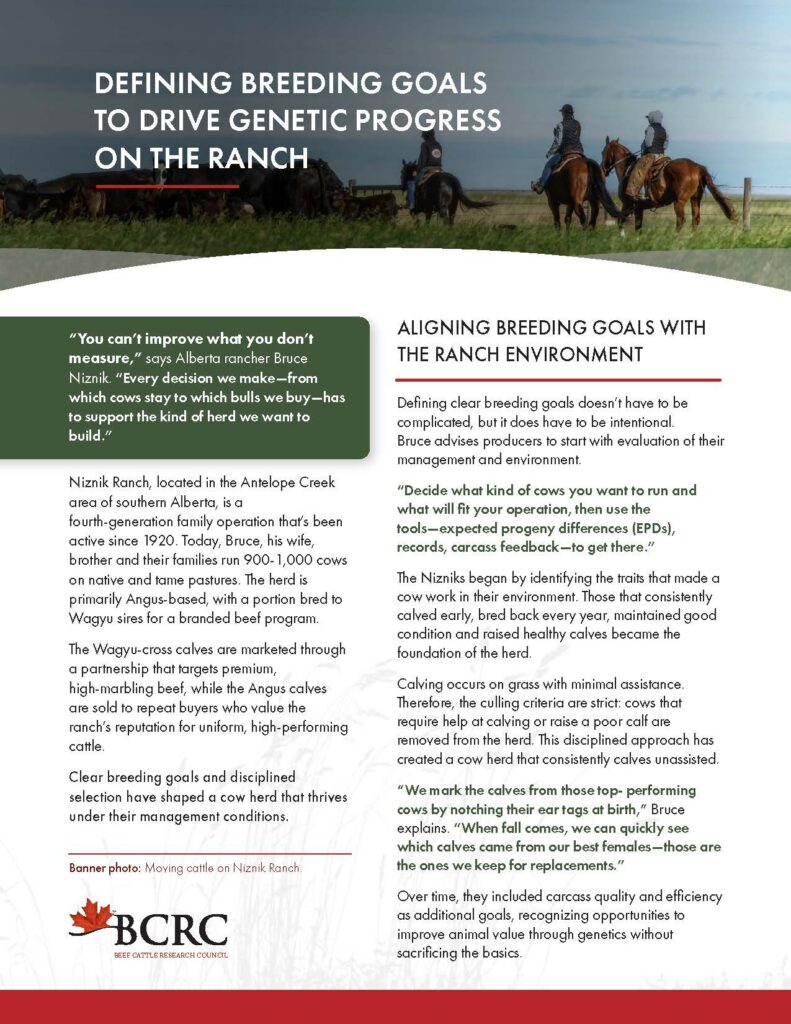
“You can’t improve what you don’t measure,” says Alberta rancher Bruce Niznik. “Every decision we make—from which cows stay to which bulls we buy—has to support the kind of herd we want to build.”
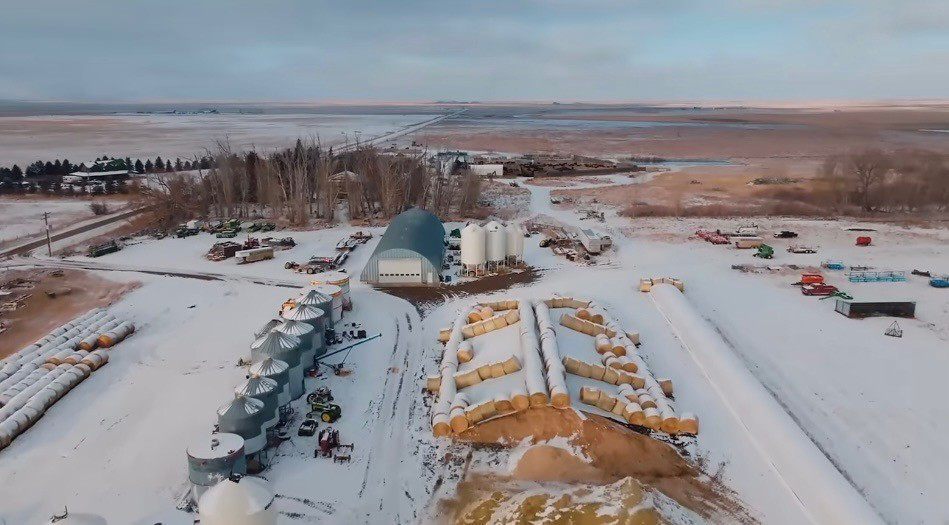
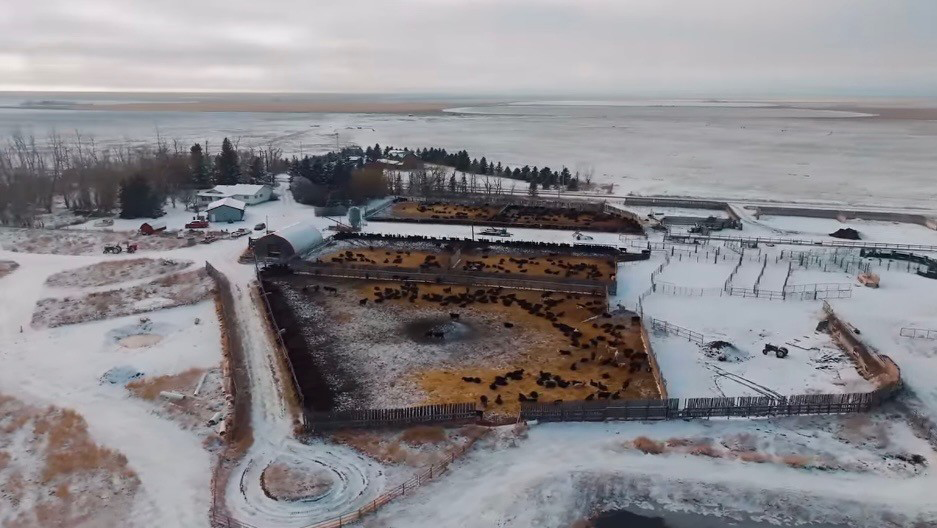
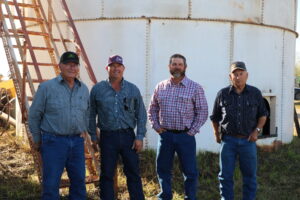
Niznik Ranch, located in the Antelope Creek area of southern Alberta, is a fourth-generation family operation that’s been active since 1920. Today, Bruce, his wife, brother and their families run 900-1,000 cows on native and tame pastures. The herd is primarily Angus-based, with a portion bred to Wagyu sires for a branded beef program.
The Wagyu-cross calves are marketed through a partnership that targets premium, high-marbling beef, while the Angus calves are sold to repeat buyers who value the operation’s reputation for uniform, high-performing cattle.
Clear breeding goals and disciplined selection have shaped a cow herd that thrives under their management conditions.
Aligning Breeding Goals with the Ranch Environment
Defining clear breeding goals doesn’t have to be complicated, but it does have to be intentional. Bruce advises producers to start with evaluation of their management and environment.
“Decide what kind of cows you want to run and what will fit your operation, then use the tools—expected progeny differences (EPDs), records, carcass feedback—to get there.”
The Nizniks began by identifying the traits that made a cow work in their environment. Those that consistently calved early, bred back every year, maintained good condition and raised healthy calves became the foundation of the herd.
Calving occurs on grass with minimal assistance. Therefore, the culling criteria are strict: cows that require help at calving or raise a poor calf are removed from the herd. This disciplined approach has created a cow herd that consistently calves unassisted.
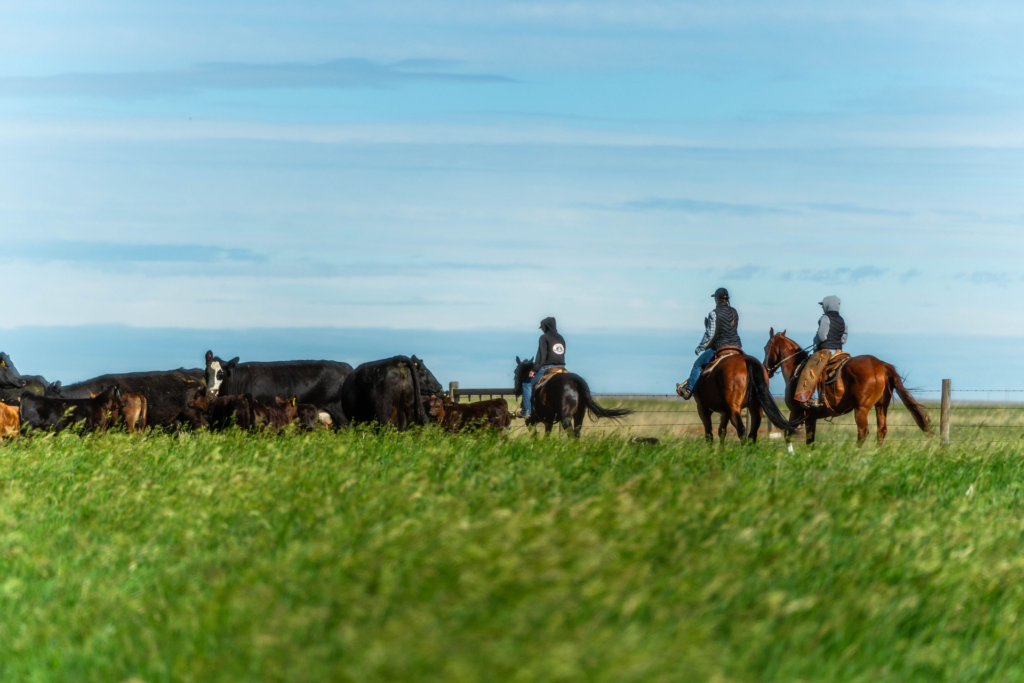
“We mark the calves from those top-performing cows by notching their ear tags at birth,” Bruce explains. “When fall comes, we can quickly see which calves came from our best females — those are the ones we keep for replacements.”
Over time, they included carcass quality and efficiency as additional goals, recognizing opportunities to improve animal value through genetics without sacrificing the basics.
Using Bull Selection to Drive Progress
Every bull the Nizniks buy is chosen for a purpose—whether it’s to improve carcass quality, strengthen feet or maintain fertility and cow size.
“We look at our herd each year, identify what needs fine-tuning and then find bulls that address that,” Bruce adds.
They source bulls from a few consistent Angus breeders who provide detailed EPD data and carcass ultrasound results, focusing on traits that complement their operational goals.
Soundness, docility and structural correctness are non-negotiable traits, alongside calving ease and feed efficiency. Bulls are also evaluated on how their progeny perform within the ranch’s environment, helping refine future breeding decisions.
Evolving Goals: Adding Carcass Value
A decade ago, the operation introduced Wagyu genetics to diversify income and capture added value from cows that weren’t providing replacements. Roughly 40% of the calves born each year are Wagyu crosses, produced as a terminal mating.
Heifers that calve in the first or second cycle stay in the Angus herd; those calving later move into the Wagyu group.
“The Wagyu cross fits with our management,” Bruce explains. “It lets us make use of good, functional cows that don’t fit our replacement criteria—and it’s helped us add carcass value.”
Data from that program provided valuable feedback on their breeding direction.
“Our crossbred calves perform better and grade higher than the average,” he says. “That tells us that the base genetics in our herd are working the way they should.”
Managing for Long-Term Progress
Through disciplined selection, the Nizniks have built a herd that fits their environment, management and markets—moderate-framed cows with good feet, strong maternal instincts and calves that perform both in the feedlot and on the rail.
“The progress has been gradual but steady,” says Bruce. “Our herd is more uniform, easier to manage and produces a better-quality product every year. That’s what good bull selection does—it compounds over time.”
Key Takeaways:
- Define your breeding goals first based on your environment, management and marketing.
- Select for consistency. Culling cows that don’t fit your system is just as important as choosing the right bulls.
- Use genetic tools wisely. EPDs, ultrasound data and carcass feedback can validate your progress and fine-tune decisions.
- Stay practical by focusing on traits that improve functionality and profitability.
Acknowledgements
Thanks to the following individuals for contributing their time and expertise to review this article and related resources:
- Canadian Beef Breeds Council (CBBC)
- Karin Schmid, Beef Production and Extension Lead, Alberta Beef Producers
- Chelsey Siemens, Livestock and Forage Extension Specialist, Saskatchewan Ministry of Agriculture
- Stephanie Lam, Director of Research, Livestock Research Innovation Corporation
Sharing or reprinting BCRC posts is welcome and encouraged. Please credit the Beef Cattle Research Council, provide the website address, www.BeefResearch.ca, and let us know you have chosen to share the article by emailing us at info@beefresearch.ca.
The BCRC is funded by a portion of the Canadian Beef Cattle Check-Off.
Your questions, comments and suggestions are welcome. Contact us directly or spark a public discussion by posting your thoughts below.