From Intake to Absorption: Getting More from Your Mineral Program

You can provide the best mineral package on the market, but if cattle can’t absorb those nutrients, much of that investment is left on the table. Trace minerals play a critical role in fertility, immunity, milk production and calf development, yet their effectiveness depends on more than what’s included in the mineral feeder. Understanding how minerals are absorbed, and what can get in the way, can help ensure your herd gets the full benefit of every bite.
Editor’s note: This article is part one of a three-part series on optimizing your mineral program. (Read part two and part three.)
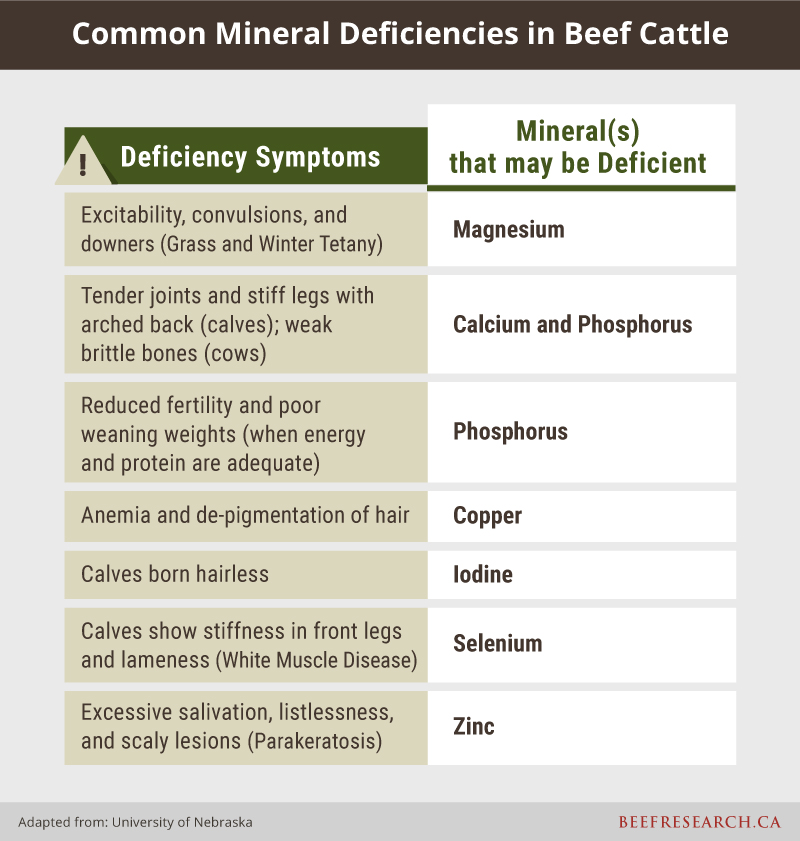
What Does a Mineral Deficiency Look Like?
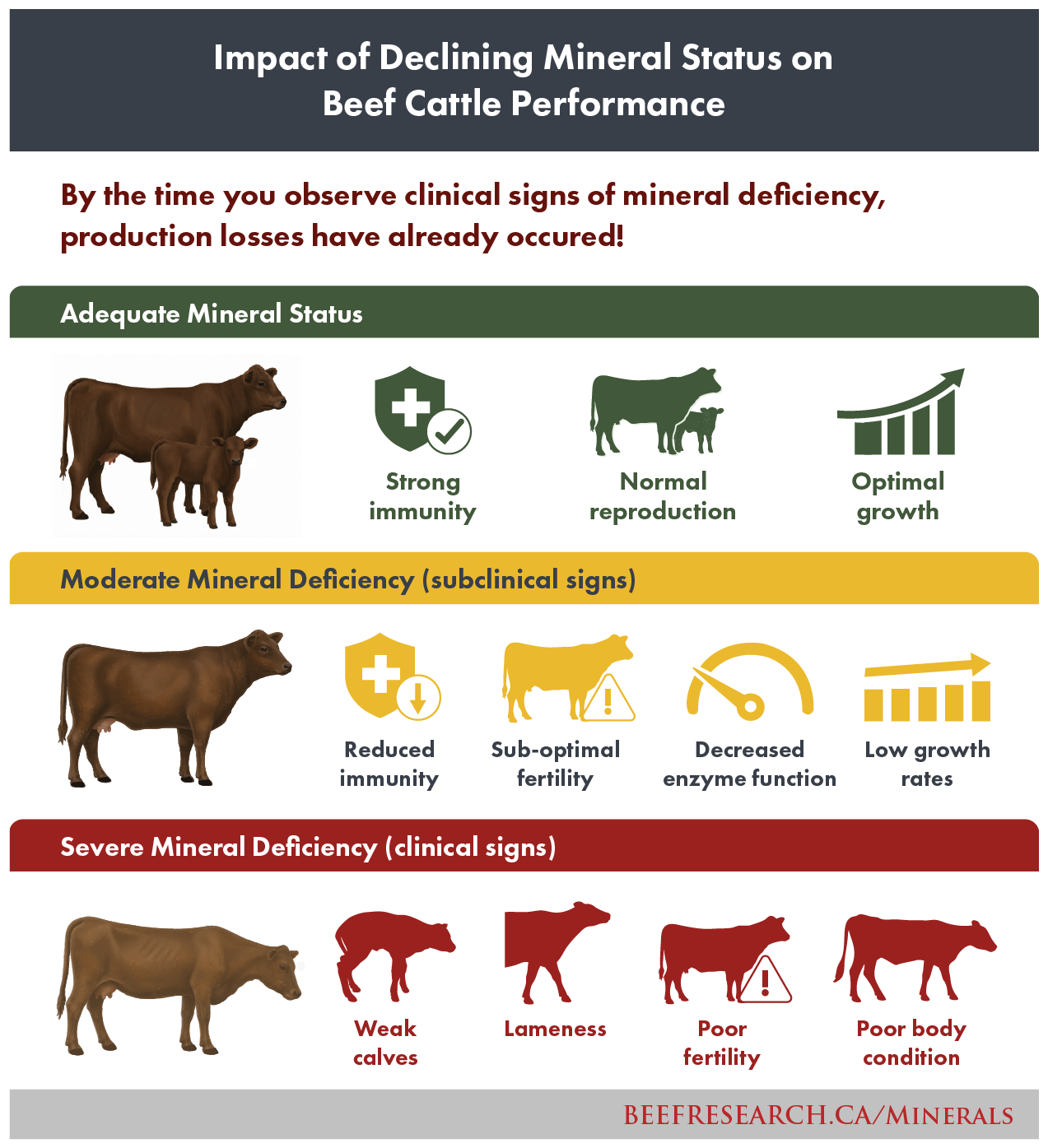
A mineral deficiency occurs when an animal’s intake of essential minerals is insufficient to meet bodily requirements. This results in impaired growth, reduced immunity or lower reproduction. Deficiencies can be categorized as primary (low nutrient levels in feed) or secondary (dietary antagonists block nutrient absorption).
Trace mineral supplementation has been shown to mitigate stress and positively affect growth and health of beef calves.1 Similarly, copper status has been associated with conception rates, with increased open rates in cows younger than 10 years old when copper intake is reduced.2
When Antagonists Strike
Antagonists are compounds or minerals that interfere with the absorption or utilization of essential trace minerals, such as copper, zinc, manganese and selenium. Even when cattle consume adequate minerals, antagonists can prevent those nutrients from reaching the animal. These interactions can take place in the digestive tract or at the site of metabolism.3
Common mineral antagonists include:
Molybdenum
Molybdenum can tie up copper and make it unavailable to cattle. The problem gets worse when sulfur levels are also high. In the rumen, molybdenum and sulfur combine to form compounds called thiomolybdates, which bind to copper and reduce how much the animal can absorb. As a result, cattle can become copper deficient even when the diet appears to contain enough copper.
Sulfur
Sulfur is found in all feeds and can also be present in water. High sulfur levels can interfere with copper and selenium nutrition. Sulfur works with molybdenum to reduce copper absorption and can also directly tie up copper and selenium, making these important minerals less available to the animal.4
Iron
Iron is an essential mineral needed to prevent anemia. It is generally abundant in cattle diets, but has an antagonistic relationship with some trace minerals, particularly copper.
It Is Not Just What You Feed, It Is What They Absorb
Providing trace minerals is one thing. Getting them into an animal where they can do their job is another.
Inside the rumen, minerals compete for absorption. With some trace mineral forms, a portion of what is fed never gets absorbed. That is where bioavailability comes into play.
Bioavailability is the portion of the mineral that is absorbed and utilized by the animal.
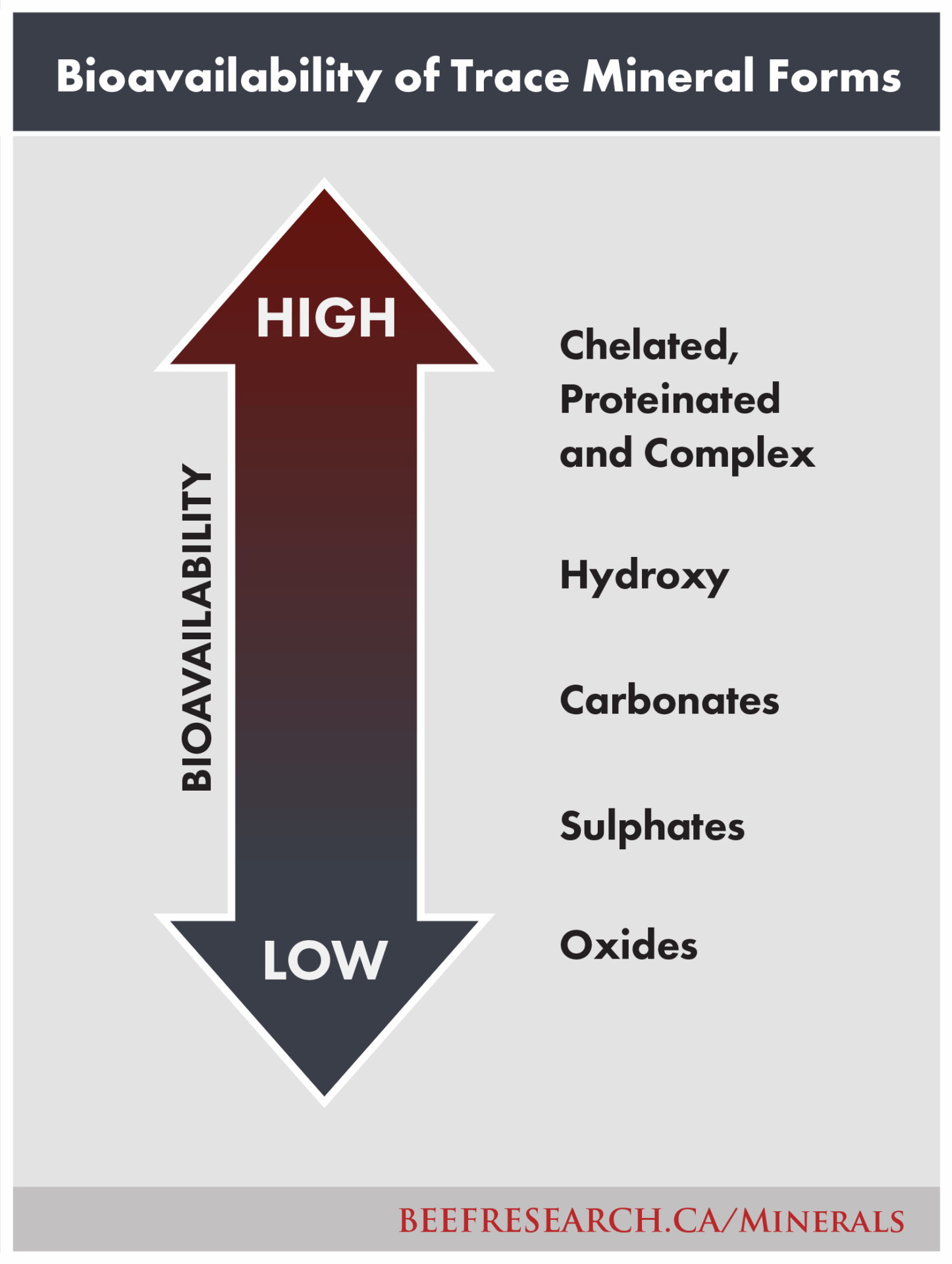
Chelated and hydroxy trace minerals (organic forms) are designed to protect the mineral as it moves through the digestive system, thus increasing bioavailability. Think of them as having a VIP pass in the rumen as they are not tied up by antagonists and available for absorption and use by the animal. This can be especially important during high-demand periods such as breeding season, calving or transportation.
Inorganic Trace Minerals
Inorganic trace minerals are the most widely used form in beef cattle supplementation, typically provided as sulfates, oxides or carbonates. They supply essential trace minerals at an economical cost, making them a practical option for many herds. However, these minerals are also the most reactive form within the rumen, making them more prone to antagonisms with other minerals, reducing bioavailability.5 Therefore, they may not be sufficient in high-production or high-stress conditions or when antagonists are present in the feed.
Organic Trace Minerals
Organic trace minerals are bonded to amino acids, proteins or organic acids in a way that makes it more bioavailable to the animal. Examples include zinc methionine, copper proteinate and manganese amino acid complexes. Organic sources of selenium differ from organic copper, zinc and manganese.
Hydroxy Trace Minerals
Hydroxy trace minerals have a crystalline structure that protects them and allows the minerals to bypass rumen digestion, thereby increasing bioavailability. Although they’re technically in an inorganic form, they share the same covalent bond structure as organic forms which prevent breakdown by rumen microbes.
Small Nutrients, Big Impact
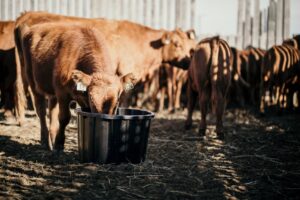
Trace minerals may be required in small amounts, but their impact on cattle performance is anything but small. From supporting reproductive success and immune function, to promoting calf development and overall herd productivity, these nutrients play a critical role throughout every stage of production. However, simply providing trace minerals is not enough. Factors such as mineral antagonists can significantly reduce absorption, limiting the benefits those nutrients are intended to provide.
Understanding the interactions that occur within the rumen and bioavailability of mineral sources is important when selecting a mineral program that is suitable for your operation to ensure that cattle receive the nutritional support they need. Working with your nutritionist, veterinarian or local extension specialist to develop an effective trace mineral program for your herd is an investment in healthier cows, stronger calves and improved long-term herd performance.
- References
- Megahed AA, Bittar JHJ, Palomares RA, Mercadante VRG, Dias NW. 2023. Evaluation of the stress-reducing effect of trace mineral injection in beef calves. J Vet Intern Med. 37:1278-1285. Available here.
- Van De Weyer LM, Hendrick SH, Waldner CL. 2011. Associations between prebreeding serum micronutrient concentrations and pregnancy outcome in beef cows. J Am Vet Med Assoc. 238:1323–1332. Available here.
- McDowell L. 2017. Mineral Nutrition History: The Early Years. 1st ed. First Edition Design Publishing, Sarasota, FL. pp. 1– 722.
- Hidiroglou M. 1980. Zinc, copper, and manganese deficiencies and the ruminant skeleton: A review. Can. J. Anim. Sci. 60:579–590. Available here.
- Drovers. 2011. When To Use Chelated Trace Minerals.
Sharing or reprinting BCRC posts is welcome and encouraged. Please credit the Beef Cattle Research Council, provide the website address, www.BeefResearch.ca, and let us know you have chosen to share the article by emailing us at info@beefresearch.ca.
The BCRC is funded by a portion of the Canadian Beef Cattle Check-Off.

Your questions, comments and suggestions are welcome. Contact us directly or spark a public discussion by posting your thoughts below.