Navigating Feed Tests: When to Test, What to Test for and How to Interpret Results
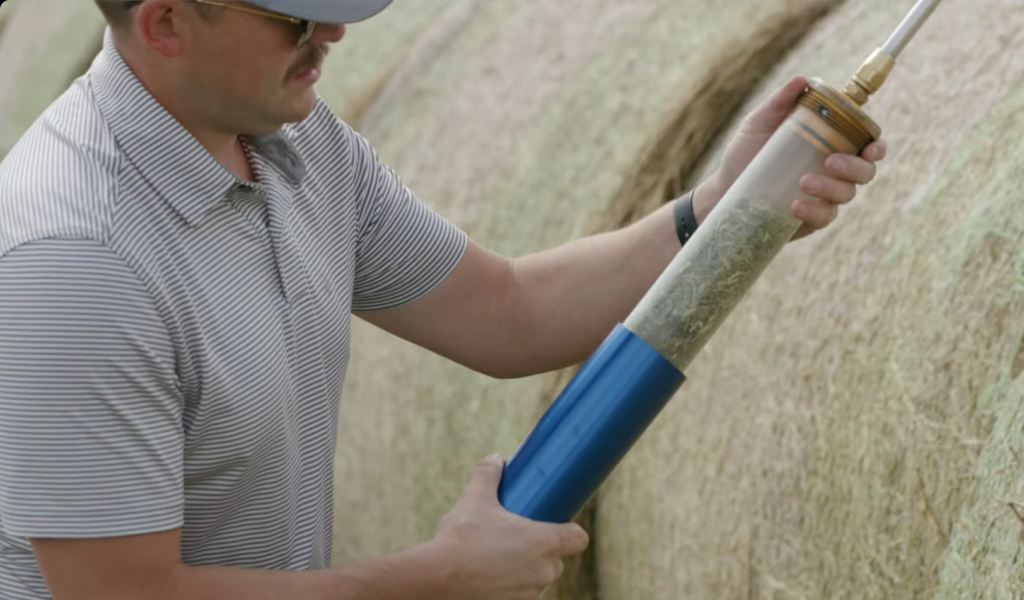
Feed represents one of the largest input costs in beef production. Without an accurate understanding of its nutritional value, both feed planning and ration formulation becomes largely speculative, increasing the risk of under- or over-supplying key nutrients. Laboratory feed analysis provides a precise assessment of nutrient availability, allowing producers to optimize feed utilization and improve overall efficiency.
While most producers are familiar with basic feed components such as dry matter, crude protein and starch, interpreting laboratory results can be more complex. Modern feed analyses go beyond basic nutrient measurements, offering additional insight on digestibility and nutrient components. These advanced metrics provide a more complete understanding of how nutrients will perform within the animal, supporting more informed feeding decisions.
Two common methods of analyzing feed samples are wet chemistry and near infrared spectroscopy (NIR). Wet chemistry uses heat and chemicals to measure nutrients, while NIR estimates values from light reflectance calibrated against wet chemistry data.
When should you test feed?
Timing matters as much as the test itself.
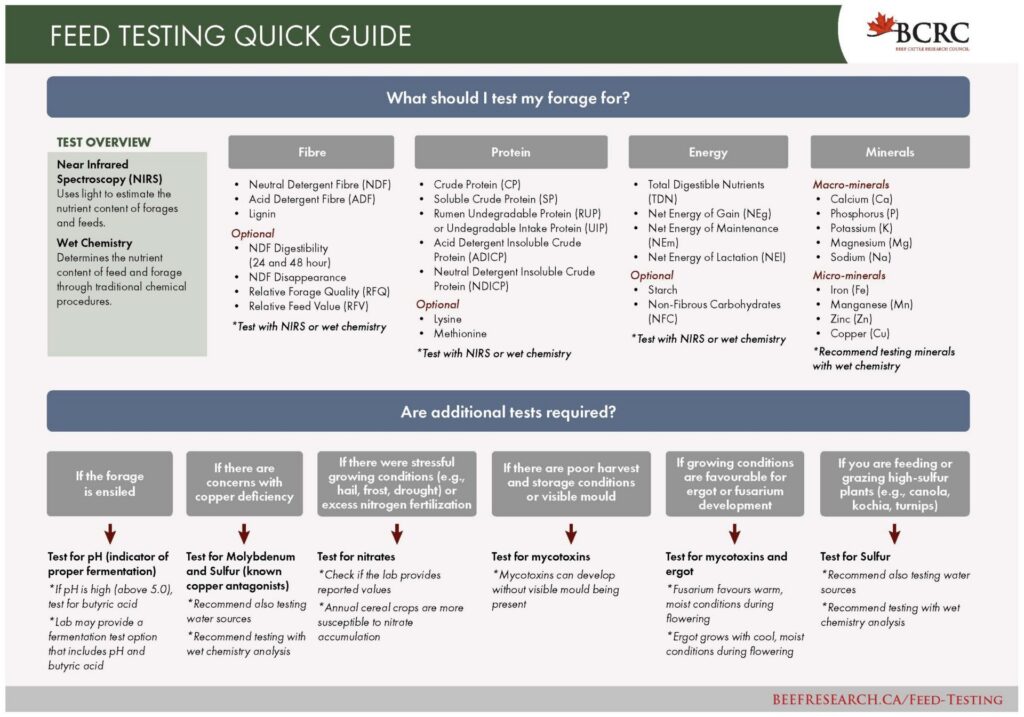
- Sample each lot of feed separately (e.g., single field of hay, load of grain, harvest date).
- Test as close to feeding as possible or when management decisions are being made.
- Allow time for lab results (minimum two weeks) before feeding decisions are finalized.
- For silage, wait at least four weeks after ensiling before sampling to ensure fermentation is complete.
Bottom line: test every year and anytime feed conditions have changed.
What should you test cattle feed for?
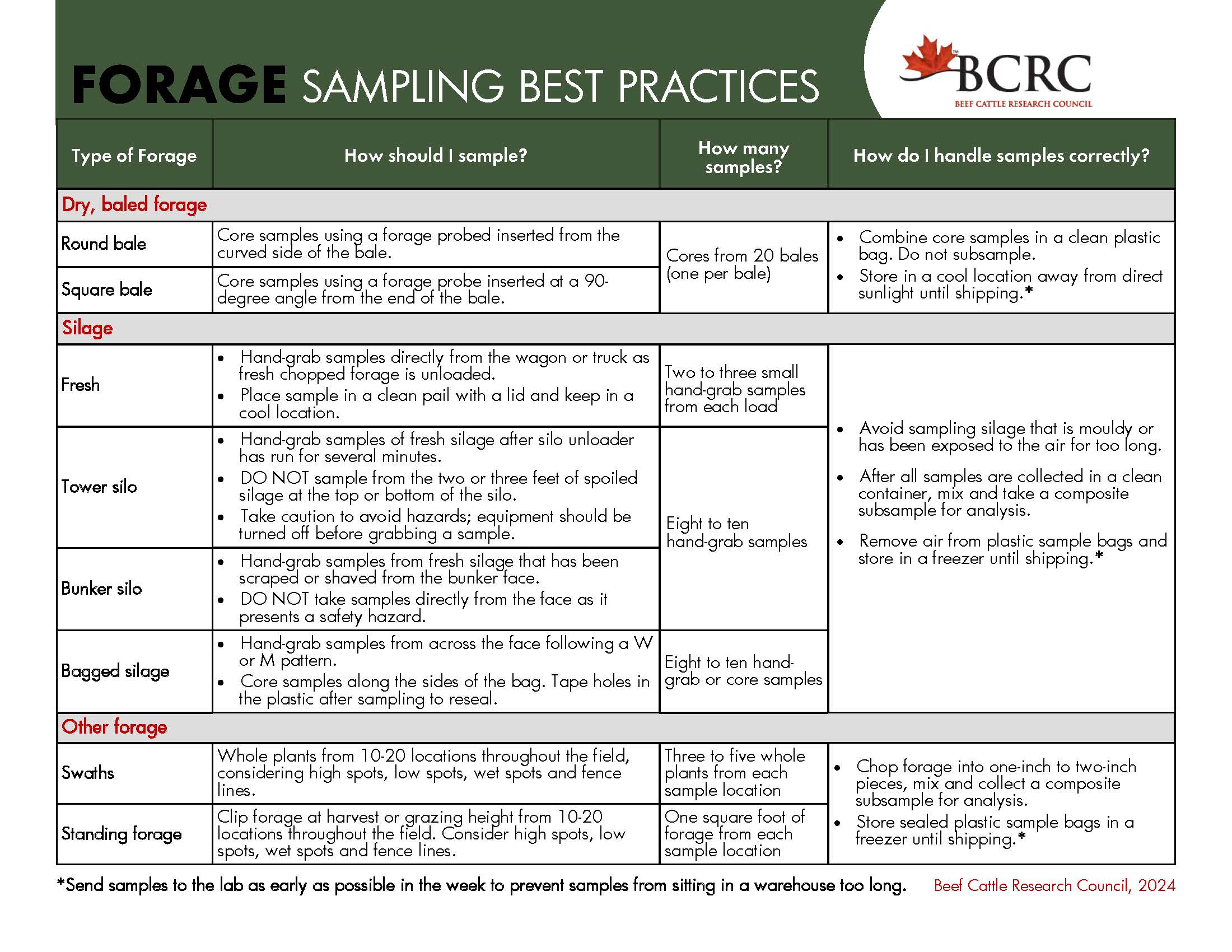
Key nutrient categories include fibre, protein, energy and minerals. What you test for will depend on the type of feed, the management decisions you need to make and how much you are willing to spend. For example, if you are feeding dry hay or greenfeed, you might want to consider testing for dry matter, crude protein, acid detergent fibre, neutral detergent fibre, energy, calcium, phosphorus, potassium and magnesium. If the forage is ensiled, including an additional test for pH can be beneficial to evaluate fermentation quality.
Laboratory feed analysis provides a precise assessment of nutrient availability, allowing producers to optimize feed utilization and improve overall efficiency.
Forage that is baled or ensiled when it is too wet can undergo heating and become brown to black in colour with a sweet, tobacco-like smell. This means that some of the protein in the forage will become unavailable to the animal. If heat damage is suspected, analysis of acid detergent insoluble nitrogen or protein (ADIN or ADIP) should be requested. Heating can also produce nitrites, which are highly toxic.
Some by-product feeds (such as distillers’ grains) or annual forages (such as canola or mustard) may have high levels of sulphates. Testing for sulfur is recommended when these feeds make up a significant portion of the diet, as excessive intake can cause polioencephalomalacia in cattle. Depending on the feed source and growing conditions, additional analyses for nitrates and mycotoxins may also be warranted.
How To Interpret Feed Test Results
Check out our interactive Sample Forage Lab Test Result for definitions of terms commonly included in a feed test analysis result.
Understand Dry Matter
Dry matter (DM) is the foundation for interpreting all other nutrients as it represents the portion of feed that contains nutrients. It is often easier to think in terms of “as fed” when evaluating beef cattle rations, as these values are needed when building a total mixed ration (TMR) or loading a feed mixer. However, nutrients such as protein, energy, vitamins and minerals are in the DM portion. And knowing that these nutrients drive performance, converting to DM is key in ensuring cows are meeting nutrient needs.
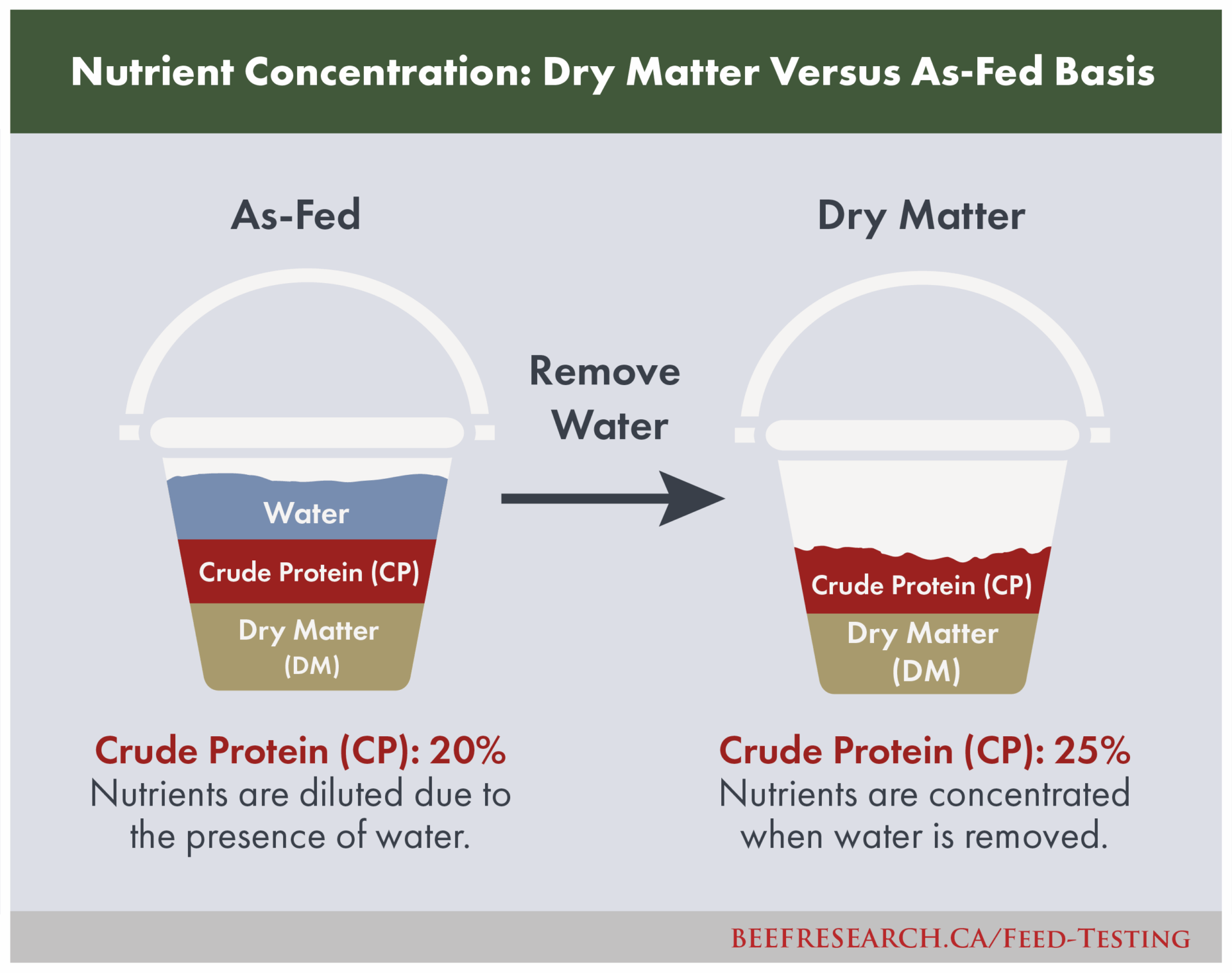
If we break this down, beef cows typically consume about 2.0% to 2.5% of their body weight in DM per day of good-quality forage. For example, a 1,200 lb cow needs 24 lb of DM daily (1,200 x 0.02), which equals roughly 27 lb of hay at 88% DM (24 / 0.8814).
A good example of why this conversion matters is silage. Appropriately harvested cereal silage is typically 35% DM and 65% moisture. This means that in each pound of silage, there is only 0.35 lb of DM—the rest is water. When only considering as fed values, feeding 30 lb of silage may seem like plenty of feed for a 1,200 lb cow, but it is only providing 10.5 lb of DM—well below the requirement for dry matter intake (24 lb)—and does not provide sufficient nutrients to the cow.
Check Protein
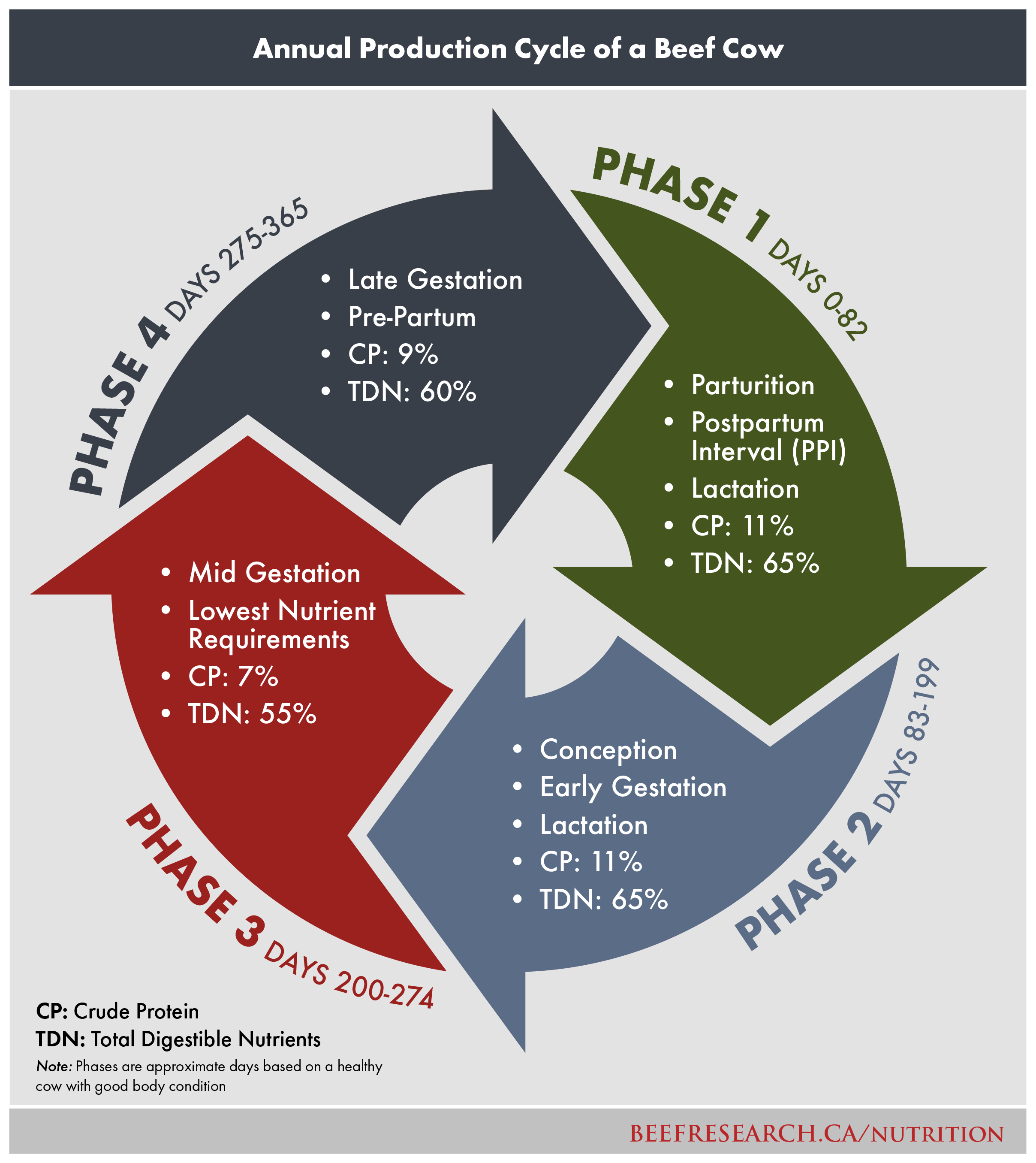
Crude protein is a critical value, particularly for maintaining rumen function. Low protein (below seven to eight percent on a DM basis) can limit digestion and intake, especially in mature cows.
Protein is required for maintenance, growth, lactation and reproduction. It is a component of muscles, the nervous system and connective tissue. Protein requirements depend on cattle age, growth rate, pregnancy and lactation status. Young, growing cattle, as well as those in late pregnancy or lactation, have increased protein requirements.
Watch Fibre Levels
Fibre measurements, including acid detergent fibre (ADF) and neutral detergent fibre (NDF), play a major role in forage digestibility and feed intake. As forages mature, fibre levels increase, which reduces digestibility and limits how much cattle can consume. NDF is particularly useful in predicting intake, as high levels physically fill the rumen and slow feed passage rates.
Poor-quality forages, such as straw or slough hay, will be consumed at low levels, around 1.25 to 1.5 per cent of body weight on a DM basis. In contrast, high-quality alfalfa or alfalfa grass hay will approach 2.5% of body weight.
As a general recommendation, the maximum NDF dry matter content of the daily ration should be from 1.2% to 1.5% of the cow’s body weight. The higher quality the forage, the closer to 1.5% can be consumed. In the case of low-quality forages, it is essential to provide supplemental feed to ensure optimal nutrition.
Don’t Ignore Minerals
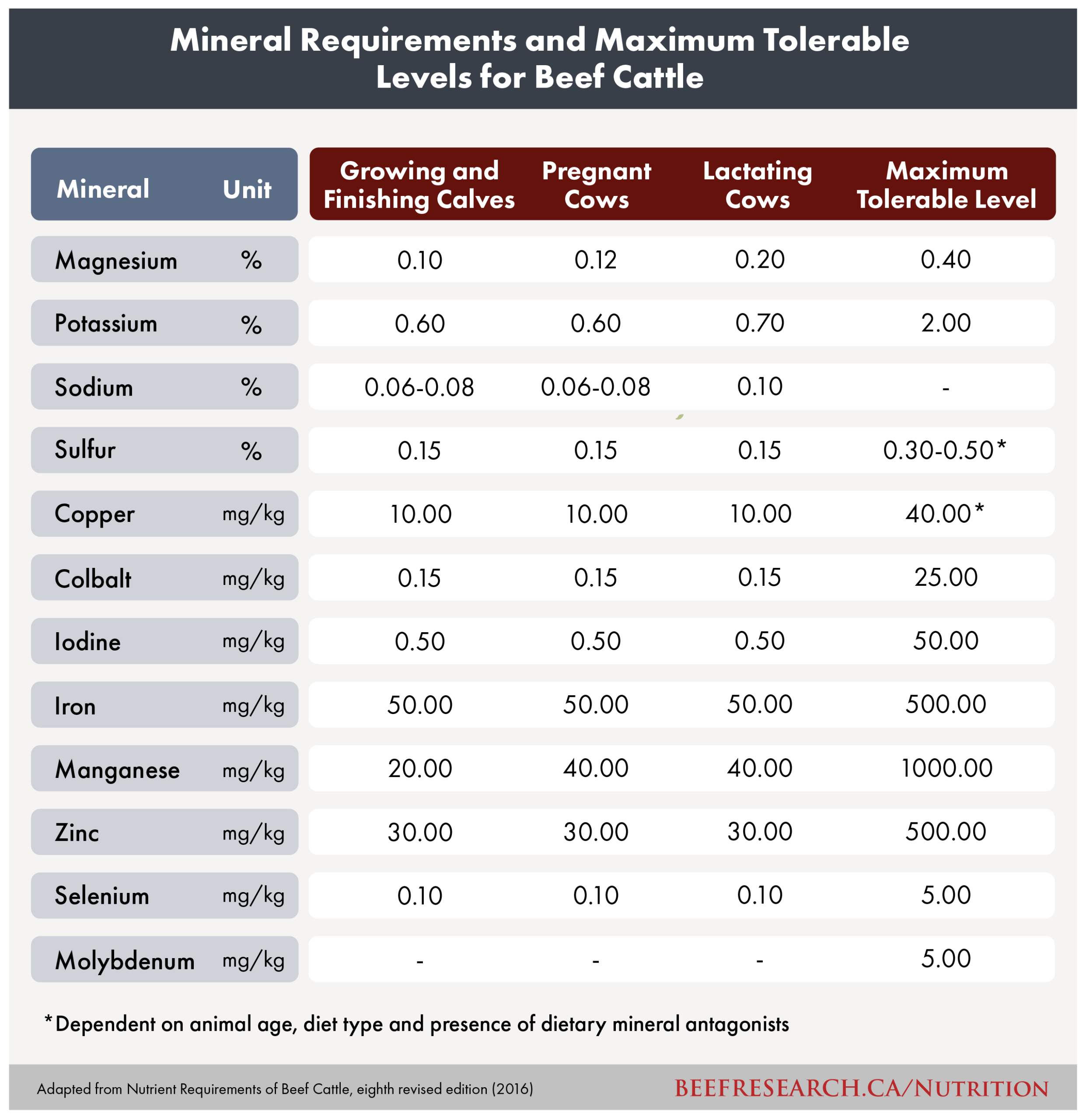
Although minerals are required in relatively small amounts for optimum beef cattle health, a deficiency can cause significant reductions in growth, immune function and reproduction. Regional variations in the trace mineral content of forages and soils create high risk areas where trace mineral deficiencies are more likely to occur. It is important to include mineral analysis of forages as part of regular feed testing.
When rations contain grass hay, alfalfa or a mixture of the two, calcium and phosphorus usually need to be supplemented in a 1:1 ratio (one part calcium to one part phosphorus). When feeding cereal forage rations, such as oat or barley greenfeed, a 2:1 or even 3:1 mineral mixture may be required to provide a balanced mineral mixture. Be sure to consult with a nutritionist to ensure proper supplementation.
Putting Results to Work
Feed testing takes the guesswork out of cattle nutrition. By understanding a few key numbers you can make smarter feeding decisions, help to control feed costs and maintain herd performance.
Turning feed analyses into feeding decisions often requires considering cattle class, stage of productions, feed intake, environmental conditions and more. The BCRC offers additional resources and tools to help you put feed test results to work. When in doubt, consult a beef cattle nutritionist to develop a balanced feeding program that meets your production goals.
Additional Resources
- Feed Quality, Testing and Analysis (BCRC topic webpage)
- Tool for Evaluating Feed Test Results (BCRC calculator)
- Don’t Let Nitrates Sneak Up On Your Herd (BCRC article and podcast episode)
- Feed Testing: A Tool for Better Returns (BCRC article)
Sharing or reprinting BCRC posts is welcome and encouraged. Please credit the Beef Cattle Research Council, provide the website address, www.BeefResearch.ca, and let us know you have chosen to share the article by emailing us at info@beefresearch.ca.
The BCRC is funded by a portion of the Canadian Beef Cattle Check-Off.

Your questions, comments and suggestions are welcome. Contact us directly or spark a public discussion by posting your thoughts below.