Improve Profitability with a Shorter Calving Season: Updated Calculator Available
As the calving season ends and Canadian beef cattle producers switch gears toward breeding season, there is an opportunity to evaluate calving distribution and its impact on herd performance and profitability. Now is the time to assess operational goals and desired outcomes and incorporate any changes during breeding season. This may include when to turn out bulls or when to pull them from pasture, as these decisions will affect next year’s calving season and calf crop, including calving distribution.
Calving distribution is the percentage of calves born in each 21-day cycle throughout the calving season.
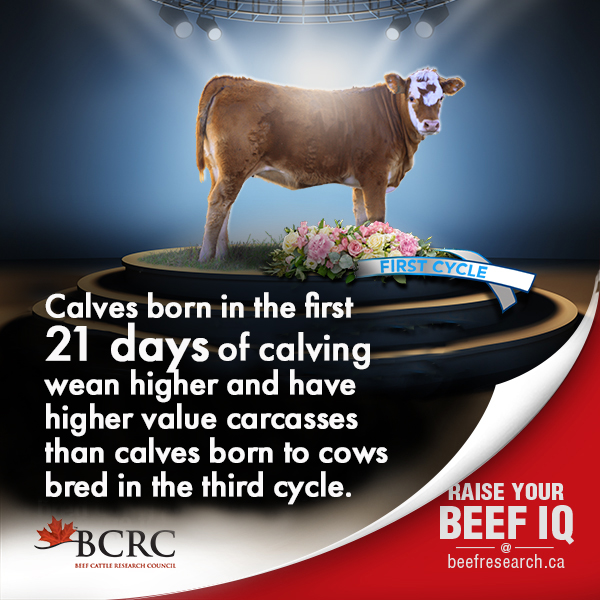
Each time a cow is not bred during a 21-day heat cycle, it can cost 39 lbs of weaning weight (assuming an average daily gain on calves of 1.85 lbs/day). Having more calves born in the first 21 days of the calving season allows beef producers to market larger, more uniform groups of calves and increase their profit potential.
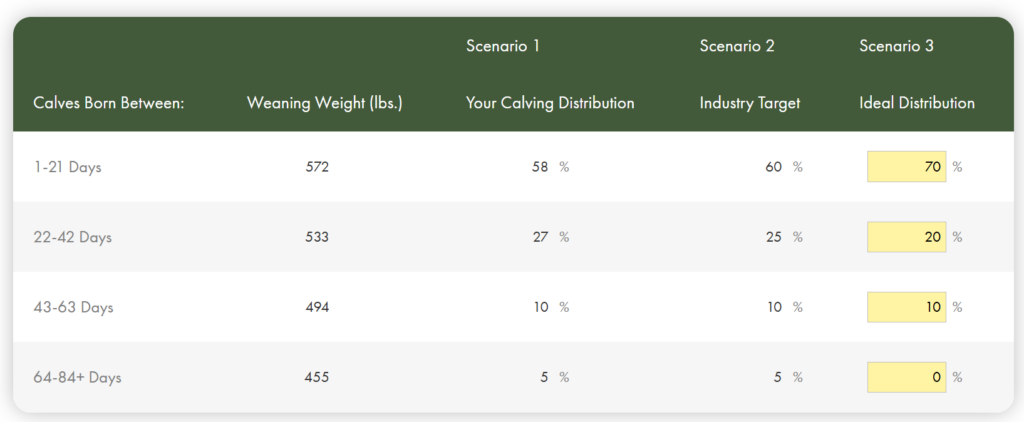
The standard industry target is to have at least 60% of females calve within the first 21 days of calving season (first cycle), followed by 25% calving between 21-42 days, 10% between 42-63 days and the remaining 5% calving in the fourth and final cycle. An ideal distribution could be 70-20-10, with a condensed breeding season of three cycles (63 days).
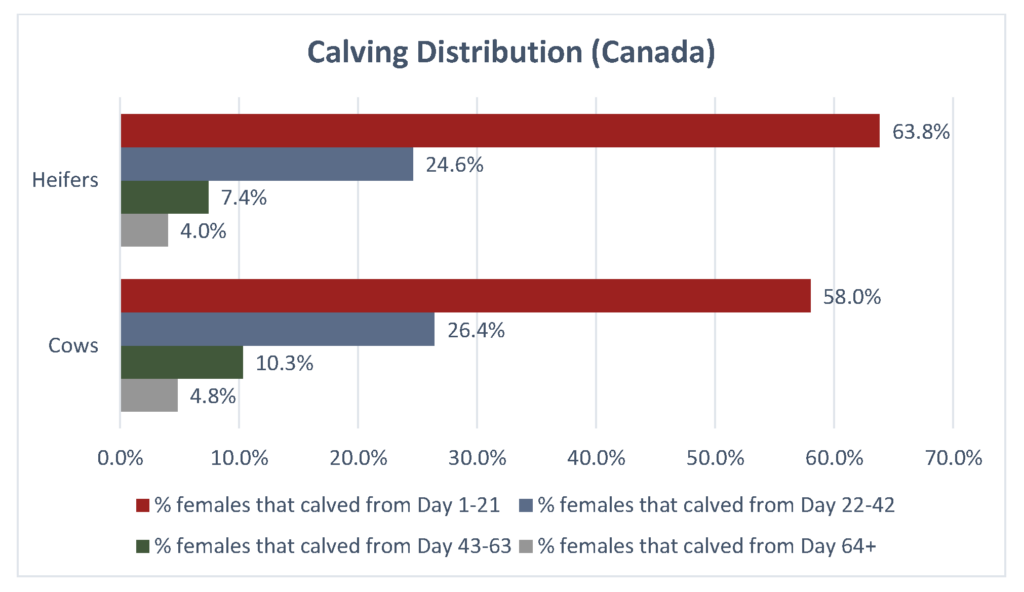
How does the industry target compare to actual calving periods on farms across Canada? The 2022-23 Canadian Cow-Calf Survey showed less than 5% of all females calved after 63 days, or three cycles. The survey reported a calving distribution for cows of 58-26-10-5 (Figure 1).
Figure 1. Calving distribution for heifers and cows from the 2022-23 Canadian Cow-Calf Survey
How does adjusting your calving window impact profitability?
Want to see where your herd’s calving intervals stand today—and what tightening them up could mean for your profitability? The BCRC’s updated Value of Calving Distribution Calculator can help you compare your current numbers to the industry target of 60-25-10-5, or a tighter three-cycle (63-day) breeding season at 70-20-10. As with any management decision, it’s important to weigh the potential for added revenue against the cost and effort required to get there.
More calves born in the first cycle pay off in two big ways: heavier weaning weights and cows that stay productive in the herd longer.
Western Beef Development Centre research tracking heifers over 16 years (2001–2017) found that females calving earlier had better pregnancy rates, stayed in the herd longer and produced one more calf over their lifetime compared to later-calving females.
Earlier-born calves also simply have more days to grow. At 1.85 lbs/day, calves born in the first cycle can wean about 39 pounds heavier than calves born in the next cycle. For example, with a February 15 start, November 15 weaning, and 85 lb birth weight, first-cycle calves average 572 lbs, second-cycle calves average 533 lbs, and third-cycle calves average 494 lbs. More calves born early means more pounds to sell (Figures 2 & 3).
Figure 2. Parameters for the calving distribution calculator
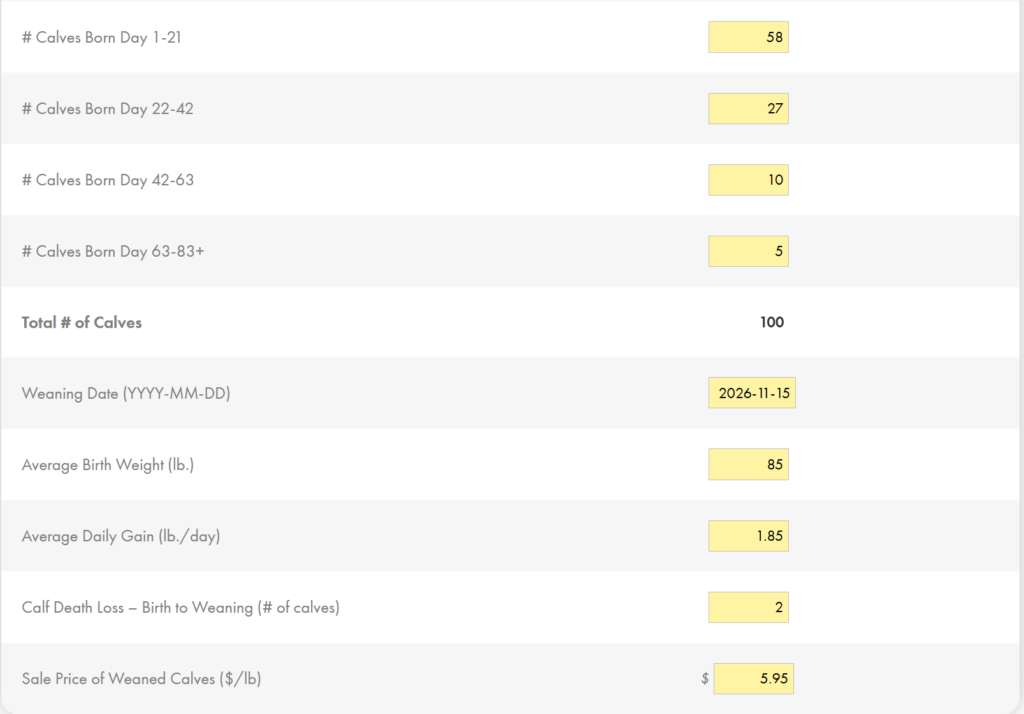
Figure 3. Weaning weights and calving distribution
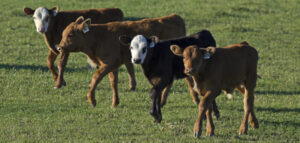
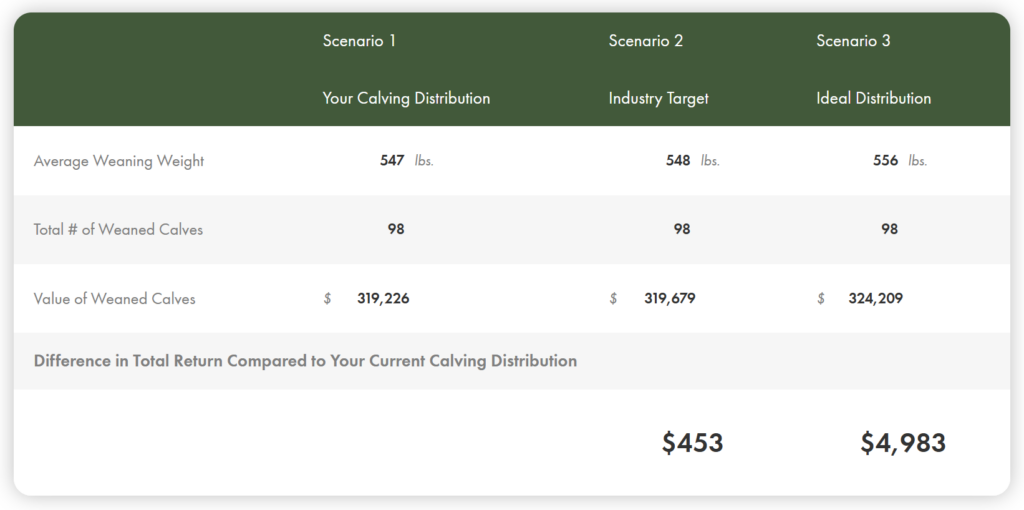
Changing calving distribution can impact profitability. Increasing the number of calves born in the first cycle from 58% to 60% improves return by $453 (Figure 4). Achieving the ideal distribution of 70% of calves born in the first cycle improves return by $4,983.
Figure 4. Difference in total return compared to current calving distribution.
For beef cattle producers to see an improvement in their calving distribution next year, they need to understand the factors at play in their existing scenario and determine if and how they will adjust their breeding season decisions now.
Sharing or reprinting BCRC articles is welcome and encouraged. Please credit the Beef Cattle Research Council, provide the website address, www.BeefResearch.ca, and let us know you have chosen to share the article by emailing us at info@beefresearch.ca.
The BCRC is funded by a portion of the Canadian Beef Cattle Check-Off.

Your questions, comments and suggestions are welcome. Contact us directly or spark a public discussion by posting your thoughts below.