Make informed decisions for your operation with information delivered right to your inbox.
Get the latest tools, innovations and science-based information for the Canadian beef industry, including seasonal production considerations and economic analyses.
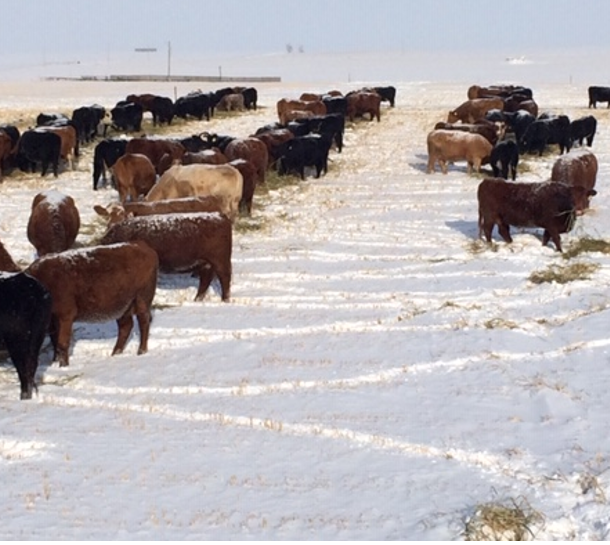
Standing Corn: A High-Energy, Low-Cost Winter Grazing Option
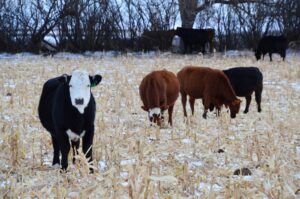
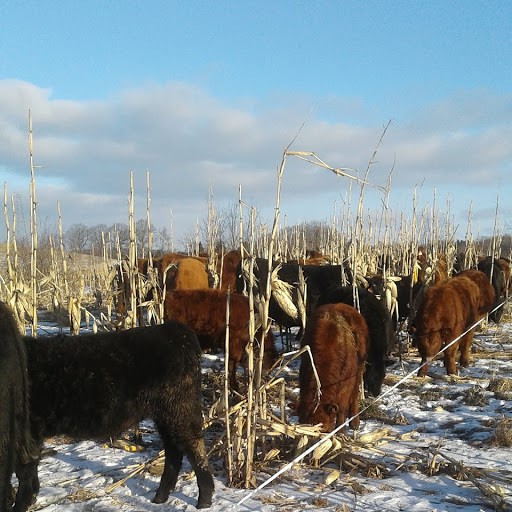
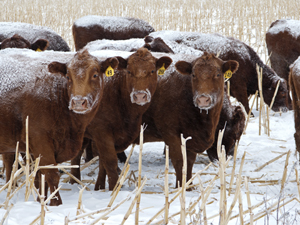
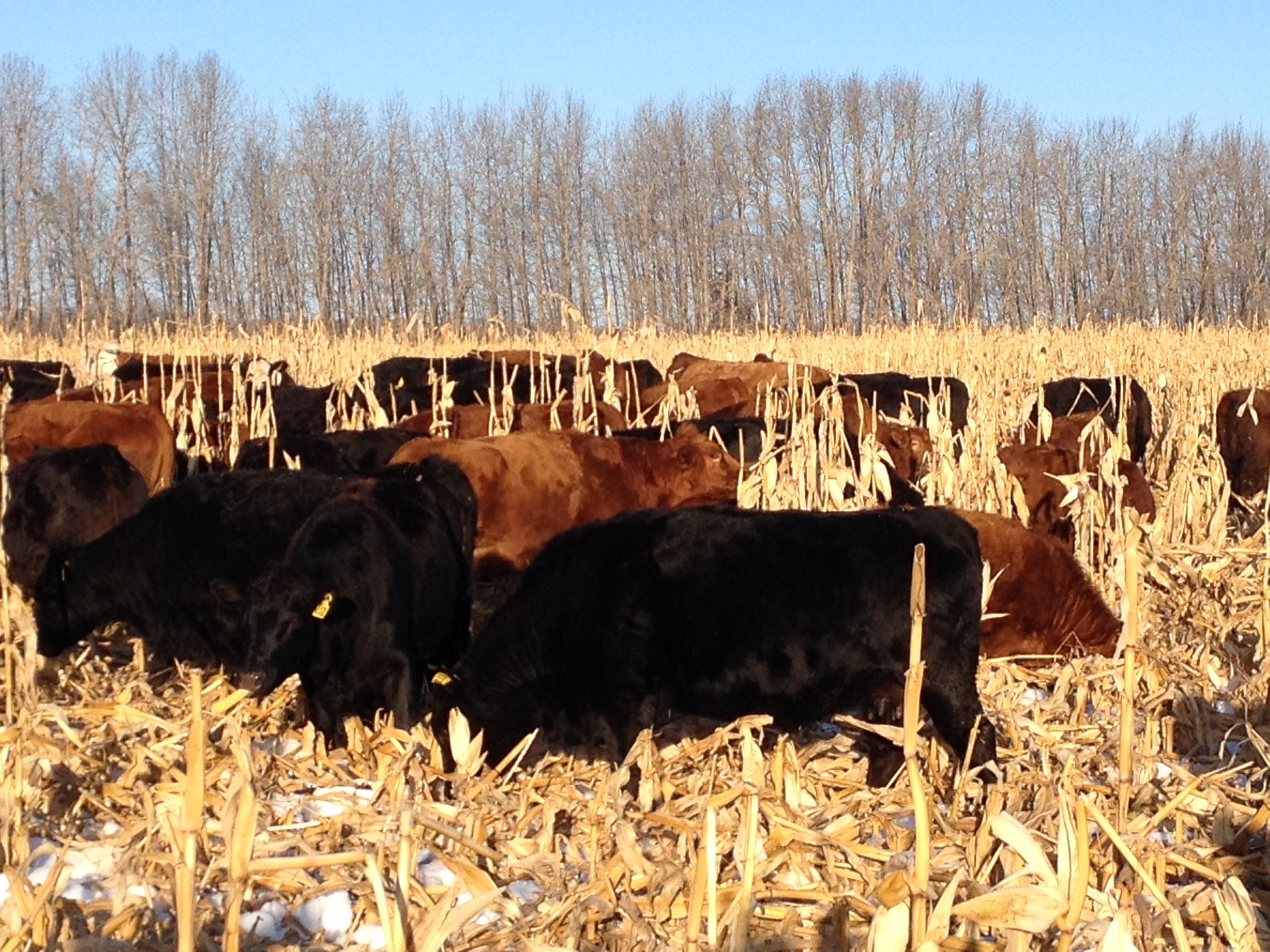
With proper planning and management, grazing standing corn can provide a cost-effective forage option for cow-calf operations, while reducing reliance on stored feed and effectively extending the grazing season. This practice can help lower feed costs, make better use of available land and provide shelter from the weather, while giving cattle direct access to a feed source. However, corn grazing isn’t a one-size-fits-all solution. Success depends on choosing the right variety, seeding, managing the crop and monitoring cattle.
When Does Corn Grazing Make Sense?
Corn grazing may not work for every beef cattle operation; it is important to consider your goals. Corn grazing is best suited for:
Extended or year-round grazing systems looking to reduce winter feeding costs
Operations with limited hay land or those looking to increase forage production per acre
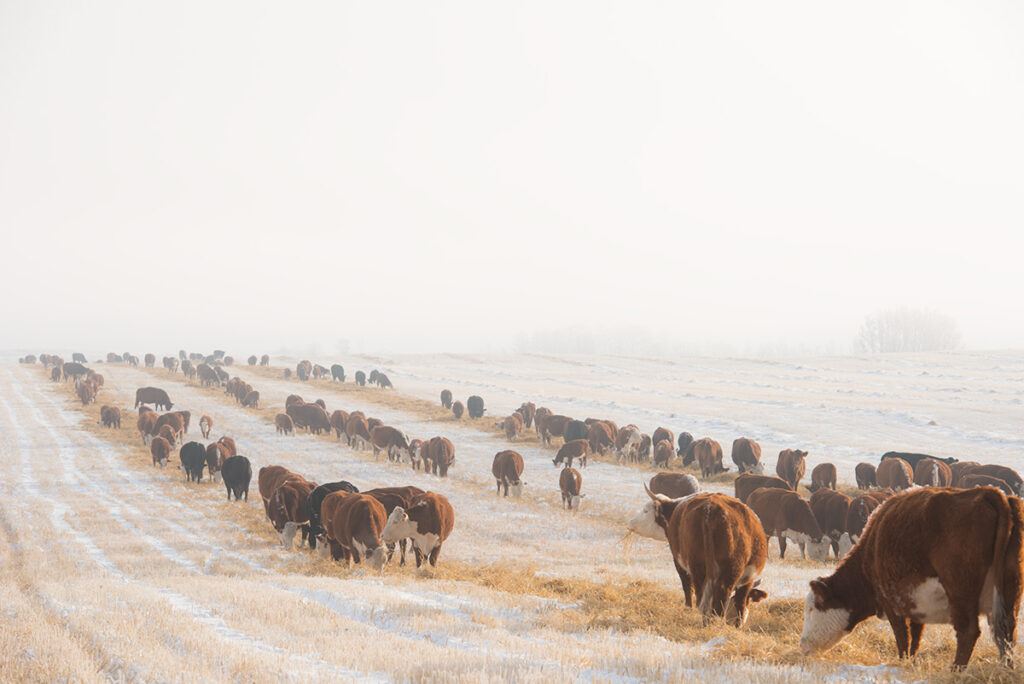
Regions with cold, dry winters, where corn can stand above snow and be grazed in place
Which Variety Should I Choose?
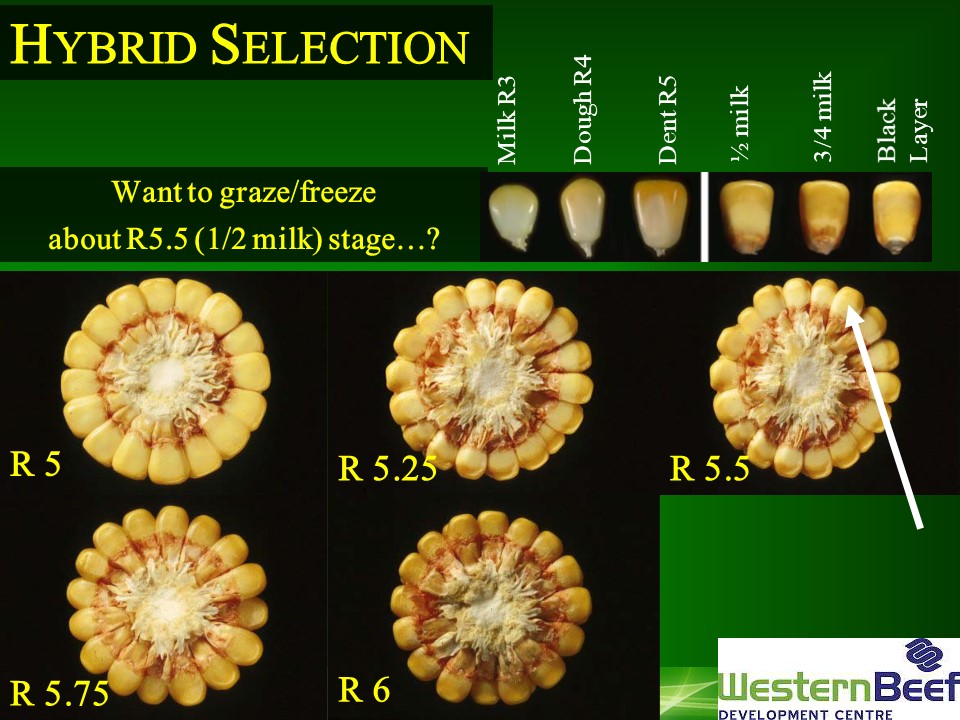
Grazing corn varieties are not the same as those used for grain or silage production. Select early-maturing, silage-type hybrids that align with the corn heat units (CHU’s) in your region to increase the chance of a high-yielding, high-quality crop. These varieties typically offer a good balance between moderate grain yield and high biomass, which helps reduce the risk of acidosis by limiting the proportion of energy-rich cobs relative to the overall plant.
Corn Heat Unit (CHU): A measure of accumulated heat, rather than calendar days, during the growing season that indicates how well corn will grow in a specific area. Higher CHUs mean more suitable conditions for corn maturity, helping producers choose hybrids and predict feed availability for silage or grazing.
How To Seed Corn for Grazing
Consider the recommendations below to help maximize yield and grazing efficiency.
Seeding depth: aim for 1.5 to 2 inches in western provinces (BC to MB) and 1.5 to 3 inches in eastern regions (ON to PEI). Always plant into warm, moist soil with a temperature of at least 10°C.1
Row spacing: 30” is preferred to allow for optimal plant development and easier cattle access.
Seeding equipment: for best results, producers could use a corn planter, which promotes better emergence and can produce 15 to 20% more biomass compared to air drill seeders.
Weed control: it is recommended to apply treatment before seeding and again at the four-leaf and eight-leaf stages.
Fertilization: about 80lbs of nitrogen per acre is typically needed to meet crop needs and maximize productivity.
Grazing Management Considerations
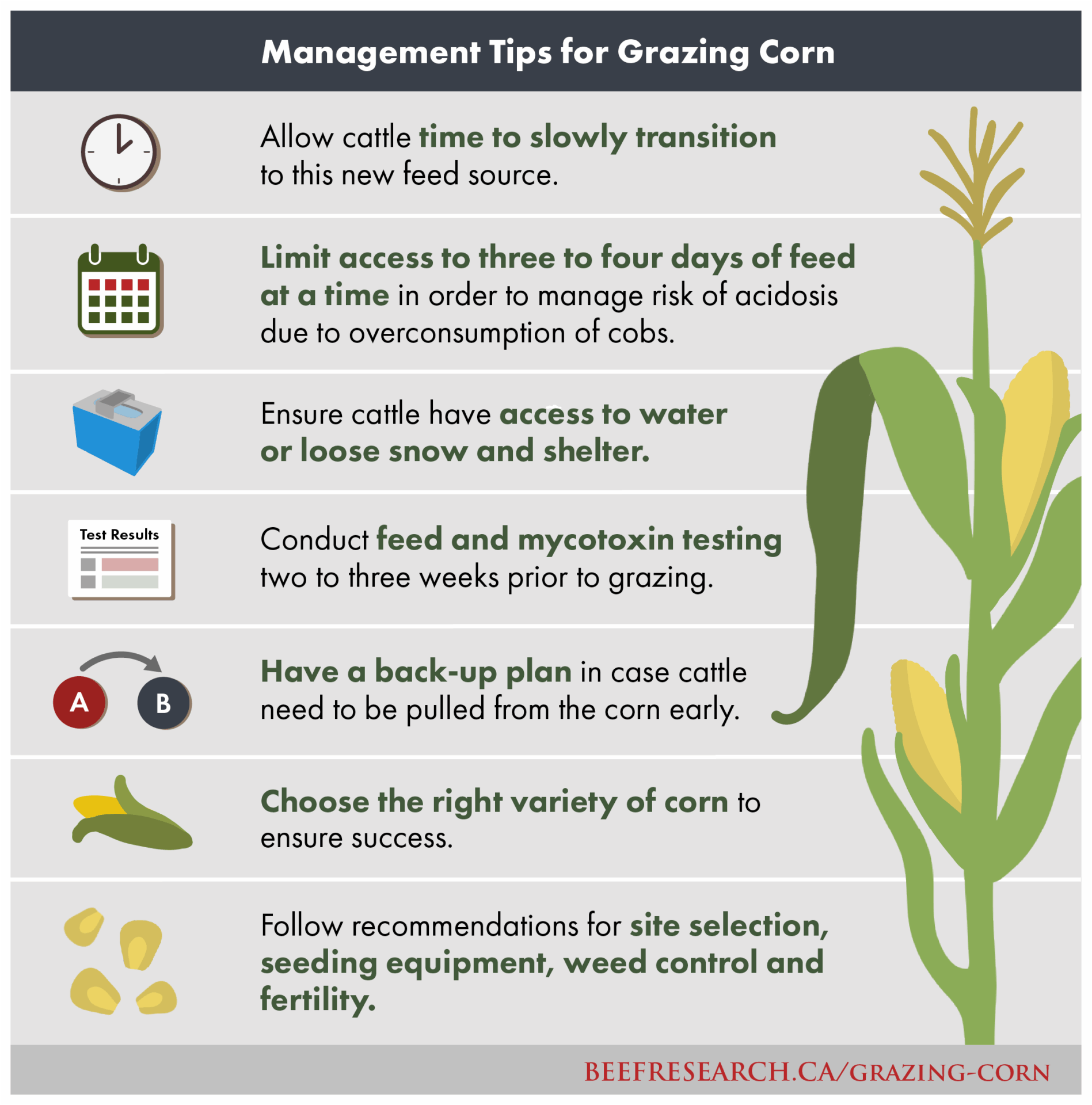
Cattle unfamiliar with corn grazing need time to learn how to graze the tall stalks and to allow time for the rumen to adjust to the new feed. Consider the management tips below:
Start slow when transitioning cattle to corn grazing.
Offer small grazing areas with access limited to just three to four days of feed.
Provide hay or another familiar forage alongside the corn to support digestion and reduce the risk of acidosis.
Monitor cattle closely, especially those with no prior corn grazing experience, and pay attention to whether they’re selectively eating only cobs, which can increase the likelihood of digestive upset.
Move the electric fence every few days to limit overconsumption of cobs and to prevent trampling.
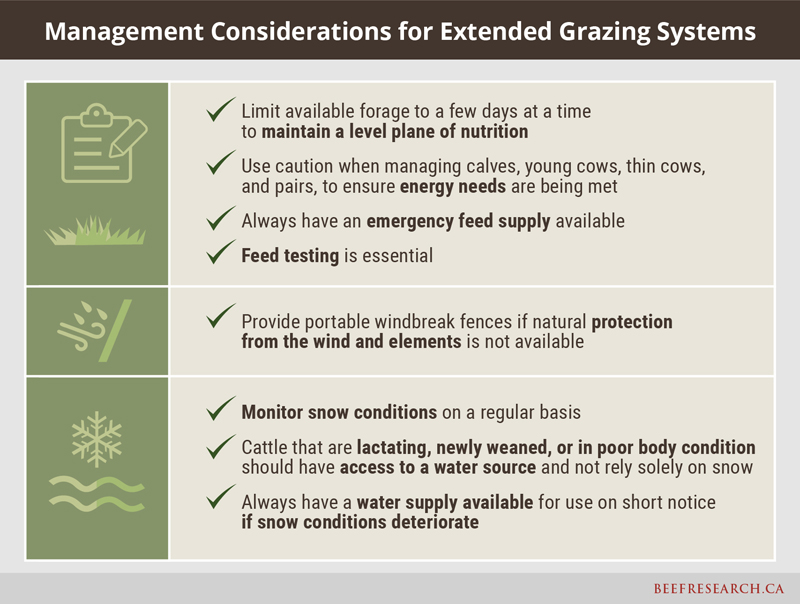
Have a backup feed source, such as bale grazing, if corn grazing becomes inaccessible.
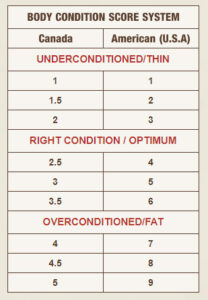
Monitoring body condition score (BCS) and weather conditions is critical during corn grazing. Cows in poor condition (BCS 1-2) are more vulnerable to cold stress, meaning they may need supplementation or early removal.
Fencing, Water and Shelter Management
Strip grazing with electric fencing is the most effective way to regulate corn access and to promote uniform nutrient intake.
Reliable water access is critical. Ensure cattle can reach flowing water, dugouts or loose snow, especially during extreme cold weather.
One of the benefits of corn grazing is that corn stalks can provide shelter from the elements if grazed from the center of the field outward. However, pasture layout and colder temperatures may mean additional shelter, such as windbreaks, should be provided.
Deep snow or crusted fields can reduce cattle’s ability to access standing corn. In addition, unpredictable winter weather can impact both the availability of the feed and reduce intakes.
Animal Health Considerations
Acidosis is a key concern when grazing corn as cows will choose to consume the high-energy cobs first. Excessive energy intake can also lead to over-conditioned cows.
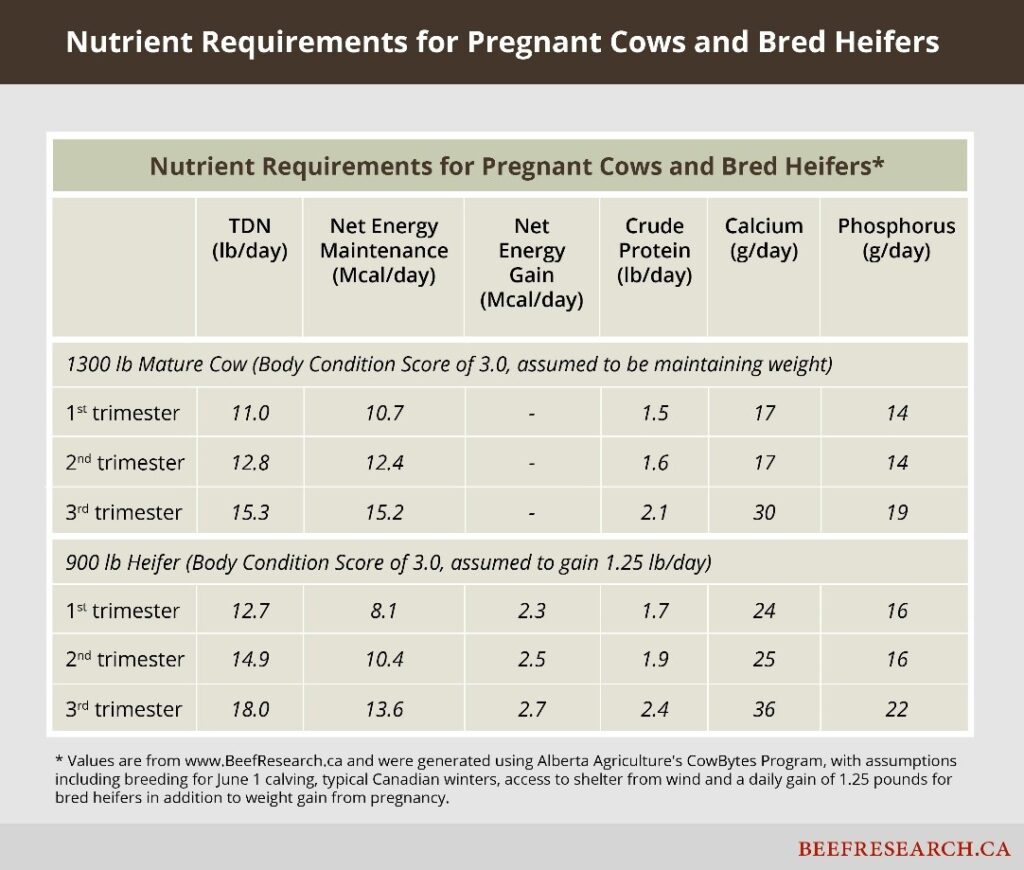
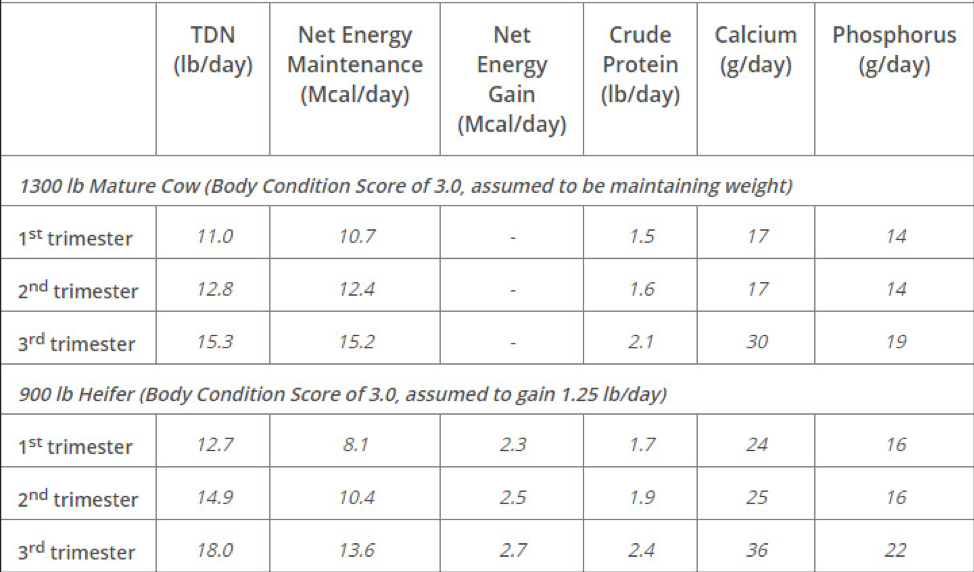
While standing corn often meets the energy needs of cows in mid-gestation, it is low in protein and calcium, along with other minerals. This makes feed testing important to determine what additional supplementation is required. Corn should also be tested for mycotoxins, which are a group of harmful toxins that can create a variety of problems for beef cattle including impaired health and reduced productivity.
Conclusion
Corn grazing can be a valuable addition to your feeding program, offering high energy, reduced feed costs and flexibility in extended grazing systems. Careful planning is essential, from selecting the right variety to managing animal health and field conditions to ensure success.
References
Manitoba Agriculture, Crop Management. Corn Seed Bed Preparation.
Sharing or reprinting BCRC posts is welcome and encouraged. Please credit the Beef Cattle Research Council, provide the website address, www.BeefResearch.ca, and let us know you have chosen to share the article by emailing us at info@beefresearch.ca.
The BCRC is funded by a portion of the Canadian Beef Cattle Check-Off.
Your questions, comments and suggestions are welcome. Contact us directly or spark a public discussion by posting your thoughts below.
Choosing the Right Winter-Feeding Strategy: Pros & Cons
Winter-feeding is one of the largest costs for cow-calf producers in Canada. How this period is managed can make a big difference in both herd health and an operation’s bottom line.
From extended grazing systems to feeding stored forages, each method has its strengths and challenges. The right strategy depends on the operation, available resources and winter conditions. Regardless of the system chosen, taking the time to test feed, balance rations and score body condition regularly will help make the most of your winter-feeding program.
Here’s a look at some common winter-feeding strategies, with the pros and cons of each and links to Beef Cattle Research Council resources where you can learn more.
Feeding ensiled forages (e.g., corn, haylage) as the main fiber source in the winter ration.
Pros:
High energy, palatable feed
Good option for high-producing or under-conditioned cows
Consistent rations when properly ensiled
cons:
Requires infrastructure and storage facilities
Spoilage losses if not managed well
Higher upfront costs than grazing systems
Key Takeaways
There’s no one-size-fits-all solution to winter-feeding. Many beef cattle producers use a combination of systems; the key is ensuring cows receive the energy and nutrition they need to maintain good body condition throughout the winter months. Feed testing, ration balancing and body condition scoring are the best tools to help keep costs in check while supporting cow health and performance.
Sharing or reprinting BCRC posts is welcome and encouraged. Please credit the Beef Cattle Research Council, provide the website address, www.BeefResearch.ca, and let us know you have chosen to share the article by emailing us at info@beefresearch.ca.
The BCRC is funded by a portion of the Canadian Beef Cattle Check-Off.
Your questions, comments and suggestions are welcome. Contact us directly or spark a public discussion by posting your thoughts below.
Overextended Grazing 🎙️
This article written by Dr. Reynold Bergen, BCRC Science Director, originally appeared in the November 2024 issue ofCanadian Cattlemenmagazine and is reprinted on BeefResearch.ca with permission of the publisher.
Last month’s column featured a University of Saskatchewan research trial that used high-moisture corn grain, snaplage or silage to partially replace barley grain or silage in finishing diets. While the steers were in the feedlot, this team wintered cows on the corn stover (Performance and ruminal fermentation of second-trimester pregnant beef cows fed short-season high-moisture corn stover or barley greenfeed during winter in western Canada; https://doi.org/10.1139/cjas-2023-0035).
What They Did
They planned to compare the performance of mature, pregnant cows (30 to 36 per diet) winter-grazed on snaplage residue, high-moisture corn stover, or whole-plant barley over two years. Corn was harvested in mid-October at 30% moisture, barley was swathed in mid-August at the hard dough stage, and grazing started in late November. Feed tests showed that corn stover contained less protein than whole-plant barley, so cows fed corn stover were supplemented with corn DDGS (1.1 lbs/head in 2020-21 and 4.3 lbs/head/d in 2021-22). Cows fed corn stover were given additional DDGS as an energy supplement when windchills dipped below -30oC (6 lbs/head/d in Year 1 and 4.2 lbs/head/d in Year 2). Cows fed whole-plant barley were supplemented with DDGS (2.4 lbs/head/d) during cold weather in Year 1 but not Year 2. Feed intakes, body weights and body condition scores were measured. Cattle had constant access to windbreaks, water, salt, mineral and vitamin supplements and were bedded as needed.
What They Learned
Grazed corn stover vs. barley swaths: In Year 1, an early snowstorm flattened and buried the snaplage residue, making it inaccessible to the cows. That treatment was scrapped. High winds, geese and deer wreaked havoc on the corn stover windrows, so a lot of the highly digestible leaves, dropped cobs and shattered grain were gone before grazing started. The barley swaths were much less impacted by the wind and wildlife. Electric fences were moved every three days to control access to swaths. Higher fiber levels meant that cows grazing corn stover ate less than cows grazing barley swaths. But because supplemental DDGS were used to make up for these nutritional differences, the corn stover and barley grazed cows gained the same amount of weight and maintained body condition score equally well. The winter grazing trial ended in mid-January when heavy snow followed by rain and ice made swath grazing impossible.
Baled corn stover vs. barley greenfeed: Year 2 was a drought, resulting in 75% lower swathed barley yields and 50% lower corn stover yields compared to Year 1. To avoid the wind and wildlife losses, in Year 2, the corn stover windrows and barley swaths were baled and fed in bale feeders. Again, the cows fed baled corn stover ate less than the cows fed barley greenfeed. This time the intake differences were due to differences in both fiber and moisture content. The barley greenfeed was baled at 13% moisture. The high-moisture corn grain was harvested at 30% moisture, but the moisture content of the stalk and leaves was much higher (nearly 50%). It was baled immediately afterwards (to rescue it from the wind and the King’s livestock). The high moisture content led to many moldy, spoiled and frozen-solid corn stover bales despite added preservative (propionic acid). The cows were unable to pick and choose the most digestible parts out of the frozen bales, so they simply ate whatever they could pull out. As a result, the barley greenfeed cows gained weight 82 lbs and maintained body condition while the cows fed corn stover bales didn’t gain weight and lost body condition. This trial ended in mid-January when the barley greenfeed bales ran out.
Bottom Line
With appropriate protein (and possibly energy) supplementation, corn stover could be a useful feed for wintering pregnant cows. Baling stover under Western Canadian conditions is challenging as the stage of maturity may not allow for sufficient drying to prevent mold.
So what does this mean (or NOT mean)… to you?
Extended winter grazing doesn’t always go according to plan. Wildlife don’t just consume feed; they consume the best feed. So, testing swaths when grazing begins (rather than when they’re swathed) more accurately predicts the nutrients your cows can consume. Many producers have learned that swath grazing isn’t the optimal extended winter grazing strategy when wildlife live in the neighborhood. Electric fencing to control access to swath (or bales) is extra work but helps ensure cows don’t consume all the most nutritious cobs, heads and leaves early in the grazing season, then have to survive on stalks in the depth of winter.
Have a Plan B – deeply buried and frozen swaths ended the first trial early, and a feed shortage ended the second trial early. Make sure you have stored backup feed in case extended winter grazing becomes impossible. Make sure your cattle are bedded when they need it (wasted feed may suffice), have natural or manmade shelter, and clean, loose snow or open water (frozen dugouts are very risky) to help them maintain weight and body condition and keep a 365-day calving interval. Doing the small things right is critical to ensure that low-cost winter grazing strategies don’t have a long-term cost.
The Beef Cattle Research Council is a not-for-profit industry organization funded by the Canadian Beef Cattle Check-Off. The BCRC partners with Agriculture and Agri-Food Canada, provincial beef industry groups and governments to advance research and technology transfer supporting the Canadian beef industry’s vision to be recognized as a preferred supplier of healthy, high-quality beef, cattle and genetics. Learn more about the BCRC at www.beefresearch.ca.
The sharing or reprinting of articles on BeefResearch.ca is typically welcome and encouraged, however this article requires permission of the original publisher.
The BCRC is funded by a portion of the Canadian Beef Cattle Check-Off.
We welcome your questions, comments and suggestions. Contact us directly or generate public discussion by posting your thoughts below.
Grazing Cattle on Cropland Can Be Mutually Beneficial 🎙️
When we hear stories of farms from previous generations, mixed operations are often the tradition, where people grew crops and had some cattle and other livestock as well. With economies of scale and farm size increasing, farms have generally become more specialized. However, recent rises in input costs and climate crises such as drought have many producers rethinking integrated farming operations.
Click here for the special Cows and Crops issue of The Wire, the BCRC’s monthly e-newsletter.
This may mean owning both cattle and cropland, but it could also mean working with neighbours. In some situations, beef producers have been working with their cropping neighbours to develop mutually beneficial deals where both parties can benefit from having cattle on cropland.
Integrating cattle and cropland is not new, but there are many questions about how it can work on our current landscapes. Researchers at the University of Manitoba have teamed up in search of answers. Dr. Yvonne Lawley, associate professor in the Department of Plant Science, and Dr. Emma McGeough, associate professor in the Department of Animal Science, have been working together on projects involving cover crops, polycrop blends, “shoulder season” grazing and extended grazing.
Be Flexible and Manage Risk
“There is no such thing as a normal year,” says McGeough. She points out that while you can’t control the weather, having a diversified feeding strategy and relationships built with others in your area can help when plans need to be changed. Both researchers note that it is important to have a plan going into the grazing season, but it is just as important to have a plan B and be flexible if the weather throws a wrench in those circumstances. “You have risk management strategies and conditions you count on, but you have to be able to pivot if Mother Nature gives you a different set of conditions,” says Lawley.
“All of these systems can help with risk management,” says McGeough. Whether it is grazing cover crops, grazing stubble or crop residue, salvaging a failed commodity crop or any other method of integrating livestock and crops, having these systems helps provide some safety in case of drought or other climate disasters.
When talking to producers about adding cover crops or management practices to extend the grazing season, the two concerns Lawley and McGeough hear are that practices can be high-risk and high-cost. While these can be prohibitive, McGeough recommends trying practices out on a small scale first to see what will work in your area and on your operation. “Can you seed just a 20-acre plot to see if something will grow or manage only a small segment of your cattle a certain way rather than put all of your eggs in one basket?” she asks.
Trying new ideas on a small scale first can help to reduce risk and cost.
Photo credit: Dr. Emma McGeough
Even within their research trials, Lawley and McGeough have had to make adjustments due to weather. Over the years, between drought, flooding and hail, they have had to accommodate differences in seeding dates, change grazing timelines, salvage crops that were intended for harvest and even use some crops in different seasons than intended. While this can be frustrating it also provides real-world examples of how different systems may be used on farms and how sometimes that can have unexpected benefits. For example, due to weather conditions this year, they were late seeding an annual forage plot in July, however, that crop ended up greener and more lush than earlier seeded plots.
“You can think of us as a bit of a case study for producers who are out there trying to do this,” says Lawley. “I provide the agronomy knowledge and Emma provides the animal experience.” The research team points out that communication has been vital to working together, as both come to the table with different knowledge, goals and expectations. “It’s about building that safe space to have a really clear dialogue where we can discuss how the agronomy affects the feed value and vice versa,” Lawley explains.
Agronomic and Animal Considerations
Key things to remember if thinking of salvaging a crop or grazing cropland for other reasons include:
Keep lines of communication open
Be willing to seek advice from professionals and others who have used similar systems
Cow grazing salvaged lentils. Photo credit: Jesse Williams
Turning cattle out onto cropland can be beneficial as it can return nutrients to the soil, but there are concerns about compaction and uneven nutrient distribution. While many soil scientists are looking into quantifying the costs and benefits of having cattle on cropland, Lawley points out that by being strategic about what crop you plan to grow the following year can help mitigate the risk.
“From a crop perspective, you are going in knowing that you may have to do some residue management or choose a crop that can thrive or at least cope with that,” she says. If grazing a crop with a lot of residue such as corn, you may want to consider a crop that can be seeded later in the following season to allow that residue to dry out. Working with an agronomist can help you plan what to seed next in the rotation. Depending on your fertility strategy, you may choose to seed something like a cereal after grazing annual cropland that could take advantage of the readily available nitrogen. Alternatively, you may choose a nitrogen fixing pulse crop that doesn’t need nitrogen early in the season to allow time for microbes to break down the nitrogen in time to mineralize and be available for the crop next year.
If planning on using cropland for winter feed, it is necessary to think of how the crops themselves will respond to winter weather conditions and grazing. If cattle will be harvesting plants themselves in winter and snow, the crops’ ability to be accessible under snow needs to be evaluated. Considerations such as plant structure and leaf loss and retention late in the growing season are very important for extended grazing.
Another thing to be aware of is the infrastructure required. When turning cattle out on cropland, fencing and water availability need to be considered. Do the logistics of setting up grazing pay off or would it be more economical to bale or silage the feed and move the feed to the cattle rather than the other way around? If extending the grazing season is a long-term goal on your operation, it may pay to invest in infrastructure like electric fencing or portable water systems or to build these materials up over time.
Grazing cattle and crops together can be a win-win solution for both crop and cattle farmers with proper communication and the willingness to try new things and be adaptable to change.
Sharing or reprinting BCRC posts is welcome and encouraged. Please credit the Beef Cattle Research Council, provide the website address, www.BeefResearch.ca, and let us know you have chosen to share the article by emailing us at info@beefresearch.ca.
The BCRC is funded by a portion of the Canadian Beef Cattle Check-Off.
Your questions, comments and suggestions are welcome. Contact us directly or spark a public discussion by posting your thoughts below.
Drought is More Than a Summer Challenge
Drought has been a common occurrence on the prairies and many producers are familiar with the long-term consequences of dry conditions. Dry weather and feed shortages can have consequences that last beyond the summer season.
“Drought is not just an issue when you are on pasture,” says Dr. John Campbell, veterinarian and professor at the Western College of Veterinary Medicine. “Drought affects feed resources which results in feeding very different things than we are used to and can cause trickle down effects into winter and the following years.”
Previous periods of drought have provided key learnings that can be useful in preventing further issues.
Impaction
When feed supplies are tight, some producers may be sourcing winter feeds that contain largely low-quality forages or straw as a fibre source. While this can be an affordable way to meet nutrient requirements, there are some things to watch out for.
Campbell highlights the fact that impaction can be an issue with these diets.
“Feed testing in general is a good idea when it comes to feeding these alternative diets.” says Campbell. “And then working with a nutritionist or veterinarian to make sure that NDF levels of the diet aren’t too high.”
Neutral detergent fibre, or NDF as it is listed on most feed tests, is a measurement of the structural component of the plant and therefore can help predict how much an animal can eat. As forages mature, their NDF content goes up, and, if it gets too high, cattle eat too much fibre meaning they can’t physically consume enough feed to meet their needs.
Impaction is caused when these low-quality forages essentially plug up the cow’s stomach leading to loss in condition, dehydration, weakness and even death.
Maintaining body condition score
A cow in right condition with a BCS of 3 has increased fat cover over ribs and the ribcage is only slightly visible. Use the BCRC’s BCS tool to see how body condition affects cow productivity and the value of weaned calves.
When feed resources are slim, it can be temping to stretch feed which can lead to a drop in body condition in a herd. “It is much better to cull or buy feed than to let cattle lose condition going into the winter,” says Bart Lardner, professor at the University of Saskatchewan.
Losing condition before or during the winter-feeding period can result in cow health issues and reproductive losses, and the long-term costs far outweigh any short-term savings.
“It is extremely expensive to feed up a condition score,” says Lardner. “When cattle are coming in at a 2 out of a score of 5, you are essentially playing catch up through the winter-feeding period where your feed costs and energy demand of the cows are the highest.”
According to Lardner, when feed costs are high, maintaining adequate body condition should still be the priority.
Extended grazing
During drought conditions it may make sense to put cattle out on extended grazing pastures early.
“You may be moving those cattle onto your bank of extended grazing systems in September when you were planning for November,” says Lardner. “I always suggest having more than one system in your back pocket.”
It could be necessary to have multiple plans for utilizing your extended grazing pastures or supplement with purchased feed that can be rolled out on pasture or fed in a dry lot.
Pneumonia
Pneumonia can show up more often in drought years due to dusty, dry conditions. Campbell says a useful strategy to prevent pneumonia is to reduce stressors on calves. Reducing the number of times cattle are bunched together (e.g. sorting for AI programs, holding cattle in a pen) can also help prevent pneumonia symptoms.
Campbell also notes that if fall rains do occur, cattle can get “fog fever” (sometimes also referred to as emphysema) and show pneumonia-like symptoms that occur when cattle are transitioned too rapidly onto lush pastures.
If possible, allow cattle to slowly transition onto lush pasture, move cattle later in the day when their rumen is full or wait until after a hard frost to graze pastures with lush regrowth.
Having a good vaccine program can help reduce incidences of both.
If not managed properly, drought can bring not only feed shortages, but also long-term animal health implications. Even though they may seem like one more unwanted cost or chores, activities like feed testing, conducting hands-on body condition scoring and vaccination programs can become even more important in drought years.
When the stress of drought gets overwhelming, please reach out to your community or to professionals for mental health support. The Do More Agriculture Foundation website has a number of great resources, call line numbers and agricultural support groups.
Sharing or reprinting BCRC posts is welcome and encouraged. Please credit the Beef Cattle Research Council, provide the website address, www.BeefResearch.ca, and let us know you have chosen to share the article by emailing us at info@beefresearch.ca.
The BCRC is funded by a portion of the Canadian Beef Cattle Check-Off.
Your questions, comments and suggestions are welcome. Contact us directly or spark a public discussion by posting your thoughts below.
A Quarter-Century of Progress with Extended Grazing 🎙️
Putting cattle on extended grazing systems has paid off handsomely for Canadian ranchers over the past quarter-century – mostly by drastically reducing feeding costs, but also in helping the environment.
Trevor Atchison, Poplarview Stock Farm
“Any time you can graze a blade of grass that you didn’t have to cut, bale, harvest or store, it’s cheaper,” says Trevor Atchison. “Things have been bad enough in the cow-calf sector lately – without what we’ve been implementing over the years, things would be a lot tougher for us having to spend on expensive fuel and equipment.”
Atchison’s Poplarview Stock Farm calves 750 cows a year, backgrounds the calves over the winter and runs the heifers on grass. When conditions are right, he buys in 250 to 350 feeders, usually heifers. Atchison owns 5,500 acres of land with 3,000 in pasture and rents 8,000 acres with half in pasture. The ranch is in southwest Manitoba, east of Pipestone, and has been in the family for 120 years.
Atchison started taking over the reins of the business a couple of years after graduating high school in 1993 when his dad got busy with several different boards. Since then, he’s been diligent in keeping up with developments through seminars, trade shows and other learning opportunities.
Extended grazing means keeping cattle out of pens and corrals as long as possible. Methods include swath grazing, in which grain crops like oats, barley or triticale are swathed in the green stage and left in the field for the cattle. In bale grazing, bales of hay are placed in the pasture or hayfield instead of feeding in barns or yards. Bales are rationed to the cows by using electric fencing and wastage can be reduced by moving the fences every two to five days. Stockpiled perennial forages and crop residues can also be used in extended grazing systems.
Bale grazing at Poplarview Stock Farm, photo provided by Trevor Atchison
The economic advantages over conventional drylot systems are many, including reduced costs for labour, equipment and transportation, planting, harvest and storage, buildings and managing manure. The manure aspect is actually an environmental boon in extended grazing systems because it naturally restores nutrients back to the soil.
Drawbacks can include access to water, variable winter weather and snow that prevent the cattle from getting to the feed, shelter requirements, needing a backup for when feed is not available and wildlife damage to the feed.
Statistics Canada’s 2021 agricultural census had 30,302 Canadian farms using in-field winter grazing or feeding. That’s 41 per cent of all farms reporting cattle, up from 35.4 per cent in the 2016 census.
More Canadian producers are using extended grazing because they have seen how well it works in real time and because of the 25 years of research that has demonstrated how this practice is practical, economical and environmentally responsible.
Kathy Larson, University of Saskatchewan
Crunching the numbers
“By far the biggest cost to producers is winter feeding, especially in cow-calf production,” says Kathy Larson, professional research associate at the University of Saskatchewan, who is also involved with the Canadian Cow-Calf Cost of Production Network.
In a study conducted by the Western Beef Development Centre between 2001 and 2012, winter feeding accounted for 27 to 34 per cent of overall costs, which included labour, veterinary and medicine, transportation and a number of other inputs.
“Extended grazing is beneficial to the animal and to the pocketbook,” she says, adding that swath grazing is one of the lowest-cost feeding methods to over-winter cows yet it’s not the most common method used by producers.
The economic advantages of extended grazing have been researched and well-documented for decades. A study published in 1993 showed that stockpiled grazing fescue was 52 per cent cheaper than alfalfa cubes and silage in drylot. In 2004, Duane McCartney and his research team at Lacombe (see below) found that swath grazing was $70 per cow cheaper over 100 days than drylot and used 38 per cent less labour. And environmentally, a 1997 study showed that pasture growth doubled after just one year of bale grazing.
Swath grazing photo by Tamara Carter
Larson had just launched a survey in January 2023 to update knowledge on how producers use swath grazing as well as why some producers prefer not to swath graze or have even stopped using the method.
Extended grazing in Canada has been used by some producers for decades and research has continued to show its worth.
History
Duane McCartney, beef and forage researcher
In 1996, researcher Duane McCartney moved to Lacombe, Alberta, when the beef research program in which he had been working for more than 20 years at Melfort, Saskatchewan, was closed by the federal government.
There, during the late 1970s and early 1980s, he and the research team had good success with crested wheatgrass – normally grown much farther south than Melfort – for early spring and late fall grazing. In summer, the cattle would be turned out on brome-alfalfa pastures.
“The longer we could keep them (the cattle) grazing, the better off everybody was,” he says.
They then moved on to Italian rye grass, which would be underseeded to oats or barley which would be cut and used for silage. The rye grass would then grow and be used for late fall grazing.
“We could graze cattle right up to and into snow,” he says, adding that during the late ‘80s and early ‘90s, he heard about swath grazing being used by producers in Alberta.
At Melfort, they successfully used swath grazing with oats and barley for a number of years.
In the late 1990s, the Western Forage Beef Group was formed at Lacombe with extension people from the province and federal research scientists. Funding from the Canada-Alberta Beef Development Fund enabled the researchers to undertake a large research program on swath grazing.
“The people at Lacombe have been swath grazing ever since,” he says.
While barley and oats are the most common grains for swath grazing, there has been good success with triticale and corn, as well.
Thirty years ago, calves at Poplarview were born in March and weaned in October. Calves were marketed immediately and heifers were kept as well as some bulls. Cows would go back out grazing after weaning. In those days, most ranchers brought their animals in and started feeding after weaning.
Trevor Atchison & family, Poplarview Stock Farm
“As long as the tractor could get around the pasture, we left them out,” Atchison says.
When Trevor took over, rotational grazing was being heavily promoted and there was lots of information available.
“In the late ‘80s and early ‘90s, there was a big transition from grain land back to grass,” he says, which prompted a lot of experimentation in grazing. “I spent a lot of time travelling, gathering information, talking to people and trying to get it right,” he says.
Today, Atchison’s cattle stay out on pasture for the entire year, except for when they are brought in for processing, including pregnancy checks, body condition scoring and vaccinations.
Based on the body condition score and the age of the animal, he splits the herd into two groups – the ones that need extra nutrition and the ones that are doing fine. He uses a combination of swath and bale grazing and, in the past five years, started feeding silage. Calving now starts in May.
The cattle are moved every other day in rotational grazing, which provides an opportunity to do health checks. Water sources include snow, aquifer fed dugouts, wells and troughs, and more than 12 miles of pipes. To prevent freezing, he allows water to trickle out of the pipes all the time.
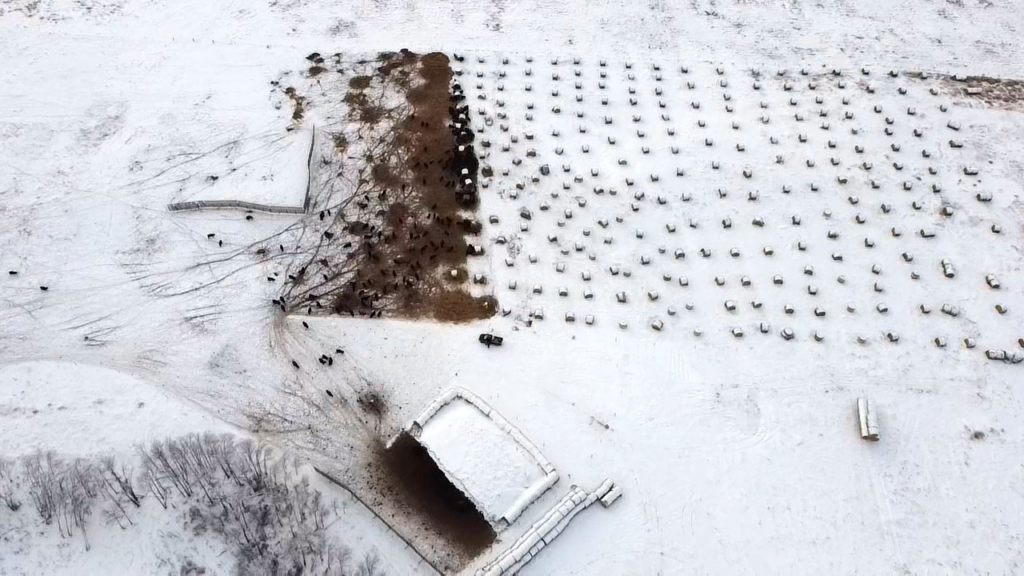
Aerial view of bale grazing and feeding silage in the field at Poplarview Stock Farm, photo provided by Trevor Atchison
Sharing or reprinting BCRC posts is welcome and encouraged. Please credit the Beef Cattle Research Council, provide the website address, www.BeefResearch.ca, and let us know you have chosen to share the article by emailing us at info@beefresearch.ca.
The BCRC is funded by a portion of the Canadian Beef Cattle Check-Off.
Your questions, comments and suggestions are welcome. Contact us directly or spark a public discussion by posting your thoughts below.
With winter rolling in across the Prairies and parts of Eastern Canada, you may be turning to extended grazing to help keep cattle out on pasture longer. Grazing standing corn has many benefits, including being a high-energy forage, but can also pose animal health risks if not managed properly.
Here are some tips to help you successfully manage standing corn for grazing.
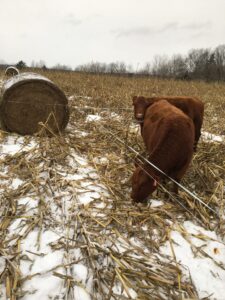
Photo from Nova Scotia beef producers Dean and Catherine Manning
EASE CATTLE INTO GRAZING CORN
If this is the first-time grazing corn, it may take some time for cattle to realize what they are supposed to do with the tall stalks. It is a good idea to slowly transition cattle from pasture to fall or winter corn grazing. Regardless of how familiar they are with grazing, the rumen takes time to adapt to the new feed source. One way to do this is to provide access to only a couple days’ worth of feed and also supply cattle with an alternative feed source such as a bale of hay to help them through the transition period.
LIMIT COWS TO 3-4 DAYS OF FEED
Inevitably, when cattle are turned out, they will eat the best (most palatable) parts of the plant first, which is the cob. If cows are allowed access too much corn, there can be problems with rumen acidosis. Research conducted at the Western Beef Development Centre in Saskatchewan suggests limiting cattle to three to four days’ worth of feed and providing a fibre source (low-quality hay or straw) to help mitigate the risk of acidosis.
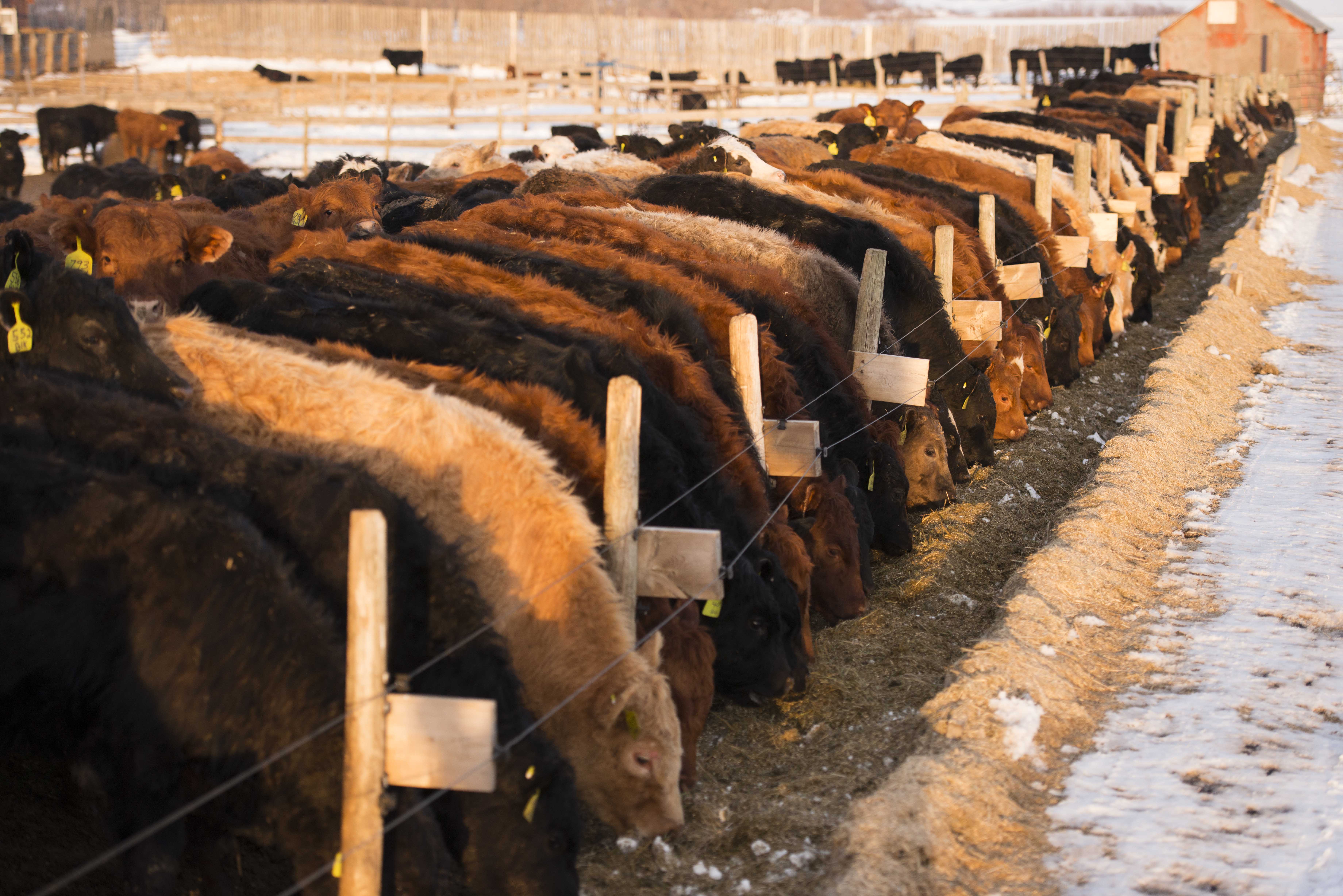
Strip grazing using electric fence provides a more uniform nutrient intake, reducing the risk of acidosis caused by cattle only eating high energy cobs, and utilization per acre is improved. This also reduces trampling and wastage.
PROTECT CATTLE FROM THE ELEMENTS
In years of heavy snowfall, cattle may have better access to standing corn compared to swathed crops under snow. Observations have also shown standing corn providing protection from the wind during inclement weather. Cattle can graze through the winter as long as they have access to water or loose snow and shelter.
FEED TEST, FEED TEST, FEED TEST
In most cases corn exceeds the nutrient requirements of cattle in the first two trimesters of pregnancy, but it is still important to feed test to determine if the cows’ requirements will be met by grazing corn alone or if additional supplementation (protein) should be provided. Testing corn for mycotoxins is also recommended. Since corn is grazed standing, it is recommended to do a feed and mycotoxin test a couple weeks before grazing so that it is a close representation of what the cattle will actually be grazing. Visit the BCRC’s Feed Quality, Testing & Analysis for Beef Cattle webpage for more information.
Read more about Eastern beef producers’ experience with corn grazing:
1. When using electric fence, rather than drill holes in frozen ground for posts, break the cobs off a corn stalk and slide a length of PVC pipe over top of the stalk, tying the wire to that.
2. Strategically plan paddocks so the herd can graze from the inside of the field outward and use the corn as a natural windbreak.
HAVE A PLAN B
Even with the best plans in place weather conditions such as too much snow, lack of frost or even too much rain can put an end to corn grazing. Make sure you have an alternative winter feed in case you are forced to pull cows from the corn early.
Thinking about next year?
pLAN aHEAD
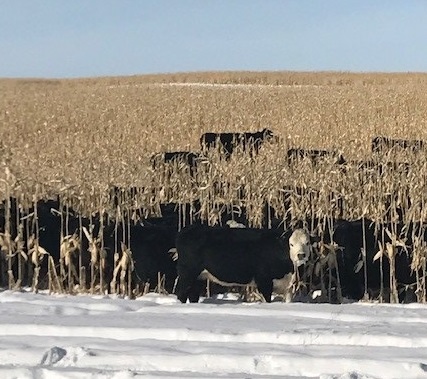
Photo from Saskatchewan beef producer Ryan Beierbach
Select an early-maturing variety that will match the Corn Heat Units (CHU) rating for your area to increase the chance of a high-yielding, high-quality corn crop.
Planting an early-maturing, silage-type corn variety for use in late-season grazing has great potential since the productivity is very high and the taller plant allows cattle to harvest the stand when the snow gets deep.
PLANT FOR SUCCESS
Choosing the right variety of corn is very important to ensure cattle don’t experience grain overload or acidosis. Learn more from this producer.
Read 10 Corn Planting Tips, which includes an overview of site and variety selection, seeding equipment, weed control and fertility.
Grazing corn can be seeded with an air seeder, air drill, row planter or conventional hoe drill. From Manitoba to British Columbia, the recommended seeding depth is 1.5-2 inches deep, preferably into moisture, at a soil temperature of at least 10 degrees Celsius. From Ontario to Prince Edward Island, the recommended seeding depth ranges from 1.5-3 inches deep. Row spacing of 30 inches is recommended.
LEARN MORE
For more tips on grazing corn plus an excellent overview of considerations when using extended grazing systems, view the BCRC webinar, Refining Corn Grazing Recommendations, presented by Dr. Bart Lardner. Highlights include understanding Corn Heat Units (22:48), agronomics of growing corn (23:55), grazing management (30:35) and research results (33:00).
Sharing or reprinting BCRC posts is welcome and encouraged. Please credit the Beef Cattle Research Council, provide the website address, www.BeefResearch.ca, and let us know you have chosen to share the article by emailing us at info@beefresearch.ca.
The BCRC is funded by a portion of the Canadian Beef Cattle Check-Off.
Your questions, comments and suggestions are welcome. Contact us directly or spark a public discussion by posting your thoughts below.
Two Farms "Right-Sized" Their Herds by Being Open to Change and Working in Sync with Nature
Editor’s note: This is the second in a two-part series on taking inventory of forage supplies and “right-sizing” a herd. Click to read Part One.
Every farm has a unique set of circumstances, resources and goals, but every farm should aim to make a profit. A key aspect of maximizing profit and maintaining stability is striking the right balance between cattle numbers and available forage.
Work in Sync with Nature
Well-known holistic management proponent Don Campbell says one of the best ways to manage forage supply and demand on a farm is to look at nature.
“It’s a great place to start – instead of trying to dominate nature, how can I cooperate and work with nature?” he asks.
“Your real power isn’t in your land or your grass or your cattle, your real power is in your mind.”
– Don Campbell, Saskatchewan beef producer
Campbell, who along with his family, runs a large grazing and beef operation near Meadow Lake, Saskatchewan, says the key to creating stability on their farm has been planned grazing. “I took a holistic management course in 1985 – that changed everything,” he explains, which prompted him to focus on profit rather than production.
Over the course of decades, Campbell’s ranch has sustained floods, droughts, and every condition in between. “The year before, we had a severe flood, we were underwater,” Don says, about 2020. “That was a major upset. The next year, 2021, was a drought,” he adds. “We had frost in May which is detrimental and heat in July and grasshoppers – things all went wrong at the same time,” Campbell explains.
“With planned grazing and better management, our land is resilient,” Don says, estimating they have tripled their capacity to grow grass since they changed their management in the mid-80’s.
The Campbells calve in May and June with a relatively short calving period which helps them achieve a uniform calf crop.
Calving in sync with nature achieves two goals, says Don. “One, you have a higher survival rate of offspring, and two, you have a higher breeding percentage in females,” he says. “We breed a lot of heifers and let nature select them. The ones that get bred are the best ones and fertile, and the ones that aren’t – sell them as yearlings,” Don suggests.
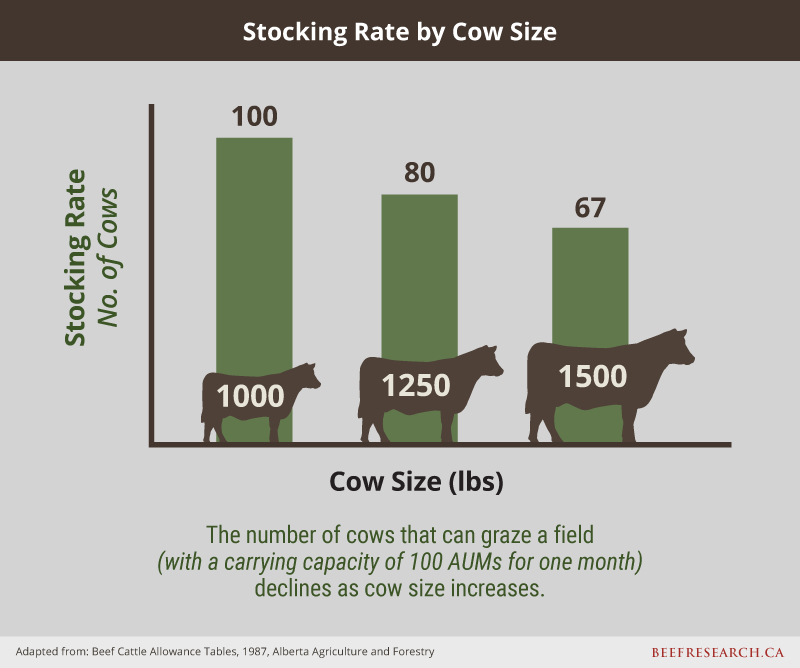
Adapting their cow size to match their grazing resources has been important for the Campbell family and they use their cattle as a tool to make a profit. “It takes a certain amount of nutrition and grass to run a cow,” he says, explaining that running a larger cow (for example, 1500-1800 lb) will end up meaning a producer can run fewer cows that eat the same amount of grass but have fewer calves to sell. “The calves may be somewhat heavier, but they are less profit per cow,” Campbell says. “If you right-size the cow, she takes less feed.
The Campbell family also grazes yearlings as a management strategy. “If you have a difficult year, the yearlings are flexible,” Don says, as they consume less grass than a cow-calf pair and they are quick to market if need be.
Campbell acknowledges that operating a ranch and challenging one’s paradigms is not easy, but producers should be encouraged to step up and take control of their business. “You can start calving anytime you want, and you control when you pull bulls out of the herd,” Don says. “Your real power isn’t in your land or your grass or your cattle, your real power is in your mind,” he adds.
Pondering the idea of balancing forage supply and demand, Don shares a favourite quote from cattle handling icon Bud Williams: “In the cattle business, there’s grass, there’s money, and there’s cattle. You can never have too much grass, you can never have too much money, but you can have too many cattle.”
Learn to be Fluid
Terri and Brad Mappin run Lazy M Bar Ranch in Stettler County, Alberta, along with their two sons. Their philosophy is to move towards making life easier with cattle.
The Mappins transitioned to calving in May and June when their kids were still young. They traditionally backgrounded their calves with the target of selling them in the spring on the grass market. “In 2020, when COVID hit, the grass market kind of fell out,” Terri says. They responded by switching gears to grass the yearlings themselves.
Brad & Terri Mappin took the opportunity to start grassing their own yearlings and now value the practice as a flexible strategy to help manage their grass. Photo courtesy of Terri Mappin.
With some quick thinking and cover crops, they grazed their yearlings on a cocktail mix that contained oats, canola and chicory, which got them through to September.
“The yearlings gave us adaptability, we had always talked about grassing them through but had never done it,” she says. “Keeping the yearlings has pushed the paradigm and made us think differently.” This past spring, when conditions were dry, they were prepared to market the grass cattle if it didn’t rain by a certain date.
Being adaptable has served the Mappin family well given they’ve experienced many climate curveballs in recent years, including drought, dwindling stock water supplies and hail storms.
Terri uses portable fencing to create stock water alleyways for grazing paddocks. Photo courtesy of Terri Mappin.
I’ve always rotationally grazed cows to some extent whether it’s been splitting a field in half or quarters or whatever,” explains Terri. “With the drought, I’ve upped the ante on that which gives the grass more rest time which results in more grass,” she says. They’ve also started using more relay blends to complement winter cereals which fill gaps in their forage supply. “We’ve always done fall and winter cereals, they take advantage of snow if you get it or moisture in the fall and winter,” she says.
Brad and Terri have developed additional dugouts, invested in more solar water systems, and strategically fenced grazing paddocks to make things work from a stock-water standpoint. They rely on alleyways and electric fences to create pathways to water. “It doesn’t hurt cattle to walk to water,” says Terri.
“We have tried bale grazing and loved it,” says Terri Mappin, who adds that the soil benefits have been long-lasting. Photo courtesy of Terri Mappin.
This year, they had to pivot again when their triticale/sweet clover swath grazing mix was wiped out by hail. “The swath grazing was intended for cows but after the hail, we put it into a silage pile,” she explains. They plan to feed the silage right out in the field by limiting access using electric fence.
At a time when mixed farmers seem to be trending away from forage, Mappins are bucking the trend. “Brad loves to run numbers, and with input prices, it kind of got to the point where either we go all in grain or we try and figure out a different way and we’re going a different way,” says Terri. “If we can minimize our costs by grazing more and for longer, we feel there is an opportunity.
Brad says they are part of a grazing club and get together to look at different operations. “If you talk to other people, there are so many other ideas and different ways of doing things,” he says. “That’s such a key going forward in the cattle industry,” Brad says. “You have to learn how to be fluid, you can’t hang on to the ways we’ve always done things.”
Sharing or reprinting BCRC posts is welcome and encouraged. Please credit the Beef Cattle Research Council, provide the website address, www.BeefResearch.ca, and let us know you have chosen to share the article by emailing us at info@beefresearch.ca.
The BCRC is funded by a portion of the Canadian Beef Cattle Check-Off.
Your questions, comments and suggestions are welcome. Contact us directly or spark a public discussion by posting your thoughts below.
Taking Inventory of Feed Resources – How to Right-Size Your Cow Herd
Editor’s note: The following ispart one of a two-part series. Stay tuned for the next instalment with a focus on how producers worked to right-size their herds — and cows — on their farms.
While feed costs have come down some this summer, hay prices remain at historically high levels and have been trending higher in many regions over the last ten years. Current market signals are encouraging producers to “right-size” their cow herd to minimize winter feed and rely on grazing as much as possible. But this is not a “one size fits all” conversation. In fact, there are a couple of ways that producers can accomplish matching their herd to their feed resources.
What is the right number of cows for your farm?
There are several reasons an operation may choose to scale back its herd size. Drought recovery may require fewer animals to avoid overgrazing. Abundant rain may have increased forage production to support a larger herd at one time, however the increased grazing capacity may no longer be present now or in the foreseeable future. Winter feed challenges, either with feed availability or capacity to harvest it, can result in a change in production system. Or adjusting may be due to the desire to reduce labour required for harvesting forage and winter feeding.
A Production System is the set-up of the farm which is engaged in producing beef cattle. It is how resources are put together and converted into a product, specifically a weaned calf, feeder or fed cattle. It includes:
calving date
weaning date
winter feed ration
winter feeding days
housing
The first thing to do is a thorough assessment of forage resources. The ability of a pasture or hayland to produce forage is measured in Animal Unit Months (AUMs). The ranch’s ability to produce forage may stay relatively constant, but how that forage is used can vary significantly. For example, using information from the Canadian Cow-Calf Cost of Production Network (COP Network), for most western Canadian cow-calf operations, if the cow herd was decreased by 10%, grazing days could be increased by 10%. (Notable exceptions occurred in the east as this relationship did not hold).
The impact of increasing grazing days and reducing winter feed days will vary by production system but can have a proportionately larger impact on operations with high feed costs per head per day. Examples of such farms might be those that rely on purchased feed to supplement homegrown production or that have high cost structures (for example, machinery or unpaid labour) that contribute to the cost of homegrown feed or sourcing feed. If feed supplies are going to be tight this winter, producers may be taking a hard look at what cows could be culled to stretch feed resources.
When considering the right number of cows for an operation, there are trade-offs with economies of scale that producers face. When winter feed is relatively cheap, the incentive can be to expand the herd. In this case, more cows mean less overall available grazing days for the herd (assuming land base and carrying capacity remain steady) and result in more days that the herd is being fed. This does reduce overhead costs per cow by spreading total costs over more animals. In contrast, a smaller herd results in overhead costs being spread over fewer animals, increasing costs per cow or per pound of calf weaned. Producers must carefully evaluate the trade-offs between lower winter feed costs and the impact on the operation through reduced economies of scale.
What is the right size of cow for your farm?
Another way of looking at this question is not about the number of cows that overhead costs can be spread over, but rather the mature cow weight.
The COP Network found that the top third most profitable farms had mature cow weights that were 30 pounds lighter than the medium third group and 45 pounds lighter than the lowest third. Culling not just the oldest cows, but the heaviest cows, has the potential to support future profitability on the operation. Heavier cows eat more per day than a lighter-weight cow, and therefore by reducing mature cow weight, forage resources can be saved not by reducing winter feeding days but by how much feed is consumed per day.
Selecting smaller framed cows is usually a longer process, as it takes time to change the entire herd. One of the considerations is how this will impact weaning weights and overall revenue.
The COP Network found that those top third most profitable farms had weaning weights that were actually four pounds heavier than the medium third group and 17 pounds lighter than farmers in the lowest third of profitability. So, while the mature cow weight was different enough to make an impact on winter feed requirements, the difference in weaning weight was not as directly impacted. Year-to-year fluctuations in weaning weight were likely impacted more by genetics, pasture conditions and forage availability than cow size. This selection of smaller, more efficient cows that require less feed or forage per day can have a big impact over the long-term.
Producers should assess their long-term forage and feed resources, as well as take a hard look at their existing herd, considering how cow size factors into cost management, feed use and weaning weights. This information can be invaluable when deciding what size of herd — or cow — makes the most sense for them.
Sharing or reprinting BCRC posts is welcome and encouraged. Please credit the Beef Cattle Research Council, provide the website address, www.BeefResearch.ca, and let us know you have chosen to share the article by emailing us at info@beefresearch.ca.
The BCRC is funded by a portion of the Canadian Beef Cattle Check-Off.
Your questions, comments and suggestions are welcome. Contact us directly or spark a public discussion by posting your thoughts below.
Strategies for Fall and Winter Grazing: Eastern Canadian Perspectives 🎙️
Editor’s note: To support current extension initiatives and provide enhanced resources, the Beef Cattle Research Council has increased collaboration and delivery of extension content that reflects the production practices and needs of Eastern Canadian beef producers. This post is part of an ongoing series of content delivery. Suggestions, ideas and comments are always welcome.
Photo provided by Québec beef producers Jacob Morin and Rosemarie Allen
As we move into late summer, planning ahead for the coming fall and winter months is always time well spent, especially when considering the nutritional needs of the beef herd. Winter feeding can be costly and labour-intensive work.
Extending the grazing season is one way to minimize reliance on stored feeds and reduce yardage costs and labour. Depending on your unique situation, this type of management system may take on various forms. Stockpiled perennial forages, annual forages (including cover crops), crop residues and bale grazing are all options that may work on your operation.
The following producer profiles highlight some of the ways these strategies have been successfully implemented in Eastern Canada.
Manning Family Farm – Falmouth, Nova Scotia
Cover crop and corn grazing
The Manning Family Farm is located near Falmouth, Nova Scotia, and is operated by Dean and Catherine Manning and their family. They run an 80-head cow herd with split calving seasons in the late spring and early fall; they also grow field crops and vegetables. A goal on their farm is to maximize biodiversity and sustainability.
Part of their commitment to sustainable beef production is through extending their grazing season. They have been grazing stockpiled forage and standing corn for several years and this past winter experimented with grazing a cover crop cocktail mix. Cover crops are often grown for agronomic reasons—they hold on to soil, improve water infiltration and reduce runoff. However, they also provide a valuable feed source for grazing livestock, and including grazing animals in the system can help further improve the soil.
Photo provided by Nova Scotia beef producers Dean and Catherine Manning
In 2021, the Mannings’ cover crop was seeded mid-August onto an 11-acre field after a crop of winter rye was harvested. The mix included fall rye (36%), Austrian winter peas (20%), hairy vetch (12%), crimson clover (10%), turnips (5%), forage kale (5%), berseem clover (5%), Nitro radish (2%), sunflowers (2%), Vivant hybrid brassica (2%) and phacelia (1%). This cocktail mix was chosen to maximize diversity within the stand.
Fifty bred heifers were turned into the field on December 2, with an average weight of 1,200 pounds. Dean reported it took approximately one week for the cows to learn how to eat the roots of the radishes and turnips.
Another benefit of grazing cover crops is annuals will usually be higher quality than what is typically available as stockpiled pasture. “I knew the feed had to be pretty good . . . they didn’t mind looking for feed in the snow,” Dean remarked. Forage samples showed 15.5% crude protein and 71% total digestible nutrient levels. There was approximately 7,300 pounds of dry matter/acre available which included both the above-ground leafy material and the turnip and radish roots. This resulted in approximately three weeks worth of grazing; the herd was able to graze the cover crop until late December. Dean reported that weeds were not a concern, likely due to the time of planting.
Photo provided by Dean and Catherine Manning
Corn grazing is another opportunity that the Mannings use to graze cattle throughout the winter. After the cattle had finished grazing cover crops this past winter, they were moved to a nearby piece of land where silage corn had been grown for the purpose of winter grazing.
The cows strip-grazed through the field and were allowed controlled access to rows of corn. Acidosis can be a concern if cows are allowed access to too much corn at once as they will selectively eat the cobs and get insufficient fibre. To mitigate this, the Mannings fed bales of hay in addition to the standing corn—at least half of the total diet. Controlled access also improved manure distribution and allowed for more uniform animal impact to trample stalks. On previous corn grazing locations, the area was replanted with a forage mix and used for harvested forage and stockpiling. This year they planted corn and brassicas where the cover crop had been grazed.
Over time, Dean is interested in seeing how winter grazing affects soil quality and continues to contribute to the sustainability of their farm. The farm meets the certified sustainable beef standards as outlined by the Canadian Roundtable for Sustainable Beef through the Verified Beef Production Plus program. The Mannings were the recipients of the Canadian Cattle Association Environmental Stewardship Award for 2021 and Nova Scotia’s Provincial Farm Environmental Stewardship Award in 2010.
Québec beef producers Jacob Morin and Rosemarie Allen
Le Paysan Gourmand – Saint-Félix-de-Kingsey, Québec
Stockpiled, corn and bale grazing
Le Paysan Gourmand is a family farm located 20 minutes from Drummondville, Québec and is run by Jacob Morin and Rosemarie Allen and their young family. They have 80 black Angus cow-calf pairs that are grazed year-round on their 300-acre farm and neighbouring cropland. In addition, they also raise pastured pork and run a market garden. Three years ago, they took over the family farm after farming alongside Jacob’s parents.
They finish their cattle on farm and sell half of their product direct to consumer as grass-fed beef and the other half to a retailer in Montreal. They also sell purebred black Angus heifers and bulls that have been proven for grass-based systems. In the past, they have had Salers and Simmental as well but feel that the smaller frame size and large rumen capacity of Angus works well for their operation.
Their motivations to keep cattle outdoors year-round include improved animal health and increased profit margins, in addition to environmental sustainability. The barn on their property is an old dairy barn “with terrible ventilation,” Jacob says. They also see reduced costs by not operating their tractor while cattle are grazing corn, including no need to spread manure or haul bales. When bale grazing, they primarily buy in all their bales and have them delivered directly to the grazing site. On occasion when they do bale their own forage, they select fields which are nearby the chosen grazing site to reduce the hauling distance. This year they are growing corn on the site of last winter’s bale grazing which will reduce or eliminate the need for fertilizer.
Photo provided by Jacob Morin and Rosemarie Allen
Photo provided by Jacob Morin and Rosemarie Allen
After the growing season, dry cows are grazed on stockpiled pasture before being moved to corn residue on a neighbour’s property. From around Christmas to early-mid February, they are moved to standing corn and finally, bale grazing until mid-April when they go to calving pastures. In the calving pastures, the cows are fed bales on the ground every other day. As they calve, they are moved to their regular pasture where they are rotationally grazed throughout the growing season. Calving season lasts from the end of April until early July. To address any challenges with mud the family is building a high-density wintering yard with a bed pack on sand where the cattle can be moved in the event of thaws, although they expect that good rotations should limit the use of it.
This year, they are working on installing permanent, energy-free winter watering systems across the farm to allow better access to winter water, in the event that there is not enough snow available to satisfy the animals’ requirements and to reduce the distance animals currently have to walk to water. They are also aiming to directly market more of their beef and increase the number of breeding bulls being sold.
Jacob stresses the importance of having the correct herd genetics to graze year-round. He suggests that producers purchasing bulls should think about the goals of their operation and look for bulls from farms that share the same values and production systems. He encourages visiting the farms before buying bulls, if possible. In addition to this, he also suggests that producers shouldn’t be afraid to cull cows that aren’t performing for them.
Beef producer Rosemarie Allen on her Québecfamily farm, Le PaysanGourmand
“If they aren’t working for you, they end up costing you money compared to selling them, Jacob says. “They are taking the place of a cow that would work better for your situation.” For their system, they require their cows to breed back and raise a calf every year.
Variable weather is a challenge that the Morin family encounters; sometimes the snow comes earlier than expected or frost comes later. When grazing corn residue on neighbouring cropland they wait until after the ground is frozen to prevent damage to the field. Jacob says, “It’s a matter of being observant and adaptable and that every year is a learning experience; it’s all part of the process.”
For more information about fall and winter grazing options, visit the BCRC’s recently updatedExtended Grazing topic page.
This post was developed in collaboration and with the expertise of staff at Perennia Food and Agriculture, based in Nova Scotia.
Sharing or reprinting BCRC posts is welcome and encouraged. Please credit the Beef Cattle Research Council, provide the website address, www.BeefResearch.ca, and let us know you have chosen to share the article by emailing us at info@beefresearch.ca.
The BCRC is funded by a portion of the Canadian Beef Cattle Check-Off.
Your questions, comments and suggestions are welcome. Contact us directly or spark a public discussion by posting your thoughts below.
Bale Feeding Options: Pros and Cons of Common Strategies 🎙️
Bale feeding is common across Canada for all classes of cattle especially during winter months. There are many different management strategies to deliver bales as feed. To help you determine the best option for you and your cattle, see below for pros and cons of three common bale feeding strategies:
Rolling out bales/using a bale processor and feeding on pasture
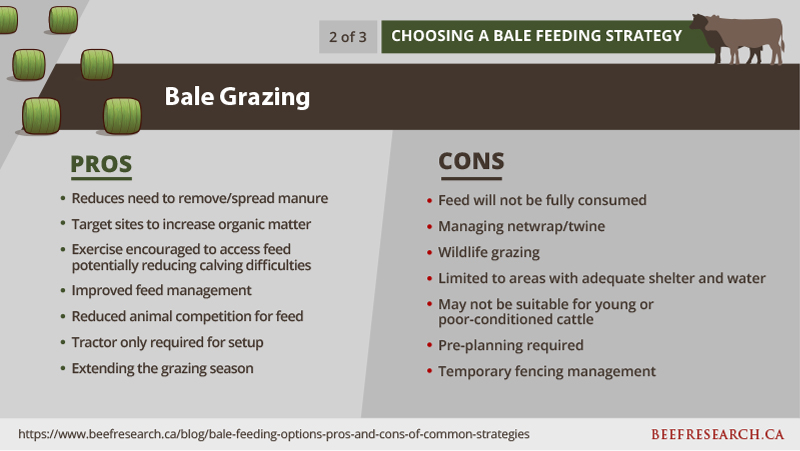
Bale grazing
Round feeder
When thinking about each strategy for your operation, consider the following: What are the nutritional requirements of your cattle? What is the nutritional quality of your forage? What equipment do you currently have? What equipment do you need? How much time do you have to dedicate to feed management?
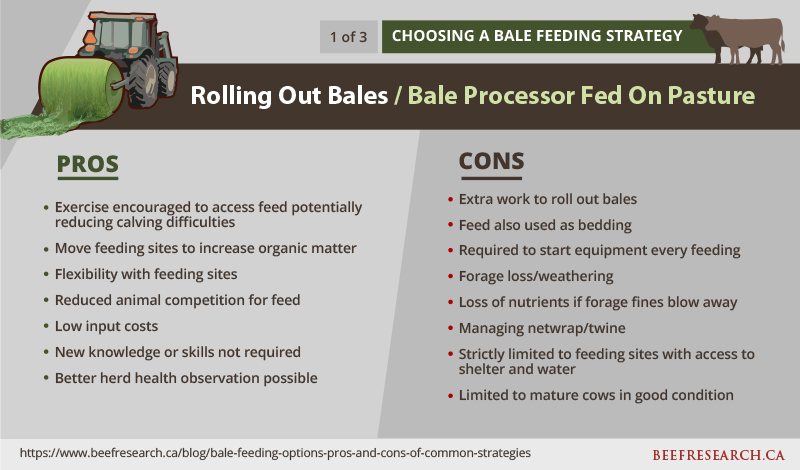
Rolling out bales/bale processor fed on pasture
Pros
Cattle are required to travel more for feed, encouraging exercise which may result in less calving difficulties
Opportunity to move feeding location which allows manure to be deposited more evenly, reducing manure management costs, and targeting areas that would benefit from nutrient deposition
Flexibility with feeding sites
Reduced competition due to increased access to feed
Low input cost. Equipment required is likely equipment already on farm
Doesn’t require a lot of new knowledge or skills to implement
Opportunity to monitor cow health before/during/after feeding as you are amongst the herd almost daily
Cons
Extra work to roll out bales rather than having them free-standing or in a feeder
Cattle will eat some high-quality feed and use the rest as bedding. While this provides organic matter to the soil, in years when feed availability is low and cost is high, it is a significant loss. (This loss can be remedied by portable bunks)
Required to start equipment every feeding
Winter conditions can cause forage loss/weathering
Overprocessing (i.e. bale processor) can cause loss of nutrients if forage fines blow away
Managing netwrap/twine is time consuming and can be difficult on equipment and cattle
Site options are strictly limited to locations with proper shelter and stock water (or adequate snow cover)
Limited to mature cows in good condition
Bale grazing
Pros
Reduces or eliminates the need to remove/spread manure
Can target sites to increase organic matter in areas that would most benefit in increased forage production
Depending on size of grazing area, cattle may be required to travel more for feed, encouraging exercise which may result in less calving difficulties
Feed testing is used to improve feed management
More cattle can access feed at a time compared to rolling bales or using bale feeders
Only requires a tractor once to set up fields, daily/weekly chores consist of moving fences
Cattle won’t fully clean up feed. While this provides organic matter to the soil, in years when feed availability is low and cost is high, you want to minimize this loss
Managing netwrap or twine needs to be a priority
There may be losses due to wildlife grazing
Sites strictly limited to areas with adequate shelter & water
May not be suitable for young or poor-conditioned cattle
Requires pre-planning to set up sites prior to winter feeding period
Temporary-fencing management is required
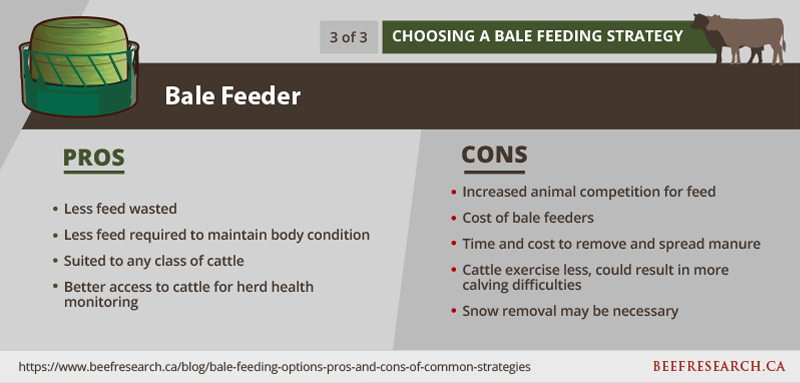
Round feeder
Pros
Cattle consume majority of the feed, leave less behind (“wasting” less)
Lower cost than bale processing or rolling bales out due to reduced waste
Less feed to maintain fat cover if hay has adequate nutrient density, as cattle are usually maximizing intake of what is fed
Suited to any cattle class
Easy access to cattle for monitoring or treating illnesses
Cons
Cattle have limited access to feed based on available bunk space which can increase competition among animals
Cost of bale feeders
Required to start a feed truck/tractor for every feeding
Increased time and financial cost to remove and spread manure if not moving feeding sites
Cattle exercise less to consume feed, which can contribute to calving difficulties
Snow removal may be necessary to support regular feeding activities
The sharing or reprinting of BCRC articles is welcome and encouraged. Please provide acknowledgement to the Beef Cattle Research Council, list the website address, www.BeefResearch.ca, and let us know you chose to share the article by emailing us at info@beefresearch.ca.
We welcome your questions, comments and suggestions. Contact us directly or generate public discussion by posting your thoughts below.
Bale Grazing Checks the Boxes for Three Canadian Producers🎙️
Editor’s note: The following is the final instalment of atwo-part series that will help you to evaluate different considerations for bale grazing across Canada. Click here to read part one.
Beef farmers everywhere are looking to reduce costs, decrease their workload, and improve the carrying capacity of their pastures. Bale grazing is a production practice that can help.
There is a learning curve with any grazing method, especially when it’s planned for winter, arguably one of the most unpredictable seasons. Three producers across Canada share their experiences with bale grazing, provide their top tips, and explain why extending the winter grazing period has been a game changer on their farms.
John Duynisveld, Wallace, Nova Scotia
John Duynisveld operates a beef and sheep farm on 250 acres of pasture land on the north shore of Nova Scotia. He calves his herd of 25 to 30 cattle in May and June, and markets his grass-finished beef directly to consumers.
John says they started doing things differently on their farm after his dad attended a grazing seminar more than 30 years ago. Later, when he was working on his Master’s degree, grazing management became a big focus once again. “As you delve into more ways of trying to extend your pasture and ways to be more cost effective and labour efficient, bale grazing becomes sort of an obvious choice,” he says. They’ve been bale grazing for 20 years and purchase dry hay from a neighbour who sets the bales up in the field for Duynisveld.
“We lay the bales out in a strip 25 feet apart in one direction and 80 feet apart in the other,” John explains. He uses electric fence to restrict cattle movement and typically moves them twice a week. “We choose fields that aren’t overly steep and have a heavy soil that is good for binding nutrients.” He adds that they move the strips where bales are placed each year and over time the pasture has demonstrated uniform fertility and growth.
Shifting away from barn feeding created a few pleasant surprises, including how clean his cattle stay while bale grazing outside of confinement. “I think it reflects well on the cattle’s natural ability,” he says, adding that cattle are fairly resilient. “One year we had about four feet of snow in the fields that we were bale grazing and it still worked,” John remarks. Only the tops of the bales were visible and John used an axe to open up the bales but the cattle continued grazing.
Excess moisture can be a challenge, so John ensures bales are placed on the round sides rather than the flat end. He removes netwrap at that time as well. “If bales are on the flat end, they act like a sponge and soak up moisture, turning into a block of ice,” he explains. He finds bale grazing helps mitigate mud problems during spring thaw and the fall period. “If you’ve done a good job on pasture management prior, you have a pretty good sod,” he says, adding that giving his herd springtime access to areas they’ve already bale grazed also helps combat mud. “I’m surprised that more people don’t do it,” John concludes.
Top Tips
Use narrow strips to quickly set up paddocks. “Long, narrow strips give you flexibility for grazing or bale grazing,” John says. They use strips that tend to be 50 meters to 100 meters wide.
Set up at least one extra wire (move) in advance. John’s farm sometimes receives a heavy snow right around the freezing mark that will stick to poly wire, dragging it to the ground. “If you have one to two wires set up ahead and they do break in, they only have access to that,” John adds.
Stick fibreglass fence posts into the next row of bales, which eliminates the issue of pounding posts in frozen ground.
John & Deanne Chuiko, St. Walburg, Saskatchewan
In order to avoid problems with pounding posts in frozen ground, Duynisveld builds fence with fibreglass posts inserted in the next row of bales. Photo: Deanne Chuiko.
“We started bale grazing to cut down on our workload,” says John Chuiko, explaining the motivation behind first implementing the practice on their farm 15 years ago. John and Deanne operate a 350 head cow-calf and long yearling operation, with calving taking place in May and June. They say bale grazing has helped them work as closely to nature as possible. “Yardage costs go down and it’s amazing what it does for our perennial pastures and for our soil and grass volume,” he adds.
The Chuikos purchase their feed and set up enough bales in each pod to provide 20 days of grazing for their cattle. “All of our feed is weighed coming in so we know exactly how many pounds of forage is out there and how much our herd needs daily so we know how many days our pods should last,” Deanne explains, but adds that it isn’t a hard and fast rule. They use feed test results to help them build their pods, adding in greenfeed and hay of differing quality, depending on what they’ve purchased for that year. They use temporary electric fence to restrict access if their pods contain more than 20 days worth of feed.
The Chuikos set up bale pods in specific areas that need improvement. “With our planned grazing system we keep track of our grazing days in the summer time. We’re in our pastures every day and we know where we need to add the nutrients and where we need fertility,” Deanne says.
Photos: Deanne Chuiko
They have found bale grazing works with all types of cattle including bulls, market cows, yearlings and cow-calf pairs, as long as they have access to adequate shelter and water. They rely on natural shelter and point out that by placing bales 38 feet apart, that acts as a windbreak as well. “We keep our calves on a lot longer now until late March so our cow herd will always have access to water when calves are on them,” John says. They work closely with their vet to ensure they are meeting the needs of their herd.
The Chuiko herd is grazing in a bale pod. Photo: Chuiko family.
A challenge they need to work around is wildlife, particularly dealing with bale damage from elk herds. “I would love to put all of the hay out where I want to in October and get the net and twine off and be done, but that’s leaving too much risk,” John explains. They instead plan to first graze pods that are at greatest risk for elk damage or will wait to place bales on susceptible ground until it’s closer to grazing time.
John and Deanne are clear that there is no “one size fits all” to planned grazing and bale grazing. “There’s no recipe to follow that I see,” John says. “Play around with it, see what works for you.”
Top Tips
“We’ll take the tractor and plow a snow ridge and I’ll build the fence in the hardened snow ridge,” Deanne says, when they need to use electric fence to split up a pod.
Remove netwrap and twine before it freezes to save time. Last year the Chuikos hired students who removed netwrap from 800 bales in a single afternoon.
Bale grazing can help manage brush encroachment. “The cows did a nice number on them,” Deanne says, explaining how a bale grazing experiment worked in an area that was becoming overgrown with brush.
Hans Myhre, Dauphin, Manitoba
Hans Myhre runs a commercial and purebred Charolais operation near Riding Mountain National Park in Manitoba. For the past 15 years, he has used bale grazing for part or all of the winter as a cost saving measure.
“I started looking at practices that could save winter costs,” Hans says. “When you figure it out, winter feeding is the biggest expense in the operation, so anything we could do to trim that is helpful,” he continues. He soon found the improvements were not limited to his bottom line. “As we went along you started to see the benefits to the land,” he explains, and adds that increased grazing capacity was obvious soon after implementation.
The Myhre family has used some form of bale grazing for the past fifteen years. Photo: Hans Myhre.
Over time, his extended grazing system has shifted and evolved. For example, when they first started, Hans only allowed cattle access to three or four days of feed, whereas now they allow their herd up to a month’s worth at a time. “If it is going to be more than a month’s [supply of] feed, we will select an extra site or put a temporary fence in,” he says.
They rotate their sites each winter, choosing places that will benefit from a fertility boost as well as areas that will provide shelter for his cows and herd bulls. “We look for sites that can provide natural shelter for cattle to get into,” Hans explains. Wind exposure is a challenge on his farm and while Hans would like to place bales on some sites, he avoids areas that are too exposed to west winds.
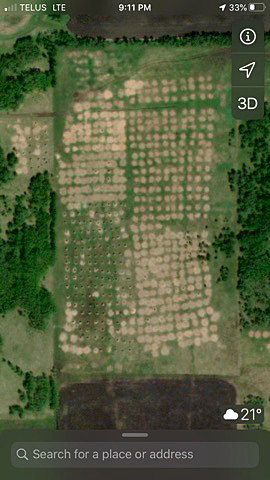
This Google Earth image demonstrates the residue and ground cover of bale grazing on Myhre’s farm. Photo: Myhre family.
While they have used hay, Myhre primarily purchases bales of grass seed production by-products from timothy, rye grass or fescue. “It’s a lot cheaper than hay so you don’t worry about the waste so much,” Hans says and adds the extra residue cattle leave behind actually creates more improvement to the pasture. He tries to create a balanced ration by bale grazing and will incorporate low quality feed and supplement with silage or grain if needed. “Don’t think that you have to use high quality feed to do it. So-called waste might be higher on low quality stuff but the benefits you leave behind are higher with more residue,” Hans says. “It’s really surprising how much fertility and water holding capacity you can add into your pastures just by leaving all that residue,” Hans adds.
Top Tips
When possible, buy bales that are bound with sisal string, which is a natural twine that will break down on its own over time. “I’d rather pay an extra $1 a bale for sisal string than find someone to pay a dollar a bale to remove it,” Hans says.
Place your bales in late summer or early fall. “We have ours set up now already and that hasn’t always happened,” Hans explains. “Sometimes we’ve had to plow through several feet of snow. It doesn’t make it impossible but it would increase your cost for one thing,” he adds.
Myhre suggests setting bales out for grazing in late summer or early fall. Photo: Hans Myhre.
Producers continue to discover new ways of incorporating bale grazing as a method to reduce expenses, improve forage stands, and extend grazing. Like any system, there is no right way or wrong way to bale graze and practical experience will shape how extended grazing works in the future.
Click here tosubscribeto the BCRC Blog and receive email notifications when new content is posted.
The sharing or reprinting of BCRC Blog articles is welcome and encouraged. Please provide acknowledgement to the Beef Cattle Research Council, list the website address, www.BeefResearch.ca, and let us know you chose to share the article by emailing us at info@beefresearch.ca.
We welcome your questions, comments and suggestions. Contact us directly or generate public discussion by posting your thoughts below.
Beat Costs and Boost Yields with Bale Grazing 🎙️
Editor’s note: The following is part one of a two-part series to help evaluate different considerations for bale grazing across Canada. Click here to read part two.
Many Canadian producers have taken steps to extend their grazing period and provide forage for cattle outside of confinement and away from corrals. Well planned extensive wintering systems have obvious benefits for reducing on-farm labour and yardage costs, but extended grazing also has environmental advantages for nutrient management and potential forage yield improvements.
Bale grazing enables producers to keep cattle away from confinement, depositing manure and nutrients on the landscape, rather than in the corral. Photo courtesy of Hans Myhre.
Different methods of extended winter grazing may include annual forages for swath grazing, corn grazing, and grazing crop residue or cereals. Perennial forages can also be stockpiled for later grazing.
Bale grazing is another method of extensive wintering that is proving popular with farmers. Cattle graze bales on pastures and hay fields, typically through controlled access by electric fence. Bales can be purchased or grown on-farm and placed strategically in cells or “bale pods.” In some cases, cattle feed on bales directly where they are dropped from the baler but in most situations, bales are placed on pre-selected sites that need additional fertility or are located adjacent to stock water or natural or man-made shelter.
Producers typically set bales on their round sides, 35 to 40 feet apart, and remove twine or netwrap prior to allowing cattle access to the area. Some farmers try to source bales that are wrapped in sisal twine, which breaks down over time making follow-up twine management easy.
When producers place bales, they are importing nutrients onto a site not just from the forage itself but also from the urine and manure of grazing cattle. This reduces manure handling and hauling costs and also allows farmers to target areas in need of soil improvements. Any residual forage left ungrazed after cattle have moved to the next area isn’t a waste, but rather a source of nutrients for subsequent forage crops, litter to help increase water holding capacity and water infiltration of the soil, and a forage species seedbank.
The number of days producers choose to allow their cattle access to a pod of bales will depend on how many bales are placed, quality of the feed, body condition score of the cattle, weather, and the farmer’s personal goals and management style. Some producers will move cattle every two to five days, while other producers will allow cattle access for 20 or 30 days of feed at a time, or even longer.
The fertility and forage yield benefits from bale grazing are apparent for several years after bale grazing occurs on a site. Photo courtesy of Deanne Chuiko.
It’s important to feed test and weigh bales placed in grazing areas to ensure cattle have a relatively level plane of nutrition and avoid a “rumen roller coaster” caused by too much or too little feed. Producers may use hay, greenfeed, or even straw with supplementation, however feed testing is the key to ensuring a balanced ration is achieved and potential toxicity issues are avoided.
Bale grazing can improve perennial pastures and even be used to reduce brush encroachment; however, it is not suited for all sites. Avoid placing bales on environmentally sensitive sites such as wetlands or creeks. Do not bale graze on native rangeland to prevent introduction of invasive or weedy species that can upset the balance of natural biodiversity or reduce the overall ecological integrity of a site.
Bale grazing was used on this site to help reduce brush encroachment. Bales were grazed in winter, then site was grazed the following growing season during a planned rotation. Photo courtesy of Deanne Chuiko.
Monitor snow conditions closely. Snow should not be used as the sole water source for lactating cows, freshly weaned calves, or cattle with a body condition score of 2.5 or lower. A dwindling snow pack can cause animals’ stock water demands to spike, even when other water is available. Excess snow can cause cattle to expend extra energy to access feed, something that should be avoided for cattle groups that require higher levels of management such as calves, young cows, or thin cattle.
It’s always important to have a back-up plan with any extensive wintering system and bale grazing is no different. A prolonged harsh winter can increase the need for additional shelter and better-quality forage or supplementation for animals in any condition. Producers must manage and closely monitor cattle to ensure they stay healthy, remain in good body condition, and have access to forage that is of adequate quality, as well as access to water and shelter.
Producers are finding forage management success and cost savings by trying new methods of extensive wintering, but like any beef cattle production practice, bale grazing requires planning and management. Stay tuned for part two in the series that covers producer experiences and top tips for bale grazing from different regions across Canada.
Click here tosubscribeto the BCRC Blog and receive email notifications when new content is posted.
The sharing or reprinting of BCRC Blog articles is welcome and encouraged. Please provide acknowledgement to the Beef Cattle Research Council, list the website address, www.BeefResearch.ca, and let us know you chose to share the article by emailing us at info@beefresearch.ca.
We welcome your questions, comments and suggestions. Contact us directly or generate public discussion by posting your thoughts below.
Meet the Council: Implementing Management Practices that Pay Off
The Beef Cattle Research Council (BCRC) is made up of producer members from across Canada, representing and appointed by each of the provincial beef organizations that allocate part of the Canadian Beef Cattle Check-Off to research. The number of members from each province is proportional to the amount of provincial allocation to research.
The following is part two in a series to introduce you to this group of innovative thinkers that set BCRC’s direction by sharing practices, strategies, or technologies that they have integrated into their own operations. Read part one of this series.
Conditions and circumstances across the country may vary but these three beef producers have found value in adjusting common management practices to work successfully on their operation.
Utilizing Different Calving Seasons
Fred Lozeman – Alberta
Fred and his family own and operate a mixed farm near Claresholm, Alberta at the base of the Porcupine Hills. Along with a spring and fall calving herd they operate a feedlot, finishing their own calves, as well as around 1,500 head of purchased cattle. They also grow most of the feed required for the feedlot and cow-calf operation.
The spring calving herd is managed very extensively. They combine cattle with a neighbour who manages the whole herd on pasture in the Porcupine Hills. The fall calving herd is managed at home on pasture along with oat-based swaths and corn grazing. If needed, a total mixed ration (TMR) supplement is provided which is possible since these cows are located near the yard site. Fred does point out that managing a fall calving herd is much more hands on but it has worked for them as it allows them to split their labour as well as have animals finished in March and April which gives them access to a different market.
Lozeman notes that the body condition of the fall calving herd does seem to fluctuate more than the spring herd. Since cows are often on green lush pasture when they aren’t supporting a calf, Fred finds that they gain weight easily but because they are in calf and lactating during the cold winter months they often lose condition during that time period. He attributes these seasonal changes in condition to the reason that the cows in the fall calving herd on average get culled sooner than those in the spring calving herd.
Having the ability to follow calves all the way through to the packer has provided Fred with some unique opportunities to base his cow herd culling decisions. When carcass reports are received, each animal is ranked in order of gross revenue (a combination of carcass weight, yield and quality) and that ranking is attributed to the cow. The cow receives a ranking based on the sum of all of her calves. For example, if a cow has had three calves that were ranked number 8, number 22, and number 10 in their respective carcass groups, the cow would be assigned an average score of 13.3. The lower the score for the cow, the higher they rank. Fred then uses this information to make culling decisions. If a cow in the spring calving herd is in the top 25% of the herd but comes up open, she might be moved to the fall calving herd based on her age and past performance. But a cow that is open and in the bottom 25% would simply be culled.
Fred comes at his operation with a unique perspective. He earned his PhD at the University of Oxford in diabetes research and worked as a scientist in a Nobel Prize-winning lab at the University of Washington. This education and unique experience allow him to look at new technologies and current research with a bit of a different view, and to see their operation in a different light when making management decisions.
Extending the Grazing Season
Michael Spratt – Saskatchewan
Being able to extend the grazing season and keep cows out on pasture longer has been beneficial for Michael Spratt. Spratt, along with his family, owns and operates a 6,000 acre grain farm and 140 head seedstock Maine Anjou herd near Melfort, Saskatchewan. They also background their own calves as well as do some custom backgrounding.
The area where Spratt farms is very fertile with highly productive land resulting in high land prices, so making the best use out of the land is a priority. Crops like corn are very high risk due to the short growing window and limited heat units available in this part of the province. This is also a high moisture area meaning that crops grow very well but it can be challenging to get them put up dry. For these reasons, the family relies on swath and residue grazing to keep cows out on pasture as long as possible. For over 20 years they have been swath grazing and refining their system.
Since the Spratts also grain farm, swath grazing crops are usually selected based on what seed is left over after the grain crops have been planted. They have found that oats and barley grow best in their location and provide a high-quality feed source. In late October, Michael brings cows in from summer pastures and weans the calves. The cows are then turned out onto a stubble field to graze until the ground is frozen and then will be moved to the swath grazing.
Since they calve in February cows are in their third trimester when swath grazing, but they have found that the feed is usually able to meet the cows’ high nutrient demands. Michael feed tests his swath grazing for nitrates and quality to ensure that it can meet the needs of the cow herd. They have also found that cows seem to have less trouble calving and have attributed some of that to their fitness level due to them having the space to walk around in the extended grazing system.
Swath grazing cows are pastured near the yard site and are given access to about a week to ten days worth of feed at a time using cross fencing. Since cows are located near the yard they have access to water but Michael says that if they have a lot of fluffy, loose snow some of the cows will choose to just eat snow and don’t come down to the yard site for water. By the end of December, they like to move the cows off of the swath grazing and into the drylot so they are closer to home for calving.
When it comes to the drylot side of their operation Michael says that he would not want to do it without their feed wagon. Having a feed wagon with a scale allows them to accurately formulate rations as well as know exactly how much feed each pen is getting. Both backgrounding cattle and cows close to calving get a total mixed ration (TMR) that is balanced for their specific nutritional needs.
Preconditioning Pays Off
Matt Bowman – Ontario
Matt and his family live near Thornloe, Ontario which is located along the 49th parallel and borders the province of Quebec. There they raise 125 Charolais-cross cattle, cash crop 650 acres, and operate a pick-your-own strawberry patch.
The cow herd calves in mid-March with weaning occurring in September. All calves are preconditioned for a period of six weeks receiving all vaccinations, adjusting to eating at bunks, and receiving medicated feed if necessary. Before they sell calves, any replacement heifers they plan on keeping are picked from the group and the remaining calves sell in a special preconditioned sale. Matt says persistence pays off when it comes to preconditioning. His family has been doing some form of preconditioning since the 1980’s and have built up a reputation in the area for quality, high health cattle. Matt says they can usually expect 10-15 cents above market price for their calves.
Bowman is also able to take advantage of some lower quality land to keep cows out of the yard longer. In his area mud is often the biggest issue so having places that the cows can spread out in the fall is a major asset. Bowman has some hilly pastureland that borders bush where cows are kept from October to December. The hills and dense bush make the land inaccessible for other uses, but it makes good grazing land. Matt rolls out hay bales for the cows and lets them bed down in the bush. This allows them to move around more than they would in the drylot and Matt has noticed fertility improvements since moving towards this more extensive system.
During the winter, the cow herd is moved into the yard so that they can be monitored during calving. Before going back out to pasture in the spring, all cows are vaccinated with a modified live vaccine prior to breeding and Matt has seen a very positive impact on overall herd health since implementing this practice. He finds that both cows and calves have less health problems but are also more vigorous out on pasture.
During the breeding season the heifers and second calvers are sorted into their own management group. This allows for better management of their specific nutritional needs but also provides the opportunity for selective breeding. This group of young females is bred to Angus sires while the rest of his cow herd is exposed to Simmental bulls.
Stay tuned for the next installment in this series when we introduce you to another group of Council members and the management strategies and practices implemented on their operations.
Click here tosubscribeto the BCRC Blog and receive email notifications when new content is posted.
The sharing or reprinting of BCRC Blog articles is welcome and encouraged. Please provide acknowledgement to the Beef Cattle Research Council, list the website address, www.BeefResearch.ca, and let us know you chose to share the article by emailing us at info@beefresearch.ca.
We welcome your questions, comments and suggestions. Contact us directly or generate public discussion by posting your thoughts below.
The Benefits of Bringing Cattle and Crops Together 🎙️
Grazing cattle on neighbouring farmland can have benefits to both the cattle producer and the farmer if done properly. From Saskatchewan to Manitoba and Ontario the following producers have had success with grazing cattle on neighbouring cropland.
Leanne Thompson and Tannis Axten are neighbours in southeastern Saskatchewan. The Thompsons own and operate a cow-calf and backgrounding operation with 500-800 head of mother cows as well as backgrounding cattle. The Axten family owns and operates a 6,000 acre grain farm that is highly diverse, focusing heavily on soil health and intercropping. Both operations have experienced mutual benefits by arranging to have the Thompsons’ cattle graze stubble and cover crops on the Axtens’ landbase.
Joey Bootsman and Family. Submitted photo.
Joey Bootsman is a cow-calf producer near Brandon, Manitoba where, along with his family, he calves 600-700 cows, as well as manages backgrounding and grass cattle, and raises bred heifers for sale. The Bootsmans grow most of their own feed but will send cattle to community co-op pastures or other rented pastures in the summer. Bootsman works with his neighbours to graze his cows on their stubble fields when they come home from summer pasture to carry cattle through the fall.
Adam Shea and his family have a beef, sheep, and cash crop operation in east central Ontario. They are located in a very diverse agricultural area that includes ideal cash crop acreage next to hilly areas that are suitable only for grazing cattle. Shea really liked the idea of grazing cover crops but his uncle and father who run the cash crop side of their operation were not so sure. Shea was able to work out a deal with his neighbour to graze cover crops after winter wheat was harvested.
Although all of these producers have a unique story when it comes to working with their neighbours, some common themes emerged.
Communication is Key
All four producers reiterated that clear communication up front was key. While some sit down together and draw up an official contract, others keep things more informal with verbal communications. All agree that making sure everything is talked about early on makes the partnership much smoother. It is important to leave no assumptions on the table. Even things as simple as who will be looking after the cows, fence, and water should be discussed to make sure both parties are on the same page.
Infrastructure is a key communication piece, and often where things get a little tricky. Farmers don’t need or often want permanent water and fencing but having access to those is needed to graze cattle on cropland. Shea and Bootsman combatted this by using temporary electric fence and water troughs and maintaining clear communication about when it would be taken down. It was also important to identify who is responsible for setting it up and taking it down by the agreed upon date.
“It really comes down to trust,” says Axten. “Once you have communicated clearly and the cattle are out on the land you have to trust both parties will make the right decisions.” Axten also recognizes that although it’s easy to want different things than your neighbours, such as more frequent cattle moves, there is also a practical limit to their ability so it is important to reach a compromise that is manageable for both parties.
For Shea, since he is relying on cover crops as a source of feed, he says it is necessary to treat them like a forage crop, and in his area that means ensuring nitrogen fertilizer is applied. The discussion of who is seeding cover crops, who is paying for them, when they are being seeded, when nitrogen is applied, and who is paying for nitrogen application is all discussed the previous year.
When it comes to convincing cropping neighbours it is a good idea to graze cattle on their land, doing it right the first year is key. “You can usually find someone willing to try it once,” says Bootsman. “If you communicate well and continue to be a good steward of the land, they are more likely to want to work with you in the future.”
Assign Value
With proper planning ranchers and farmers can work together to provide a mutually beneficial system. Crop farmers can use cows to terminate fall cover crops, receive some post-harvest income, and positively impact soil health, while beef producers can get additional grazing without buying or renting land.
“Feed isn’t free,” says Thompson. “It’s important to assign value to services provided by both sides even if no money is actually changing hands.” Assigning value to all aspects of the partnership, whether it is grazing time, soil health, or fence construction, allows both parties to understand what they are getting out of the deal. Thompson was clear that cattlemen can’t approach the arrangement with an attitude that the farmer wasn’t using it anyway so there is no value. Having a value assigned assures both parties are comfortable with what is happening and that everyone gets the most out of the arrangement.
Shea is upfront with his neighbour to make sure both parties see value from the outset. “This only works if they feel they are getting something out of it as well.”
For Bootsman the valuation is also clear up front. In his area he pays $500-$1,000 per quarter section for grazing land. Since it is revenue the farmer would not have otherwise received at that time it helps to ensure that he has stubble to graze.
Good Fences Make Good Neighbours
Infrastructure like fencing and water is necessary to graze cattle on cropland and often must be installed before grazing can take place. Adequate fencing will ensure cattle stay where they are supposed to which is crucial for success and a better chance of being invited back to graze again in future years.
For Bootsman and Shea, temporary electric fencing is the solution. Both use a single wire fence (Bootsman uses two wires near a highway) but both emphasize that this only works when cattle have already been trained to an electric fence. Both then remove the electric fence shortly after grazing so it isn’t in the farmer’s way.
The Axtens had some permanent fencing, but it needed repairs and rebuilding. They worked out an agreement with Thompsons where they purchased the supplies and Thompsons provided the labour to put it up.
Portable watering systems have been used by all producers. Shea says being flexible is key, since he only grazes on cover crops after winter wheat has been harvested and he rotates the fields he uses every year. In some years he has been close enough to the yard to simply run a hose and in other years has had to haul water.
Thompsons have also relied on portable watering systems, but occasionally get lucky and are able to tie on to water lines from their own property if grazing land is nearby. For fall and winter grazing, they tend to rely on dugouts or snow for a water source while cattle are on Axten’s cropland.
Know Your Conditions
Understanding the conditions and knowing when it is time to move cattle, or not put cattle out at all, is important to prevent damaging the cropland.
Where Bootsman is located, wet fields tend to be a problem, and being flexible helps to avoid damage in the fields. He tries to manage his cattle according to the conditions. In a high rainfall year, they may have to remove cattle, adjust grazing to later in the season, or not put cattle out at all. Later season grazing often allows cattle to help clean up farmer’s fields by removing regrowth.
Bootsman has noticed that heifers pace more than cows, so they may cause more damage along fence lines. In those cases, he works with the farmer and is willing to help pay for any extra tilling or working the land that is required to reduce any damage that is done but finds that by spring, most evidence of cattle grazing is gone.
Although wet conditions are often not the main problem for Axtens, they do like to see cattle graze after the ground has frozen. They feel that grazing at this time helps prevent damage and compaction of the soil. Axtens also like to see cattle only remove about 50% of the residue meaning that cattle are moved according to the amount of residue that is left over.
For Shea he also tries to alter his grazing plan to do minimal damage to fields. If he knows that specific fields have low or wet spots, he tries to graze those first so that they have the most time to recover. He has grazed wet fields before and finds that with good management and quick cattle moves, he can usually prevent any long-term damage.
Move Cattle Frequently
Short grazing periods was important for all producers to reduce the amount of damage that is done to cropland as well as prevent cattle from overgrazing. These specific grazing management decisions were different for each producer. For Bootsman, he likes to graze a group of 250 cows together in one herd. This allows a quarter of land to be grazed in five to ten days.
For Axtens having cattle on every acre was important but so was only taking half of the plant material. When cattle were grazing their land they liked to see most of the acres being used and if there were less nutrients available they would just move through quicker. Thompsons have tried different grazing techniques including a mob grazing style where large numbers of cattle were turned onto a cover crop or stubble for a short amount of time. Because of their large and diverse cattle herd, they can often gather a large herd of cattle to move quickly through a field, sometimes in only a few days.
Even with smaller cattle numbers, Shea is still able to move quickly over a piece of land. He uses portable electric fencing to build a “hub and spoke” grazing area in the paddocks. By placing the water source in the center of the field and fencing outward from there, he is able to move cattle every few days and allow them on a piece of land for a short amount of time. Spacing is key for this model, as Shea is often trying to make cattle clean up the cover crops so that they can seed a no-till crop in the following years with minimal problems. Shea finds that if you give cattle too much space, they will inevitably just lay on the crop and make a mess of things.
Use the Right Class of Cattle
It is important to match the nutritional needs of the cattle that will be grazing to the quality of feed that is available. Although supplementation is often an option it is typically harder to do on land that isn’t owned by the producer. A feed test can help determine which classes of cattle are best suited for the feed source available.
For Thompsons and Axtens, choosing the right class of cattle was important. Once Axtens decided what pieces of land they wanted grazed and when they wanted to graze it, Thompsons could then select the appropriate class of cattle to meet those requirements.
Bootsman says stubble can work well for maintaining body condition but stubble alone won’t work for lactating cows or growing steers or heifers without additional supplementation, he adds.
For the first few years Shea brought his spring calving (March/April) herd home from pasture in the fall and put both cows and calves out on to the cover crops. Although both the cows and calves came back in great condition, they had to bring them home before they had grazed all the cover crop to wean and market claves. Last year Shea sent the cows to the cover crops after weaning and backgrounded the calves. Turning just the cows out onto the cover crop meant that they were able to graze until early December.
Shea was originally concerned about both cows and calves being at risk for nitrate poisoning and bloat but has had no concerns with either. The cover crop mixture includes a cash crop base (usually oats), purple top turnip, and daikon radish for soil improvement, and some type of legume, although he hasn’t found a legume that works well in his area yet. He turns the cattle straight out from pasture onto the cover crop and has yet to have a problem with bloat.
Overall, grazing cattle on cropland can be a win-win strategy for both cattle producers and farmers as long as all cooperators are clear and upfront about the goals of the partnership. Starting small may be a good idea as it enables both producers to get their feet wet before committing to a larger partnership. Shea points out that, “every acre you graze is additional days you aren’t feeding cattle in a bunk so even a small amount is worth it.”
Click here tosubscribeto the BCRC Blog and receive email notifications when new content is posted.
The sharing or reprinting of BCRC Blog articles is welcome and encouraged. Please provide acknowledgement to the Beef Cattle Research Council, list the website address, www.BeefResearch.ca, and let us know you chose to share the article by emailing us at info@beefresearch.ca.
We welcome your questions, comments and suggestions. Contact us directly or generate public discussion by posting your thoughts below.
Three Producers Share Ideas That Improve Efficiency
Beef producers across the country are always looking to improve management and production practices that not only benefit cattle, but also reduce their workload, and help to save time and money.
It may involve improved calf identification measures, installing remote cameras to monitor watering systems, or adopting quiet livestock handling practices in a flexible year-round grazing system. They all help to improve beef production efficiency.
Here are some measures three beef producers say has benefited their operations:
Rob Somerville – Endiang, AB
Rob Somerville who ranches with family members in east-central Alberta is using both high and low-tech technology to help him manage cattle on the century old family farm near Endiang, about 90 minutes east of Red Deer.
On the low-tech side, noting “it may have been a good idea my wife had”, Somerville says for the past two calving seasons he has been using bright coloured dog collars to help him identify calves he needs to be watching.
“All our calves are given I.D. ear tags,” says Somerville who ranches with his wife Laurie. “But when you have a good sized herd and you need to find five calves out of about 300 head it can take a lot of looking to find the ones you want to check. Using these dog collars has made the job just so much easier.”
Photo submitted by Rob Sommerville
The brightly coloured dog collars are applied to calves that need some follow up attention. It could be a situation where Somerville just wants to find a calf to make sure it is nursing its mother, it may be a calf that needs to be fed morning and evening, or in another case, it may be a calf being treated for some health reason that needs to be watched or given a follow up treatment.”Say, for example, it is a calf and I just want to make sure it is nursing,” he says. “I’ll give it an orange dog collar and then when I’m checking the herd it is very easy to pick out. If there is another calf that needs to be fed twice a day I will give it a different coloured dog collar. And if it is a calf that needs to be given some sort of treatment I’ll give it another coloured collar. It makes it so much easier to find them.”
Acting on Laurie’s suggestion, Somerville found the collars at an outdoor sporting supply store. They are large, brightly coloured and made of durable plastic type material. He bought several in different colours.
“An important thing to remember, as soon as you are done trying to track a calf, make sure you take the collar off. They can be cleaned up and reused.”
Value of RFID tags
Another higher tech management tool Somerville began using during the 2019 calving season, is to outfit each calf with a CCIA-approved RFID ear tag as soon as it is born. “The dog collars help with management, but using these RFID tags on newborn calves has actually made me money,” says Somerville. With the RFID tags applied to the calf, almost as soon as it hits the ground, Somerville can usually match the calf RFID to the mother’s RFID, eliminating or reducing the risk of ending up with an orphan calf.
“At the peak of calving when you have 20 or 25 cows calving a day it can get crazy,” he says. “Most pairs mother-up very well, but every once in while you run into a calf on its own and you have to ask “who does this guy belong to?” So we try to be there and apply that RFID tag just as soon as the calf is born, and then we can come back later or the next day to dehorn calves as needed and attach a floppy ID tag in the ear.
Somerville bought a good quality Gallagher RFID tag reader, which also allows him to input management information into the reader right in the field.
“As soon as the calf is born it takes a few seconds to snap the RFID tag into place, you have the calf’s number in the reader and usually the mother is close by so you can capture her number as well and then move on to the next one.”
Somerville says he has had situations where soon after a cow gives birth, the mother wanders off and ignores the calf, in other situations he has had one cow calve but then she mothers up with another cow’s calf, and occasionally there are twins born with both calves needing to be linked to a single mother.
He said it would have been a really useful tool in the spring of 2018 when bad weather hit during calving. “Several calves were literally born in a snowbank so you rushed to get inside to be warmed up, but then it was a challenge to get them paired up with their right mothers later on,” he says.
Somerville says even with his new system of applying RFID tags at birth, if one calf does get missed it is easier to determine the mother of that calf through a process of elimination. “You can identify the ones that are paired up by RFID numbers, so that leaves just one or two that maybe haven’t been,” he says.
Along with the RFID tag number, he can also input calf birthweights and other management information into the reader, which is all useful as he follows that calf through their on-farm finishing feedlot.
“Information on how the calf performs is also useful in making decisions on which cows to cull,” he says. “If you’re short of pasture and need to cut down numbers, it is always good to know who the bottom-end cows are.”
Somerville says he has used the RFID tags for years, but “it was mostly because it was required,” he says. The calves would receive RFID tags at branding or just ahead of sale day. “I see now how they can be a valuable management tool right from birth in helping to keep cow-calf pairs mothered up. Using these RFID tags at calving will make us more money.”
TRAVIS PEARDON – OUTLOOK, SK
Travis Peardon likes to keep an eye on summer and winter watering systems as well as farmyard activities even when he might be some distance from home.
The southern Saskatchewan beef producer, who farms with family members near Outlook uses two camera systems to help him monitor and manage cattle helping him to maintain the beef herd and also saves time and reduces stress.
One camera system is used to monitor remote watering systems on summer pasture and winter feeding areas. The camera either confirms water is available to his 250 head cowherd, or can alert him to a supply problem.
“Actually I got the idea from colleague Alicia Sopatyk, (Saskatchewan Agriculture livestock and feed extension specialist at Tisdale) who had tested the camera idea through the ADOPT program, ” says Peardon, who himself is also a provincial livestock specialist at Outlook. ADOPT is an acronym for Ag Demonstration of Practices and Technologies program.
With their cattle wintered on a site about a half-mile from the farm headquarters, Peardon, for the winter of 2018/19, installed a game camera over the winter watering system. The winter-feeding site has a dugout with water transferred into a wet well and then pumped into a heated water bowl. He has electricity available from nearby irrigation systems to provide power to the watering system, although it can be hooked up to solar power as well.
Photo submitted by Travis Peardon
The $350 game camera is mounted on a post above the water bowl and is programmed to capture three photos per day and transfer those photos to Peardon’s cell phone.”You can set up the camera system to be motion activated or just program the camera to take photos at different times of the day,” he says. The game camera system provides 100 free photos per month. A fee is charged for any photos over the 100 limit.
“We know when our cattle usually head to the waterer so we have the camera programmed to send three photos daily at 10, 11 a.m. and 12 noon,” he says. “It’s a good clear picture of the bowl, so if we can see water in the bowl we know it is working.”
Similarly, they can move the camera to a solar powered watering system used on pasture in the summer.
“Before we had the camera we would need to check the watering systems every day,” he says. “This way we can regularly monitor the waterers and know they are working. You don’t want your cattle to run out of water at anytime, but particularly on a hot day in the summer water needs to be available.”
The game camera photos are transmitted to both Peardon’s cell phone as well as to his father’s cell phone. “That way we can both keep an eye on the watering system and check if there appears to be a problem,” he says.
“It saves time, it provides peace of mind being able to see the waterers are working, and also from a production standpoint you don’t want cattle running out of water,” he says.
Another calving camera system in the farmyard is also a useful tool, says Peardon. It can be monitored form his cell phone or portable tablet.
“The calving camera helps you monitor cattle that are about to calve in the yard,” he says. “You can scan over a group of cows and zoom in on a particular animal for a closer look. You can also zoom in on the waterer in the pen to make sure it is working. And I can also scan most of the farmyard to make sure everything is in order there.”
DEAN MANNING – FALMOUTH, NS
Variable weather is something Dean Manning is learning to work with on his mixed farming operation at Falmouth, NS about a 45 minute drive north of Halifax.
With a 75 to 80 head commercial beef herd being about one half of his farming operation and a market garden and vegetable production being about the other half, he’s been working to develop an extended, but flexible grazing system for his operation.
“I’ve always been interested in grazing management and probably focused more on getting the proper forage stand for a number of years,” he says. “Now I have more focus on extending the grazing system, which is often affected by increasingly variable weather patterns.”
Photo submitted by Dean Manning
And as he moves cattle through a grazing system that has them outside about 90 per cent of the time, he also pays attention to proper, gentle, handling practices, which makes management much easier.In recent years, he’s been working to extend winter grazing as long as possible. Through proper management of a rotational grazing system, he stockpiles forage on both native and tame pastures, he seeds some kale as an annual forage crop for fall and winter grazing, and has also saves part of his corn silage crop for winter grazing as well.
He says his cattle — a Red Angus based cowherd crossbred with continental breeds such as Limousin, Simmental and Charolais — are never really inside for winter feeding. “They are used to being outdoors so that is where they spend most of winter,” says Manning. “There is a loose housing barn they can use for shelter if the weather gets bad, but they come and go as they wish. And we have native pastures that are brushy and well treed so they use that as well if they need shelter from the weather.”
Manning runs both spring and fall calving herds. Calves from the spring herd are weaned in late October and sold as feeders, while calves from the fall herd are weaned in early April and sold in April and May. All calves are weaned with the Quiet Wean nose flap system. It is a system that allow calves to remain alongside their mothers, but once the nose flaps are attached they can no longer nurse. After three to five days of not nursing, the calves are weaned and can be separated from their mothers with considerably reduced stress on the cattle as well as humans who don’t want to listen to the bawling.
With most of the farm landbase devoted to forage production for winter feeding, Manning needs to haul cows to pasture. “We are sort of boxed in here where the farm is with little extra land available close by,” he says. “For summer grazing we need to haul cows to different pastures that may be one to two hours away.”
Tame pastures are a combination of mostly fine-leaf tall fescue, meadow fescue and festulolium, which is a cross between tall fescue and perennial ryegrass. Native pastures are a combination of native grasses, shrubs and trees. “The native pastures are fairly productive land for cattle but not suited for cultivation,” says Manning. “It provides good protection throughout the year if the cattle need shelter from the elements.”
Photo submitted by Dean Manning
In the rotational grazing system, the cattle move through the tame grass pastures three times over the growing season, while the native pastures are used once with maybe a second shorter or lighter grazing later in season.”We try to leave some of the pastures to regrow so the stockpiled forage provides some late fall grazing,” he says. “But once it gets colder we get snow and sometimes freezing rain, or snow melts and freezes and then the pastures get this layer of ice and cows can’t reach the grass. Once it thaws or as we get closer to spring and the ice melts they can go back on those pastures.”
Kale and standing corn remain above the ice layer so they provide grazing later into the winter. While the cattle are grazing these winter crops, Manning also provides supplemental feed in the form of round bale grass silage.
“Sometimes the weather co-operates and we can make hay, but usually we have frequent rains, so most of the grasses are cut and baled at higher moisture and put into in-line wrapping which produces a long sealed tube of bales that turn into silage.”
For winter feeding, along with kale and/or corn grazing, silage bales are hauled out and placed in roundbale feeders to minimize feed waste. “If they are grazing standing corn, for example, we limit feed the corn area they can graze with a moveable electric fencing and we’ll place the round bale feeders on the area that has already been grazed and haul out new bales every day or two as needed. We also keep moving the feeders to a new location to help with manure distribution.”
Manning says, although he’s only used winter corn grazing for a couple years it appears to work well. The cattle do well and it reduces the amount of feed he needs to haul. A downside can be the variable weather.
“If we have frozen ground, the cows can remain on the corn fields, but if we get a thaw they’d be up to their bellies in mud,” he says. When there is a thaw, he moves cows to other pastures with higher ground. He also moves the roundbale feeders to those areas. If it freezes up again, cows can go back to the corn.
“With the variable weather we really have to keep things flexible and move to areas where conditions are more suitable.”
With the need to move cattle by truck to pasture, or just to move animals through rotation in summer, or to fields with better footing in the winter, Manning says it is important to use proper cattle handling practices so moves go smoothly.
“You need to have an understanding of animal behaviour and also be calm when working around cattle,” he says. “We also cull cattle based on their temperament. If you go into a field and something gets their head in the air and ears pointing forward to take off, that’s an animal that isn’t going to stay around this farm. We use calm and quiet handling procedures when handling the cattle and we also want cattle with a quiet temperament.”
Click here tosubscribeto the BCRC Blog and receive email notifications when new content is posted.
The sharing or reprinting of BCRC Blog articles is welcome and encouraged. Please provide acknowledgement to the Beef Cattle Research Council, list the website address, www.BeefResearch.ca, and let us know you chose to share the article by emailing us at info@beefresearch.ca.
We welcome your questions, comments and suggestions. Contact us directly or generate public discussion by posting your thoughts below.
Time for a Back-Up Plan - Managing the Impacts of Drought in the Winter
(4 minute read)
In an ideal world, producers can plan ahead for their feed requirements in the spring and be prepared well before the first snowflake falls. Unfortunately, Mother Nature doesn’t always comply. Dry conditions from the previous growing season or earlier can leave producers feeling worried about forage supplies. What if winter is longer than expected? What if next year is dry again? Coping with drought is a serious reality in many regions across Canada, however beef producers are inventive, resilient, and experienced. If the original plan isn’t working, they make adjustments.
When it comes to withstanding drought, the best defense is a good offence. Drought planning and preparation is best done in advance. While that may be little comfort to producers currently coping with dry conditions, there are many strategies that can help farmers prepare for the long-term or help them to recover their drought-ravaged resources in the coming seasons.
Plant material left ungrazed is not a waste, but rather becomes litter, a “rancher’s insurance policy.” Litter shades soil and roots, reduces soil temperatures, improves water retention and infiltration, provides nutrients to grazing plants, and minimizes moisture lost to evaporation.
Balance available forage supply with the number of cattle grazing.
Avoid overgrazing by providing effective rest for pasture plants during the growing season. This helps to maintain a resilient plant community, by allowing the canopy cover – the plant’s solar panels – to capture energy and store it in the root system.
Combine smaller herds into one or two larger herds that can rotationally graze. This allows more pastures the opportunity to rest.
Choose to graze pastures that may be better able to resist intense grazing, such as tame plant communities like crested wheat grass.
Manage grazing to allow for plant litter, or residue, to be left behind after grazing. Litter is sometimes referred to as a “rancher’s insurance policy” and is incredibly valuable particularly during dry conditions. Litter shades and insulates the soil surface, breaks down into valuable nutrients, reduces soil temperatures, increases water retention and infiltration, and minimizes moisture lost to evaporation.
Test dwindling stock water sources to ensure they are safe for cattle.
For farmers that were challenged with a dry growing season, their efforts are focused on getting the cow herd through the winter feeding period while maintaining the nutritional needs of their pregnant cows. Winter weather is unpredictable and these needs can change as cold weather fluctuates. Sometimes opportunity feed sources arise even as winter progresses and resourceful producers may seek alternative feeds and forages to fill the gaps.
Frozen or damaged crops, processing by-products, fruit or vegetable waste, and even weeds, can all be sources of feed for cattle in addition to more mainstream alternatives like annual cereals or cover crops.
Perform a feed test analysis on alternative feed ingredients to determine their nutritional value, and to rule out any potential anti-quality factors such as mycotoxins.
Work with a livestock extension specialist or nutritionist to balance rations and ensure non-conventional feeds are meeting the nutritional requirements of cattle particular to their age, stage, class, and condition.
Beef producers may consider an extended grazing season. While it may not be practical for all operations, some producers can reduce costs and labour and manage manure effectively by keeping cattle out of the corral and on the land for longer.
Cattle can graze crop residue, failed crops, forage on stockpiled grass, or eat bales placed out on fields. Providing conventional or alternative supplements such as pellets, grain, or by-products may be an economical way to meet nutritional demands.
Make sure cattle have access to fresh water and shelter. Consider infrastructure, such as fencing, windbreaks, or stock water, that needs to be developed to make extended grazing a reality. Can the infrastructure be used or re-purposed in the future?
Closely monitor the body condition of grazing cattle. Remember that a cow’s winter hair coat can mask her true state and a hands-on body condition score (BCS) is the best way to be sure.
Extended grazing can work well for mature, dry cows in good condition, but young cows, calves, pairs, or old, thin cows require careful supervision.
Winter grazing conditions can be highly variable. Too much snow, extremely cold temperatures, or hungry wildlife eating away at forage supplies, can throw a wrench in plans. Producers must have a back-up plan and be prepared to switch gears if necessary.
Drought is often a time to make strategic marketing decisions and free up much needed forage or pen space by deliberately moving some cattle down the trail.
Consider preg-checking early and selling open cows that will not provide you with a marketable calf. Producers can use our Economics of Pregnancy Testing decision support tool to determine the best option for managing open cows.
Cull older, thin cows while they still retain their value and well before they become a transport risk or a welfare concern.
If you typically retain ownership in calves, background feeders, or develop replacement heifers, look at your options and pencil out the cost of keeping the status quo.
Managing forage, water, cattle, and soils can be complicated even during good years. Hoping for the best but preparing for the worst is perhaps the only practical approach producers can take when drought has limited resources and the impending winter is uncertain. However, beef producers have been rising to the challenge for generations, and their resourcefulness and adaptability will help them.
Click here tosubscribeto the BCRC Blog and receive email notifications when new content is posted.
The sharing or reprinting of BCRC Blog articles is welcome and encouraged. Please provide acknowledgement to the Beef Cattle Research Council, list the website address, www.BeefResearch.ca, and let us know you chose to share the article by emailing us at info@beefresearch.ca.
We welcome your questions, comments and suggestions. Contact us directly or generate public discussion by posting your thoughts below.
Winter Feeding Cost Comparison – Hay vs. Alternative Feeds
Fall has arrived and focus has shifted to winter feed supplies. Feed prices have dropped significantly from their June highs, but unfavorable weather conditions have left the question of available supplies. Hay prices vary significantly with prices in some areas with short supplies nearly double those in areas with adequate supplies. On the other hand, there could be numerous options for alternate winter feeds this year as some crops originally intended for grain are being harvested as livestock feed. Harvest delays and the likelihood of frost damage has led to quality downgrades. Alberta feed barley prices have dropped 13% from the June peak at $205/ton to $179/ton in September, and market analysts project that the feed grain markets have not hit bottom yet.
In eastern Canada, last year’s fall and winter conditions caused significant winter kill on the winter wheat and hay crops, while spring planting was delayed due to excessive moisture. According to local market reports, the fears of supply shortage have sent Ontario wheat straw prices to $0.06-0.10/lb in some areas compared to the historical range of $0.03-0.04/lb. Cool, wet weather in August and September are also causing harvest delays in the east, with the possibility of more cereal crops going to the feed market.
(Click on charts to enlarge)
Opportunities to Reduce Feed Costs
Winter feed costs are the largest variable cost for cow-calf production. With the increased availability and falling prices of alternative winter feeds in some areas, there could be a good opportunity to reduce wintering costs by using alternative feed sources this year.
How will the use of alternative feeds affect winter feeding costs this year?
Producers can use BCRC’s decision making tool Winter Feed Cost Comparison Calculator to calculate and compare the costs of main feed ingredients in different rations.
Based on feed ration examples available on provincial government websites, the cost of main feed ingredients in different rations are estimated for beef cows at 1,400 lbs in mid-pregnancy with a body condition score of three.
Two price scenarios are considered: scenario one assumes that hay and alternative feed prices are steady with the most current published prices; scenario two assumes steady hay prices and declines in alternative feed prices based on Agriculture and Agri-Food Canada’s grain price projections for the 2019/20 crop year.
It should be noted that this analysis only includes the main feed ingredients, while other costs such as vitamins, minerals, yardage, and labour are excluded.
**** Projections based on Agriculture and Agri-Food Canada Outlook for Principle Field Crops (Sept 2019) projected prices
The cost comparisons in Table 1 shows that rations based on silage and greenfeed generally cost less than the hay-based rations in both western and eastern Canada, based on these price assumptions. For example, at current price levels, the main ingredients (alfalfa hay and cereal straw) in ration #2 are estimated to cost $1.74 per cow per day compared to ration #5 (Cereal Straw and Greenfeed) at $1.47 per cow per day, which is a 16% difference. For a 150-day winter feeding period for 100 cows, this represents a $4,000 difference in total feeding costs. If hay prices stay steady and alternative feeds prices go lower, the cost difference between the two rations would expand to about 20% or $5,250 for 100 cows with a 150-day feeding period.
Precautions
While the above analysis shows the potential cost savings by using alternative winter feeds, producers should consider what their individual feed costs are, along with local feed availability. There are still a lot of uncertainties in terms of regional supplies and prices of forage and feed grains at this point, depending on where you are and how harvest turns out this year.
When considering alternative feed sources, feed testing is important to test for nutritive value to ensure a balanced ration that meets the nutritional needs of the herd. Testing can also identify quality or toxin issues such as nitrates, sulphur, or mycotoxins. Any new feed should be introduced gradually to allow cattle to adjust to the different texture and taste. Feed rations should be adjusted according to the cows’ body condition and weather conditions (see Table 2).
Table 2. Nutrient Requirements for Pregnant Cows and Bred Heifers**Values are from www.BeefResearch.ca and were generated using Alberta Agriculture’s CowBytes Program, with assumptions including breeding for June 1 calving, typical Canadian winters, access to shelter from wind and a daily gain of 1.25 pounds for bred heifers in addition to weight gain from pregnancy.
While the above analysis focuses on alternative winter feeds, extended grazing, such as stockpiled perennial forages, use of annual forages, crop residues, and bales left in the field, have considerable economic and environmental benefits over traditional winter-feeding systems. For example, research indicates that swath grazing can reduce total daily feeding cost per cow by 41 to 48% compared to drylot feeding.
For more information about extended winter grazing, visit Extended Grazing
Click here tosubscribeto the BCRC Blog and receive email notifications when new content is posted.
The sharing or reprinting of BCRC Blog articles is welcome and encouraged. Please provide acknowledgement to the Beef Cattle Research Council, list the website address, www.BeefResearch.ca, and let us know you chose to share the article by emailing us at info@beefresearch.ca.
We welcome your questions, comments and suggestions. Contact us directly or generate public discussion by posting your thoughts below.
New Web Page: Extended Grazing
Editor’s note: Relevant and up-to-date information that had been available on Foragebeef.ca is gradually being added to BeefResearch.ca. (More information). The new Extended Grazing page, which is previewed below, is one example. Further webpages will be added or updated on BeefResearch.ca to include the valuable content from Foragebeef.ca, ensuring that information remains freely available online. Completion is expected by Spring 2020.
Methods to extend the grazing season, including stockpiled perennial forages, use of annual forages, crop residues, and bales left in the field, have considerable economic and environmental benefits over traditional winter-feeding systems. Well-managed systems reduce or eliminate labour, feed harvesting, transport and delivery, and manure handling. These systems also allow for flexibility in returning nutrients back to the land instead of concentrating animals in pens. However, the ability to implement a winter grazing system is dependent on a number of variables including water availability, snow conditions, provision of shelter, and forage use by wildlife.
Numerous studies have demonstrated the economic and environmental benefits of extended grazing systems. Costs of production are reduced compared to more traditional winter feeding in confinement, along with benefits to the environment and agronomic performance due to improved soil fertility and forage yields. Barriers for adoption expressed by producers include too much snow, lack of a winter water source, cold weather, feed waste, animal welfare and animal performance, all potential risks which must be carefully monitored and managed.Extended grazing methods include:
As with all winter management scenarios, caution is required when managing calves, young cows, thin cows and cows with calves, as they require higher levels of energy and management than mature dry cows.
Stockpiled perennials
Grazing annual small grain cereals
Swathgrazing
Corn grazing
Brassica crops
Grazing crop residues
Bale grazing
For any type of extended grazing system to be successful, good management is needed to keep cattle healthy and in good condition. Forage quality, fencing, water and shelter are important elements that need to be carefully planned.
Click here tosubscribeto the BCRC Blog and receive email notifications when new content is posted.
The sharing or reprinting of BCRC Blog articles is welcome and encouraged. Please provide acknowledgement to the Beef Cattle Research Council, list the website address, www.BeefResearch.ca, and let us know you chose to share the article by emailing us at info@beefresearch.ca.
We welcome your questions, comments and suggestions. Contact us directly or generate public discussion by posting your thoughts below.
5 Tips for Grazing Corn This Fall and Winter
Corn grazing is becoming more popular across Canada because producers can grow more biomass on less land. If you are planning on grazing corn this winter, here are 5 tips to help you make the most of the corn grazing season:
Ease cattle into grazing corn
If this is the first time you are grazing corn, it may take some time for cattle to realize what they are supposed to do with the tall stalks. It is a good idea to slowly transition cattle from summer pasture to fall corn grazing. Regardless of how familiar they are with grazing, the rumen also takes some time to adapt to the new feed source. One way to do this is to provide access to only a couple days’ worth of feed and also supply cattle with an alternative feed source such as a bale of hay to help them through the transition period.
Limit cows to 3-4 days of feed
Inevitably when cattle are turned out, they will eat the best (more palatable) parts of the plant first, which is the cob. If cows are allowed access too much corn there can be problems with rumen acidosis. Research conducted at the Western Beef Development Centre suggests limiting cattle to 3-4 days’ worth of feed and providing a fibre source (low quality hay or straw) to help mitigate the risk of acidosis.
Protect cattle from the elements
Cattle can graze through the winter as long as they have access to water or loose snow and shelter. If you don’t have a natural tree line or shelter belt on your winter grazing pasture, it is important to provide cattle with a man-made wind break. Energy needs increase as winter temperatures drop. Every degree Fahrenheit below cows’ lower critical temperature increases their energy requirements (TDN) by 1%, so animals may need to be supplemented or will eat more and therefore consume the 3-4 days’ of feed you’ve limited them to more quickly as temperatures drop below their lower critical temperature.
Cattle’s lower critical temperature (LCT) is the temperature at which the maintenance requirements of the animal increase to the point that their performance is negatively affected. LCT varies due to a variety of things; for example a cow maintained at a body condition score (BCS) of 3.0 and has a dry winter hair coat has a lower LCT than thin or wet cows with summer hair coats. Thin cows (BCS of 1.0 – 2.0) typically have a LCT of approximately -17oC, whereas cows in ideal condition (BCS of 3.0) have a LCT of approximately -25oC.
Feed test, feed test, feed test
In most cases corn is able to exceed the nutrient requirements of cattle in the first two trimesters of pregnancy, but it is still important to feed test to determine if the cows’ requirements will be met by grazing corn alone or if additional supplementation (protein) should be provided. Testing corn for mycotoxins is also recommended. Since corn is grazed standing, it is recommended to do a feed and mycotoxin test a couple weeks before grazing so that it is a close representation of what the cattle will actually be grazing. Visit the Feed Testing and Analysis for Beef Cattle page.
Have a plan B
Even with the best plans in place weather conditions such as too much snow, lack of frost, or even too much rain can put an end to corn grazing. Make sure you have an alternative winter feed in case you are forced to pull cows from the corn early.
For more tips on grazing corn this winter, watch this webinar recording featuring Bart Lardner, PhD from the University of Saskatchewan (https://www.youtube.com/watch?time_continue=715&v=ezkj3WM2TvY):
Click here tosubscribeto the BCRC Blog and receive email notifications when new content is posted.
The sharing or reprinting of BCRC Blog articles is welcome and encouraged. Please provide acknowledgement to the Beef Cattle Research Council, list the website address, www.BeefResearch.ca, and let us know you chose to share the article by emailing us at info@beefresearch.ca.
We welcome your questions, comments and suggestions. Contact us directly or generate public discussion by posting your thoughts below.
Eight beef producers share their recent changes
Canadian beef producers appear to be keeping up with the often heard axiom “the only constant in life is change”. With that in mind, these eight beef producers from across the country talk about recent changes they’ve made or are making in their farming operations.
Some of the changes are management related, others are operational, some involve getting a broader perspective of expert advice, and another was about how to make a job simpler when you’re wearing your mitts.
They are fairly easy to moderate, sometimes major changes – even a series of relatively small tweaks — these producers are making in management and production practices that either improve their management skills, increase forage or beef production efficiency, or just increase their knowledge to ultimately help them achieve the bottom line goals — save time or money, reduce costs, increase returns, improve profitability.
TREVOR WELCH GLASSVILLE, NB
Rotational Grazing and Forage Stand Improvements
Photo submitted by Trevor Welch
Trevor Welch has been developing a rotational grazing system on his western New Brunswick family farm over the past three years. Season long grazing was fairly successful with a small herd of beef cattle, but as he plans to expand the herd, he’s looking to increase the carrying capacity on a limited land base.
“We own most of our pasture land, and also rent some land as well,” says Welch, who is the fourth generation on the five generation farm — his son Taylor is interested in farming and his dad, Fred, is also still involved. As with most parts of Atlantic Canada a 40-acre pasture can produce enough forage to support a 30-cow beef herd for the season. “But with season-long grazing there were always some areas that would be underutilized and other areas that were overgrazed,” he says. The Welch’s run a herd of purebred and commercial Black Angus cattle.
In recent years, with the home pastureland for example, he has cross-fenced 40 acres into 12 paddocks. The perimeter of the field has a permanent fence, but most of the interior paddocks are created with portable electric fencing. The fencing has not only allowed Welch to move the cattle through the paddocks in sequence over the grazing season, but also gives him the opportunity to exclude cattle from certain paddocks as they are re-seeded to renew some 30-year old forage stands that had played out.
With the system he has developed each paddock is between two and three acres in size. During the grazing season, the herd is moved every two or three days to fresh grass. The rotation works so each paddock gets at least a 30-day rest to regrow before the herd returns.
While some areas of the field are reseeded, he also helps renew forage stands in other areas with frost seeding. This involves broadcast applying a forage seed mix to frozen ground in early spring, and then allowing cow hoof action to work seeds into the soil. “It’s not a dramatic difference but we are starting to see new forages emerge in areas where they weren’t before,” he says. The seed mix is a blend of grasses and legumes. He is including a new fescue grass seed with improved frost tolerance, that might help keep stands productive later in the season, since a killing frost in September is fairly common. Some paddocks each year also receive a manure application, from manure stockpiled from the winter feeding period.
Although the grazing system is still fairly new, Welch says the pasture is more productive. Depending on the growing season, he is able to stockpile forage in some paddocks during the summer so it can be used later in the fall, especially when growing conditions are usually dry.
With the combination of efforts — rotational grazing and forage stand improvements — he’s been able to extend the grazing season by two to three weeks. Over the next two to three years he plans to increase the stocking rate on the pasture to support up to 50 head of cattle in the rotational grazing system.
To also better manage time and resources he started a small fall-calving commercial-cow herd last fall. The purebred herd calves through February and March while the 10-head commercial herd calves in November. “By having another small group of calves ready for market at different times it helps with cash flow, and also improves workflow during the year,” he says.
GIB DRURY GATINEAU HILLS, QC
Putting Scrap Materials to Use
Gib Drury has a couple of recycling ideas that have made a difference on his western Quebec farm in the Gatineau Hills area, about 40 kilometres north of Ottawa.
Drury runs a 200 head commercial cow-calf herd and backgrounds about 350 head of feeders each fall and winter. Along with his own calves he buys another 150 head for backgrounding.
Photo supplied by Gib Drury
Part of his winter feed supply is stored as haylage — high moisture hay stored in airtight plastic tubing to ensile. Once the silage bales are removed he’s left with a tube of plastic that when cut open is 10 feet wide and 220 feet long. Rather than bundling it up and finding some way of disposing of it, he uses the plastic to protect baled hay.
Depending on the haying season, he hopes to produce good quality hay in large round bales, but inevitably some will get rained on and therefore are lower quality hay. Nothing goes to waste.
The good quality net-wrapped dry hay he stacks on the ground, in columns, two-bales high and two bales wide, flat side up. “On top of that hay I lay one of these opened plastic tubes to protect the hay from rain and snow,” says Drury. “And then a few poorer quality rained on hay bales are placed on top of the plastic to hold it in place. The plastic is put to good use and my hay is protected.” He says a great benefit of stacking hay this way is that the net wrap or twine never freezes to the bale in the winter, making it easier to remove.
Photo supplied by Gib Drury
One other great recycling idea involved making a better gate latch. Drury uses lap-type seat belts out of old vehicles to make an easy to operate gate latch. “Usually it is not hard to find an old vehicle someplace,” says Drury. “I cut the lap belts out, nail each cut end on each side of the post and I have a durable gate latch. What I really like about these latches is that I can open and close the latch (seat belt) with my mitts on. They stand up very well to the weather and if you do need another, they are not too hard to find.”
COREY VAN GRONINGEN CAYUGA, ON
Scheduled Movement and Segregation During the Calving Season
Van Groningen, who farms with family members at Cayuga, Haldimand County, west of Niagara Falls has been following the Sandhills calving system for several years. Basically it breaks the herd into three or six calving groups.
“A few years ago we were having problems with scours during calving season,” says Van Groningen. Even though they were vaccinating against scours, the whole herd would be held in one group for the on-pasture calving season that started in May. But as a few cases of scours developed it would spread through more animals over the six-week calving period.
“So with the Sandhills system (developed in the Nebraska sandhills) the whole herd starts calving on pasture and then every one or two weeks we sort out the cow-calf pairs, they stay behind and the rest of the herd that hasn’t calved moves to new fresh ground,” he says. “And then once there is a week or two worth of new calves on the second pasture, we sort again, and again move the cows that haven’t calved to new ground. And we keep doing that until everyone has calved.”
Depending on the rate of calving, Van Groningen does the sort and moves the herd every week creating six mini-calving seasons, or every couple weeks, creating three mini-calving seasons.
Photo supplied by Corey Van Groningen
“Since we’ve been doing it we haven’t had any problem with scours,” he says. “With each move a group is moving to fresh, clean ground so there haven’t been any scour outbreaks.” Van Groningen follows a fairly intensive rotational grazing system on the farm, so there are plenty of paddocks with fresh ground, and with portable electric fencing “we can create as many or any sized paddock we want.”
Another benefit of the system is reduced colostrum theft. “The other thing we observed when the herd was altogether is that we’d see some of the older (two-week old calves) nursing on some of the cows that had just freshened. So the older calves were stealing colostrum meant for the newborn calves. Sorting and moving the herd has solved that problem too.
“It does take more labour to sort and move cows, and you have to make sure watering systems are in place for each pasture, but we’re not having the work of catching and treating calves for scours,” he says. Also because cows are calving as grazing season is in full tilt, it takes some management to ensure paddocks are properly stocked to provide the desired level of grazing. “Overall, not having sick calves is well worth the effort,” he says.
RAMONA BLYTH MACGREGOR, MB
Grazing Polycrops into Winter
Photo supplied by Ramona Blyth
It’s been a little bit more than a tweak in management, but getting cattle out of the yard for several months over winter, and developing a nine to 10 month grazing program has helped the Blyth family of south central Manitoba improve efficiency on several levels.
Some of the fine tuning to that program in the past couple years has been to add polycrop seed blends to the forage program, says Ramona Blyth, who along with her husband Harold operate Rosehill Cattle Co. near MacGregor, about half way between Brandon and Winnipeg.
“It’s only been a couple years,” says Blyth, who is also chair of the Manitoba Beef and Forage Initiative. “But the polycrop acres have proven to be an excellent forage source and have helped to extend the grazing season. As winter feeding begins we can put out some excellent alfalfa hay, but the cattle still prefer to be nosing through the snow and the dirt to clean up the turnips and the last of the polycrops — they just love it.”
Polycrop seed blends can include a wide range of diverse plant species. Blyth has been trialing one blend that includes turnips, forage radish, hairy vetch, Italian rye grass, and crimson clover, along with oats and barley. They take a mid-season cut to produce polycrop hay or bales. And if the weather co-operates the stand will regrow to produce late fall grazing well into early winter.
Photo supplied by Ramona Blyth
The concept behind the potentially high yielding polycrops is that almost regardless of growing conditions, at least something will grow, and with moisture it becomes a very high yielding, high quality forage stand. The diversity of shallow and deep-rooted plant species also benefits the soil. The Blyths have two 45-acre fields they alternate between polycrops and grazing corn. The polycrops produce some baled feed as well as grazing in late fall, while the grazing corn is saved for January and February grazing before cattle are brought home for calving in March.
The Blyths run a mixed farming operation with about 350 head of commercial beef cattle as well as grain and oilseed crops. The beef grazing program today is considerably different than it was 20 years ago.
“You go back quite a few years and we use to bring the cows home to wean the calves and the cows would just stay in the corral and we’d feed them all winter,” says Blyth. It was not only an expensive way to feed, but manure had to be hauled and spread come spring. They began developing an extended grazing system.
Part of the program involved installing a system of buried, pressurized water lines to deliver a year round water supply to outlying pasture areas. It’s a cost effective, energy-free system. Large, used mining truck tires were modified into durable watering troughs. The geothermal heat of the water coming up through a standpipe from the underground waterline, for the most part keeps water from freezing. Occasionally on the coldest days they may have to break an inch or two of ice on the surface, but generally the water in the troughs remain open. Water flow is controlled by curb stop valves, so when troughs aren’t needed water can be shut off. Any water left is bailed out so it doesn’t freeze solid.
Winter pasture includes hayfield regrowth, some fenced cropped stubble land, rough areas in fields not suitable for annual cropping, as well some bushland. They also began producing a blend of oats and barley greenfeed which is cut and baled. The regrowth on those fields can be used for pasture as well.
Photo supplied by Ramona Blyth
With two farm locations in close proximity, cow-calf pairs are brought into an assembly yard for sorting at weaning in early November. The calves are brought to the home headquarters, while the cows head back out for late fall and winter grazing.
The cows will fall graze as long as possible until winter sets in, then large 4x4x8 square bales are hauled to pasture locations. “We let the cows direct us on this,” says Blyth. “If the weather is nasty and they’re in a bush area then we place their feed in the bush area as well.” While mature trees are protected to provide year round shade and windbreaks for the herd, feeding in the bush area helps to knock down brush removing some of the ground cover. “It is surprising how much it opens things up,” she says. “We are starting to see more grass, more grazing, in the bush areas as well.”
TIM OLEKSYN PRINCE ALBERT, SK
Active, Life-Long Learning
Being open to new ideas, listening, talking to experts, trying new technology and concepts — this philosophy has helped Oleksyn Bros Farms adopt a wide range of changes over the years, says Tim Oleksyn. He is one of three brothers, all born and raised on and operating the mixed cattle and grain family farm in north-central Saskatchewan near Prince Albert, northeast of Saskatoon.
Photo supplied by Tim Oleksyn
The “open to new ideas” philosophy has always served Oleksyn well in managing a commercial cross-bred beef herd that ranges in size from “sometimes too many, sometimes not enough” head. Working with horned Hereford, red factor Charolais and Red Angus genetics they’ve developed a successful program for producing F1 cattle.
“We’ve put money into trying a number of different products and technology over the years,” says Oleksyn. “And yes, it is usually money up front, but I think in just about every case each of those new ideas or those changes has improved our bottom line so I consider them good investments.”
He admits that while sometimes he thinks he knows a lot, he is a big believer in developing good networks, good partnerships within the industry, where perhaps he can learn something. For example, a partnership of expertise that includes his local veterinarian, research organizations such as the Beef Cattle Research Council, university experts, vet colleges, animal health product suppliers and others.
Listening to advice from that partnership he has tried new products such as meloxicam to reduce pain and stress in animals being processed, intranasal vaccines which provide improved health protection for young calves, learned different strategies of using or not using certain antibiotics — some of the measures he’s tried that have either reduced cost, improved herd performance or both.
Photo supplied by Tim Oleksyn
He says he’s discovered small and not so small technology changes improve his workload on a daily basis — he’s still using the first of several solar panels he’s installed to help pump water at remote watering sites, electric drive thru gates save him time and steps when getting feed out of the silage pits. RFID ear tags are not only of value for the Canadian beef cattle traceability system, but his cows can lose dangle tags when grazing in timbered areas, so the RFID tags also help with his own herd management, and he’s really impressed with new genetic testing technology “just on the cusp” of being able to provide chute side read outs on herd sire identification.
He also likes to participate in industry webinars which discuss new tools and new concepts. And he’s figuring out one of the most valuable changes is “learning to not talk, but listen to others. As I get older, there are a lot more young people involved in the industry and it is important to listen to them,” he says. “I’m finding they may be half as young as me, but three times as smart.”
LARRY SPRATT MELFORT, SK
Saving Time with the Right Equipment
Photo supplied by Larry Spratt
Larry Spratt says several relatively small to mid-size changes in recent years in the beef operation on their family-run mixed farming operation at Melfort, on the north-easterly side of Saskatchewan have added up to improve overall efficiency in the farming operation.
Along with 150 head of purebred Maine-Anjou and Angus cattle, they also crop about 6,000 acres and have another 1,500 acres of hay and pastureland. The challenge he says was to find efficiencies making the operation more manageable for the four Spratt families involved with Donaro Farms. They don’t hire any outside farm labor.
“The changes weren’t necessarily major,” says Spratt. “But if we could make some changes that saved fuel and time — saving 10, 15, 20 minutes a day may not seem like much, but you save that every day over five months of winter feeding, that’s several hours of tractor idling time and perhaps I am saving two, three or four days where my time could be better spent doing something else.”
With most of their pastureland located about 20 miles from the main yard, they spent extra time hauling cattle in two smaller stock trailers. They decided to invest in a cattleliner — rather than making four trips with small trailers, they could move everything in one cattleliner load.
With the winter-feeding program in that part of Saskatchewan usually starting in late October, they looked at the feeding equipment. They had a high capacity mixer wagon for feeding cattle, but a bottleneck in preparing the ration was a small grain auger that took about 15 minutes to fill the wagon for each load. They bought a larger auger with double the capacity. “The larger auger could put the grain needed in each load in five minutes rather than 15 minutes,” he says. “Again over the course of the winter those minutes add up.”
Photo supplied by Larry Spratt
Another project he hopes to tackle this coming year is a portable penning or corral system that can easily be moved to pastures. As some of their pastureland is divided by roads, they had built or inherited what are now older permanent corrals. To improve those facilities they built some 30-foot long steel tubing panels out of used oilpatch drilling pipe, but those panels need to be moved with a front-end loader and a flat deck truck. Spratt hopes to get into the shop at some point this year to build a self-contained penning system that can be moved and easily set up from pasture to pasture as needed.
During haying season he takes a tractor trailer unit with a flatdeck trailer to the field and brings a load of bales home each day, rather than making multiple trips later on with a pickup truck and smaller trailer. “I have to get there somehow anyway, so I might as well make each trip pay,” he says.
“It does cost some money to increase the size of equipment, but at the same time I am spreading those costs over several years, improving the economy of scale, and as I say minutes saved here and there add up into hours and days where my time can be better spent.”
IAN MURRAY ACME, AB
Taking a Systems Approach
Ian Murray has gained efficiencies on their south-central Alberta ranch by looking at things on a systems approach. Murray, along with family members operates Shoestring Land and Cattle Co. near Acme, about an hour north of Calgary, where they run between 180 and 200 head commercial cow-calf herd and backgrounding/yearling operation.
By extending the grazing season as much as he can, he’s cut winter feeding down to one to two months.
Photo supplied by Ian Murray. Photo by Shanyn Silinski
“With a systems approach, for example, our hayland isn’t just hayland,” he says. “We take a cut of hay in late June or early July but that sets it up to regrow and then provide grazing later in the year — so it is both hay and pasture land.”
Another aspect of the systems approach in recent years has been a move to delayed weaning in February. The cowherd calves May/June on pasture, but instead of weaning in October as they did for many years, the calves stay with their mothers on swathing grazing until mid-February.
“As a rule with swath grazing it costs about $1 per day to feed a cow for the winter and about 50 cents per day for her calf,” he says. “That’s a considerably lower cost than if I had put those calves in a lot and started feeding a backgrounding ration. As well, all the manure — nutrients — stay out on the field.”
Calves born in May 2018, for example, will be sold as 950 pound grass yearlings come the fall of 2019. Murray says while their rate of gain might be lower on several months of swath grazing, they soon make up any weight once they hit grass the following spring.
“Another reason we like to delay weaning is that our cows were getting too fat on swath grazing the oats and triticale swaths alone,” says Murray. “So by keeping the calves with them, they have to work a little harder and don’t get over conditioned.” As nine or 10 month old calves when they are weaned, both cows and calves experience much lower stress, he says. They sort the calves into a corral, the cows remain within contact in a field on the outside of the corral — “And last February I stuck my head outside the door the night after we had weaned and there wasn’t a sound,” he says.
One further efficiency in the system they’ve developed, the size of the cowherd is geared toward the minimum carrying capacity of the ranch. The yearlings provide flexibility. “Even in a dryer year we know we have the grass and feed to support the herd we have,” says Murray. “So if conditions warrant we can move some of the yearlings to a feedlot and either sell them or retain ownership depending on the market, but cowherd numbers aren’t going up and down.”
DUNCAN BARNETT 150 MILE HOUSE, BC
Pasture watering systems
Protecting and dealing with the environment has led Duncan Barnett to adopt a number of management changes on his ranch in the Cariboo region of the B.C. Interior.
It’s not just about just being a good steward of the environment, but also reflects improving animal welfare, and ultimately improving beef herd production, says Barnett who ranches on Horsefly Road, east of Williams Lake.
One of the most recent changes, following an extremely dry growing season and record year for forest fires in the B.C. interior, was a decision in late 2017 to switch his long established straight cow-calf operation to a cow-calf and yearling operation.
Photo supplied by Duncan Barnett
Another change he’s made in recent years, which benefits both the environment and beef herd production, is the development of off-site pasture watering systems. Actively involved in the Environmental Farming Planning program, Barnett says it was important to keep cattle away from lakes and creek to protect riparian areas near the water bodies, to protect water quality, and at times of the year when run-off can lead to flooding, to also protect livestock.
He has fenced cattle away from a lake and river that are part of his ranch and summer pastures, and where possible developed dugouts to collect runoff and hopefully provide at least seasonal and hopefully year round water supply. The dugouts have also been fenced off.
He’s tried a number of off-site water systems to deliver water to troughs for cattle on pasture — gravity pipelines, gasoline powered pumps and solar powered pumps. One of the most reliable he’s found is energy-free “cow powered” technology referred to as nose pump. Barnett has one permanent winter watering nose pump system near the home yard, and has also developed a portable nose pump system he can trailer from pasture to pasture and connect by water line to water in a dugout, pond or river.
“There is a capital cost for the equipment and to get the systems set up properly,” says Barnett. “But once it is in place it provides a trouble free and reliable watering system, that keeps cattle out of the water source. They learn very quickly how to use the nose pump, they prefer drinking clean water, and I believe it also improves overall performance.
“The portable system also improves pasture management. As long as I can tap into a water supply I can bring water to pasture areas that normally may not get used. The system makes it possible to protect the water source, yet bring clean, fresh water to the herd.”
Click here tosubscribeto the BCRC Blog and receive email notifications when new content is posted.
The sharing or reprinting of BCRC Blog articles is welcome and encouraged. Please provide acknowledgement to the Beef Cattle Research Council, list the website address, www.BeefResearch.ca, and let us know you chose to share the article by emailing us at info@beefresearch.ca.
We welcome your questions, comments and suggestions. Contact us directly or generate public discussion by posting your thoughts below.
Planting corn this spring for your cattle to graze later? Here are 10 corn planting tips
It will soon be time to start thinking about next year’s winter feed. If you plan to graze your cows on corn next fall or winter, consider these recommendations on planting corn for grazing purposes from Breeanna Kelln, a PhD student at the Western Beef Development Centre (WBDC) who also ranches near Duval, SK, and Dr. Bart Lardner, Senior Research Scientist at the WBDC:
1. First time? Start small Corn is a high input crop. It requires more time and inputs at the beginning of the growing season than cereals used for grazing. Kelln says there is a learning curve for both the producer and the cattle, especially for cattle who have never been exposed to extended grazing. Lardner recommends starting small and planting only 5-10 acres to see how grazing corn can fit into your winter feeding program before committing to large amounts.
2. Choose the right site To set up your winter grazing plots, make sure to choose sites that have access to water and a windbreak or natural shelter-belt. If a natural windbreak is not an option, be sure you have access to portable windbreaks prior to the grazing season.
3. Use a variety that works in your area Varieties with lower heat units are becoming more readily available. Talk to your local agronomist about varieties that are known to grow well in your area to help maximize yields.
4. Start with your end use in mind When growing corn for grazing, you want a different end product than that of silage or grain corn. For grazing corn, it is OK to have a higher percentage of biomass compared to cob and this can help prevent some issues with acidosis. Kelln notes that most of the problems they have ran into while grazing corn on their operation are due to having “too good” of a crop with too much energy in the cobs. Kelln suggests growing a variety that is 200-300 heat units longer than your area or pushing back your seeding date.
5. Use a corn planter not an air seeder In studies done at the Western Beef Development Centre, researchers found that seeding with an air drill resulted in 15-20% less biomass per acre than when a corn planter was used. Lardner notes that corn planters are getting easier to find and producers could consider teaming up with their neighbours to buy one together.
6. Don’t seed into cold ground Remember that corn is a warm season crop meaning that planting into cold soil causes stress on the seed and can affect emergence. Lardner says that with the high yield of corn, it is worth it to push back the seeding date until the soil temperature is at least 10oC and weather is entering a warming trend. The Western Beef Development Centre, located near Lanigan SK, often seeds corn in late May and gets high yields.
7. Soil test As a high input crop, corn requires a lot of nitrogen so it is important to know the nitrogen content of your soils. Testing your soil saves time and money by determining the actual amount of nitrogen fertilizer that is needed for the crop.
8. Have an economic fertilizer plan When grazing corn, most producers’ goal is to have a low-cost energy source. That is important to remember when choosing input costs. Kelln pointed out that for every pound of nitrogen you put in, a bushel is produced, so she recommends around 80lbs of N for grazing corn.
9. Control weeds Until it is about knee high, corn is not a very competitive crop and does not do well with weed pressure. It is recommended that you talk to a local agronomist about the best weed management techniques for your area. Lardner suggests a good rule of thumb is to spray once before seeding and then twice more – once at the 4-leaf stage and next at the 8-leaf stage.
10. Have a backup plan and other sources of feed Weather conditions during grazing and the growing season can have a major impact on the ability to graze corn. Both Lardner and Kelln recommend having a backup plan. Kelln also pointed out the importance of having supplemental feed on hand in case corn gets too mature (past the half milk line) before freezing.
She points out the importance of providing a fibre supplement for cattle during this time since the corn will be higher in energy than expected and may lead to acidosis. Kelln also noted the importance of having additional protein and calcium supplements available if you are planning on grazing cows in late gestation as corn alone doesn’t provide enough of these required nutrients.
For more information on grazing corn, watch this webinar recording by Dr. Bart Lardner and “click for more information” below it for additional links.
Click here tosubscribeto the BCRC Blog and receive email notifications when new content is posted.
The sharing or reprinting of BCRC Blog articles is welcome and encouraged. Please provide acknowledgement to the Beef Cattle Research Council, list the website address, www.BeefResearch.ca, and let us know you chose to share the article by emailing us at info@beefresearch.ca.
We welcome your questions, comments and suggestions. Contact us directly or generate public discussion by posting your thoughts below.
Different Approaches/Same Goal for Winter Management of Heifers
Recognizing replacement and first calf heifers need extra management, producers take different paths to get to the same destination.
Beef producers like Darren Bevans in Alberta, Tyler Fulton in Manitoba and Murray Shaw in southwest Ontario know that replacement and first calf heifers need some extra attention, especially heading into and over winter — the heifers are not only pregnant and about to produce calves, but these young females are still growing themselves.
The “extra attention” doesn’t require over the top management, but just paying attention to feed and weather conditions to ensure heifers maintain a proper body condition to meet the nutritional requirements of the unborn calf as well as to support their own body growth.
In their respective operations, with extended fall and winter grazing programs, Bevans and Fulton manage heifers separate from their main cowherds so that heifers can be given extra feed when necessary. In Ontario come early December, Shaw moves the whole herd onto full feed using a Total Mixed Ration (TMR). The hay and corn silage ration is formulated so it meets requirements to keep heifers in good condition. It may be a bit more than the mature cows actually need, but adequate to meet heifer requirements.
Heifers aren’t as competitive as cows especially in limit feeding situations on swaths, corn grazing, or bale grazing. Even in drylots competition can be issue around feed bunks and round-bale feeders. And when the weather gets particularly cold it is important to meet the energy requirements of these young females to ensure their body condition doesn’t slip. For every 1 C drop in temperature below 0 C, the beef cow’s TDN energy maintenance requirements are increased by about two per cent. Nutritional requirements, just due to the demands of cold temperatures, increase by 25 to 30 per cent over winter.
The Alberta Agriculture website has more information about adjusting feeding during cold weather
Proper nutrition and growth is important with heifers to ensure optimum reproductive performance. Research shows beef heifers should be at 60 to 65 per cent of their mature weight at about 14 months of age, at 65 to 70 per cent of mature weight at time of first breeding (15 months of age) and 85 to 90 per cent of mature weight at time of calving (24 months of age). Heifers continue to grow even through to their second calving.
There is well-researched and documented evidence showing the cost if cows and heifers are in poor or thin condition.
If you have skinny or poor condition animals heading into winter, that December to March period is probably one of the toughest and most expensive times to try to get them back into condition, say researchers and ranchers, alike. And if they are on the poorer side heading into calving, then calving difficulties can increase, weaker and low vigour calves can result, and after that the costs and management mount trying to get those mothers back into condition for the approaching breeding season.
The economic value of keeping heifers and the cow herd in good condition heading into winter, to calving and to next year’s breeding season is considerable. Some research comparing cattle with the mid-range (recommended) body condition score versus a low body condition score, showed the mid-range cattle had 10 per cent more live calves, calf weaning weights the next fall were 26 per cent higher, and the pregnancy rate among mid-condition cows came in at 92 per cent versus 79 per cent for lower condition females.
It is important that producers remember and manage for the fact that heifers aren’t just young cows, says Bart Lardner, senior research scientist at the Western Beef Development Centre (WBDC) in Saskatchewan.
“Bred and first-calf heifers are still growing themselves,” says Lardner. “So they shouldn’t be managed the same as mature cows.” In fact, he says heifer management is actually a three-year project.
“Sometimes producers will manage those replacement heifers really well from weaning until the time they are bred, and as soon as they have that first calf they get moved into and managed with the cow herd,” says Lardner. “But that heifer herself is still growing so has higher feed requirements. She needs to be managed properly right through until that second calving. Producers have a lot invested in these heifers and they need to be managed properly.”
Ideally producers should apply Body Condition Scoring (BCS) to entire beef herd, says Lardner. Canada has a five point BCS scale — one being thin and five being fat. Some producers apply the U.S. nine-point BCS system rating cattle on a scale from one to nine.
An excellent video and more information on condition scoring is available here
Older research has suggested that heading into and over winter cows and heifers should be fed to maintain at 2.5 to 3 score on the Canadian BCS, which is about five on U.S. scale. More recent research, which studied over 100 herds across Western Canada, found that open rates are lowest in females with a BCS of 3.0 to 3.5 on the Canadian scale.
The challenge with feeding bred and first calf heifers is they require more energy, protein and other nutrients comparatively to mature cows, yet have about 20 per cent less dry matter capacity (eat less). In more situations than cows, heifers cannot physically eat enough poor quality feed to meet their needs.
“If a mature animal is being maintained on ration containing eight to 10 per cent protein, for example, the bred heifers and first-calf heifers are going to need about 20 per cent more,” says Susan Markus, beef research scientist with Alberta Agriculture and Forestry.” And energy requirements will be similar. If the cow ration has 55 per cent TDN, the heifer ration needs to be in 60 to 65 per cent TDN range.”
She urges producers to pay attention to feed quality whether it is baled hay or cereal swaths, or other winter feed. Poorer quality, high fibre forage may fill cattle up but still not meet their nutrient requirements. And she also recommends cattle be provided a well balanced mineral mix. Cereal-based feeds, for example can be high in potassium, which can adversely affect calcium levels in cattle.
Research shows it takes more feed (higher cost) to improve body condition of a beef animal in winter, so it makes good economic sense to have replacement and first calf heifers in good shape heading into late fall and winter feeding. (With a 1,200 pound mature animal, for example, it takes about 160 pounds of weight gain to improve body condition score by one point (on the Canadian scale) – feed costs to achieve that add up).
Depending on summer and fall pasture quantity and quality, it may make sense to wean first calf heifers — nursing heifers also pregnant with their second calf — about a month early so they are not trying to still feed a calf and can use available nutrition for their own body growth.
Replacement and first calf heifers can do well on fall and winter extended grazing programs, they just need to be properly managed says Lardner.
“Sure the risk is there that cattle can lose condition on swath, bale grazing and other winter feeding systems,” he says. “But it is also quite manageable. You have to apply the proper management, but there is no reason these systems can’t work, maintain cattle in good body condition, and in fact we have seen situations were they actually gain weight while winter grazing.”
Lardner says the first step, whether it be with barley, oats, triticale swaths, for example, bale grazing or corn grazing, is to have a feed test analysis completed before cattle start grazing, so producers know if there are any limiting quality factors.
If you use your eyes to predict the quality of that feed stuff, then you could be in a deficient position, suggested Lardner. “So have it tested.” Many forages saved for winter feed might look good but they could be low on protein, or they could be low on energy which is particularly important heading into those coldest days of winter, he says. So know your feed quality and be prepared to provide a supplement if key nutrients are lacking.
He says also remember cows and heifers need to be on a higher plane of nutrition during the last trimester of pregnancy. “If you have different qualities of stockpiled feed put them on the lower quality feed, such as straw or chaff, earlier in the winter grazing period and then switch them over to higher quality feed as they approach calving.”
If animals are under-conditioned, feeding lower quality feed earlier in the winter is not a good option, and adjustments to the feeding program should be made no later than 60 days before calving.
When swath-grazing, animals given free range will eat the seed heads first and be left with nothing but stems and stalks later in the winter when it’s colder and nutrient requirements are higher, so cross-fencing and restricting access are critical (and also reduces wastage).
Lardner also recommends first and second calf heifers be fed separately from mature cows. Those heifers have higher nutrient requirements than mature cows so it is important their winter feed is meeting those requirements.
He says replacement and first calf heifers don’t have to be babied in a drylot with high quality feed. He says don’t be afraid to put them out on swath or corn grazing or bale grazing with supplements as needed. They can do very well with a well-balanced swath-grazing ration, and then become very efficient animals later in the cow herd.
MURRAY SHAW BEAR CREEK FARM BRIGDEN, ON
Murray Shaw delays breeding of predominately straight blood Limousin replacement heifers so they are calving at 27 to 30 months of age on his southwest Ontario farm.
Running about 100 head of females in a herd that is 50 per cent purebred and 50 per commercial, Shaw says he’s found delaying breeding improves reproductive performance down the road. “Not everyone agrees with me, but I find these Limousin cattle are slower to mature,” he says. “If I delay the first breeding of replacement heifers by three to six months, the first-calf heifers are much easier to get rebred.”
Depending on the year, as fall pasture quantity and quality declines he may need to supplement pasture with hay before moving cows and heifers to the well-bedded yard with shelter. They are put on a full feed Total Mixed Ration for the winter. He did use round bale feeders for a number of years, but found it wasn’t very efficient and the heifers had a hard time competing with mature “boss” cows. For the past nine years he’s been feeding the TMR of hay and corn silage at a feed bunk. “They all have plenty of space and easy access to the ration,” he says.
Shaw says he does pay attention to body condition, with a year-round objective to make sure nothing gets out of condition. With year-round calving in three batches — a winter group calving between January and March, a spring group calving between April and June and a fall group calving between August an October — he aims to keep cows and heifers in the 2.5 to 3 body condition score range.
If pasture quality declines he supplements with hay and “ the TMR can be easily adjusted as needed,” he says. The TMR is formulated to meet the requirements of heifers, which may be a bit more than the mature cows need, but they don’t appear to be over conditioned either,” he says.
DARREN BEVANS DESERET RANCHES RAYMOND, AB
In managing for year-round grazing at Deseret Ranches in southern Alberta, Darren Bevans says first and second calf heifers are managed separately from the cowherd on winter swath grazing.
“Managing these groups separately allows us to provide a little bit of extra nutrition, which can make all the difference to body condition and future pregnancy rates” says Bevans. “Really these bred heifers are treated much like the mature cowherd, except that they will be supplemented with some quality alfalfa hay or pelleted supplement when conditions require it. ”
In winter, Deseret bred heifers are managed in a large herd of more than 1000 head, with limit access to swaths using electric fence. Heifers have access to between five and seven days worth of swathed feed at time.
“Of course on the first day or two they are eating the best part of the swaths and then as the days go on they are getting down to the less preferred material,” he says. “So if they are on this area for seven days, for example, on about day five we give them some alfalfa hay as a supplement. Depending on weather and temperature conditions we can adjust the amount of supplemental feed provided.” In case of conditions where swaths become unavailable or where weather becomes too severe Deseret Ranches is prepared to provide a full feed hay ration.
Winter herd management does involve visual body condition scoring on a weekly basis. Following the nine-point U.S. system he aims to see the herd maintained at a five condition score (roughly equivalent to a score of 3, on the 5 point Canadian system). If it looks like any group is starting to slip, extra nutrition is provided.
With heifers weaned early ahead of the mature cowherd, all cattle remain on pasture into early winter and usually move onto swath grazing on straight oats and triticale swaths in late December or January.
TYLER FULTON BIRTLE, MB
Tyler Fulton, Birtle, MB
Tyler Fulton admits he prefers to baby the replacement and first calf heifers a bit over winter on his southwest Manitoba farm at Birtle, near the Saskatchewan border.
The full Beef Booster/cross cowherd and heifers usually remains on pasture until late November when females are weaned and preg checked. The cowherd then moves onto oats and barley swaths for a few weeks of transition from pasture before being moved in mid to late December into corn grazing for about three months.
As the cows remain out, the replacements and some of the first-calf heifers are moved into a 20-acre paddock with shelter and portable feed bunks and put on feed. Steer calves are moved into a background program.
“I probably baby the heifers a bit but I’m not sure how well they will compete with the mature cows in corn grazing,” says Fulton. He applies a visual condition scoring to the herd, aiming to maintain everything at the 2.5 to 3 condition score over winter.
Heifers on the 20-acre paddock are supplied a ration that includes both corn and alfalfa silage, along with alfalfa hay as needed.
Photo courtesy of Tyler Fulton
“Since first-calf heifers are still growing as well we do a sort with them at weaning,” says Fulton. “Anything that is a bit smaller or could use more condition goes with the replacement heifers into the winter paddock, while the others will stay with the cows. If we have 80 to 90 replacement heifers, for example, we may be feeding 110 head in the paddock over winter — the rest being the first-calf heifers.”
Fulton says the silage and/or hay ration in the paddock maintains the heifers in that excellent mid-range condition, with few calving problems as the heifers start calving in April, followed by excellent conception rates at rebreeding.
More information on the value of body condition scoring is available here
Click here tosubscribeto the BCRC Blog and receive email notifications when new content is posted.
The sharing or reprinting of BCRC Blog articles is welcome and encouraged. Please provide acknowledgement to the Beef Cattle Research Council, list the website address, www.BeefResearch.ca, and let us know you chose to share the article by emailing us at info@beefresearch.ca.
We welcome your questions, comments and suggestions. Contact us directly or generate public discussion by posting your thoughts below.
3 Tips for Swath and Bale Grazing
We’ll soon see cattle out in fields cleaning up swaths or feeding on bales. If you’re planning to feed your cattle this way into the winter months, here are a few recommendations to consider from a recent BCRC webinar.
Extended grazing methods, including swath, stockpiled and bale grazing, have considerable economic benefits over traditional winter feeding systems, such as reduced labour, equipment, feed and manure handling costs.
The related webinar, held last fall, featured Vern Baron, PhD, a Research Scientist for Agriculture Agri-Food Canada (AAFC) in Lacombe, Alberta, and John Duynisveld, a Research Biologist for AAFC in Nappan, Nova Scotia.
They discussed both swath and bale grazing and offered tips for producers across the country, including:
Successful extended grazing programs match the energy requirements of the cow with the true quality of the forage and/or supplement being offered. Knowing the true quality of the feed, by reviewing the results after sending samples to a lab for feed analysis, is the first and critical step to a successful winter grazing program.
It takes 20% more energy on average for cows in an extended grazing system than in a dry lot system because of the extra energy they use to search for feed and to stay warm in grazing conditions. This means cows must be in good condition to be able to face the demands of winter grazing.
Some classes of cattle are better prepared to meet these demands. Dry cows in good body condition are the best suited. Weaned calves are the least suited for winter grazing.
Both animal requirements and forage quality change over the winter months. As cows move through gestation, their nutrient requirements increase so cows may need to be provided higher quality forage, a supplement, or moved to a different management system when they get closer to calving.
Dry cows in the earlier stages of pregnancy have a lower energy requirement than cows in their third trimester or lactating cows. Therefore, there is a potential window in late fall to feed lower quality forage. However, if cows have less than ideal body condition, late fall may instead be the time to feed higher quality forages in order to increase their condition before their energy requirements increase in second and third trimesters. Testing your feed and body condition scoring your cows can help you determine which option is right for you.
Leave extra biomass on the field to help reduce problems with mud: (29:30)
With cattle in extended grazing systems being more exposed to the elements than cows in a dry lot situation, it takes you more effort to be prepared for whatever mother nature will throw at you. Being unprepared for harsh whether can result in cows losing body condition and therefore may have more calving difficulties, lower calf birth weights, and a longer post-partum interval, throwing off next year’s calving season. One tip is to ensure cows have proper lice control to keep their haircoat healthy and full all winter.
During extreme cold patches, it is advised to make sure that cattle have enough high energy feed. This may mean moving fences a little earlier and not making cattle “clean up” swaths to the same extend you would expect during milder temperatures. Ensuring good access to natural or manmade windbreaks is especially important when temperatures drop or winds pick up.
In cases where mud is an issue (late frosts, when frost is coming out of the ground, or in regions of Canada with milder winter conditions) it is advised to leave as much biomass on the field as possible. This acts as a “snowshoe”, allowing cattle to be able to walk on top of the mud. The extra root biomass also helps to hold soil together. It is recommended to move cattle more frequently when pastures are muddy. Also consider moving cattle to a different extended grazing pasture that will be broken up in the spring to prevent damage to the land you plan to continually use for grazing.
Help cattle use as much feed as possible (1:05:45)
There is value to leaving some biomass in the field in terms of improving soil organic matter, but generally speaking, the more crop that cattle utilize for energy, the more efficient the extended grazing system.
Overall utilization in extended grazing systems is relatively high with both researchers on the webinar reporting between 65-90% utilization during their research trials depending on weather conditions. Utilization declines in deep snow and therefore costs increase.
To increase overall utilization in a swath grazing system, it is recommended to build large swaths around 3-4 feet wide and 18 inches high. These big swaths are easier for cows to access even with snow cover. Choosing a type of crop and variety that is higher yielding also help to increase utilization.
Watch the full webinar for more on how different crops and varieties rank in terms of yield.
Click here tosubscribeto the BCRC Blog and receive email notifications when new content is posted.
The sharing or reprinting of BCRC Blog articles is welcome and encouraged. Please provide acknowledgement to the Beef Cattle Research Council, list the website address, www.BeefResearch.ca, and let us know you chose to share the article by emailing us at info@beefresearch.ca.
We welcome your questions, comments and suggestions. Contact us directly or generate public discussion by posting your thoughts below.
Another Look at the Costs and Benefits of Swath Grazing
This article written by Dr. Reynold Bergen, BCRC Science Director, originally appeared in the August 2017 issue ofCanadian Cattlemenmagazine and is reprinted on the BCRC Blog with permission of the publisher.
Well-managed swath grazing has well-known economic benefits for producers. But research results from a study funded by the Beef Science Cluster showed that it can have environmental benefits as well. Dr. Vern Baron and coworkers at Agriculture and Agri-Food Canada’s Lacombe Research Station recently published Swath grazing triticale and corn compared to barley and a traditional winter feeding method in central Alberta (Canadian Journal of Plant Science 94:1125-1137) and Effect of winter feeding systems on farm greenhouse gas emissions (Agricultural Systems 148:28-37).
What they did:
A five-year winter feeding study was conducted in central Alberta (2008-09 through 2012-13). Angus x Hereford and Red Angus x Charolais cows were fed barley silage, barley grain, barley straw and hay in confinement, or swath-grazed on triticale or corn for 120 days. Confined cows were fed once daily and had a heated waterbowl. Swath grazed cows were restricted to three or four days of feed at a time using electric fences; they also had an all-season waterer, bedding pack and windbreak. Forage quality was monitored weekly (confined feeding) or monthly (swath grazing); protein levels were adequate for all diets, and fiber levels and digestibility were similar. All production costs were calculated and cow weight, body condition score and ultrasound backfat depth were monitored for all five years. Emissions of three greenhouse gases (carbon dioxide from crop production and yardage, methane from rumen digestion and manure, and nitrous oxide from soil and manure) were calculated for the first three years.
What they learned:
Feed production: Growing feed for the confinement-fed control cows was always costlier than raising triticale for swath grazing. Corn was more expensive to grow than triticale, and at least as costly as the feed used in the confined treatment in three out of five years. But because yardage costs were lower for swath grazing than for confined feeding, average total feed costs for triticale ($0.78/cow/day) and corn grazing ($1.05/cow/day) were much lower than for confined feeding ($1.98/cow/day).
Greenhouse gas emissions were 11% lower for the triticale swath grazing and 24% lower for the corn swath grazing compared to the confined feeding treatment. Nitrous oxide emissions from manure were slightly higher for swath grazing than confined feeding. But confined feeding had slightly higher carbon dioxide emissions (from burning diesel to haul feed, process feed, feed cows, and haul manure) and much higher manure methane emissions than the swath grazed treatments. In fact, methane emissions accounted for nearly a quarter of total emissions in the confined treatment, but less than 2% in the swath grazing treatments.
Body weight and condition scores: Over the 120 day winter feeding period, confined cows maintained their body condition and backfat and gained weight. Swath grazed cows lost weight and a small amount of body condition and backfat. At the end of the 120 day wintering feeding period, cows fed in confinement weighed at least 100lbs more than either group of swath grazed cows.
What it means:
We’ve known for a long time that well-managed extended winter grazing programs can considerably reduce daily winter feeding costs. However, the new finding that extended winter grazing generates measurable reductions in greenhouse gas emissions is important, especially considering the emission source. Most of the greenhouse gas emission reductions in swath grazed cattle came from lower manure methane emissions, not from burning less diesel fuel. Using less diesel, time, labor and equipment to clean corrals and spread manure provides a direct benefit to the swath grazing producer. But the fact that manure deposited during swath grazing emits less greenhouse gas than manure in a corral bedding pack really benefits society more than the producer. That’s an ecological good.
The loss in body condition score and weight in the swath grazed cows is equally noteworthy. Swath grazed cattle have higher energy needs because they are more exposed to wind chill and work harder for their feed. These swath-grazed research cattle lost body condition and weight even though they were provided with water, bedding, a windbreak, and cross-fencing to ensure that fresh feed was available every few days. They probably would have lost much more weight, backfat and body condition if they had not had bedding or a windbreak, or if uncontrolled access to the swaths had allowed them to eat the best quality feed first and waste the rest, or if snow had been used as the sole water source. This goes double for heifers and young cows that are still growing. Cows that don’t reach their optimal body weight and condition before the breeding season starts will cycle later, rebreed and calve later (or not at all), and be culled sooner. The economics of mismanaged extended winter grazing may be profoundly unfavorable if females are culled before they have weaned enough calves to pay for themselves.
Click here tosubscribeto the BCRC Blog and receive email notifications when new content is posted.
The sharing or reprinting of BCRC Blog articles is typically welcome and encouraged, however this article requires permission of the original publisher.
We welcome your questions, comments and suggestions. Contact us directly or generate public discussion by posting your thoughts below.
Will Swath Grazing in Late Summer Help Maintain Alfalfa in Rested Perennial Pastures?
This article written by Dr. Reynold Bergen, BCRC Science Director, originally appeared in the April 2015 issue ofCanadian Cattlemenmagazine and is reprinted on the BCRC Blog with permission of the publisher.
Background
Numerous studies have shown that maintaining 40% alfalfa in a forage stand is the most economical way of improving soil fertility, forage yields and animal grazing performance. Unfortunately, alfalfa drops below the 40% threshold level after several years of grazing.
Alfalfa drops out of perennial pastures partly due to over-use during the grazing season. Hay producers do not usually cut their alfalfa fields when the plants are preparing for winter dormancy (beginning of August to the first killing frost). This helps alfalfa withstand future stresses such as low temperature, future defoliation and disease, and enhances alfalfa persistence into subsequent growing seasons. However, cattle producers will often continue to graze alfalfa-containing perennial pastures during this time.
Seeding annual cereals earlier (mid-May) and swath-grazing from late July to early September could allow grass-alfalfa pastures to rest during the late summer period. This may increase in the carrying capacity of the overall grazing system without any additional input costs. The Canadian Journal of Animal Science recently reported the results of a six-year project conducted at AAFC Brandon by Dr. Obioha Durunna and coworkers, entitled “Effects of resting perennial pastures during the sensitive pre-dormancy period in western Manitoba: Pasture productivity and beef cattle performance”.
Objective
To determine whether resting perennial pastures during the critical late-season period benefits overall stand health, plant growth, root growth, water use efficiency, alfalfa persistence, animal performance, system energy balance and economic benefits and costs.
That they did
A series of grass (meadow brome) and grass-alfalfa (meadow brome plus Spredor 3 or 4) paddocks that had been established 8 to 26 years previously were grazed by 224 cow-calf pairs over six seasons (2006 through 2011). Early- (mid-May) and late- (mid-June) seeded annual cereals were swath grazed (oats in the even years and barley in the odd years). All perennial paddocks were rotationally grazed from early June until late July. At this point, each paddock was divided by a cross-fence, and half of each perennial paddock continued on the rotational grazing program. The other half of each perennial paddock was rested until fall, while those cow-calf pairs swath-grazed the early-seeded cereals. All calves were weaned when the forage supplies got low in either the perennial or swath-grazed paddocks. The dry cows from the perennial paddocks then swath-grazed the late-seeded annuals, while the dry cows from early-seeded swath grazing moved back to graze the rested half of each perennial paddock. Animal performance, forage yield and quality, overall stand health, plant growth, root growth, water use efficiency, and alfalfa persistence were monitored. Profitability and energy use efficiency will be analyzed to indicate whether this practice will reduce production costs.
What they Learned
Resting during the pre-dormancy period didn’t have clear benefits for the grass-alfalfa stands. The grass-alfalfa stands contained around 15% alfalfa at the start of the trial in 2006, and still contained around 15% alfalfa at the end of the trial in 2011. Because the alfalfa plants didn’t have a chance to set seed and start new plants (because they were all grazed every year), the only way the proportion of alfalfa could have increased would be if their creeping roots had developed new shoots. If this happened, it wasn’t enough to significantly increase the proportion of alfalfa in the mixed stand.
Calves that stayed on the rotationally grazed paddocks for the entire summer gained 15lbs more than calves that spent the second half of the season on the early-seeded swath-grazing paddocks. Similarly, although cows that stayed on the rotationally grazed paddocks for the entire summer maintained their body weight, the cows that moved to the early seeded swath-grazing paddocks for the second half of the summer lost 1.25 lbs/day while their perennial paddocks were being rested.
What it Means
This study demonstrated that resting pastures during the late summer period was not an effective way to increase the proportion of alfalfa in old mixed stands. Further research would be needed to learn whether this strategy may help alfalfa persist in younger stands, and whether these benefits would offset potentially negative impacts on cow and calf performance during the rest period.
Footnote
AAFC closed the beef and forage research program at Brandon in the spring of 2013. An announcement at the Manitoba Beef Producers Annual Meeting in early February revealed that MBP, AAFC, Manitoba Agriculture, Ducks Unlimited and the Manitoba Forage and Grassland Association have developed and funded an initiative to keep the Brandon pasture and forage research sites available for industry-led beef and forage research and demonstration projects. This is an exciting opportunity for producers, researchers, academics and extension experts to work together on projects that will directly benefit prairie beef and forage producers.
Click here tosubscribeto the BCRC Blog and receive email notifications when new content is posted.
The sharing or reprinting of BCRC Blog articles is typically welcome and encouraged, however this article requires permission of the original publisher.
We welcome your questions, comments and suggestions. Contact us directly or generate public discussion by posting your thoughts below.
New Resources Added to BodyConditionScoring.ca Help Cow-Calf Producers Increase Profits
New resources have been added to BodyConditionScoring.ca to help cow-calf producers make decisions about managing body condition in their cow herd. Cattle producers know that fat cover plays a crucial role in the reproduction, health and welfare of their animals. These new resources will help guide them when modifying practices on farm to better manage body condition and increase their herds’ productivity and profitability.
The new feed cost calculator gives producers the opportunity to compare the extra expense of adding condition to thin cows in the Fall to the extra value gained by the resulting larger calf crop. The calculator is not a ration formulation tool but rather a customizable demonstration of extra costs versus extra returns. Producers can select a 60 or 90-day feeding period scenario to increase cow condition by one body condition score (BCS), and input their own herd size, feed supply options, feed costs and projected weaned calf sale price for a better understanding of what’s most profitable on their operation.
The webpage also now has the following two-page fact sheets which offer science-based, practical advice:
BodyConditionScoring.ca launched in January to offer a fresh look at the importance of monitoring the nutrition of beef cows and the role body condition plays in overall productivity and profit. The webpage also features an interactive tool that makes the impacts of maintaining cows in various conditions clear, and an engaging four minute video that shows how to quickly and easily score cows’ body condition.
The project is a collaborative effort between the Beef Cattle Research Council, Alberta Beef Producers, Farm and Food Care Saskatchewan, the University of Saskatchewan and the Saskatchewan Ministry of Agriculture. Funding was provided by Alberta’s Growing Forward 2 Livestock Welfare Delivery Agent Program. Growing Forward 2 is a federal-provincial-territorial government initiative to drive an innovative, competitive and profitable Canadian agriculture and agri-food sector.
Click here tosubscribeto the BCRC Blog and receive email notifications when new content is posted.
The sharing or reprinting of BCRC Blog articles is welcome and encouraged. Please provide acknowledgement to the Beef Cattle Research Council, list the website address, www.BeefResearch.ca, and let us know you chose to share the article by emailing us at info@beefresearch.ca.
We welcome your questions, comments and suggestions. Contact us directly or generate public discussion by posting your thoughts below.
Improved Swath Grazing Through New Annual Forage Varieties and Grazing Management
By improving agronomic and grazing management practices, researchers and producers have increased the yields of crops seeded for swath grazing. This has reduced overwintering feed costs for the cow herd. Aspects of swath grazing that could be improved are the overall nutritive value of the swathed-grazed crop and weathering during fall, winter and spring, which reduces carrying capacity.
Lead researcher Dr. Vern Baron offering tips when swath grazing in an episode of the Beef Research School: http://youtu.be/EzQ8KZoaG-8
Research currently underway and funded by the National Check-off and Canada’s Beef Science Cluster is working to further improve pasture carrying capacity and reduce overwintering costs by evaluating new annual forage varieties and developing management strategies with improved forage quality that can be maintained throughout the swath grazing season.
This research will provide recommendations that would reduce the daily feed cost per cow, make the swath grazing system more flexible, allow cows to maintain good body condition during extremely cold conditions without supplementation, and allow swath-grazing to be used over a broader geographical area.
Click here tosubscribeto the BCRC Blog and receive email notifications when new content is posted.
The sharing or reprinting of this BCRC Blog article is welcome and encouraged. Please provide acknowledgement to the Beef Cattle Research Council, list the website address, www.BeefResearch.ca, and let us know you chose to share the article by emailing us at info@beefresearch.ca.
We welcome your questions, comments and suggestions. Contact us directly or generate public discussion by posting your thoughts below.
Creating a Forage Industry Chair to Maintain Research Expertise
Cow-calf producers in Western Canada have widely adopted extended fall and/winter grazing practices using both annual and perennial forages. However, competition with high value annual crops has resulted in higher land prices and decreased land base for forage production in many beef producing areas. Therefore, having expertise in integration of land, plant and animal management is critical to increasing the productivity of both the forage land base and cow herd.
Work funded by the National Check-off and Canada’s Beef Science Cluster is supporting the establishment of a permanent Western Canada Forage Industry Chair at the University of Manitoba. The project will also provide leadership and technology transfer for several projects focused on the evaluation and utilization of novel annual and perennial forages for late season and overwinter grazing.
Click here tosubscribeto the BCRC Blog and receive email notifications when new content is posted.
The sharing or reprinting of this BCRC Blog article is welcome and encouraged. Please provide acknowledgement to the Beef Cattle Research Council, list the website address, www.BeefResearch.ca, and let us know you chose to share the article by emailing us at info@beefresearch.ca.
We welcome your questions, comments and suggestions. Contact us directly or generate public discussion by posting your thoughts below.
Ergot: Low Levels Cause Big Problems
This article written by Dr. Reynold Bergen, BCRC Science Director, originally appeared in the July 2014 issue ofCanadian Cattlemenmagazine and is reprinted on the BCRC Blog with permission of the publisher.
Ergot develops when a fungus called Claviceps purpurea infects susceptible grass and grain plants during flowering. Rye is most susceptible annual crop, followed by triticale, then wheat. Barley and oats are less susceptible but not completely resistant. Ergot is not a concern in corn. Ergot can also infect a number of perennial grasses. Cool, damp weather conditions during the flowering period (like those in Western Canada over the last few years, and that appear to be shaping up again this summer) cause the flowers stay open longer. This allows more opportunities for ergot spores to spread and infect the seed head. Ergot spores can survive for a year on the soil surface. Less summer fallow, continuous grain-on-grain rotations and un-mowed grass in road allowances allow ergot spores to build up in the soil and help the disease cycle to continue and build.
In infected crops, some of the grain in the seed head will be replaced by black ergot bodies that resemble mouse droppings. These ergot bodies contain toxins called ergot alkaloids. Like all toxins, the severity of their effects depends on how much toxin was consumed, for how long, and the physiological state of the animal. At very high levels (2000 parts per billion, or ppb) in feed, ergot alkaloids will cause dry gangrene of the ears, tails and feet. But more subtle effects (e.g. reduced appetite, growth and performance, prolactin, milk production, reproduction and immunity) start to appear at much lower levels (200 ppb).
Canadian beef nutritionists will soon be able to make more refined feeding and management recommendations regarding ergot contaminated feed. Researchers at the University of Saskatchewan research are using the Prairie Diagnostic Center’s extremely sensitive Liquid Chromatography – Mass Spectrometry (LC-MS) equipment to detect ergot levels as low as 1-3 ppb.
A common recommendation is that grain samples with more than 0.1 to 0.3% ergot bodies by weight will pose a risk to cattle. This roughly equates to 5 to 20 ergot bodies per liter of grain, though this will obviously be affected by the bushel weight of the grain. The Saskatchewan Agriculture Development Fund (SADF) is funding a project led by Dr. Barry Blakley (Toxicology Center), John McKinnon (Animal and Poultry Science), and Jaswant Singh (Western College of Veterinary Medicine). In this study, a grad student is counting the number of ergot bodies per liter in many infected wheat and barley samples varying in bushel weight. Actual ergot alkaloid concentrations will also be determined using the LC-MS equipment. This will lead to better on-farm guidelines for producers to determine when lab testing is recommended for ergot-infected grain samples.
The cow-calf sector doesn’t generally feed a lot of grain, but ergot is also found in the seed heads of annual crops used for greenfeed, swath grazing, or bale grazing. Ergot toxins can be much more highly concentrated in distillers’ grains, screenings, and screening pellets. To better understand the effects of ergot alkaloid levels on cow-calf production, SADF is funding another research project with Drs. McKinnon, Blakley and Singh. In this study, the researchers have formulated pellets containing 39,000 ppb ergot alkaloids by blending barley, canola meal, oat hulls and ergot-contaminated wheat screenings. The pellets have been mixed with silage to create four diets containing 0, 125, 250, or 2000 ppb ergot alkaloids. These diets will be fed to cow-calf pairs for one week. Blood samples will be collected and analyzed for the hormone prolactin. Ultrasound will be used to measure blood flow in the uterus and tail. This project will help identify the ergot alkaloid levels that first start to subtly affect the cow’s physiology. Based on these results, the diets will be refined and a follow-up experiment will collect longer term measurements on cow reproduction and pre-weaning calf growth.
We also don’t know when ergot bodies start to develop in the seed head, when ergot alkaloids first appear, or how fast they accumulate in the ergot bodies. The Saskatchewan Ministry of Agriculture, led by regional livestock specialist Sean Thompson, will collect seed heads throughout the summer from a variety of ergot-infected grain crops around the province. These samples will be analyzed for ergot levels using the LC-MS equipment to determine how ergot alkaloid levels change as the crop develops. This will help determine how early ergot alkaloids can be detected in the seed, how fast ergot alkaloids accumulate in the seed, and help to develop better recommendations around the use of ergot-infected crops for swath-grazing, bale-grazing, greenfeed or silage.
For more information about ergot, and how to identify, sample, test for, and deal with it in feed grain and screenings:
Click here tosubscribeto the BCRC Blog and receive email notifications when new content is posted.
The sharing or reprinting of BCRC Blog articles is typically welcome and encouraged, however this article requires permission of the original publisher.
We welcome your questions, comments and suggestions. Contact us directly or generate public discussion by posting your thoughts below.
Cold Enough for You?
This article written by Dr. Reynold Bergen, BCRC Science Director, originally appeared in the March 2014 issue ofCanadian Cattlemenmagazine and is reprinted on the BCRC Blog with permission.
Red Deer, Alberta had three times as much snow as normal last November and December. This winter brought more snow and cold to the rest of Canada as well. Canfax reports that low temperatures contributed to a 35lb drop in Western Canada’s January carcass weights compared to January 2013. If low temperatures can impact bedded feedlot cattle sheltered by a porosity fence and fed a high energy finishing diet… how has it affected your cows?
Cold and wind: In 1970, the University of Alberta showed that cows could tolerate -26oC without increasing their heat production, provided they were in good condition, had a good hair coat, a good diet, and there was no wind (Can. J. Anim. Sci. 50:563). But wind changes the picture considerably. Cows need to produce 20% more heat at -20oC with an 8mph wind than at -26oC with no wind, and nearly 30% more heat at -20oC with a 12mph wind.
Windbreaks and bedding
In 1959, Dr. Red Williams at the University of Saskatchewan reported that cattle raised behind a 20% porosity fence were 18% more efficient than unsheltered cattle. Feed costs were 25% lower for cattle that were bedded in winter compared to those that weren’t bedded. In 1975 the University of Alberta’s Bruce Young reported that cows in good to fat body condition, fed generously, bedded and housed outside gained 42lbs between early November and mid-January. Cows that were managed identically (but without bedding) lost close to 10lbs (Can. J. Anim. Sci. 55:619).
Energy intake
Bob Hironaka and Hobart Peters of Agriculture Canada published a three year study in 1969 (Can. J. Anim. Sci. 49:323). They compared cows fed 100% of their recommended energy intake all winter long, cows fed 80% of recommendations all winter, and cows fed 80% for the first half of the winter then 100% for the second half. In year 1, temperatures averaged -4oC from November through April. At calving time, the 80%/100% cows weighed as much as the cows fed 100% of recommended energy intake all winter. Both groups gained weight during pregnancy. The cows fed the 80% diet all winter long did not gain weight during pregnancy. In year 2, winter temperatures averaged -15oC. In that case, the 100% cows and the 80%/100% cows maintained (but did not gain) weight over the winter. Cows fed 80% all winter lost weight. The third year was warmer (-7oC), but the coldest temperatures occurred in the last third of pregnancy. All groups lost weight during pregnancy, but cows fed the 80% diet all winter lost the most.
There is no new news here. Cold cows need more energy. The colder they are, the more they need. When daytime highs drop below -20oC, Saskatchewan Agriculture recommends feeding 1lb of grain per head per day for each additional 5oC below -20oC. That’s 1lb at -25oC, 2lbs at -30oC, 3lbs at -30oC, and so on. If this energy doesn’t come from the diet, it will come from the cow’s energy stores.
This historic research was based on cattle wintered in pens. A lot of winter feeding has moved out of the corral. Some producers deliver hay or silage to cattle in the field. Other cattle graze bales, chaff piles, swaths or stockpiled forage. These systems have cost advantages compared to traditional pen feeding. If the extended feeding program is being managed properly and the cow’s dietary requirements are being met, all should be well. But the harder the cow has to work for her feed, and the more exposed she is to the environment, the more feed will go to maintaining her (or the sooner you will run out of feed).
In 2004, Duane McCartney and co-workers at Agriculture and Agri-Food Canada’s Lacombe research station (Can. J. Anim. Sci. 84:511) reported that mature cows grazing barley swaths consumed 18 to 21% more feed energy than pen-fed cows given free-choice barley straw, plus barley silage fed every day or every other day. Even though they ate more, the swath fed cows gained less than a tenth of a pound per day, while the pen-fed cows gained nearly a pound.
Winter is not over yet. Check the body condition score of your heifers, mature and old cows. Cows with a BCS of 2 out of 5 will need more or better nutrition to get them into optimal BCS (2.5 to 3.0) by calving time. A feed test, a nutritionist, and some of last fall’s grain are a good start. Meeting the cow herd’s nutritional requirements can be expensive, but failing to do so can have costly impacts on reproductive performance.
Click here tosubscribeto the BCRC Blog and receive email notifications when new content is posted.
The sharing or reprinting of BCRC Blog articles is typically welcome and encouraged, however this article requires permission of the original publisher.
We welcome your questions, comments and suggestions. Contact us directly or generate public discussion by posting your thoughts below.
Raise Your Beef IQ
Well managed extended grazing systems, including swath, stockpiled and bale grazing, have considerable economic benefits over traditional winter feeding methods by reducing or eliminating labour, feed and manure handling costs. Learn more.
Click here tosubscribeto the BCRC Blog and receive email notifications when new content is posted.
The sharing or reprinting of this BCRC Blog article is welcome and encouraged. Please provide acknowledgement to the Beef Cattle Research Council, list the website address, www.BeefResearch.ca, and let us know you chose to share the article by emailing us at info@beefresearch.ca.
We welcome your questions, comments and suggestions. Contact us directly or generate public discussion by posting your thoughts below.
Is it OK to use Snow as the Only Water Source for Cattle?
The Beef Cattle Research Council has funded a number of extended grazing research projects over the years. This puts us in contact with Canada’s leading forage, grazing, cattle nutrition, health and welfare experts, and helps us to answer the winter grazing management questions that inevitably pop up at this time of year.
Here’s a recent question from a producer in Quebec: “I’m reading all I can about bale grazing. Many times, ranchers tell me they don’t give water to cattle and there’s no problem with that. Do you agree? Is it possible to winter cattle only with snow with no negative effects?”
Some beef producers do use snow as a water source for part of the winter. These are typically producers who are using stockpiled pastures, swath grazing, or bale grazing. On winter pastures, the cattle often need to push through snow to get to the feed. The snow gets on the feed, and so the cattle eat some snow with the feed. The snow melts in the rumen, and provides water to the animal.
Section 2.2 (page 12) of the new Beef Code of Practice talks about using snow as a water source.
It is possible to use snow as the water source for cattle, under certain conditions:
You need to have snow! Snow on the other side of the fence is not good enough… the cattle need to be able to reach it.
The snow needs to be clean.
The snow needs to be loose; cows can’t eat snow that is frozen solid or crusted over.
But there can be serious problems when relying on snow as a water source, especially when you or your cattle are new to this program, and/or when the weather doesn’t cooperate.
Here are some critically important things to remember:
Check your cattle often, regardless of how you manage them in winter. If they are standing by the gate bawling, there is a problem. If they’re hungry, they may be out of feed, or may not be getting enough water. If they are losing body condition, they need better or more feed. They also need to have access to natural or man-made shelter and/or bedding.
Cows often need some time to learn how to eat snow (or graze in winter), so keep a very close eye on them.
The cow uses heat energy from the rumen to melt the snow, so their energy requirements will be higher.
Feed quality needs to be adequate if you are using snow as a water source (see point 3).
Don’t use snow as the sole water source for thin cows, nursing cows or young, growing cattle. The extra energy demands (see point 3) will be extra hard on them.
Snow is not always a reliable water source. It is not always there, it is not always clean, and sometimes it is frozen too hard for cattle to eat. So if you are using snow as a water source, you need to watch your cattle and snow conditions VERY closely. Dehydration will kill animals a lot faster than starvation, so animal welfare concerns can develop very quickly. You also need a plan “B” – how will you get water to the cows (or the cows to water) if the snow runs out, gets trampled in, or freezes over?
On a related note, holes chopped in an ice-covered dugout or pond can also be a risky water source. The ice may be thick and strong enough to support a few cattle, but if the hole freezes over and isn’t re-opened soon enough, thirsty cattle may crowd onto the ice. Their combined weight may cause the ice to break, ending up with drowned cattle.
Ask your provincial beef extension experts, nutritionist and/or veterinarian for advice before you start using snow as a sole water source. They may have some specific advice for your part of the country, and may be able to put you in touch with other producers in your area who have had practical experience and success with this management approach.
Do you have experience or advice on using snow as a water source for cattle? Comment below.
Click here tosubscribeto the BCRC Blog and receive email notifications when new content is posted.
The sharing or reprinting of this BCRC Blog article is welcome and encouraged. Please provide acknowledgement to the Beef Cattle Research Council, list the website address, www.BeefResearch.ca, and let us know you chose to share the article by emailing us at info@beefresearch.ca.
We welcome your questions, comments and suggestions. Contact us directly or generate public discussion by posting your thoughts below.
How to do a Rangeland Health Assessment: Videos
Rangeland, or range, can perform a number of valuable functions for both the livestock industry as well the general public. Rangeland is defined as land that supports indigenous or introduced vegetation that is either grazed or has the potential to be grazed and is managed as a natural ecosystem. By evaluating its health, cattle producers can manage their grazing lands for optimal, sustainable forage production.
The benefits of maintaining healthy rangeland for livestock producers include:
Lower feed costs
Renewable and reliable source of forage production
Stability of forage production during drought
Greater flexibility and efficiency for alternate grazing seasons (fall or winter)
Lower maintenance costs like weed control
Does not require the input of inorganic fertilizers and other soil amedments and additives
Reduced concern for noxious weeds
In two new videos featuring Mike Alexander, Provincial Rangeland Specialist with the Alberta Ministry of Environment and Sustainable Resource Development (ESRD), you’ll learn the basics of how to do your own rangeland health assessment.
Part one defines rangelands, covers the principles of range management and highlights some of the assessment tools that are available.
In Part two, we follow Mike as he does a rangeland health assessment using five key questions on a lightly grazed site in Southern Alberta, and see how it compares to heavily and very heavily grazed range.
Click here tosubscribeto the BCRC Blog and receive email notifications when new content is posted.
The sharing or reprinting of BCRC Blog articles is welcome and encouraged. Please provide acknowledgement to the Beef Cattle Research Council, list the website address, www.BeefResearch.ca, and let us know you chose to share the article by emailing us at info@beefresearch.ca.
We welcome your questions, comments and suggestions. Contact us directly atinfo@beefresearch.ca or generate public discussion by posting your thoughts below.
Planning pastures: Beef Research School episode
Taking the time to plan your pastures and hay land can boost forage productivity and cattle performance, and save you headaches later in the season. A new video in the Beef Research School series features Steve Eby, a producer from Kincardine, Ontario, who shares his planning process. While planing summer grazing areas, Eby considers drought and moisture tolerant forage species based on the topography of his land, cattle flow, watering options, and seeding and harvesting equipment.
The sharing or reprinting of BCRC Blog articles is welcome and encouraged. Please provide acknowledgement to the Beef Cattle Research Council and list the website address, www.BeefResearch.ca.
We welcome your questions, comments and suggestions. Contact us directly atinfo@beefresearch.ca or generate public discussion by posting your thoughts below.
The practice of extending grazing into the winter months is quickly gaining popularity. Extended grazing methods, including swath, stockpiled and bale grazing, have considerable economic benefits over traditional winter feeding systems. Well managed systems reduce or eliminate labour, feed and manure handling costs during the winter. New research continually informs management practices that deliver optimum results. For example, research underway by the Beef Cattle Research Council is exploring optimal seeding dates for different annual cereal crops to maximize swathed crop yield and to identify least cost crops or crop combinations.
This video features Dr. Vern Baron, an Agriculture and Agri-Food Canada researcher who specializes in forages and pasture management. He explains feed cost savings and how cattle typically respond when first introduced to swath grazing. Dr. Kim Ominski from the University of Manitoba discusses what producers should keep in mind when selecting sites for swath and bale grazing, and Dr. Don Flatten, a University of Manitoba researcher who specializes in soil fertility, explains benefits and concerns of extended grazing on future forage growth.
The sharing or reprinting of BCRC Blog articles is welcome and encouraged. Please provide acknowledgement to the Beef Cattle Research Council and list the website address, www.BeefResearch.ca.
We welcome your questions, comments and suggestions. Contact us directly at info@beefresearch.ca or generate public discussion by posting your thoughts below. Stay connected by following us on Twitter @BeefResearch, liking us on Facebook, and subscribing to our YouTube Channel.
Managing Winter Nutrition: New Beef Research School Episode
Feeding beef cattle over the winter can be a challenging balance between ensuring the health and productivity of your animals, and keeping feed and yardage costs at a reasonable level. We recently sat down with Dr. Kim Ominski, a researcher at the University of Manitoba focused on productivity and environmental sustainability of forage-based beef cattle production systems. In the new episode of the Beef Research School, Dr. Ominski discusses the changing nutritional needs of bred cows and heifers over the winter, and some considerations when using extended grazing techniques.
The sharing or reprinting of BCRC Blog articles is welcome and encouraged. Please provide acknowledgement to the Beef Cattle Research Council and list the website address, www.BeefResearch.ca.
We welcome your questions, comments and suggestions. Contact us directly atinfo@beefresearch.ca or generate public discussion by posting your thoughts below. Stay connected by following us onTwitter @BeefResearch, liking us on Facebook, and subscribing to our YouTube Channel.
Feed Testing Explained in Beef Research School Video
Feed testing is a fundamental tool to assist cow-calf producers, backgrounding operations and feedlots develop sound feeding programs. By knowing the nutritional qualities of feeds, producers are better able to achieve desired production targets and save on supplemental feed costs. Feed testing is especially important to accurately determine the feed quality of forages, because visual appraisal of colour, plant species and leaf content, and knowledge of cutting time, can be misleading and should not be relied upon to determine feed quality.
The video features Dr. John McKinnon, the Beef Industry Research Chair who teaches and conducts research focused on cattle nutrition and carcass quality at the University of Saskatchewan. He speaks about the value of knowing the energy, fibre, protein and nutrient levels in feed, as well as meeting the nutritional requirements of bred heifers and cows throughout the winter. Dr. Darryl Gibb, a cattle nutritionist, speaks about the cost of feed testing, how to take a sample and how to interpret the results.
This episode is part of a beef research series that will produce 30 videos through to Summer 2013. Past episodes discussed research on cattle transport and the value of research in Canada’s beef cattle industry.
The sharing or reprinting of BCRC Blog articles is welcome and encouraged. Please provide acknowledgement to the Beef Cattle Research Council and list the website address, www.BeefResearch.ca.
We welcome your questions, comments and suggestions. Contact us directly atinfo@beefresearch.ca or generate public discussion by posting your thoughts below. Stay connected by following us on Twitter @BeefResearch, liking us on Facebook, and subscribing to ourYouTube Channel.
Tips for Successful Extended Grazing to Reduce Winter Feeding Costs
This is a guest post written by Karin Schmid, Beef Production Specialist with theAlberta Beef Producers, in collaboration with Dr. Reynold Bergen, BCRC Science Director.
Extended grazing systems have a number of benefits. By extending grazing into the winter months, costs related to traditional winter feeding and the labour it requires can be significantly reduced. For example, research indicates that swath grazing can reduce total daily feeding cost per cow by 41 to 48%. This is based on a 78% reduction in yardage costs and a 25% reduction in feed costs. Extended grazing can also have environmental benefits, such as residue and manure management.
However, extended grazing in our Canadian winters requires some added planning and management. Replacement heifers, young cows and mature animals all have different nutritional requirements due to their age and physiology. These differences are fairly easy to manage in a confined feeding system; however, managing the different classes of cattle during winter grazing requires more care.
Winter grazing is a viable management option for many beef cattle operations, but it must be managed properly. There are a number of animal care considerations that must be attended to when extending the grazing season, whether your method of choice is swath grazing, bale grazing, or using stockpiled forages.
Body condition
Cattle need to enter the winter in good body condition (aim for a body condition score of 2.5-3). Winter temperatures mean that more feed is necessary to keep cows in good condition, and it is very difficult to improve the condition of thin cows during this energy expensive period. When access to feed is controlled, dominant cows get the most and the best feed. This can be avoided by segregating cattle into groups (e.g. mature cows, old cows, young cows and heifers). Check body condition regularly, and ensure that cattle losing too much condition are removed and fed separately. For more information on body condition scores and management, please visit: Alberta Ministry of Agriculture.
Water
Although water requirements decrease in winter, a 1450 lb cow (the average cow size in AB) still needs 10 to 15 gallons/day, depending on stage of gestation. Cows can and will eat enough snow to meet these requirements if it is loose and clean. Water from another source must be provided if the snow cover is lacking, dirty, or crusted over. Frost-free stock waterers are recommended. Although they are more expensive than dugouts or streams, they minimize the risk of drowning and are more reliable than snow, especially in areas prone to repeated freeze-thaw cycles.
Feed testing
Feed testing will help to ensure that your winter forage will meet the nutritional needs of the cattle, but it is important to monitor wastage. If feed waste is high, animals are likely selecting a higher quality feed than the test indicated. If there is little waste, the feed test quality is likely accurate, but feed intake may be lower than predicted. It is important to regularly monitor intake and body condition to ensure that all nutritional requirements are being met. For more information on feed testing and the nutritional requirements of bred heifers and cows in each trimester, please visit: Have you Had your Feed Tested (BCRC Blog post).
Shelter
Cattle in good body condition, with a good winter hair coat and a high quality diet can withstand temperatures of -10oC (calves) to -25oC (cows) without ill effects. However, a 35km/h breeze can make -25oC feel like -40oC. If sufficient bedding and natural shelterbelts or a portable windbreak is not accessible, cattle will lose body condition and may suffer frostbite or hypothermia, if these conditions are prolonged. Information on portable windbreaks is available on the internet or from provincial extension services.
Control grazing
Electric fences reduce feed wastage by controlling access to the swaths or bales. If left to their own devices, cattle will always eat the highest quality feed first, which means that during colder weather and mid to late gestation, they will be left to eat the poor quality leftovers during the times when they need good nutrition the most. These cows will require supplementation, or else they will suffer from poor pregnancy rates in the following year due to poor body condition. Cross fencing is highly recommended to avoid this issue – when the poorest feed has been cleaned up, it’s time to move the fence.
Check cattle regularly
Cattle need to be checked frequently. If you are working off-farm and are unable to see your cattle every day in the daylight, arrange with a neighbour or family member to do this for you. Ensure that the fencer is working, and that there is enough feed and water or snow. Body condition and animal behaviour will indicate if they’re getting enough nutrition and shelter from the weather. Any problems will be easier and less costly to fix if they are caught early.
Cutting corners to save costs can quickly lead to negative consequences for the animals, and cancel the financial benefits of extended grazing. If you observe livestock with serious well-being concerns, or if you need animal welfare advice, contact your provincial farm animal care organization or provincial cattle producer association. Confidential help lines are available in British Columbia, Alberta, Manitoba and Ontario.
Contingency plan
A ‘Plan B’ and even ‘Plan C’ is especially important when winter grazing. What will you do if the swath crusts over, or the snow melts and the field turns to mud? Ensure that you are prepared to handle anything Mother Nature throws at your cattle. It is also important to have access to a low quality feed and supplements so animals will have an easily accessible alternative if the higher quality feed runs out sooner than expected.
Learn more
For more information and practical advice on how to get started or to improve your winter grazing program, as well as the economic and other benefits of extended grazing, please visit:
Click here tosubscribeto the BCRC Blog and receive email notifications when new content is posted.
The sharing or reprinting of this BCRC Blog article is welcome and encouraged. Please provide acknowledgement to the Beef Cattle Research Council, list the website address, www.BeefResearch.ca, and let us know you chose to share the article by emailing us at info@beefresearch.ca.
We welcome your questions, comments and suggestions. Contact us directly or generate public discussion by posting your thoughts below.