Déclaration du CRBB et de l'ACB concernant le financement des chercheurs fédéraux à l'Université de Guelph

BCRC and Association canadienne des bovins

DÉCLARATION PUBLIQUE 

Le Conseil de recherche sur les bovins de boucherie et l’Association canadienne des bovins se réjouissent de la récente annonce selon laquelle Agriculture et Agroalimentaire Canada (AAC) financera les salaires du Dr Óscar López-Campos et de la Dre Nuria Prieto à l’université de Guelph pour une période de deux ans. Ce financement contribuera à revitaliser le programme des sciences de la viande de l’Université, à maintenir les travaux de recherche en cours pour l’industrie et à offrir de précieuses possibilités de formation aux étudiants et aux futurs chercheurs dans le secteur bovin.  

Il s’agissait là d’une des principales demandes formulées par l’ACB et le CRBB lorsque les coupes budgétaires d’AAC ont été annoncées fin janvier, et nous saluons les efforts déployés par l’université, l’AAC ainsi que les docteurs López-Campos et Prieto pour parvenir à ce résultat.   

Le Dr Óscar López-Campos a dirigé les efforts de l’industrie visant à améliorer en permanence les techniques de classement des carcasses de bœuf, ainsi que la récente harmonisation des classes de rendement entre le Canada et les États-Unis. Il est également reconnu et respecté pour son engagement à sensibiliser les jeunes éleveurs à l’importance de la qualité des carcasses, notamment par le biais des concours annuels organisés par les clubs 4-H en Alberta.   

L’expertise de la Dre Nuria Prieto en matière d’évaluation de la tendreté, de la saveur et de la jutosité du bœuf est essentielle pour déterminer dans quelle mesure les modifications apportées à l’alimentation des bovins de boucherie et aux systèmes de production influent sur l’acceptabilité des consommateurs, ainsi que pour comparer la qualité gustative du bœuf canadien à celle de nos concurrents internationaux.  

« Bien que cette annonce de financement soit une bonne nouvelle pour l’industrie canadienne du bœuf, il est important de noter que l’aide salariale accordée par AAC est limitée à une période de deux ans », déclare Tyler Fulton, président de l’ACB. « Nous soutenons fermement les efforts continus de l’université pour justifier la création de ces postes permanents au sein de l’Ontario Agriculture College. »  

Cette mesure fait suite à la fermeture, en janvier dernier, du Centre de recherche et de développement de Lacombe d’AAC. Cette fermeture s’inscrivait dans un contexte de fermetures et de compressions touchant la recherche agricole à l’échelle du gouvernement. Les travaux menés à Lacombe par les Drs López-Campos et Prieto constituaient le seul programme de recherche au Canada consacré à la qualité des carcasses de bœuf et les sciences de la viande.   

Au fil de son histoire, le Centre de recherche de Lacombe a compilé une immense quantité de données et de technologies relatives à la composition des carcasses et à la qualité du bœuf. Le transfert de ces données et équipements essentiels de Lacombe à Guelph permettrait de garantir que les dépenses engagées par le passé par l’industrie et les contribuables en faveur de Lacombe ne soient pas perdues, et de continuer à en tirer profit tout en s’appuyant sur les recherches antérieures menées à l’Université de Guelph et en en tirant parti. La perte de l’une ou l’autre de ces ressources nuirait à la compétitivité du secteur canadien du bœuf et des bovins.   

L’industrie canadienne du bœuf continuera de soutenir et de chercher à renforcer la recherche menée dans les installations restantes d’AAC ainsi que dans les universités, afin de contribuer à la compétitivité et à la durabilité continues du secteur canadien des bovins et du bœuf. 

Pour plus d’informations, veuillez contacter : 

Tina Zakowsky
Directrice des communications
Association canadienne des bovins
403-451-0931 | zakowskyt@cattle.ca

Laura Monchuk
Beef Cattle Research Council
monchukl@beefresearch.ca

Le partage ou la réimpression des publications du BCRC sont les bienvenus et sont encouragés. Veuillez mentionner le Beef Cattle Research Council, fournir l’adresse du site Web, www.BeefResearch.ca/fr, et nous faire savoir que vous avez choisi de partager l’article en nous envoyant un courriel à info@beefresearch.ca.

Le BCRC est financé par une partie du prélèvement national sur les bovins de boucherie.

Vos questions, commentaires et suggestions sont les bienvenus. Contactez-nous directement ou lancez une discussion publique en publiant vos idées ci-dessous.

Déclaration de l'Industrie canadienne du bœuf concernant les compressions budgétaires d'AAC dans la recherche

BCRC and Association canadienne des bovins

DÉCLARATION PUBLIQUE 

L’Association canadienne des bovins (ACB) et le Beef Cattle Research Council (BCRC) s’inquiètent des réductions budgétaires imposées par Agriculture et Agroalimentaire Canada (AAC) qui touchent les fermes, les installations, les programmes et l’expertise en recherche à Nappan (Nouvelle-Écosse), à Québec (Québec) et à Lacombe (Alberta). Nous reconnaissons les pressions financières auxquelles fait face le gouvernement fédéral, mais ces compressions entraîneront des répercussions considérables pour les éleveurs de bovins, l’industrie du bœuf, les consommateurs et les efforts du Canada pour stimuler la croissance économique et diversifier les marchés d’exportation.

Au cours de la dernière décennie, les producteurs de bœuf canadiens ont augmenté leurs propres contributions à la recherche de plus de 600 %, considérant la recherche comme un investissement dans la croissance économique et la compétitivité futures. La recherche pour le bien public reste essentielle lorsque les incitations du marché sont limitées ou qu’une expertise indépendante est nécessaire pour la réglementation, le commerce et la confiance des consommateurs. Il est particulièrement important de maintenir la capacité nationale d’AAC dans les domaines de la sécurité alimentaire, de la qualité et du classement des carcasses, ainsi que de la sélection et de la gestion du fourrage.

« Les producteurs de bœuf canadiens comptent sur un réseau de recherche public stable et performant pour leur fournir les outils, les données et les innovations qui permettent aux exploitations agricoles de rester résilientes, d’assurer la sécurité alimentaire et de maintenir la compétitivité de notre secteur », a expliqué Tyler Fulton, président de l’ACB. « Lorsque les capacités de recherche sont perdues, elles ne sont pas rapidement reconstituées. Les éleveurs de bovins et le public en paient le prix pendant des années, voire des décennies. »

Conséquences négatives pour la recherche sur le bœuf et les fourrages

Le fourrage est le fondement de l’industrie bovine. Le Canada ne peut avoir une industrie du bœuf compétitive ni répondre efficacement aux priorités de l’industrie sans fourrages abondants et productifs. La capacité de continuer à développer ces programmes essentiels a été perdue avec la fermeture des stations de recherche de Lacombe, Nappan et Québec.

Les travaux approfondis menés au Centre de recherche et de développement de Lacombe sur les pratiques de pâturage prolongé ont permis aux producteurs de réduire leurs coûts d’alimentation hivernale et de survivre à la crise de l’ESB. Alors qu’un petit nombre de producteurs de bœuf avaient commencé à s’essayer à cette pratique, les conseils clairs du Dr Vern Baron, de l’AAC Lacombe, ont permis à d’autres producteurs de la mettre en œuvre au moment où elle était le plus nécessaire.

Ces dernières années, le Dr Baron a commencé à collaborer avec des chercheurs d’AAC au Québec, sous la direction des Dres Annie Claessens et Annick Bertrand, afin de mettre au point des variétés de luzerne à haut rendement et résistantes à l’hiver. À AAC Nappan, les Drs Yousef Papadopoulos, John Duynisveld et Kathleen Glover se sont concentrés sur les stratégies de fourrage et de pâturage adaptées au climat et aux sols acides uniques du Canada atlantique. Parmi leurs nombreuses réalisations, ils ont mis au point des programmes de gestion du pâturage pour l’est et l’Atlantique du Canada et ont sélectionné des variétés améliorées de trèfle, de trèfle rouge et de luzerne (par exemple, AAC Trueman) qui ont été adoptées dans tout le pays. Ce programme de recherche a permis de mettre au point des mélanges fourragers plus productifs et plus économiques pour l’est du Canada, ainsi que des méthodes peu coûteuses pour rajeunir les pâturages, qui améliorent également la germination et l’établissement du fourrage. La collaboration entre ces sites d’AAC et les universités agricoles a donné naissance à un réseau hautement productif qui profite aux producteurs de fourrage et de bœuf de tout le pays. L’efficacité de ce réseau et les avantages qu’il procure aux producteurs de bœuf canadiens sont compromis par la perte de ces installations.

Le classement du bœuf est fondamentalement important pour la fixation du prix des carcasses de bœuf. Avec la fermeture de l’AAC Lacombe, le Canada a perdu son seul programme solide en science de la viande et ne disposera plus de l’expertise scientifique nécessaire pour traiter les questions d’équivalence des grades sur les marchés d’exportation étrangers vers lesquels le secteur canadien du bœuf espère se diversifier. L’équipe de chercheurs en classement du bœuf de Lacombe a mis au point la technologie de classement instrumental actuellement utilisée dans le monde entier. Le Dr Oscar Lopez-Campos, à Lacombe, est responsable depuis plusieurs années des améliorations apportées au système canadien de classement du bœuf, et travaille à l’harmoniser avec le système américain. Il a étudié des méthodes permettant d’aller au-delà des simples estimations de la « classe de rendement » et a mis au point des techniques de découpe des carcasses individuelles afin d’optimiser la valeur des coupes de chaque carcasse. Il a également développé une méthodologie permettant de convertir les grades de qualité des carcasses de bœuf canadiennes en équivalents japonais afin de soutenir les efforts de commercialisation du bœuf canadien.

La station de recherche de Lacombe accueillait également l’équipe chargée de la sécurité alimentaire, dirigée par la Dre Xianqin Yang. La recherche en matière de sécurité alimentaire permet de résoudre les problèmes avant qu’ils n’atteignent les consommateurs canadiens ou internationaux. Ce programme a permis d’élaborer et de valider des procédures utilisées par les usines de transformation pour laver les carcasses avec peau, rincer les carcasses et appliquer des méthodes de pasteurisation, ainsi que d’améliorer les méthodes de nettoyage des convoyeurs, des couteaux et d’autres équipements. Ces progrès ont contribué à une diminution significative des rappels de produits alimentaires liés à la bactérie E. coli O157:H7 au Canada. Après une importante épidémie d’E. coli en 2012, la Dre Yang a déterminé comment cuire en toute sécurité le bœuf attendri au moyen d’attendrisseur muni d’aiguilles afin que Santé Canada puisse l’étiqueter de manière appropriée. La sécurité alimentaire est un « obstacle non tarifaire au commerce » courant.

Nous reconnaissons pleinement les pressions budgétaires auxquelles fait face le gouvernement fédéral et comprenons que des réductions des dépenses sont nécessaires compte tenu de la situation sans précédent à laquelle le Canada est confronté. En prévision de cela, nous avons contacté AAC en demandant et en espérant que les priorités de l’industrie soient prises en considération. La suppression d’une expertise cruciale dans les domaines de l’amélioration génétique des fourrages, du classement des carcasses et de la sécurité alimentaire semble imprudente et pourrait entraîner des répercussions à long terme sur la stabilité et la pérennité de l’industrie canadienne du bœuf.

Que faire maintenant ?

La recherche est un investissement, pas une dépense facultative. Le BCRC estime que la décision de fermer les stations de recherche de Nappan, au Québec, et de Lacombe pourrait entraîner des conséquences néfastes à long terme pour notre industrie, notamment :

  • La perte potentielle d’une expertise impartiale et indépendante au Canada dans des domaines critiques tels que la sélection et la gestion des fourrages, la qualité du bœuf, le classement des carcasses et la sécurité alimentaire.
  • La perte potentielle de solutions innovantes et efficaces en matière de sélection et de gestion des fourrages, capables de répondre à des conditions défavorables telles que le froid, la sécheresse, les inondations et la mauvaise qualité des sols agricoles.
  • La perte potentielle de la capacité du Canada à répondre aux préoccupations et aux crises en matière de sécurité alimentaire à l’aide de données scientifiques et de plans d’action.
  • La perte potentielle de la capacité du Canada à moderniser son système de classement des carcasses de bœuf en réponse à l’évolution de la génétique, des pratiques de gestion, des préférences des consommateurs et des exigences du marché international.

Face à la perte de capacités essentielles dans ces domaines de recherche, le président du BCRC, Dean Manning, a déclaré : « L’efficacité devrait signifier une coordination plus intelligente du réseau national et non l’érosion d’un savoir-faire irremplaçable. Bien que l’objectif soit l’efficacité, la réalité est que le Canada perd sa capacité à générer les connaissances et les innovations qui permettent de maintenir et d’améliorer une production alimentaire durable et sûre. » Il a ajouté : « Je crois que les producteurs de bœuf canadiens sont prêts à s’associer pour trouver des solutions plutôt que de voir disparaître des capacités de recherche essentielles. »

L’ACB a demandé que, si la fermeture de ces installations est maintenue, les capacités et les programmes essentiels soient transférés comme indiqué ci-dessous.

  • Le maintien d’un programme national de recherche sur la qualité et la classification des carcasses est d’une importance cruciale. L’ACB demande que le programme du Dr Oscar Lopez-Campos soit transféré à une autre institution, telle que l’Université de Guelph, qui dispose d’un abattoir de recherche inspecté par le gouvernement fédéral.
  • Nous croyons comprendre que le poste de la Dre Xianqin Yang pourrait être transféré au Centre de recherche et développement de Lethbridge. L’ACB demande que cela soit confirmé afin de garantir qu’un soutien adéquat soit disponible pour maintenir les recherches essentielles menées dans le domaine de la sécurité alimentaire.
  • L’ACB demande que les programmes d’amélioration génétique des fourrages de Nappan et de Québec soient maintenus ou transférés, tout en veillant à ce que les chercheurs continuent d’avoir accès aux parcelles de sélection des fourrages ainsi qu’au soutien nécessaire.
  • Si AAC décide d’annuler des projets en cours de réalisation, l’ACB demande que les investissements réalisés par l’industrie soient remboursés.

L’Association canadienne des bovins et le Beef Cattle Research Council restent déterminés à collaborer de manière constructive avec le ministre MacDonald et les responsables de l’AAC afin de garantir le maintien des capacités de recherche essentielles, la bonne gestion des transitions et la réalisation des résultats escomptés pour les projets financés par les producteurs.

Pour plus d’informations, veuillez contacter : 

Tracy Herbert
Directrice de la mobilisation des connaissances et des communications 
Beef Cattle Research Council
306-850-5026 | herbertt@beefresearch.ca

Tina Zakowsky
Directrice des communications
Association canadienne des bovins
403-451-0931 | zakowskyt@cattle.ca

Le partage ou la réimpression des publications du BCRC sont les bienvenus et sont encouragés. Veuillez mentionner le Beef Cattle Research Council, fournir l’adresse du site Web, www.BeefResearch.ca/fr, et nous faire savoir que vous avez choisi de partager l’article en nous envoyant un courriel à info@beefresearch.ca.

Le BCRC est financé par une partie du prélèvement national sur les bovins de boucherie.

Vos questions, commentaires et suggestions sont les bienvenus. Contactez-nous directement ou lancez une discussion publique en publiant vos idées ci-dessous.

Producer Investment in Action: 2024-2025 Year in Review

BCRC Year in Review highligting investments by Canadian cattle producers

Ever wonder where your Canadian Beef Cattle Check-Off dollars go? The Beef Cattle Research Council’s 2024–2025 Year in Review shows how beef producer investments and input are driving research, tackling industry priorities and delivering more value back to Canada’s beef producers. 

Beef Cattle Research Council Chair Craig Lehr

“The BCRC draws heavily on the input of Canadian beef producers when directing National Check-Off dollars towards advancements in feed and forage production, animal health and welfare, and overall productivity for beef operations across the country,” says Alberta beef producer and BCRC Chair Craig Lehr.

BCRC project funding by source

The 2024-2025 BCRC Year in Review provides a broad funding overview by program area and source. In the past fiscal year, the BCRC received on average $0.66 (unaudited) of every $2.50 of the Canadian Beef Cattle Check-Off collected by provincial beef cattle associations. Typically, for every $1 of producer investment, the BCRC looks to leverage $2-3 in other direct funding and in-kind contributions.   

This annual stakeholder report spotlights project funding and research findings among: 

  • 23 Beef and Forage AgriScience Cluster research and knowledge mobilization projects, 
  • 70 priority research projects and 
  • 16 proof-of-concept projects. 

It also reflects significant growth in access to and engagement with the BCRC’s knowledge mobilization efforts. The BCRC created more than 300 resources and content pieces in the past year, reaching more people than ever before with practical, science-based information.  

BCRC Executive Director Andrea Brocklebank

“The BCRC recognizes that moving research from reports to application is important,” says BCRC Executive Director Andrea Brocklebank. “We continually strive to take research results and translate them into applicable extension that is accessible to all Canadian beef cattle producers.”

Additionally, the report highlights the four university research chair positions and other BCRC-supported funding for retention of valuable research capacity at Canadian universities. It also includes an update from the Verified Beef Production Plus program that the BCRC continues to fund and oversee.   

The Year in Review offers a visual summary of the BCRC’s 2024-2025 Results Report, which was submitted to the Canadian Beef Cattle Research, Market Development and Promotion Agency, and covers the fiscal year, July 1, 2024, through June 30, 2025.  

Sharing or reprinting BCRC posts is welcome and encouraged. Please credit the Beef Cattle Research Council, provide the website address, www.BeefResearch.ca, and let us know you have chosen to share the article by emailing us at info@beefresearch.ca.

The BCRC is funded by a portion of the Canadian Beef Cattle Check-Off.

Canadian Beef Cattle Check-Off

Your questions, comments and suggestions are welcome. Contact us directly or spark a public discussion by posting your thoughts below.

New University of Manitoba Research Chair to Advance Beef Production Sustainability

The Beef Cattle Research Council has developed research chair positions in partnership with key research institutions and matching industry and government funders with the goal of ensuring long-term research capacity and maintained momentum in priority areas. Following is an announcement of the latest research chair position.

University of Manitoba BCRC Chair in Beef Cattle Economic Sustainability announcement
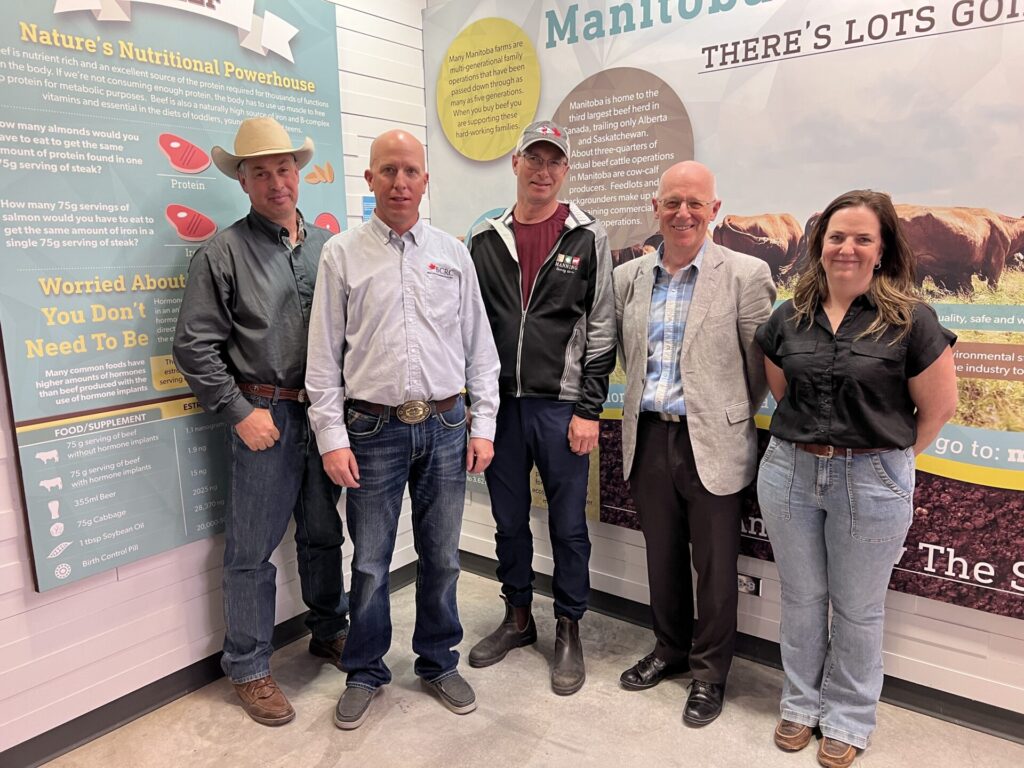
Representatives of the Beef Cattle Research Council (BCRC) visited the University of Manitoba’s (UM) Glenlea Research Station for the announcement of the BCRC Chair in Beef Cattle Economic Sustainability. L to R: BCRC Finance Chair Lee Irvine, Chair of the BCRC Producer Council Craig Lehr, BCRC Vice Chair Dean Manning, Dean of the UM Faculty of Agricultural and Food Science Dr. Martin Scanlon, and BCRC Executive Director Andrea Brocklebank.

MEDIA RELEASE

First-of-its-kind initiative will make cow-calf sector more economically viable

June 17, 2025 — Thanks to a $1.5 million grant from the Beef Cattle Research Council (BCRC), the University of Manitoba (UM), along with its partners at Manitoba Beef Producers, Manitoba Agriculture, and Manitoba Beef and Forage Initiatives, is proud to announce the establishment of the BCRC Chair in Beef Cattle Economic Sustainability. 

“It’s important for our industry to understand beneficial management practices that boost productivity, profitability, and environmental sustainability—including those related to greenhouse gas emissions, land and water use, and biodiversity,” said Craig Lehr, BCRC chair and Alberta beef producer. “This new Chair will focus on viable solutions for Canadian beef cattle producers with innovations that improve economic sustainability while reducing environmental footprint.” 

The beef industry faces mounting challenges, including volatile input costs, climate-related risks, and limited access to equitable risk management tools. These pressures have made it increasingly difficult for producers—especially in the cow-calf sector—to adopt new technologies and practices that could reduce their environmental footprint. 

“Beef producers in Manitoba and across Canada care deeply about both environmental and economic sustainability because the land they steward today must feed their families tomorrow,” said Matthew Atkinson, president of Manitoba Beef Producers. “Thriving ecosystems and strong businesses go hand in hand. Having this Chair position will help producers make decisions both good for the land and for their bottom line.”

Housed in the Department of Animal Science, the BCRC Chair will advance research around innovative financial incentive models, analyze the behavioral drivers behind the adoption of Best Management Practices (BMPs) and work closely with producers, policymakers, and researchers to ensure findings are translated into actionable strategies. The position will also play a key role in training the next generation of agricultural economists and extension specialists. 

Beyond its research mandate, the Chair will serve as a catalyst for broader impact by leading a multidisciplinary team that will align economic and environmental outcomes across the beef value chain. It will attract diverse funding from industry and government to expand research capacity, create enhanced training opportunities for students in cattle economics and extension, and continue to strengthen the beef industry by positioning it as a national and international leader in sustainable beef production research. 

“This Chair exemplifies the University of Manitoba’s commitment to collaborative, high-impact research,” said Martin Scanlon, Dean of the Faculty of Agricultural and Food Sciences. “By bringing together academia, industry, and government, we are creating a powerful platform to support the long-term sustainability of Canada’s beef industry.”

The BCRC Chair, valued at $300,000 annually over a 10-year period, will serve as a hub for research, education, and extension activities that benefit producers across Canada. The process to hire the new BCRC Chair will begin immediately.

For more information, please contact: 

Crystal Jorgenson 
Communications Specialist 
Faculty of Agricultural and Food Sciences 
University of Manitoba 
crystal.jorgenson@umanitoba.ca 
204-791-8109 

Tracy Herbert 
Knowledge Mobilization and Communications Director 
Beef Cattle Research Council 
herbertt@beefresearch.ca 
306-850-5026 

New Research Chair at USask will help maximize environmental, economic benefits of forage crops

SASKATOON – A new Beef Industry Integrated Forage Management and Utilization Chair will be established at the University of Saskatchewan (USask) to connect the study of soils, plants, animals, economics, and ecosystems to tap into forage crops’ full range of benefits.

The new Beef Industry Integrated Forage Management and Utilization Chair will connect the study of soils, plants, animals, economics, and ecosystems. (Photo: Cassidy Sim).

“The Chair will help to address concerns raised for a number of years by producers searching for expanded forage management information,” said Matt Bowman, chair of the Beef Cattle Research Council (BCRC) and a producer from Thornloe, Ont. “We need the science in order to better manage complex forage systems, implement effective utilization strategies, and understand the associated environmental benefits created through the dynamic soil-plant-animal interface.”

Funding for the research chair will be provided from a variety of sources. Industry contributions include $2.5 million from the Beef Cattle Research Council (BCRC) and $1 million from the Saskatchewan Cattlemen’s Association (SCA). The governments of Canada and Saskatchewan will provide $750,000 through the Canadian Agricultural Partnership. The Global Institute for Food Security (GIFS) at USask will contribute $320,000.

“The role of rangeland and forages in our ecosystem cannot be taken for granted,” said Marie-Claude Bibeau, federal minister of Agriculture and Agri-Food. “Rangeland plants increase the resilience of the ecosystem and create natural benefits such as carbon sequestration and soil stabilization, as well as for pollinators. This new research chair position will help further our understanding in these areas.”

“This research chair will work with partners from across the province to develop practical tools for producers,” Saskatchewan Agriculture Minister David Marit said. “This investment will help grow the livestock sector and bring us closer to achieving the goals outlined in Saskatchewan’s Plan for Growth, including our target to increase livestock cash receipts to $3 billion.”

A 2012 assessment concluded lack of research and development investment in the Canadian forage industry meant advances in forage had not kept pace with developments in other crops. The beef and cattle industry is increasingly seeing forages as a high-value feed source.

“Saskatchewan is looking to increase crop production and livestock cash receipts as a means of economic growth. This new chair will create momentum to meet this objective, and support the agricultural industry worldwide,” said USask Vice-President Research Baljit Singh. “Strengthening this sector and bolstering food security is a focus of USask as we provide research the world needs.”

There’s growing recognition that forage crops play a critical role in nutrient cycling, carbon sequestration, promoting biodiversity, and protecting wildlife habitat. The livestock industry believes the value of these environmental and ecological benefits complement forages’ economic impact.

“Forage production and utilization is the foundation of beef cattle productivity and competitiveness,” said Saskatchewan Cattlemen’s Association Chair Arnold Balicki. “After years of advocacy it is gratifying to see this position created via partnership between producers, government, USask and GIFS.”

The new research chair will be located in the College of Agriculture and Bioresources at USask, as a joint appointment between the Department of Plant Sciences and Department of Animal and Poultry Science. Among key roles will be to ensure USask is at the leading edge of research on use of forage in the beef industry, connect expertise in the field locally, nationally, and internationally, and grow funding support for research.

“This is a great opportunity for GIFS and the Plant Phenotyping and Imaging Research Centre program that we manage on behalf of USask, as it gives us the opportunity to work together with partners—government, industry and USask’s College of Agriculture and Bioresources—to deliver value to the agriculture and food sectors,” said GIFS Chief Executive Officer Steven Webb. “This collaboration will help us advance the sectors in a manner that is economically, environmentally and socially sustainable.”

The international search will begin this summer and USask anticipates filling the position before the end of 2021.

The Canadian Agricultural Partnership is a five-year, $3 billion investment by Canada’s federal, provincial and territorial governments to strengthen and grow Canada’s agri-food and agri-products sectors. This commitment includes $2 billion for programs cost-shared by the federal and provincial/territorial governments that are designed and delivered by provinces and territories.

-30-

For media inquiries, please contact:

Janice Bruynooghe
Project Coordinator
Beef Cattle Research Council
306-229-5459 | extension@beefresearch.ca

New research chair will collaborate with beef producers to bring research into practice

As the BCRC-Hays Chair in Beef Production Systems, Gleise M. Silva will play a key role in building a more sustainable and competitive industry.

Funded by the Beef Cattle Research Council, the Hays family and other partners, the University of Alberta has hired Gleise M. Silva as the new Chair in Beef Production Systems. Silva will collaborate with beef producers, translating research into practical solutions to create a more sustainable and competitive beef industry.Gleise M. Silva grew up in Recife, Brazil—a city perched on the turquoise edge of the Atlantic, home to lush forests, stunning beaches and 17th-century architecture. And yet, while living and studying in the “Brazilian Venice,” Silva found herself overwhelmingly drawn towards a subject she would never encounter in her hometown.

“I was 100 per cent sure I wanted to work with beef cattle. I was amazed by the animals—by the physiology,” said Silva, who started working with cattle when she travelled to the University of Florida for an undergraduate internship.

She went on to complete her PhD at UF’s North Florida Research and Education Center, specializing in beef cattle nutrition. Now, Silva’s planning her move to the prairies, becoming the University of Alberta’s first BCRC – Hays Chair in Beef Production Systems.

In her role as chair, Silva will work with beef producers, translating her and her colleagues’ research on cow-calf production into practical advice. Her work will help producers save money, maintain forage lands and advance the Canadian beef industry’s leadership in sustainable production. The position, beginning July 1, is funded by the Beef Cattle Research Council (BCRC) and the Hays family, with additional support from McDonald’s Restaurants of Canada and Cargill.

“[Producers] are the ones working hard for us from Monday to Sunday. So I want to help them get the most out of their production systems. I want my research to actually reach the people who need it the most,” she said.

This work will not be new to Silva, whose PhD focused on environmental and diet-induced stress in cattle, and on potential solutions to make cattle healthier and more efficient for the producer.

At the U of A, Silva will explore ways to responsibly produce the best beef cattle and protect grasslands—all with the goal of advancing the economic, environmental and social sustainability of Canadian beef. For example, one area she will focus on is how to reduce the cost of feeding beef cattle during long Canadian winters.

Silva’s chair position was supported by BCRC, a national, industry-led agency that invests funds from Canadian beef producers into relevant research on beef, cattle and forage. BCRC is directed by a committee of beef producers and is one of the main donors to the new chair.

“Dr. Silva is genuinely interested in engaging with producers to learn more about Canada’s beef sectors and production practices,” said Craig Lehr, BCRC vice-chair and a producer from Medicine Hat, Alta. “The council is excited about the collaboration between the university and Canada’s beef industry in filling this critical gap in Canadian research capacity.”

“The U of A is a leader in both beef genomics and rangeland research. This chair will complement and connect those programs to improve the whole cow-calf production system,” said Matt Bowman, BCRC chair.

Silva’s position was also supported by Kathy and Dan Hays. Dan is a U of A graduate, a former Canadian senator and the son of Harry Hays, creator of the Hays Converter beef cattle breed.

“The Hays family has a long history of pursuing improved productivity in the cattle industry and we’re excited to be looking to the future. The research coming out of this chair position will well serve our producers, Albertans and the environment,” said Dan.

The position is guaranteed for 10 years with responsibilities in teaching, research and extension and will be housed in the U of A’s Faculty of Agricultural, Life & Environmental Sciences (ALES). The chair will work with other faculty researchers and build a team of graduate students and support staff to create a powerful research group.

The Faculty of ALES is uniquely positioned to host this chair, with top research facilities like the Roy Berg Kinsella and Mattheis research ranches, noted dean Stan Blade.

“We are very grateful for the long-term vision of our partners, and their choice to invest in this position at the U of A,” he said. “Now, we want to use these resources to do what we do best—create new ideas that lead to innovative, practical solutions to the most pressing issues in the industry.”

As Silva prepares to move to Edmonton, she’s already planning ways to connect with Alberta’s beef industry. She mentioned how exciting it will be to get on the phone with producers and start chatting about their goals.

“I want to be someone they can reach. It’s an exchange of knowledge. I will learn as much from them as I hope they will learn from me.”

Author: Anna Holtby, University of Alberta

For further information, contact:

Tracy Herbert
Extension and Communications Director
Beef Cattle Research Council
C: 306-850-5026 | herbertt@beefresearch.ca

Click here to subscribe to the BCRC Blog and receive email notifications when new content is posted.

The sharing or reprinting of BCRC Blog articles is welcome and encouraged. Please provide acknowledgement to the Beef Cattle Research Council, list the website address, www.BeefResearch.ca, and let us know you chose to share the article by emailing us at info@beefresearch.ca.

We welcome your questions, comments and suggestions. Contact us directly or generate public discussion by posting your thoughts below.

New $2.35-M USask research chair targets improved health and productivity in beef herds

Saskatoon, SK – With $2.35 million from the federal government and the Beef Cattle Research Council (BCRC), University of Saskatchewan (USask) veterinary researcher Dr. Cheryl Waldner will undertake a major five-year research program to advance beef cattle health and productivity, helping to sustain the profitability and competitiveness of Canada’s $17-billion-a-year beef industry.

USask veterinary researcher Dr. Cheryl Waldner is the new NSERC/BCRC Industrial Research Chair in One Health and Production-Limiting Diseases. Photo: Amanda Waldner

“This timely and cutting-edge research builds on our university’s strengths in agriculture and ‘One Health’ to help advance the livestock industry’s economic contributions to the country and ensure continued consumer confidence in the safety and quality of Canadian beef,” said USask President Peter Stoicheff in announcing the new chair Jan. 30.

The $750,000 award from the federal Natural Sciences and Engineering Research Council (NSERC) is matched by $750,000 in producer check-off funding from the BCRC. USask is contributing $850,000.

As NSERC/BCRC Industrial Research Chair in One Health and Production-Limiting Diseases, Waldner will work with the industry to address priorities of Canada’s beef producers across the beef value chain—from improved herd health, to expanded surveillance of antibiotic use and resistance, to increased uptake of best practices for herd management.

“This chair will use a systems approach to build on existing research and examine complex health challenges,” said Waldner, a professor of large animal clinical sciences in the USask Western College of Veterinary Medicine (WCVM).

“We will identify existing gaps and fill them using innovative data collection and decision-making tools and technologies to enable the Canadian beef industry to better manage production-limiting diseases and develop evidence-based policies for animal health and antimicrobial stewardship.”

Management of diseases such as Johne’s disease in cow-calf herds and bovine respiratory disease in feedlots, as well as antibiotic use and antibiotic resistance, are key industry priorities.

“Disease-causing bacteria in animals are increasingly able to resist the antibiotics used to treat them, and the agriculture industry is being challenged to improve antibiotic stewardship in livestock production,” she said.

The tools and technologies to guide herd management and policy and enable targeted precision medicine will include genomics, big data and system science tools, network analysis, computer modelling, and smart phone sensors and apps. USask’s computer science researchers will play a key role in adapting these new tools and technologies to industry challenges and providing experts to help researchers manage the volumes of data to support complex decision making, she said.

“The challenges faced by the beef industry require new and more specialized diagnostic and data management tools that can generate results in real time, and trained expertise to help producers make complex animal disease prevention, treatment and management decisions,” said BCRC Chair Ryan Beierbach. “We look forward to working with Dr. Waldner and her team on research aimed at supporting continued advancements in industry productivity and sustainability and helping to inform industry and government policy and standards.”

The IRC award enables the hiring of a junior faculty member, expanding the regional veterinary college’s beef cattle health research capacity. The IRC also includes training for at least three master’s students, two PhD students, one post-doctoral fellow and five undergraduate students, providing skills in great demand by industry and government such as data management and analysis, bioinformatics and systems science.

Among the reasons USask was chosen for the chair—in addition to Waldner’s research record and previous collaborations with BCRC—are the critical mass of beef researchers at WCVM and the College of Agriculture and Bioresources, along with access to the new USask Livestock and Forage Centre of Excellence.

“NSERC is proud to support the University of Saskatchewan, which has a long history of supporting research in the livestock area,” said Marc Fortin, NSERC’s Vice-President of Research Partnerships. “Dr. Waldner and her team will develop innovative tools to support policy setting and management decisions in Canada’s beef industry, a significant contributor to the Canadian economy.”

As well, the new chair builds on a recent $5.6-million Genome Canada award to Waldner and her colleagues at USask and the University of Alberta, including $750,000 announced Jan. 29 by the Saskatchewan Agricultural Development Fund. This project, administered by Genome Prairie, involves developing genomic diagnostics tools that can be used to quickly and accurately identify an antimicrobial treatment for a disease, something that now takes five to seven days using traditional laboratory tests.

Canada is one of the largest exporters of red meat in the world, with 38 per cent of domestic beef exported. More than 80 per cent of the cattle are raised in Western Canada.

About BCRC:

The Beef Cattle Research Council (BCRC) is Canada’s industry-led funding agency for beef, cattle and forage research. The BCRC is funded through a portion of the Canadian Beef Cattle Check-Off as well as government and industry funding, and is directed by a committee of beef producers from across the country. https://www.beefresearch.ca

About NSERC:

The Natural Sciences and Engineering Research Council of Canada supports university students in their advanced studies, promotes and supports discovery research, and fosters innovation by encouraging Canadian companies to participate and invest in post-secondary research projects. NSERC researchers are on the vanguard of science, building on Canada’s long tradition of scientific excellence. https://www.nserc-crsng.gc.ca/index_eng.asp

For more information, contact:

Victoria Dinh
USask Media Relations Specialist
306-966-5487
victoria.dinh@usask.ca

Stacey Domolewski
Research and Innovation Coordinator
Beef Cattle Research Council
(403) 635-1847
domolewskis@beefresearch.ca

Click here to subscribe to the BCRC Blog and receive email notifications when new content is posted.

The sharing or reprinting of BCRC Blog articles is welcome and encouraged. Please provide acknowledgement to the Beef Cattle Research Council, list the website address, www.BeefResearch.ca, and let us know you chose to share the article by emailing us at info@beefresearch.ca.

We welcome your questions, comments and suggestions. Contact us directly or generate public discussion by posting your thoughts below.

2018 Highlights and Deliverables

The Beef Cattle Research Council (BCRC) is Canada’s industry-led funding agency for beef, cattle and forage research. Our mandate is to

  • determine and communicate the Canadian beef cattle industry’s research and development priorities, and
  • administer the Canadian Beef Cattle Check-Off funds that have been assigned by producers to research

The BCRC invites and funds projects and initiatives that have the greatest potential to benefit the sustainability and competitiveness of Canada’s beef industry. The BCRC is led by a committee of beef producers who proportionally represent each province’s research allocation of the Canadian Beef Cattle Check-Off.

The BCRC’s Research Priorities Focus On
  • improving competitiveness in the production of Canadian beef cattle,
  • supporting science-based policy, regulation and trade,
  • supporting science-based public education and advocacy,
  • supporting the Canadian Beef Advantage, and
  • accelerating the adoption of beneficial innovations by the Canadian beef industry

2018 has been a transition year for the Beef Cattle Research Council (BCRC) in terms of both funding and program administration. An increase in the Canadian Beef Cattle Check-Off from $1 to $2.50 per head in most provinces and revised allocations to research has grown the BCRC’s research budget from approximately 15 cents to approximately 75 cents per head. (More information on the Canadian Beef Cattle Check-Off can be found at www.cdnbeefcheckoff.ca/) In addition, the Beef Science Cluster II, under Agriculture and Agri-Food Canada’s AgriInnovation Program, wrapped up March 31, 2018 and the Beef Science Cluster III program, under the Canadian Agricultural Partnership (CAP), has begun.

Canada’s Beef Cattle Industry Science Clusters

The Science Clusters are a partnership with Agriculture and Agri-Food Canada that combines their strengths (including funding levels) and the BCRC’s strengths (including understanding of industry’s priorities) to make wise joint-investments in a variety of research programs with the greatest potential to advance the industry.

The first Beef Cattle Industry Science Cluster directed $10.5 million to 32 research projects between 2009 and 2013.  Joint industry and government commitments to the second Cluster (April 1, 2013 – March 31, 2018) totaled $20 million, including $14 million in funding from AAFC, $1 million in provincial government investments, and $5 million in funding from the research allocation of the Canadian Beef Cattle Check-Off and provincial beef industry groups. Funding was directed to 26 research projects.

Beef Science Cluster II Outcomes

Research supported through the Cluster is developing solutions to issues of concern to Canada’s beef industry, governments, regulators, consumers and the public. Results include:

  • A factual understanding of the Canadian beef industry’s environmental footprint. In 2011, producing each kg of Canadian beef required 29% less breeding stock, 27% fewer slaughter cattle and 24% less land, used 17% less water, and produced 15% less greenhouse gases than in 1981.
  • Optimal combinations of annual forage crops, agronomic management and grazing practices that improve forage productivity while providing economical and nutritionally appropriate winter feed for the cow herd.
  • Cost-effective, practical ways to manage the pain associated with castration in beef calves. The adoption by producers of pain control for castration has increased significantly in recent years.
  • A report on the changes in Canadian beef quality and consumer satisfaction over time. Attributes of quality and satisfaction have remained stable or slightly improved over the past 5 years.
  • An understanding of the occurrence and severity of beef carcass defects to inform prevention strategies. Total losses due to carcass quality defects are approximately $200 million/year. Some defects, like bruises and horns, are becoming less common while others, like excess weight, fat, tag, liver health and injection site lesions require further investigation of nutritional and health management strategies to reduce losses.
  • New feed grain and forage varieties with superior yield and quality, including ten barley varieties approved for registration, and several lines of native plant materials, legumes, grasses and triticale with potential for commercialization.
  • Dry chilling methods to cost-effectively control microbiological growth on carcasses in small abattoirs.
  • The establishment of a veterinary and producer surveillance network to gather information on the prevalence of production limiting diseases and evaluate the adoption of and producer attitudes towards various management practices such as antimicrobial use, animal welfare practices and biosecurity practices.
  • Detailed metagenomic analysis of microbiological samples collected throughout cattle environments, soils, wetlands, rivers, municipal water, retail beef, human patients and sewage samples found no link between the use of antimicrobials in beef cattle and antimicrobial resistance in humans.

Beef Science Cluster III in Progress

Funding for the third Cluster was announced by AAFC in July 2018. Covering the period to March 31, 2023, $21 million will be directed to 26 research projects. The funding includes $14 million from AAFC, $5 million in funding from the research allocation of the Canadian Beef Cattle Check-Off and $1.5 million in in-kind contributions from industry in the form of cattle, equipment, and materials.

This Cluster will work to grow beef exports and supply growing global beef demand by supporting research and technology transfer that advances Canadian beef and forage production while enhancing industry competitiveness and the public’s trust in responsible production.

Examples of Cluster III project objectives include:

  • determine how camera-based computerized carcass grading systems can optimize fabrication and direct beef products to the most suitable market to support market growth and trade;
  • measure and identify opportunities for further improvements in carcass and beef quality to support value-added product development;
  • expand production-limiting disease surveillance across Canada to anticipate, mitigate and respond to emerging disease threats;
  • enhance environmental sustainability and address climate change by evaluating carbon sequestration and biodiversity in Canada’s grasslands and identify strategies to increase the beef industry’s contribution;
  • reinforce public trust and support transport regulation development by determining optimal rest intervals and durations for cattle in transit
  • support consumer confidence and demand by improving understanding of bacteria and cattle interactions to improve food safety, reduce the risk of E. coli O157:H7, and reduce the need for antimicrobials to treat bovine respiratory disease and digestive upsets; and
  • strengthen awareness and adoption of research results via the BCRC’s innovative knowledge translation and transfer team.

Details on all 26 Cluster III projects are available on BeefResearch.ca.

Leveraging the Increased Canadian Beef Cattle Check-Off

The increased Canadian Beef Cattle Check-Off enables the BCRC to continue to play an integral role in achieving several of the industry goals identified in the National Beef Strategy by maintaining existing programming and expanding in the following ways:

Priority Research Projects: Increased funding will be allocated to research aimed at achieving specific outcomes related to beef quality, food safety, feed grain production, forage production and utilization, improved feed efficiency at both cow-calf and feedlot levels, and production-related priorities in the areas of animal health and welfare and antimicrobial resistance and use. The council launched a call for letters of intent in June 2018. Funding decisions on proposed projects will be made in February 2019. Summaries will be available on BeefResearch.ca.

Research Capacity: Increased funding is enabling the reinvigoration of research programming in areas where research expertise has declined in Canada, such as beef production, and forage breeding, agronomy, and utilization. Many research funding agencies are limited in their ability to fund new research positions; the BCRC has the flexibility to fund this type of initiative and is looking to leverage producer investments with Institutional and Government funding opportunities that exist. The council launched a call for proposals for Research Chairs in August 2018. An announcement will be made in 2019.

Knowledge and Technology Transfer: The BCRC continues to advance the implementation of its Knowledge Dissemination and Technology Transfer Strategy to drive broad and timely uptake of research results. Focus has been placed on developing and utilizing a Canadian Beef Technology Transfer Network to support the regionally limited, underfunded, and fragmented nature of beef extension across Canada. The BCRC is working to develop collaborative extension projects that bring together the expertise and resources of various groups in order to develop excellent extension resources together. Investments are also being made in economic-based decision-making tools and resources to help producers evaluate the relevance of adopting particular innovations on their operations.

Advancement of the Verified Beef Production Plus program: In addition to funding research, the BCRC is responsible for the delivery of the Verified Beef Production Plus (VBP+) program, which verifies on-farm practices related to food safety, animal care, biosecurity, and environment. Ongoing national industry investment will ensure the consistent delivery of the VBP+ program as it becomes a core pillar in verifying sustainable beef production in partnership with end-users

For More Information

To learn more about BCRC initiatives and take advantage of our extension resources, including articles, videos, webinars, and calculators, visit our website at www.beefresearch.ca.

Click here to subscribe to the BCRC Blog and receive email notifications when new content is posted.

The sharing or reprinting of BCRC Blog articles is welcome and encouraged. Please provide acknowledgement to the Beef Cattle Research Council, list the website address, www.BeefResearch.ca, and let us know you chose to share the article by emailing us at info@beefresearch.ca.

We welcome your questions, comments and suggestions. Contact us directly or generate public discussion by posting your thoughts below.

Attn Institutions: BCRC Call for Proposals for Research Chairs

The Beef Cattle Research Council (BCRC) invites proposals from leading research institutions for the establishment of Research Chairs. The deadline is October 1, 2018 at 11:59 PM MT.

Currently, a shortage of scientific experts and research capacity in some areas of beef, cattle and forage research are hindering the ability to conduct priority research that supports improvements in productivity and demand and responds to emerging issues. To fill these gaps, the BCRC is exploring options to establish Research Chairs in key areas with investment of Canadian Beef Cattle Check-Off funding in partnership with other funders.

To procure the strongest opportunities for capacity development and encourage matching investments, Research Chair concepts will be considered through an open call for proposals. The BCRC welcomes proposals that work towards the achievement of its three core research objectives:

  • To enhance industry competitiveness and reduce production costs, priority outcomes are to enhance feed and forage production, increase feed efficiency, and decrease the impact of animal health issues and production limiting diseases.
  • To improve beef demand and quality, priority outcomes are to reduce food safety incidences, define quality and yield benchmarks supporting the Canadian Beef Advantage, and improve beef quality through primary production improvements and the development and application of technologies to optimize cut-out values and beef demand.
  • To improve public confidence in Canadian beef, outcomes are to improve food safety, strengthen the surveillance of antimicrobial use and resistance, develop effective antimicrobial alternatives, ensure animal care, demonstrate the safety and efficacy of new production technologies, improve environmental sustainability and measure the beef industry’s environmental benefits.

Applications must include explanations of how the newly created Chair position will align with the Canadian Beef Research and Technology Transfer Strategy 2018-2023, and how the proposed Chair will include industry-focused extension within their research program.

The BCRC will provide funding (up to 10 years) to establish research chairs, while the institutions will be responsible for long-term maintenance of the positions. BCRC funding must result in the creation of a new position and not replace or supplement an existing or recently vacated position. The newly created Chair position may be filled by a current researcher within the institution however the vacancy created by this reassignment must be filled.

The BCRC intends to commit funding to support two Research Chairs over the next two years. Additional calls for proposals in subsequent years are subject to annual BCRC funding allocations.

This research capacity development initiative, in support of the National Beef Strategy, is made possible by the increase in the Canadian Beef Cattle Check-Off in most provinces.

Download:

Click here to subscribe to the BCRC Blog and receive email notifications when new content is posted.

The sharing or reprinting of BCRC Blog articles is welcome and encouraged. Please provide acknowledgement to the Beef Cattle Research Council, list the website address, www.BeefResearch.ca, and let us know you chose to share the article by emailing us at info@beefresearch.ca.

We welcome your questions, comments and suggestions. Contact us directly or generate public discussion by posting your thoughts below.

Maintaining Momentum

This article written by Dr. Reynold Bergen, BCRC Science Director, originally appeared in the December 2017 issue of Canadian Cattlemen magazine and is reprinted on the BCRC Blog with permission of the publisher.

Canada’s pasture and rangelands have drier, colder, and shorter growing seasons than many other beef producing areas in the world. The forage varieties that perform best in Canada are generally the ones that have been bred, selected and developed to germinate, grow, survive and thrive here. Forage varieties developed in foreign countries are sometimes marketed in Canada, but they weren’t developed under our climate and may not perform as well as home-grown varieties.

A total of 144 new perennial forage cultivars (grasses and legumes) were developed in Canada and registered between 1932 and 2017. Although private or not-for-profit companies often sell these seeds, these companies rarely did the actual breeding and development work. Nearly all (98%) of these 144 cultivars were developed by public (government and university) breeding programs. It is critically important that universities and governments continue these breeding programs, because when a program stops it takes years to rebuild its momentum.

Here are a few examples. Only 8 new perennial forage varieties were registered during the 1930’s; forage breeding programs that had lost manpower and momentum due to World Ware 1 were still rebuilding when World War 2 started. Only 3 new perennial forage varieties were registered during the 1940’s. Many more recruits were drafted and sent overseas during World War 2, and some forage breeders who remained in Canada were reassigned to develop grasses that could reinforce and stabilize air force landing strips. World War 2 ended in 1945, but only 4 new Canadian perennial forage varieties were released during the 1950’s, and only 15 during the 1960’s. Forage breeding programs never really regained their momentum until the 1970’s, when 24 new varieties were released, and maintained their momentum through the 1980’s (23 new varieties), 1990’s (28), and 2000’s (25). Fourteen new perennial forage varieties have been registered since 2010.

It takes a long time to develop a new variety from scratch. Dr. Bruce Coulman of the University of Saskatchewan (who provided me with this list of Canada’s forage varieties), recently recalled the start of his forage breeding career at McGill University. McGill had allowed its forage breeding program to collapse, and had no breeding lines under development when Bruce started. Starting from scratch in 1976, Bruce registered his first forage variety in 1993. After that, the new variety had to be commercialized, foundation seed multiplied and grown to commercial quantities, marketed and adopted. When starting with nothing, it can take the better part of two decades for a new variety to proceed from the initial crosses to commercial availability. The development pipeline is very long, so it takes a long time after the breeding tap is opened before any new varieties start to flow out the other end.

The reverse is also true. New varieties can emerge from a breeding program long after the program has stopped making the initial crosses and selections to develop new varieties. This can give the false illusion that all is well. Remember; this pipeline is very long, so new varieties can continue to trickle onto the market long after the tap has been turned off.

Funding determines whether governments and universities keep the taps open on their breeding programs. Historically, forage breeding (like all agricultural research) was funded almost entirely by tax dollars. Today, industry dollars are needed to help support and encourage continued government and university investment in these breeding and research programs. This probably a symptom of how society has changed; in 1931, 32% of Canadians lived on farms. In 2011, fewer than 2% of Canadians lived on farms. Agriculture’s contribution to Canada’s economy is still very significant, but public support for agricultural research now faces ever increasing demands for public support for urban healthcare, education, etc.

The Canadian Beef Cattle Check-off provides a significant share of the industry funds that support government and university beef cattle and forage research programs in Canada. In recent years, provincial beef producer groups have increased the research allocation of the Canadian Beef Cattle Check-off dollar from an average of 6 cents to an average of 18 cents. That has greatly increased the Beef Cattle Research Council’s ability to leverage producer funds more effectively, and fund a broader variety of research. The current Beef Science Cluster has allocated 30% of its funds towards forage breeding and production research. Industry investments like this have encouraged governments and universities to also renew their commitment to forage research.

Over the past two years, at least nine new forage researchers have been hired by the Universities of Saskatchewan, Manitoba and Agriculture and Agri-Food Canada stations across the country. Some of these new researchers have even been hired before their more experienced counterparts have retired. This is really beneficial, because it means they can benefit from the experience and wisdom their mentor gathered over the course of their career, and helps maintain momentum in Canada’s forage breeding and management research.

Click here to subscribe to the BCRC Blog and receive email notifications when new content is posted.

The sharing or reprinting of BCRC Blog articles is typically welcome and encouraged, however this article requires permission of the original publisher.

Announcing the Beef Researcher Mentorship Program 2016-17 Participants

The Beef Cattle Research Council (BCRC) is pleased to announce the participants in the 2016-17 Beef Researcher Mentorship program. Following an open application process, four researchers have been selected. Each has been paired with notable leaders in the Canadian beef industry and given a travel budget for the coming year, which will provide valuable opportunities for greater engagement with Canada’s beef industry.

Mentee: Dr. Getahun Legesse Gizaw
Mentors: Charlie Christie and Brenna Grant 

GLGizaw

Getahun Legesse, Ph.D., is a Research Associate at the University of Manitoba. He is currently working on a collaborative project that aims to define the environmental footprint of Canadian beef. This involves collecting and analyzing of beef industry data to assess how the environmental impact of the beef industry has changed over the past thirty years. Earlier, he worked in the area of alternative forage-based systems for environmentally-sound and profitable production of beef in Canada.

Getahun received his Ph.D. in Animal Science (Livestock Production Systems analysis) from the University of Hohenheim in Stuttgart, Germany. His doctoral project examined the productive, reproductive and economic performance of small ruminants in two production systems and identified possible options for improvement.

Through the mentorship program, Getahun hopes to gain more knowledge of cattle management practices as well as policies, regulations, and guidelines that affect the production, transportation, marketing and processing of cattle and beef products.

CharlieChristie

Charlie Christie, along with his wife Rochelle run a mixed farm with 2000 acres of mixed grain and hay as well as 400 Angus-influence crossbred cows West of Trochu, Alberta. They finish their own calves and custom feed about 300 head.

Charlie is the current Finance Chair of the Alberta Beef Producers (ABP) and has been an ABP delegate for nine years, all of these as a Cattle Feeder Council delegate. Charlie has served as the Cattle Feeder Council’s BCRC representative for six years, two of these as chair. He has also been a Zone 5 representative on the ABP research committee for several years.

brenna-grant

Brenna Grant has a Master’s of Science in Applied Economics, Professional Agrologist designation and nine years’ experience with Canfax Research Services (CRS).  As manager of CRS, Brenna provides industry with statistical information, economic analysis and market outlooks focusing on both the Canadian and global beef markets. Statistical information and economic analyses are used in business plan development, marketing decisions, research, and other projects.


Mentee: Dr. Jessica Gordon 
Mentors: Joe Hill, Dr. Calvin Booker, and Dr. Peter Kotzeff

JGordon

Jessica Gordon D.V.M., D.V.Sc, is an Assistant Professor in Ruminant Health Management in the Department of Population Medicine at the Ontario Veterinary College. She focuses her teaching on beef cattle health and management. Her most recent research involved parasite control in cow-calf herds.

Jessica grew up in an urban setting in Michigan with little exposure to agriculture. Her interest in cattle was sparked during her undergraduate program when she participated in a research project involving bovine nutrition. She fostered this interest by working on a dairy for several years, taking many management and nutrition classes, and completing her BS in Animal Science at Michigan State University. She continued to follow her passion for cattle by focusing on food animal medicine in veterinary school. After graduation from veterinary school, she held a position in a food animal practice in Wisconsin servicing mostly dairy and cow-calf producers. She left the practice after 3 years to pursue a DVSc at the University of Guelph in Ruminant Health.

She hopes to continue applied research in cow-calf and feedlot medicine, expanding into other areas such as disease prevalence and prevention and causes of lameness.

Through the mentorship program, Jessica hopes to expand her knowledge of both the Canadian and global beef industry and better understand industry issues in order to tailor her research to finding solutions to relevant problems to Canadian beef producers.

joeh_web

Joe Hill, his wife Jennifer, and children Kaleb and Miranda run a small feedlot and crop farm in Wellington County, Ontario. They grow corn, soybeans, wheat, barley and hay on 800 acres, with on-farm drying and storage for the grain. In the cattle operation, they purchase yearling cattle from backgrounding farms, through auction, and finish them on a grain based diet. Cattle typically arrive weighing 1000lbs to 1050lbs and are marketed around 1600lbs.

Joe has been on the Beef Farmers of Ontario board of directors since 2011 and currently sits as Vice-President. He represents the Ontario beef industry on the Canadian Cattlemen’s Association and the Agriculture Adaptation Council, which provides GF2 funding to businesses and organizations on behalf of the Ontario Government. Joe was an inaugural board member on the Livestock Research and Innovation Corporation. His experiences have allowed him the opportunity to work with government, academia and producers from a cross section of Ontario agriculture.

Calvin Booker

Dr. Calvin Booker received his D.V.M. in 1989 and his M.Vet.Sc. in 1992 from the Western College of Veterinary Medicine. Dr. Booker completed an internship at the Ambulatory Clinic, New York State College of Veterinary Medicine, Cornell University, Ithaca, New York in 1990 and a residency at the Field Service Clinic, Western College of Veterinary Medicine, Saskatoon, Saskatchewan in 1992.

From 1990 to 1992, Dr. Booker collaborated on research efforts with Feedlot Health Management Services (Feedlot Health), which is a professional services company that provides comprehensive veterinary and production consulting services, as well as computerized individual animal data collection systems and management/execution tools, to feedlot and calf grower operations throughout Canada, the United States, and Mexico. In addition, Feedlot Health has extensive research capabilities that focus on identification, development, and evaluation of applied technologies in commercial feedlot and calf grower production systems.

Dr. Booker became part of the Feedlot Health team in 1992 as an epidemiologist, data analyst and production consultant. Dr. Booker is currently a Managing Partner in the firm, with responsibilities that include managing the Feedlot Health production consulting business, directing research and development activities, and building the company growth and development plan.

Peter Prof portrait

Dr. Peter Kotzeff is a graduate of the Ontario Veterinary College. He is a partner at North Heritage Animal Hospital, a small animal practice managed by his daughter. Peter devotes 100% of his professional time to beef practice and the beef industry at the Chesley Veterinary Clinic.

Peter operates a 2000 acre cash crop and grazing operation in Bruce County Ontario with an emphasis on integrating cattle grazing, cover crops and minimal tillage to improve soil quality. He received the 2014 Ontario Cattleman’s Environmental Stewardship Award and the 2015 Grazing Award for his grazing operation.

Peter and Pam, his wife of thirty-five years, have four children, Sasha who is also an OVC grad, Nichole a recent graduate nurse, Laura working in New Zealand and Simon a Harvard and MIT grad.


Mentee: Dr. Kateryn Rochon 
Mentors: Tim Oleksyn and Karin Schmid

KRochon

Kateryn Rochon, Ph.D. is an Assistant Professor in the Department of Entomology at the University of Manitoba, where her research program is focused on arthropods as vectors of both livestock and wildlife pathogens, with a current emphasis on tick distribution and ecology.

Kateryn has a Ph.D. in Veterinary Entomology from North Carolina, her dissertation work focused on the potential of stable flies to act as a vector for a swine virus causing serious problems to the industry at the time. Following her degree, Kateryn moved back to Canada to complete a three-year postdoctoral fellowship at Agriculture and Agri-Food Canada in Lethbridge, where she did research on geographic distribution and sampling of Rocky Mountain wood ticks.

Through the mentorship program, Kateryn would like to gain a better understanding of the structure of the Canadian beef industry and increase her network of producers to better understand the production challenges they face.

tim-oleksyn

Tim Oleksyn farms and ranches near Shellbrook, Saskatchewan, along with his wife and brothers, where he manages the cow/calf operation for Oleksyn Brothers Farms.

His extensive involvement with the beef industry has a sharp focus on research, and Tim serves on a number of boards and advisory groups, both provincially and nationally. He is the past Chair of the Beef Cattle Research Council. Tim is also Chair of Western Beef Development Centre, and Vice-Chair of the Saskatchewan Agriculture Development Fund.

KarinSchmid-48

Karin Schmid is the Beef Production Specialist for the Alberta Beef Producers. Karin grew up on a mixed farm near Keoma, AB, raising purebred Simmental cattle and grain, and is still involved to a limited extent. She has a Master’s Degree in Agriculture from the University of Alberta, which focused on the genetic and metabolic factors affecting feed efficiency in beef cattle. Before joining ABP, Karin spent just over four years with the Canadian Hereford Association as their Breed Development Coordinator. As the Beef Production Specialist for ABP Karin provides technical support in the areas of production, health, welfare, and research.


Mentee: Dr. Marjolaine Rousseau
Mentors: Jacques Desrosiers, Steve Eby and Dr. Rémi Laplante 

marjolaine rousseau[1]

Marjolaine Rousseau, DMV, is currently an Assistant Professor of Bovine Ambulatory Medicine at the University of Montreal. After graduation of her DMV at the University of Montreal, she completed an Internship in Bovine Medicine at the same institution then worked for a mixed animal practice in a rural veterinarian shortage area in southeastern Ohio. In 2008, she started a 3-year residency in food animal surgery at Kansas State University. By 2011, she had graduated from that program and completed a master’s degree. which investigated the use of an absorbable carrier to deliver antimicrobials and growth factors to bone in order to enhance its healing in presence of infection in a goat model. In 2011, she returned to the University of Montreal as a clinician at the Farm Animal Hospital.She became a certified specialist of large animal surgery by the American College of Veterinary Surgeons in 2016.

She is currently involved as a co-investigator in a research project to evaluate the use of a new disinfectant as a footbath to control digital dermatitis.

Through the mentorship program, Marjolaine hopes to broaden her knowledge of the feedlot sector and specific feedlot herd management strategies. Marjolaine would like to better understand the decision making processes of large feedlots as well as the specific clinical problems faced by the industry.

IMG_0266

Jacques Desrosiers, along with his family operate Ferme B et L Desrosiers, a farm and feedlot in Saint-Hermas, Québec. They feed approximately 3500 head a year that are primarily Angus. They also farm 2000 acres, growing soybeans, wheat, and corn.

Steve picture Feb 2012

Steve Eby owns and operates a feedlot, grazing and crop operation near the shores of Lake Huron in Kincardine, Ontario. The Eby family markets 1500 head of fed cattle annually and manage 300 head on pasture. Their crop production includes corn, soybeans, spring cereals, alfalfa and pasture. He is a University of Guelph grad with a major in Animal Science.

Steve has been very involved in a number of agricultural organizations including the Bruce County Cattlemen’s Association, Grey Bruce Farmers Week, OMAFRA Livestock Medicines Committee, Chair of Ontario Cattlemen’s Association Research Committeeas well a past board member of Beef Farmers of Ontario and Canadian Cattle Identification Agency.  He is currently a member of the Beef Farmers of Ontario Feedlot Committee.

Laplante Remi 2015_2 copy

Dr. Rémi Laplante currently holds the position of veterinary advisor for Les Producteurs de bovins du Québec. Born in Thurso, a rural village in Québec, Rémi was greatly influenced in his choice of career by his grandfather, who ran a small dairy operation. Following his graduation from the Université de Montréal’s Faculté de médecine vétérinaire in 1982, Rémi worked as a large animal practitioner for thirty-four years, providing health management and veterinary services to dairy, feedlot and cow-calf producers.

Rémi is the proud father of three grown daughters, and a doting grandfather to three delightful little girls.


The Beef Researcher Mentorship Program provides upcoming and new applied researchers with the opportunity to deepen their understanding of the needs of the beef industry in practical and meaningful ways. Participants are paired with innovative cattle producers and other industry professionals for a one year mentorship along with a travel budget to attend industry meetings, producer workshops, and farm tours. The program complements similar programs in existence but for which some researchers may not be eligible. Funding is made available through the technology transfer initiative within the second Beef Cattle Industry Science Cluster.

Learn more about the Beef Researcher Mentorship program, including highlights from last year’s participants, at https://www.beefresearch.ca/about/mentorship-program.cfm.

Click here to subscribe to the BCRC Blog and receive email notifications when new content is posted.

The sharing or reprinting of BCRC Blog articles is welcome and encouraged. Please provide acknowledgement to the Beef Cattle Research Council, list the website address, www.BeefResearch.ca, and let us know you chose to share the article by emailing us at info@beefresearch.ca.

We welcome your questions, comments and suggestions. Contact us directly or generate public discussion by posting your thoughts below.

Announcing the Beef Researcher Mentorship Program 2015-16 participants

We are pleased to announce the participants in the 2015-16 Beef Researcher Mentorship program. Following an open application process, four researchers have been selected. Each has been paired with notable leaders in the Canadian beef industry and given a travel budget for the coming year, which will provide valuable opportunities for greater engagement with Canada’s beef industry.

Mentee: Dr. Angela Canovas
Mentors: Mike McMorris and Daniel Doerksen

A Canovas photo

Angela Canovas, PhD is the recently hired Assistant Professor of Beef Cattle and Small Ruminant Genomics at the University of Guelph. Angela received her undergraduate degree in Agricultural Engineering from the University of Lleida, Spain and a PhD in Animal Breeding and Genetics from UdL-IRTA, Spain. She also worked as a Fulbright post-doctoral researcher at the University of California-Davis. Through her background in molecular genetics and cellular biology, combined with using the most up to date technologies during her postdoc, she has developed extensive statistical and bioinformatics skills and a solid knowledge base in Next Generation sequencing and animal systems biology.

Through this opportunity, Angela plans to gain a better understanding of the research needs of the Canadian beef industry in terms of developing a beef breeding program and establishing research lines in a lab. She also plans to expand her network and gain skills in order to develop an effective applied research program to translate research achievements into instructional material, and share advancements with producers and other industry stakeholders.

Mike McMorris

Mike McMorris is the General Manager of BIO. He grew up on a beef and crop farm near Guelph, Ontario where he later went to University, and earned a Master’s degree in Animal Breeding and Genetics. Mike worked for thirteen years with the Ontario Ministry of Agriculture and Food, first in extension as the Provincial Beef Genetics Specialist and then in several management roles. In 1999, he moved to the Ontario Cattlemen’s Association where he was Executive Director for a very busy five year period.

Following that, Mike spent 4 years with Agricorp as Director of Operations responsible for delivery of crop insurance, CAIS and other risk management programs to Ontario farmers. In 2008, he moved to BIO. Recent years have seen BIO evolve into an international, multi-species organization, still focused on helping producers make better business decisions, primarily with bioTrack but also with genetic evaluations and genomics.  At its heart, BIO is all about telling the story of animals and food products.

Mike is married with three children and was a past mentor in the Cattlemen’s Young Leaders program.

Daniel Doerksen

Daniel Doerksen, together with his family, runs a purebred Hereford and commercial cowherd near Gem, Alberta. They focus on raising efficient moderate framed cattle. They sell bulls by private treaty and use their own bulls in their commercial cowherd.

Daniel graduated from Lethbridge Community College with a diploma in Animal Science in 2005. Among other community activities, Daniel serves as the President of the Gem Grazing Association and is a volunteer fireman. Daniel and his wife Kimberly have three children.

Mentee: Dr. Argenis Rodas-González
Mentors: Betty Green and Trevor Atchison

ARodasGonzalez

Argenis Rodas-González, PhD is an Assistant Professor in Meat Science and Food Safety at the University of Manitoba. Argenis was raised on a grass feeding dual-purpose cattle operation in Venezuela. His research has been in evaluation of meat composition and quality of domesticated livestock (beef and pork) and exotic species (water buffalo and bison), with special interest in the factors that determine meat shelf life and palatability, and application of novel technologies in order to improve them.

Through the mentorship program, Argenis plans to learn more in the areas of trade and regulation in order to help develop creative solutions to these issues. He looks foreward to better understanding Canadian production systems and obtaining a broad outlook of the Canadian industry and its future perspective and direction.

Betty Green

Betty Green is the provincial coordinator of the Verified Beef Production program in Manitoba. Betty has over 30 years of involvement in leadership roles in areas of education, agriculture and rural development. Perhaps one of the most challenging roles was being the president of the Manitoba Cattle Producers’ Association in 2003. She has also served as the Vice-Chair of the Prairie Improvement Network and the Chair of the Zone Canada Initiative. Betty has been active in the policy development and operations of many groups but her passion is in areas of research and development for future initiatives.

Betty is a partner in the G7 Ranch in Fisher Branch, Manitoba with her husband and son. They run about 10,000 acres and a 1000 cow beef herd. They have a backgrounder feedlot and a small full blood Simmental herd.

Trevor Atchison District 6 2nd Vice President

Trevor Atchison is a fourth generation rancher. Together with his wife and parents, Trevor owns and operates Poplarview Stock Farm near Pipestone, MB. After graduating from high school in 1993, Trevor made the decision to jump all into farming and he hasn’t looked back. Trevor devotes his time to the land and the cattle as well as juggling spending time with his wife and two children and being community-minded. Trevor strives to stay on the cutting edge of the industry by attending educational events and seminars such as the Ranching for Profit School, Holistic Management.

Trevor has been a director on Canada Beef Inc. for three years and currently sits as Vice Chair. Until February 2014, he served six years as a director of the Manitoba Beef Producers, and served as MBP president for one year.

Mentee: Dr. Claudia Narvaez Bravo
Mentors: Mauricio Arcila and Tom Teichroeb

Claudia

Claudia Narvaez Bravo, PhD is an Assistant Professor at the University of Manitoba, Food Science Department. Claudia has a degree in Veterinary Medicine, and a Master of Science in Microbiology from Zulia State University. During her career, she has been working with food microbiology, specifically shelf life, quality, food-borne prevalence at the pre- and post-harvest levels, antimicrobial resistance in livestock animals (poultry, swine and beef cattle) and bacterial genetic characterization. Dr. Narvaez’s current research focuses on the development of suitable pre-harvest and post-harvest interventions to reduce the presence of pathogenic organisms within the meat production system.

Through the mentorship program, Claudia plans to gain a better understanding of breeding, feeding, finishing and over-winter practices used in the Canadian beef industry. She hopes to gain an understanding of the overall Canadian beef production system, to obtain working knowledge and experience, establish contacts with stakeholders and facilitate research collaborations between academia and industry.

ma

Mauricio Arcila currently serves as the Food Safety Quality and Regulatory Superintendent for Cargill Meat Solutions in High River, AB.  He was born and raised on a coffee plantation in Columbia before coming to Canada. He has been a director with the Canadian Meat Science Association in addition to working for beef producer groups (Beef Export Federation and the Canadian Beef Breeds Council) and private industry (XL Foods, Identigen, Cargill). Mauricio lives in Calgary with his wife Sandra and son Felix.

Tom-Teichroeb

Tom Teichroeb, with his wife, Michelle, and children, Madison and Regan, own and operate a 350 cow-calf operation near Langruth, Manitoba.  They purchased the ranch in 2000 and have been able to expand their cowherd and grow most of their feedstuffs. The ranch consists of approximately 4000 acres of native pasture and approximately 550 acres of tame forage production. Their goal is to expand their herd to 500 cow-calf pairs in the future.  They background their calves in conjunction with a neighbor to reduce overhead costs and maximize marketing opportunities.

Their goal is to manage their resources in a responsible and environmentally sound manner. They participate in educational opportunities, such as those related to soil management, grazing methods, and cattle handling to help improve their ranch. Through their utilization of the Verified Beef Production program and other environmentally sustainable practices, their goal is to keep a keen focus on managing their resources and livestock. Along with ranch duties, Tom is a school trustee, and a director for both for Manitoba Beef Producers and the Canadian Cattlemen’s Association.

Mentee: Dr. Shaun Dergousoff
Mentors: Coaldale Veterinary Clinic and Allied Marketing Group

Dergousoff-Photo

Shaun Dergouousoff, PhD recently joined Agriculture and Agri-Food Canada as a research scientist in Lethbridge. The overall goal of his research program is to better understand the risks associated with different arthropods (ticks and biting flies) that can transmit livestock diseases of current and potential concern.

Shaun completed a Bachelor of Science degree in Microbiology and Immunology from the University of Saskatchewan. He then worked for several years as a research technician at the Canadian Food Inspection Agency (CFIA) where he was involved with various research and diagnostic programs for food-borne and livestock parasites. Shaun returned to the U of S to complete his PhD on vector ecology focusing on the identification of bacteria in ticks from western Canada.

Through the mentorship program, Shaun wants to continually learn more about beef cattle production systems and the overall Canadian beef industry. He also hopes to get a better understanding of current and potential concerns regarding arthropod-transmitted diseases to help to expand his research program.

CVC_large_Main

The Coaldale Veterinary Clinic Ltd. (CVC) is a bovine-exclusive practice located in southern Alberta. The practice provides health management and veterinary services to feedlot, dairy and cow-calf producers. The practice is served by five veterinarians: Carl Dueck, DVM; Chris Dunn, DVM; Steve Hendrick, DVM, DVSc; Phil Klassen, DVM; and Chase Wendorff, DVM. The focus of the CVC is herd-based medicine with a special interest in clinical research in cattle.

The Allied Marketing Group (AMG) is a partnership formed in 2010 among five feedlot owners in the Lethbridge Alberta area. Members include Ryan Kasko, Les Wall, Ed Stronks, Leighton Kolk and Shawn Murray, who collectively manage 11 feedlots with a one-time combined capacity of 110,000 head.

Image credit: Alberta Beef Magazine http://www.albertabeef.ca/content/alberta-cattle-feeders-join-forces-certified-angus-beef

The goal of the AMG partnership is to share information and data to help advance feeding efficiencies and increase Marketing opportunities. One example of how they do this is working together to feed Angus cattle for the Certified Angus Beef program. They support a database that passes information from the packer all the way back to the producer to help link producers, feedlots and packers.

“We have been so pleased to hear last year’s participants explain all of the industry learning and networking they experienced thanks to this program”, said Tim Oleksyn, Chair of the BCRC and a producer from Shellbrook, Saskatchewan. “We look forward to continuing to work with them and supporting this new group with many opportunities to discuss and observe our industry’s challenges, which will be so valuable for them and the industry as they plan, conduct and communicate their research”, added Oleksyn.

The Beef Researcher Mentorship Program provides upcoming and new applied researchers with the opportunity to deepen their understanding of the needs of the beef industry in practical and meaningful ways. Participants are paired with an innovative cattle producer and another industry professional for a one year mentorship along with a travel budget to attend industry meetings, producer workshops, and farm tours. The program complements similar programs in existence but for which some researchers may not be eligible. Funding is made available through the technology transfer initiative within the second Beef Cattle Industry Science Cluster.

Learn more about the Beef Researcher Mentorship program, including highlights from last year’s participants.

Click here to subscribe to the BCRC Blog and receive email notifications when new content is posted.

The sharing or reprinting of BCRC Blog articles is welcome and encouraged. Please provide acknowledgement to the Beef Cattle Research Council, list the website address, www.BeefResearch.ca, and let us know you chose to share the article by emailing us at info@beefresearch.ca.

We welcome your questions, comments and suggestions. Contact us directly or generate public discussion by posting your thoughts below.

The Value of Your Industry Investments in Research

This article written by Andrea Brocklebank, BCRC Executive Director, originally appeared in the April 2015 issue of Saskatchewan Cattlemen’s Connection magazine and is reprinted on the BCRC Blog with permission of the publisher.

Andrea_SaskCattleman

Producer check-offs and private investments are critical to maintaining strong research expertise, facilities, projects and technology transfer in Saskatchewan.

“Telling the future by looking at the past….is like driving a car by looking in the rear-view mirror” – Herb Bordy…but history helps illuminate the present. Shortly after Confederation, agriculture became a nation-building tool to settle the West and prevent U.S. expansion. Agriculture provided freight for Canada’s railroads, fed the urban population, and supplied millers, processors and exporters. Canada’s Experimental Farms Stations Act of 1886 supported productivity-boosting research and provided even more freight, food, and economic spin-offs.

Canada’s farm population declined as technology and mechanization reduced the need for farm labour, and more people moved into other jobs in Canada’s expanding economy. When Canada’s first agricultural census was completed in 1931, 31.7% of Canada’s population lived on farms. By 2005, 2.2% of Canada’s population lived on farms.

What does this mean for applied cattle, forage and beef research? As Canada’s population grows, governments are challenged to support healthcare, education and other programs demanded by Canadians while reducing deficits. Very few Canadian voters are beef producers, and the beef sector is a relatively small part of the Canadian economy (less than 2% of the GDP). Consequently, public funding for applied agricultural research has declined over the last several decades.

In a competitive global beef industry, standing still is falling behind. If beef cannot compete for limited land, labour and water resources with other agricultural commodities, production will decline. As an export dependent industry, Canada’s beef industry must also be able to produce a high quality product that is competitively priced with other major beef producing countries.

Putting your money where your mouth is. Although both federal and provincial governments continue to be important and significant contributors to Canadian beef and forage research, lack of industry support has been used to justify cutting or redirecting public research and extension programs. This is especially apparent as researchers retire. A lack of industry support means that retired researchers have not been replaced and research programs have been cut in an effort to reduce budgets. “Industry support” means “industry investment”. Government research funding is increasingly being triggered and guided by industry investments. The ratio varies, but often government contributes $3 for every $1 industry invests.

What does this mean to Saskatchewan beef producers? Many Canadian universities have a narrow focus on animal welfare, genomics, or environmental research programs. This attracts public funding for today’s hot topics, and may be less costly than production research, but a broad farm-to-fork approach is needed to train new expertise that can conduct applied research of direct benefit to beef producers. The University of Saskatchewan currently has Canada’s strongest and most comprehensive forage, cattle and beef research program. The expertise, infrastructure, research and education within and between the Departments of Soil, Crop, Plant Sciences, and Animal Sciences, the Western College of Veterinary Medicine (WCVM), Vaccine and Infectious Diseases Organization (VIDO), , the Crop Development Centre, the Western Beef Development Centre (WBDC), and others allow for research that provides meaningful outcomes that directly benefit Saskatchewan’s and Canada’s beef industry.

Industry investment and leadership are critical to the success of the research produced by these programs. For example, the Saskatchewan Beef Industry Chair position currently held by Dr. John McKinnon was funded by industry. Dr. McKinnon works closely with cow-calf producers, feedlot operators, veterinarians and the feed industry on numerous aspects of beef cattle management, including nutritional and environmental factors influencing the growth and carcass quality of feeder cattle and the nutrition of wintering beef cows. The relevance of Dr. McKinnon’s research and technology transfer program to Canada’s beef industry can be directly attributed to his keen interest in working closely with Canada’s cow-calf and feedlot sectors. Without industry funding this position may not have existed.

Dr. McKinnon has played a key role in developing the proposed new Beef Cattle Research and Teaching Unit (BCRTU). The half-century old University feedlot facility is in dire need of replacement. Its location in the center of Saskatoon is unsuitable, its small pens and facility design no longer reflect industry standards, and it no longer meets Canadian Council for Animal Care standards. The Livestock Research Building on campus can’t support the caliber of the nutritional and physiological research that the university’s research team is capable of conducting. The proposed BCRTU will overcome these challenges and allow the University to conduct meaningful research into the future. The Saskatchewan Cattlemen’s Association’s commitment of one million producer check-off dollars to the BCRTU initiative clearly tells government that this initiative is an industry priority. Meaningful progress is being made with government to ensure the construction of this important facility proceeds.

The Termuende family ranch bequeathed to the University of Saskatchewan is another significant private investment. This initial partnership evolved into the applied beef cattle research program at the Western Beef Development Centre (WBDC), emphasizing technology transfer that brings research results to cattle operations. The partnership between industry and the University at the WBDC led to significant investments in infrastructure and ongoing support of research expertise and programs by the Saskatchewan Ministry of Agriculture, Agriculture & Agri-Food Canada, and other funding agencies.

The WBDC is evolving to strengthen its ties with the industry-oriented beef and forage research and technology transfer programming at the University of Saskatchewan. This initiative has been spearheaded by a Livestock and Forage Steering Committee convened by the Saskatchewan Ministry of Agriculture. The intent is to relocate the WBDC researchers, program and herd to the Goodale research farm managed by the WCVM. Locating the WBDC and near the BCRTU and closer to the Saskatoon campus will provide greater access and opportunities for researchers and students. This integration will come at a cost, and industry will need to consider what role it needs to play as this integration proceeds.

Research expertise is another significant concern. A number of critical beef and forage researchers are set to retire in the next five to ten years. The BCRC and other industry groups have invested check-off dollars to train new researchers in these areas. Ensuring that new researchers are available to replace anticipated retirees will help ensure that research positions are not lost through attrition, that research programs are transitioned, and that research momentum is not lost. Like the Beef Chair positions in the Department of Animal Science and in the WCVM, industry may need to provide seed funding that can leverage government funds to get these new researchers hired into permanent positions. Check-off funds can only be spread so far, so this is also an opportunity for private donors from the beef and forage industry to make a very meaningful investment with a lasting impact.

What is the beef industry’s role in funding research? There are two main ways that individuals and industry organizations can support research. Producer organizations support research through provincial and national check-off investments. Each provincial cattle organization decides how to divide their national check-off dollar between research and marketing initiatives, so check-off investments in research vary among provinces. Saskatchewan producers allocate $0.30 of the national check-off to research programming, with the remainder being allocated to marketing of beef ($0.68) and administration ($0.02).

Producer check-offs help provide consistent levels of funding to support research projects and programs that maintain or improve beef quality, food safety, feed and forage productivity, environmental sustainability and animal health and welfare. Check-off revenues to support research and marketing initiatives are under significant pressure. When annual inflation is considered, the purchasing power of the national check-off has fallen from $1.00 in 1999 to $0.80 in 2013. Cattle inventories and sales have declined to levels last seen in the early 1990s, leading to still fewer national check-off funds available for research. This will greatly limit industry’s ability to fund high priority research and support badly-needed initiatives like new Beef Industry Chairs.

The new National Beef Strategy (http://beefstrategy.com/) clearly explains what industry could achieve if the national check-off was increased from $1.00 to $2.50/head. If the proposed national check-off increase is implemented, Saskatchewan will have a $3.00 provincial check-off and a $2.50 national check-off. To put this into perspective relative to current prices, with the proposed increase, Saskatchewan producers would be investing a total of 0.43% of a weaned calf’s value, or 0.27% of a fed animal’s value into provincial and national policy, research, and marketing initiatives. This is less than a half of what other agricultural commodities invest in their industries.

Producer check-off funds help support ongoing research projects, while private contributions (e.g. Termuende Research Ranch) and endowments (e.g. Beef Industry Chairs and the Beef Cattle Research and Teaching Unit) allow larger investments in research facilities and expertise. This provides an opportunity for Saskatchewan producers who value the contributions that Saskatchewan’s applied cattle, forage and beef research and technology transfer have made to their industry in the province to help ensure it continues while leaving a lasting legacy.

Click here to subscribe to the BCRC Blog and receive email notifications when new content is posted.

The sharing or reprinting of BCRC Blog articles is typically welcome and encouraged, however this article requires permission of the original publisher.

We welcome your questions, comments and suggestions. Contact us directly or generate public discussion by posting your thoughts below.

Using Research Funds More Efficiently

This article written by Dr. Reynold Bergen, BCRC Science Director, originally appeared in the February 2015 issue of Canadian Cattlemen magazine and is reprinted on the BCRC Blog with permission of the publisher.

image

Canada has many cattle, forage and beef research funders. Some, like the Beef Cattle Research Council and Agriculture and Agri-Food Canada, fund projects all across the country. Others, like most provincial beef organizations and provincial governments have a more regional focus. Each funder generally operates completely independently from every other. Each funder sets their own priorities, makes their own decisions, and administers their own projects. They each do their best to fund research that will benefit their corner of the industry, but often don’t know whether another funder may already be supporting a similar project elsewhere in the country.

The Beef Cluster is an effort to get Canada’s beef research funders to communicate, coordinate and cooperate more closely. The first Beef Cluster (2009-13) began with check-off funding from the BCRC and Alberta Beef Producers, federal government funds from AAFC and additional industry contributions from the Grey-Wooded Forage Association and Pioneer Hi-Bred. In the spring of 2012, the BCRC began planning for the second Beef Science Cluster (2013-18).

To help us intelligently focus Canada’s beef research funding for the next five years, we needed to know where Canada’s beef research funding had gone in the past five years. So we contacted 25 different research funders across Canada and asked them to tell us what their research priorities were, as well as details about each project they funded (project title, researchers, institutions, and research objectives) over the five years between January 2007 and December of 2011. In the end, 23 funders provided information on nearly 600 projects.

The survey found some imbalances between funding priorities and funding allocations. For example, prion-related research was only mentioned as a priority 3% of the time. But prion-related research actually received close to 25% of all of the Canada’s forage, cattle and beef research funding. On the other hand, food safety research was mentioned as a priority 18% of the time, but only received 7% of the funding. Forage research was mentioned as a priority 24% of the time, but received only 13% of the funding. This reflects Canada’s shortage of food safety and forage researchers. If there aren’t many researchers, there is a limit to how much research they can do. Some sectoral differences were very apparent as well. Over 90% of feedlot related health research was focused on respiratory disease. In contrast, nearly half of cow-calf health funding was directed towards Johne’s disease. In terms of beef quality, omega-3 and CLA research was funded as heavily as efforts to understand and improve tenderness.

The survey results stimulated a lot of discussion among the participants of the 2012 National Beef Research Workshop about “have we really focused in the right areas over the past five years, and if not, how should we focus in the next five in order to help the industry the most?” These conversations ultimately led to the National Beef Research Strategy, which guided the research programs at the core of the second Beef Cluster. More funders have become involved in the second Beef Cluster, and a number of government and beef and forage industry groups are using the National Beef Research Strategy.

The survey took a lot of time and effort on behalf of the BCRC as well as each of the industry and government funders who pored through their files to provide us with information. The funders discussed these problems at the National Workshop and agreed that everyone would benefit if funders communicated more closely all the time, not just once every five years.

Because of our experience doing the funder survey, the BCRC was asked to develop a beef research inventory to track research funding on an ongoing basis. In simple terms, we are tracking two things. Firstly, participating funders are letting us know about all of the proposals that are being submitted to them (whether they are funded or not). This helps us to track what researchers are interested in, so if a particular issue suddenly needs research, we can quickly identify researchers who are interested in doing that sort of work. We can also determine whether similar work is already ongoing somewhere else, and suggest potential collaborators. Over 800 proposals have been submitted for funding since January 2012.

We are also tracking over 400 projects that have been funded since January 2012. By comparing the research objectives of each proposal with the target research outcomes in the National Beef Research Strategy, we can identify which outcomes are being addressed, which are potentially being over-funded, and which outcomes are not being addressed at all.

In fact, the beef industry’s approach to strategically coordinating research funding is now being held up as a positive example for other commodity groups to follow.

Click here to subscribe to the BCRC Blog and receive email notifications when new content is posted.

The sharing or reprinting of BCRC Blog articles is typically welcome and encouraged, however this article requires permission of the original publisher.

We welcome your questions, comments and suggestions. Contact us directly or generate public discussion by posting your thoughts below.

Canada’s Beef Industry Supports Forage Research

This article written by Dr. Reynold Bergen, BCRC Science Director, originally appeared in the November 2014 issue of Canadian Cattlemen magazine and is reprinted on the BCRC Blog with permission of the publisher.

Click to view digital issue

A competitive cow-calf sector requires an adequate supply of forage. Increasing forage quality and yield allows more cow-calf pairs to be maintained per acre of forage, or reduces the number of forage acres needed to maintain the same number of cow-calf pairs.

Better yields come from the development of better varieties and production practices. Statistics Canada data indicate that canola yields have increased by 13.5 bushels per acre since 1980, while tame hay yields have dropped by more than half a ton per acre over the same time frame. This is partly related to differences in how the research and technology transfer is funded.

The 2011 Census of Agriculture reported that Canada had over 50 million acres in native or tame pasture, compared to 19 million acres in canola. In spite of this, there has been much more private investment in canola breeding and production research compared to forage. Many grass and legume stands are only re-seeded every decade or two, so seed sales are limited and there is little incentive for private companies to invest in forage breeding and production research.

This lack of private investment has left Canada’s beef producers reliant on public (federal and provincial government and university) forage breeding and production research programs. These forage research programs have been declining in the same way as forage yields. A 2008 Canadian Cattlemen’s Association report entitled “Feed Grains and Forage Research and Commercialization in Canada” indicated that funding for forage research had dropped by 50% between 1985 and 1998. Half of Canada’s forage researchers were lost during this time. By 2008, forage and range research, which stands to benefit 50 million acres of tame and native forage, received less funding than potato breeding programs aimed at improving Canada’s 350,000 acres of potatoes.

Before 2009, many beef industry groups weren’t funding forage research very heavily. Governments concluded that the beef industry lacked interest in forage research, and cut their support for forage research accordingly. For example, only 10% of BCRC funds were allocated to forage research between 2006 and 2008. At the time, 6 of every National Check-off dollar was directed to the Beef Cattle Research Council to fund research. These extremely limited budgets meant that the BCRC was unable to support all of the important research that needed funding. Since then, Canada’s beef producers have become much more aware of the importance and value of research, and have increased the share of the National Check-off dollar that is directed to research. At present, the BCRC currently receives nearly 16 of each National Check-off dollar. This has allowed the BCRC to invest more industry funds in a broader range of research areas. Forage research has seen a considerable increase in funding. The current Beef Science Cluster has allocated 30% of funds to forage and environment research. This means that the BCRC is directing three times as much of its budget to forage research compared to when the CCA report first raised these issues in 2008. Dollar-wise, industry-directed investments in forage research have increased by nearly ten times.

As mentioned earlier, governments sometimes take their funding cues from industry signals, so increased beef industry investments in forage research have encouraged governments to invest as well. Industry’s investments in forage research have helped to start reversing the loss of forage researchers. In late 2012, the Saskatchewan Forage Network was joined by the Saskatchewan Forage Council, Saskatchewan Cattlemen’s Association and Beef Cattle Research Council in an effort to get a new forage breeder hired at the University of Saskatchewan. The Saskatchewan Ministry of Agriculture agreed, and developed a new “Ministry of Agriculture Chair in Forage Crop Breeding”. Dr. Bill Biligetu was hired, and started in the new role in May, 2014. The BCRC is particularly pleased about this, because Dr. Biligetu’s post-doctoral training at Agriculture and Agri-Food Canada’s Swift Current research station was funded under the first Beef Science Cluster. The current Beef Science Cluster is also funding a forage chair position at the University of Manitoba that has been staffed by Dr. Emma McGeough.

Canada’s beef and forage industry has significantly increased its support for forage research in Canada, has helped to create some new forage research positions at Canadian universities, and has seen them staffed with young, enthusiastic new researchers. This is good news, but this job is far from complete. A number of highly regarded Canadian researchers are nearing retirement. Industry groups will need to work hard and work together to ensure that these positions are re-filled, make sure that the new researchers have industry mentors to help them develop industry-oriented research and extension programs, and provide adequate funding to support their research.

Click here to subscribe to the BCRC Blog and receive email notifications when new content is posted.

The sharing or reprinting of BCRC Blog articles is typically welcome and encouraged, however this article requires permission of the original publisher.

We welcome your questions, comments and suggestions. Contact us directly or generate public discussion by posting your thoughts below.

Announcing the Mentors in the Beef Researcher Mentorship Program

Last month we proudly announced the launch of the Beef Researcher Mentorship Program, a new initiative that will facilitate greater engagement of upcoming and new applied researchers with Canada’s beef industry. Three researchers were selected as inaugural participants: Drs. Emma McGeough, Bill Biligetu and Raquel Rodriquez Doce.

These researchers have now been paired with notable leaders in Canada’s beef industry. Mentors will help the researchers build the knowledge, skills and network needed to deliver successful applied research and extension programs of benefit to our industry through ongoing discussions and by initiating various introductions, tours and meetings. The mentors will be valuable resources of information about day-to-day cattle and forage production, industry structure and influences, and perspectives on industry challenges and opportunities at regional and national levels.

The BCRC is pleased to announce the 2014/15 Beef Researcher Mentorship Program mentors:

Mentee: Emma McGeough
Co-Mentors:
Janice Bruynooghe and Sandy Russell

Janice Bruynooghe, MSc, PAg was raised on her family’s ranching operation in central Saskatchewan. Her formal training included time at the University of Saskatchewan earning Bachelor of Science in Agriculture and Master of Science degrees focusing on animal science, grazing management and forage production systems. Past employment includes the Western Beef Development Centre and working as an instructor within the College of Agriculture at the University of Saskatchewan.

In 2003 Janice and her husband Chad launched Spring Creek Land & Cattle Consulting, providing services to the forage and livestock sectors. During this time Janice served for more than a decade as Executive Director for the Saskatchewan Forage Council while also working on an extensive list of beef and forage industry projects both at the provincial and national level. Her interests and expertise include research and project management, strategic planning, governance and organizational development, and communication solutions. With a strong focus on collaboration and a commitment to building partnerships, Janice’s projects have included working with industry associations, producer groups, private business, provincial and federal governments and universities. Her current focus includes an innovative initiative being established by stakeholders through the creation of an industry-wide ‘Saskatchewan Forage Network’ – a collaborative approach to research and industry development which complements and expands the current activities and resources at work within the province and across Canada.

Janice remains directly connected to the industry. Along with Chad and their eleven year old son, she calls the ranch near Outlook, Saskatchewan home.

Sandy Russell

Sandy Russell, MSc, PAg is a Saskatchewan-based Market Analyst and Partner in Spring Creek Land & Cattle Consulting, Inc. Sandy received both her Bachelor and Master of Science degrees from the College of Agriculture at the University of Saskatchewan. Following her formal education, Sandy worked for the Saskatchewan Ministry of Agriculture for six years as Provincial Beef Economist and then Senior Livestock Industry Analyst.

In 2008, Sandy left public service to become a partner in Spring Creek Land & Cattle Consulting, Inc., a consulting firm providing management and communication services, production and economic solutions, and market and policy analysis to the forage and cattle industries. During the past 10 years, Sandy has become recognized for her market and policy analysis of the beef industry and is respected for her in-depth knowledge and understanding of the ever-changing dynamics of the cattle business.

Sandy grew up on Spring Creek Ranch, a commercial cattle operation, and continues to remain active in the cattle business, co-owning and operating Russell Cattle Company near Outlook, Saskatchewan.

Emma McGeough

Emma McGeough, PhD was raised on a mixed beef/dairy/poultry operation in the Rep. of Ireland. She received a Bachelor of Agricultural Science and a Ph.D. in the area of ruminant nutrition, assessing the impact of feeding ensiled forages to finishing cattle on enteric methane emissions and animal performance. In 2010, following her formal education, she took up a Natural Sciences and Engineering Research Council (NSERC) Post-Doctoral Visiting Fellowship position at the Agriculture and Agri-Food Canada Lethbridge Research Centre where she focused on mitigation of enteric methane emissions from ruminant livestock and life-cycle assessment of greenhouse gas emissions.

In the Spring of 2013 Emma joined the Department of Animal Science at the University of Manitoba as an assistant professor of sustainable grasslands/livestock production systems. This role encompasses forage and beef research, in addition to a range of academic duties as well as outreach to the beef industry and general public. Through her research interests, she aspires to enhance the environmental, social and economic sustainability of the Canadian cattle industry. Emma’s current collaborative research projects include evaluation of perennial and annual forages for use in extended grazing systems, mitigation of enteric methane emissions from cattle through supplementation of forage diets and establishment of the environmental footprint of the Canadian beef industry.

Through the Beef Research Mentorship Program, Emma plans to gain a better understanding of Canadian production practices, policies and regulations governing the industry, and the marketing of livestock commodities. She looks forward to becoming more involved with industry to understand influences at regional, national and international levels, and become better equipped to identify key issues for beef producers and the Canadian beef industry at large.

Mentee: Bill Biligetu
Mentor: Aaron Ivey

Aaron Ivey and his wife Adrienne, along with their children Noelle and Colton, own and operate a mixed cattle and grain farm near Ituna, Saskatchewan.

Aaron and Adrienne purchased their first land in 2000, after completing their agriculture degrees. Since then, they have focused on growing their family, building their cow herd, expanding their land base, and restructuring their operation. They continually focus on ways to improve their production and business bottom line. Variety trials, stockpile grazing demos, plant growth promoter side-by-sides and genomic trias are all ways they examine their current practices and plan for the future. Bale grazing, extended weaning, sod seeding and genetic selection have all been areas of innovation and change of their operation.

Aaron supports initiatives focused on bringing government and producer group funding and focus back to research and innovation in the beef and forage sectors. He has been involved in a number of industry organizations, steering committees and projects related to agriculture research.

Bill Biligetu, PhD, is an Assistant Professor in Forage Crop Breeding with the Crop Development Centre at the University of Saskatchewan. He has been in this role since May 2014. The major focus of his research is to develop new varieties of important perennial forage crops seeded in Saskatchewan and western Canada.

Bill was born and raised on a family ranch in Inner Mongolia, China. He completed a Bachelor of Science in Grassland Sciences and a M.Sc. in Rangeland Management from the Inner Mongolia Agriculture University. He also obtained a Ph.D. in Perennial Forage Physiology and Management from the University of Saskatchewan, and completed certificates for ‘Advanced plant breeding’ from University of Nebraska-Lincoln. Bill has over three years experience in perennial forage breeding and research at Agriculture and Agri-Food Canada research centers, and has worked for the Saskatchewan Ministry of Agriculture as a forage specialist.

Bill’s objectives through this opportunity include to gain better understanding of cow-calf production in Western Canada, to learn more about the beef and forage sector structure and influences across Canada, and to identify future needs for forage breeding and other related research that supports Canadian beef production.

Mentee: Raquel Rodriquez Doce
Mentor: Graeme Finn

Graeme Finn

Graeme Finn and his wife, Heather, and their two young daughters Claire and Morgan, currently run a beef operation near Madden, Alberta. They manage a cow-calf operation and run grass yearlings with a focus on year-round grazing of both high legume pastures and annual crop grazing. They have been successful in incorporating intensive rotational grazing and winter grazing strategies into their management system.

Graeme has been Vice President of the Agricultural Research Extension Council of Alberta (ARECA) board. He currently sits on the advisory committee of the Canadian Beef and Forage Research Council (CBFRC) as well as the Alberta Crop Industry Development Fund (ACIDF) board. His passion for looking at new ways to do things and finding ways to be profitable by cutting the bottom line as well as looking outside the box to improve profit margins has made him keen to be involved with all of the ARECA associations, including the Foothills Forage and Grazing Association (FFGA).

Graeme has been involved in the agricultural industry in his capacity with ACIDF, FFGA, CBFRC and ARECA to try and help advance agriculture in any way, always willing to lend a hand and talk anything grass.

Raquel Doce

Raquel Rodriquez Doce, PhD is a Post-Doctoral Fellow at the Agriculture and Agri-Food Canada research centre in Lacombe, Alberta. Her research is focused on the development and management of cereal-forage crops for improved utilization in cow-calf, backgrounding and feedlot operations.

Raquel studied Animal Production and Economy at the University of Leon in Spain, followed by a M.Sc. in Animal Production and Ph.D. in Ruminant Nutrition. Over the past two years during her post-doctorate at Lacombe, she has generated near infrared reflectance spectroscopy (NIRS) calibration equations to predict forage quality traits, and developed a simple economic and nutrient requirement spreadsheet that relates cereals silage and swath grazing to feedlot backgrounding and swath grazing.

Raquel plans to use this experience to continue to increase her practical knowledge of cereal crop production and beef production from cow-calf through to finishing. With direct contact with producers like Graeme, she will build her understanding of their challenges and production decisions, become more familiar with industry structure and relations with government, and identify the industry’s ongoing research priorities and needs for solutions and improvements.

Learn more

Beef research council putting out the welcome mat for young researchers
Alberta Farmer Express

Beef Researcher Mentorship Program launches
BCRC News Release | August 5, 2014

Click here to subscribe to the BCRC Blog and receive email notifications when new content is posted.

The sharing or reprinting of this BCRC Blog article is welcome and encouraged. Please provide acknowledgement to the Beef Cattle Research Council, list the website address, www.BeefResearch.ca, and let us know you chose to share the article by emailing us at info@beefresearch.ca.

We welcome your questions, comments and suggestions. Contact us directly or generate public discussion by posting your thoughts below.

Creating a Forage Industry Chair to Maintain Research Expertise

Click to open fact sheet

Cow-calf producers in Western Canada have widely adopted extended fall and/winter grazing practices using both annual and perennial forages. However, competition with high value annual crops has resulted in higher land prices and decreased land base for forage production in many beef producing areas. Therefore, having expertise in integration of land, plant and animal management is critical to increasing the productivity of both the forage land base and cow herd.

Work funded by the National Check-off and Canada’s Beef Science Cluster is supporting the establishment of a permanent Western Canada Forage Industry Chair at the University of Manitoba. The project will also provide leadership and technology transfer for several projects focused on the evaluation and utilization of novel annual and perennial forages for late season and overwinter grazing.

To learn more, see the BCRC fact sheet.

Click here to subscribe to the BCRC Blog and receive email notifications when new content is posted.

The sharing or reprinting of this BCRC Blog article is welcome and encouraged. Please provide acknowledgement to the Beef Cattle Research Council, list the website address, www.BeefResearch.ca, and let us know you chose to share the article by emailing us at info@beefresearch.ca.

We welcome your questions, comments and suggestions. Contact us directly or generate public discussion by posting your thoughts below.

Video: How Research Can Help with Challenges in the Beef Sector

Whether our industry thrives is determined by the profitability of raising cattle and consumer demand for Canadian beef. Grain prices, which are projected to continually rise, and gradually declining red meat consumption per capita in Canada yet expanding markets overseas will be major influences in the future of the Canadian beef sector. How will government funded research and innovation help to overcome long term challenges?

The following presentation outlines Agriculture and Agri-Food Canada’s research capacity and partnerships, describes examples of noteworthy research underway, and explains how that work can help benefit the industry.

Can’t see the embedded video? Click to watch it on YouTube: http://youtu.be/x-5HjEiMHk0

Click here to subscribe to the BCRC Blog and receive email notifications when new content is posted.

The sharing or reprinting of this BCRC Blog article is welcome and encouraged. Please provide acknowledgement to the Beef Cattle Research Council, list the website address, www.BeefResearch.ca, and let us know you chose to share the article by emailing us at info@beefresearch.ca.

We welcome your questions, comments and suggestions. Contact us directly or generate public discussion by posting your thoughts below.

The Future of Beef Research in Canada

This article written by Dr. Reynold Bergen, BCRC Science Director, originally appeared in the November 2013 issue of Beef in BC magazine and is reprinted with permission.

Telling the future by looking at the past… is like driving a car by looking in the rear-view mirror Herb Brody…  but history helps illuminate the present. Shortly after Confederation, agriculture became a nation-building tool to settle the west and prevent US expansion. Agriculture provided freight for Canada’s railroads, fed the urban population, and supplied millers, processors and exporters. Canada’s Experimental Farms Stations Act of 1886 supported productivity-boosting research. This provided even more freight, food, and economic spin-offs. Canada’s farm population declined as technology and mechanization reduced the need for labor, and an expanding economy produced new jobs in other industries. When Canada’s first agricultural census was completed in in 1931, 31.7% of Canada’s population lived on farms. By 2006, 2.2% of Canada’s population lived on farms. Agricultural productivity continues to increase, but other economic sectors have grown even faster. Last year, Canada’s beef industry and economic spin-offs contributed $32 billion to Canada’s economy, about 1.7% of Canada’s $1.8 trillion gross domestic product.

Governments need to cut deficits while supporting health, education and other programs that Canadians demand. Very few Canadian voters are beef producers, and the beef industry is a relatively small proportion of Canada’s economy. Maintaining public support for applied beef research may be challenging.

The future is made of the same stuff as the present Simone Weil…  In a competitive global beef industry, standing still is falling behind. Canada’s beef industry will need innovations that improve production efficiencies to keep beef competitive with pork, poultry, and foreign beef in both domestic and export markets. We will need beef quality and food safety research that supports consumer confidence and demand for Canadian beef.

The only thing we know about the future is that it is going to be differentPeter Drucker…  Research can do more than find ways to reduce production costs and improve product value. Research can also inform effective, science-based regulation (e.g. federal animal transport regulations), generate fact-based consumer information (e.g. nutritional value of beef), and validate the environmental, animal welfare, food safety, and product quality attributes of Canada’s beef industry. Research into issues that concern the general public was once viewed as the government’s responsibility. The public’s questions have now become the industry’s concerns, and we need to make sure we have the right answers.

The trouble with the future is that is usually arrives before we’re ready for itArnold H. Glasow…  Public research investments are increasingly guided by industry investments. Lack of industry investment is used to justify cutting or redirecting public research and extension programs. The University of Saskatchewan has Canada’s only strong, comprehensive forage, cattle and beef research program. Most universities have shifted towards narrowly-focused animal welfare, genomics, or environmental research. This attracts public funding for today’s hot topics, and may be less costly than production research. But it compromises the education of tomorrow’s researchers. Many of today’s animal science graduates are from an urban or non-Canadian background. Their outside perspectives are good, and their enthusiasm and sincere desire to contribute to the beef industry are invaluable. But these promising new researchers need opportunities to learn about Canada’s beef industry. The Cattlemen’s Young Leaders mentorship program is providing some up-and-coming researchers with this exposure.

The future, according to some scientists, will be exactly like the past, only far more expensive John Sladek…  Cattle producers support research through provincial and National Check-Offs (NCO). Provincial cattle associations decide how their NCO dollar is invested. In 2012, an average of 15 cents went to research (Beef Cattle Research Council; BCRC), 70 cents went to marketing (Canada Beef Inc.), and 13 cents went to provincial initiatives. But a declining Canadian beef herd and inflation have reduced the number of NCO dollars as the cost of research is increasing. Industry is expected to fund a larger share of both applied and public-good research projects, and industry investments are often required before a university or government will create or fill new research jobs or facilities.

Check-off and public funds support research that doesn’t interest for-profit companies. Private research is important, but it doesn’t typically fund research that won’t produce a saleable product (e.g. extending the grazing season to lower winter feeding costs). Or research to strengthen the industry in general, but no one in particular (e.g. animal welfare, environment, food safety and antimicrobial resistance). Public and industry check-off funding supports this industry-good research. Even in 2007, when 550 pound calves were selling for under $600, less than one fifth of one percent of the sale value of their animals went to support Canada’s national marketing and research programs.

The future is here. It’s just not widely distributed yetWilliam Gibson…  Pressures imposed by decreasing government support for research and declining check-offs will lead funders to be more strategic in their research investments. In the 2009-13 Beef Science Cluster, the BCRC, Alberta Beef Producers (ABP) and Agriculture and Agri-Food Canada (AAFC) pooled their research funds ($85 government:$15 industry), and invested them in 32 industry-selected projects with specific research and technology transfer outcomes. In early 2012, the Beef Value Chain Roundtable commissioned a National Beef Research Strategy. The strategy showed how improving funder alignment could help avoid over-funding of “hot” topics (e.g. omega-3 beef), and ensure adequate funding for less exciting but critical research (e.g. forage breeding). The strategy also lists specific priority outcomes that Canada’s beef industry wants to achieve over the next 3, 5 and 10 years. These outcomes form the basis of the research and extension activities supported under the 2013-18 Beef Science Cluster. In addition to BCRC, ABP and AAFC, the new cluster includes industry investments from Alberta Cattle Feeders Association, Ontario Cattlemen’s Association, Manitoba Beef Producers, and the Quebec Beef Producers Federation ($75 government:$25 industry). The BCRC is developing a simple National Beef Inventory to help coordinate research funding, and to assess how the National Research Strategy’s priority research outcomes are being supported by industry and government research funders.

To learn more about the Beef Science Cluster and the research funded through the National Check-Off, please visit www.beefresearch.ca.

Click here to subscribe to the BCRC Blog and receive email notifications when new content is posted.

The sharing or reprinting of BCRC Blog articles is welcome and encouraged, however this article requires permission of the original publisher.

We welcome your questions, comments and suggestions. Contact us directly at info@beefresearch.ca or generate public discussion by posting your thoughts below.

BCRC Welcomes Announcement of New Forage Research Chair

For immediate release
June 10, 2013

Calgary, AB – The Beef Cattle Research Council (BCRC) welcomes today’s announcement of federal-provincial Growing Forward 2 funding of $1.25 million over five years for the creation of a forage research chair at the University of Saskatchewan.

As highlighted in the 2012 National Beef Research Strategy developed by the BCRC and the Beef Value Chain Roundtable, Canadian beef industry stakeholders strongly identify the need for continued and reinvigorated forage and grassland productivity capacity and research.  The new research chair position will help address this concern. 

Ongoing forage research ensures that Canada fully capitalizes on its natural advantages for beef production, is improving forage yields and nutritional value, and strengthens the beef industry’s ongoing commitment to environmental management and sustainability.

“Forages are the foundation of Canada’s beef industry,” said BCRC Vice-Chair Tim Oleksyn, a cow-calf producer from Shellbrook, Saskatchewan. “Increasing forage productivity is more important than ever with increasing competition for farmland by other agriculture sectors and urban growth.”

The forage research chair will play an important role in future programs within Canada’s Beef Cattle Industry Science Cluster, a partnership between Agriculture and Agri-Food Canada (AAFC) and the BCRC to ensure that applied beef research funds are allocated to research priorities and projects that have the greatest potential to benefit the competitiveness of the industry.

“It’s expected that the new chair will not only develop new forage varieties that could be valuable nation-wide, but also mentor and train new forage experts to sustain Canadian forage research into the future,” said Oleksyn.

Maintaining existing professional research capacity in this area will continue to be an industry priority as current forage researchers are set to retire within the next few years.

The BCRC is Canada’s industry-led funding agency for beef research.  The BCRC is funded through a portion of the producer-paid national levy which leverages government research funding, and is led by a committee of beef producers from across the country.  The BCRC’s mandate is to determine research and development priorities for the Canadian beef cattle industry and to administer national check-off funds allocated to research.  It operates as a division of the Canadian Cattlemen’s Association.

– 30 –

For further information, contact:

Tracy Sakatch
Beef Extension Coordinator
Beef Cattle Research Council
403-275-8558 x 410 | sakatcht@cattle.ca
www.beefresearch.ca

Click to view PDF version.

Western Canadian Beef and Forage Research Stakeholder Consultation

Representatives from the Beef Cattle Research Council (BCRC), Andrea Brocklebank (Research Manager) and Dr. Reynold Bergen (Science Director), recently attended a Research Stakeholder Consultation hosted by the Saskatchewan Cattlemen’s Association in Regina. The November 22 meeting provided an opportunity to discuss and prioritize Western Canada’s beef and forage research issues. More than twenty other participants representing Alberta Beef Producers, Manitoba Beef Producers, Saskatchewan Forage Council, the Saskatchewan Forage Network, Canadian Forage and Grassland Association, the University of Saskatchewan, Saskatchewan Ministry of Agriculture, Manitoba Agriculture and Rural Initiatives, and Agriculture and Agri-Food Canada also attended the meeting.

It quickly became clear that forage research was a shared concern for all of the groups in attendance, so the conversation quickly focused on the shortage of forage research expertise. The lack of forage breeders is particularly acute. Agriculture and Agri-Food Canada currently has one tame legume breeder remaining at the Lethbridge Research Station (Dr. Surya Acharya), and is supporting the perennial grass breeding program headed by Dr. Bruce Coulman at the University of Saskatchewan. This situation will become even more critical shortly, as both of these researchers are expected to retire within the next few years.

Bringing new forage breeders into the system before our remaining breeders retire will allow them to be mentored, trained and gain from the valuable experience these experts have gained from working closely with the industry. However, there is no clear plan in place to identify and hire new forage researchers. The shortage of forage researchers in general and forage breeders in particular was also clearly highlighted in the National Beef Research Strategy developed by the BCRC earlier this year through a Beef Value Chain Roundtable initiative.

Current restrictions on re-filling vacant federal research positions are not expected to relax for the next few years. Not-for-profit industry groups do not have the financial resources to fill this role on their own, so a collaborative approach involving university research programs supported by industry, federal, and provincial government funding needs to be explored. Saskatchewan’s beef industry has a long history of supporting similar initiatives, including Beef Chair positions in the Department of Animal Science, the Western Veterinary College, and most recently the Beef Cattle Teaching and Research Unit.

There was consensus that industry and government need to address these forage research capacity needs in the very near future. The BCRC looks forward to participating in the development of new forage research capacity through the Beef Science Cluster program. Reinvigorated forage research expertise will play an important role in future Beef Science Cluster research activities, and will be critically important in ensuring that Canada’s beef industry has access to higher yielding forages with optimal feed values.

The sharing or reprinting of BCRC Blog articles is welcome and encouraged. Please provide acknowledgement to the Beef Cattle Research Council and list the website address, www.BeefResearch.ca.

We welcome your questions, comments and suggestions.  Contact us directly at info@beefresearch.ca or generate public discussion by posting your thoughts below.  Stay connected by following us on Twitter @BeefResearch, liking us on Facebook, and subscribing to our YouTube Channel.