From Records to Results: Practical Genetics from an Eastern Canadian Seedstock Operation

On the red shores of Prince Edward Island, Jennie Mutch and her husband Stephen run a data-driven purebred beef program built on practical goals and a clear focus on commercial cattle producers’ needs. Since starting in 2010, they’ve grown to 30 cows—mostly Simmental with a few Angus—and sell bulls and replacement heifers to purebred and commercial herds across Atlantic Canada and Quebec.
Their aim is straightforward: raise purebred cattle that thrive in commercial environments.
“We show a few, but showing doesn’t drive our breeding decisions,” Jennie says. “We want balanced, consistent cattle that work for commercial producers first.”
Record-Keeping That Drives Real Decisions
Behind every calf on the farm is a detailed record. The couple tracks everything: vaccination dates, calving records, birth weights, weaning weights, castration dates, yearling weights and more. They submit all data through the Canadian Simmental Association’s Total Herd Enrollment (THE) program which is something Jennie believes is essential for accuracy and breed improvement.
“It gives a true picture of your herd,” she says. “If we want accurate genetic predictions, we need complete data, not just the best calves under the best circumstances.”
Including steers and commercial-bound cattle raised under the same environmental and management conditions improves accuracy of expected progeny differences (EPDs) and ultimately benefits both seedstock suppliers and commercial buyers.
They also maintain their own spreadsheets, allowing year-over-year comparisons of performance within their own herd and environment. Those internal numbers help guide culling decisions, evaluate retained females and monitor trends unique to their management system.
Building Bulls for the Commercial Market
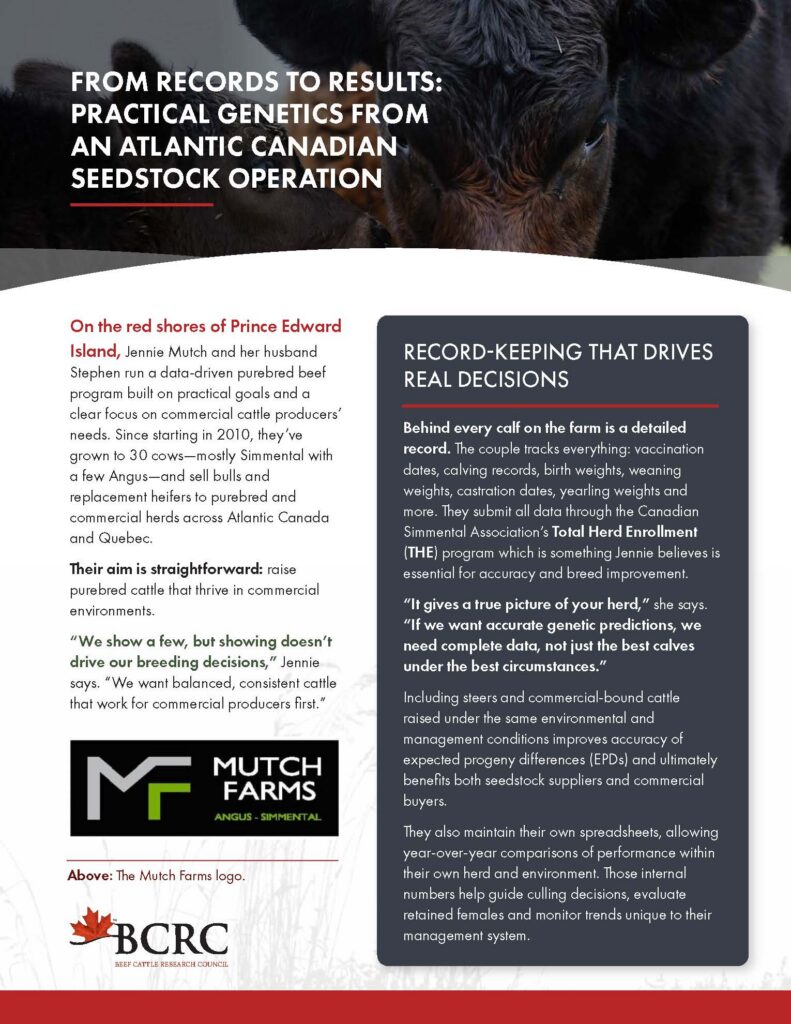
When selecting sale bulls, they look first at birth weight and calving ease, which are key priorities for their customers. Most commercial producers in the region run smaller herds and want bulls that can be used across the entire cow herd, which naturally leads to more questions about calving suitability.
To meet that need, the Mutch’s target moderate, predictable birth weights:
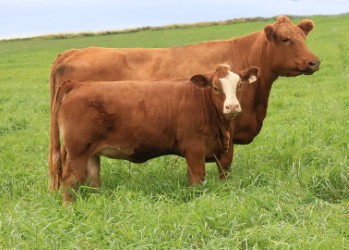
- Heifers: 70–85 lb
- Cows: 80–100 lb
These benchmarks help ensure calves are born easily while still maintaining enough early growth and muscle expression to perform. Any bull calf born outside those ranges, or out of a cow that requires calving assistance, is flagged and evaluated critically before being considered for sale.
“A lot of buyers ask, ‘Can I use this bull on heifers?’” Jennie says. “We’re honest about that. Not every bull fits that need.”
From there, they evaluate phenotype, structural correctness, growth and overall balance. They strive to avoid extremes— consistency is the priority.
Leveraging Genomics for Better Accuracy
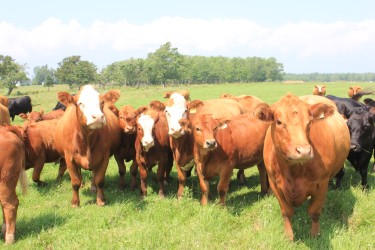
Every year, the operation pulls tail hair samples from all males and retained females for genomic evaluation. They complete full 100K DNA testing, including parent verification, polled and colour testing, and genomically enhanced EPDs (GE-EPDs).
Genomically enhanced EPDs increase the accuracies of EPDs by the same amount as having added performance information from seven to 23 offspring, depending on the specific trait. This means producers are better able to predict the genetic merit of progeny from young animals (heifers or yearling bulls) before they have produced any calves.
Buyers are increasingly using online EPD profiles to compare bulls. Questions from buyers about yearling weights, calving ease numbers or growth EPDs are becoming more common.
“When we first started, we were talking a lot to other breeders to better understand expected bull and progeny performance,” she says. “But as we’ve used genomics over time, we’re seeing the patterns play out in the real world.”
Selecting Outside Sires: Consistency Over Extremes
When it comes to bringing in new genetics, either through artificial insemination (AI) or herd bulls, the couple looks at their own cow herd first: where they are, what traits need stabilizing and how to maintain balance.
“We tend not to chase extremes,” Jennie says. “Consistency across the cow herd is the goal.”
They review pedigrees, visit other farms, study progeny when possible and rely heavily on the growing availability of GE-EPDs. Provincial programs that reward top-percentile animals add another layer of motivation to prioritize balanced trait selection.
Navigating Environment and Management Differences
One of the biggest challenges Jennie identifies in tracking genetic progress is environmental variation. Prince Edward Island’s wet, mild winters create different management needs than Western Canada’s colder, drier climate. These differences can influence performance, birth weights and even how traits are expressed in a new environment.
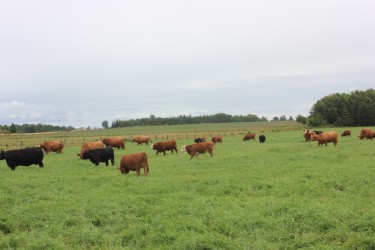
“We’ve had to adjust our feeding and calving timing because of the weather,” she says. “We moved calving to early December so that cows moved more, which brought birth weights down. That kind of management difference matters when you’re comparing cattle from other regions.”
This awareness also shapes their conversations with customers. They ask about calving seasons, feeding programs and operational goals to ensure they match buyers with the right bull—sometimes even guiding them toward another breeder if a better fit exists.
A Growing Market and Better Conversations
With strong beef prices and renewed interest in expanding cow herds across the Maritimes, more producers are shopping for high-quality bulls and replacement females. Jennie says this shift is leading to better, more informed discussions about genetics.
“When people are willing to invest more, they start asking more questions,” she says. “It’s pushing positive conversations around EPDs, management and long-term goals.”
Key Takeaways:
- Genomics can accelerate progress. Genomically enhanced expected progeny differences (GE-EPDs) give yearling bulls higher accuracy, increasing confidence in calving ease, growth and maternal traits.
- Match bull selection to your environment. Birth weights, growth and performance can change when cattle move between regions. Choose genetics proven to work under conditions similar to your own.
- Work with seedstock suppliers who know your operation. Share details about your calving season, feeding program and long-term goals so they can help you find the right bull.
- Evaluate new genetics based on your cow herd’s needs. Whether using AI or buying herd sires, focus on stabilizing weak points and reinforcing strengths rather than chasing high-number sires.
Acknowledgements
Thanks to the following individuals for contributing their time and expertise to review this article and related resources:
- Canadian Beef Breeds Council (CBBC)
- Karin Schmid, Beef Production and Extension Lead, Alberta Beef Producers
- Chelsey Siemens, Livestock and Forage Extension Specialist, Saskatchewan Ministry of Agriculture
- Stephanie Lam, Director of Research, Livestock Research Innovation Corporation
Sharing or reprinting BCRC articles is welcome and encouraged. Please credit the Beef Cattle Research Council, provide the website address, www.BeefResearch.ca, and let us know you have chosen to share the article by emailing us at info@beefresearch.ca.
The BCRC is funded by a portion of the Canadian Beef Cattle Check-Off.

Your questions, comments and suggestions are welcome. Contact us directly or spark a public discussion by posting your thoughts below.