Beef Farm Tours: Keep Biosecurity on the Itinerary
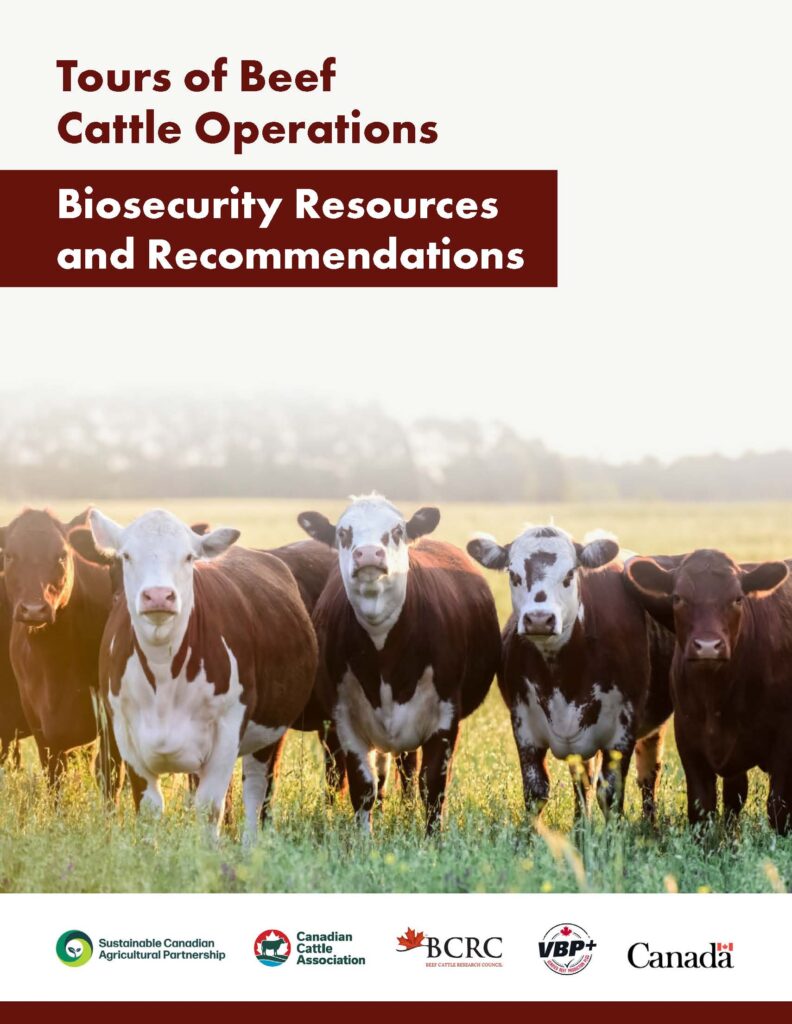
Farm tours are a great way to learn from others, network, build relationships, showcase your operation and give visitors a close look at the beef industry. However, with more boots on the ground comes more opportunity for disease to move between animals and operations.
Whether you’re welcoming a school group, hosting industry professionals or visiting a neighbouring operation, a little planning can go a long way. Biosecurity starts before the tour begins and continues after the last visitor heads home.
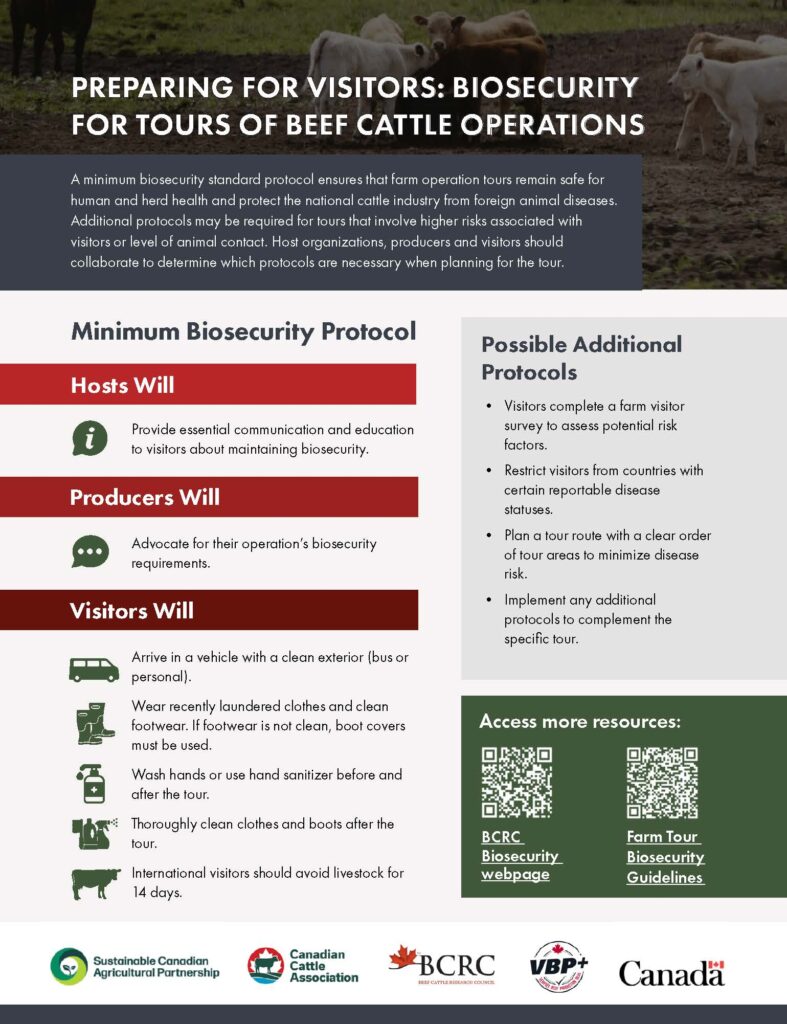
Good biosecurity requires everyone’s participation. There are practical steps that tour hosts, cattle producers and farm visitors can take before, during and after a tour to help reduce biosecurity risks.
If You’re Hosting a Farm Tour
Tour hosts play an important role in planning for biosecurity and communicating expectations with everyone involved.
Before the tour, consider the goals of the tour and activities planned, the level of animal contact and the risks associated with the visitors attending. For example, a tour that remains outside production areas presents different considerations than one involving direct animal contact. Additional considerations may be needed for international visitors.
Connect with the bus company, cattle producer and visitors to communicate where visitors will go, what activities are planned and what biosecurity practices they should expect. Communication templates for bus companies, cattle producers and visitors, along with information for international visitors, can help hosts prepare ahead of the tour.
The goal isn’t to stop people from visiting farms, it’s to plan the visit so everyone can enjoy the tour while minimizing unnecessary biosecurity risks.
During the tour, follow the planned biosecurity measures, including recommended boot-cover practices and appropriate personal protective equipment (PPE) based on the activities and level of animal contact.
After the tour, keep contact information for visitors, the bus driver and the producer so everyone can be contacted if a disease concern or outbreak is identified following the visit.
For more detailed requirements, tips and email templates for planning and managing a tour, see Resources and Recommendations for Tour Hosts.
If You’re Welcoming Visitors to Your Farm
Beef cattle producers can help make a tour successful by working with the host to ensure visitor activities fit with the operation’s biosecurity practices.
Before the tour, work collaboratively with the tour host to develop a plan that meets your operation’s biosecurity requirements. Share important information with the host, such as any recent disease concerns or outbreaks that could affect the planned visit and identify areas that visitors should avoid.
During the tour, be available to guide visitors and help the host implement the planned biosecurity measures. Remind visitors of the operation’s protocols and, where appropriate, explain why they are important.
After the tour, be diligent with cleaning protocols and monitor the herd for changes in health status, particularly among animals that had contact with visitors. Ensure visitor information is accurately recorded and retained if needed.
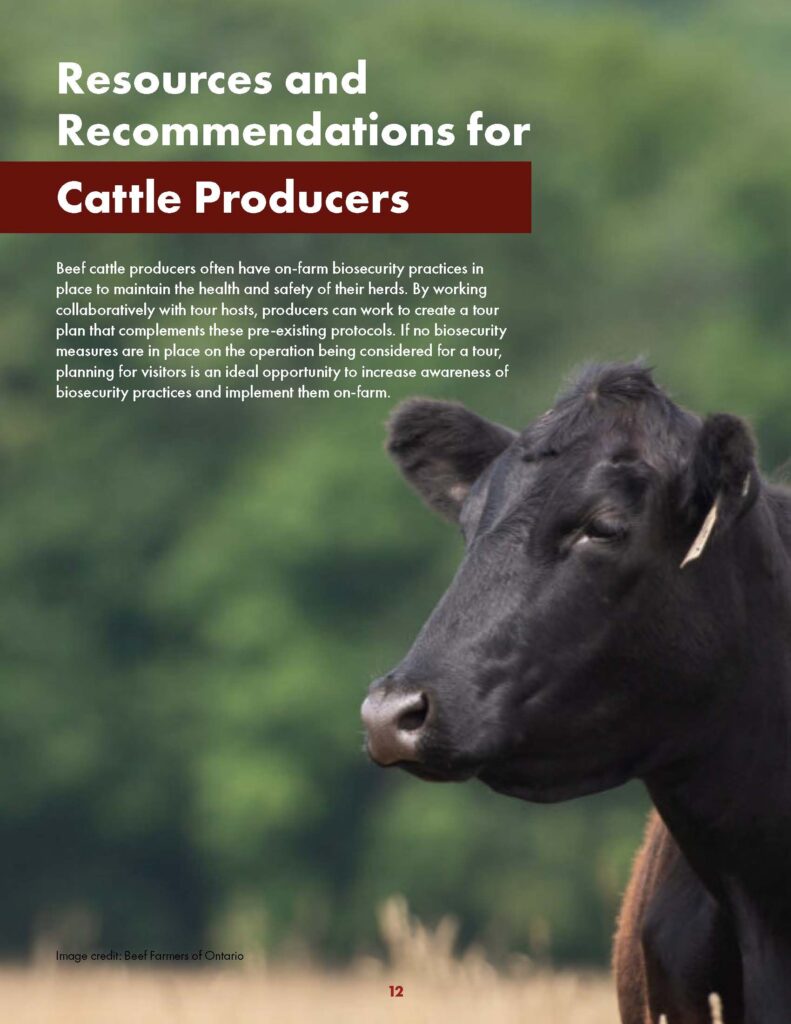
For more detailed requirements and beneficial practices, see Resources and Recommendations for Cattle Producers.
If You’re Visiting a Farm
Visitors also have an important role to play in protecting animal health and the industry. Following the producer’ and host’s expectations can help reduce the risk of carrying disease onto or between operations.
Before the tour, review all biosecurity information provided by the host and complete a farm visitor survey, if requested. Arrive wearing clean clothing and footwear that has not previously been worn around livestock or ensure clothing and footwear have been properly cleaned and disinfected.
During the tour, avoid unnecessary contact with livestock and follow instructions about where you can go and what you can touch. Leave any unnecessary items on the bus or in your vehicle and leave any out-of-country food at home. And, of course, ask questions and have fun!
After the tour, clean and disinfect clothing, footwear and equipment used on the tour. Monitor your personal health following the tour.

International farm visitors should take additional precautions, including:
- avoiding livestock contact
- declaring farm visits at border crossings
- following the destination country’s quarantine requirements and entrance guidelines
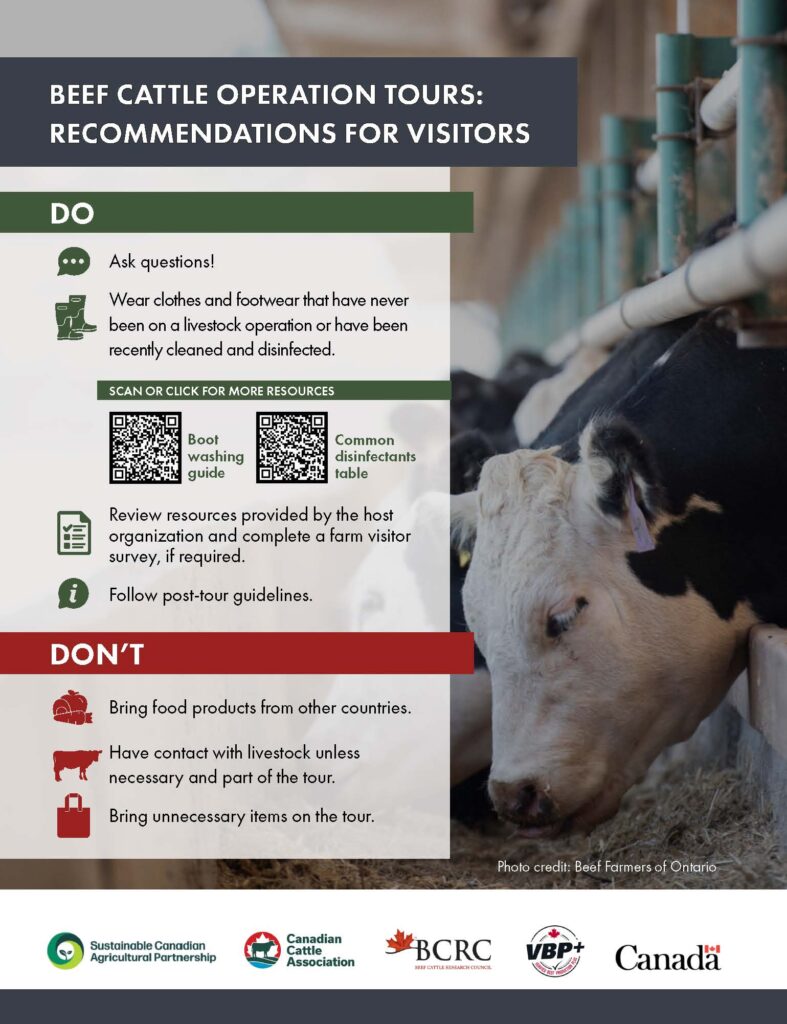
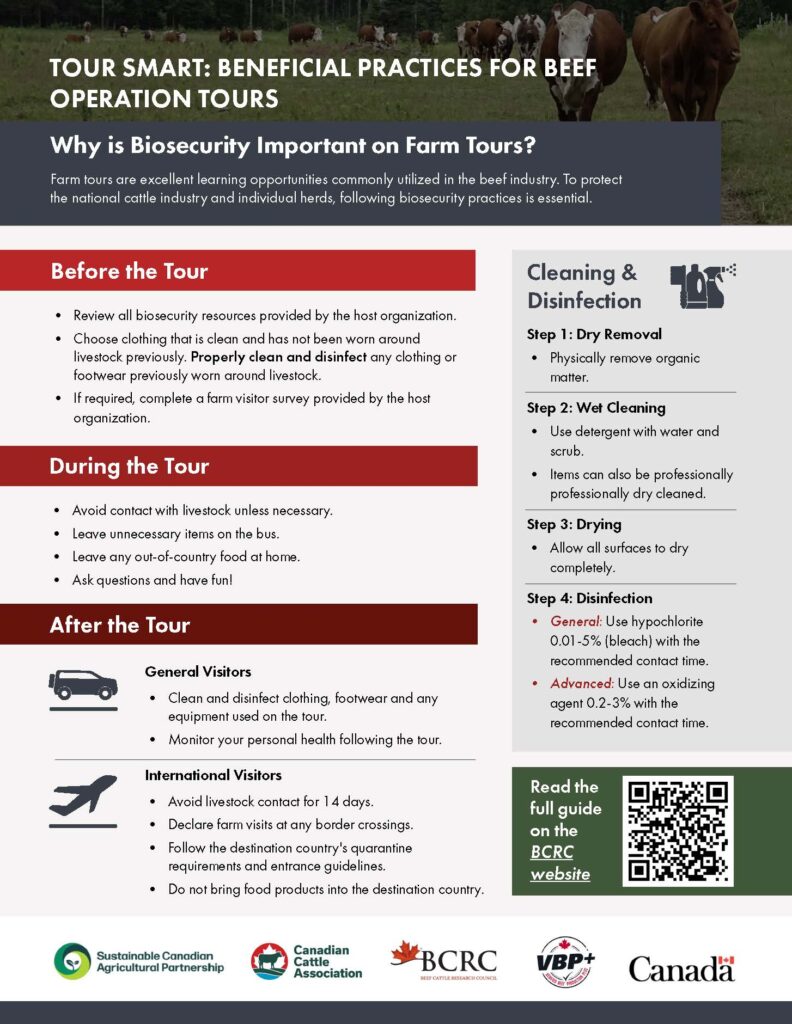
For more detailed requirements and recommendations for visitors, see Resources and Recommendations for Cattle Operation Visitors.
Biosecurity at Every Stop of the Farm Tour
A successful farm tour takes more than having a good itinerary. Considerations should be built in from planning until the last pair of boots is disinfected and put away.
Whether you’re hosting, welcoming visitors or attending a farm tour, keep biosecurity in mind before, during and after the tour.
Get the full Picture
The full 27-page guide, Tours of Beef Cattle Operations Biosecurity Resources and Recommendations, provides more details for planning, managing and attending beef cattle operation tours.
Share these resources with everyone involved. Good biosecurity is a team effort, and planning can help make farm tours a positive experience for everyone while minimizing unnecessary risks.
Sharing or reprinting BCRC articles is welcome and encouraged. Please credit the Beef Cattle Research Council, provide the website address, www.BeefResearch.ca, and let us know you have chosen to share the article by emailing us at info@beefresearch.ca.
The BCRC is funded by a portion of the Canadian Beef Cattle Check-Off.
Your questions, comments and suggestions are welcome. Contact us directly or spark a public discussion by posting your thoughts below.