Ingenuity, Upgrades and Legacy: On-Farm Practices That Pay Off for These Beef Producers
The Beef Cattle Research Council (BCRC) is made up of producer members from across Canada, appointed by each of the provincial beef organizations that allocate part of the Canadian Beef Cattle Check-Off to research. The number of members from each province is proportional to the amount of provincial check-off allocated to research.
The following is part of a series introducing you to this group of innovative thinkers. These producers set the BCRC’s direction by sharing practices, strategies or technologies they have integrated into their own operations. Read the past installments in this series.
Implementing changes to increase profitability, reduce labour or fit farm work around an off-farm job doesn’t happen overnight. But, is doesn’t always require big investments either. Small tweaks and creatively using resources already on your farm can add up to meaningful gains and deliver big pay offs.
Using Data and Resources Effectively
Tara Mulhern Davidson – Ponteix, Saskatchewan
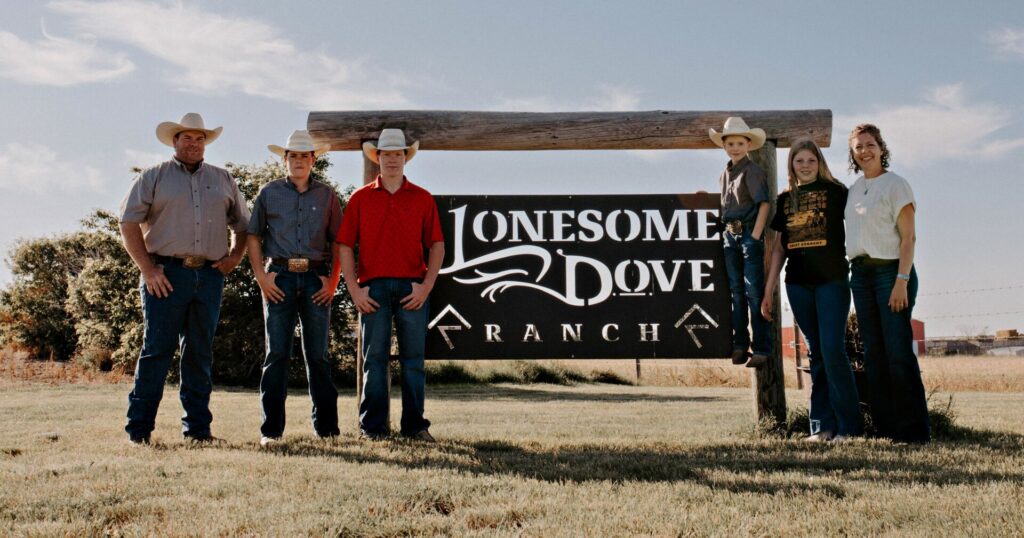
Tara Mulhern Davidson, along with her husband Ross and their four children, own and operate Lonesome Dove Ranch, a large commercial cow-calf and seedstock operation south of Ponteix, Saskatchewan. They raise both purebred Gelbvieh and commercial Gelbvieh-cross cattle, selling feeder steers, replacement heifers and some direct-to-consumer beef. The ranch also exports cattle genetics and live animals across North America and around the world, co-hosting an annual bull sale with family.
The Davidsons calve the majority of their herd in February and March and sort cattle as they are calving into groups for pasture turnout. Cows usually go to pasture in May, and Tara points out that their operation is “very spread out, so while our headquarters are south of Ponteix, we can have cattle 40 minutes away from us in any direction, and this is reflected in some of our management decisions.”
Data-Driven Decisions Through Record-Keeping
Tara is a long-time advocate of digital record-keeping and was an early adopter of online herd management tools. For more than 16 years, she’s used online cattle management software to track animal health, performance, treatments, maternal lineage and reproductive data. Tara has found that having this data is valuable for day-to-day management decisions.
“If someone is out riding through calves and gives one a treatment, they can record it immediately,” she explains. “The next day if someone completely different is out there riding through, they can look the calf up and know that they have already been treated.”
They also find value in having years of data in the system. Being able to look up any animal and know not only her information, but also the information about her offspring over several years has helped in decision making.
Tara points out data is used both for individual management and for herd-level decisions including:
- Identifying cows for culling based on temperament, feet, udder quality and performance
- Selecting heifers and bulls with strong genetic and performance histories
- Ensuring consistent information is available to all ranch workers no matter where they are
By tying calf data to dams and following animals across years, Tara can confidently market only the cattle that fit the ranch’s long-term goals and breeding objectives.
Portable Handling Systems for a Spread-Out Ranch
Operating across a wide geographic area, Tara notes that having a portable hydraulic squeeze chute has been a game changer for their ranch. “We can now check and process animals virtually anywhere,” she says. “You can make a corral out of anything and then stick the chute on the end, and it makes handling cattle much easier and safer.”
This system works especially well on rented pastures where they don’t know if they will have access in future years. It gives them flexibility to pregnancy check, treat or vaccinate cattle on the pasture whenever needed.
The portable chute reduces stress for both cattle and handlers and allows implementation of consistent management practices even on distant pastures.
Using Straw Bales for Shelter and Flexibility
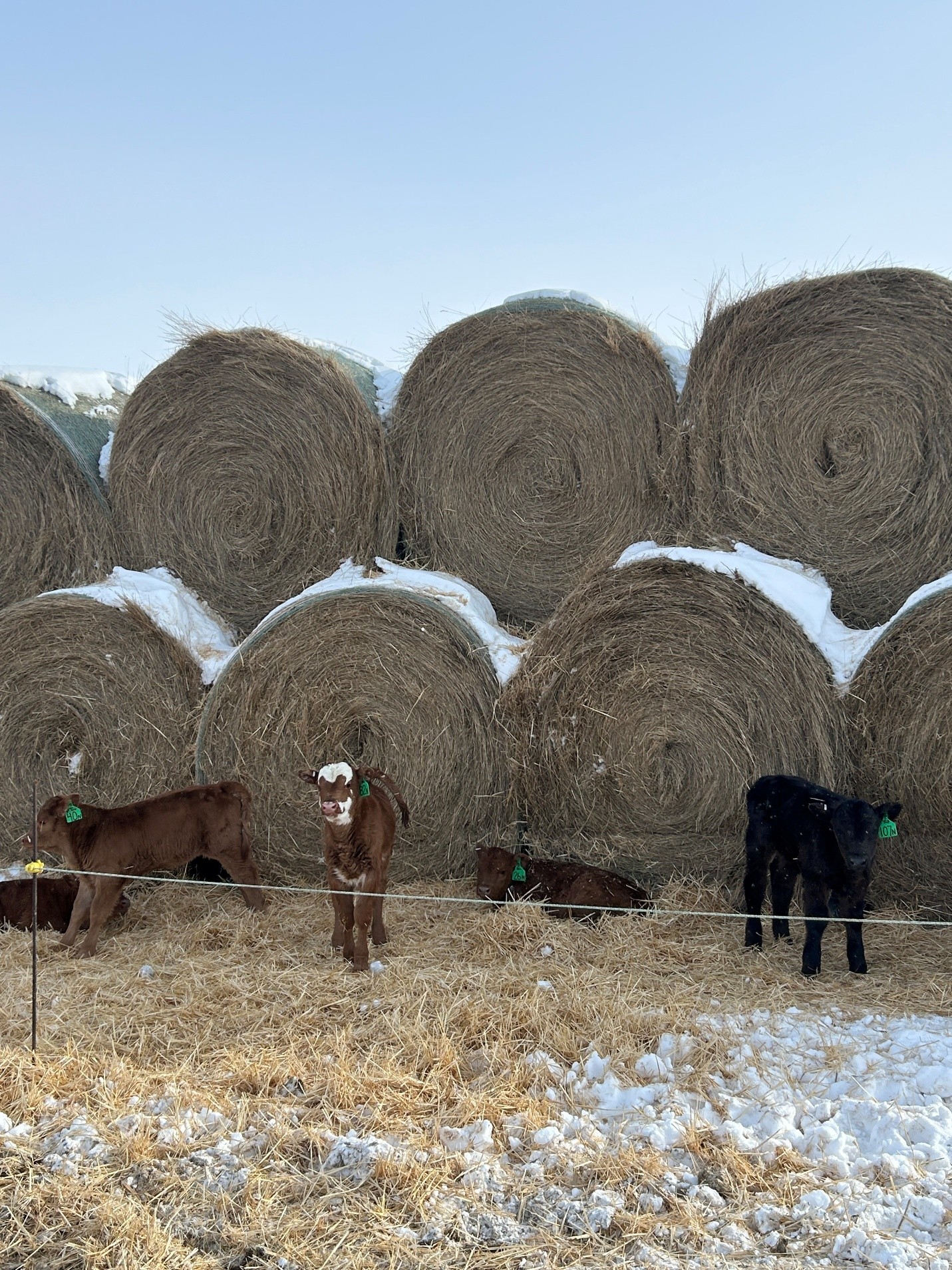
Straw is an extremely valuable resource on the Davidson’s farm. Because straw can be difficult to find in their area, they bale it from their own cereal crops to ensure supply. They use straw as feed and as bedding, but they also stack it strategically in calving and grazing areas as windbreaks and as temporary shelter for young calves and cows throughout the spring and winter. They run electric fence around the outside of the bales, which allows calves to get under it close to the bales but prevents cows from getting too close.
Tara also likes that this system is flexible, enabling them to stubble graze some of their fields and allowing shelter where it is needed year to year.
Making Your Farm Work For You
Kim Jo Bliss – Emo, Ontario
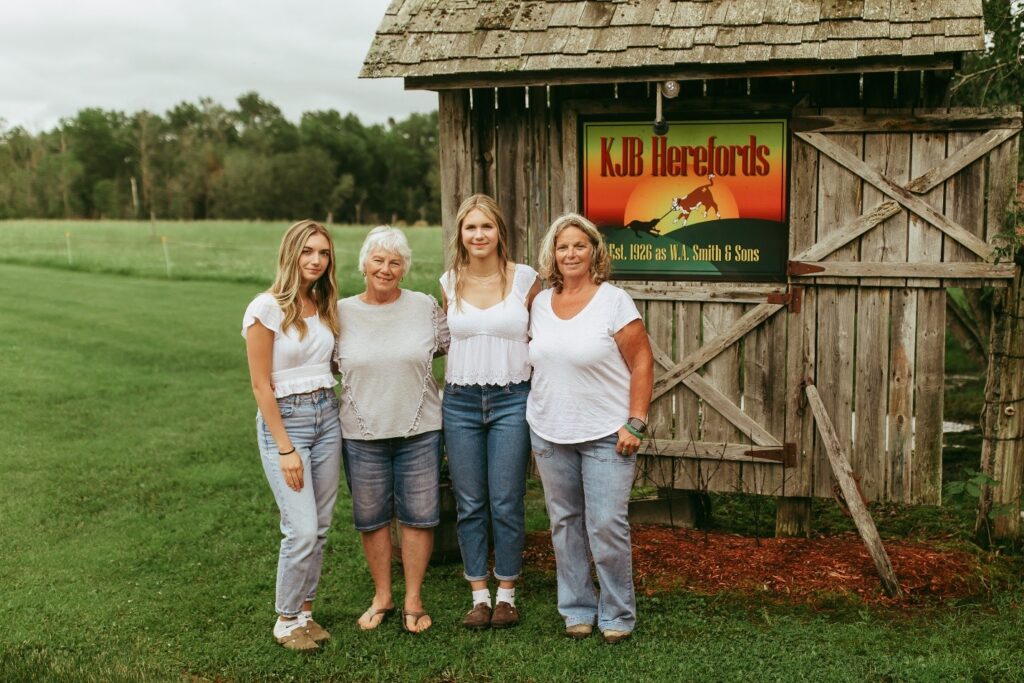
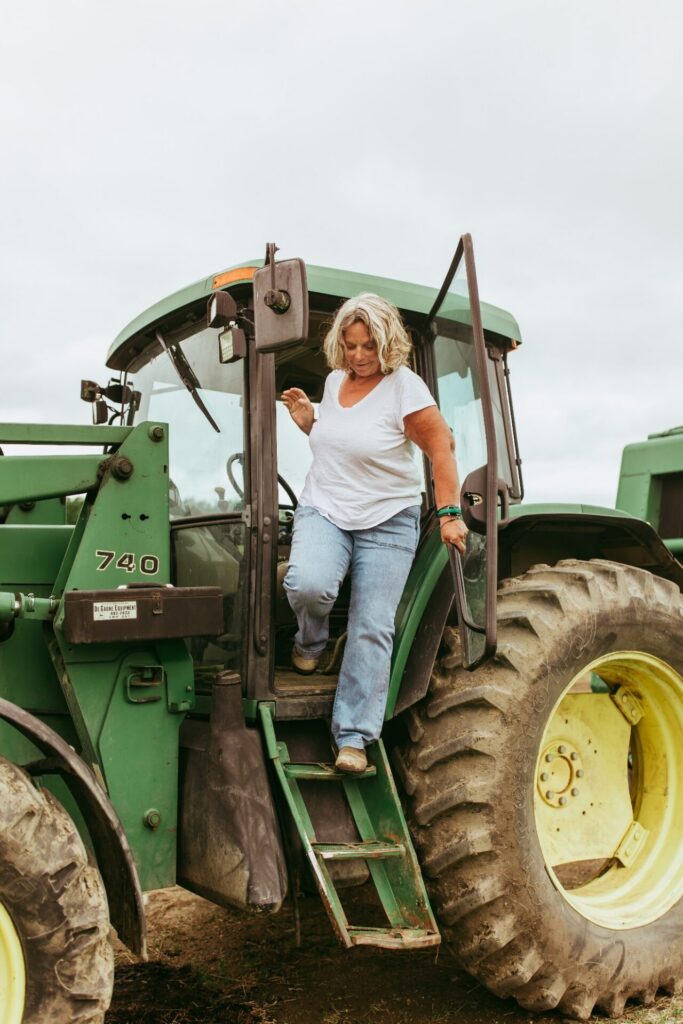
Kim Jo Bliss runs a diversified beef cattle operation in Northwestern Ontario near the borders of Manitoba and Minnesota. After coming back from university, Kim fell in love with farming through her grandmother and still farms some of her grandmother’s land today. On her farm, Kim Jo has about 50 head of purebred Herefords and Hereford × Red Angus crosses, along with some sheep, goats and other animals.
Kim Jo balances on-farm production with her day job at the University of Guelph’s Emo Research Station. Her role keeps her at the intersection of producer needs, forage research and practical on-farm management adaptations. Off-farm work has required Kim Jo to adopt practices that enable her to be away from the farm during the day.
Winter Bale Grazing for Efficiency and Animal Health
Kim Jo grows all of her own feed and utilizes the fields with bush for winter feeding. She uses hay to bale graze but rotates pastures to ensure a better distribution of nutrients and to allow cattle access to the bush for shelter.
Bale grazing begins in November with cattle allowed access to 10–14 days of feed at a time and bales are spaced out to encourage cattle to walk. Depending on forage quality, older or poorer quality bales are rolled out to encourage cattle to eat them. Providing only this amount of feed at a time allows Kim Jo an opportunity to look through the cattle and check them when feeding. “I still check the cattle on the days I am not feeding, but I find spending the time to go out there every 10 days really gives me a good opportunity to look at everything while I am feeding,” she says.
The feed is tested annually, and protein blocks are fed to balance the nutritional value of the hay. She points out that in drought years there can be a real problem with feed quality, especially when it comes to mineral deficiencies. This method allows her to tailor feeding and grazing patterns, keeping cattle healthier and better monitored while also maximizing labor and feed resources.
Calving Barn Cameras for Management Flexibility
Cows calve in February and March to accommodate a busier field work season in Kim Jo’s job at the research centre. A network of cameras ensures she can check on and manage calving, even while working off farm during the day, especially during colder weather.
All cattle are brought in close to the yard during calving, then those that are close to calving are moved to the barn. Kim Jo points out that having higher quality cameras has helped her not only monitor calving but also ensure calves are getting up and nursing or determining if they require assistance.
The barn is set up with six calving stalls each with their own camera, and with the addition to a camera in the yard, she is able to monitor cattle from anywhere on her phone. “I choose to use a security camera system. It rotates 360 degrees and will also zoom in for high quality so that I can read ear tags. It was more money, but I think it was worth it.”
This technology gives her peace of mind during peak calving and allows her to balance farm chores with other responsibilities.
Putting Production-Driven Experience Into Action
Both Tara and Kim Jo bring production-tested practices to the BCRC — from data-informed decisions and flexible infrastructure, to adaptive grazing systems and smart use of technology. Their on-farm experiences enrich the council’s perspective, ensuring research directions continue to reflect the realities and opportunities of Canadian beef production.
Sharing or reprinting BCRC posts is welcome and encouraged. Please credit the Beef Cattle Research Council, provide the website address, www.BeefResearch.ca, and let us know you have chosen to share the article by emailing us at [email protected].
The BCRC is funded by a portion of the Canadian Beef Cattle Check-Off.
Your questions, comments and suggestions are welcome. Contact us directly or spark a public discussion by posting your thoughts below.