Calf Health Management — What Does the Science Say? 🎙️
CLICK THE PLAY BUTTON TO LISTEN TO THIS POST:
Listen to more episodes on BeefResearch.ca, Spotify, Apple Podcasts, Amazon Music or Podbean.
This article written by Dr. Reynold Bergen, BCRC Science Director, originally appeared in the January 2026 issue of Canadian Cattlemen magazine and is reprinted on BeefResearch.ca with permission of the publisher.
Sometimes two research studies will ask a similar question and get different results. That doesn’t mean that one is right and the other is wrong, or that it’s a coin toss, or that research is pointless – it just means that details and context are important. If we want to know whether a particular management practice helps prevent scours in beef calves, large-scale studies that measure signs of scours, treatment and recovery rates in beef calves are more helpful than studies that compare rectal temperatures or white blood cell numbers in a few dairy calves.
This is where “systematic reviews” are helpful. A systematic review clearly defines what kind of existing studies will help answer a specific question. Then it finds all the published studies that meet those criteria, reviews them, and identifies what they all agree on. Systematic reviews are extremely helpful when trying to make recommendations to real-life producers.
Claire Windeyer and a team of veterinary researchers from the Universities of Calgary and Saskatchewan recently published a systematic review of management practices related to preweaning death loss in beef calves (doi.org/10.1017/S1466252325000015). Then they convened a panel of 12 veterinary experts to identify and prioritize a large variety of management practices that would provide the greatest benefit for the most cow-calf producers (doi.org/10.3390/vetsci11100453).
What They Did
They screened 4,942 published research studies related to preweaning death loss. Eleven studies met their criteria to provide meaningful information regarding preweaning death loss in beef calves.
That doesn’t mean the other 4,931 studies were a waste of time and money – they may have been perfectly well-designed to effectively answer the specific question they were asking (e.g., “Do experimental vaccine formulations A and B produce similar immune responses against pathogen X in newborn calves?” That’s important to know in the early stages of vaccine development). They just weren’t helpful for this specific, producer-level question.
What They Learned
Four management practices clearly impact preweaning calf mortality.
Providing colostrum to calves that need assistance at calving and/or hadn’t nursed on their own reduced preweaning mortality. Calves that need help are still at a higher risk of dying before weaning compared to calves that don’t need any help, but providing these compromised calves with high quality colostrum shortly after birth greatly increases the likelihood that they will survive.
Injecting selenium and vitamin E at birth reduced calf mortality. The Canadian Cow-Calf Surveillance Network confirmed that many cows across Canada have less than adequate selenium, and vitamin E levels decline in stored or weathered forages. Selenium and vitamin E deficiencies can cause white muscle disease in newborn calves. Supplementing cows helps the cow but doesn’t necessarily transfer enough minerals or vitamins to the fetal or newborn calf fast enough. Injecting newborn calves is an easy way to rapidly prevent a common problem.
Calving season: Spring- or summer-calving herds lost fewer calves before weaning than fall- or winter-calving herds. Low temperatures and wind make small, wet calves feel even colder. Cold calves have a slower metabolic rate, are less vigorous and slower to nurse. If this means they don’t consume enough colostrum soon enough, they’ll receive less immune protection from the cow and be more likely to get sick and die before weaning. On the other hand, a calving barn can protect newborn calves from the cold, but it also bunches calves together, and that can increase the risk of disease transmission, sickness and death. This can pose a conundrum for purebred herds that calve early to produce bulls that are mature enough to breed as yearlings.
Length of the calving season: Herds with a shorter calving season had less preweaning death loss. Calving grounds should be relatively free of disease-causing microbes at the start of the calving season, so calves that are born early are exposed to less disease. Disease builds up as more and more cows calve, and as the earliest-born calves begin to shed their own pathogens and add to the disease load. As a result, calves born later in the calving season are exposed to more disease. With a tight calving season, the last calf is on the ground before the ‘disease machine’ cranks into high gear.
Veterinary experts agreed that providing colostrum to calves that have not nursed, and administering clostridial vaccines to preweaned calves will help reduce preweaning mortality in all herds. Many other recommended management practices (including specific vaccination, biosecurity, nutritional, and calving management practices) were deemed to be very useful for most or some herds. This doesn’t mean they’re optional – it means that they’re situational. They may not provide much benefit on some operations, but they may greatly reduce preweaning mortality on others. A few practices – including preventative or group antibiotic treatment under the direction of a veterinarian – were deemed to be potentially helpful in rare cases. Antibiotics aren’t effective for some diseases or pathogens, so veterinary direction is important to make sure you’re not simply wasting money on ineffective drugs, delaying effective treatment and risking the death of a valuable calf.
So What Does All This Mean…To You?
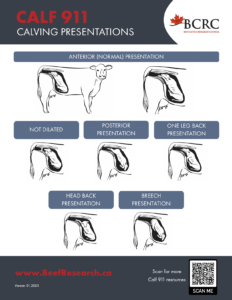
If you haven’t already, now’s a great time to touch base with your veterinarian to review your calving management practices and refresh your calf 911 practices.
The Bottom Line
Giving calves a good start in life greatly increases the odds that they’ll survive to weaning. Can you afford not to at these prices?
The Beef Cattle Research Council is a not-for-profit industry organization funded by the Canadian Beef Cattle Check-Off. The BCRC partners with Agriculture and Agri-Food Canada, provincial beef industry groups and governments to advance research and technology transfer supporting the Canadian beef industry’s vision to be recognized as a preferred supplier of healthy, high-quality beef, cattle, and genetics. Learn more about the BCRC at www.BeefResearch.ca.
Click here to subscribe to the BCRC Blog and receive email notifications when new content is posted.
The sharing or reprinting of BCRC Blog articles is typically welcome and encouraged, however this article requires permission of the original publisher.
The BCRC is funded by a portion of the Canadian Beef Cattle Check-Off.
We welcome your questions, comments and suggestions. Contact us directly or generate public discussion by posting your thoughts below.