Prenez des décisions éclairées pour votre opération avec des informations livrées directement dans votre boîte de réception.
Obtenez les derniers outils, innovations et informations scientifiques pour l'industrie canadienne du bœuf, y compris des considérations sur la production saisonnière et des analyses économiques.
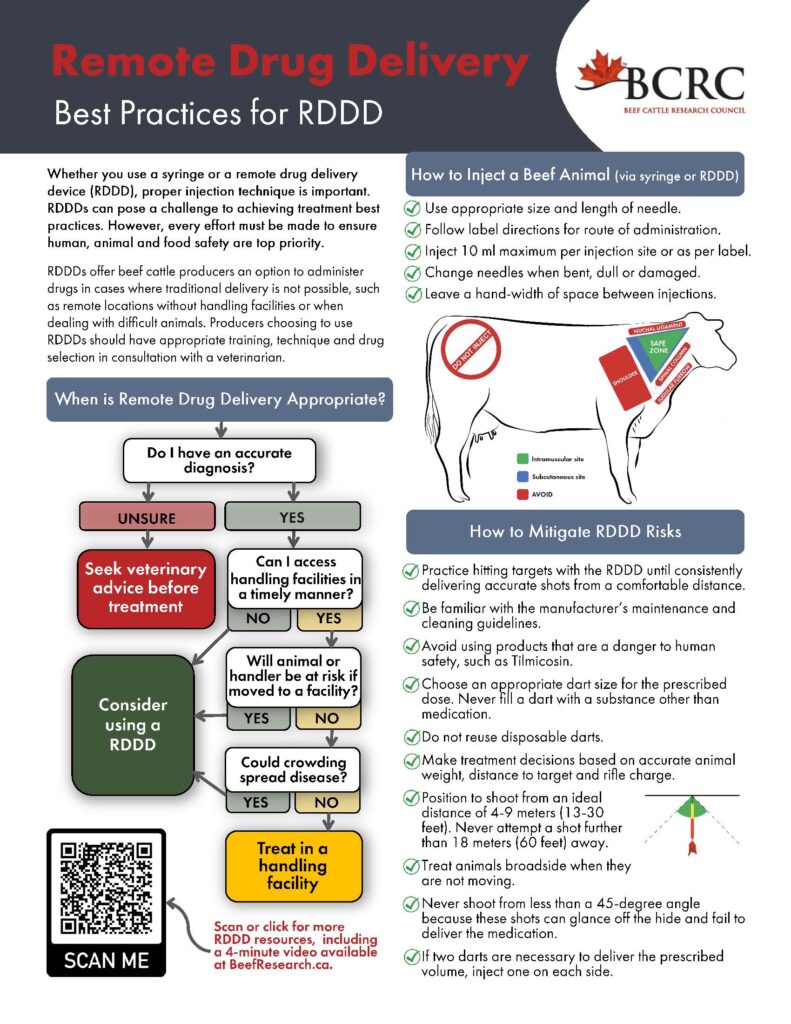
Whether you use a syringe or a remote drug delivery device (RDDD), proper injection technique is important. RDDDs–such as dart guns, pole syringes and crossbows designed for administering injections–can pose a challenge to achieving treatment best practices. However, every effort must be made to ensure human, animal and food safety are top priorities.
RDDDs offer beef cattle producers an option to administer drugs in cases where traditional delivery is not possible, such as remote locations without handling facilities or when dealing with difficult animals. Producers choosing to use RDDDs should have appropriate training, technique and drug selection in consultation with a veterinarian.
Key Points
Remote drug delivery devices provide an option to deliver pharmaceuticals to animals that might not otherwise be treated.
Using these devices can make it difficult to follow best practice recommendations for injecting beef cattle.
Producers should always follow best practice recommendations for injecting cattle even in difficult circumstances.
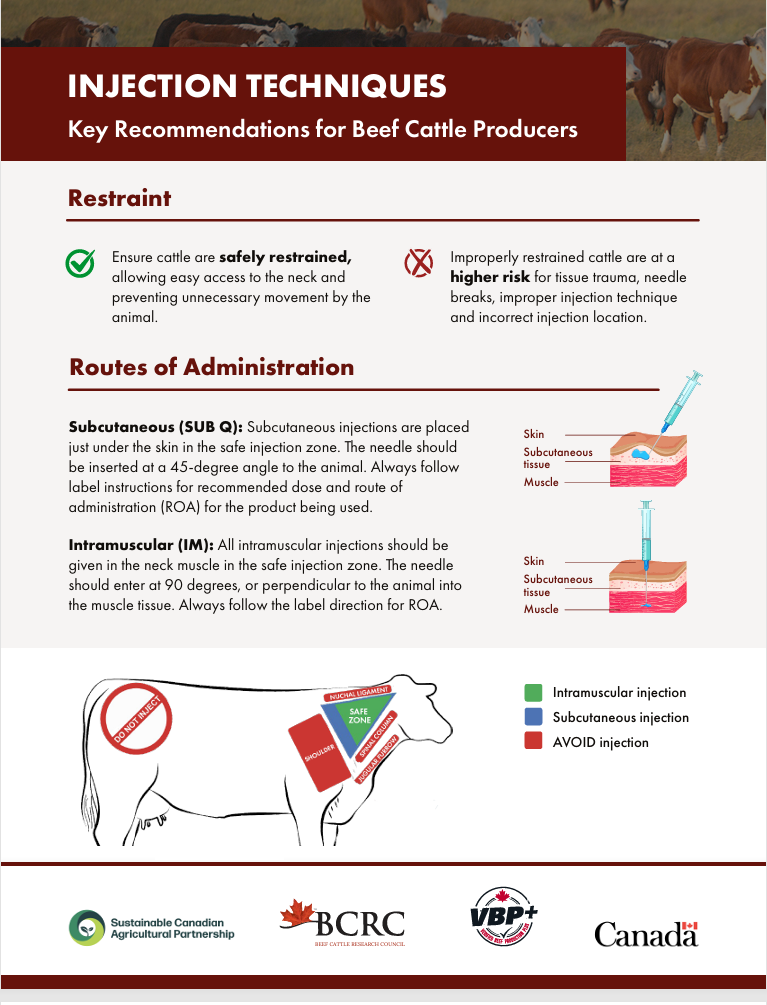
Injections should never be given in the rump or shoulder of a beef animal.
Remote drug delivery devices should be kept in good working condition, and producers should practice using them to ensure they are as accurate as possible.
A veterinarian should be consulted for proper diagnosis and use of any prescription medications
Video: When and How To Treat a Beef Animal Using Remote Drug Delivery
One-page flier on best practices for RDDD:
Click to download PDF
Four-page guide to beef cattle injection techniques:
Click to download PDF
QR code for veterinarian prescription labels:
Right click and “Save image as” a png file
Printed tri-fold brochure for veterinarian offices:
BCRC Podcast Episode 76: Remove Drug Delivery – What you Need to Know
“While RDDD’s can help to treat animals in a timely manner when facilities are not available, it is still very important to recognize their limitations and to always follow the recommendations for best practices when injecting any animal.”
“Producing quality, wholesome and safe meat should be everyone’s goal. Darting for treatment is a last option and should be pretty infrequent, but if you utilize RDD, do so following the guidelines as close as possible.” – Alberta veterinarian Dr. Roy Lewis
“If we have handling facilities available, or any other method of restraining and treating these animals, we should select those options first. Remote delivery devices should be used only as a last resort for a small minority of treatments in situations where animal welfare is a concern and there are no other options.” – Dr. John Campbell, Western College of Veterinary Medicine
Over the last two decades, great strides have been made in standardizing beef cattle injection techniques and methods. Today, there are animal injection best practices that have become widely known in the beef industry as “just the right thing to do.” These recommendations are to help farmers produce safe beef for the consumer and maintain Canada’s high reputation for beef quality.