Understanding nutrition terminology can help you make informed decisions for your beef cattle herd. However, some terms can be challenging to understand when used in different contexts. This dictionary summarizes nutrition and ration-balancing terms and phrases, with brief descriptions and how they may apply to your beef operation.
Click on the first letter of the term you are searching to jump to that section:
A B C D E F G H I J K L M N O P Q R S T U V W X Y Z
A
Acid detergent fibre (ADF): A measure of the least digestible portions of a plant (i.e., cellulose, lignin). As ADF levels increase, the digestibility of the forage decreases along with voluntary intake. High-quality legumes will typically have ADF values between 20-35%, while grass can range from 30-45%.
Acid detergent insoluble nitrogen (ADIN): Also referred to as acid detergent insoluble protein, acid detergent insoluble crude protein (ADICP), acid detergent fibre protein, insoluble protein or bound protein. ADIN is a measure of heat damage during harvest and storage that can bind protein and make it unavailable to cattle. Feeds can contain 3-8% ADIN even without heating.
Ad libitum: The amount of feed an animal consumes when it has free access to adequate feed and can eat as much as it wants.
Alternative feeds: Non-conventional feeds that can be used to supplement or improve beef cattle diets. This can include crop residues, damaged crops, processing by-products, fruit, vegetable and bakery waste, off-grade grains and even weeds.
Amino acid (AA): Nitrogen-containing molecules that are the building blocks used to create and maintain protein in the body.
Antagonists: Compounds or minerals that interfere with the absorption or utilization of essential trace minerals, such as copper, zinc, manganese and selenium. Even when cattle consume adequate minerals, antagonists can prevent those nutrients from reaching an animal. These interactions can take place in the digestive tract or at the site of metabolism. Common mineral antagonists include molybdenum, sulfur and iron.
As-fed basis: Describes a feed’s nutrient content in the form cattle actually consume it, including the water it contains. This measurement reflects the amount of feed delivered or consumed, not just the dry matter portion. As-fed values help determine how much feed must be delivered or consumed, while dry matter values should be used when evaluating nutrient concentrations against animal requirements.
Ash: The inorganic (mineral) component found within plants and reported as a percentage. In a forage sample, ash can also come from external sources such as soil or bedding. Excessive ash content (i.e., >5% for corn silage, >8% for alfalfa, >6% for grasses and >10% for legumes) can indicate external (i.e., soil or bedding) contamination in the sample.
Average daily gain (ADG): Also referred to as growth rate, average daily gain is the average amount of weight an animal gains each day. It is calculated by taking the amount of weight gained (lbs or kg) and dividing that by the number of days that weight gain was accumulated. ADG can be important to monitor and record for benchmarking and goal-setting to ensure your cattle are on target for goal weaning, breeding or finishing weights.
B
Balanced ration: A diet supplying nutrients in the current amounts and proportions to meet the specified animal requirements.
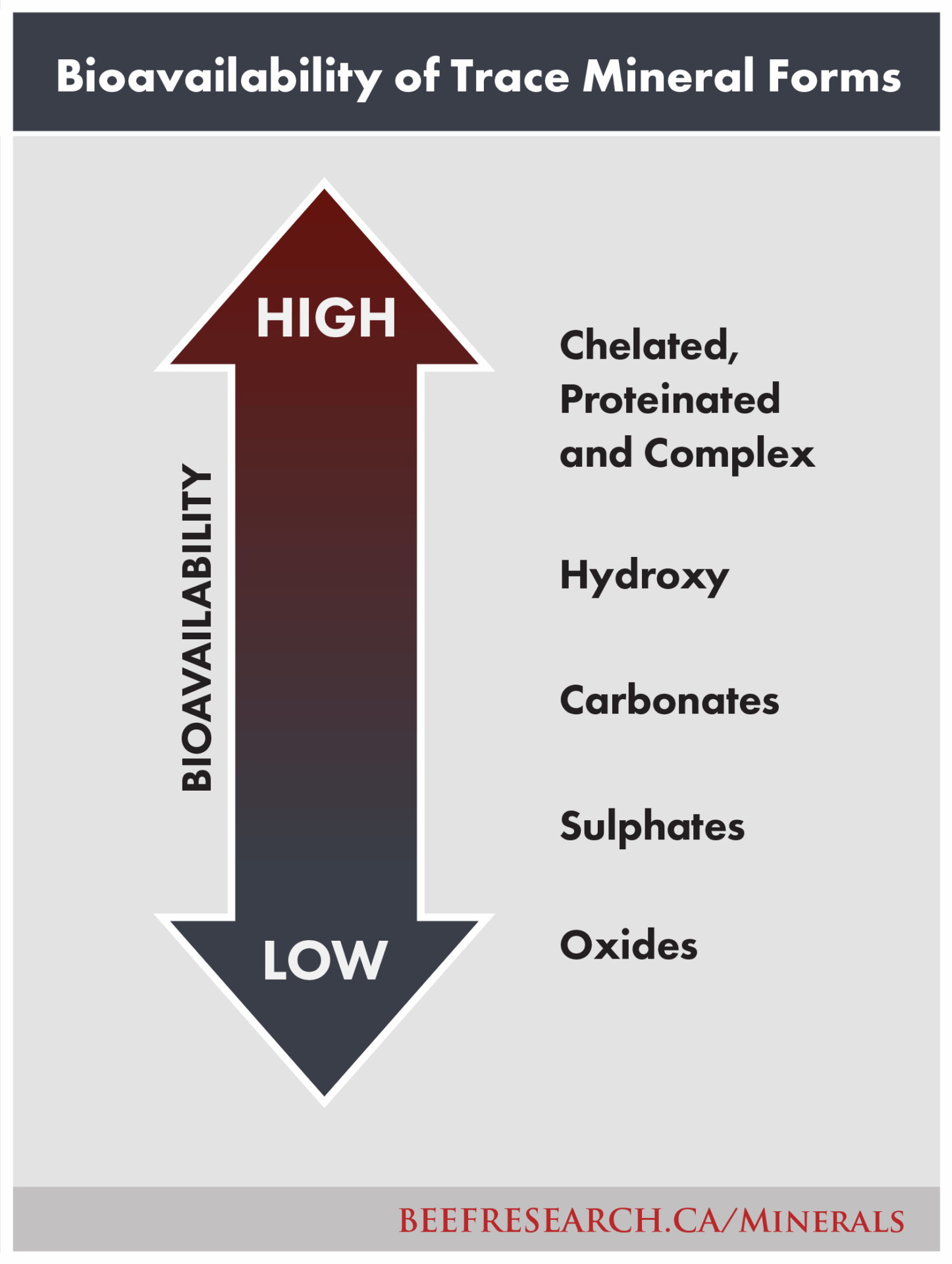
Bioavailability: The proportion of an ingested nutrient that is absorbed from the digestive tract and utilized for metabolic functions. Ruminants have unique absorption rates, making the chemical form of supplements (e.g., minerals, amino acids) critical for overall health, immunity and growth.
Body condition score (BCS): A low-cost, hands-on method to determine the condition (amount of fat cover) cattle have. BCS can be an important metric to monitor and record to help inform nutrition and management decisions throughout the production cycle.
By-products: Materials left over from processing crops, livestock products or bioenergy crops that can often be repurposed as livestock feed.
Bypass protein: See rumen undegradable protein.
C
Calcium (Ca): The most abundant macromineral found in the body; approximately 98% functions as a structural component of bones and teeth. Calcium is also necessary for blood clotting and muscle contraction.
Cellulose: A fibrous carbohydrate that is the main part of plant cell walls.
Chelated trace mineral: A compound formed between an organic molecule and a mineral that increases mineral absorption by an animal, which can reduce excretion of excess minerals in manure.
Chloride (Cl): A macromineral typically supplemented through salt. Works with sodium (Na) to maintain acidity in bodily fluids and pressure in body cells. Cattle should always have access to a source of salt.
Cobalt (Co): An essential micromineral (trace mineral) necessary for synthesis of B12 by microorganisms in the rumen.
Copper (Cu): An essential micromineral (trace mineral) necessary for immune function, fertility, fetal development and bone growth.
Crude fat: The nutrient portion of a feed comprised of fats, oils and other compounds that can be extracted using a chemical called ether. Fats and oils contain 2.25 times the energy found in carbohydrates and proteins. They can be added to rations to increase energy concentration when feed intake is limited.
Crude protein (CP): Is an estimate of the total protein content of a feed. Crude protein includes true protein and non-protein nitrogen sources such as ammonia, amino acids and nitrates. Protein digestibility can vary, and proteins may be bound to indigestible forms (e.g., heat damaged proteins).
D
Digestibility: The percentage of a nutrient that is absorbed rather than excreted.
Digestible energy (DE): The portion of energy an animal can digest with the help of the rumen microbes.
Degradable intake protein (DIP): See rumen degradable protein.
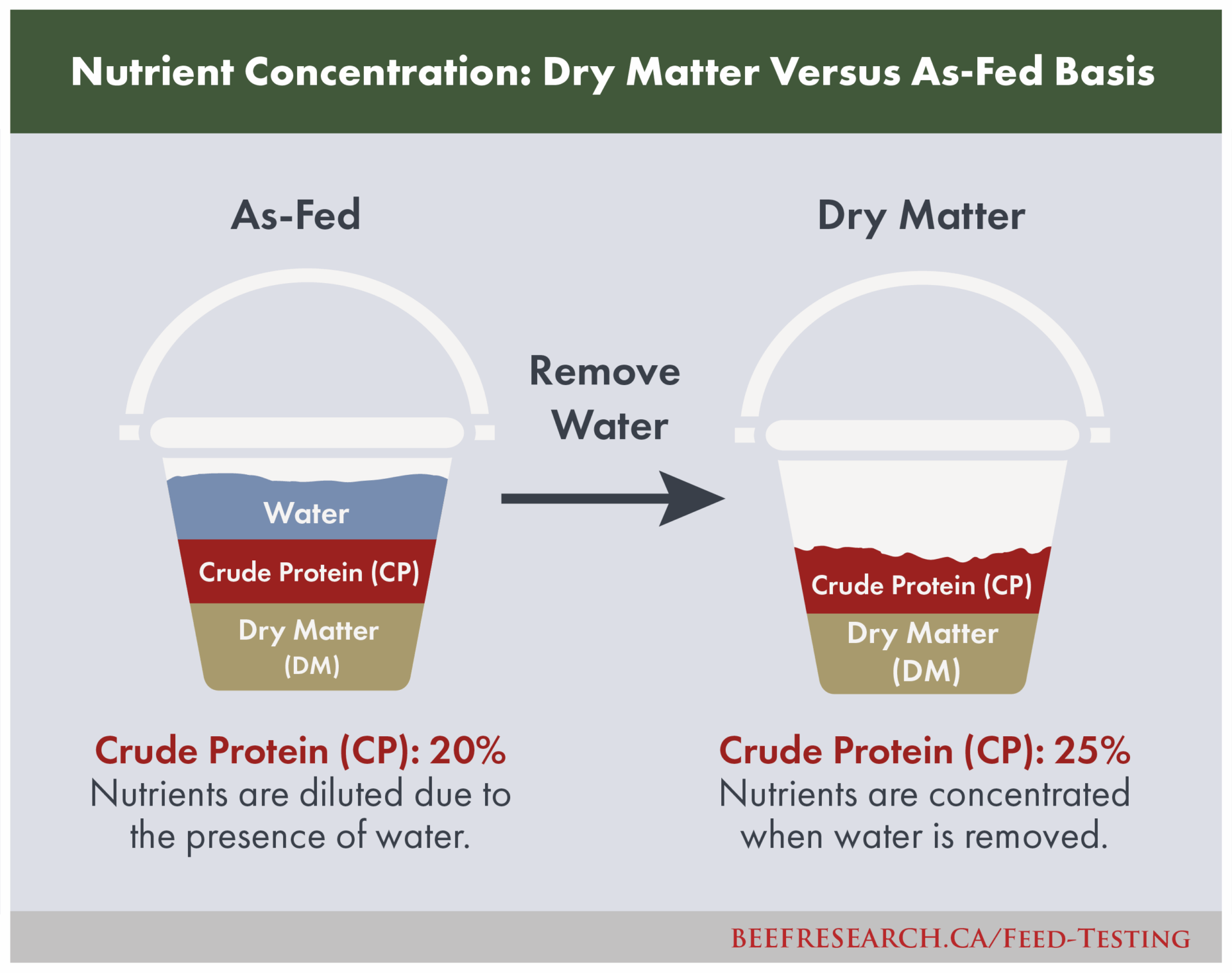
Dry matter (DM): The moisture-free content of a feed sample. The water content of forage will dilute nutrients. Therefore, it’s important to balance all rations on a dry matter basis. The daily intake of mature beef cattle will be 1.75%-2.5% of body weight on a dry matter basis. Moisture contents outside of expected ranges can indicate potential spoilage issues. The average dry matter of hay is 85-90%, meaning on average hay contains 10-15% water. For silage, average dry matter is 30-45%, meaning in an average year, silage contains 55-70% moisture. This may be less if silage is harvested in drier conditions. Grain has an average dry matter of 90%, meaning up to 10% may be water.
Dry matter intake (DMI): Amount of moisture-free feed or diet consumed. Rations should always be balanced on a dry matter basis.
E
Ether extract (EE): See crude fat.
F
Fat soluble vitamins: Vitamins stored in an animal’s fat reserves or liver, such as A, D, E and K.
Feed additive: A non-nutritive ingredient included in a ration to improve performance or health.
Feed conversion: The weight of dry matter (DM) feed consumed divided by live weight gained. Lower numbers indicate better feed conversion and greater feed efficiency, which can improve profitability.
Feed:gain ration (F:G): A measure of efficiency looking at the weight gain per pound of feed consumed. Also known as the feed conversion ratio (FCR), F:G is a measure of an animal’s efficiency in converting feed nutrients into increased body mass. Lowering the F:G ratio will reduce the cost to finish cattle.
Feed refusal: The amount of feed remaining after an animal has finished eating.
G
Gain:feed ratio (G:F): A measure of efficiency. Greater G:F means that an animal is putting more weight on for each kg or lb of feed consumed.
Gross energy (GE): The total amount of energy in the feed. Not all of this energy is available to an animal, as losses occur through digestion and are excreted as feces, urine, gases and heat.
H
Hemicellulose: A carbohydrate found in plant cell walls that is more complex in structure than sugars but less complex than cellulose.
Hydroxy trace minerals: Hydroxy trace minerals have a crystalline structure that protects them and allows the minerals to bypass rumen digestion, thereby increasing bioavailability.
I
Implant: An implant or growth implant is a small pellet containing natural or synthetic hormones placed under the skin of an animal’s ear. The hormones in the implant work in conjunction with natural hormones to improve growth performance and feed efficiency.
Inorganic minerals: These are the most widely used form in beef cattle supplementation, typically provided as sulfates, oxides or carbonates. These minerals provide the essential trace minerals cattle need at a relatively low cost, making them a practical choice for many beef operations.
International unit (IU): A standard unit of potency for biological compounds such as a vitamin, hormone, vaccine or antibiotic.
Iodine (I): Essential micromineral (trace mineral) involved in regulation of energy metabolism in the body. Approximately 70-80% is absorbed from the rumen.
Ionophore: Antimicrobials delivered through cattle feed that improve nutrient availability to an animal and prevent diseases like coccidiosis. There are different types of ionophores, but the most commonly used in Canada is monensin sodium.
Iron (Fe): An essential micromineral (trace mineral) for oxygen transport and utilization.
L
Least-cost formulation: A balanced ration designed to meet animal requirements at minimum cost.
Lignin: The indigestible portion of the plant. The level increases with the maturity of the forage.
M
Macrominerals: Minerals required in large amounts, including calcium (Ca), phosphorus (P), magnesium (Mg), potassium (K), sodium (Na), sulfur (S) and chlorine (Cl).
Magnesium (Mg): A macromineral important for nerve, muscle and immune function.
Maintenance requirement: Nutrients required by an animal to maintain body weight, reproduction and body condition.
Manganese (Mn): An essential micromineral (trace mineral) important in immune function, fetal development, fertility, milk production and bone growth.
Medicated feed: Any feed that contains drug ingredients intended for the cure, treatment or prevention of animal disease, enhancement of feed efficiency or promotion of growth.
Metabolizable energy (ME): The amount of energy available to the animal for metabolism and body functions after losses in energy from rumen fermentation (carbon dioxide, methane) and urine have been accounted for.
Metabolizable protein (MP): True protein absorbed by an animal’s intestines.
Microbial crude protein (MCP): Microorganisms in the rumen combine the ammonia supplied by rumen degradable protein or other non-protein sources (e.g., urea) with rumen digestible carbohydrates to synthesize microbial crude protein. MCP is digested in the abomasum, with the resultant amino acids absorbed in the small intestine. Microbial protein makes up close to 70% of all protein absorbed from the small intestine, and the protein contributions from microbes may be close to 100% for cattle fed low-quality forage.
Molybdenum: A trace mineral found in forages, which can act as a copper antagonist when found in high concentrations.
Mould: A microscopic fungus that grows on feedstuffs such as hay, silage and grain, lowers feed quality and creates health risks.
Mycotoxins: Poisonous chemical compounds produced by certain fungi that can contaminate cattle feed.
N
Near infrared spectroscopy (NIRS): Method of analyzing feed and forage using light to estimate nutrient content.
Neutral detergent fibre (NDF): A measure of the insoluble fibre content in the plant, which includes the plant cell wall components. More mature forages will have higher NDF levels.
Neutral detergent fibre digestibility: A measure of the percentage of neutral detergent fibre that can be digested by rumen microbes and used by an animal.
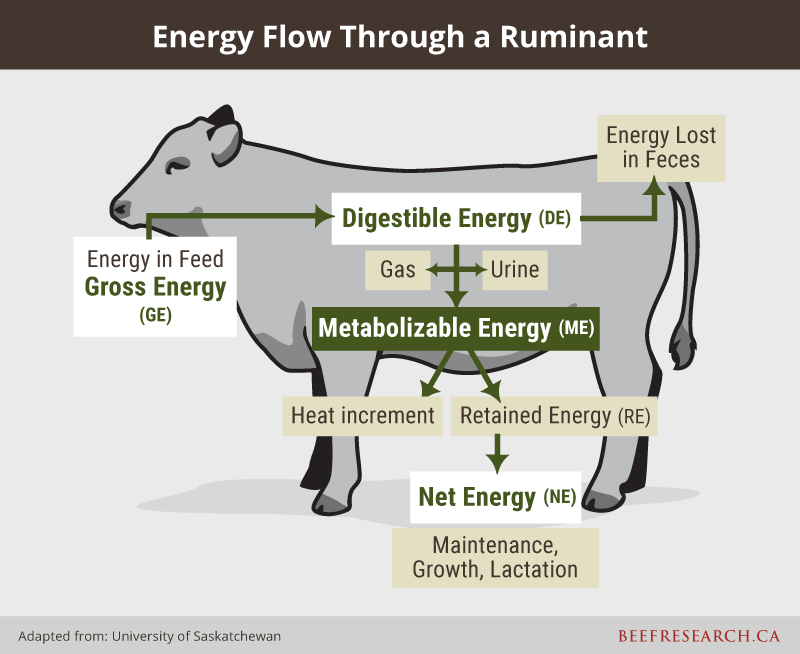
Net energy (NE): A measure of the energy available to an animal for maintenance and productive purposes (growth, gestation and lactation).
- Net energy of maintenance (NEm) is an estimate of the energy value of a feed to maintain animal tissue without gain or loss of weight.
- Net energy of lactation (NEl) estimates the energy available from the feed to support an animal’s requirements for maintenance plus milk production during lactation.
- Net energy of gain (NEg) is an estimate of a feed’s energy value for body weight gain above the energy required for maintenance. It is used in ration balancing for cattle when weight gain is desired.
Neutral detergent insoluble crude protein (NDICP): NDICP is linked to rumen undegradable protein (RUP) meaning that as it increases, the more RUP you will have in the feed sample.
Nitrates (N03-): Natural plant nutrients that can become a dangerous poison for beef cattle when plants accumulate high levels during bad weather or drought.
Nitrite (NO2): When nitrates (NO3-) are consumed at low concentrations, rumen microbes can effectively convert it to nitrite (NO2) and then further to ammonia (NH3) to produce proteins. However, if nitrates are consumed at high concentrations, this metabolic process becomes overwhelmed, leading to a buildup of nitrite. This excess spills over into the bloodstream and binds to hemoglobin, reducing the blood’s oxygen-carrying capacity. The result is similar to carbon monoxide poisoning and is a medical emergency, as cattle can die quickly.
Non-fibrous carbohydrates (NFC): The soluble components of the plant stored in the cell wall (i.e., starch, sugar, soluble fibre, organic acids) that provide energy to an animal. The microbial population within the rumen breaks down the NFCs for use as an energy source. NFC levels will be lower when acid detergent fibre (ADF) and neutral detergent fibre (NDF) portions are higher. Alfalfa hay averages an NFC level around 30%, while grass hay is around 19%.
Non-protein nitrogen (NPN): Non-protein nitrogen sources do not contain amino acids. Rumen microbes can convert nitrogen to microbial crude protein (MCP) if adequate energy is available in the diet. However, as rumen microbes breakdown NPN, they produce ammonia. If energy is insufficient, the ammonia may be absorbed at levels too high for the liver to break down, resulting in toxicity. Urea is a common NPN source for use in beef cattle rations. Ammonia toxicity is a concern when urea is included in the diet, but can be managed with proper dosage, use and mixing techniques.
Nutrient deficiency: A nutritional shortfall occurring when an animal’s intake of essential nutrients, such as vitamins, minerals or energy, is insufficient to meet bodily requirements. This results in impaired growth, reduced immunity or lower reproduction. Deficiencies can be categorized as primary (low nutrient levels in feed) or secondary (dietary antagonists blocking nutrient absorption).
Nutrient density: Nutrient concentration per unit of feed.
Nutrient requirement: The quantity of a nutrient needed for a specific animal and production level to maintain optimum health and productivity.
O
Organic matter: Total dry weight of the feed minus minerals (i.e., ash).
Organic trace minerals: Organic trace minerals are bonded to amino acids, proteins or organic acids in a way that makes them more bioavailable to the animal. Examples include zinc methionine, copper proteinate and manganese amino acid complexes.
Orts: See feed refusal.
P
Palatability: The preference an animal has for a particular feed when offered a choice.
Phosphorus (P): A macromineral required for bone development, energy transfer and reproduction.
Physically effective neutral detergent fibre (peNDF): That fraction of neutral detergent fibre that stimulates chewing.
Pica: A behaviour caused by a deficiency in minerals such as sodium and phosphorus. Affected animals will eat dirt.
Potassium (K): A macromineral that serves to maintain acidity levels in body fluids and pressure in body cells. Forages normally contain adequate amounts of potassium. Supplementation might be necessary for high grain diets.
Premix: A concentrated blend of vitamins, trace minerals and a carrier that helps ensure these nutrients are evenly mixed throughout a ration. Compared with mineral supplements, premixes contain higher levels of vitamins and trace minerals.
Primary mineral deficiency: Occurs when cattle are consuming a diet devoid of that mineral.
R
Rate of digestion: Speed at which feed is broken down in the digestive tract.
Rate of passage: Speed at which feed moves through the digestive tract.
Ration: A balanced, daily mixture of feedstuffs designed to meet the specific nutritional needs of an animal at a given stage of production.
Relative feed value (RFV): An index that estimates intake and digestibility and is useful for evaluating 100% alfalfa hay or silage only, with full bloom alfalfa hay used as the baseline with an RFV of 100. Values below 80 normally do not meet animal energy requirements. It is not reliable for mixed hay, grass hay or cereal greenfeed. It is often used for price discovery but is not helpful when balancing rations.
Relative forage quality (RFQ): An index that estimates intake and total digestible nutrients (TDN). The estimate of intake is based on different equations for grasses versus legumes or legume-grass blends and includes additional factors to improve the accuracy of prediction, as well as in vitro measures of neutral detergent fibre (NDF) digestibility. RFQ can be used for legume, grass and legume/grass mixtures. The RFQ value for full-bloom alfalfa hay will be similar to the relative feed value (RFV), but when samples differ in NDF digestibility, RFQ will differ from RFV.
Rumen degradable protein (RDP): Portion of ingested protein that is susceptible to digestion by rumen microorganisms. This portion is used in the synthesis of microbial protein.
Rumen undegradable protein (RUP): The portion of ingested protein that bypasses the rumen, with further digestion occurring in the intestinal tract. Not susceptible to digestion by rumen microorganisms.
S
Secondary mineral deficiency: Occurs when cattle are consuming enough of a specific mineral to meet requirements, but mineral antagonists are present in the diet which interfere with the normal absorption of that mineral.
Selenium (Se): An essential trace mineral important in immune function, fetal development, fertility and muscle development.
Sodium (Na): A macromineral important in regulation of fluid balance, nerve function, muscle contraction and nutrient transport. It is typically supplemented through salt and is important in regulating feed intake, growth, reproduction and herd performance.
Soluble crude protein (SCP): The most readily available form of protein to the animal. SCP is expressed as a percentage of crude protein.
Soluble intake protein (SIP): The portion of the protein intake that is completely soluble in rumen fluid and rapidly utilized by bacteria.
Starch: A measure of the easily digested carbohydrates found in a feed sample.
Sulfur (S): A macromineral essential for synthesizing microbial protein, amino acids and certain vitamins.
Supplement: Feed or feed mixtures used to improve the nutritional value of the base ration. A supplement is rich in one or more of protein, energy, vitamins, minerals or antibiotics, and it is combined with other feeds to produce a more complete feed.
T
Total digestible nutrients (TDN): Defined as digestible carbohydrate + digestible protein + (digestible fat x 2.25), reflecting the greater caloric density of fat. A TDN value can be converted into estimates of digestible, metabolizable or net energy. It’s most useful and accurate for rations comprised primarily of plant-based forages.
Total dissolved solids (TDS): Measures all dissolved substances in water other than water molecules themselves and is used as an indicator of inorganic salts including calcium, magnesium, potassium, sodium, carbonates, nitrates, chlorides and sulphates.
Total mixed ration (TMR): Homogeneous mixture of mechanically mixed ration ingredients, including roughages.
Toxicity: The extent to which a substance is poisonous to animals.
Trace minerals: Minerals required in small amounts, including copper (Cu), zinc (Zn), manganese (Mn), iodine (I), iron (Fe), cobalt (Co) and selenium (Se).
U
Undegradable intake protein (UIP): See rumen undegradable protein.
V
Vitamin: Organic compounds that typically function as parts of enzyme systems essential for many metabolic functions.
Voluntary feed intake: The amount of feed an animal chooses to consume each day when it has free access to feed or forage.
W
Water soluble vitamin: Vitamins that dissolve in water, including the B complex vitamins and vitamin C.
Wet chemistry: Method of determining the nutrient content of feed and forage through traditional chemical procedures.
Z
Zinc (Zn): An essential micromineral (trace mineral) important in immune function, fetal development, fertility, milk production and muscle, skin and hoof development.