Make informed decisions for your operation with information delivered right to your inbox.
Get the latest tools, innovations and science-based information for the Canadian beef industry, including seasonal production considerations and economic analyses.
Navigating Feed Tests: When to Test, What to Test for and How to Interpret Results
Feed represents one of the largest input costs in beef production. Without an accurate understanding of its nutritional value, both feed planning and ration formulation becomes largely speculative, increasing the risk of under- or over-supplying key nutrients. Laboratory feed analysis provides a precise assessment of nutrient availability, allowing producers to optimize feed utilization and improve overall efficiency.
While most producers are familiar with basic feed components such as dry matter, crude protein and starch, interpreting laboratory results can be more complex. Modern feed analyses go beyond basic nutrient measurements, offering additional insight on digestibility and nutrient components. These advanced metrics provide a more complete understanding of how nutrients will perform within the animal, supporting more informed feeding decisions.
Two common methods of analyzing feed samples are wet chemistry and near infrared spectroscopy (NIR). Wet chemistry uses heat and chemicals to measure nutrients, while NIR estimates values from light reflectance calibrated against wet chemistry data.
When should you test feed?
Timing matters as much as the test itself.
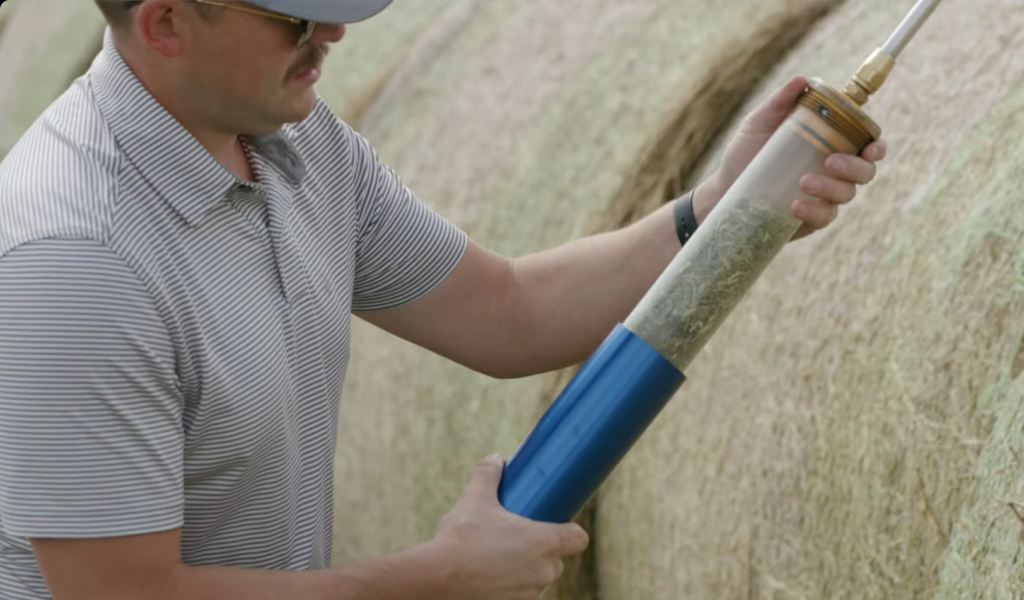
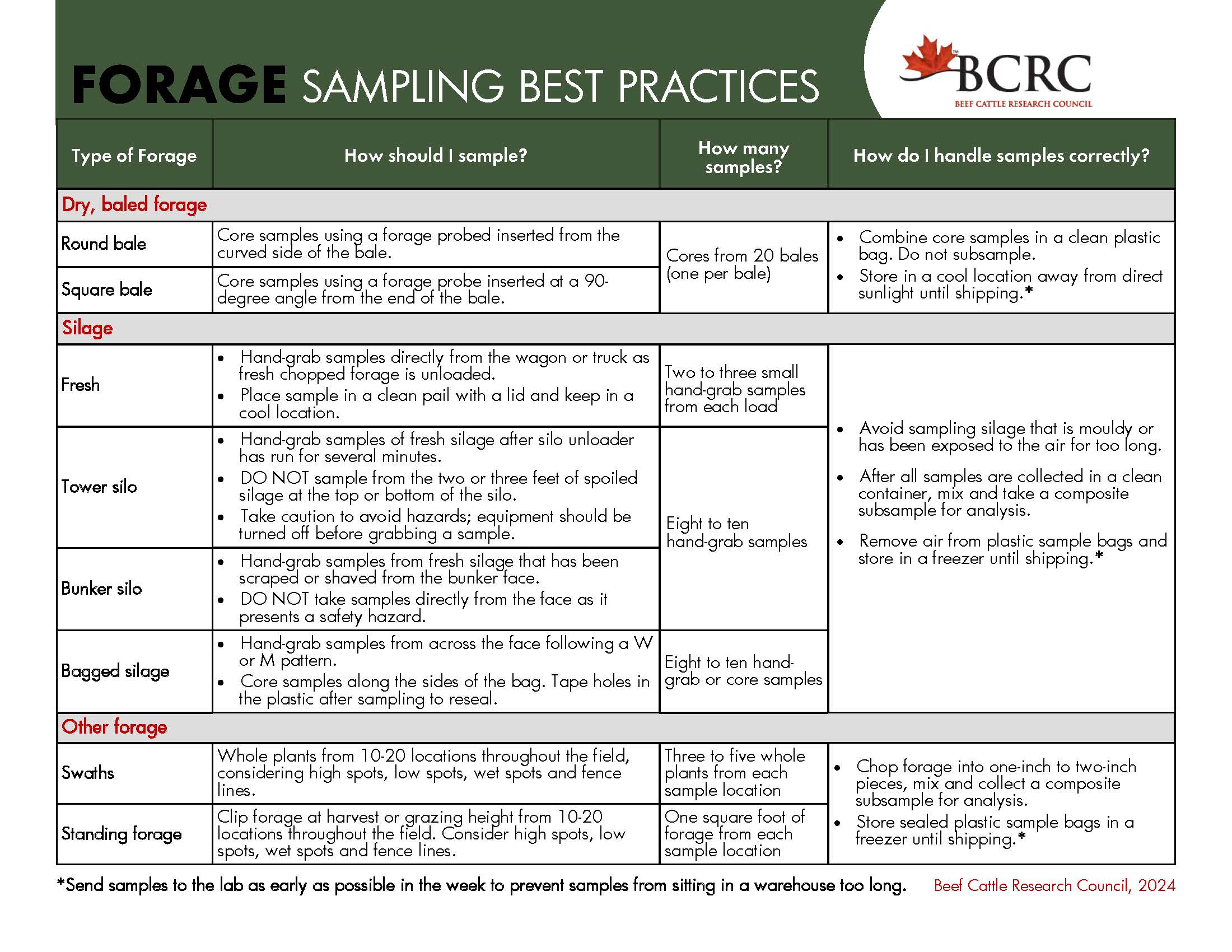
Sample each lot of feed separately (e.g., single field of hay, load of grain, harvest date).
Test as close to feeding as possible or when management decisions are being made.
Allow time for lab results (minimum two weeks) before feeding decisions are finalized.
For silage, wait at least four weeks after ensiling before sampling to ensure fermentation is complete.
Bottom line: test every year and anytime feed conditions have changed.
What should you test cattle feed for?
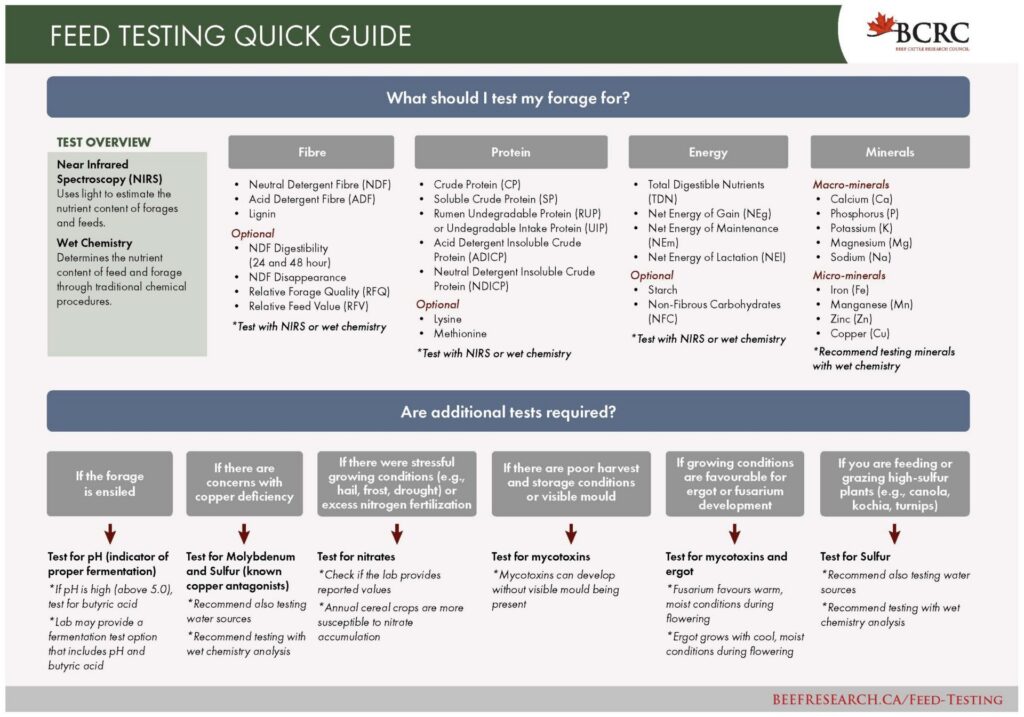
Key nutrient categories include fibre, protein, energy and minerals. What you test for will depend on the type of feed, the management decisions you need to make and how much you are willing to spend. For example, if you are feeding dry hay or greenfeed, you might want to consider testing for dry matter, crude protein, acid detergent fibre, neutral detergent fibre, energy, calcium, phosphorus, potassium and magnesium. If the forage is ensiled, including an additional test for pH can be beneficial to evaluate fermentation quality.
Laboratory feed analysis provides a precise assessment of nutrient availability, allowing producers to optimize feed utilization and improve overall efficiency.
Forage that is baled or ensiled when it is too wet can undergo heating and become brown to black in colour with a sweet, tobacco-like smell. This means that some of the protein in the forage will become unavailable to the animal. If heat damage is suspected, analysis of acid detergent insoluble nitrogen or protein (ADIN or ADIP) should be requested. Heating can also produce nitrites, which are highly toxic.
Some by-product feeds (such as distillers’ grains) or annual forages (such as canola or mustard) may have high levels of sulphates. Testing for sulfur is recommended when these feeds make up a significant portion of the diet, as excessive intake can cause polioencephalomalacia in cattle. Depending on the feed source and growing conditions, additional analyses for nitrates and mycotoxins may also be warranted.
How To Interpret Feed Test Results
Check out our interactive Sample Forage Lab Test Result for definitions of terms commonly included in a feed test analysis result.
Understand Dry Matter
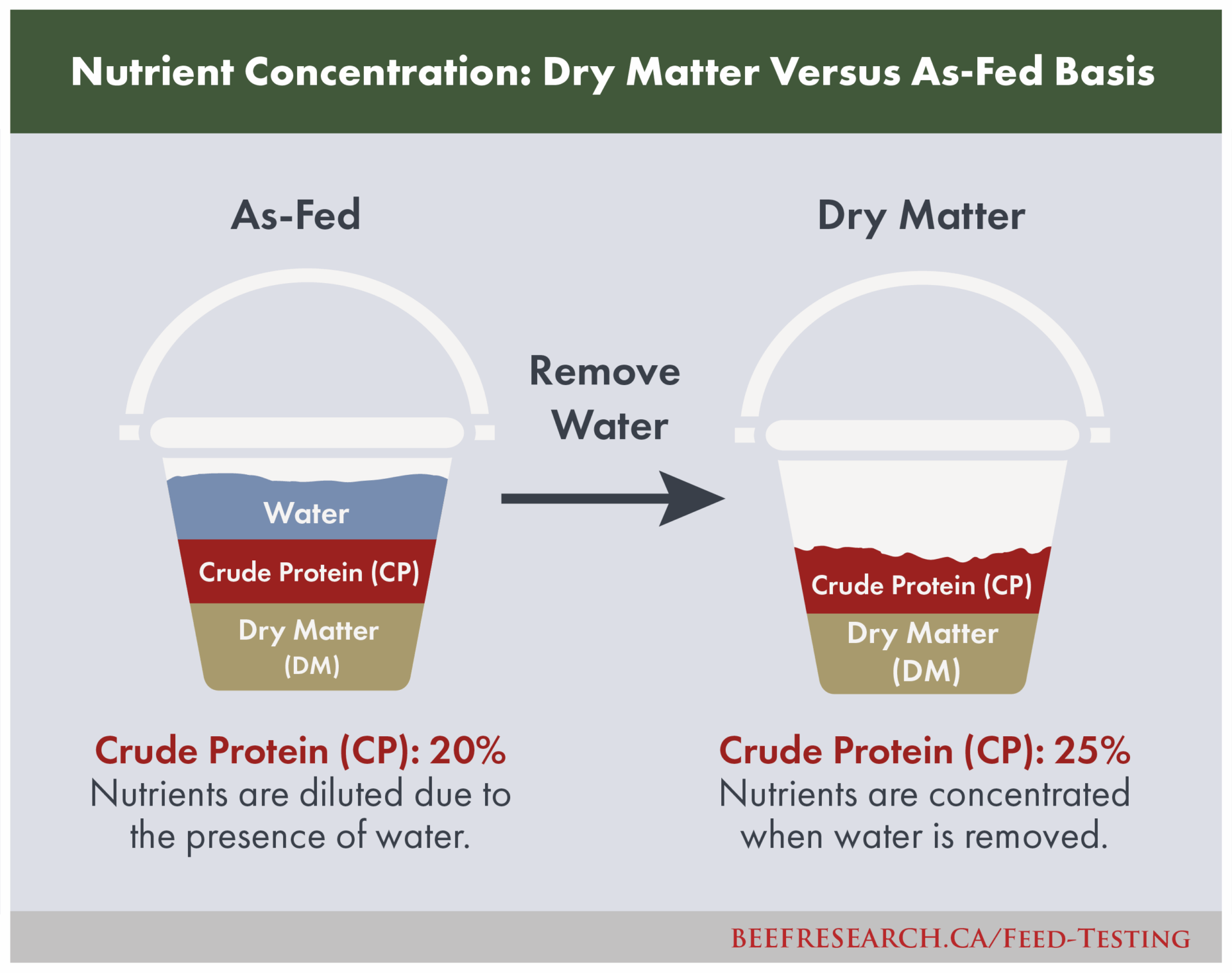
Dry matter (DM) is the foundation for interpreting all other nutrients as it represents the portion of feed that contains nutrients. It is often easier to think in terms of “as fed” when evaluating beef cattle rations, as these values are needed when building a total mixed ration (TMR) or loading a feed mixer. However, nutrients such as protein, energy, vitamins and minerals are in the DM portion. And knowing that these nutrients drive performance, converting to DM is key in ensuring cows are meeting nutrient needs.
If we break this down, beef cows typically consume about 2.0% to 2.5% of their body weight in DM per day of good-quality forage. For example, a 1,200 lb cow needs 24 lb of DM daily (1,200 x 0.02), which equals roughly 27 lb of hay at 88% DM (24 / 0.8814).
A good example of why this conversion matters is silage. Appropriately harvested cereal silage is typically 35% DM and 65% moisture. This means that in each pound of silage, there is only 0.35 lb of DM—the rest is water. When only considering as fed values, feeding 30 lb of silage may seem like plenty of feed for a 1,200 lb cow, but it is only providing 10.5 lb of DM—well below the requirement for dry matter intake (24 lb)—and does not provide sufficient nutrients to the cow.
Check Protein
Crude protein is a critical value, particularly for maintaining rumen function. Low protein (below seven to eight percent on a DM basis) can limit digestion and intake, especially in mature cows.
Protein is required for maintenance, growth, lactation and reproduction. It is a component of muscles, the nervous system and connective tissue. Protein requirements depend on cattle age, growth rate, pregnancy and lactation status. Young, growing cattle, as well as those in late pregnancy or lactation, have increased protein requirements.
Watch Fibre Levels
Fibre measurements, including acid detergent fibre (ADF) and neutral detergent fibre (NDF), play a major role in forage digestibility and feed intake. As forages mature, fibre levels increase, which reduces digestibility and limits how much cattle can consume. NDF is particularly useful in predicting intake, as high levels physically fill the rumen and slow feed passage rates.
Poor-quality forages, such as straw or slough hay, will be consumed at low levels, around 1.25 to 1.5 per cent of body weight on a DM basis. In contrast, high-quality alfalfa or alfalfa grass hay will approach 2.5% of body weight.
As a general recommendation, the maximum NDF dry matter content of the daily ration should be from 1.2% to 1.5% of the cow’s body weight. The higher quality the forage, the closer to 1.5% can be consumed. In the case of low-quality forages, it is essential to provide supplemental feed to ensure optimal nutrition.
Don’t Ignore Minerals
Although minerals are required in relatively small amounts for optimum beef cattle health, a deficiency can cause significant reductions in growth, immune function and reproduction. Regional variations in the trace mineral content of forages and soils create high risk areas where trace mineral deficiencies are more likely to occur. It is important to include mineral analysis of forages as part of regular feed testing.
When rations contain grass hay, alfalfa or a mixture of the two, calcium and phosphorus usually need to be supplemented in a 1:1 ratio (one part calcium to one part phosphorus). When feeding cereal forage rations, such as oat or barley greenfeed, a 2:1 or even 3:1 mineral mixture may be required to provide a balanced mineral mixture. Be sure to consult with a nutritionist to ensure proper supplementation.
Putting Results to Work
Feed testing takes the guesswork out of cattle nutrition. By understanding a few key numbers you can make smarter feeding decisions, help to control feed costs and maintain herd performance.
Turning feed analyses into feeding decisions often requires considering cattle class, stage of productions, feed intake, environmental conditions and more. The BCRC offers additional resources and tools to help you put feed test results to work. When in doubt, consult a beef cattle nutritionist to develop a balanced feeding program that meets your production goals.
Sharing or reprinting BCRC posts is welcome and encouraged. Please credit the Beef Cattle Research Council, provide the website address, www.BeefResearch.ca, and let us know you have chosen to share the article by emailing us at info@beefresearch.ca.
The BCRC is funded by a portion of the Canadian Beef Cattle Check-Off.
Your questions, comments and suggestions are welcome. Contact us directly or spark a public discussion by posting your thoughts below.
From a Piece of Wire to Contaminated Feed: Preventing Foreign Material Hazards in Beef Cattle Operations
Foreign material and toxin consumption by beef cattle can lead to significant health problems, reduced performance and economic losses. Canadian cattle producers take great pride and care in how they manage their farms and ranches, from providing proper nutrition to stewarding their land and ensuring excellent animal care. Yet even with the best intentions, foreign materials and toxins can quietly find their way into feed, water or pastures. Understanding where they come from and how to prevent exposure is a key part of protecting your herd.
Foreign materials and toxins often slip in through everyday farm activities such as repairing fences, running equipment, feeding hay or dealing with weather-stressed crops. A small piece of wire, leftover net wrap or contaminated feed source might not seem like much, but if consumed by cattle, it can trigger health issues, lost performance or even death.
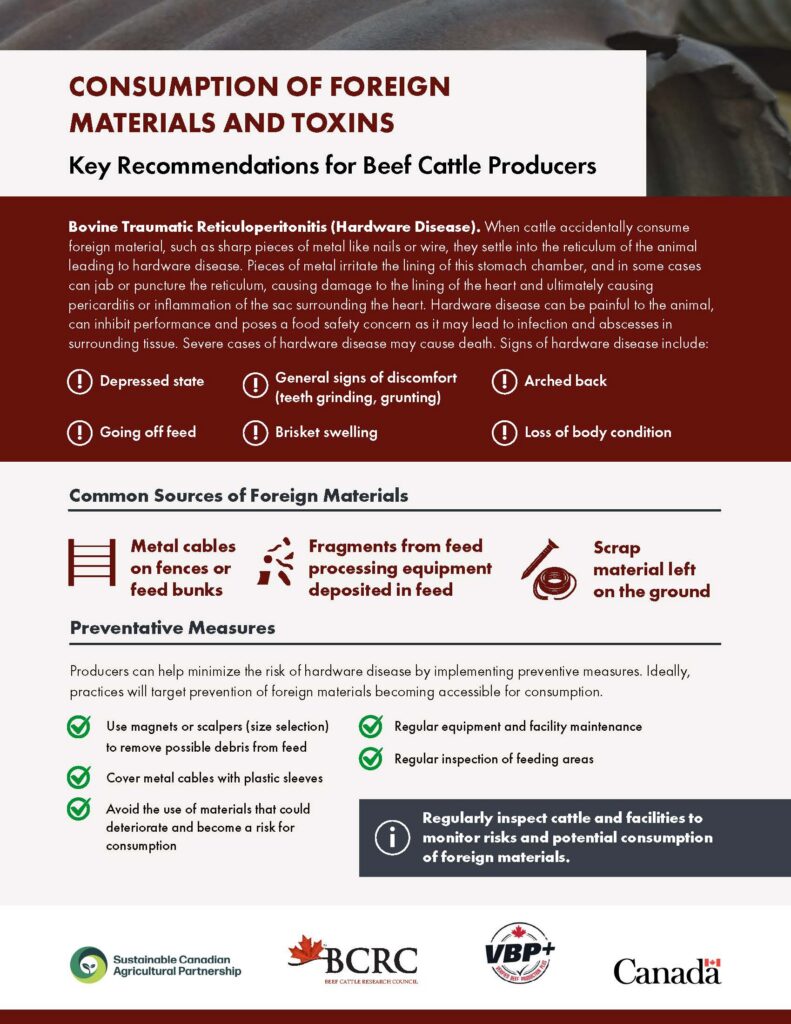
When cattle consume sharp metal objects like nails or pieces of wire, those items can settle in the reticulum and irritate or puncture the stomach lining. In the worst cases, these foreign objects can migrate and damage the heart, causing severe illness or death. This condition is known as hardware disease (or bovine traumatic reticuloperitonitis), and it can be both dangerous and costly.
Signs of hardware disease include:
Depression or dullness
General discomfort (e.g., teeth grinding, grunting)
Arched back
Off feed
Brisket swelling
Loss of body condition
Common sources of metal pieces include cables on fences or feed bunks, fragments from feed processing equipment and scrap materials left on the ground. Prevention goes a long way and there are several preventative practices that can be implemented, including:
Using magnets or scalpers to remove possible debris from feed
Covering metal cables with plastic sleeves
Avoiding materials that deteriorate over time
Regular equipment and facility maintenance
Keeping yards and feeding areas clean
Twine and Net Wrap: A Preventable Risk
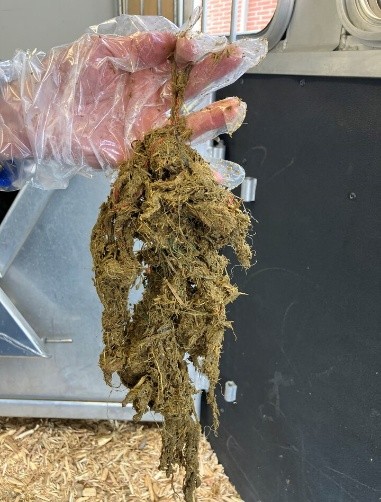
Twine and net wrap are among the most common foreign materials consumed by cattle and are some of the easiest problems to avoid. These materials are indigestible and can build up in the rumen leading to blockages and digestive tract injury.
Signs of twine or net wrap consumption include:
Weight loss
Abdominal pain
Poor coat condition
Lethargy
Diarrhea
Bloating
Straining to defecate
Twine found in the rumen of a calf post mortem.
Prevention is Key
Once consumed, there is no easy fix. Taking a few extra minutes to remove and properly dispose of twine and net wrap before feeding, perform regular maintenance of equipment and facilities and inspect feeding areas for foreign materials can save a lot of trouble down the road.
Toxins That Put Cattle at Risk
Toxins can be difficult to spot, but their impact can be serious. Exposure can lead to reduced feed intake and poor performance or, in some cases, sudden illness or death.
Some of the most common toxins beef cattle may be exposed to include:
Botulism from decaying carcasses, spoiled silage or poorly preserved hay
Nitratesfrom weather-stressed plants or excess nitrogen fertilization
Prussic acid from plants such as sorghum, Sudan grass, Johnson grass, chokecherry and treated canola seed (risk increases during drought or frost stress)
Toxic plants including hemlock, poison hemlock, death camus, lupine, red maple, oak, locoweed, monkshood, tansy, ragwort, common tansy, henbane, stinkweed and tall larkspur
Leadfrom improperly disposed batteries, contaminated water sources, lead pipes or lead based paints
Preventing Exposure to Toxins
Preventing toxin exposure involves awareness, monitoring and good management practices:
Test when in doubt: Test feed and water sources suspected of contamination or considered high risk (e.g., grain screenings, distillers’ grains).
Watch the weather: Moisture levels during growth and harvest affect mycotoxin risk. For example, cool, moist conditions during flowering favour ergot growth, while warm, moist conditions favour fusarium development.
Proper feed storage: Keep feed dry and well ventilated to prevent mould growth and spoilage.
Vaccination: Vaccination programs can help protect against certain toxins, such as botulism or clostridial diseases.
Expert guidance: Work with your nutritionist and veterinarian to design balanced diets and monitor toxin exposure. If exposure is suspected, contact your veterinarian to confirm and document the toxin exposure.
Management practices: Rotate pastures, avoid overgrazing and inspect fields regularly, especially after frost or drought, to minimize exposure to toxic plants and mouldy feed. Routinely check pastures for lead sources such as discarded batteries.
Education and awareness: Stay informed through extension programs, industry groups, agronomists and other farm advisors. Consider implementing a preventive control plan to identify hazards and reduce risks.
A few proactive steps can prevent cattle from accessing foreign materials and toxins, which is essential for maintaining herd health, protecting performance and avoiding preventable losses. Taking the time to walk pastures and feeding areas and regularly inspecting cattle, facilities, feed and water sources can help catch problems early.
Sharing or reprinting BCRC posts is welcome and encouraged. Please credit the Beef Cattle Research Council, provide the website address, www.BeefResearch.ca, and let us know you have chosen to share the article by emailing us at info@beefresearch.ca.
The BCRC is funded by a portion of the Canadian Beef Cattle Check-Off.
Your questions, comments and suggestions are welcome. Contact us directly or spark a public discussion by posting your thoughts below.
Nitrates can become a serious problem in beef cattle diets when consumed at high levels. Knowing how nitrates work, why they are a risk and how to manage them can help protect both your cattle and your bottom line.
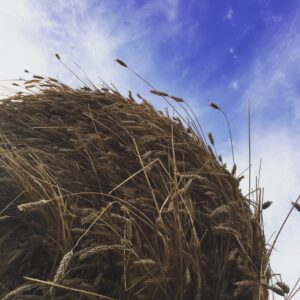
Annual crops such as canola, wheat, corn, oats, barley, sorghum, Sudan grass, millet and rye are prone to nitrate accumulation.
Why Are High Nitrates a Problem for Beef Cattle?
When nitrates (NO3-) are consumed at low concentrations, rumen microbes can effectively convert them to nitrite (NO2) and then further to ammonia (NH3) to produce proteins. However, if nitrates are consumed at high concentrations, this metabolic process becomes overwhelmed, leading to a buildup of nitrite. This excess spills over into the bloodstream and binds to hemoglobin, reducing the blood’s oxygen-carrying capacity. The result is similar to carbon monoxide poisoning and is a medical emergency, as cattle can die quickly. If you suspect your cattle have nitrate poisoning, contact your veterinarian immediately.
When Are Nitrates the Biggest Risk?
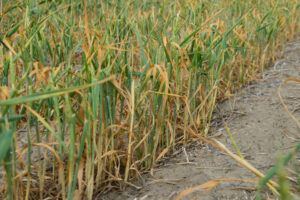
Nitrates pose the biggest risk to cattle when plants have accumulated levels above what can be converted to plant protein – usually during stressful growing conditions such as heat stress, drought, frost and hail damage. These events result in an inhibition of the plants’ ability to process nitrates effectively. Elevated nitrate levels can also occur with excess nitrogen fertilization.
Annual crops such as canola, wheat, corn, oats, barley, sorghum, Sudan grass, millet and rye, along with common weeds like kochia, thistle, pigweed, lambs quarter, dock and sweet clover, are more susceptible to nitrate accumulation. Harvesting annual crops as dry, baled forage or greenfeed can be of particular risk as the drying process will not reduce nitrate levels. Grazing stubble fields of nitrate-accumulating plants, such as canola or corn, can also pose a danger. There is a much smaller risk of nitrate poisoning from perennial forages. Alfalfa, for example, stores nitrogen in the roots and only moves it to the rest of the plant when needed.
Symptoms of Nitrate Poisoning in Cattle
Symptoms of nitrate poisoning include:
Drought increases the risk of nitrates.
Reduced feed intake
Weakness or reluctance to move
Staggering
Muscle tremors or convulsions
Abortions
Brown, muddy gums
Respiratory distress
Collapse
Death
Sampling Feed for Nitrate Testing
To effectively manage nitrates in beef cattle diets, a feed test is needed. Nitrate levels can only be determined through laboratory analysis. Any feed suspected of having elevated nitrates should be tested.
A test result is only reliable if a good sample was submitted. Follow recommended procedures for collecting feed samples.
Interpreting Nitrate Levels
Different labs will report nitrate levels in different ways, such as percent of dry matter (% DM), parts per million (ppm) NO3- or nitrate-nitrogen (NO3-– N). Some labs offer a screening test (a “presence/absence” test) while others can quantify the amount of nitrate in the feed. Check with the lab for which test is used.
Below are conversion formulas to help you determine the level of nitrates in your feed:
Work closely with your nutritionist to interpret nitrate test results and balance rations.
Nitrate nitrogen (NO3-N) x 4.43 = Nitrate (NO3-)
Potassium nitrate (KNO3) x 0.613 = Nitrate (NO3-)
Sodium nitrate (NaNO3) x 0.729 = Nitrate (NO3-)
Nitrite nitrogen (NO2-N) x 3.29 = Nitrate (NO3-)
The recommended safe level for nitrate consumption by cattle is <0.5% on a dry matter basis. This is the level in the total diet (feed and water combined). The table below provides a guideline for interpreting nitrate levels:
Feed Testing Interpretation Guidelines
Recommendation
Nitrate (NO3)
Nitrate nitrogen (NO3-N)
Potassium nitrate (KNO3)
Generally safe for livestock use.
<0.5% DM <5000 ppm
<0.12% <1200 ppm
<1% <10 000 ppm
Use with caution. Feed should be blended with low-nitrate forage to reduce risk. Avoid feeding to pregnant cattle.
0.5-1.0% DM 5000-10 000 ppm
0.1-0.2% 1000-2000 ppm
1.0-1.6% 10 000-16 000 ppm
Dangerous. High risk of poisoning. Dilute feed significantly to lower nitrate intake.
>1.0% DM or higher >10 000 ppm
>0.2% DM >2000 ppm
>1.6% >16 000
Management Tips When Dealing with High Nitrate Feeds
Test before feeding. Test all suspect feed to determine nitrate levels.
Don’t forget about water. Nitrates can build up in water sources and should be tested prior to livestock consumption. Visit the BCRC Water Systems for Beef Cattle webpage for more information on water quality and testing.
Avoid feeding to young, hungry, pregnant or lactating animals. These groups are more susceptible to nitrate poisoning.
Blend high-nitrate feeds. Mix with low-nitrate feeds to reduce the risk of poisoning. If mixing is not an option, put low-nitrate feed at the beginning of each feeding and follow up with higher-nitrate feed to ensure each animal has consumed the low-nitrate feed first.
Introduce high-nitrate feeds gradually. Allow the rumen time to adapt to moderate nitrate levels over time. Caution: cattle can lose tolerance to moderate nitrate feeds quickly, so do not feed intermittently.
Make harvest adjustments. Consider increasing cutting height at harvest to avoid the nitrate-rich stems.
Delay grazing. Wait 10-14 days to graze forages that have experienced stressful conditions to allow nitrates to dissipate. Caution: delay timing further if plants experience another stressful event.
Provide adequate energy. Feeding a high-energy supplement, such as grain, can help the rumen to metabolize nitrates into protein more effectively.
Ensile feeds. Ensiling can reduce the nitrate content, but forage quality will be reduced. Caution: test prior to feeding as there is no guarantee the ensiled feed will reach safe levels.
Proper management and feed testing are required for high-nitrate feeds to be utilized safely. The key is to know your numbers before the feed hits the bunk.
ACKNOWLEDGEMENT:
Thank you to the livestock and feed extension specialists with the Saskatchewan Ministry of Agriculture and Dr. Vanessa Cowan, DVM, with the Western College of Veterinary Medicine, for sharing their expertise on this topic.
Sharing or reprinting BCRC posts is welcome and encouraged. Please credit the Beef Cattle Research Council, provide the website address, www.BeefResearch.ca, and let us know you have chosen to share the article by emailing us at info@beefresearch.ca.
The BCRC is funded by a portion of the Canadian Beef Cattle Check-Off.
Your questions, comments and suggestions are welcome. Contact us directly or spark a public discussion by posting your thoughts below.
Experts Respond to Drought Questions
On July 29, the Beef Cattle Research Council hosted a webinar that allowed beef producers to ask drought-related questions to a panel of nutrition and animal health experts. Producers asked for everything from recommendations for grazing canola, how to manage for antinutritional factors, tips on ammoniation and to how to manage grass into the fall. While questions were varied and diverse, a few main themes emerged.
Feed testing:
In a drought year, testing your feed sources is more important than ever. Especially when using alternative feed sources, a feed test allows you to understand what you have in terms of energy and protein and therefore what you will need to supplement to maintain the health and body condition of cows and other classes of cattle. A feed test will also identify some of the antinutritional factors and potential toxic levels of substances such as nitrates or sulfates that are more prevalent in drought years or unconventional feeds. Feed tests can be performed on standing or swathed crops, bales or silage. A feed test can be instrumental in determining how a particular feed will fit into your overall feeding strategy.
Water testing:
With hot dry conditions water conditions can change rapidly. As water evaporates it leaves behind the minerals and other compounds that can be problematic, toxic, or result in death or dehydration. Water should be tested frequently during drought and cattle should be monitored more closely. For example, one of the first warning signs of high sulfates is that cattle will refuse to drink the water. It is important to monitor cattle and remove them from the water source if you see signs that cattle have not been drinking. Depending on what levels of mineral(s) or toxin(s) are present in the water source, aeration or diluting the water with a clean water source may help mitigate the concerns.
Be aware of additive effects and interactions:
Even if feed and water sources are each within tolerable levels for potential toxins like nitrates or sulfates, remember that cattle consume both water and feed. The combination of the two could have additive effects resulting in negative animal health consequences or even death. This is even more important with alternative feed sources. For example, canola tends to be naturally high in sulfates. If you are feeding salvaged canola but your water source is also high in sulfates, the combination can result in overexposure. Cattle may show immediate signs of sulfur toxicity (such as neurological symptoms like twitching, vison impairment or staggering). Mineral interactions can also ensue. For example, copper levels may be acceptable in both the water and the feed, but excess sulfates (or molybdenum) can tie up that copper and result in a lower pregnancy rates next year, or tie up vitamin E and selenium increase the risk for white muscle disease in calves next spring. There may be enough nutrient in the feed, but if that nutrient is bound up by another feed ingredient and can’t be absorbed or used by the animal, it will still be deficient. This is known as a secondary deficiency.
Certain weeds (including dandelion, lambs quarter, and kochia) can be very nutritious for cattle, but use caution. Kochia tends to be high in oxalates, which can bind calcium and result in a secondary calcium deficiency (again, the feed test result may indicate that calcium levels in the ration are adequate). Make sure you are aware of poisonous weeds in your area. Often cattle will avoid grazing these plants in normal years, but cattle may start to graze those poisonous species in drought conditions when forage supplies are short.
A few other points to consider:
Avoid grazing flax, it is also high in oxalates and can bind copper. If you plan on feeding flax, it is better to cut and bale it.
When grazing salvaged feeds, make sure you are aware of any products that have been used on that crop. Fungicides, herbicides or other chemicals used on crops may have withdrawal dates for livestock consumption or may state that livestock should not graze the crop at all.
Ammonization can be used to increase the protein content of straw. If using ammoniated feed the ration must be balanced to ensure adequate energy for cattle to digest the protein. Availability of crews can also be an issue and appropriate safety precautions must be taken.
When grazing alternative feeds or residues, use electric fence to only allow access to small amounts of the field at a time. This will help cattle graze more efficiently but also can make supplementation easier.
Consider weaning calves early to reduce the energy requirements of the cow herd. Ensure you run the numbers to decide what the best option is when it comes to marketing calves.
Watch the full webinar recording for more in-depth answers, tips, tricks and solutions to managing cattle in drought conditions.
Click here tosubscribeto the BCRC Blog and receive email notifications when new content is posted.
The sharing or reprinting of BCRC Blog articles is welcome and encouraged. Please provide acknowledgement to the Beef Cattle Research Council, list the website address, www.BeefResearch.ca, and let us know you chose to share the article by emailing us at info@beefresearch.ca.
We welcome your questions, comments and suggestions. Contact us directly or generate public discussion by posting your thoughts below.
Can Feeding Nitrate Improve Efficiency and Reduce Methane?
This article written by Dr. Reynold Bergen, BCRC Science Director, originally appeared in the November 2017 issue ofCanadian Cattlemenmagazine and is reprinted on the BCRC Blog with permission of the publisher.The rumen allows cattle to make highly nutritious beef out of things that humans can’t even digest. Rumen microbes have digestive enzymes that mammals don’t. This allows rumen microbes to break down complex feeds into very simple molecules, and reassemble those molecules into volatile fatty acids that the animal can absorb and use as an energy source. These microbes can also take some simple nitrogen-based compounds like ammonia and urea, turn them into amino acids, and assemble those amino acids into microbial proteins that the animal can digest and absorb. But the rumen can be wasteful as well. Some rumen microbes assemble carbon (C) and hydrogen (H) molecules together into methane (CH4) instead of volatile fatty acids. The animal can’t absorb or use methane, so methane gets belched out. This can waste significant feed energy – methane is the main ingredient in natural gas, after all. If we can find a way to reduce methane production in the rumen, we may be able to further improve feed efficiency and shrink beef’s environmental footprint at the same time.
A team of scientists led by Karen Beauchemin at Agriculture and Agri-Food Canada’s Lethbridge Research Centre has been studying whether feeding nitrate can reduce methane production without risking nitrate poisoning (Journal of Animal Science 95:3700-3711 and 95:3712-3726). The theory is that the hydrogen (H) molecules in the rumen will attach to the nitrogen (N) molecule from the nitrate instead of carbon (C), thus producing ammonia (NH3) instead of methane (CH4). Then the rumen microbes can convert the NH3 into amino acids and microbial protein. This could reduce methane production while improving feed efficiency.
What They Did
This team fed three different diets to 132 crossbred steers averaging 645lbs in a backgrounding and finishing study. All three diets contained the same amount of crude protein, but the crude protein sources differed slightly. The control diet contained urea but no nitrate. Another diet replaced some of the urea with 1.25% nitrate. The third diet contained 2.5% nitrate. The nitrate was encapsulated for gradual release to give the rumen microbes a better chance of using it over time, rather than letting the nitrate be absorbed directly into the animal’s bloodstream. The urea and nitrate supplements were mixed in with the grain and silage rather than top-dressed. The cattle were backgrounded (65% corn silage, 25% barley grain) for 91 days then finished (10% corn silage, 80% barley grain) for 150 days. A sample of 20 steers were used for methane measurements during both the backgrounding and finishing periods. Animal intake and weights, feed and blood samples, and carcass measurements were also collected.
What They Learned:
Performance: Dry matter intake, growth rate and feed:gain were similar for all three groups during the backgrounding period. In the finishing period, the 2.5% group ate slightly less than the other two groups but gained just as fast, meaning that the 2.5% group converted slightly more efficiently than either the 1.25% or Control groups.
Methane production was highest for the control, intermediate for the 1.25% and lowest for the 2.5% nitrate group during the backgrounding period, but these differences were not statistically significant. No differences were seen during the finishing period either.
Health: Blood samples showed no evidence of nitrate poisoning, and no animals exhibited signs of nitrate poisoning during either the backgrounding or finishing periods.
Carcass traits and liver abscess scores were similar among groups. Nitrate levels in meat and organs were virtually undetectable, and far below the levels allowed when nitrate is used to cure meat products.
Feeding sorting appeared to differ among the three groups. The urea and nitrate particles were small but similarly sized, so the percentage of large (e.g. silage), medium (e.g. rolled grain) and small (e.g. nitrate and urea) particles were similar in all three total mixed rations. But when weekly samples of uneaten backgrounding ration were collected from the bunk and analyzed, the 2.5% diet contained a lower proportion of large and medium particles, and a greater proportion of small particles than the control and 1.25% diets. In the finishing diets, the 2.5% and 1.25% diets contained a lower proportion of large and medium particles, and a greater proportion of small particles than the control diet. It looked as though the cattle may have been trying to avoid the nitrate, especially in the finishing diet.
What it Means:
Feeding nitrate didn’t reduce methane production, but it may have improved feed efficiency with no adverse health effects. The apparent undesirable flavor of nitrate tastes may even be useful. An earlier study monitored feeding behavior in individually-fed cattle. Compared to cattle receiving no nitrate, cattle fed nitrate ate just as much, but they ate smaller meals, more often, and had more stable rumen pH. If further research demonstrates similar effects in group-fed cattle, perhaps nitrate can help manipulate feeding behavior, modulate rumen pH, reduce acidosis and help maintain liver health in feedlot cattle.
The Beef Research Cluster is funded by the Canadian Beef Cattle Check-Off and Agriculture and Agri-Food Canada with additional contributions from provincial beef industry groups and governments to advance research and technology transfer supporting the Canadian beef industry’s vision to be recognized as a preferred supplier of healthy, high quality beef, cattle and genetics.
Click here tosubscribeto the BCRC Blog and receive email notifications when new content is posted.
The sharing or reprinting of BCRC Blog articles is typically welcome and encouraged, however this article requires permission of the original publisher.
We welcome your questions, comments and suggestions. Contact us directly or generate public discussion by posting your thoughts below.